From Real Exams Quiz
Primary 3 Science Life Cycles Quiz
Free P3 Science Life Cycles quiz, Kimi2.6 Exam version, with questions, answers, and syllabus-aligned practice for Singapore students.
These static practice materials are generated from the site's syllabus and paper-generation workflow, with source and model context shown so students and parents can evaluate the material before use.
Questions
Free quiz and exam paper access
Enter your details to view this paper
Your access is remembered on this device.
Answers
Primary 3 Science Quiz - Life Cycles: ANSWER KEY
Total Marks: 30
Section A: Multiple Choice
1. (b) They can grow and reproduce [1 mark]
Explanation: All living things can grow (get bigger or develop over time) and reproduce (make young/offspring). Not all living things can fly (e.g., dogs cannot fly) or swim (e.g., trees cannot swim). Having four legs is only true for some animals like cats and dogs, but birds have two legs and insects have six.
2. (a) Life cycle with a pupa stage [1 mark]
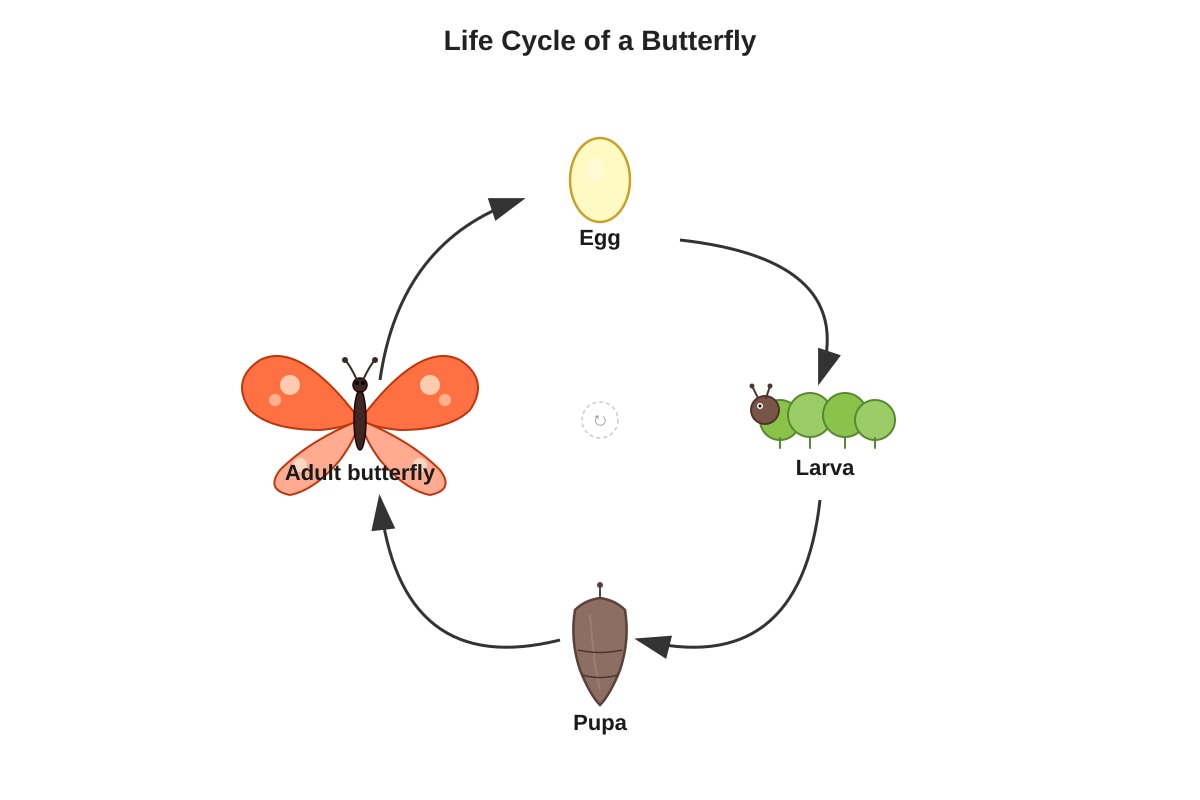
Explanation: A butterfly has a four-stage life cycle called complete metamorphosis: egg → larva (caterpillar) → pupa (chrysalis) → adult butterfly. The pupa stage is when the caterpillar transforms into a butterfly inside a protective case. This is different from animals like chickens that do not have a pupa stage.
3. (c) Larva [1 mark]
Explanation: The diagram shows complete metamorphosis with four stages. After the egg hatches, the next stage is the larva (caterpillar). The larva eats a lot and grows before becoming a pupa. The expected diagram shows: Egg → Larva → Pupa → Adult butterfly, with arrows going in a circle.
4. (d) looks different and needs to grow [1 mark]
Explanation: A newly hatched chick is much smaller than its parents, has downy feathers instead of adult feathers, and cannot yet fly or lay eggs. It must eat and grow over time to become an adult chicken. Unlike a butterfly's young, a chick already has two legs and a beak like its parents, but it still needs to develop fully.
5. (c) Frog [1 mark]
Explanation: A frog goes through metamorphosis where its young (tadpole) looks very different from the adult. A tadpole lives in water, has gills for breathing, and has a tail for swimming. The adult frog has lungs, four legs, and can live on land. Chickens, humans, and rabbits have young that look similar to their parents from birth.
6. (c) Pollination and fertilisation [1 mark]
Explanation: To produce seeds, a flower first needs pollination — pollen from the male part (anther) must reach the female part (stigma), often carried by insects or wind. Then fertilisation happens when the male cell from pollen joins with the female cell in the ovule. After this, the ovary swells to become a fruit containing seeds. Water, sunlight, and soil help the plant grow but are not directly responsible for making seeds.
7. (b) changes its body features and where it lives [1 mark]
Explanation: This describes metamorphosis. The frog changes from a water-breathing, tail-swimming tadpole to a land-capable, lung-breathing, leg-jumping adult. It changes both its body structures (gills → lungs, tail → legs) and its habitat (water → land and water).
8. (a) Baby → Child → Adult → Elderly [1 mark]
Explanation: This is the correct order of a human life cycle. We start as babies, grow into children, then become adults who can have their own children, and finally become elderly. The cycle continues when adults have babies. This is different from insects because humans do not metamorphose — babies look like small versions of adults.
Section B: Fill in the Blanks and Short Answers
9. The three basic things living things need to survive are:
- Water
- Food
- Air (oxygen) [1 mark each; total 3 marks]
Explanation: These are the basic needs of life. Water helps transport nutrients and keeps cells working. Food provides energy for growth and activity. Air (oxygen) is needed for breathing and releasing energy from food. Different living things get these in different ways — plants make their own food using sunlight, while animals eat other organisms.
10. (a) Pupa (or tumbler stage) [1 mark]
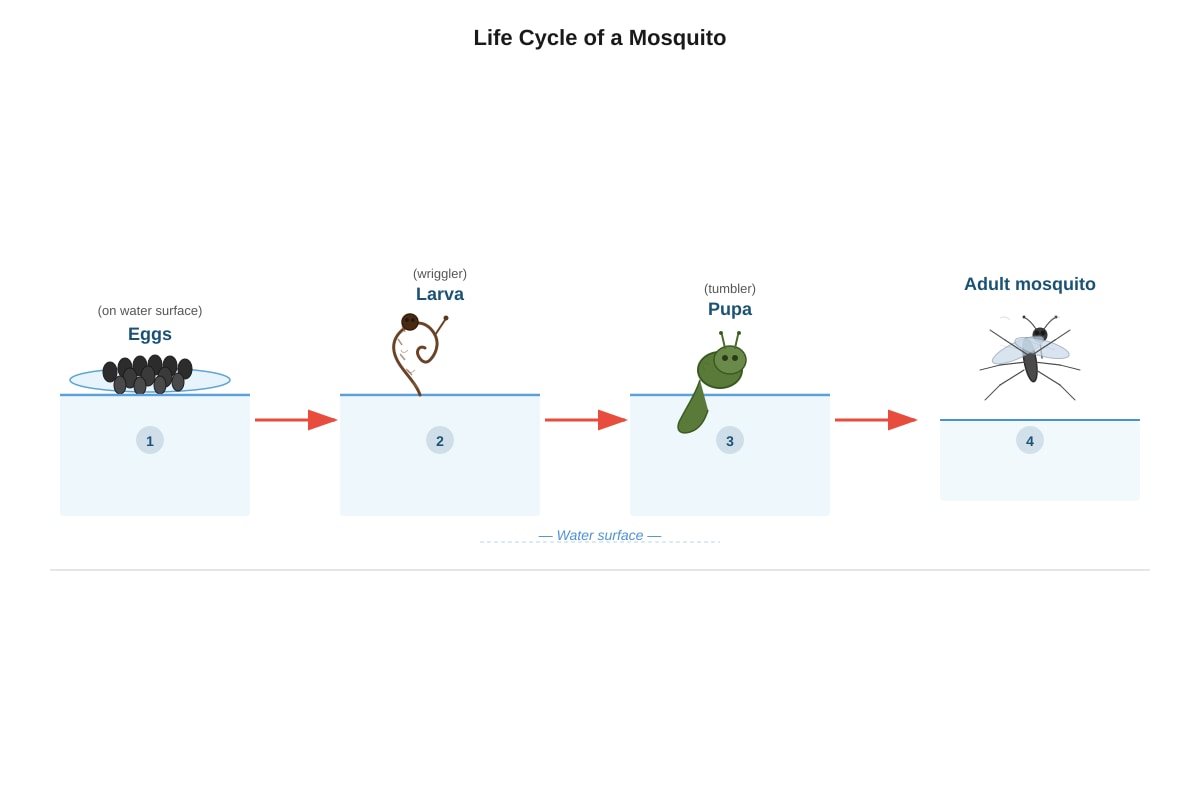
Explanation: In the mosquito life cycle, the pupa is a non-feeding, transitional stage. The larva (wriggler) eats and grows actively, but the pupa does not eat. Inside the pupa, the larval body is reorganizing into the adult mosquito form.
(b) Stagnant water is where mosquitoes lay their eggs and where their larvae and pupae live and develop. [1 mark]
Removing stagnant water stops mosquitoes from completing their life cycle, so fewer adult mosquitoes develop to spread diseases. [1 mark]
Explanation: Mosquitoes need water for the first three stages of their life cycle. No water = no place for eggs, larvae, or pupae = no adult mosquitoes. This is why Singapore has campaigns to prevent mosquito breeding by clearing stagnant water.
11. (a) Completed table: [1 mark per correct row; total 3 marks]
| Living thing | Number of stages in life cycle | Young looks like adult? |
|---|---|---|
| Chicken | 3 or 4 (accept 3-stage: egg, chick, adult) | ✓ Yes |
| Butterfly | 4 | ✗ No |
| Grasshopper | 3 | ✓ Yes |
Explanation:
- Chicken: Has 3 main stages (egg → chick → adult chicken). The chick looks like a small version of the chicken.
- Butterfly: 4 stages with complete metamorphosis; larva (caterpillar) looks completely different from adult.
- Grasshopper: 3 stages with incomplete metamorphosis; the young (nymph) looks like a small adult without wings, and gradually grows larger.
(b) Grasshopper [1 mark]
Explanation: Grasshoppers go through incomplete metamorphosis (egg → nymph → adult). The nymph looks similar to the adult but is smaller and lacks fully developed wings. There is no pupa stage, unlike complete metamorphosis in butterflies and beetles.
12. (a) Germination [1 mark]
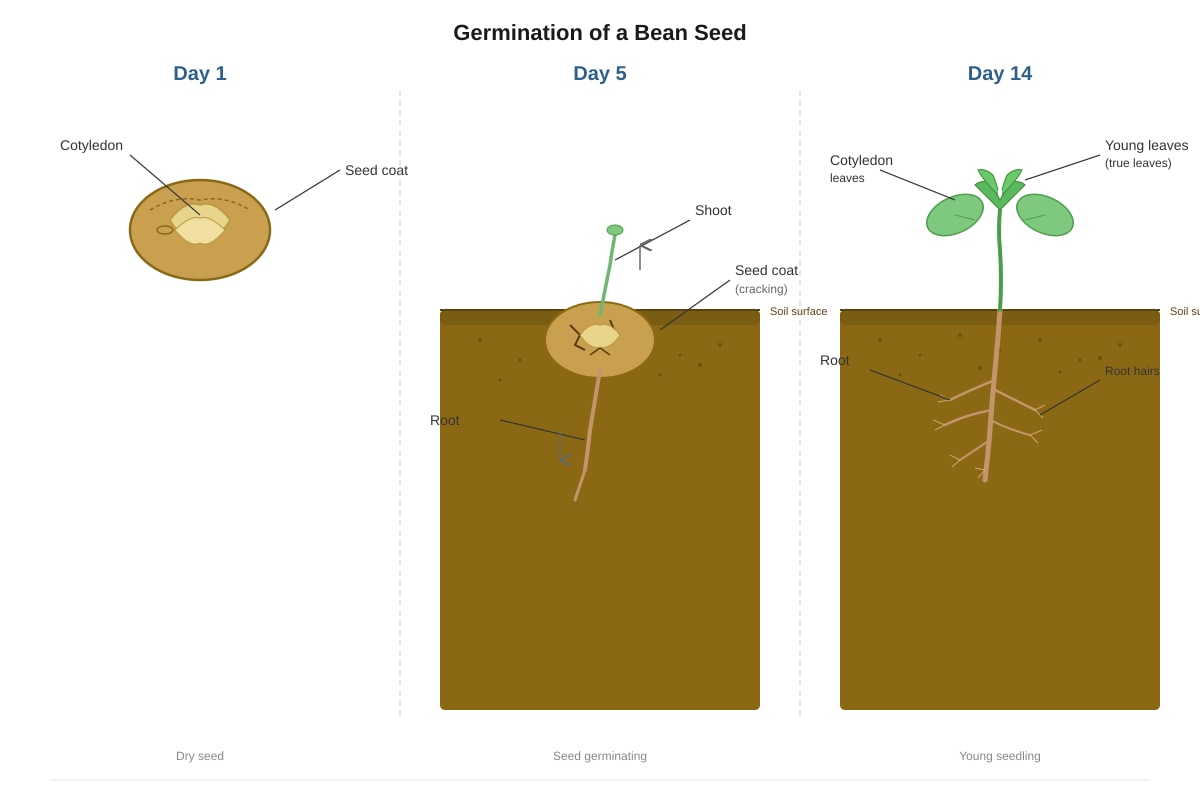
Explanation: Germination is the process where a seed begins to grow and develop into a new plant. It starts when the seed absorbs water and the embryo inside becomes active.
(b) Any two from:
- Water
- Air/oxygen
- Warmth / suitable temperature [1 mark each; total 2 marks]
Explanation: The seed needs water to soften the seed coat and activate enzymes; air/oxygen for respiration to release energy; and warmth for enzymes to work properly. Light is needed later for photosynthesis but not always for germination itself.
(c) To soften the seed coat and allow the baby plant (embryo) to start growing / to activate enzymes that break down food stored in the cotyledon. [1 mark]
Explanation: The seed contains stored food in its cotyledons. Water triggers chemical changes that release this food energy so the root and shoot can begin to grow. Without water, the seed stays dormant (inactive).
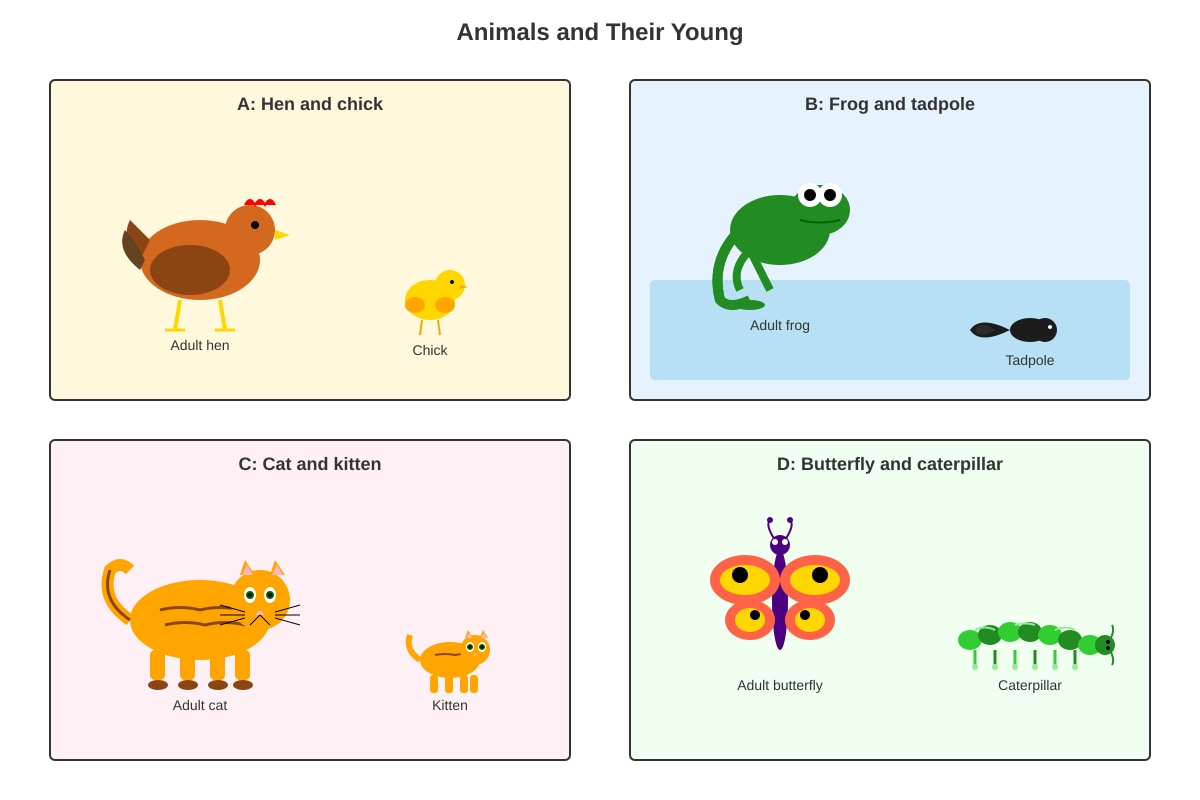
13. (a) Cat (C) and Hen (A) — or "the cat and the chicken" *[2 marks; 1 mark per correct animal
Explanation: Kittens look like small cats with fur, four legs, and similar features. Chicks have two legs, beaks, and feathers like adult hens, just in different proportions. The young resemble their parents from birth/hatching.
(b) For frog or butterfly: The young (tadpole/caterpillar) looks very different from the adult. [1 mark]
It undergoes metamorphosis: the body changes shape, develops new body parts (like legs, wings), and loses old features (like tail, gills). [1 mark]
Explanation: In complete metamorphosis, the animal's body is completely rebuilt during the pupa stage. Cells reorganize and new structures grow — legs, wings, lungs — while larval features disappear. This takes time and energy but allows the adult and young to live in different habitats and eat different foods, reducing competition.
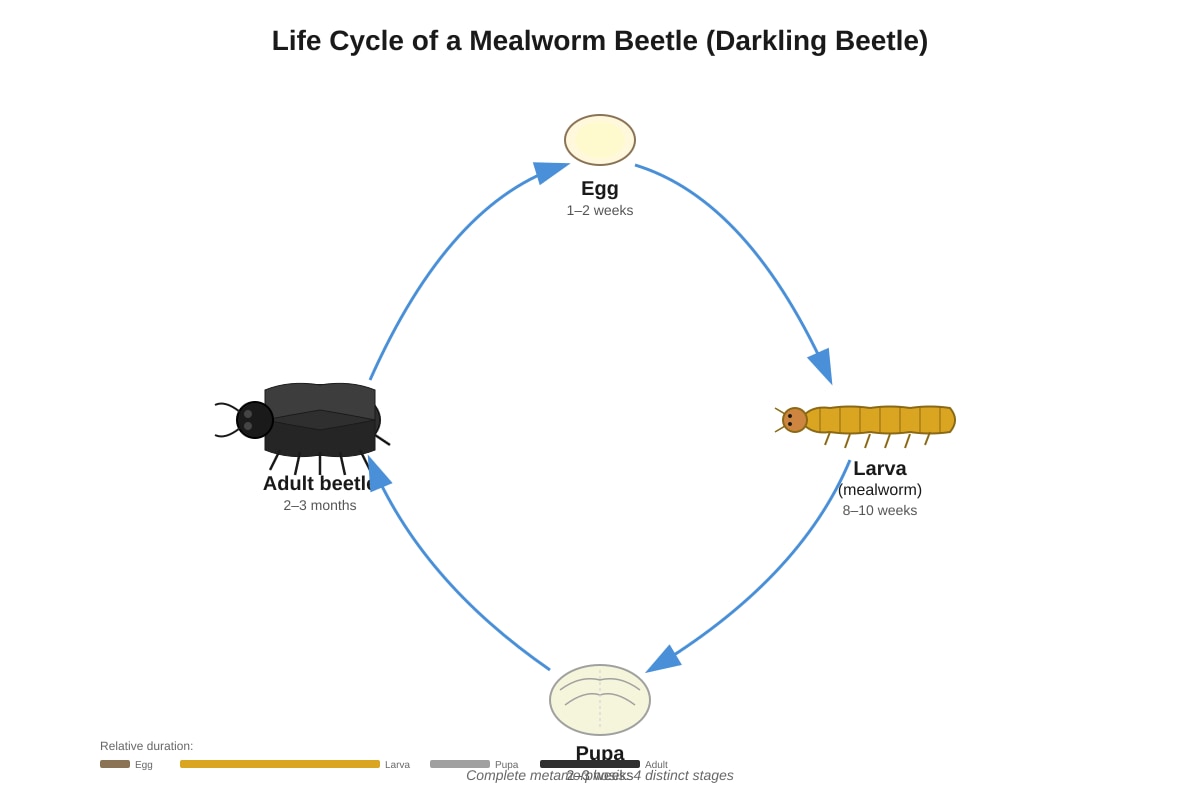
14. (a) Four stages (egg, larva, pupa, adult) [1 mark]
Explanation: This is called complete metamorphosis. The stages are distinct and very different from each other in appearance and behavior.
(b) The larva needs time to eat and grow large enough to store energy for the pupa stage. [1 mark]
During pupation, the insect does not feed at all, so all the energy for transformation must come from food eaten during the larval stage. [1 mark]
Explanation: The mealworm larva eats grains and stored food, growing and storing fat and protein. When it pupates, its body breaks down and rebuilds — this requires lots of energy. A longer larval stage means more food stored, leading to a healthier adult capable of reproduction. This is common in complete metamorphosis insects.
Section C: Extended Response
15. (a) Ben is correct. [1 mark]
A robot is not a living thing because it cannot grow by making new cells, and it cannot reproduce to make baby robots. It is a machine made by humans. [1 mark]
Explanation: The robot only moves because of batteries and motors programmed by people. Movement alone does not mean something is alive.
(b) Any two from: [1 mark each; total 2 marks]
- Cannot respond to stimuli by itself (only follows programming)
- Cannot breathe/needs no air
- Cannot need food for energy (uses electricity)
- Cannot produce wastes/excrete
- Will not die naturally from old age
Common mistake: Students often think moving = living. Emphasize that living things have ALL the characteristics together, not just one.
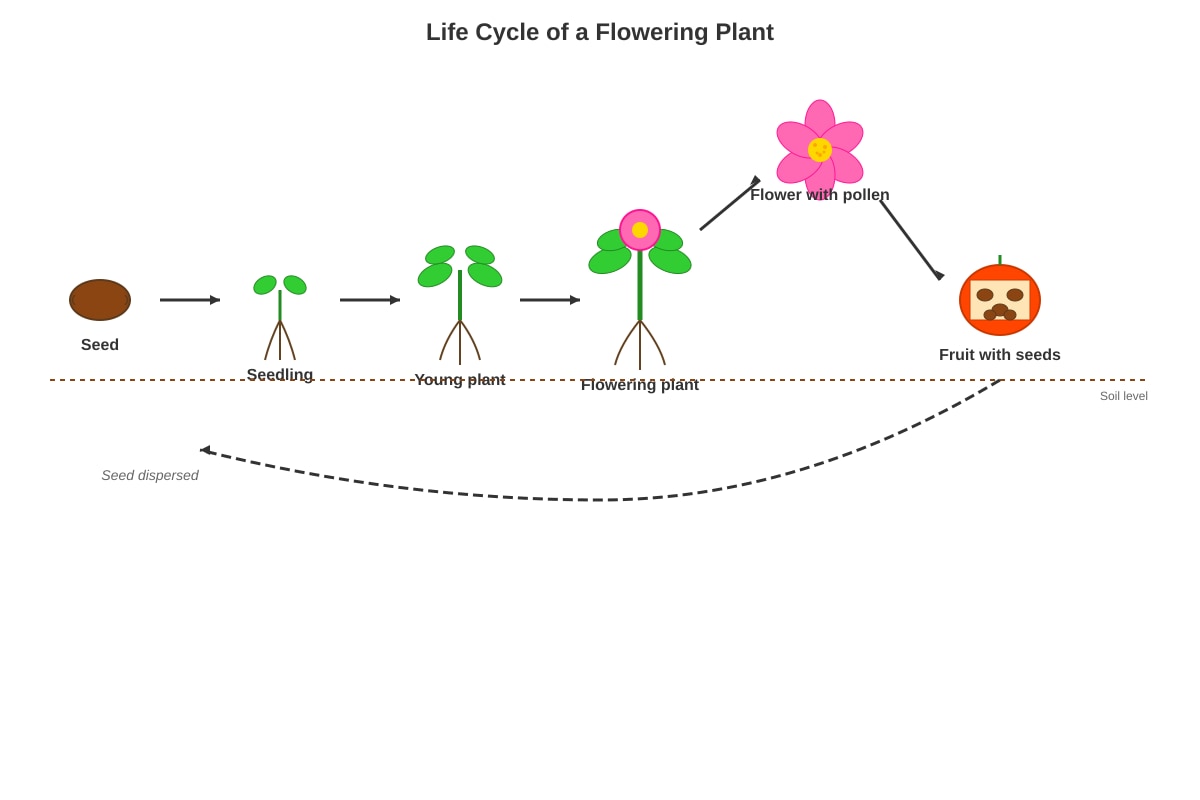
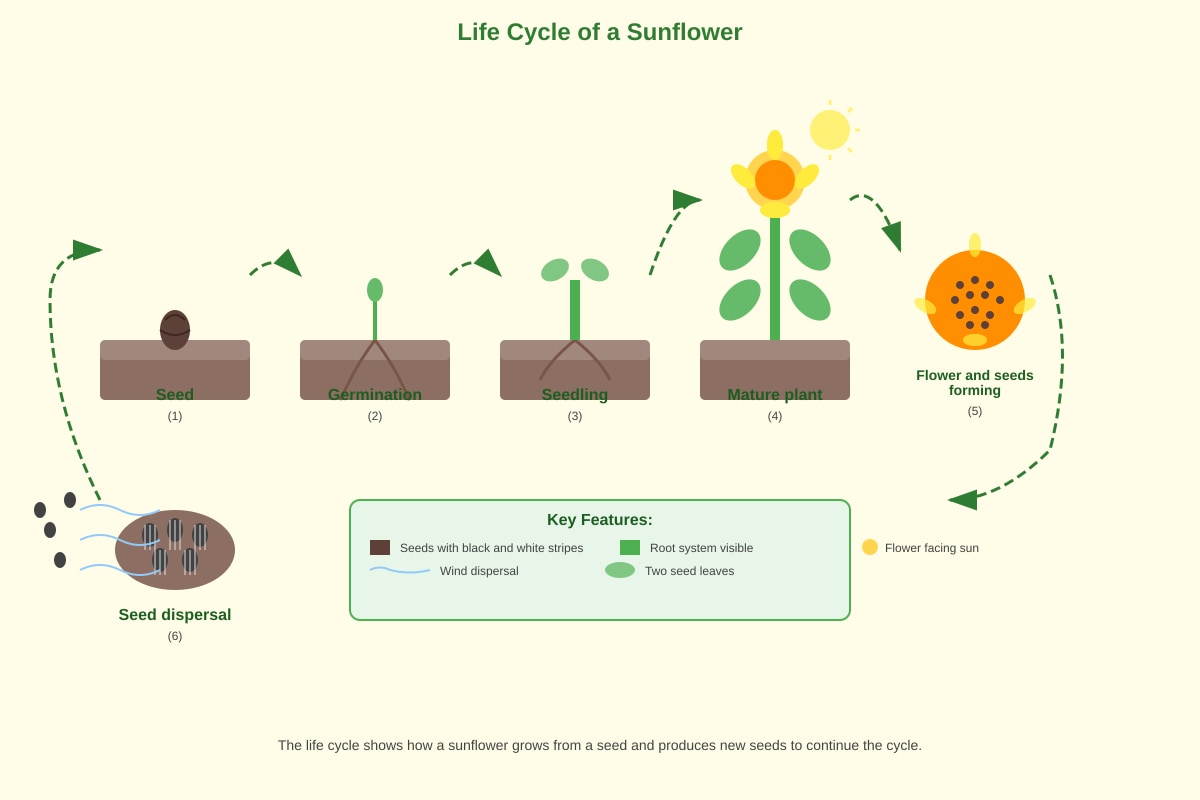
16. The plant life cycle is circular because the adult plant produces seeds, and these seeds can grow into new plants just like the first one. [1 mark for identifying circular nature]
From the diagram: The mature sunflower makes flowers that become seed heads. [1 mark]
These seeds are dispersed by wind and can germinate to become new seedlings, which grow into mature plants again. [1 mark]
Explanation: "Circular" means the ending connects back to the beginning. The plant dies, but its seeds carry on its kind. This is different from a straight line — generations continue because new seeds always start the cycle again. The sunflower makes many seeds, so one plant can lead to many new plants.
17. (a) Tadpole (after two weeks) [1 mark] and Frog/young frog with legs (after two months) [1 mark]
Explanation: These are two distinct stages in frog metamorphosis. The timeline matches real development: eggs hatch into tadpoles in days, and legs develop over weeks.
(b) Any two valid changes: [1 mark each; total 2 marks]
- Developed legs (hind legs first, then front legs)
- Lost its tail / tail became shorter
- Changed from gills to lungs (can breathe air)
- Changed from living only in water to living on land and water
- Changed from eating algae/plant matter to eating insects
Explanation: These changes happen during metamorphosis. The tadpole's cells reorganize: tail cells break down and are absorbed; leg cells multiply and grow; gills shrink while lungs develop. This transformation prepares the frog for life on land as an adult.
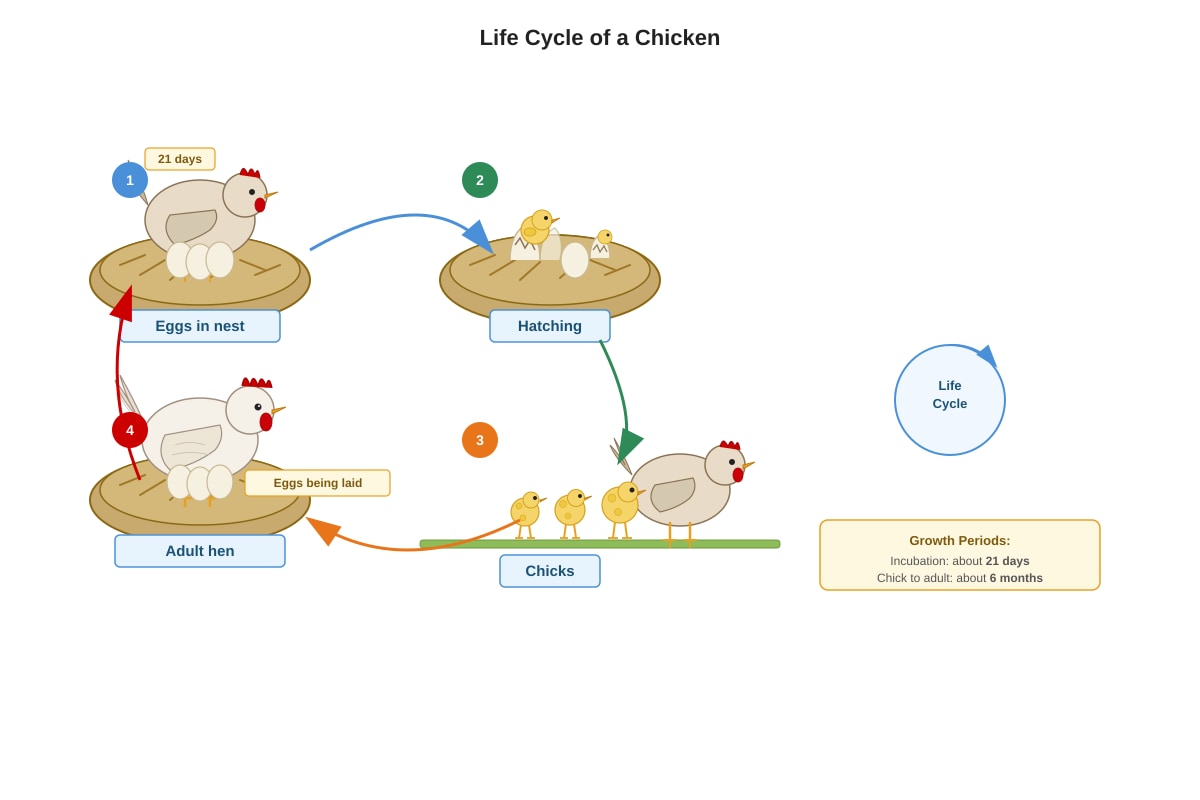
18. (a) Incubation [1 mark]
Explanation: Incubation means keeping eggs warm so the embryo inside can develop. Chickens sit on eggs, or farmers use incubators. The temperature must stay around 37-38°C for about 21 days for proper development.
(b) The chick needs:
- Food (chick starter feed, grains) to grow bigger [1 mark]
- Time to grow — about 5-6 months to become a fully grown adult hen that can lay eggs [1 mark]
Explanation: Growth requires energy from food and time for cells to divide and develop. Female chicks become hens at about 6 months and can then lay eggs, continuing the cycle. The chick also needs water, warmth, and protection from predators.
19. (a) Knowing the life cycle tells us that mosquitoes need water to breed (for eggs, larvae, and pupae). [1 mark]
If we remove or cover stagnant water, we stop the young stages from developing, so fewer mosquitoes become adults that can bite and spread diseases. [1 mark]
Explanation: This is called vector control. Female adult mosquitoes need blood to make eggs, but they cannot produce new generations without water. Breaking the life cycle at the larval/pupal stage is easier than catching flying adults.
(b) Any two: [1 mark each; total 2 marks]
- Flower pots with collected water in the dish/base
- Discarded tires or containers that collect rainwater
- Clogged roof gutters
- Unused buckets or pails left outdoors
- Puddles or ponding in uneven ground
Singapore context: NEA checks for these in dengue prevention campaigns.
20. (a) Pupa (or chrysalis) [1 mark]
Explanation: The pupa is a protective case formed from the caterpillar's skin hardening. Inside, the caterpillar's body breaks down into a soup of cells that reorganize into butterfly structures.
(b) Inside the pupa, the caterpillar's body breaks down and rebuilds completely. [1 mark]
It grows wings, legs, antennae, and adult mouthparts, and its body shape changes from long and worm-like to compact with six legs and two pairs of wings. [1 mark]
Explanation: This is the metamorphosis process. Special cells called imaginal discs that were dormant in the larva now grow and develop into adult structures. The process is controlled by hormones and takes energy from food stored in the larva.
(c) Raj should plant flowers with nectar (e.g., butterfly pea, lantana, daisies, milkweed). [1 mark]
Adult butterflies need to drink nectar for energy, so flowers attract them to the garden where they may also lay eggs on suitable host plants. [1 mark]
Explanation: Different butterfly species need specific host plants for their caterpillars (e.g., monarch butterflies need milkweed). The adult butterfly drinks through its proboscis (tubular mouthpart). Nectar provides sugar energy for flying and reproduction. By planting both nectar flowers and host plants, Raj supports the complete butterfly life cycle in his garden.
END OF ANSWER KEY