From Real Exams Quiz
Primary 3 Science Life Cycles Quiz
Free P3 Science Life Cycles quiz, HY3 Exam version, with questions, answers, and syllabus-aligned practice for Singapore students.
These static practice materials are generated from the site's syllabus and paper-generation workflow, with source and model context shown so students and parents can evaluate the material before use.
Questions
Primary 3 Science Quiz - Life Cycles
Name: ___________________________
Class: ___________________________
Date: ___________________________
Score: ___________ / 20
Duration: 40 minutes
Total Marks: 20
Instructions:
- This quiz has 20 questions on Life Cycles.
- Section A: 10 multiple-choice questions (1 mark each).
- Section B: 5 short-answer questions (1 mark each).
- Section C: 5 structured questions with subparts (1 mark each, total 5 marks).
- Write your answers clearly in the spaces provided.
Section A: Multiple Choice (1 mark each, Q1–Q10)
-
Which of the following shows the correct order of the life cycle of a flowering plant?
A. Adult plant → Seed → Young plant
B. Seed → Young plant → Adult plant
C. Young plant → Seed → Adult plant
D. Seed → Adult plant → Young plant
Answer: ______ -
A butterfly goes through a stage where it is a caterpillar before becoming an adult. This kind of change is called
A. growth
B. reproduction
C. metamorphosis
D. classification
Answer: ______ -
Which animal below does NOT go through metamorphosis?
A. Frog
B. Butterfly
C. Chicken
D. Mosquito
Answer: ______ -
The life cycle of a frog includes which of the following stages?
A. Egg → Tadpole → Froglet → Adult frog
B. Seed → Tadpole → Adult frog
C. Egg → Caterpillar → Adult frog
D. Egg → Chick → Adult frog
Answer: ______ -
A cockroach grows from an egg to a young cockroach that looks like a small adult, then to an adult. This is an example of
A. incomplete metamorphosis
B. complete metamorphosis
C. a plant life cycle
D. a mammal life cycle
Answer: ______ -
Which of these animals reproduces by laying eggs?
A. Cat
B. Chicken
C. Dog
D. Cow
Answer: ______ -
A student observes a seed planted in soil. After one week, a small green plant appears. This small plant is called a
A. seed
B. young plant
C. adult plant
D. flower
Answer: ______ -
Which of the following animals has a life cycle most similar to a grasshopper?
A. Butterfly
B. Cockroach
C. Frog
D. Mosquito
Answer: ______ -
Why is a life cycle called a "cycle"?
A. Because it ends when the animal dies
B. Because it is a repeated pattern from birth to reproduction
C. Because it only happens once
D. Because plants do not have life cycles
Answer: ______ -
A beetle goes through egg, larva, pupa, and adult stages. How many distinct stages are in its life cycle?
A. 2
B. 3
C. 4
D. 5
Answer: ______
Section B: Short Answer (1 mark each, Q11–Q15)
-
Name the stage that comes after "egg" in the life cycle of a butterfly.
-
Write the missing stage in this plant life cycle:
Seed → ____________ → Adult plant
-
A tadpole lives in water and later grows legs to become a frog. What is the stage called after tadpole but before adult frog?
-
Which animal from this list goes through complete metamorphosis? (Butterfly, Chicken, Grasshopper)
-
Fill in the blank: The life cycle of a ________ shows the stages of growth and development from a young form to an adult. (plant / rock)
Section C: Structured Questions (1 mark per subpart, Q16–Q20)
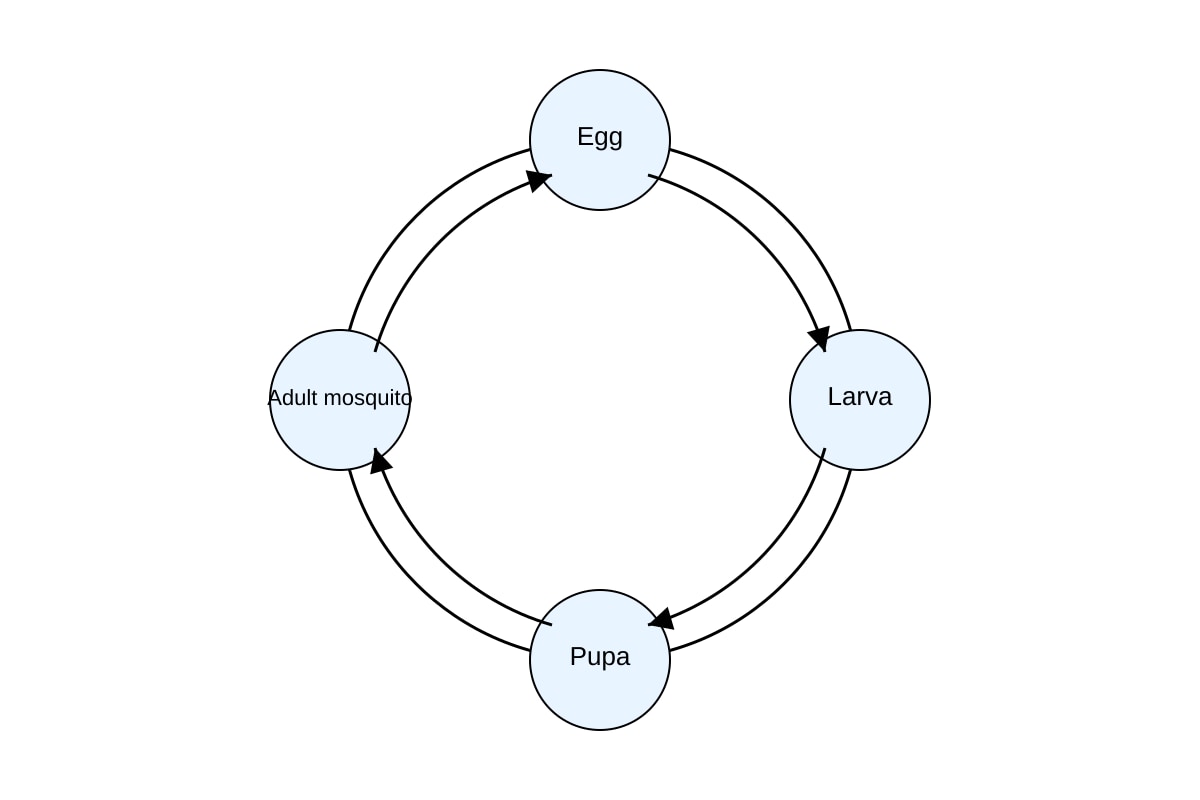
- Look at the life cycle of a mosquito below.

Generated diagram for Q16.
(a) Write the name of the first stage. ___________
(b) Write the name of the stage after larva. ___________
(c) How many stages are shown in the cycle? ___________
17. A flowering plant grows from a seed.
(a) What does the seed grow into first? ___________
(b) What is the last stage before the plant makes new seeds? ___________
(c) Name one thing a plant needs to grow. ___________
-
Study the animal life cycles.
(a) Which animal changes from tadpole to frog? ___________
(b) Which animal changes from caterpillar to butterfly? ___________
(c) Which animal does NOT change shape dramatically (like a chick to chicken)? ___________ (Write "chicken" or "frog") -
Sort the animals into the correct life cycle type.
Animals: Butterfly, Grasshopper, Frog, Chicken
(a) Goes through complete metamorphosis: ___________
(b) Goes through incomplete metamorphosis: ___________
(c) Grows from egg without metamorphosis: ___________ -
A student draws the life cycle of a hen.
(a) What comes out of the egg? ___________
(b) What is the young hen called? ___________
(c) What does the adult hen do to continue the life cycle? ___________
Answers
Primary 3 Science Quiz - Life Cycles (Answer Key)
Total Marks: 20
Topic: Life Cycles (Plants and Animals)
Section A: Multiple Choice (1 mark each)
Q1. B
Teaching note: The life cycle of a flowering plant is Seed → Young plant → Adult plant. A seed sprouts into a young plant, which grows into an adult plant that can make new seeds. Choice B is correct. Common mistake: thinking adult comes before young.
Q2. C
Teaching note: Metamorphosis means a big change in body form. A butterfly starts as egg, becomes caterpillar (larva), then pupa, then adult with wings. That dramatic change is metamorphosis.
Q3. C
Teaching note: Chicken grows from egg to chick to adult chicken without a dramatic body change (no larva/pupa). Frog, butterfly, mosquito all go through metamorphosis.
Q4. A
Teaching note: Frog life cycle: Egg → Tadpole (lives in water) → Froglet (has legs) → Adult frog. Other options mix plant or insect stages.
Q5. A
Teaching note: Cockroach and grasshopper have incomplete metamorphosis: egg → young (nymph, looks like small adult) → adult. Complete metamorphosis has larva and pupa stages.
Q6. B
Teaching note: Chicken is a bird and lays eggs. Cat, dog, cow are mammals and give birth to live young.
Q7. B
Teaching note: The small green plant from a seed is a young plant. It is not yet an adult plant.
Q8. B
Teaching note: Grasshopper and cockroach both have incomplete metamorphosis (egg → young like adult → adult). Butterfly, mosquito have complete; frog is amphibian.
Q9. B
Teaching note: A cycle repeats. Life cycle repeats as adults reproduce and new young are born, continuing the pattern.
Q10. C
Teaching note: Beetle stages: egg, larva, pupa, adult = 4 stages. Count each named stage once.
Section B: Short Answer (1 mark each)
Q11. Larva (or caterpillar)
Teaching note: Butterfly egg → larva (caterpillar) → pupa → adult.
Q12. Young plant
Teaching note: Plant cycle: Seed → Young plant → Adult plant.
Q13. Froglet
Teaching note: After tadpole, frog grows legs and becomes froglet before adult frog.
Q14. Butterfly
Teaching note: Butterfly has complete metamorphosis. Chicken and grasshopper do not.
Q15. plant
Teaching note: Rock is non-living and has no life cycle. Plant life cycle shows growth and development.
Section C: Structured Questions (1 mark per subpart)
Q16.
(a) Egg
(b) Pupa
(c) 4
Teaching note: Diagram shows 4 labelled stages in circle. Count stages: egg, larva, pupa, adult = 4.
Q17.
(a) Young plant
(b) Adult plant
(c) Water (or sunlight, air)
Teaching note: Seed → young plant → adult plant. Plants need water, air, sunlight to grow.
Q18.
(a) Frog
(b) Butterfly
(c) Chicken
Teaching note: Frog from tadpole; butterfly from caterpillar; chicken grows gradually, no metamorphosis.
Q19.
(a) Butterfly (and Frog if accepted, but per list: Butterfly)
(b) Grasshopper
(c) Chicken
Teaching note: Butterfly = complete metamorphosis; Grasshopper = incomplete; Chicken = direct development from egg.
Q20.
(a) Chick
(b) Chick (young hen)
(c) Lays eggs
Teaching note: Hen lays eggs to start the cycle again.
Free quiz and exam paper access
Enter your details to view this paper
Your access is remembered on this device.