From Real Exams Quiz
Primary 3 Science Human System Quiz
Free P3 Science Human System quiz, Exam version, with questions, answers, and syllabus-aligned practice for Singapore students.
These static practice materials are generated from the site's syllabus and paper-generation workflow, with source and model context shown so students and parents can evaluate the material before use.
Questions
Free quiz and exam paper access
Enter your details to view this paper
Your access is remembered on this device.
Answers
Answer Key: Primary 3 Science Quiz - Human System
Total Marks: 20
Section A: Multiple Choice Questions (Questions 1 - 5)
1 mark each.
1. Answer: C) To give the body shape and support
- Explanation: The skeleton is the framework of the body. It provides structure (shape) and support so we can stand upright. Option A (help us breathe) is the job of the lungs and diaphragm. Option B (pump blood) is the heart's job. Option D (digest food) is the job of the digestive system.
- Common mistake: Students may confuse the skeleton's support function with the heart's pumping function.
2. Answer: C) Heart
- Explanation: The heart is a muscular organ that acts as a pump. It contracts and relaxes to push blood through blood vessels to all parts of the body, delivering oxygen and nutrients.
- Common mistake: Students might think the brain pumps blood because it controls everything, but the brain does not pump blood.
3. Answer: B) Respiratory system
- Explanation: The respiratory system is responsible for breathing. It takes in oxygen from the air and removes carbon dioxide from the body. The lungs are the main organs of this system.
- Common mistake: Students might confuse the respiratory system (lungs) with the circulatory system (heart and blood).
4. Answer: B) To break down food
- Explanation: The stomach is part of the digestive system. It uses stomach acid and muscles to churn and break down food into a liquid mixture so the body can absorb nutrients.
- Common mistake: Students might think the stomach's main job is to store food, but its primary function is digestion.
5. Answer: C) Brain
- Explanation: The skull is a hard, bony structure that surrounds and protects the brain, which is a very soft and delicate organ.
- Common mistake: Students might think the skull protects the eyes or face, but its main protective function is for the brain.
Section B: Matching and Fill-in-the-Blanks (Questions 6 - 10)
2 marks each. Award 1 mark for each correct match or blank.
6. Answers:
- (a) Heart → B. Pumps blood
- (b) Lungs → A. Helps us breathe
- (c) Stomach → D. Breaks down food
- (d) Brain → C. Controls the body
Explanation: Each organ has a specific function. The heart pumps blood, the lungs help us breathe (gas exchange), the stomach breaks down food, and the brain controls all body activities.
7. Answer: skull
- Explanation: The skull is the bone that forms the head and protects the brain. It is made of several bones fused together.
8. Answer: respiratory
- Explanation: The respiratory system includes the nose, trachea (windpipe), and lungs. Its main job is gas exchange: taking in oxygen and removing carbon dioxide.
9. Answer: humerus
- Explanation: The humerus is the long bone in the upper arm, between the shoulder and the elbow. It is one of the longest bones in the body.
10. Answer: circulatory
- Explanation: The circulatory system (also called the cardiovascular system) includes the heart, blood, and blood vessels (arteries, veins, capillaries). It transports blood, oxygen, nutrients, and waste products around the body.
Section C: True or False (Questions 11 - 15)
1 mark each. Award 1 mark for correct True/False and correction (if needed).
11. Answer: True
- Explanation: The heart is located in the chest cavity (thorax), between the lungs and slightly to the left side.
12. Answer: False. The lungs are part of the respiratory system.
- Explanation: The digestive system includes the mouth, oesophagus, stomach, intestines, etc. The lungs are for breathing, not digestion.
13. Answer: True
- Explanation: The stomach is located in the upper abdomen, and it is partially protected by the lower ribs (ribcage).
14. Answer: True
- Explanation: The brain controls all voluntary and involuntary actions, thoughts, memories, and emotions. It receives information from the senses and sends signals to the body.
15. Answer: True
- Explanation: Muscles are attached to bones by tendons. When muscles contract, they pull on bones, causing movement at the joints. The skeleton acts as a system of levers.
Section D: Short Answer Questions (Questions 16 - 20)
2 marks each.
16. Answer: Heart and lungs (Accept: heart and lungs)
- Explanation: The ribcage is a bony cage that surrounds and protects the heart and lungs from injury.
- Marking: 1 mark for each correct organ named. (2 marks total)
17. Answer: The heart is important because it pumps blood to all parts of the body. The blood carries oxygen and nutrients that the body needs to survive.
- Explanation: Without the heart pumping, blood would not circulate, and organs would not receive the oxygen and nutrients they need. The body would stop working.
- Marking: 1 mark for stating it pumps blood. 1 mark for explaining why this is important (carries oxygen/nutrients). (2 marks total)
18. Answer: No, I do not agree. The skeleton does more than just support. It also protects vital organs (like the skull protects the brain and the ribcage protects the heart and lungs) and allows movement (by providing a place for muscles to attach).
- Explanation: The skeleton has three main functions: support, protection, and movement. The student's statement only mentions one function.
- Marking: 1 mark for disagreeing. 1 mark for providing at least one other function (protection or movement). (2 marks total)
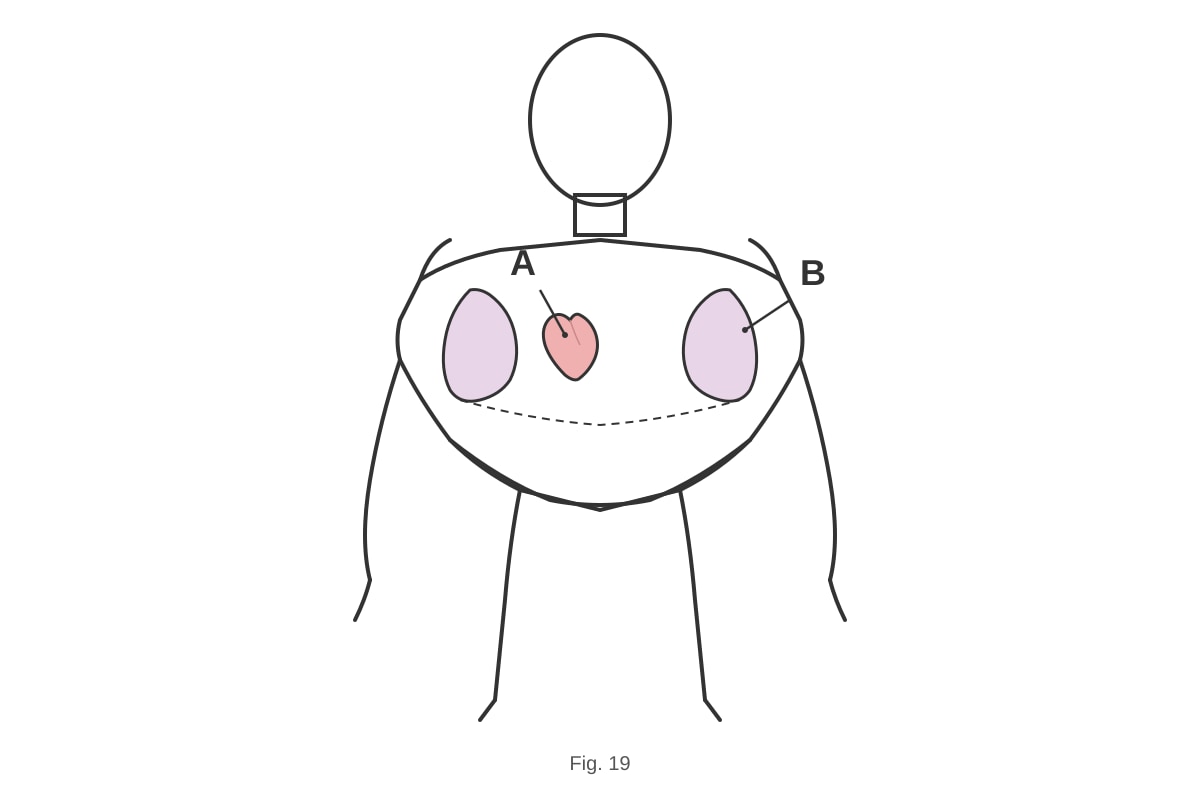
19. Answer: A: Heart, B: Lungs (or Lung)
- Explanation: In the diagram, A points to the heart (a smaller organ in the middle-left of the chest) and B points to one of the lungs (larger organs on the sides).
- Marking: 1 mark for each correct label. (2 marks total)
20. Answer: (Accept any reasonable answer, e.g.,) Eat foods rich in calcium (like milk and cheese) to keep bones strong. / Exercise regularly to keep bones and muscles healthy. / Wear protective gear (like a helmet) when cycling to protect the skull.
- Explanation: The skeletal system needs proper nutrition (calcium, vitamin D) and exercise to stay healthy and strong. Protection from injury is also important.
- Marking: 1 mark for a reasonable method. 1 mark for a brief explanation of how it helps. (2 marks total)
End of Answer Key