From Real Exams Quiz
Primary 3 Science Human System Quiz
Free P3 Science Human System quiz, Exam version, with questions, answers, and syllabus-aligned practice for Singapore students.
These static practice materials are generated from the site's syllabus and paper-generation workflow, with source and model context shown so students and parents can evaluate the material before use.
Questions
Free quiz and exam paper access
Enter your details to view this paper
Your access is remembered on this device.
Answers
Answer Key: Primary 3 Science Quiz - Human System
Total Marks: 30
Section A: Multiple-Choice Questions (Questions 1 to 10)
Each question is worth 1 mark.
1. A) To pump blood around the body
- Explanation: The heart is a muscular organ that acts as a pump. Its main job is to pump blood, which carries oxygen and nutrients, to all parts of the body. Option B is the function of the lungs, C is the function of the stomach and intestines, and D is the function of the brain.
- Marking: 1 mark for A.
2. B) Respiratory system
- Explanation: The respiratory system is responsible for breathing. It includes the nose, windpipe (trachea), and lungs. The lungs are the main organs where oxygen from the air is exchanged for carbon dioxide from the blood.
- Marking: 1 mark for B.
3. C) Stomach
- Explanation: The stomach is a part of the digestive system. It receives food from the gullet and uses strong muscles and digestive juices to break the food down into a liquid mixture. This process is called digestion. The heart pumps blood, the brain controls thoughts, and the lungs help us breathe.
- Marking: 1 mark for C.
4. B) Nervous system
- Explanation: The nervous system, which includes the brain, spinal cord, and nerves, is responsible for sensing the environment and sending signals to the muscles. When the boy touches the hot pan, nerves in his hand send a signal to his brain (or spinal cord for a reflex), which then sends a signal to his arm muscles to pull his hand away. This is a very fast response.
- Marking: 1 mark for B.
5. C) Pumping blood around the body
- Explanation: The skeleton provides support, protects organs (like the skull protecting the brain and the ribcage protecting the heart and lungs), and works with muscles to help us move. Pumping blood is the function of the heart, not the skeleton.
- Marking: 1 mark for C.
6. A) The organ in the head
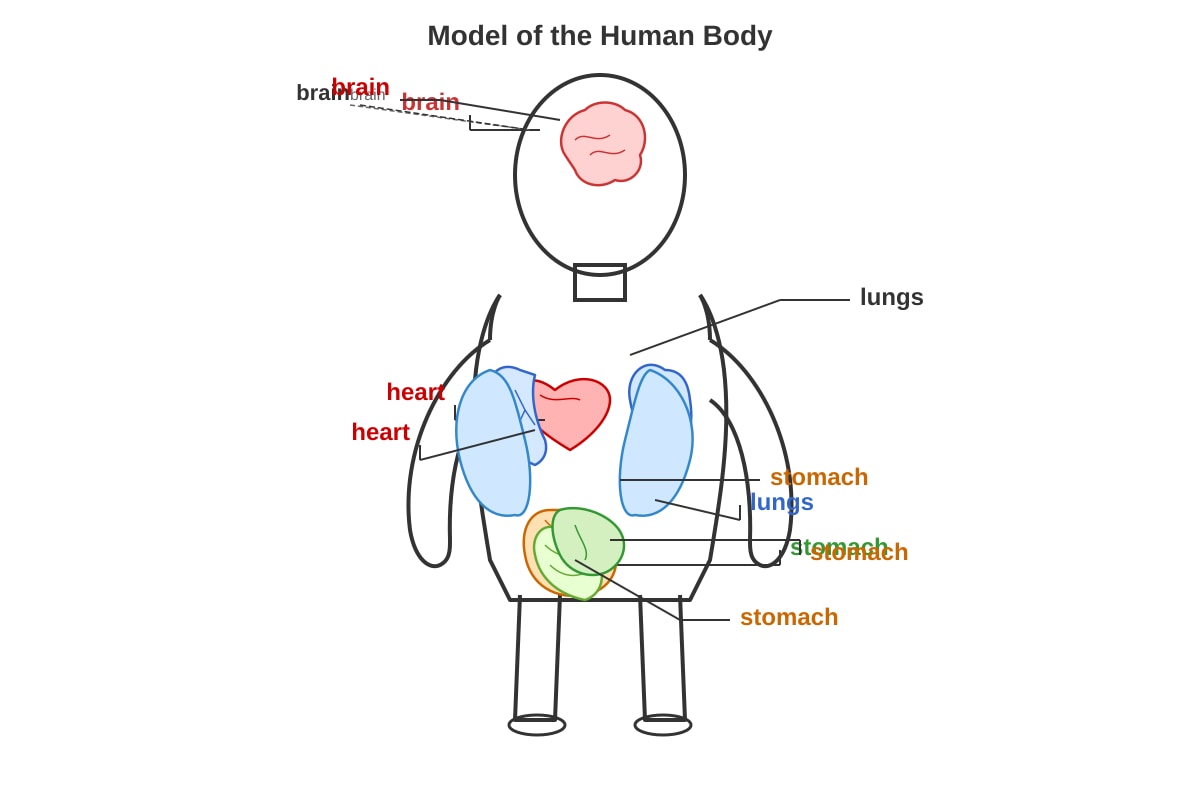
- Explanation: The brain is located inside the skull, which is in the head. The diagram shows the brain in the head area. The organs in the chest are the heart and lungs, and the organ in the abdomen is the stomach.
- Marking: 1 mark for A.
7. B) oxygen
- Explanation: When we exercise, our muscles work harder and need more energy. To produce this energy, our cells need more oxygen. Our breathing rate increases to take in more oxygen from the air and to remove the extra carbon dioxide that is produced.
- Marking: 1 mark for B.
8. C) Intestines
- Explanation: The digestive system is a long tube that runs from the mouth to the anus. The intestines (small and large) are a major part of this system where nutrients are absorbed and waste is formed. The heart, lungs, and brain are part of other systems.
- Marking: 1 mark for C.
9. B) To protect the heart and lungs
- Explanation: The ribcage is a cage-like structure made of bones (ribs) that surrounds the chest cavity. Its main function is to protect the delicate organs inside, especially the heart and lungs, from injury.
- Marking: 1 mark for B.
10. C) Reading a book
- Explanation: The brain controls voluntary actions, which are actions we choose to do, like reading, writing, and talking. The heart beating, lungs breathing, and stomach digesting are involuntary actions (they happen automatically without us thinking about them), but they are also controlled by the brain (specifically the brainstem).
- Marking: 1 mark for C.
Section B: Matching and Fill-in-the-Blanks (Questions 11 to 15)
11. Matching Organs and Functions (2 marks)
-
(a) Heart → B) Pumps blood around the body
-
(b) Lungs → A) Helps us to breathe
-
(c) Stomach → D) Breaks down food
-
(d) Brain → C) Controls our thoughts and actions
-
Explanation: Each organ has a specific main job. The heart is a pump, the lungs are for gas exchange, the stomach is for digestion, and the brain is the control centre.
-
Marking: 1 mark for two correct matches. 2 marks for all four correct.
12. Fill-in-the-Blanks (2 marks) The heart pumps blood to all parts of the body. The lungs take in oxygen from the air and remove carbon dioxide from the body.
- Explanation: The blood is the transport medium. Oxygen is the gas we need from the air. Carbon dioxide is the waste gas we produce.
- Marking: 1 mark for "blood" and "oxygen" correct. 2 marks for all three correct.
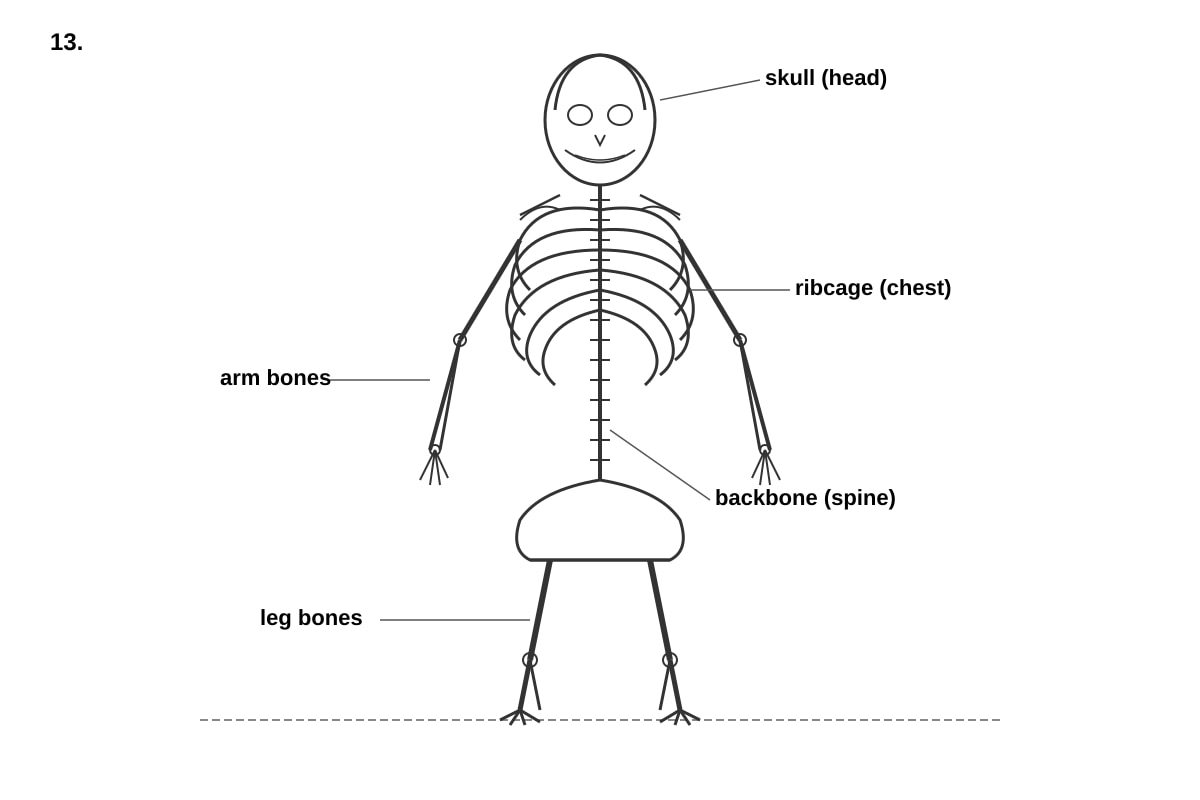
13. The Human Skeleton (2 marks) (a) The part of the skeleton that protects the brain is the skull (or cranium). (b) The part of the skeleton that protects the heart and lungs is the ribcage (or ribs).
- Explanation: The skull is a hard, bony case that surrounds the brain. The ribcage is a bony basket that surrounds the chest cavity.
- Marking: 1 mark for each correct answer. Accept "skull" for (a) and "ribcage" or "ribs" for (b).
14. Order of the Digestive System (2 marks)
| Part of Digestive System | Order (1 to 4) |
|---|---|
| Mouth | 1 |
| Gullet (Oesophagus) | 2 |
| Stomach | 3 |
| Intestines | 4 |
- Explanation: Food enters the mouth, travels down the gullet to the stomach, and then goes to the intestines.
- Marking: 1 mark for the first two (Mouth and Gullet) in the correct order. 2 marks for all four in the correct order.
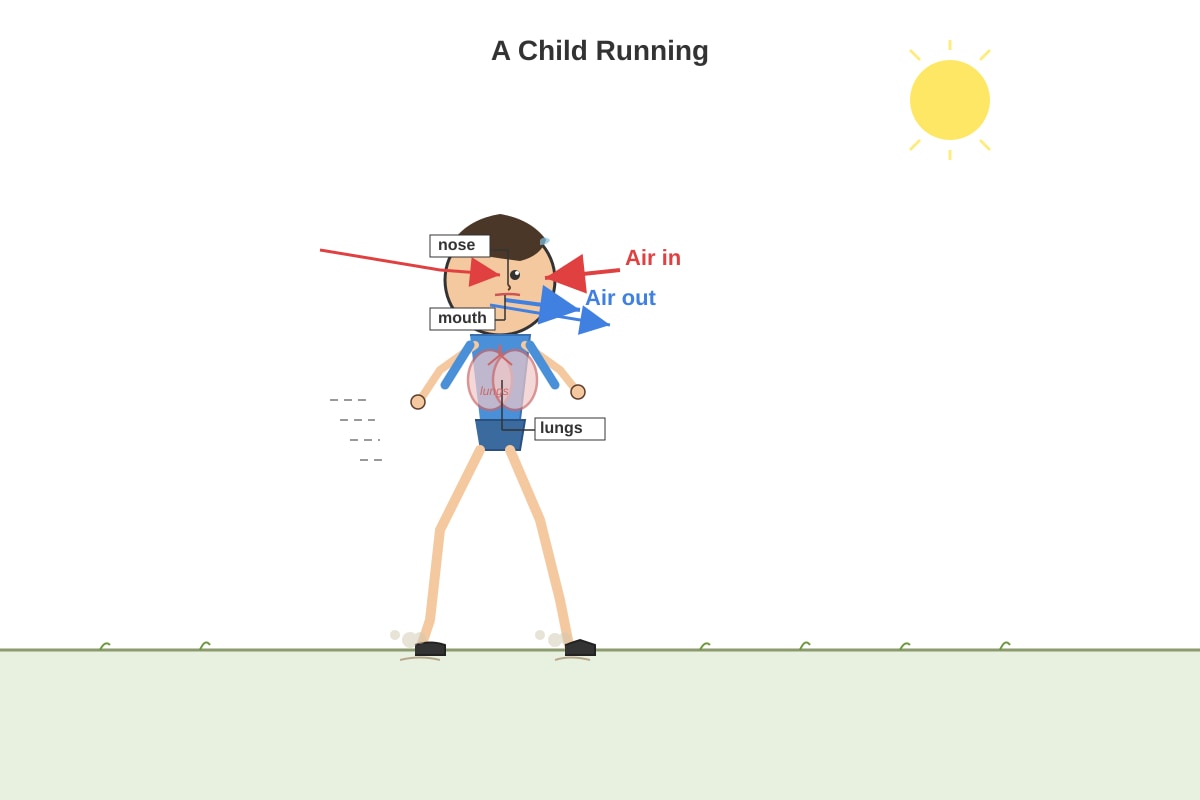
15. The Respiratory System (2 marks) (a) The body system the child is using most when running is the respiratory system (or breathing system). (b) One organ in this system is the lungs (or nose, mouth, windpipe/trachea).
- Explanation: Running requires more energy, which needs more oxygen. The respiratory system works harder to bring in oxygen and remove carbon dioxide.
- Marking: 1 mark for each correct answer. Accept "respiratory system" or "breathing system" for (a). Accept "lungs", "nose", "mouth", or "windpipe" for (b).
Section C: Open-Ended Questions (Questions 16 to 20)
Each question is worth 2 marks.
16. Importance of the Skeleton (2 marks)
- Answer: The skeleton is important because it gives our body shape and support (1 mark). It also protects our internal organs (e.g., the skull protects the brain) (1 mark). Accept any one valid reason for full marks.
- Explanation: Without a skeleton, our body would be a soft, shapeless bag. The skeleton is a strong framework that holds us up and keeps our soft organs safe.
- Marking: 1 mark for a correct reason. 2 marks for a clear and correct explanation.
17. Effect of a Faulty Heart (2 marks)
- Answer: If the heart is not working properly, it may not be able to pump enough blood to the rest of the body (1 mark). This could make the patient feel tired, weak, or short of breath because the body's cells are not getting enough oxygen and nutrients (1 mark).
- Explanation: The heart's main job is to pump blood. If it fails, the delivery of oxygen and food to the body's cells is reduced.
- Marking: 1 mark for identifying a general effect (e.g., "blood not pumped properly"). 2 marks for a more specific effect (e.g., "body won't get enough oxygen").
18. The Brain as a Control Centre (2 marks)
- Answer: The brain controls actions like reading a book (1 mark), writing, walking, talking, or thinking (1 mark). Accept any one clear example of a voluntary action.
- Explanation: The brain receives information from our senses and sends signals to our muscles to perform actions. It also controls involuntary actions like heartbeat and breathing.
- Marking: 1 mark for a correct example. 2 marks for a clear and correct example.
19. Absorption of Nutrients (2 marks)
- Answer: Most of the nutrients are absorbed into the body in the small intestines (or intestines).
- Explanation: After the stomach breaks down food, it goes into the small intestine. The walls of the small intestine have tiny finger-like projections that absorb the nutrients into the bloodstream.
- Marking: 1 mark for "intestines". 2 marks for "small intestines" or "small intestine".
20. Breathing After Holding Breath (2 marks)
- Answer: When a person holds their breath, the level of oxygen in their body drops and the level of carbon dioxide rises (1 mark). The person needs to breathe quickly to take in more oxygen and to get rid of the extra carbon dioxide (1 mark).
- Explanation: The body needs a constant supply of oxygen for its cells to function. Holding your breath stops this supply. The build-up of carbon dioxide is a signal for the brain to force you to breathe.
- Marking: 1 mark for mentioning the need for oxygen or removal of carbon dioxide. 2 marks for a complete explanation mentioning both gases or the body's need for oxygen.
--- End of Answer Key ---