From Real Exams Quiz
Primary 3 Science Diversity Living Nonliving Quiz
Free P3 Science Diversity Living Nonliving quiz, Exam version, with questions, answers, and syllabus-aligned practice for Singapore students.
These static practice materials are generated from the site's syllabus and paper-generation workflow, with source and model context shown so students and parents can evaluate the material before use.
Questions
Free quiz and exam paper access
Enter your details to view this paper
Your access is remembered on this device.
Answers
Answer Key - Primary 3 Science Quiz - Diversity Living Nonliving
Total Marks: 30
Section A: Multiple-Choice Questions (10 × 2 marks = 20 marks)
| Question | Answer | Marks | Explanation |
|---|---|---|---|
| 1 | C) A potted plant | 2 | A potted plant is a living thing because it grows, needs water and air, and can reproduce. A wooden chair, plastic flower, and glass marble are non-living things made from materials that were once part of living things or are synthetic. |
| 2 | B) Respond to changes | 2 | When a plant's roots grow towards water, the plant is detecting and reacting to a change in its environment (the presence of water). This is called responding to changes. |
| 3 | B) No, because it does not need food. | 2 | Although the toy car moves, movement alone does not make something living. Living things need food, water, and air to survive. The toy car does not need these things. |
| 4 | B) They can fly. | 2 | Not all living things can fly. For example, fish cannot fly, and trees cannot fly. All living things need air, water, and can grow. |
| 5 | C) Fungi | 2 | Mushrooms belong to the group called fungi. They are not plants because they do not have chlorophyll and cannot make their own food. |
| 6 | B) Bird | 2 | Birds are the only group of animals that have feathers on their bodies. Fish have scales, frogs have smooth moist skin, and cats have fur. |
| 7 | C) grow | 2 | A kitten growing into a cat shows the characteristic of growth. Living things increase in size and develop as they get older. |
| 8 | C) A river rock | 2 | A river rock is a non-living thing. It does not grow, need food, water, or air, and cannot reproduce. A butterfly, fern plant, and mould are all living things. |
| 9 | C) Fish | 2 | Animals with scales that breathe using gills belong to the fish group. Fish live in water and use their gills to get oxygen from the water. |
| 10 | C) Some bacteria are useful to humans. | 2 | Bacteria are living things. Some bacteria are harmful and cause diseases, but many are useful. For example, some bacteria help break down food in our digestive system or are used to make yoghurt. |
Common Mistakes for Section A:
- Q3: Students may think anything that moves is alive. Remind them that movement must be self-generated (not pushed or powered by batteries).
- Q4: Students may confuse "characteristics of living things" with abilities that only some living things have.
- Q10: Students may think all bacteria are bad because they have heard about germs causing illness.
Section B: Matching and Classification (5 × 2 marks = 10 marks)
11. Matching (2 marks – 1 mark for each correct match)
| Characteristic | Example |
|---|---|
| (a) Grow | (iii) A seedling becomes a tall tree. |
| (b) Respond to changes | (i) A sunflower turns to face the sun. |
| (c) Reproduce | (ii) A chicken lays eggs. |
Explanation:
- Growing means increasing in size and developing. A seedling growing into a tall tree is a clear example.
- Responding to changes means reacting to the environment. The sunflower turns to face the sun, which is a response to light.
- Reproducing means producing offspring. A chicken laying eggs is how chickens reproduce.
12. Classification table (2 marks – 0.5 marks for each correct tick)
| Object | Living | Non-living |
|---|---|---|
| A bird | ✓ | |
| A metal spoon | ✓ | |
| A potted cactus | ✓ | |
| A toy robot | ✓ |
Explanation:
- A bird and a potted cactus are living things. They grow, need food/water/air, and can reproduce.
- A metal spoon and a toy robot are non-living. They do not need food, water, or air, and cannot grow or reproduce.
13. Classification into Mammals and Reptiles (2 marks – 1 mark for each correct group, all animals must be correctly placed)
| Mammals | Reptiles |
|---|---|
| dog | snake |
| cat | turtle |
| cow | lizard |
Explanation:
- Mammals have fur or hair on their bodies. They give birth to live young (except platypus, not tested at P3) and feed their babies with milk. Examples: dog, cat, cow.
- Reptiles have dry, scaly skin. They lay eggs on land. Examples: snake, turtle, lizard.
- Common mistake: Students may think turtles are mammals because they live in water. Turtles are reptiles because they have dry scaly skin and lay eggs on land.
14. Two characteristics (2 marks – 1 mark for each correct characteristic with explanation)
Accept any two of the following:
- (a) The plant can grow, but the stone does not grow.
- (b) The plant needs water to survive, but the stone does not need water.
- (c) The plant can reproduce (make seeds or new plants), but the stone cannot.
- (d) The plant responds to changes (e.g., roots grow towards water), but the stone does not.
Explanation: Living things share common characteristics that non-living things do not have. The plant shows these characteristics, while the stone does not show any of them.
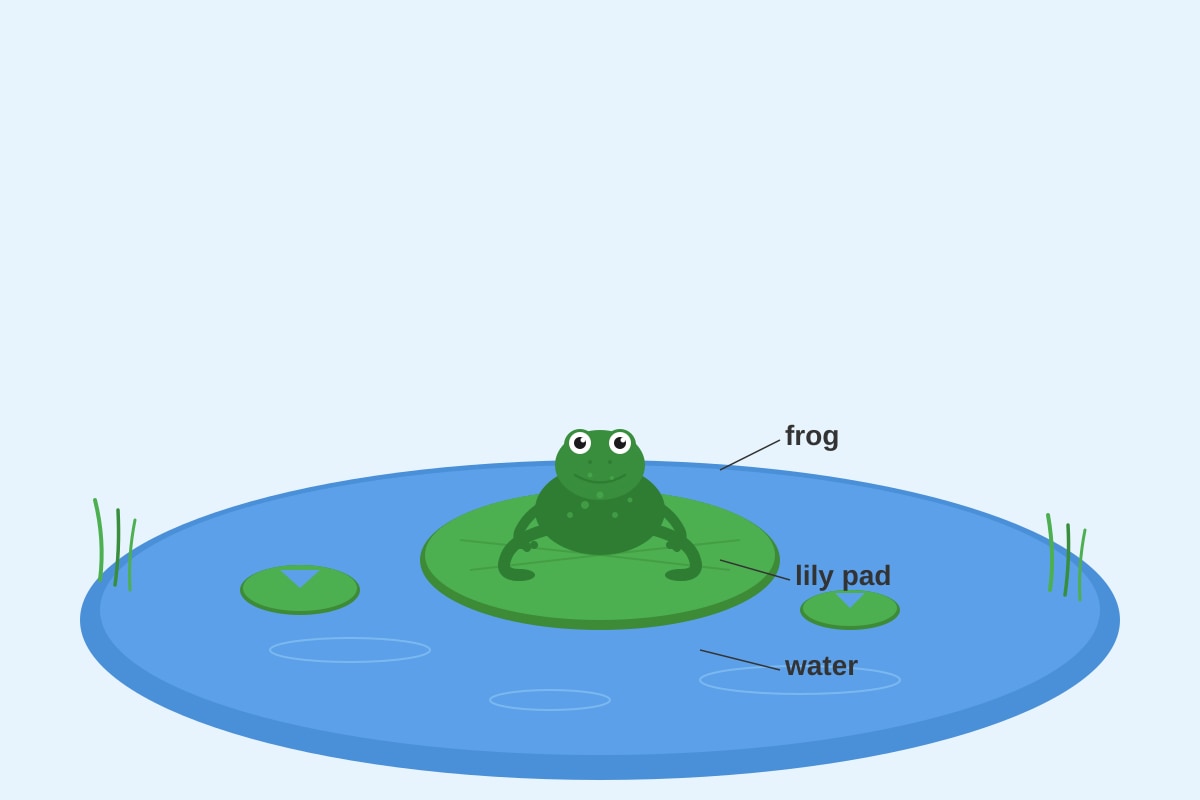
15. Frog classification (2 marks – 1 mark for correct group, 1 mark for correct explanation)
Answer: The frog belongs to the group called amphibians.
Explanation: Amphibians are animals that have smooth, moist skin and can live both on land and in water. Frogs are amphibians because they start their life in water as tadpoles and later develop lungs to live on land. Their smooth, moist skin helps them breathe through their skin.
Common mistake: Students may say "frog" is the group name. The group is amphibians, not frogs. Frogs are one type of amphibian.
Section C: Open-Ended Questions (5 × 2 marks = 10 marks)
16. Balloon question (5 marks)
Answer: No, I do not agree with the child.
Explanation (3 marks for correct reasoning, 2 marks for using two characteristics):
A balloon is not a living thing because:
- It does not grow by itself. When we blow air into a balloon, it gets bigger, but this is not true growth. Growth in living things happens because cells divide and increase in number. The balloon only stretches because air is pushed into it from outside.
- It does not need food, water, or air to survive. Living things need these things to stay alive. A balloon does not need food or water.
- It cannot reproduce. Living things can make more of their own kind. A balloon cannot make baby balloons.
- It does not respond to changes. A balloon does not react to changes in its environment (except by being pushed or moved by outside forces).
Marking scheme:
- 1 mark: Correctly states disagreement
- 2 marks: Explains why "growing" by blowing air is not real growth
- 2 marks: Names and explains another characteristic of living things that the balloon lacks
17. Animal body coverings (5 marks)
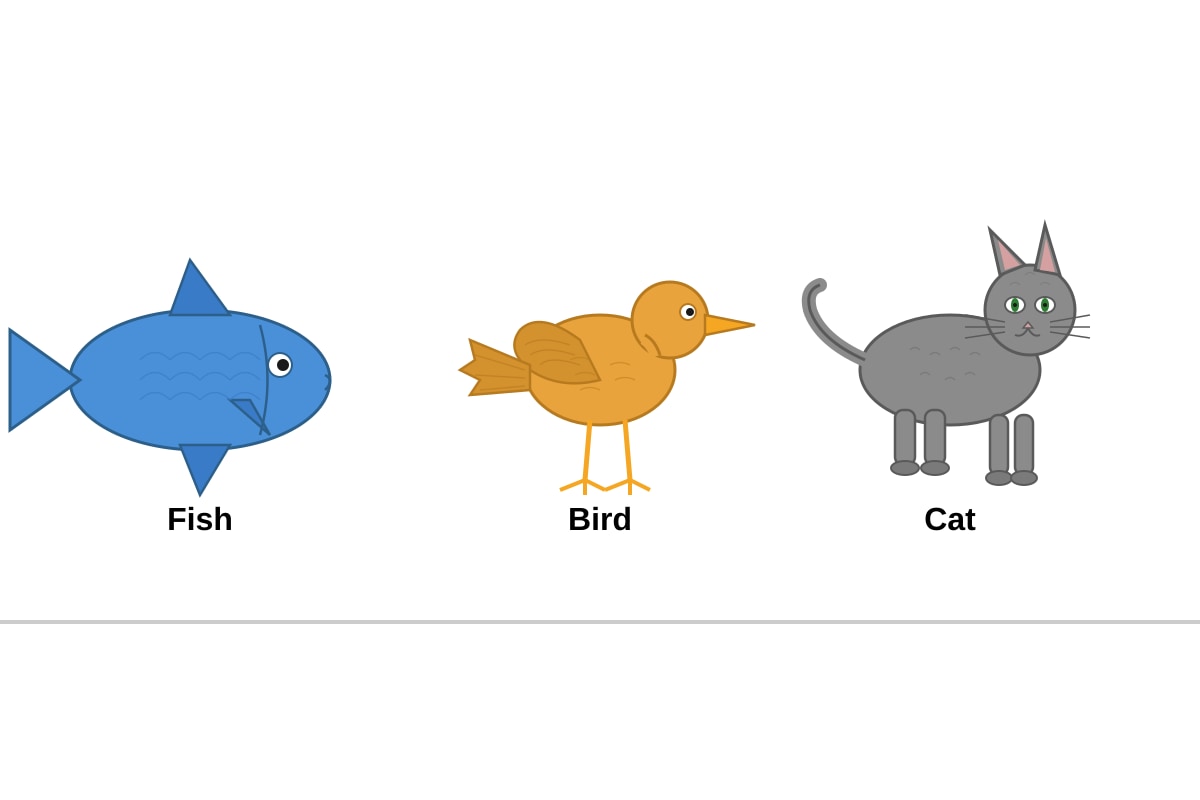
(a) The cat has fur on its body. [1 mark]
(b) The bird has feathers. [1 mark]
(c) The fish has scales on its body, while the bird has feathers. [2 marks – 1 mark for each correct difference]
- Fish scales are hard, flat, and overlapping. Feathers are soft, light, and help birds fly.
- Fish scales cover the whole body for protection. Feathers cover the bird's body and wings.
(d) Any one of the following: [1 mark]
- All living things need water.
- All living things need air.
- All living things need food.
- All living things can grow.
- All living things can reproduce.
- All living things respond to changes.
Common mistake for (c): Students may say "the fish has scales and the bird has wings." The question asks about body coverings, not body parts. Focus on scales vs feathers.
18. Mould on bread (5 marks)
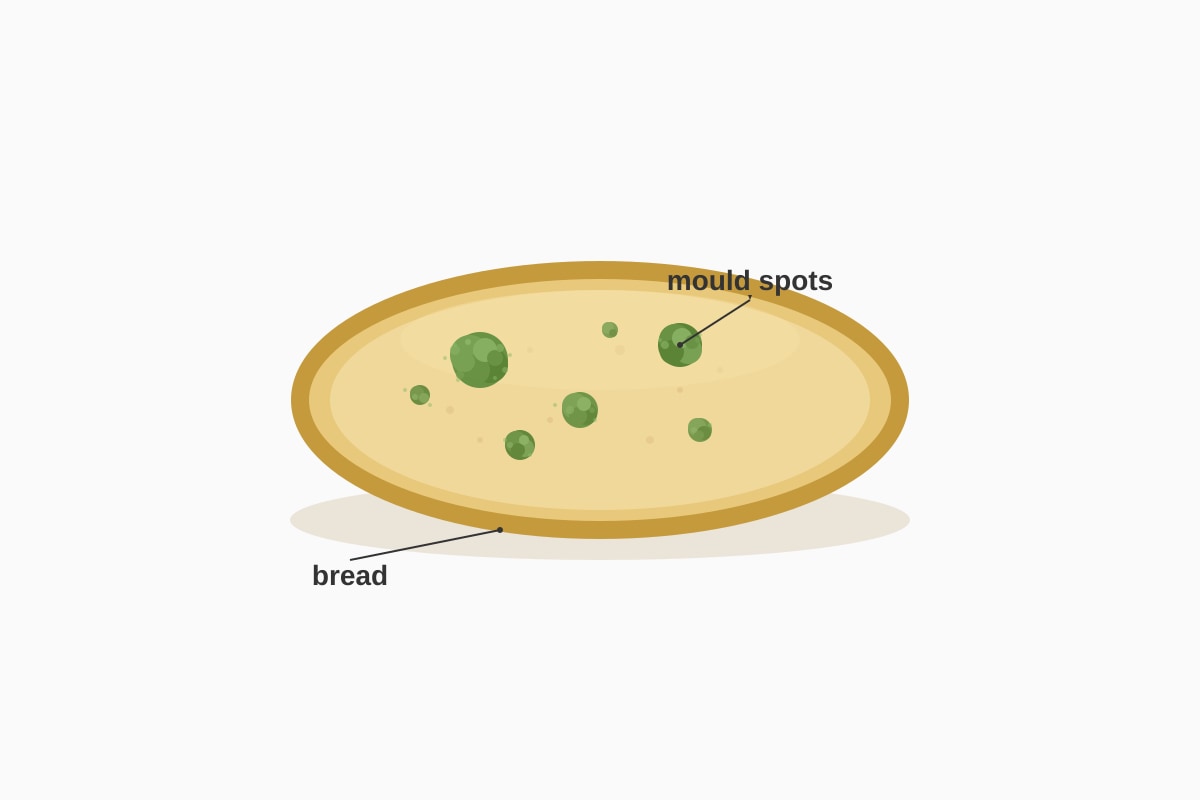
(a) Yes, the mould is a living thing. [1 mark]
(b) The mould can grow (it spreads on the bread) / The mould needs food (it feeds on the bread) / The mould can reproduce (it produces spores). [1 mark – accept any one correct characteristic]
(c) Fungi [1 mark]
(d) No, not all mould is harmful to humans. [1 mark] Some mould is used to make food, such as the mould used to make blue cheese or the mould used to make antibiotics like penicillin. [1 mark]
Explanation: Mould is a type of fungus. Like all living things, it grows, needs food, and reproduces. Some moulds can make us sick if we eat them, but others are useful in making food and medicine.
Common mistake: Students may say mould is a plant. Mould is not a plant because it does not have chlorophyll and cannot make its own food.
19. Chickens and scarecrow (5 marks)
(a) Reproduce (or reproduction) [1 mark]
(b) Any two of the following: [2 marks – 1 mark each]
- They grow (chicks grow into adult chickens)
- They need food and water (they eat and drink)
- They need air (they breathe)
- They respond to changes (they react to danger or to being fed)
(c) No, the scarecrow is not a living thing. [1 mark] The scarecrow does not need food, water, or air to survive. It cannot grow, reproduce, or respond to changes by itself. It is made of non-living materials like wood and cloth. [1 mark]
Explanation: The scarecrow may look like a person, but it does not have the characteristics of living things. It is placed in the field to scare birds away, but it does not move or act by itself.
20. Sorting objects (5 marks)
(a) The wooden block is sorted into the wrong group. [1 mark] Wood comes from trees, which are living things. However, the wooden block itself is a non-living thing because it no longer grows, needs food, or reproduces. The wood has been cut and processed, so it is no longer alive. [1 mark]
Note: Accept either answer if the student explains correctly. The wooden block was once part of a living tree, but as a block, it is non-living. Some exam papers accept "wooden block is non-living" as correct classification.
(b) Any one of the following: [1 mark]
- They all need water.
- They all need air.
- They all need food.
- They all can grow.
- They all can reproduce.
(c) The mushroom should be put in the Living group. [1 mark]
(d) The mushroom is a living thing because it can grow / it needs food / it can reproduce. [1 mark – accept any one correct characteristic]
Explanation: Mushrooms are fungi, which are living things. They grow from spores, need food (they absorb nutrients from their surroundings), and can reproduce by releasing spores.
End of Answer Key