From Real Exams Quiz
Primary 3 Science Diversity Quiz
Free P3 Science Diversity quiz, Exam version, with questions, answers, and syllabus-aligned practice for Singapore students.
These static practice materials are generated from the site's syllabus and paper-generation workflow, with source and model context shown so students and parents can evaluate the material before use.
Questions
Free quiz and exam paper access
Enter your details to view this paper
Your access is remembered on this device.
Answers
Primary 3 Science Quiz - Diversity (Answer Key)
Total Marks: 20
Section A: Living and Non-Living Things (Questions 1 - 5)
1. Answer: C) A sunflower plant [1 mark]
Explanation: A sunflower plant is a living thing because it can grow, needs water and sunlight, and can reproduce. The other options (wooden chair, plastic doll, glass of water) are all non-living things. They do not grow, reproduce, or need food.
Common Mistake: Students might think a doll is living because it looks like a person, or that water is living because it is needed by living things.
2. Answer: No, I do not agree. [1 mark for correct answer] The toy car is not a living thing because it cannot grow, reproduce, or need food and water. It only moves because of a battery or a push. [1 mark for correct explanation]
Explanation: Movement alone does not make something living. A toy car moves because of a motor or a push, not because it is alive. Living things move by themselves, but they also do other things like grow, need food and water, and reproduce. The toy car does not do these things.
Marking Notes:
- Award 1 mark for stating disagreement.
- Award 1 mark for a valid reason (e.g., cannot grow, does not need food, only moves because of a battery).
3. Answer: [2 marks - 0.5 marks for each correct match]
- A (Grows) → A plant's roots grow longer
- B (Reproduces) → A cat gives birth to kittens
- C (Responds to changes) → A mimosa plant closes its leaves when touched
- D (Needs air) → A fish needs oxygen from water
Explanation:
- Grows: A plant's roots getting longer is a clear example of growth in a living thing.
- Reproduces: A cat having kittens is how cats make new living things of the same kind.
- Responds to changes: The mimosa plant closing its leaves when touched is a response to a stimulus (touch).
- Needs air: A fish needs oxygen (which is in the air/water) to survive.
4. Answer: B) 2 [1 mark]
Explanation: The living things in the list are the bird and the mushroom. A rock and a bicycle are non-living. So there are 2 living things.
Common Mistake: Students might not know that a mushroom is a living thing (it is a fungus). They might also think a rock is living because it is found in nature.
5. Answer: No, this is not an example of a living thing growing. [1 mark for correct answer] The balloon is getting bigger because more air is being added, not because it is growing by itself. Living things grow by taking in food and using it to make new cells. [1 mark for correct explanation]
Explanation: Growth in living things means getting bigger because cells inside the body are dividing and increasing. A balloon getting bigger is just being stretched by air. It is not a living thing, so it cannot grow by itself.
Marking Notes:
- Award 1 mark for stating "No".
- Award 1 mark for explaining that the balloon is not growing by itself, or that it is just being filled with air.
Section B: Classifying Living Things (Questions 6 - 10)
6. Answer: C) Y [2 marks]
Explanation: Fish have scales on their bodies. In the table, animal Y has scales. Animal W has feathers (bird), X has fur (mammal), and Z has dry, scaly skin (reptile).
Marking Notes: Award 2 marks for correct answer. Award 1 mark if the student correctly identifies that scales belong to fish but chooses the wrong letter.
7. Answer: C) Birds [1 mark]
Explanation: Animals with wings and feathers that can fly are birds. While some insects also have wings and can fly, they do not have feathers. Feathers are a unique characteristic of birds.
8. Answer: B) Amphibians [1 mark]
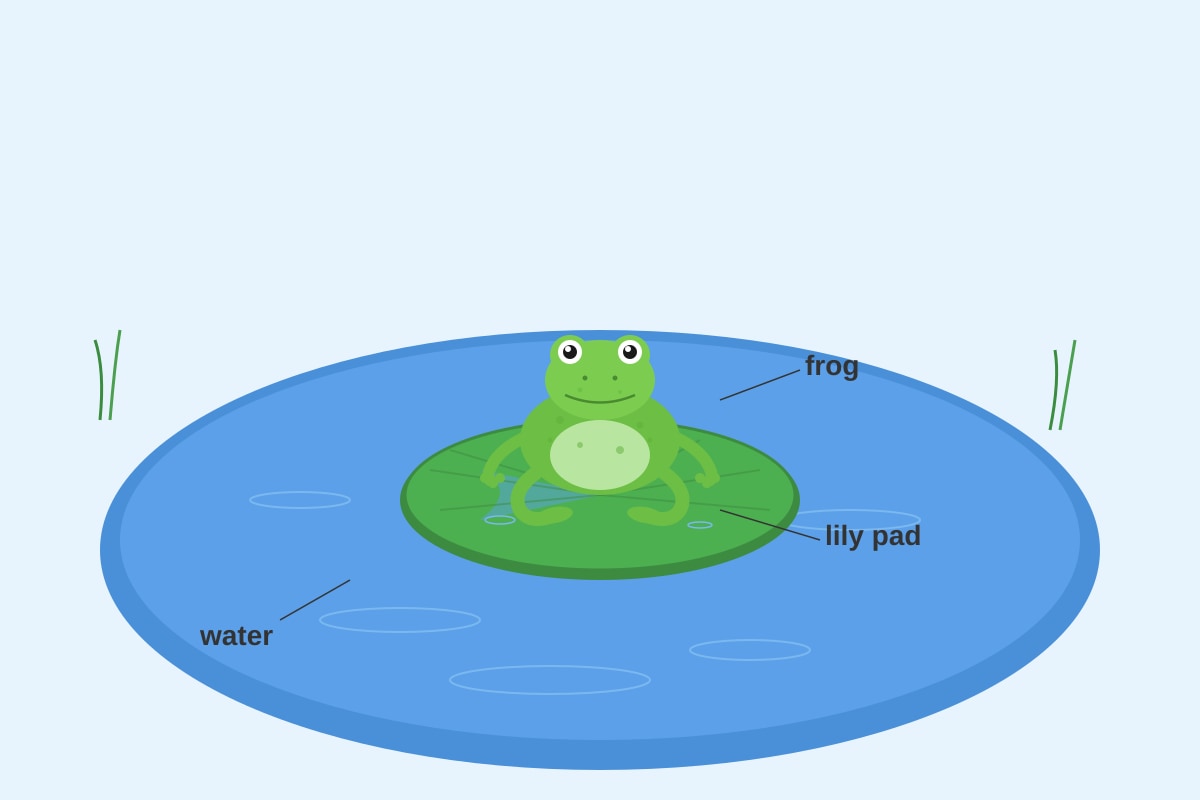
Explanation: Frogs are amphibians. They have smooth, moist skin and can live both on land and in water. This is a key characteristic of amphibians.
Common Mistake: Students might think frogs are reptiles because they live in water and on land, but reptiles have dry, scaly skin.
9. Answer: C) It has fur on its body [1 mark]
Explanation: Insects do not have fur. They have a hard outer covering called an exoskeleton. Insects have six legs, a body divided into three parts (head, thorax, abdomen), and two antennae. Fur is a characteristic of mammals.
10. Answer: A penguin is still classified as a bird because it has feathers. [2 marks]
Explanation: The main characteristic that defines a bird is having feathers. Even though a penguin cannot fly, it still has feathers, a beak, and lays eggs. These are all bird characteristics. Flight is not a requirement for being a bird.
Marking Notes:
- Award 1 mark for mentioning feathers.
- Award 1 mark for a clear explanation that flight is not necessary to be a bird.
Section C: Fungi and Bacteria (Questions 11 - 15)
11. Answer: C) fungus [1 mark]
Explanation: Mould is a type of fungus. Fungi are a group of living things that are not plants or animals. They include mould, mushrooms, and yeast.
12. Answer: A) Yes, because they can grow and reproduce. [1 mark]
Explanation: Bacteria are living things. They are very small, but they can grow, reproduce, and need food. They are not plants or animals, but they are still alive.
Common Mistake: Students might think bacteria are not living because they are too small to see.
13. Answer: C) Some fungi, like mushrooms, can be eaten. [1 mark]
Explanation: Some fungi are edible, like the mushrooms we buy at the supermarket. However, not all fungi are safe to eat. Fungi are not plants; they are a separate group of living things.
14. Answer: B) helpful [1 mark]
Explanation: Bacteria that help us digest food are helpful to our bodies. This shows that not all bacteria are harmful. Some bacteria are very useful.
15. Answer: No, I do not agree. [1 mark for correct answer] Mushrooms are not plants because they cannot make their own food. They are fungi. [1 mark for correct explanation]
Explanation: Plants can make their own food using sunlight (photosynthesis). Mushrooms cannot do this. They get their food from dead or decaying matter. This is why they are classified as fungi, not plants.
Marking Notes:
- Award 1 mark for stating disagreement.
- Award 1 mark for a valid reason (e.g., cannot make its own food, is a fungus).
Section D: Materials and Their Properties (Questions 16 - 20)
16. Answer: B) It should be waterproof. [1 mark]
Explanation: A raincoat is used to keep a person dry in the rain. Therefore, the material must be waterproof, meaning it does not let water pass through.
17. Answer: A) P [2 marks]
Explanation: A window needs to be transparent so we can see through it. It should also be waterproof to keep rain out. Material P is both transparent and waterproof. Material S is transparent but not waterproof.
Marking Notes: Award 2 marks for correct answer. Award 1 mark if the student correctly identifies that the material needs to be transparent but chooses the wrong material.
18. Answer: B) It is strong and hard. [1 mark]
Explanation: A spoon needs to be strong so it does not bend or break when we use it to scoop food. Metal is a strong and hard material, making it suitable for this purpose.
19. Answer: C) Wood [1 mark]
Explanation: Wood comes from trees, which are natural. Plastic, glass, and nylon are all man-made materials. They are made by people from natural resources.
Common Mistake: Students might think glass is natural because it is made from sand, but sand is processed by humans to make glass, so it is man-made.
20. Answer: Paper is not waterproof, so it absorbs water from the hot water inside the cup. [1 mark for identifying paper absorbs water] Plastic is waterproof, so it does not absorb water. [1 mark for identifying plastic is waterproof]
Explanation: The paper cup feels wet because the paper material absorbs the water. The plastic cup does not feel wet because plastic is a waterproof material. It does not let water pass through or get absorbed.
Marking Notes:
- Award 1 mark for stating that paper absorbs water/is not waterproof.
- Award 1 mark for stating that plastic is waterproof/does not absorb water.
END OF ANSWER KEY