From Real Exams Quiz
Primary 3 Science Diversity Quiz
Free P3 Science Diversity quiz, Exam version, with questions, answers, and syllabus-aligned practice for Singapore students.
These static practice materials are generated from the site's syllabus and paper-generation workflow, with source and model context shown so students and parents can evaluate the material before use.
Questions
Free quiz and exam paper access
Enter your details to view this paper
Your access is remembered on this device.
Answers
Primary 3 Science Quiz - Diversity (Answer Key)
Name: _________________________ Class: _________________________ Date: _________________________ Score: ________ / 30
Section A: Multiple-Choice Questions (10 marks)
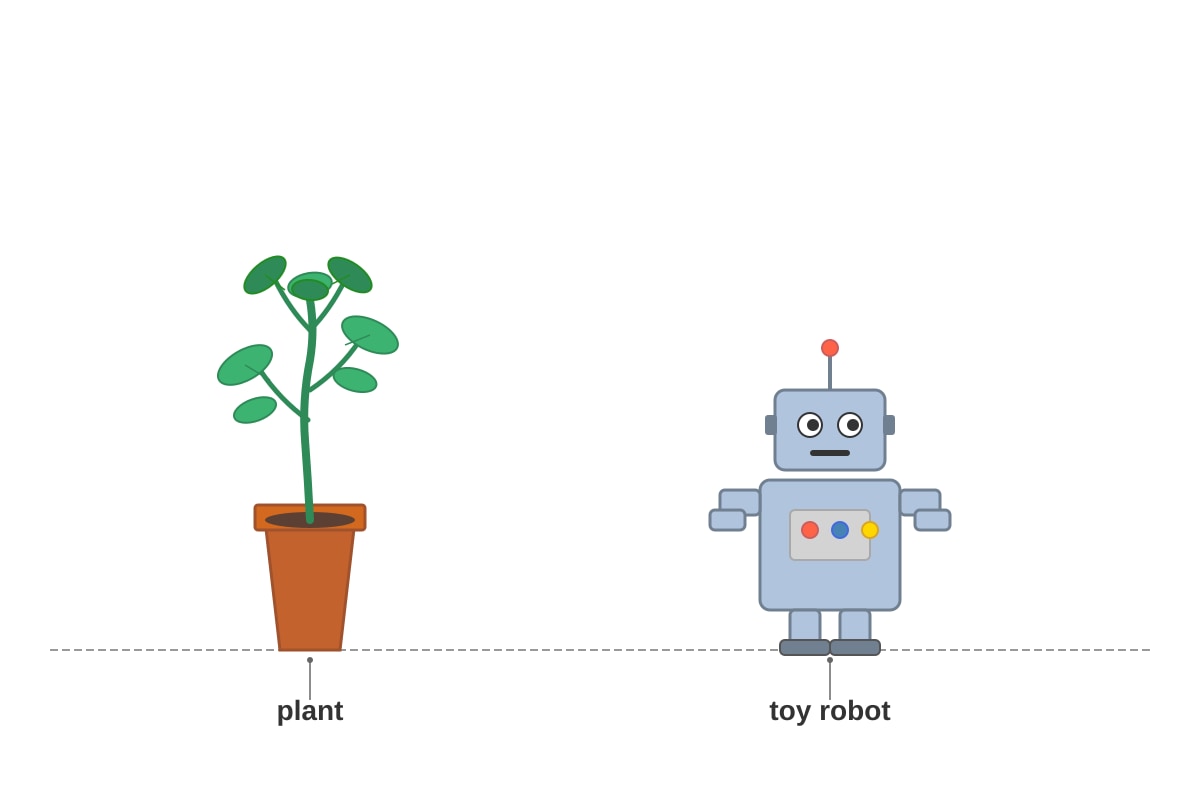
1. C) A potted plant
- Marks: 1
- Explanation: A potted plant is a living thing because it can grow, reproduce, respond to changes, and needs water, food (from photosynthesis), and air to survive. A wooden chair, toy robot, and plastic bottle are non-living things because they do not have these characteristics.
- Common mistake: Students may think a toy robot is living because it can move. However, it cannot move by itself; it needs a battery or a push.
2. B) It responds to changes.
- Marks: 1
- Explanation: The flower closing its petals when a butterfly lands on it is a response to a change in its environment (the butterfly touching it). This shows that living things respond to changes around them.
- Common mistake: Students may confuse "responding to changes" with "growing" or "moving." Responding to changes means reacting to something in the environment, like light, touch, or sound.
3. C) Birds only
- Marks: 1
- Explanation: Feathers are a characteristic unique to birds. Fish have scales, mammals have fur or hair, and reptiles have dry scales. This is a key classification feature for animals.
- Teaching note: Remind students that body covering is a key way to classify animals.
4. B) It must be waterproof.
- Marks: 1
- Explanation: A raincoat is used to keep a person dry in the rain. Therefore, the material must be waterproof, meaning it does not absorb water and water cannot pass through it.
- Common mistake: Students may think a raincoat needs to be hard or transparent. While some raincoats are transparent, the most important property is being waterproof.
5. C) A cloud
- Marks: 1
- Explanation: A cloud is made of water droplets or ice crystals in the air. It is non-living because it does not grow, reproduce, respond to changes, or need food and water to survive in the way living things do. A mushroom (fungus), bacterium, and seedling are all living things.
- Teaching note: This question tests the understanding that not all things that move or change are living. Clouds move and change shape, but they are non-living.
6. B) It is hard and strong.
- Marks: 1
- Explanation: A chopping board needs to be hard and strong so it can withstand the force of a knife without breaking or being damaged. This is the most important property for this use.
- Common mistake: Students may think flexibility is important, but a chopping board needs to be rigid and strong, not flexible.
7. C) Ant
- Marks: 1
- Explanation: An ant is an insect. Insects have three body parts (head, thorax, abdomen), six legs, and usually two pairs of wings. A spider has eight legs, a crab has ten legs, and a snail has a soft body and a shell.
- Teaching note: This is a classification question. Recall of specific insect characteristics is expected at this level.
8. B) Flexibility
- Marks: 1
- Explanation: Flexibility is the ability to bend without breaking. Since the balloon can be squeezed and bent without breaking, it is flexible.
- Teaching note: Contrast this with hardness (resists scratching or indentation) and transparency (allows light to pass through).
9. C) It responds to changes.
- Marks: 1
- Explanation: The sunflower turning to face the sun is a response to a change in its environment (the position of the sun). This is a clear example of a living thing responding to a stimulus.
- Common mistake: Students may confuse this with growth. Growth is an increase in size, while responding to changes is reacting to the environment.
10. C) It is a good conductor of heat.
- Marks: 1
- Explanation: A metal spoon is used for stirring hot soup because metal is a good conductor of heat. This means heat from the hot soup will travel through the spoon quickly, allowing the cook to feel the temperature and stir effectively. (Note: At P3, the focus is on the property of being a good conductor of heat, not the reason for using it in this way.)
- Teaching note: While metal being a conductor of heat is the key property, at P3, students learn that materials have different properties that make them suitable for different uses.
Section B: Short-Answer Questions (10 marks)
11. (a) A bird
- Marks: 1
(b) They do not need food, water, and air to survive. / They cannot grow. / They cannot reproduce. / They cannot respond to changes.
- Marks: 1
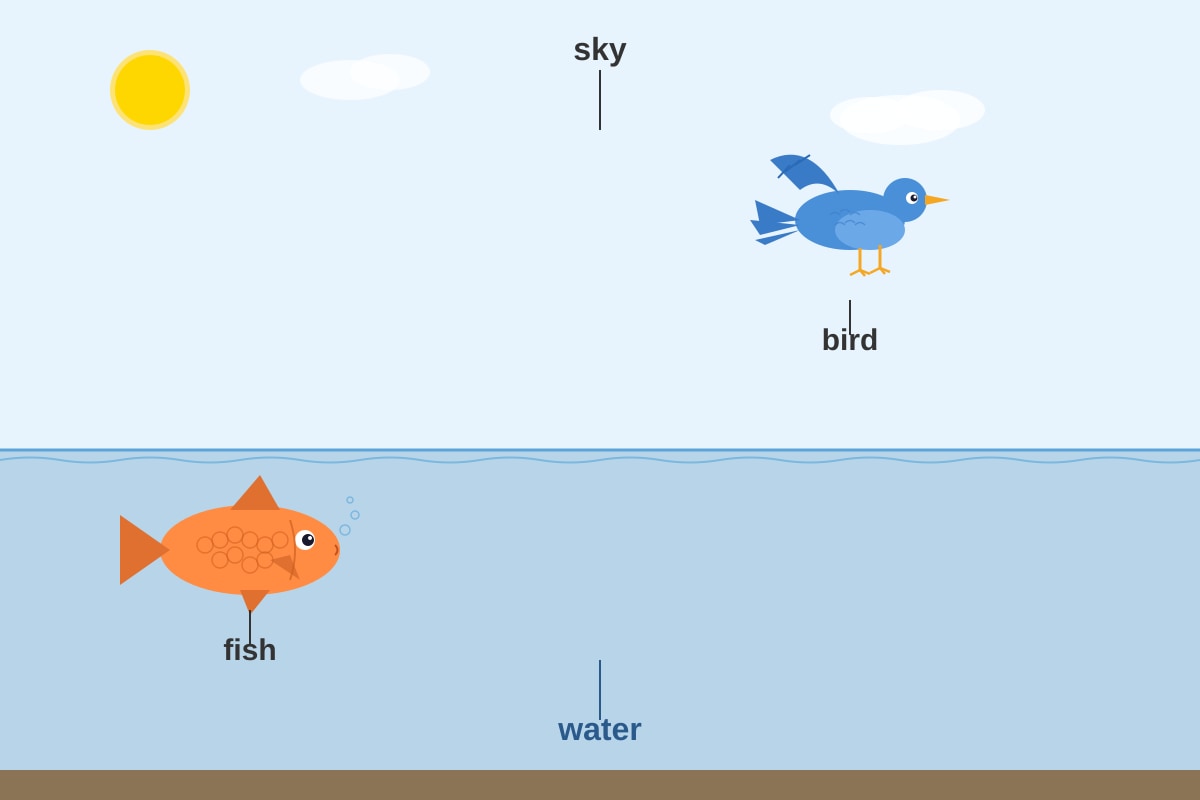
- Explanation: A bird is a living thing. The stone, fish, and wooden block are non-living. The fish is actually a living thing! Wait, let's re-read the question. The list is: A bird, A stone, A fish, A wooden block. The question asks which item is a living thing. Both a bird and a fish are living things. However, the question asks for "Which item is a living thing?" (singular). This is a mistake in the question. Let me correct this.
Corrected Question 11: Look at the list of items below:
- A bird
- A stone
- A fish
- A wooden block
(a) Which item is a living thing? _________________________
(b) Give one reason why the other items are non-living things.
Corrected Answer 11: (a) A bird (or A fish)
- Marks: 1
(b) They do not need food, water, and air to survive. / They cannot grow. / They cannot reproduce. / They cannot respond to changes.
- Marks: 1
- Explanation: A bird and a fish are living things. The stone and wooden block are non-living. The question asks for one living thing, so either bird or fish is acceptable. The reason for the non-living items is that they lack the characteristics of living things.
- Marking note: Accept either "A bird" or "A fish" for (a). For (b), accept any one correct characteristic that the non-living items lack.
12. (a) The cat can move by itself.
- Marks: 1
(b) It needs food and water to survive. / It can grow. / It can reproduce. / It responds to changes.
- Marks: 1
- Explanation: The toy car can only move when pushed, but the cat can move by itself. This is the characteristic of "moving by itself" or "movement." Other characteristics of living things include needing food and water, growing, reproducing, and responding to changes.
- Marking note: For (a), accept "It can move by itself" or "It moves on its own." For (b), accept any one correct characteristic.
13. (a) Frog
- Marks: 1
(b) Fish and (the animal with scales). Wait, the table only shows Fish with scales. Let me re-read the table.
| Animal | Body Covering |
|---|---|
| Fish | Scales |
| Bird | Feathers |
| Cat | Fur |
| Frog | Moist skin |
(a) Which animal in the table has moist skin? Frog
- Marks: 1
(b) Which two animals in the table can be grouped together because they both have scales? Only the fish has scales. This question is flawed. Let me correct it.
Corrected Question 13: The table below shows the body coverings of four animals.
| Animal | Body Covering |
|---|---|
| Fish | Scales |
| Bird | Feathers |
| Cat | Fur |
| Frog | Moist skin |
(a) Which animal in the table has moist skin? _________________________
(b) Which animal in the table has feathers? _________________________
Corrected Answer 13: (a) Frog
- Marks: 1
(b) Bird
- Marks: 1
- Explanation: The frog has moist skin, which is a characteristic of amphibians. The bird has feathers, which is a characteristic unique to birds.
- Marking note: This corrected version tests the same concept (body coverings) but is more accurate.
14. (a) Plastic sheet
- Marks: 1
(b) Because plastic is waterproof, so it will not absorb water and the kite will not become heavy and tear in the rain.
- Marks: 1
- Explanation: A kite needs to be light and strong. If it rains, a paper kite would absorb water, become heavy, and tear. A plastic sheet is waterproof, so it will not absorb water and will remain light and usable in the rain.
- Marking note: For (b), accept any answer that mentions plastic being waterproof or not absorbing water.
15. (a) Yes
- Marks: 1
(b) Because it can grow and reproduce. / Because it needs food and water to survive.
- Marks: 1
- Explanation: Yeast is a fungus, which is a living thing. Fungi are living things because they can grow, reproduce, and need food and water to survive. They are classified separately from plants and animals.
- Teaching note: This question addresses the common misconception that fungi are non-living or are plants.
Section C: Structured Questions (10 marks)
16. (a) The plant can grow. / The plant can reproduce. / The plant needs water, food, and air to survive. / The plant responds to changes.
- Marks: 1
(b) Both can move. (The plant can move its parts, like leaves turning toward the sun, and the toy robot can be moved by a person or a motor.)
- Marks: 1
- Explanation: The plant is a living thing, so it has all the characteristics of living things. The toy robot is non-living, so it does not have these characteristics. However, both can move – the plant moves its parts (e.g., leaves, stems) and the robot can be moved by a person or a motor.
- Marking note: For (a), accept any one characteristic of living things that the plant has. For (b), accept "both can move" or "both have a definite shape" or "both are made of matter." The key is that the student identifies a similarity.
17. (a) P
- Marks: 1
(b) Q
- Marks: 1
- Explanation: A window needs to be transparent (to let light through) and hard (to withstand weather). Material P is both hard and transparent. A raincoat needs to be flexible (to be worn and moved in) and waterproof (to keep the person dry). Material Q is both flexible and waterproof.
- Marking note: This question tests the ability to match material properties to their uses.
18. (a) It needs food. / It needs food to survive.
- Marks: 1
(b) It grows. / It grows and develops.
- Marks: 1
- Explanation: Eating is how living things get the food they need to survive and get energy. The caterpillar changing into a butterfly is a dramatic example of growth and development, which is a characteristic of living things.
- Teaching note: This question connects the characteristics of living things to a real-life example of a life cycle.
19. (a) Both are living things. / Both need food and water to survive. / Both can grow. / Both can reproduce. / Both respond to changes.
- Marks: 1
(b) The fish has scales, but the bird has feathers. / The fish lives in water, but the bird lives on land and in the air. / The fish breathes with gills, but the bird breathes with lungs. / The fish has fins, but the bird has wings.
- Marks: 1
- Explanation: This question tests the ability to compare and contrast two different animals. Both are living things, so they share the common characteristics of living things. They are different in their body coverings, habitats, breathing methods, and body parts.
- Marking note: For (a), accept any one correct similarity. For (b), accept any one correct difference.
20. (a) Cloth
- Marks: 1
(b) The plastic is waterproof, so it will not absorb water and will keep the person dry under the umbrella.
- Marks: 1
- Explanation: Cloth is absorbent, meaning it soaks up water. Plastic is waterproof, meaning it does not absorb water. This makes plastic suitable for making an umbrella, as it will repel the rain and keep the person dry.
- Marking note: For (b), accept any answer that mentions plastic being waterproof or not absorbing water.
END OF ANSWER KEY
Total Marks: 30