AI Generated Exam Paper
Primary 3 Science Practice Paper 4
Free P3 Science Practice Paper 4, Kimi2.6 AI version, with questions, answers, and syllabus-aligned practice for Singapore students.
These static practice materials are generated from the site's syllabus and paper-generation workflow, with source and model context shown so students and parents can evaluate the material before use.
Questions
Free quiz and exam paper access
Enter your details to view this paper
Your access is remembered on this device.
Answers
TuitionGoWhere Practice Paper - Science Primary 3: Answer Key
Version: 4 of 5 Topic: Diversity Total Marks: 50
Section A: Multiple Choice (Questions 1–10)
[10 marks]
1. Answer: C — A sunflower plant [1 mark]
Explanation: A sunflower plant is living because it can grow, make its own food, reproduce, and needs water and air. Plastic bottles (A), school desks (B), and glass marbles (D) are all non-living — they cannot grow, reproduce, or respond to changes in their environment.
2. Answer: B — They need air, food and water to survive [1 mark]
Explanation: All living things need air, food, and water to stay alive. This is one of the key characteristics that defines living things. Not all living things can fly (A — birds and insects can, but plants, fish, and most animals cannot). Speaking (C) is unique to humans, not all living things. Being green (D) only applies to plants with chlorophyll, not animals or fungi.
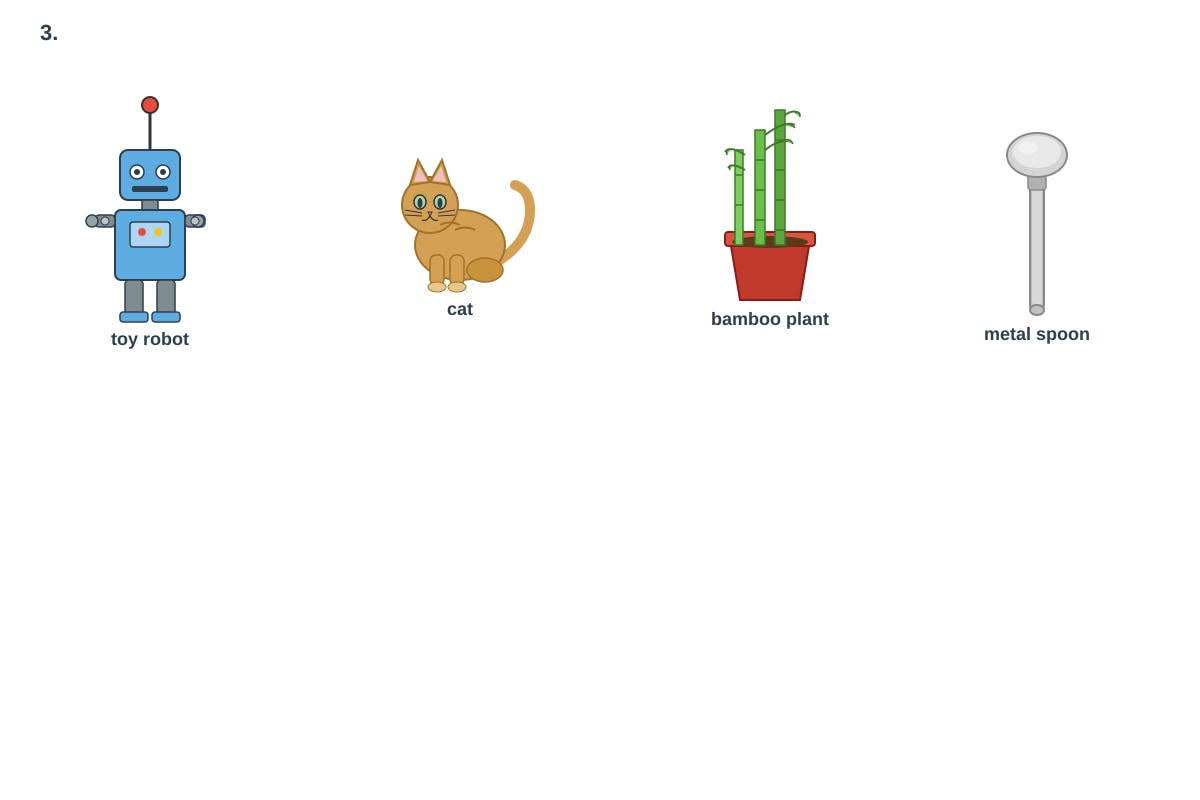
3. Answer: B — The cat [1 mark]
Explanation: The cat (B) is the only item that can grow from kitten to adult cat and can reproduce to have kittens. The toy robot (A) and metal spoon (D) are non-living — they cannot grow or reproduce. They are manufactured objects made by people. The bamboo plant can also grow and reproduce, but this option was not available as a single combined choice.
Visual check: The image shows the cat as an alive animal with natural fur and posture, distinguishing it from mechanical and manufactured items.
4. Answer: B — A living thing that can grow [1 mark]
Explanation: Mould is a type of fungus, which is a living thing. When mould appears on bread, it shows growth — one of the key characteristics of living things. Mould starts as tiny spores that are too small to see, then grows into the fuzzy patches we can observe. This proves mould is living, not non-living (A). Mould is not a plant (C) because it cannot make its own food through photosynthesis — it gets nutrients from the bread. It is definitely not a metal (D).
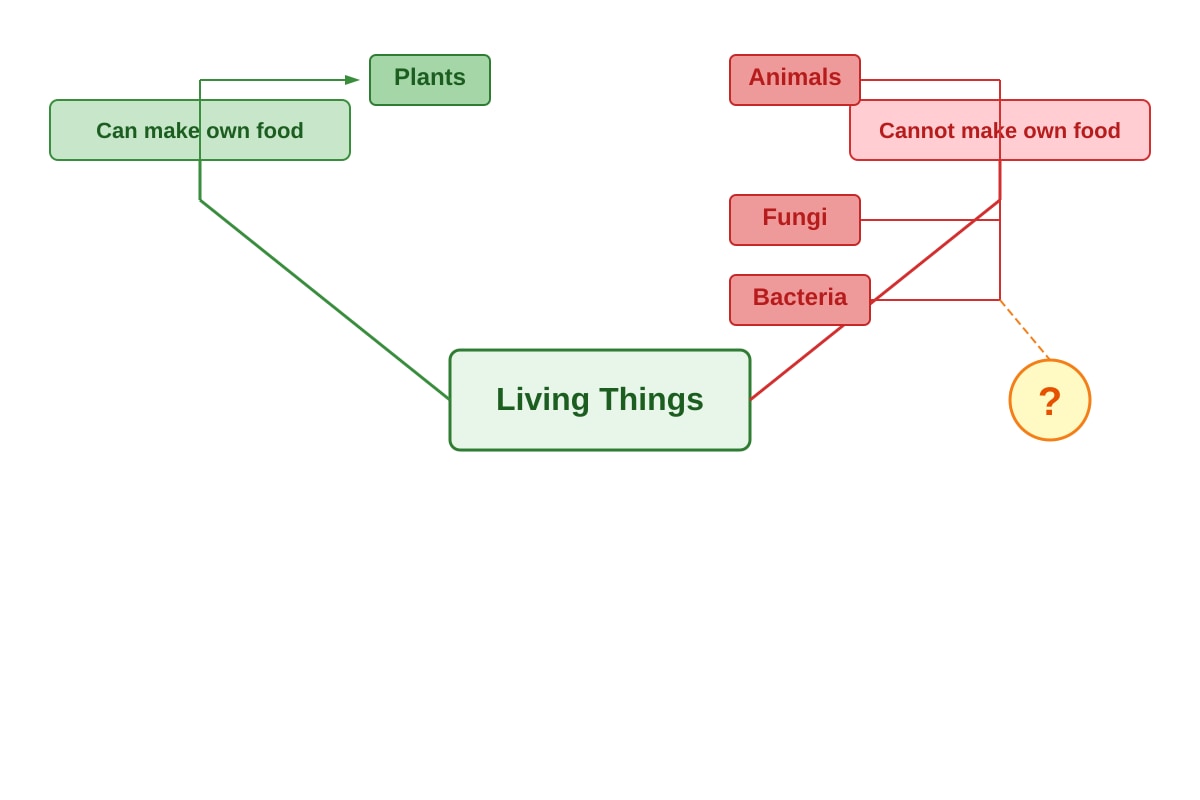
5. Answer: D — Already complete [1 mark]
Explanation: The diagram shows all the main groups of living things: Plants (make own food), and Animals, Fungi, and Bacteria (cannot make own food). There is no missing group on the right side. Non-living things (A) do not belong in a diagram of living things classifications. Water (B) and Air (C) are not groups of organisms.
Visual check: The diagram as described has complete branching with two main categories and four terminal groups, all correctly placed.
6. Answer: B — A butterfly with six legs and three body parts [1 mark]
Explanation: An insect has exactly six legs and three body parts (head, thorax, abdomen). A butterfly matches this description exactly. A spider (A) has eight legs — it belongs to a different group called arachnids. An earthworm (C) has no legs and a segmented body — it is an annelid, not an insect. A centipede (D) has many legs — it belongs to myriapods.
7. Answer: C — A wind-up toy car moves when wound [1 mark]
Explanation: The wind-up toy car disproves the student's statement because it moves but is definitely non-living. It cannot grow, reproduce, or respond to stimuli on its own — the movement is caused by a spring mechanism that people wind up. The dog (A), bird (B), and fish (D) all move AND are living because they also grow, reproduce, and need food and air. Movement alone is not enough to classify something as living.
8. Answer: A — P only [1 mark]
Explanation: A bird has all three features: wings, feathers, AND lays eggs. Only organism P has all three (✓ ✓ ✓). Organism Q lacks wings and feathers — this could be a reptile (like a snake or lizard) or fish. Organism R has wings and lays eggs but no feathers — this could be an insect (like a butterfly or moth) or a bat (mammal with wing-like structures but no feathers). Feathers are unique to birds and are essential for this identification.
9. Answer: C — Fungi [1 mark]
Explanation: Mushrooms belong to the fungi group. Fungi are living things that cannot make their own food (unlike plants), do not move from place to place (unlike animals), and reproduce using spores. Fungi include mushrooms, mould, and yeast. They are neither plants (A) nor animals (B), and they are much larger and more complex than bacteria (D), which are single-celled microorganisms.
10. Answer: B — 2 [1 mark]
Explanation: The living things are the mynah bird and sand crab (2 items). The mynah can fly, eat, breathe, and reproduce. The sand crab can move, grow, and reproduce in its sandy habitat. The sea coconut is non-living — it is a seed/fruit that has been separated from the parent plant and cannot grow or make food on its own at this stage (it needs to be planted). The plastic water bottle is clearly manufactured and non-living.
Section B: Short Answer (Questions 11–16)
[18 marks]
11. [Total: 3 marks]
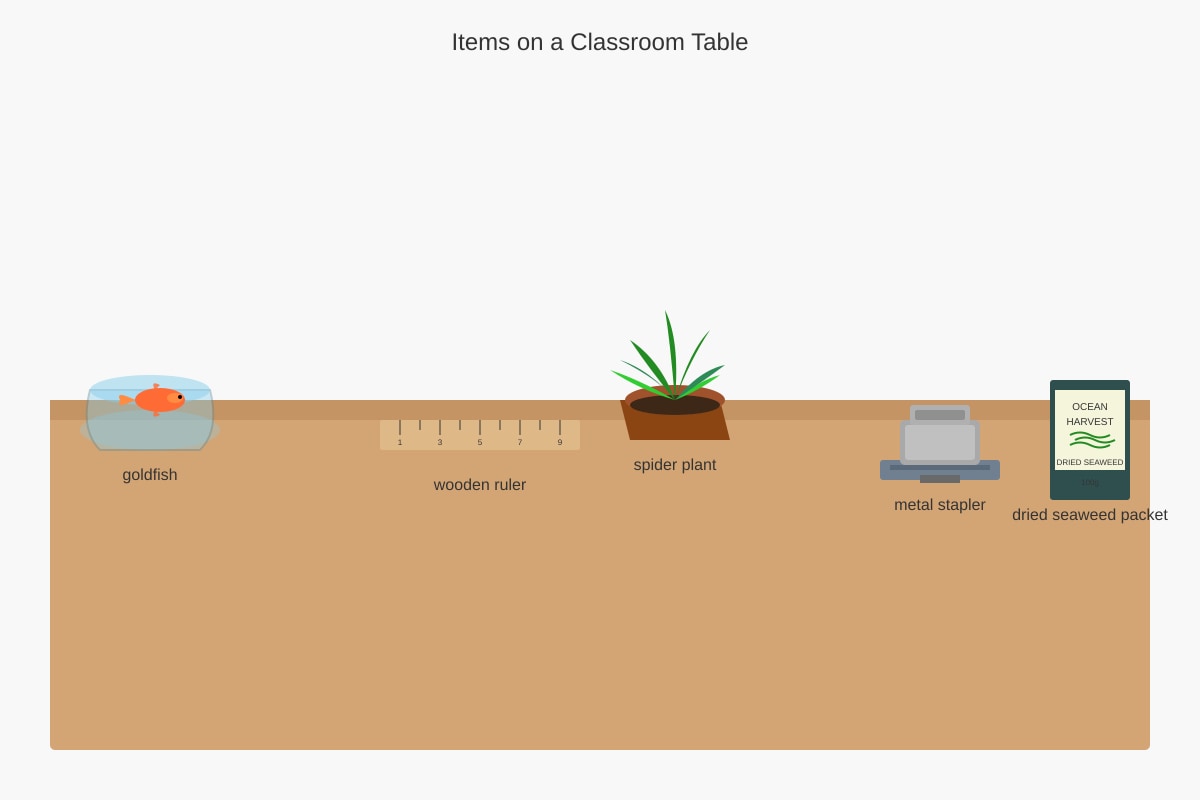
(a) [2 marks — 1 mark for each correct column, all items must be correctly placed]
| Living things | Non-living things |
|---|---|
| Goldfish | Wooden ruler |
| Spider plant | Metal stapler |
| (Dried seaweed — accept if placed in either with valid reasoning)* |
Note: Dried seaweed is dead plant material, so it is technically non-living. However, full credit for reasoned placement in living with explanation that it came from a living thing. For marking: place in non-living for simplest correct answer.
Correct classification:
- Living: Goldfish (can swim, breathe, grow, reproduce); Spider plant (can grow, make food, reproduce)
- Non-living: Wooden ruler (made by people, cannot grow); Metal stapler (manufactured, cannot respond); Dried seaweed packet (processed, no longer alive)
(b) [1 mark — 1 mark for any living thing with TWO valid characteristics; or 0.5 mark per characteristic if partially correct]
Sample answer — Goldfish:
- It needs food and water to survive
- It can move by itself (swimming) / it can grow from small fish to bigger fish / it can reproduce to have baby fish
Sample answer — Spider plant:
- It can grow bigger and produce more leaves
- It can make its own food using sunlight / it can reproduce through runners or seeds
12. [Total: 4 marks]
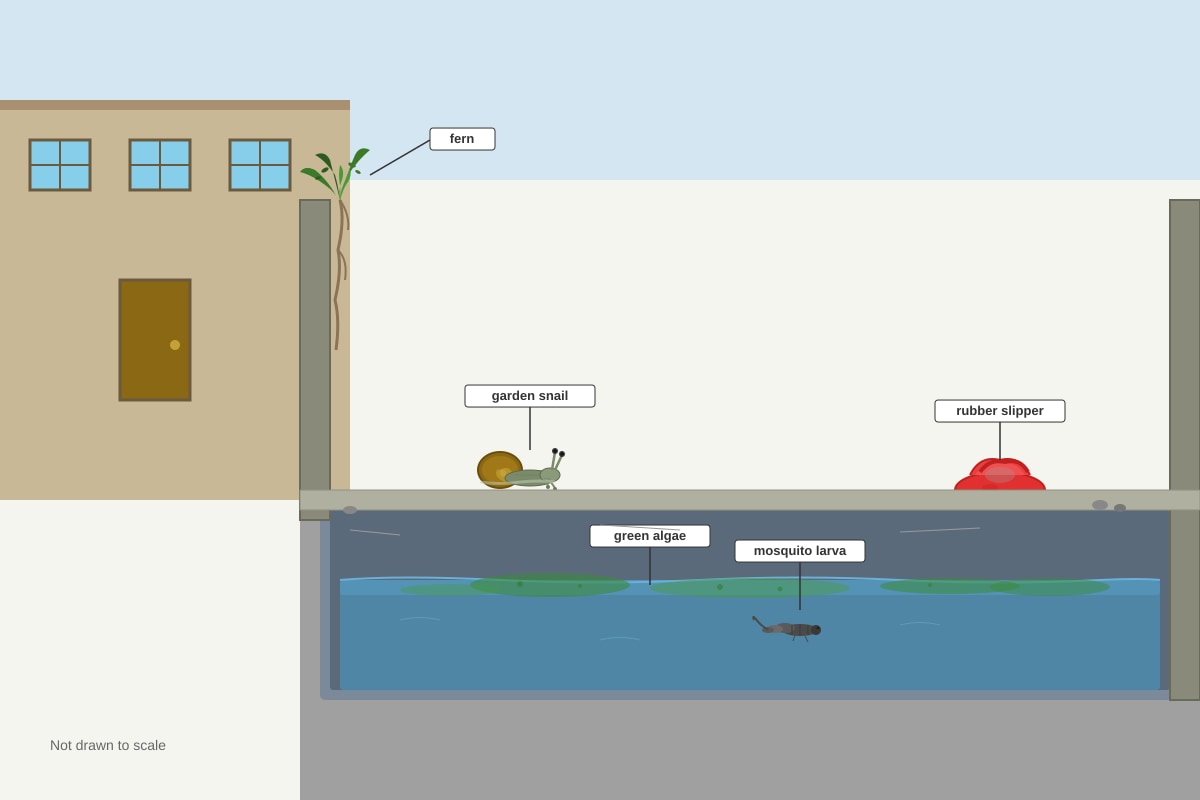
(a) [1 mark — all four correct for full mark; 0.5 mark if three correct]
Mosquito larva, garden snail, fern, green algae
(b) [2 marks — 0.5 mark each]
| Organism | Group |
|---|---|
| Mosquito larva | Animals |
| Garden snail | Animals |
| Fern | Plants |
| Green algae | Plants |
Note: Green algae can be controversial — also accept "Plants/Protists" with valid reasoning. For P3 level, "Plants" is expected as they contain chlorophyll.
(c) [1 mark — 1 mark for clear explanation]
The rubber slipper does not rot/break down naturally. [0.5 mark]
This means it stays in the environment for a very long time, taking up space and possibly harming animals that might eat it or get trapped. [0.5 mark]
13. [Total: 3 marks]
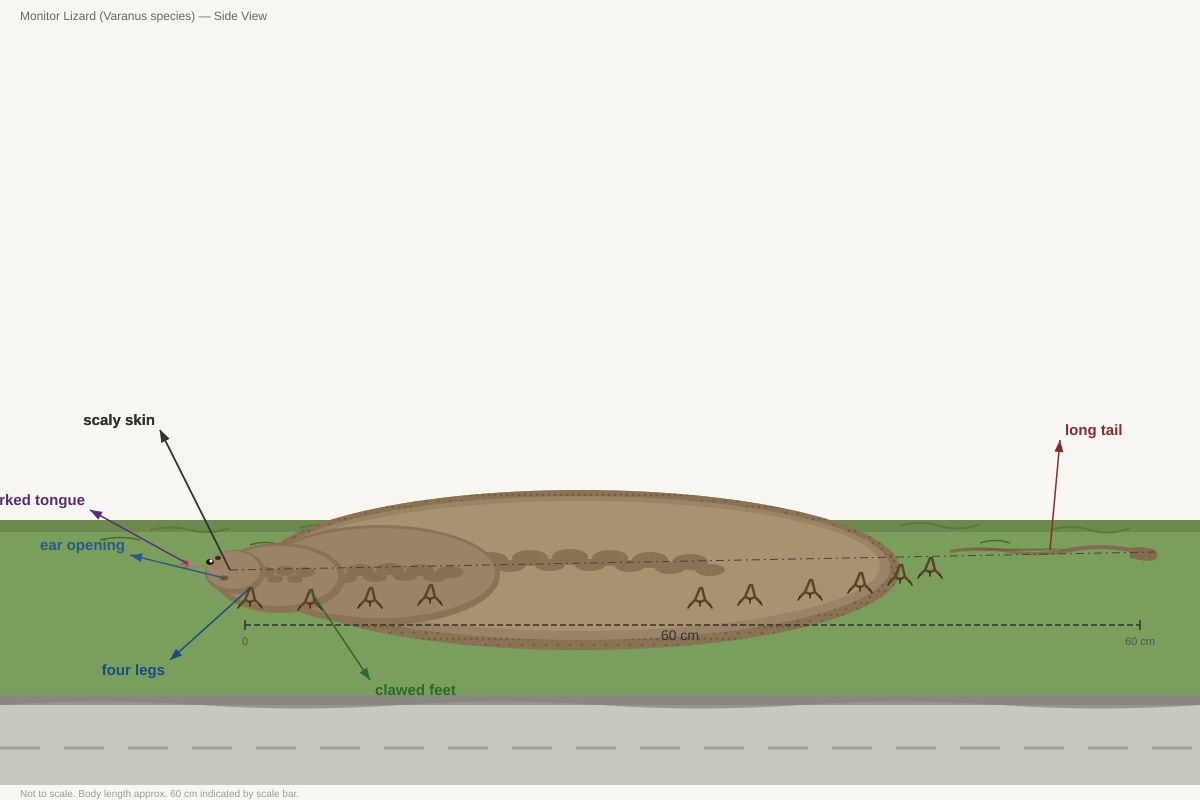
(a) [2 marks — 1 mark each for any two valid features]
- It has four legs (snakes have no legs)
- It has visible ear openings (snakes do not have external ear openings)
- It has eyelids that can blink (snakes cannot blink, they have clear scale covering eyes) — may not be visible in diagram, accept only if student describes from knowledge
(b) [1 mark — 0.5 mark for correct group, 0.5 mark for linked explanation]
Reptiles [0.5 mark]
It has scaly skin / four legs / claws / lays eggs (any one feature linked to reptile characteristics) [0.5 mark]
Visual features expected: The image clearly shows four legs, claws, scaly skin texture, visible ear openings, and relatively slender snout compared to crocodile.
14. [Total: 4 marks]
(a) [2 marks — 1 mark for part (i), 1 mark for part (ii)]
(i) Two living things: Mould on bread, Bean sprouts (either order); OR Chilli plant; OR Yeast [1 mark — any two correct]
(ii) Two non-living things: Instant noodles (processed food, cannot grow), Glass jar (manufactured) [1 mark — any two correct]
Note: Mould and yeast are living; bean sprouts and chilli plant are living. Students may argue yeast in packet is dormant — accept with reasoning. Instant noodles are dead/processed plant material. Glass jar is clearly non-living.
(b) [2 marks — 1 mark each]
(i) Fungi cannot make their own food / do not have chlorophyll / do not photosynthesise (unlike plants) [1 mark]
(ii) Fungi can grow / reproduce / need water and air / respond to changes (any characteristic of living things) [1 mark]
15. [Total: 4 marks]
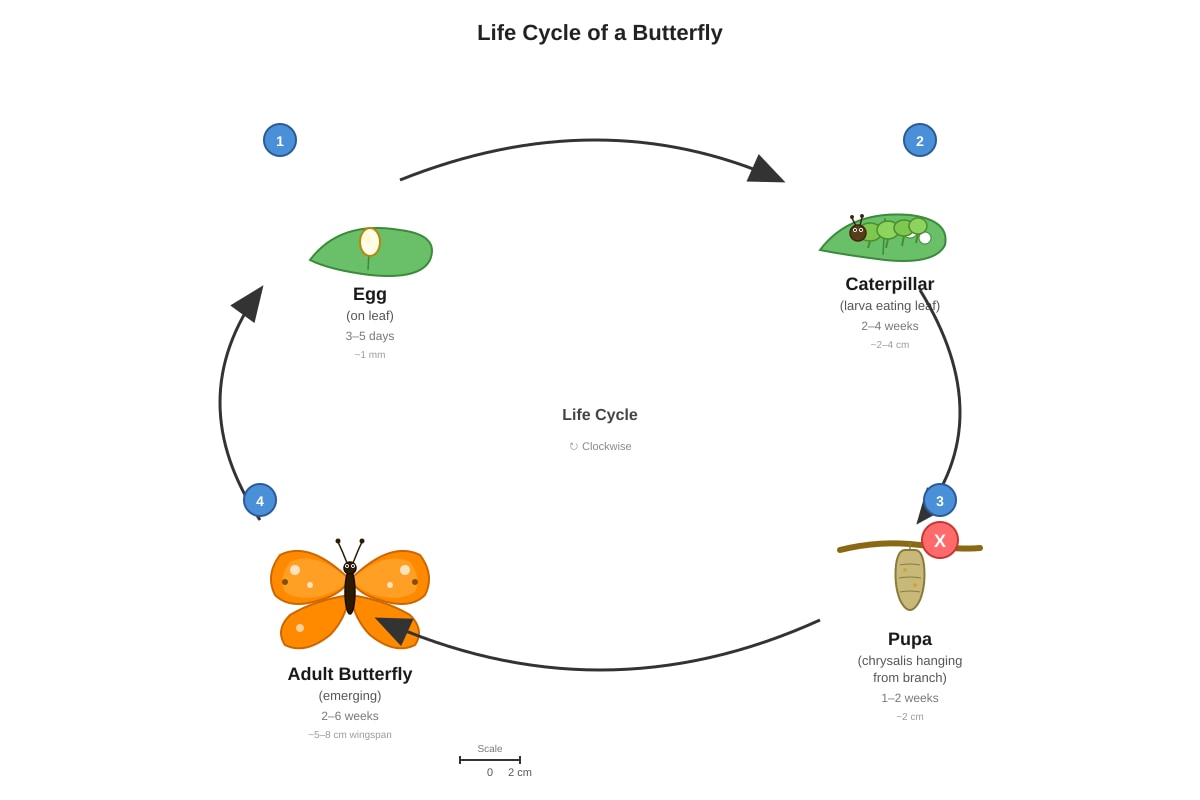
(a) [1 mark]
Pupa (accept: chrysalis)
(b) [1 mark — 1 mark for linking life cycle stage to living characteristic]
A butterfly goes through different stages of growth/development (egg → caterpillar → pupa → adult), which shows that it grows and changes — this is a characteristic of living things.
OR: The butterfly reproduces by laying eggs, which is a characteristic of living things.
(c) [2 marks — 1 mark for identifying that it is alive, 1 mark for explanation]
The student is wrong because the pupa is alive. [1 mark]
Inside the pupa, the caterpillar's body is breaking down and reorganising into an adult butterfly — this process needs energy and is a type of growth and development. The pupa may not move much, but it is still carrying out life processes. [1 mark] Movement alone is not proof of being alive or dead.
Visual check: The image should show pupa as intact, attached structure, not decaying, with context of continued life cycle.
16. [Total: 4 marks]
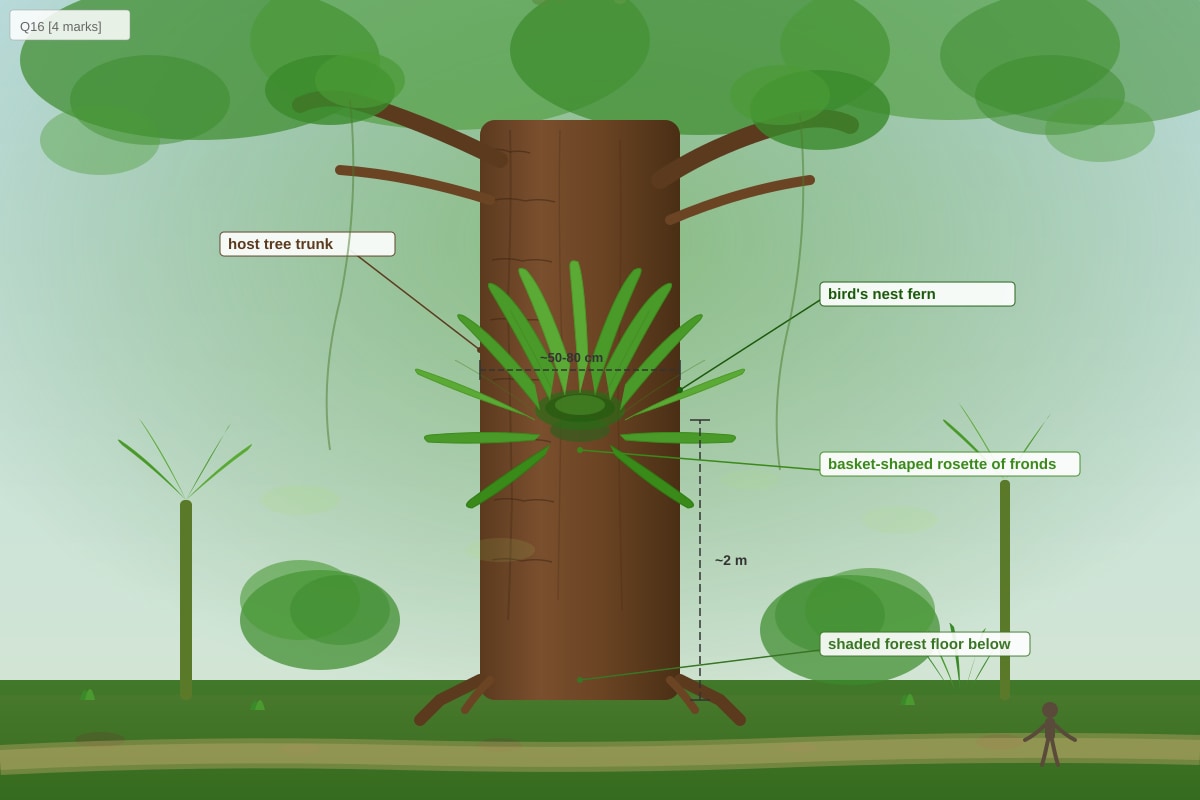
(a) [2 marks — 1 mark for mentioning chlorophyll/leaves, 1 mark for process]
The bird's nest fern has green leaves with chlorophyll. [1 mark]
It uses sunlight, water, and air (carbon dioxide) to make its own food through photosynthesis. [1 mark] It does not need to take food from the tree it grows on.
(b) [2 marks — 1 mark each for any two of: water, air/carbon dioxide, sunlight, nutrients/minerals]
- Water — for photosynthesis and transport of substances
- Sunlight — for photosynthesis to make food
- Air/Carbon dioxide — for photosynthesis
- Nutrients/Minerals — absorbed from rain and debris collected in its "nest"
Section C: Application and Investigation (Questions 17–20)
[22 marks]
17. [Total: 6 marks]
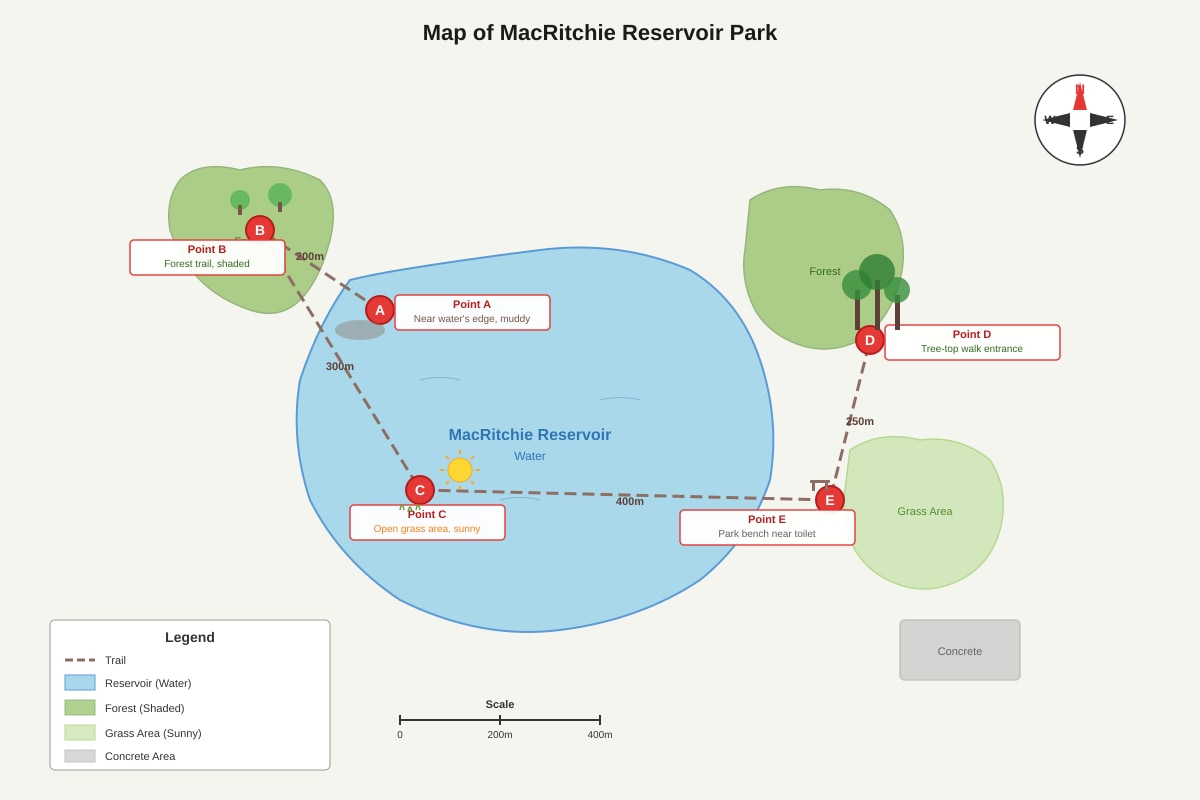
(a) [1 mark — 0.5 mark for identification, 0.5 mark for explanation]
Error: The walking stick found by Bernice is likely the insect called a stick insect / praying mantis, but a "walking stick" could also mean a wooden stick for walking, which is non-living. [0.5 mark for identifying the item]
If Bernice found an actual insect called a walking stick/stick insect, it is living. If she found a wooden walking stick, it is non-living and should not be in her living things list. [0.5 mark for explanation]
Most likely examination intent: "walking stick" as object/tool = non-living error. Accept either interpretation with valid reasoning.
(b) [1 mark — 0.5 mark for property, 0.5 mark for harm]
Plastic does not rot/decompose/break down naturally. [0.5 mark]
It remains in the water and can harm fish and other animals that might eat it or get trapped in it, polluting the reservoir. [0.5 mark]
(c) [2 marks — 1 mark for growth, 1 mark for reproduction/spores explanation]
Mushrooms grow on the rotting log over time, getting bigger and spreading. [1 mark] This shows growth, a characteristic of living things.
They also reproduce by releasing spores, which spread to grow new mushrooms nearby. [1 mark]
(d) [2 marks — 1 mark for correct organism, 1 mark for explanation]
Grasshopper / Butterfly / Ants / Water snails (any one) [1 mark]
They are all animals — they cannot make their own food, they can move from place to place, and they respond to changes in their environment. [1 mark for valid explanation with characteristic]
18. [Total: 6 marks]
(a) [2 marks — 1 mark for conclusion, 1 mark for evidence reference]
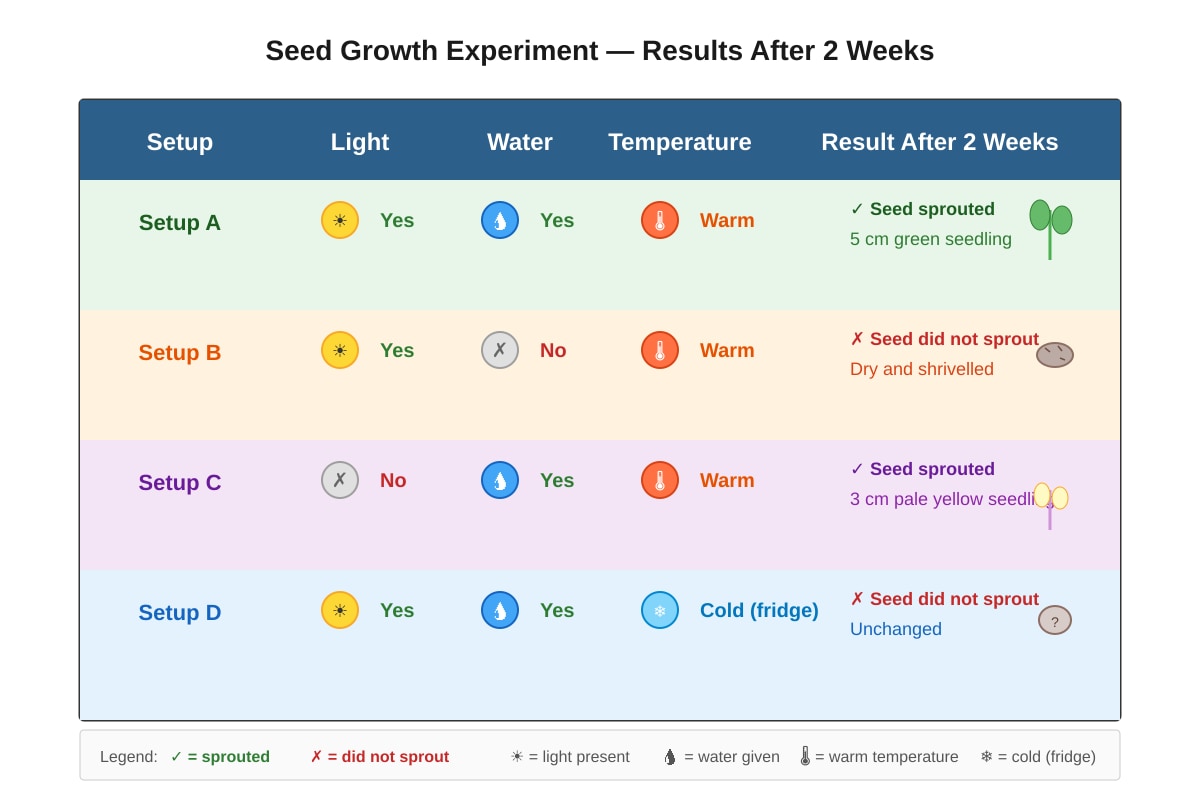
Conclusion: Seeds need water and a suitable/warm temperature to sprout. [1 mark for both factors]
Evidence:
- Setup A (water, warm) → sprouted; Setup B (no water, warm) → did not sprout, showing water is needed.
- Setup A (warm) → sprouted; Setup D (cold) → did not sprout, showing suitable temperature is needed.
- Light seems helpful but not absolutely required (Setup C sprouted in dark, though pale). [1 mark for using at least two setups as evidence correctly]
(b) [2 marks — 1 mark for explanation of pale colour, 1 mark for prediction]
The seedling in Setup C was pale yellow because it was kept in the dark and could not make chlorophyll/green pigment. [1 mark] Without light, it could not carry out photosynthesis properly.
If moved into light, it would turn green as it produces chlorophyll and starts making its own food properly. / It would continue to grow stronger and healthier. [1 mark]
(c) [2 marks — 1 mark for "dormant/not dead," 1 mark for explanation of cold storage purpose]
Cold storage does not kill seeds because the seeds are dormant/sleeping — their life processes slow down but do not stop completely. [1 mark]
Farmers keep seeds cold to preserve them and prevent them from sprouting too early, so they can plant them when conditions are right for growth (right season, with proper warmth and water). [1 mark]
19. [Total: 6 marks]
(a) [2 marks — 0.5 mark per correct cell, partial credit possible]
| Has fur or hair | Has scales | Has feathers |
|---|---|---|
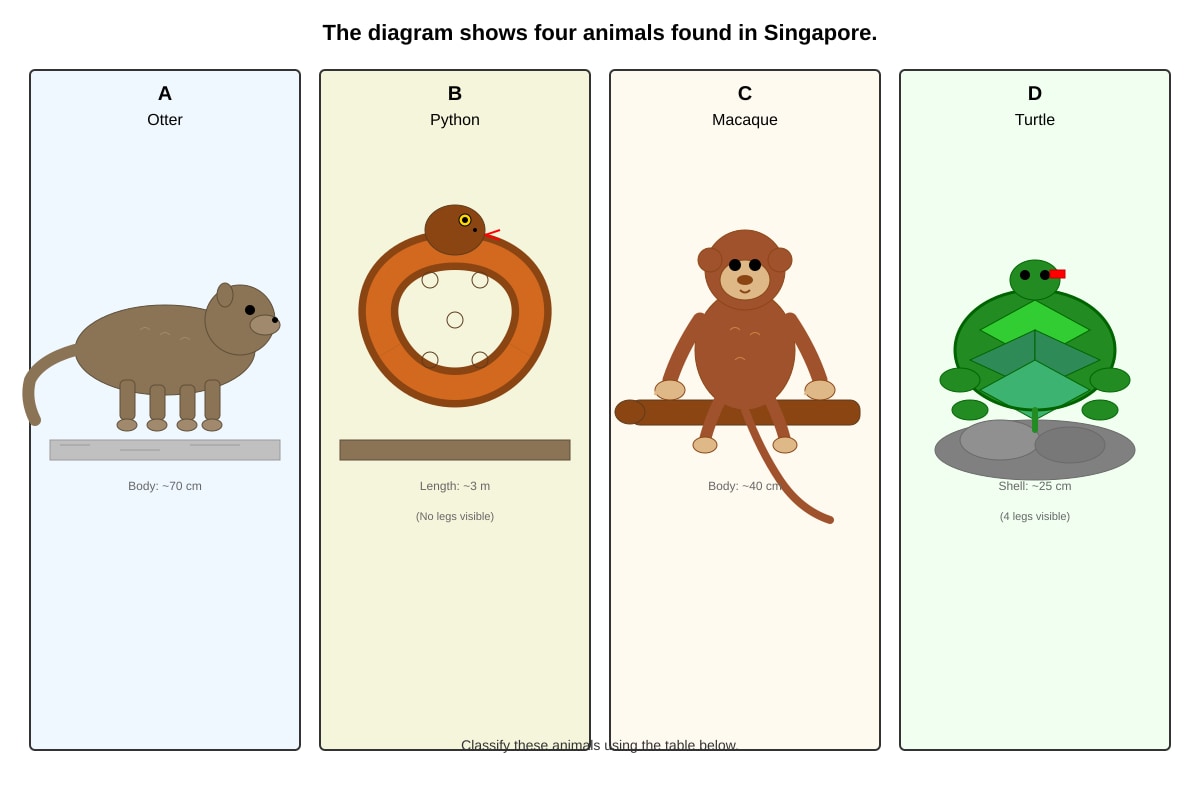
| C (Macaque) | B (Python), D (Turtle) | (none — leave blank or write "none") |
| Has legs visible | No legs visible | Lays eggs |
| A (Otter), C (Macaque), D (Turtle) | B (Python) | B (Python), D (Turtle) |
Note: Otter has fur and legs; macaque has fur/hair and legs; python has scales, no legs, lays eggs; turtle has scales, legs, lays eggs.
(b) [2 marks — 1 mark for correct animal, 1 mark for two reasons with features]
The otter (A) or the macaque (C) — both are mammals [0.5 mark for either]
Reasons for otter: It has smooth fur/hair [0.5 mark] and visible legs that suggest it nurse its young with milk / has external ear flaps (mammal features, though nursing not directly visible)
Reasons for macaque: It has fur/hair covering its body [0.5 mark] and the visible body shape suggests it nurses its young with milk / has grasping hands like primates [0.5 mark]
(Accept reasonable inferences from visible features at P3 level)
(c) [2 marks — 1 mark each]
Similar: Both have scales covering their bodies / both are reptiles / both lay eggs [1 mark]
Different: The python has no visible legs and moves by slithering, while the turtle has four visible legs and can walk / The python lives mainly on land and in water as adult, turtle has shell for protection [1 mark]
(d) [2 marks — 1 mark for position, 1 mark for explanation with valid feature]
Disagree / Partially agree with correction [0.5 mark for clear position]
While macaques and humans both climb and are primates/mammals with grasping hands, climbing trees is not the most important similarity. [0.5 mark]
Better reasons: Both have forward-facing eyes for depth perception, opposable thumbs for gripping tools, large brains relative to body size, and both nurse young with milk. [1 mark for any valid feature] Many animals climb trees (squirrels, snakes) but are not closely related to humans.
20. [Total: 4 marks]
(a) [1 mark — 0.5 mark per correct column, all must be correctly placed]
| Plants | Animals |
|---|---|
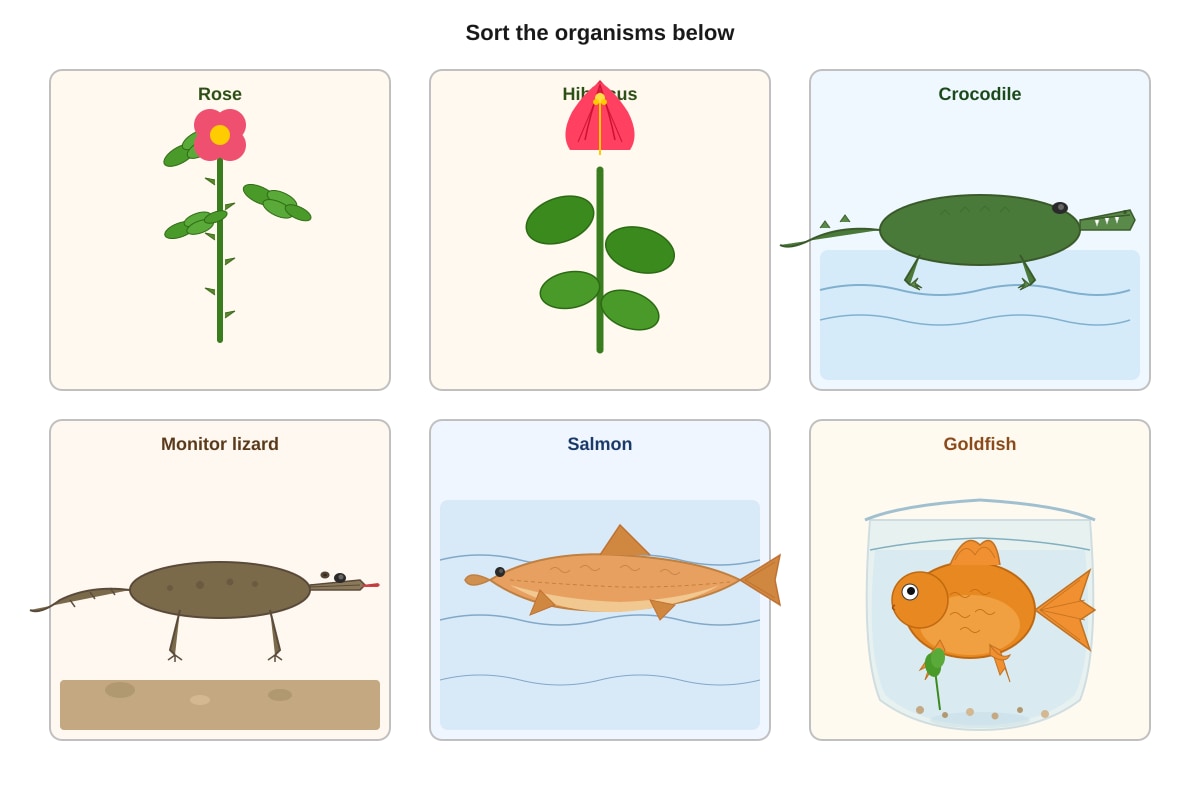
| Rose, Hibiscus | Crocodile, Monitor lizard, Salmon, Goldfish |
(b) [1 mark — 0.5 mark for correct, 0.5 mark for explanation]
Yes, he is correct. [0.5 mark]
Crocodiles can live in water (swimming, hunting fish) and on land (basking in sun, nesting on riverbanks). They are amphibious reptiles that need both environments. [0.5 mark]
(c) [1 mark — 0.5 mark for yes/no with valid reason, 0.5 mark for feature]
Yes [0.5 mark]
Both salmon and goldfish are fish — they have fins, scales, gills for breathing underwater, and a streamlined body shape for swimming. They both live in water and lay eggs. [0.5 mark for feature]
OR: No [0.5 mark — accept with valid reasoning]
They are different types of fish — salmon are long, streamlined for fast ocean/river swimming with forked tails, while goldfish are round-bodied with flowing fins for slower pond/tank swimming. [0.5 mark for distinguishing feature]
(d) [1 mark — 0.5 mark for valid rule, 0.5 mark for correct grouping]
Sample answer:
Sorting rule: Has a backbone / can live in Singapore naturally vs pet/introduced [0.5 mark]
Group 1 (with backbone/vertebrates): Crocodile, Monitor lizard, Salmon, Goldfish, (Rose, Hibiscus — plants don't have backbones, so this needs care)
Better sample:
Sorting rule: Number of legs / limbs visible [0.5 mark]
Group 1 (Has legs/limbs): Rose (stems as limb-like), Hibiscus, Crocodile (four legs), Monitor lizard (four legs)
Group 2 (No legs/limbs): Salmon, Goldfish
OR:
Sorting rule: Can move from place to place by itself at adult stage [0.5 mark]
Group 1 (Can move actively): Crocodile, Monitor lizard, Salmon, Goldfish
Group 2 (Cannot move actively — fixed in place): Rose, Hibiscus
Marking Summary
| Section | Marks |
|---|---|
| A: Multiple Choice (Q1–10) | 10 |
| B: Short Answer (Q11–16) | 18 |
| C: Application (Q17–20) | 22 |
| Total | 50 |
Note to teachers/parents: This is a syllabus-aligned practice paper generated to support P3 Science learning on Diversity. It is not derived from official past-year examination papers. Questions are designed to match MOE syllabus expectations for scientific inquiry, classification skills, and application of living/non-living characteristics.