AI Generated Exam Paper
Primary 3 Science Practice Paper 3
Free P3 Science Practice Paper 3, Kimi2.6 AI version, with questions, answers, and syllabus-aligned practice for Singapore students.
These static practice materials are generated from the site's syllabus and paper-generation workflow, with source and model context shown so students and parents can evaluate the material before use.
Questions
Free quiz and exam paper access
Enter your details to view this paper
Your access is remembered on this device.
Answers
TuitionGoWhere Practice Paper (AI) — Answer Key
Primary 3 Science — Diversity
Version 3 of 5
SECTION A (10 marks)
| Question | Answer | Explanation |
|---|---|---|
| 1 | (b) A potted orchid in your classroom | A potted orchid is a plant, which is a living thing. It can grow, needs water and air, and makes its own food. Plastic toys, wooden pencils, and glass marbles are all non-living things — they cannot grow, reproduce, or respond to changes. |
| 2 | (b) air | All living things need air (to breathe), water, and food to survive. While plants need sunlight to make food, not all living things need sunlight directly (animals get energy from food). Soil and music are not essential for survival. |
| 3 | (a) 1 | Only the squirrel is a living thing. The swing and sandbox are non-living objects made by humans. A cloud is made of water droplets and is not alive — it cannot grow, reproduce, or respond to stimuli in the way living things do. |
| 4 | (b) It can grow | Growth means increasing in size or mass over time. The kitten becoming bigger and heavier shows growth. Moving by itself would be running or walking. Responding to changes would be reacting to touch or sound. Reproducing means having babies. |
| 5 | (b) The robot cannot move by itself without batteries | Living things can move by themselves using their body parts (muscles, legs). A robot needs electricity from batteries and a person to switch it on. Even with batteries, it is not truly moving "by itself" — it follows programmed instructions. |
| 6 | (a) Object A | Plants can grow and reproduce, but most plants cannot move by themselves from place to place (they are rooted). Object C could be an animal (can grow, move by itself, but many animals reproduce). Object B moves by itself (perhaps a robot or vehicle) but cannot grow or reproduce. Object D is non-living. |
| 7 | (b) Bat, whale, rabbit | These are all mammals — they have fur or hair, give birth to live young, and feed their babies with milk. Frogs are amphibians, lizards and snakes are reptiles, eagles and penguins are birds, and salmon/tuna/shark are fish. |
| 8 | (c) Insects | Insects have exactly six legs, two antennae, and three body parts (head, thorax, abdomen). This distinguishes them from mammals (have fur, four legs), birds (have feathers), and reptiles (have scales). |
| 9 | (c) They have green leaves all year round | Some flowering plants lose their leaves in certain seasons (deciduous trees). All flowering plants produce seeds, produce flowers at some life stage, and make their own food through photosynthesis. |
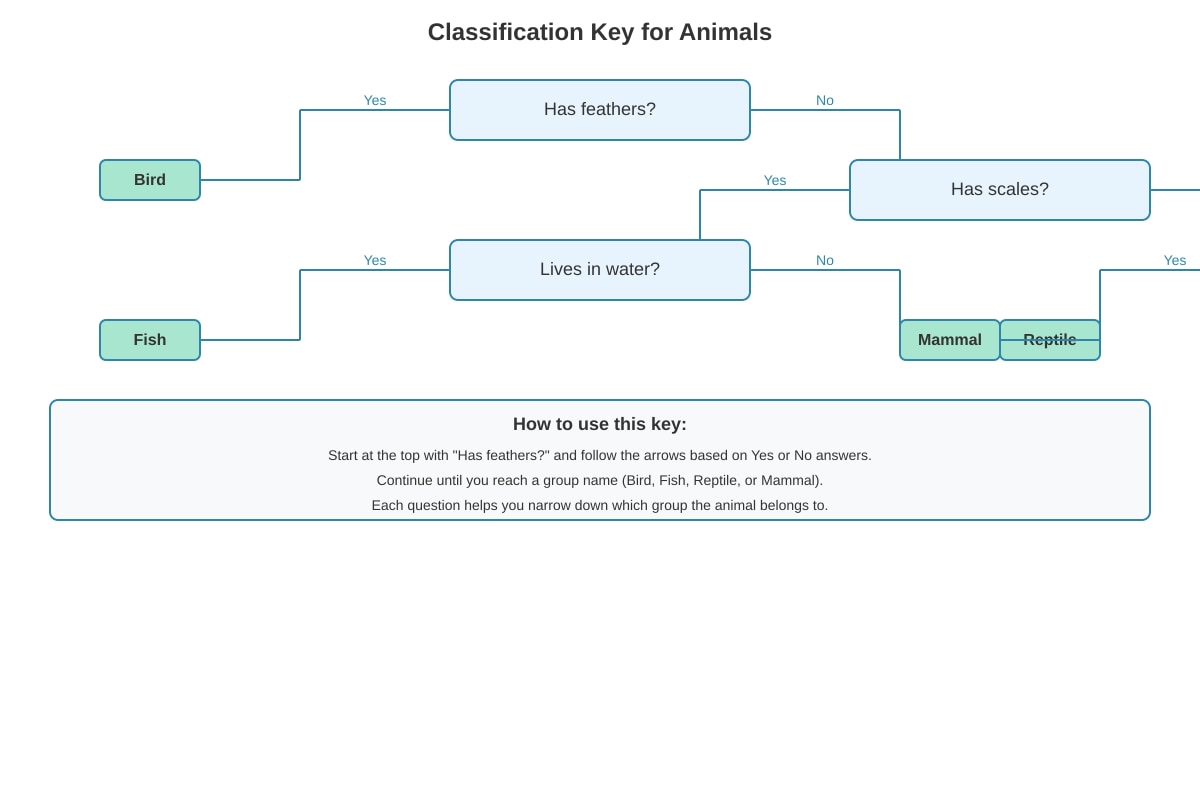
| 10 | (c) Bird | Following the classification key: "Has feathers?" → Yes → leads to Bird. Feathers and egg-laying are defining characteristics of birds. |
SECTION B (30 marks)
11. (a) Any TWO from: [2 marks]
- They need water, food, and air to survive
- They can grow
- They can reproduce
- They can respond to changes (stimuli)
- They can move by themselves
(1 mark for each correct characteristic, max 2 marks)
(b) Any ONE from: [1 mark]
- They can think / have feelings / are intelligent (these are not scientific characteristics of living things)
- They are made of cells (too advanced for P3, accept if given but not required)
- They can talk / communicate in language
Teaching note: The key scientific characteristics are those listed in (a). "Intelligence" or "thinking" are not used as defining features because they are hard to observe and test scientifically.
12. (a) [2 marks]
| Living things | Non-living things |
|---|---|
| Cactus | Rock |
| Goldfish | Toy car |
| Mushroom | |
| Bacterium |
(1 mark for all 4 correct in Living; 1 mark for both correct in Non-living. Deduct ½ mark per error if using marking guidance.)
Common mistake: Students often forget bacteria are living things because they are too small to see. Some may classify mushrooms as non-living because they don't seem to "move."
(b) Example answer (Cactus): [1 mark]
Living thing chosen: Cactus
Reason: It can grow taller and produce new stems / It needs water to survive / It can make its own food
(Any ONE valid reason specific to the chosen organism. Must match a living characteristic.)
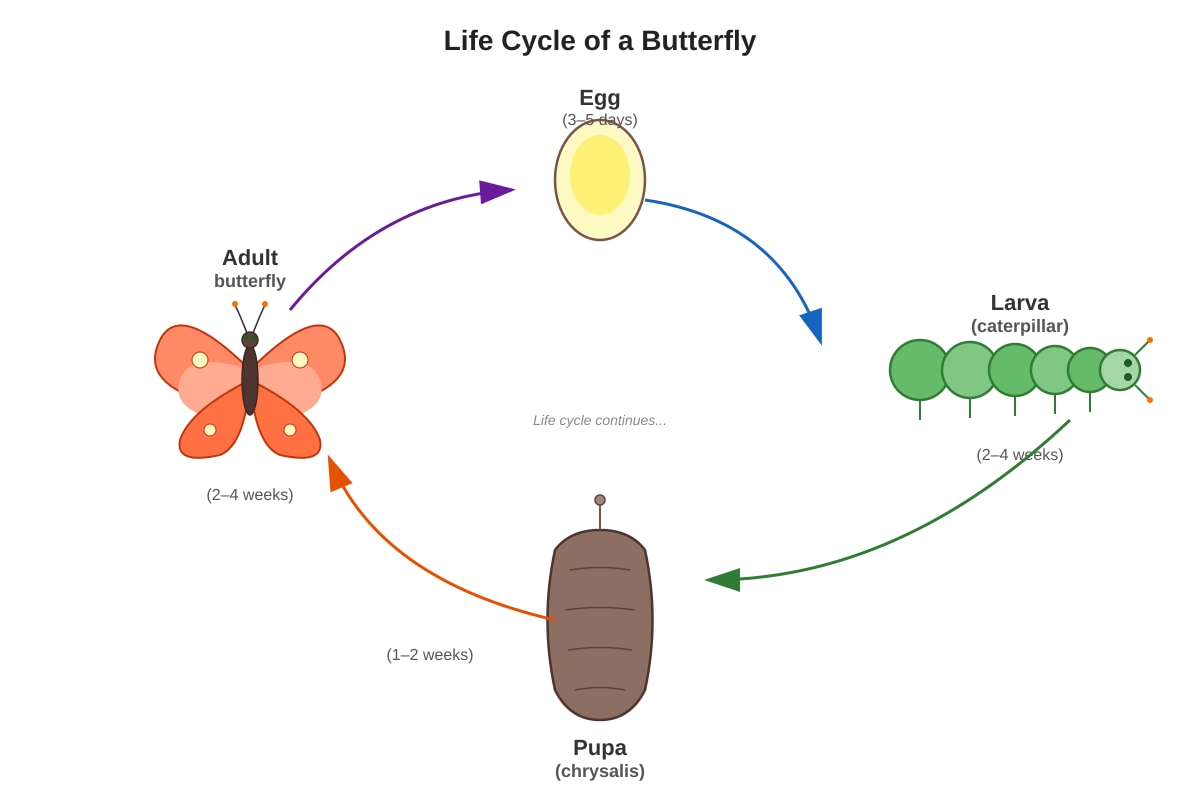
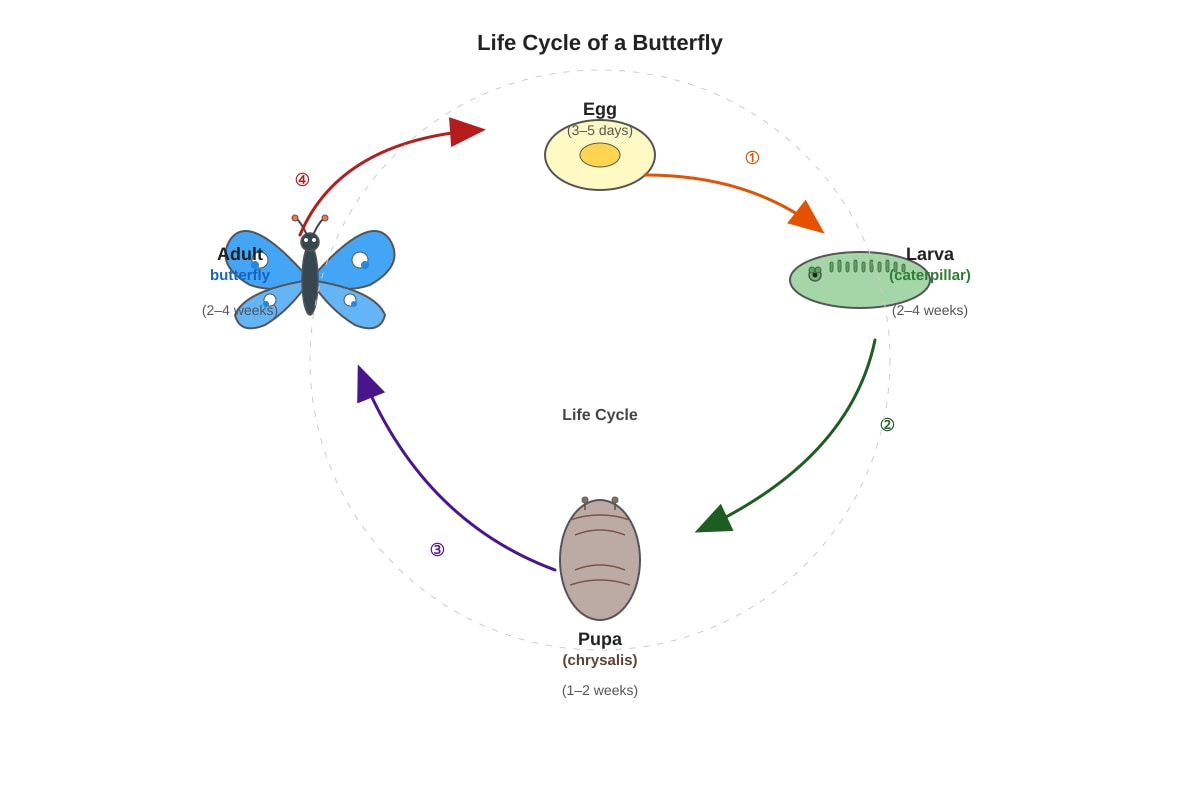
13. (a) Larva (or caterpillar) [1 mark]
(b) The larva (caterpillar) stage. [1 mark]
Explanation: The caterpillar eats constantly and grows very quickly, increasing greatly in size before forming the pupa. [1 mark]
Teaching note: The larva is the feeding and growth stage. The egg does not grow. The pupa is a resting stage where transformation happens, not growth. The adult butterfly mainly reproduces and does not grow significantly.
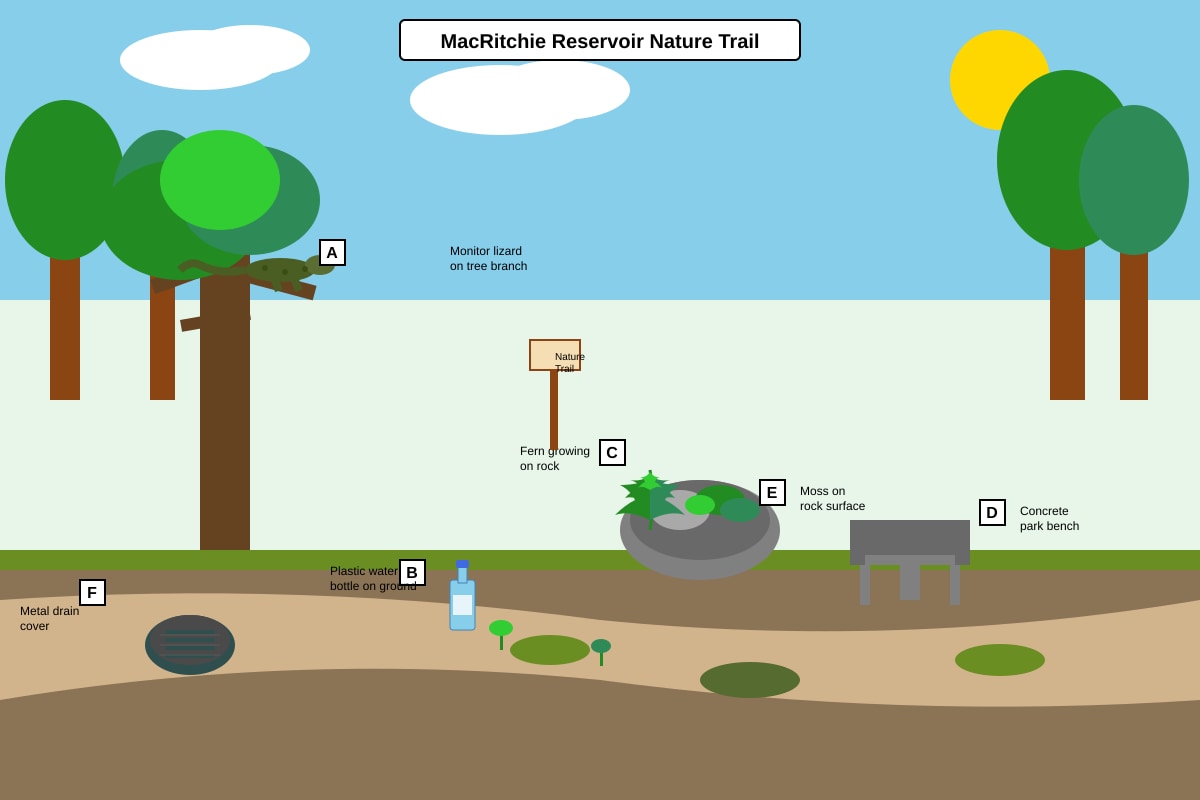
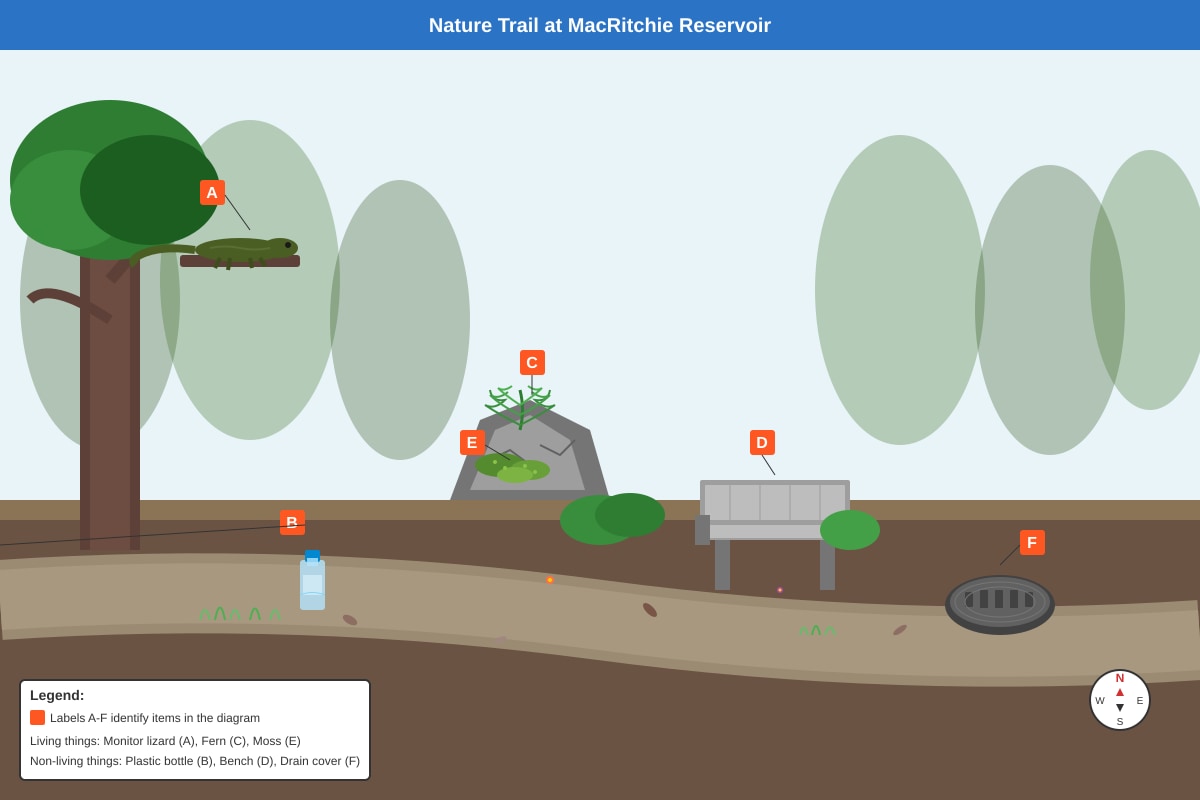
14. (a) A, C, E [2 marks]
Expected visual features for answer verification:
- A (Monitor lizard): Living — animal, can move, grow, reproduce
- B (Plastic water bottle): Non-living — man-made, no life processes
- C (Fern): Living — plant, can grow, make food
- D (Concrete bench): Non-living — man-made object
- E (Moss): Living — small plant, can grow, reproduce by spores
- F (Metal drain cover): Non-living — man-made, no life processes
(2 marks for all three correct; 1 mark for two correct; 0 marks for one or none correct)
(b) Any ONE valid reason: [1 mark]
- It cannot grow
- It cannot reproduce
- It cannot respond to changes
- It does not need air, food, or water
- It cannot move by itself
Teaching note: Emphasize that being made by humans does not automatically make something non-living (bread is made by humans but contains living yeast). However, a plastic bottle has no life processes at all.
15. [3 marks]
| Animal | Group |
|---|---|
| Frog | Amphibian |
| Eagle | Bird |
| Salmon | Fish |
| Cobra | Reptile |
| Bat | Mammal |
(½ mark per correct answer; round up if necessary, or 3 marks total with ½ mark deductions per error)
Teaching notes:
- Eagle: Bird — has feathers, wings, beak, lays eggs
- Salmon: Fish — lives in water, has scales, has fins, lays eggs in water
- Cobra: Reptile — has scales, lays eggs (usually), cold-blooded, most live on land
- Bat: Mammal — has fur, gives birth to live young, feeds babies with milk. Bats are the only mammals that can truly fly!
Common mistake: Students often think bats are birds because they fly. Emphasize that bats have fur and feed milk to babies.
16. (a) Living things grow, and gaining weight is a sign of growth. [1 mark]
(Accept: The rabbit grew bigger / increased in size / living things need food to grow and stay alive)
(b) Any TWO from: [2 marks]
- It can move by itself (hop, run)
- It responds to changes (moves away when touched, ear twitches at sounds)
- It reproduces (rabbits have babies)
- It needs air, food, and water
(1 mark each, max 2 marks)
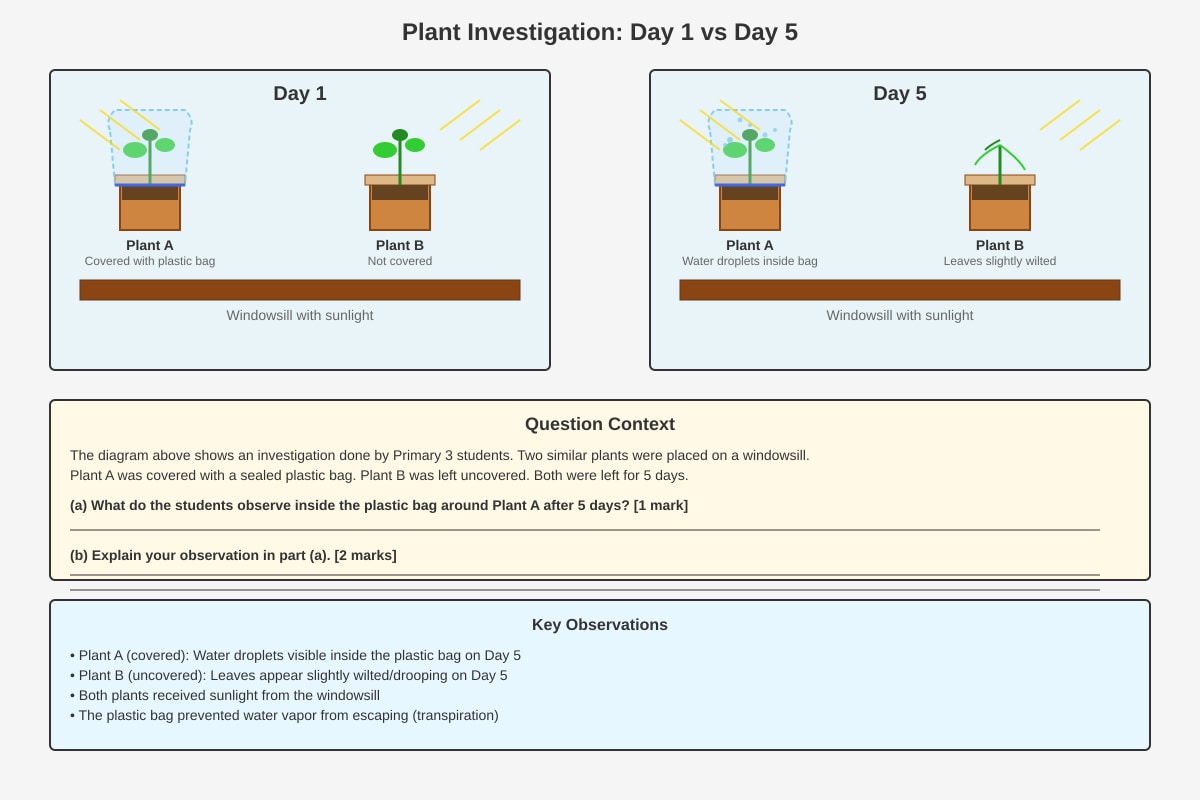
17. (a) Water droplets form on the inside of the plastic bag. [1 mark]
(Accept: The bag becomes misty / foggy inside)
(b) The plant releases water vapour through its leaves [1 mark] during transpiration. The water vapour condenses on the cooler plastic bag to form water droplets. [1 mark]
Step-by-step reasoning:
- Plants take in water through their roots and transport it to leaves
- Leaves release water vapour through tiny openings (transpiration)
- The sealed bag traps this water vapour
- Water vapour cools and condenses into liquid droplets on the inside of the bag
(2 marks — 1 mark for mentioning water coming from plant leaves; 1 mark for explaining condensation or trapped water)
(c) Plant B would wilt / dry up / die. [1 mark]
Explanation: Without the bag to trap moisture, water evaporates from the leaves faster than the roots can absorb it. The plant loses too much water and cannot stay upright.
Teaching note: This question connects to the characteristic "living things need water." The plastic bag demonstration is a classic way to show that plants lose water and need constant supply.
18. (a) Fungi [1 mark]
(b) Fungi cannot make their own food [1 mark] (or: Fungi do not have chlorophyll / green leaves / do not carry out photosynthesis)
Teaching note: This is the key difference. Plants make their own food using sunlight (photosynthesis). Fungi get nutrients by breaking down dead organisms or absorbing nutrients from surroundings.
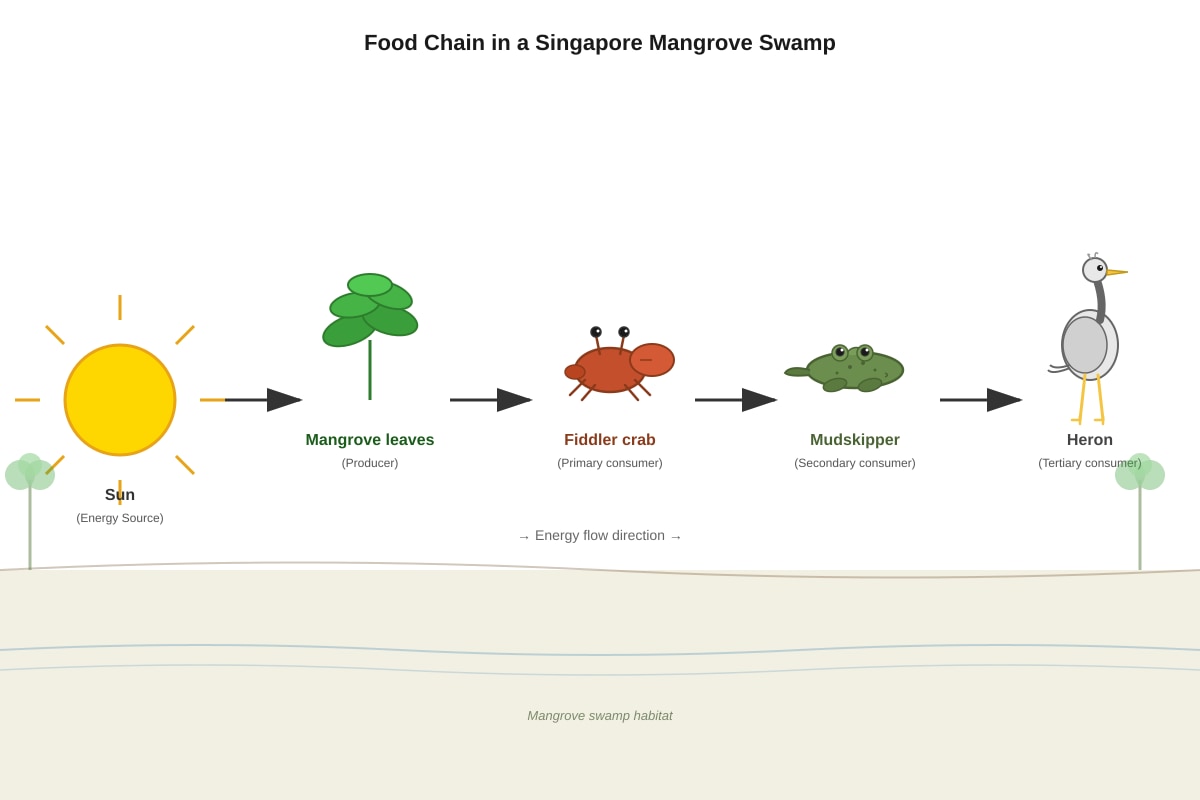
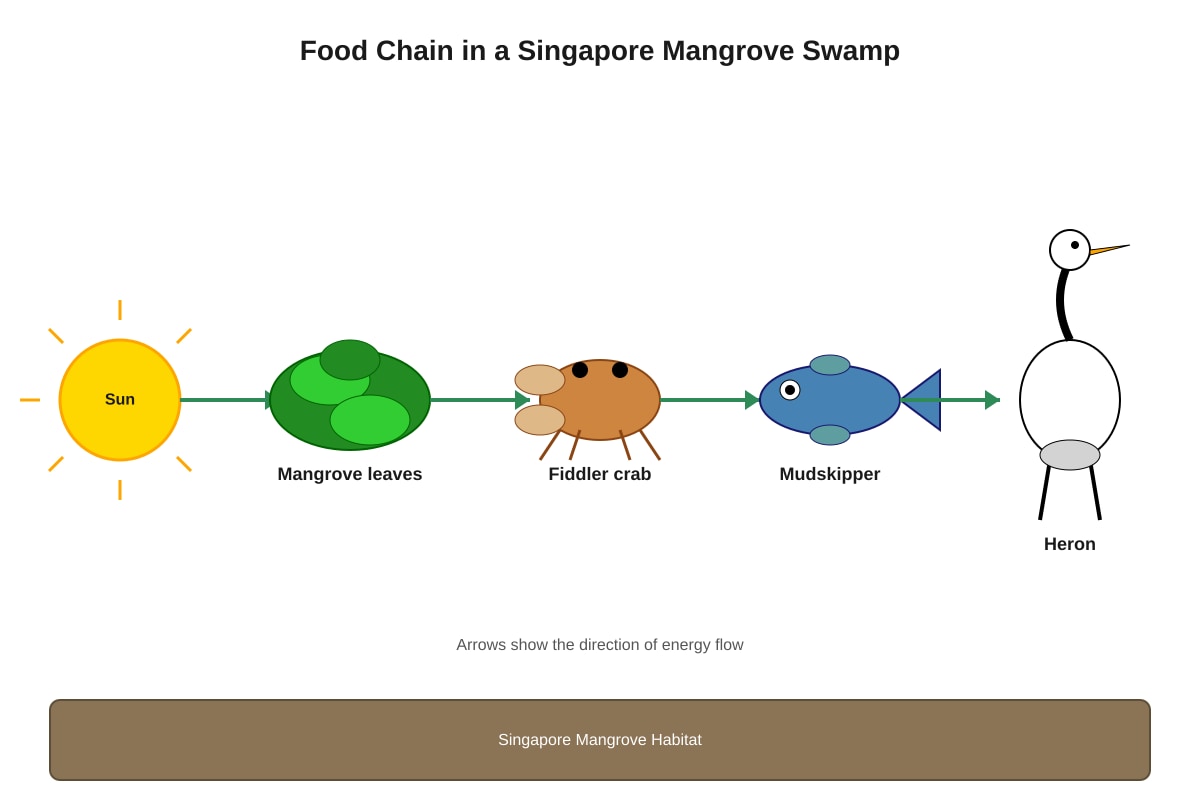
19. (a) Mangrove leaves (or: the mangrove plant / mangrove tree) [1 mark]
Expected visual verification: The producer is always at the start of a food chain, where energy from the Sun enters the system. Mangrove leaves represent the plant that makes food through photosynthesis.
(b) The arrow shows that the mudskipper eats the fiddler crab [1 mark] (or: energy passes from the fiddler crab to the mudskipper)
Teaching note: Arrows in food chains show the direction of energy flow — who gets eaten by whom. The arrow points from food → eater.
(c) The heron population would decrease / die out. [1 mark] The herons would have no food source because they eat mudskippers, and the mudskippers are gone. [1 mark]
Reasoning chain:
- Herons eat mudskippers (need to check diagram arrow direction: mudskipper → heron)
- If mudskippers die, herons lose their food
- Without food, herons cannot survive / reproduce successfully
- Therefore, heron population decreases
(2 marks — 1 mark for correct prediction; 1 mark for explanation linking loss of food to survival)
20. (a) Any ONE from: [1 mark]
- It has eight legs (insects have six legs)
- It has two body parts (insects have three: head, thorax, abdomen)
- It spins silk (most insects do not spin silk for webs)
(b) Arachnids [1 mark]
Teaching note: Spiders belong to the group Arachnida (arachnids), which also includes scorpions, ticks, and mites. Unlike insects, arachnids have 8 legs and 2 body parts. This is a common enrichment point for P3 — while the main syllabus covers insects, birds, mammals, fish, reptiles, and amphibians, spiders are often discussed as "not insects" to challenge misconceptions.
Common mistake: Students often classify anything small and creepy-crawly as a "bug" or insect. The leg count (6 vs 8) is the simplest distinguishing feature.
SUMMARY MARKING TABLE
| Section | Marks |
|---|---|
| Section A (Q1–10) | 10 |
| Section B (Q11–20) | 30 |
| TOTAL | 40 |
DIFFICULTY DISTRIBUTION SUMMARY
| Level | Questions | Approximate % |
|---|---|---|
| Easy (direct recall) | Q1, Q2, Q3, Q9, Q11, Q13a, Q15, Q18 | 35% |
| Medium (application) | Q4, Q5, Q6, Q7, Q8, Q10, Q12, Q14, Q16, Q17a, Q19a,b, Q20 | 50% |
| Challenging (reasoning/synthesis) | Q13b, Q17b,c, Q19c | 15% |
This distribution aligns with P3 Science expectations: foundational knowledge reinforced through Singapore-context application, with some multi-step reasoning to prepare students for PSLE-style thinking in upper primary.
END OF ANSWER KEY — VERSION 3 OF 5