From Real Exams Exam Paper
Primary 3 Science Semestral Assessment 2 (End of Year) Paper 3
Free P3 Science SA2 Paper 3, HY3 Exam version, with questions, answers, and syllabus-aligned practice for Singapore students.
These static practice materials are generated from the site's syllabus and paper-generation workflow, with source and model context shown so students and parents can evaluate the material before use.
Questions
Free quiz and exam paper access
Enter your details to view this paper
Your access is remembered on this device.
Answers
Answer Key: TuitionGoWhere Exam Practice (AI) - Science Primary 3 SA2 Practice (Version 3)
Topic: Diversity
Total Marks: 40
Section A (10 marks)
1. (b) A cactus plant [1]
Teaching note: Living things include plants. A cactus is a plant and is alive; the others are non-living human-made objects.
2. (b) It can grow and reproduce [1]
Teaching note: Growth and reproduction are key characteristics of living things. Colour and softness are not proof of life.
3. (b) Bird [1]
Teaching note: Birds have feathers and lay eggs. Fish have scales, insects have wings/exoskeleton, mammals have fur and usually live young.
4. (b) Cotton shirt [1]
Teaching note: Cotton comes from the cotton plant (natural). Plastic, glass, nylon are man-made.
5. (c) Glass [1]
Teaching note: Glass is transparent (light passes through). Wood, rubber, metal are not see-through.
6. (c) Microorganisms that are living [1]
Teaching note: Bacteria are living microorganisms, not plants and not non-living.
7. (c) Fungus [1]
Teaching note: Fungus is a separate group (e.g., mushroom), not an animal group.
8. (b) Not growth because it is non-living [1]
Teaching note: A balloon inflating is just air filling space; the balloon is non-living so it is not growth of a living thing.
9. (b) Plastic, because it is waterproof [1]
Teaching note: Raincoats must keep water out; plastic does not absorb water.
10. (b) A fungus [1]
Teaching note: Mushroom is a fungus, not a plant, insect, or bacterium.
Section B (12 marks)
11. [1] Any one: need air / need food / need water / can grow / can reproduce / can respond / can move by itself.
Teaching note: Living things share these traits; state one clearly.
12. [2] Dog – L; Stone – NL (1 mark each)
Teaching note: Dog is animal (living); stone is non-living.
13. [1] Plastic / glass / nylon (any one man-made).
Teaching note: Natural would be wood, cotton; man-made is produced by humans.
14. [1] Transparent (can see through) OR waterproof (does not leak).
Teaching note: Glass is used as cup because we can see liquid and it does not absorb.
15. [1] Gills.
Teaching note: Fish use gills to take in oxygen from water.
16. [1] False.
Teaching note: Some fungi like mushrooms are edible and useful; not all harmful.
17. [2] Frog → amphibian; Bee → insect (1 mark each).
Teaching note: Frog lives both water/land as young/adult; bee is an insect with wings.
18. [1] Flexible / soft / bends without breaking.
Teaching note: Rubber bends, good for grip and comfort.
19. [2] No. (1m) Reason: It is a toy made of cloth/plastic, cannot grow or reproduce. (1m)
Teaching note: Looks like animal but non-living; common mistake is thinking moving toy = alive.
20. [2] Glass (1m) because it is transparent so we can see food inside (1m).
Teaching note: Wood is not see-through; glass allows light through.
Section C (18 marks)
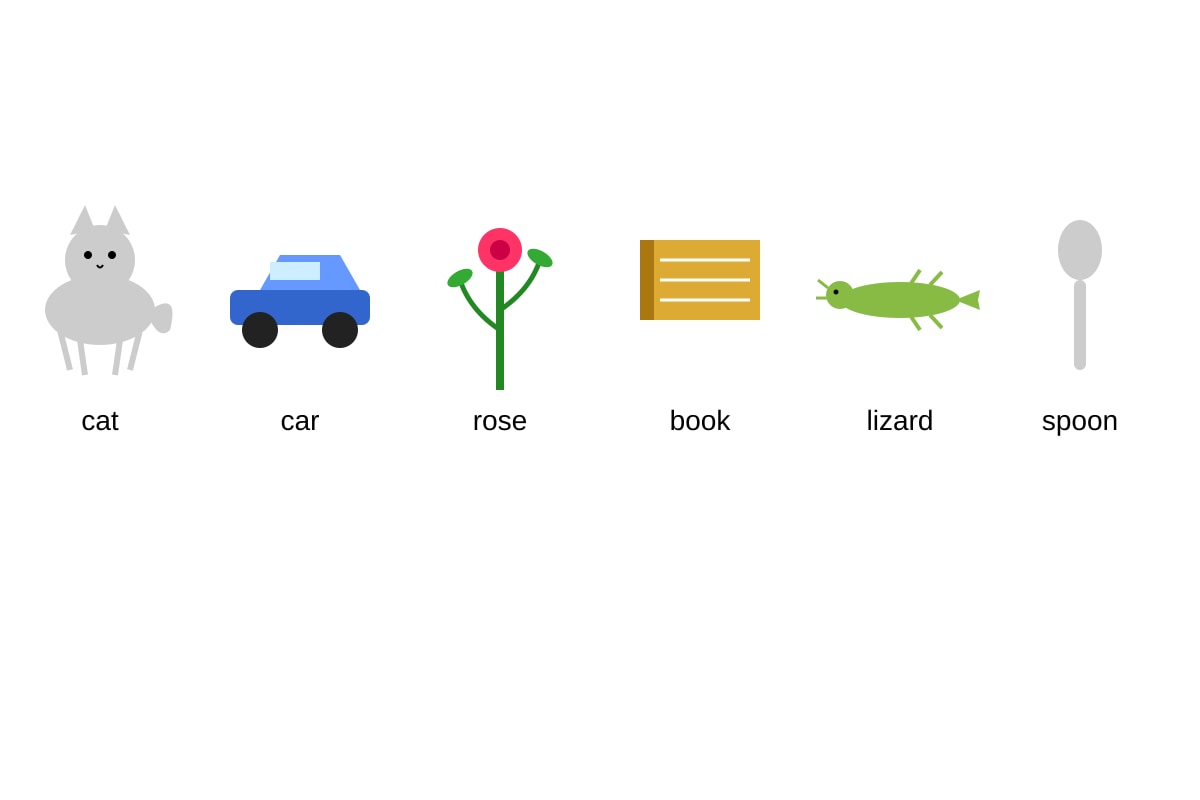
21. [2] Living: cat, rose, lizard (1m for at least 2 correct, full if all 3). Non-living: car, book, spoon (1m).
Image note: Diagram shows 6 labelled objects; cat/rose/lizard are living, others non-living.
22. [2] Plastic: Transparent Yes, Waterproof Yes. Wood: Transparent No, Waterproof No. (0.5 each)
Teaching note: Plastic see-through and water-resistant; wood opaque and absorbs water.
23. [2] (a) Reptile (1m) (b) Lizard / snake / turtle (1m).
Teaching note: Dry scales + lungs + land eggs = reptile.
24. [2] Metal is strong and conducts heat (1m). It can be heated to cook food (1m).
Teaching note: Property → use link required.
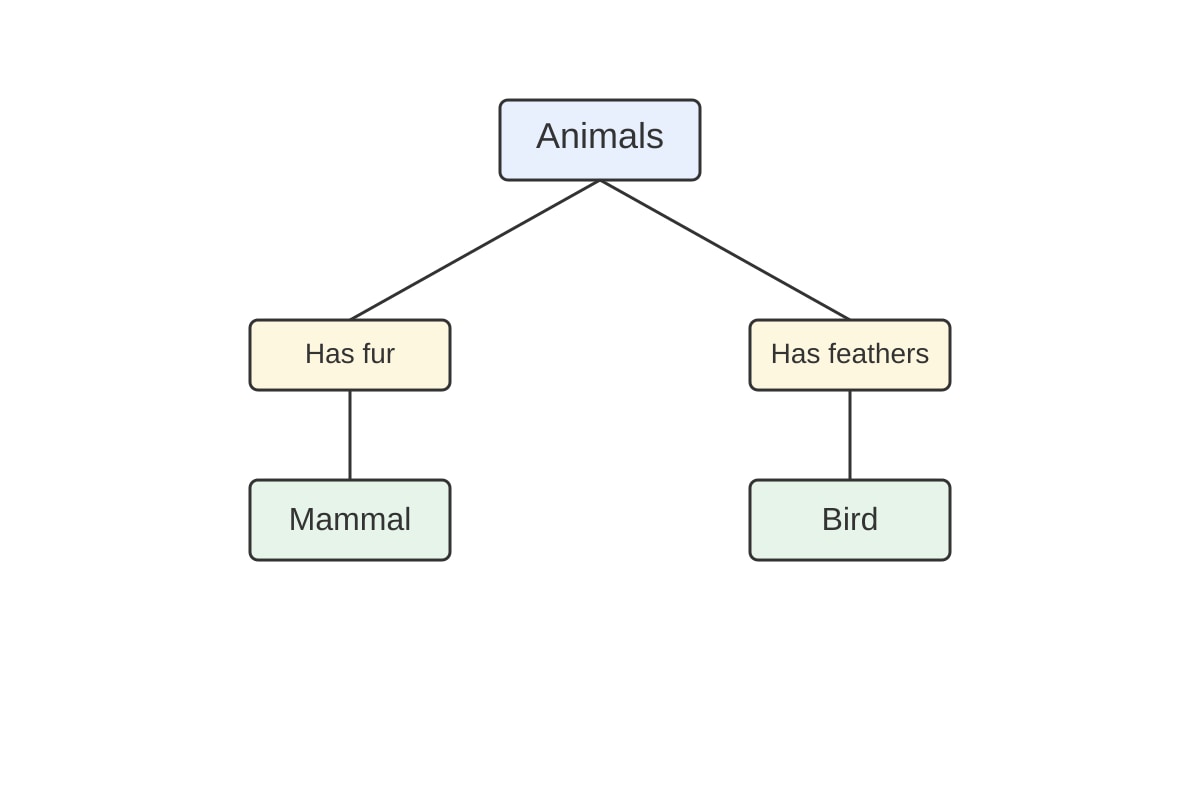
25. [2] Mammal (1m). Because dog has fur, chart shows fur → Mammal (1m).
Image note: Tree diagram shows Animals → fur → Mammal; dog matches fur branch.
26. [2] Example: bacteria help make yoghurt / break down food in gut (1m) + brief explain (1m).
Teaching note: Not all bacteria bad; some aid digestion or food.
27. [2] No (1m). Cloud moves by wind, not by itself; non-living cannot move on own or grow (1m).
Teaching note: Movement alone does not mean living.
28. [3] (a) Cotton shirt (1m) (b) Plastic raincoat (1m) (c) Plastic waterproof keeps rain out (1m).
29. [2] air, respond, grow, reproduce (0.5 each).
Teaching note: Fill blanks with syllabus words.
30. [3] (a) Yes (1m) (b) Amphibian (1m) (c) Egg / tadpole / adult (1m).
Teaching note: Frog is living amphibian; life cycle stage from text.