From Real Exams Exam Paper
Primary 3 Science Semestral Assessment 2 (End of Year) Paper 1
Free P3 Science SA2 Paper 1, HY3 Exam version, with questions, answers, and syllabus-aligned practice for Singapore students.
These static practice materials are generated from the site's syllabus and paper-generation workflow, with source and model context shown so students and parents can evaluate the material before use.
Questions
Free quiz and exam paper access
Enter your details to view this paper
Your access is remembered on this device.
Answers
Answer Key - SA2 Practice Paper Version 1 (Primary 3 Science: Diversity)
Total Marks: 40
Section A (10 marks)
-
B
Teaching note: A cactus plant is living (needs air, water, food; grows). Toys, wood, plastic are non-living. Common mistake: choosing toy robot because it moves – movement by battery is not living. -
B
Teaching note: Reproduction is a characteristic of living things. Softness, colour, size are not proof of life. -
C
Teaching note: Insects have wings and six legs (3 body parts). Fish have fins/scales, birds have feathers, mammals have fur. -
B
Teaching note: Mushroom is a fungus. Fern, grass, rose are plants. -
B
Teaching note: Cotton is natural (from cotton plant). Plastic, glass, nylon are man-made. -
C
Teaching note: Waterproof means water cannot pass through, keeping person dry. -
C
Teaching note: Goldfish has scales and gills. Frog is amphibian, lizard reptile, sparrow bird. -
C
Teaching note: Bacteria are microorganisms (living but tiny). Not plants, not insects, not non-living. -
C
Teaching note: Glass is transparent (lets light through) for window. Wood/rubber/fabric not clear. -
A
Teaching note: Teddy bear cannot grow by itself; it is non-living though it looks like a bear.
Section B (12 marks)
-
(2 marks) Any two from: need air / need water / need food / grow / reproduce / respond to changes / move by themselves.
Marking: 1 mark per correct characteristic. -
(2 marks) Living: rose, dog. Non-living: rock, spoon.
Marking: 1 mark each list correct. -
(2 marks) Flexible (bends without breaking) OR waterproof (if treated).
Teaching note: Rubber bends, good for soles to grip. -
(2 marks) Fungi do not make their own food like plants (or: fungi are not green, not plants).
Marking: 1 mark for stating difference. -
(2 marks) Example: wood (from tree), leather (from animal skin), cotton (from plant).
Marking: 1 mark name, 1 mark source. -
(2 marks) Metal is strong and conducts heat well, so it can be heated for cooking.
Marking: 1 mark property, 1 mark use link.
Section C (18 marks)
-
(3 marks)
(a) Sparrow – Bird; Shark – Fish; Frog – Amphibian; Bee – Insect. (2 marks: 0.5 each)
(b) None. (1 mark)
Teaching note: Mammals have fur/hair and lungs; none in table. -
(4 marks)
(a) Wooden desk, cotton towel. (1 mark)
(b) Glass jar. (1 mark)
(c) Plastic is waterproof / light / does not break easily, good for holding water. (2 marks: property + reason) -
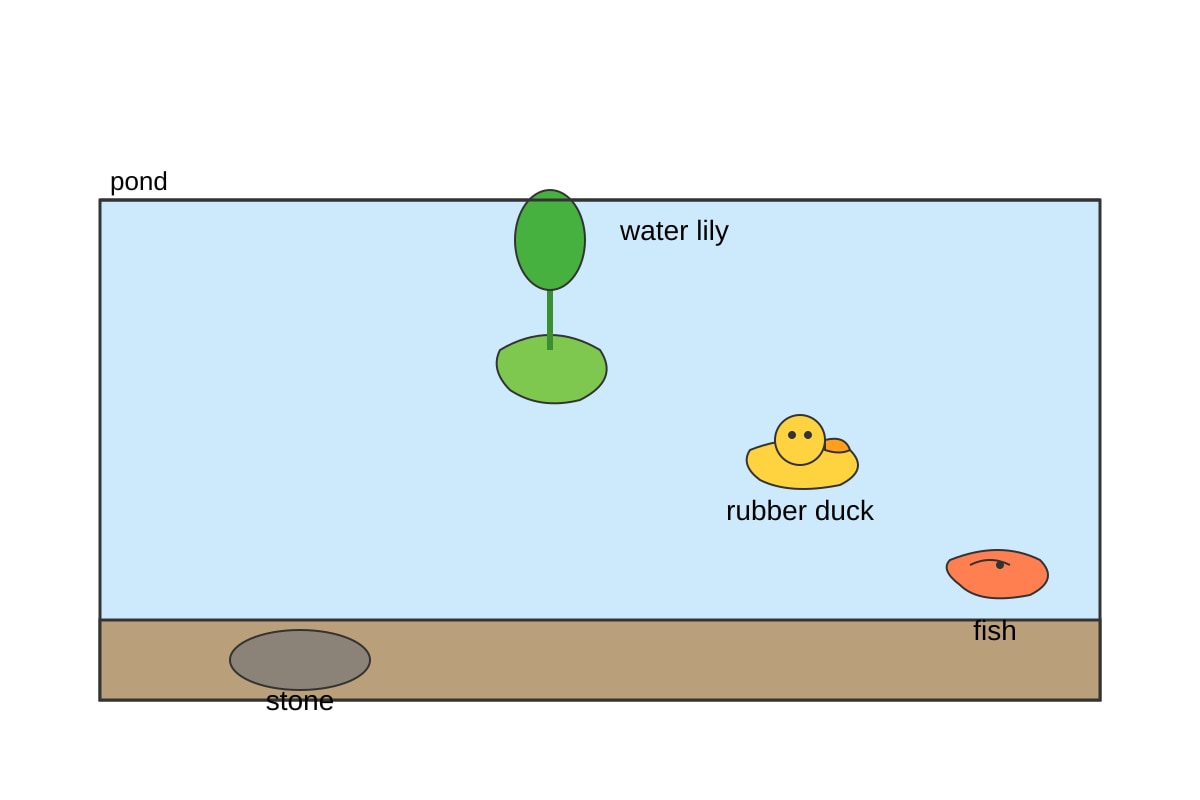
(5 marks) Based on image_placeholder Q19-fig1: fish, water lily labelled living; stone, rubber duck non-living.
(a) Fish, water lily. (2 marks)
(b) Rubber duck cannot grow / not alive. (1 mark)
(c) Has leaves/flowers, grows in water, makes food (any plant characteristic). (2 marks) -
(6 marks)
(a) Steel. (1 mark: absorbs no water)
(b) Steel is not flexible, heavy, not waterproof? Actually steel not waterproof? It does not absorb but is hard; answer: steel does not bend, is heavy, not suitable for clothing. (2 marks: property + reason)
(c) Cloth for clothes / towel. (1 mark)
(d) Paper absorbs ink / bends / light to carry. (2 marks: property + writing link)