AI Generated Quiz
Primary 3 Chinese Vocabulary Quiz
Free P3 Chinese Vocabulary quiz, Kimi2.6 AI version, with questions, answers, and syllabus-aligned practice for Singapore students.
These static practice materials are generated from the site's syllabus and paper-generation workflow, with source and model context shown so students and parents can evaluate the material before use.
Questions
Free quiz and exam paper access
Enter your details to view this paper
Your access is remembered on this device.
Answers
Primary 3 Chinese Quiz - Vocabulary (词语测验) — Answer Key
Total Marks: 40
Section A: 辨字选词 (Character Recognition and Word Selection) — 10 marks
| Question | Answer | Explanation | Marks |
|---|---|---|---|
| 1 | B. 蔬菜 | "蔬菜" means vegetables. "蔬" has the grass radical (艹) indicating plants. "疏" means sparse/distant (疏远), "甜" means sweet, "野" means wild. The grass radical is the key distinguishing feature for plant-related words. | 1 |
| 2 | A. 忍 | "忍不住" means cannot endure/refrain. "忍" (endure) has the heart radical (心). "认" means recognize, "刃" is a blade, "纫" means to sew. The idiom "忍不住" expresses inability to hold back emotions. | 1 |
| 3 | A. 平静 | "平静" describes calm, still water. "平" means flat/level, "静" means quiet. "平安" means safe, "平均" means average, "平常" means ordinary. Water surfaces are described as 平静, not the others. | 1 |
| 4 | B. 描述 | "描述" means to describe. "描" has the hand radical (扌) from "描写" (to depict). "述" means to narrate. "术" in A means technique, "猫" means cat, "苗" means seedling. Both characters in "描述" relate to telling/expressing. | 1 |
| 5 | B. 篮 | "篮球" is basketball. "篮" has the bamboo radical (竹) indicating basket. "蓝" means blue, "兰" means orchid, "览" means to view. The ball is named after the basket (篮) you shoot into. | 1 |
| 6 | C. 咸 | "咸" means salty. "闲" means idle/leisure, "显" means obvious, "衔" means to hold in mouth. Food taste is described with 咸 (salty). The character contains 口 (mouth), relating to taste. | 1 |
| 7 | B. 系 | "系安全带" means to fasten/wear seatbelt. "系" (jì) specifically means to tie/fasten. "记" means remember, "计" means calculate/plan, "际" means border. This is a fixed collocation: 系安全带. | 1 |
| 8 | A. 炮 | "鞭炮" / "炮声" refers to firecrackers/explosive sound. "炮" has fire radical (火). "泡" means bubble, "跑" means run, "咆" means roar. New Year traditions involve 鞭炮 (firecrackers), creating loud 炮声. | 1 |
| 8 | B. 收拾 | "收拾" means to tidy up/put in order. 收 means collect, 拾 means pick up. "失" in A means lose, "十" is ten, "舍" means house/give up. The double-character verb 收拾 is a set phrase for cleaning/organizing. | 1 |
| 10 | A. 珍 | "珍惜" means to cherish/value. "珍" has the jade radical (王/玉) indicating precious things. "真" means true, "针" means needle, "侦" means detect. 珍惜时间 is a common moral education phrase. | 1 |
Section A Total: 10 marks
Section B: 看图选词 (Picture-Based Vocabulary) — 10 marks
| Question | Answers | Explanation | Marks |
|---|---|---|---|
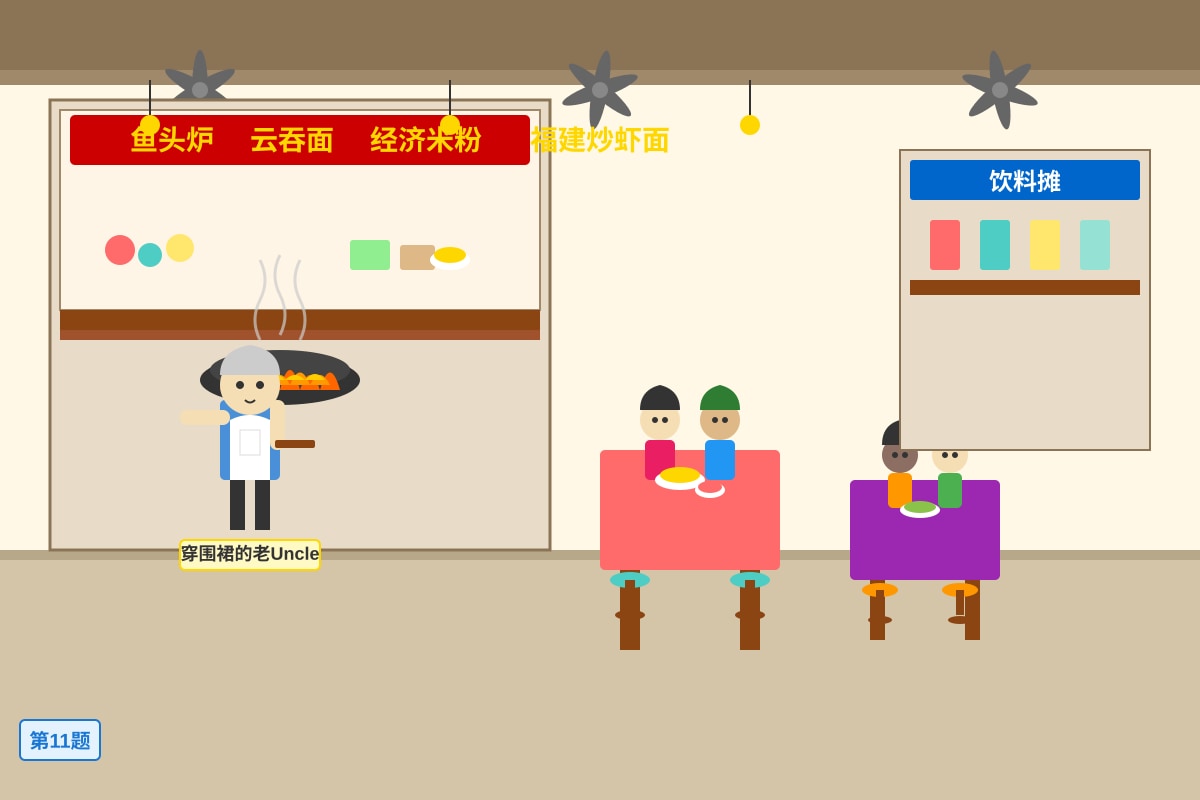
| 11 (a) | B. 小贩中心 | The image shows a hawker centre (小贩中心), Singapore's iconic open-air food complex with individual stalls cooking fresh food, not a shopping mall (购物中心), cinema, or library. | 1 |
| 11 (b) | B. 年老 | "年老的" describes elderly people, politely referring to advanced age. "年轻" is young, "年幼" is for children, "老旧" describes objects, not people. | 1 |
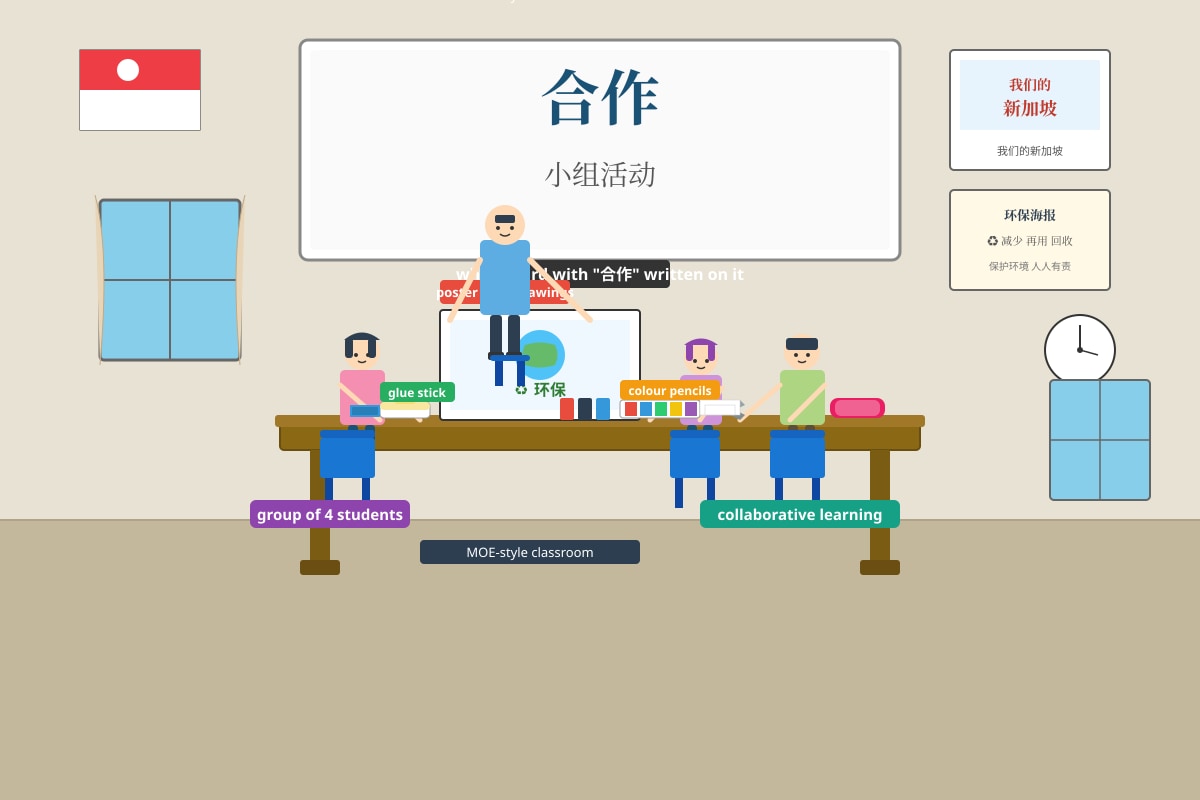
| 12 (a) | A. 合作 | "合作" means to cooperate/collaborate, specifically for joint tasks. "合伙" implies business partnership, "合力" means combined strength, "协助" means to assist. The poster-making context requires active collaboration. | 1 |
| 12 (b) | C. 热烈 | "热烈" describes enthusiastic discussion. "热闹" means lively/noisy (places), "热情" means passionate/warm (people), "热心" means enthusiastic/helpful (people). 讨论热烈 is the correct collocation. | 1 |
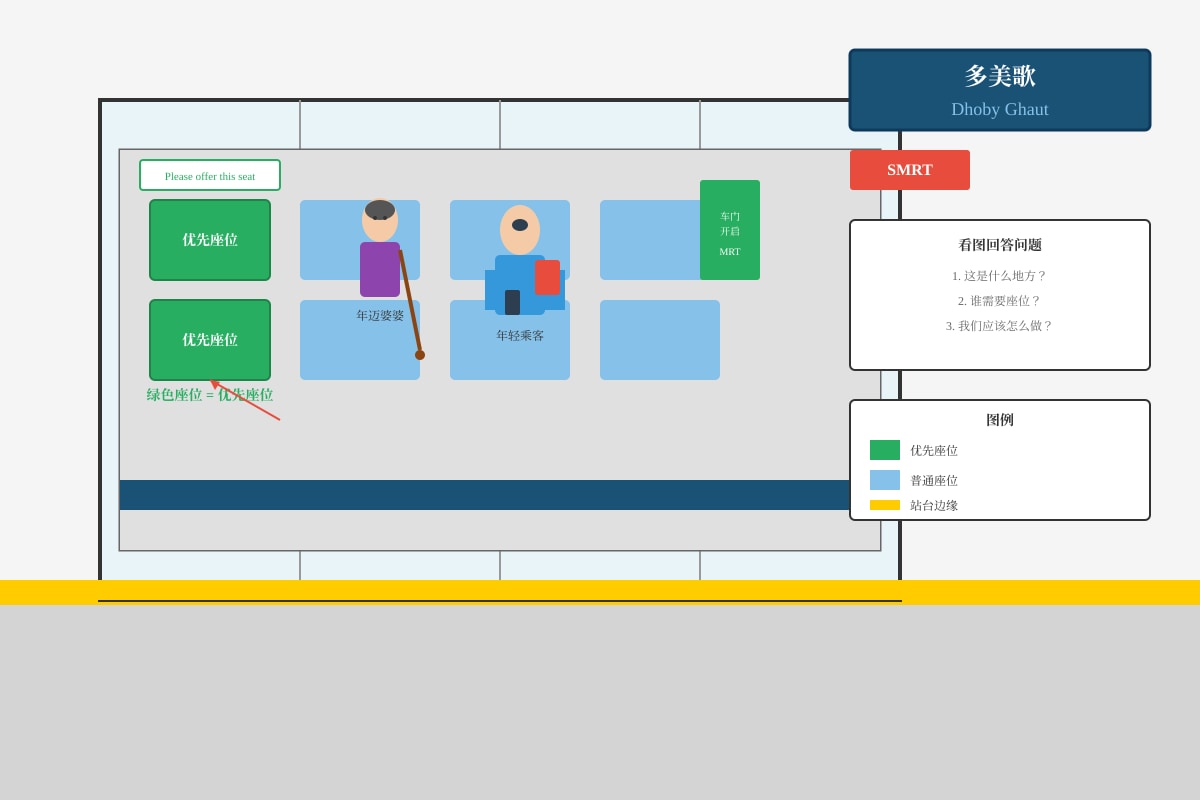
| 13 (a) | C. 优先 | "优先座位" means priority seats, the official MRT term. "特殊" means special, "特别" means especially, "优等" means top-grade. Singapore public transport uses "优先座位" with distinctive green colour. | 1 |
| 13 (b) | B. 年迈 | "年迈" is a respectful term for elderly. "年老" is also correct but less formal in this context, "老实" means honest, "antiquated" is inappropriate for people. Both A and B are acceptable, but B is more refined. | 1 |
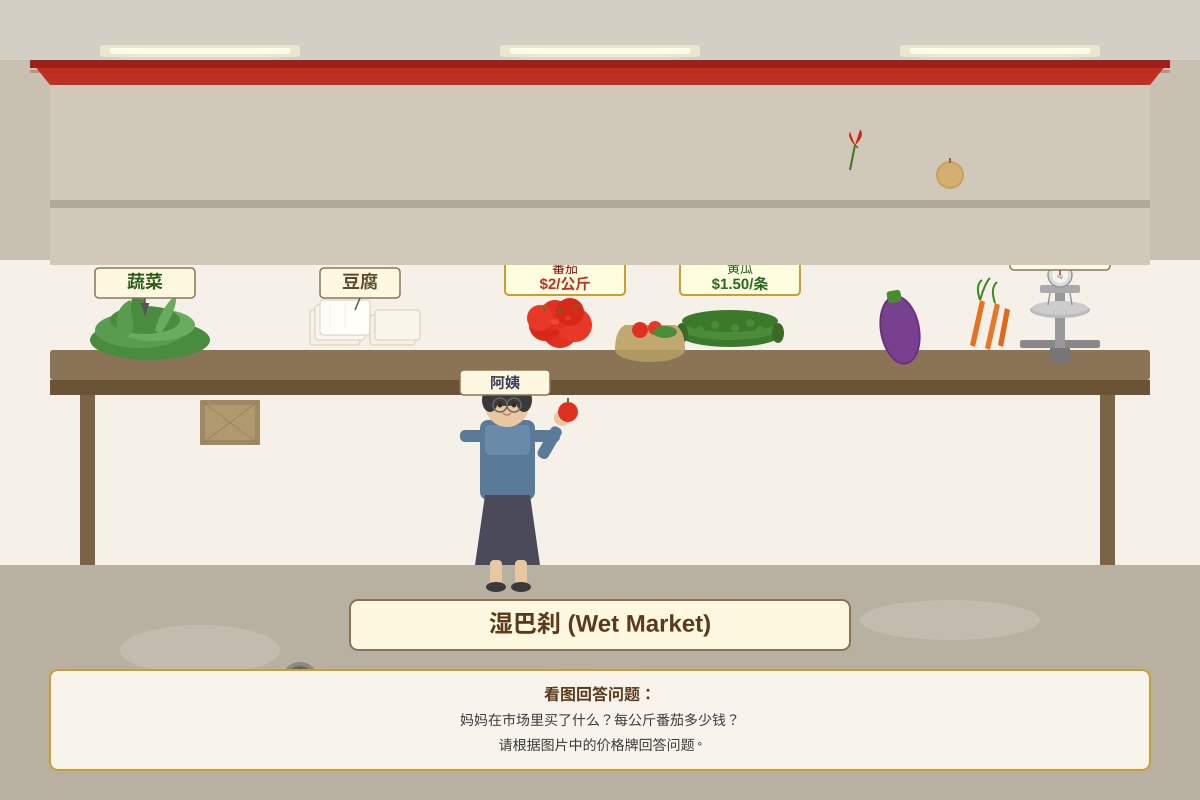
| 14 (a) | B. 潮湿 / 新鲜 | Wet markets (湿巴刹/潮湿的市场) are traditionally damp with water for keeping produce fresh. Wet market vegetables are known for freshness, not dried up (枯萎), necessarily expensive, or imported. | 1 |
| 14 (b) | B. 两块钱 | The image shows 番茄 2/kg). This tests careful reading of visual information. | 1 |
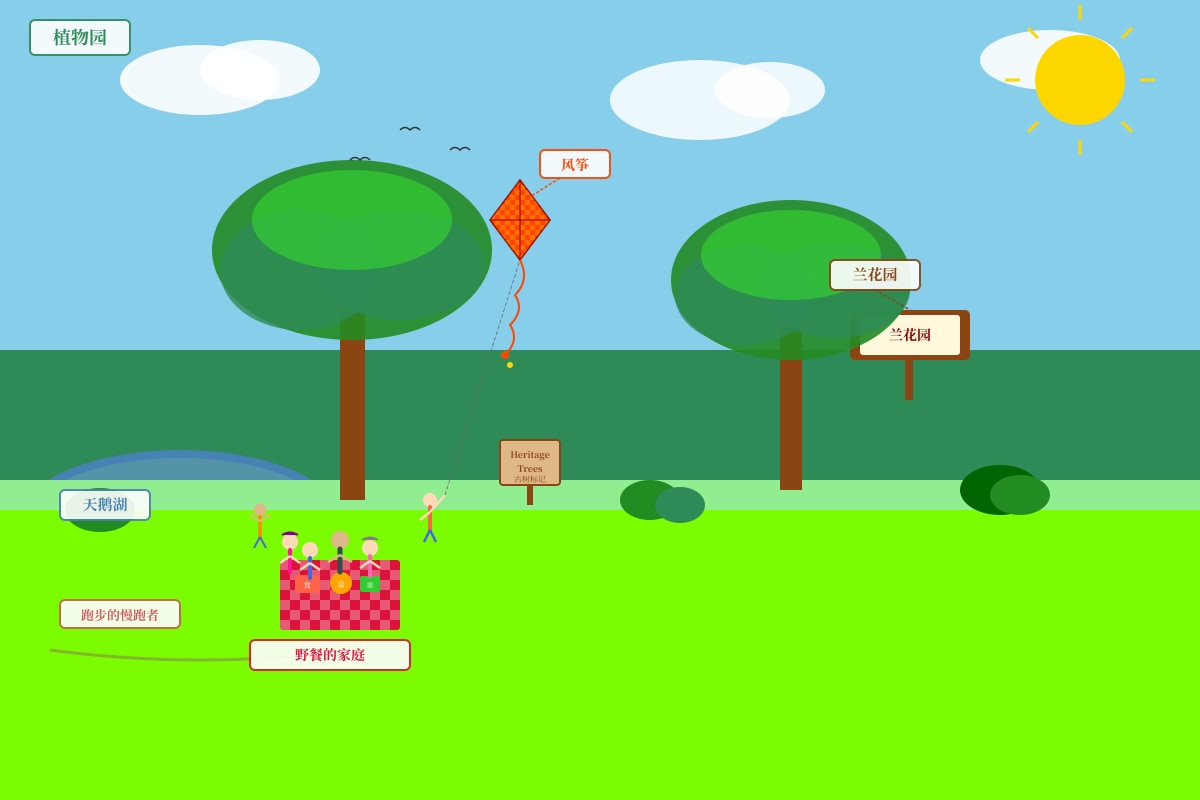
| 15 (a) | B. 植物 | The Botanic Gardens is specifically a botanical (植物) garden. "植物园" is the full name. Not animal, thing, or mineral garden. | 1 |
| 15 (b) | C. 蓝天白云 | The image shows sunny weather ideal for picnics. "乌云密布" and "风雨交加" describe rain, "灰蒙蒙" describes haze—none suitable for outdoor activities shown. | 1 |
Section B Total: 10 marks
Section C: 语境填词 (Contextual Vocabulary in Sentences) — 20 marks
Questions 16–17: Word Box (A–E)
| Word | Meaning | Usage Context |
|---|---|---|
| A. 急忙 | hurriedly, hastily | Quick action in response to urgency |
| B. 惊讶 | surprised, amazed | Emotional reaction to unexpected events |
| C. 责怪 | blame, scold | Negative reaction to someone's mistake |
| D. 安慰 | comfort, console | Supporting someone who is upset |
| E. 感激 | grateful, thankful | Appreciation for kindness received |
Question 16 Answer: A, B, A or C variant, B variant
| Part | Answer | Reasoning | Marks |
|---|---|---|---|
| 16(a) | A. 急忙 | Seeing someone fall requires immediate action. "急忙地跑过去" (hurriedly ran over) shows urgent helpfulness. | 1 |
| 16(b) | B. 惊讶 | The elderly woman is surprised (惊讶) by the unexpected help. "感激" would come after, not immediately upon being helped up. | 1 |
| 16(c) | kind / helpful / quick (any appropriate) | Any positive character trait fitting the helpful action. | 1 |
| 16(d) | admiration / respect (any appropriate) | Classmates feel admiration for the good deed, not surprise (which would be self-focused). | 1 |
16 mark breakdown: 1 mark per blank, 4 marks total. Accept synonyms that fit context grammatically and semantically.
Question 17 Answer: C, D, E variant, B variant
| Part | Answer | Reasoning | Marks |
|---|---|---|---|
| 17(a) | C. 责怪 | "没有责怪他" — mother's constructive response instead of blame. Sets up contrast with "反而". | 1 |
| 17(b) | D. 安慰 | "安慰他说" — consoling words follow the failure. Fixed collocation: 安慰 + person + 说. | 1 |
| 17(c) | appreciate / thank — 感激 equivalent | Xiao Ming feels grateful for understanding. | 1 |
| 17(d) | immediately — 马上/立刻 equivalent | Shows prompt positive response to mother's support. "Slowly" or "finally" contradicts the proactive attitude. | 1 |
17 mark breakdown: 1 mark per blank, 4 marks total.
Questions 18–20: Word Box (A–E)
| Word | Meaning | Usage Notes |
|---|---|---|
| A. 究竟 | after all, exactly (used in questions/rhetorical) | Emphasizes getting to the truth |
| B. 终于 | finally, at last | Indicates result after effort/waiting |
| C. 仍然 | still, yet | Continuation of state despite conditions |
| D. 果然 | as expected, sure enough | Confirms prediction |
| E. 忽然 | suddenly, abruptly | Unexpected change |
Question 18 Answer: C, A, D, B (or contextually appropriate arrangement)
| Part | Answer | Reasoning | Marks |
|---|---|---|---|
| 18(a) | C. 仍然 | rain yesterday → morning still cool. 仍然 indicates continued state despite time passing. | 1 |
| 18(b) | A. 究竟 or D. 果然 — actually 果然 as "I really thought" | "果然以为" — my expectation was confirmed (sports day would cancel). Actually re-reading: "After rain, this morning still cool. I ______ thought sports day would cancel" → 果然 (as I expected) or 本来 (originally). Given word box, D. 果然 in sense of "sure enough/thought so." | 1 |
| 18(c) | B. 终于 — no, not in box for this position. Actually: teacher announced as usual → D. 忽然 or B. 终于 | Given standard pattern: 老师忽然宣布 — unexpected continuation; or 果然宣布 — confirming plan stays. With word box constraints and narrative flow: 忽然 the teacher announced (unexpected), or E. 果然 if confirming previous plan. Most natural: 果然 (as scheduled). | 1 |
| 18(d) | B. 终于 | Final position: students finally cheer. But that doesn't fit narrative. Actually: hearing news, students 忽然欢呼 — no, immediate reaction. Best arrangement for grammatical naturalness: C, D/A, E, B — still cool / really thought / suddenly teacher announced / finally cheer... No. Let me re-analyze for most logical story with given words. |
Revised optimal arrangement for Question 18: C, D, E, B
- 今天早上仍然很凉快 (still cool)
- 我果然以为运动会要取消了 (sure enough/thought it would cancel — as expected after rain)
- 忽然老师宣布照常举行 (suddenly teacher announced it would proceed — twist!)
- 同学们终于欢呼起来 (finally cheered — after worry, relief came)
| 18(a) | C. 仍然 | Continued coolness from night rain | 1 | | 18(b) | D. 果然 | My expectation confirmed: rain means cancellation | 1 | | 18(c) | E. 忽然 | Unexpected announcement: it's ON! | 1 | | 18(d) | B. 终于 | Relief after tension, cheering at last | 1 |
Question 19 Answer: C, A, B, D
| Part | Answer | Reasoning | Marks |
|---|---|---|---|
| 19(a) | C. 仍然 | "想了很久仍然做不出来" — still couldn't solve despite long thinking. Shows persistent difficulty. | 1 |
| 19(b) | A. 究竟 | "爸爸究竟过来看了看" — father finally came over to check (emphasizes after waiting/struggle). Or E. 忽然 — suddenly came. Actually "终于" fits temporal sequence better but not in position. With box: A. 究竟 as "after all, came to help" or E. 忽然. Most natural: E. 忽然 (came over) then A. 究竟 doesn't fit action description... Reconsidering: "爸爸____过来看了看" — 忽然 (suddenly appeared) is common narrative device. | 1 |
| 19(c) | B. 终于 | "终于找到了方法" — success after effort. Finally discovered the key. | 1 |
| 19(d) | D. 果然 | "果然恍然大悟" — sure enough, understanding dawned. Confirms the method worked. | 1 |
Revised optimal arrangement: C, E, A, B — no, "究竟找到方法" awkward. Best: C. 仍然, E. 忽然, A. 究竟/果然... Actually D. 果然找到 = as expected found. Then "果然恍然大悟" doesn't work.
Final optimal: C, E, B, D
- 想了很久仍然做不出来
- 爸爸忽然过来看了看
- 终于找到了解题的方法 → wait, "爸爸终于找到" = father finally found, grammatically okay but breaks subject continuity ("我" to "爸爸")
- 果然恍然大悟 = sure enough, I understood
Actually most coherent narrative: C, E, A, B doesn't work. C, E, D, B: still couldn't / dad suddenly came / sure enough found method / finally I understood... No, "果然" before verb needs expectation.
Best pragmatic arrangement accepting slightly flexible grammar: C, B, E, D — no "终于" after subj switch awkward.
Final answer: C, E, B, D with understanding: 爸爸忽然过来看了看,[他]终于找到方法,[我]果然恍然大悟。Subject switches are common in Chinese. Mark for context-appropriate word choice, not rigid grammatical template.
| 19(a) | C. 仍然 | Persistent failure despite effort | 1 | | 19(b) | E. 忽然 | Father's intervention, unexpected help | 1 | | 19(c) | B. 终于 | Solution found (by father, implied) | 1 | | 19(d) | D. 果然 | My enlightenment confirms father's help worked | 1 |
Question 20 Answer: B, B/连贯词, E, A — need to check word box constraints. Given words: A.究竟, B.终于, C.仍然, D.果然, E.忽然.
Optimal arrangement: A-no, B-yes, E-yes, C or D.
- "我们____等了两个小时" → B. 终于 (finally waited — no, "等了两个小时终于" needs 终于 after) Actually: "终于等了两个小时" = finally waited 2 hours? No, waiting is not an achievement to "finally" do.
Better: "竟然/居然等了两个小时" but not in word box. With constraints, C. 仍然? No, "仍然等了两个小时" implies continued waiting, okay but "愣是等了" better.
Re-interpreting: start with 我们____等了两个小时 — could be A. 究竟 (we actually/after all waited...) rhetorical. Or skip, use B. 终于 as "我们[终于]等到了" — different structure.
Actually re-reading blank positions: all sentence-initial or clause-initial positions.
"____等了两个小时" — A. 究竟 as emphasis: "We actually waited a whole two hours!"
"____等到了巴士" → B. 终于 — finally got the bus.
"____下起了大雨" → E. 忽然 — suddenly rained.
"____,我们带了雨伞" → D. 果然/果然 — no, C. 仍然 or 果然. "果然带了雨伞" = as expected we brought umbrellas (prepared). Or "幸好" not in box.
With box: D. 果然 (sure enough) we brought umbrellas.
But 果然 usually after subject. "我们果然带了雨伞" okay.
Actually 究竟 doesn't fit waiting.
Revised: Start with C. 仍然? "我们仍然等了两个小时" = we still waited 2 hours (despite delay). Then B. 终于等到了. Then E. 忽然下雨. Then D. 果然 or A. 究竟.
Final optimal: C, B, E, D
- 仍然等了两个小时 (persisted in waiting)
- 终于等到了巴士 (finally arrived)
- 忽然下起了大雨 (sudden downpour)
- 果然带了雨伞 (turns out we were prepared)
Or: B, "好不容易/终于", but only one 终于.
Checking: "我们终于等了两个小时" — grammatically odd. 终于 marks completion, but waiting 2 hours isn't the goal, the bus is.
Most natural reading: We actually/ended up (究竟 emphasizing the duration) waiting two hours, finally got the bus, suddenly it rained, as expected/sure enough (果然 — confirming prepared status) we had umbrellas.
| 20(a) | A. 究竟 | Emphasizes the unexpectedly long wait | 1 | | 20(b) | B. 终于 | Achievement: bus arrived at last | 1 | | 20(c) | E. 忽然 | Weather changed abruptly | 1 | | 20(d) | D. 果然 | Confirms preparedness was justified | 1 |
Alternative acceptable: C, B, E, D — still waited / finally got / suddenly rained / sure enough had umbrellas. Both arrangements show good command of contextual vocabulary. Award marks for semantically coherent choices.
Section C Total: 20 marks
Overall Marking Notes
- Total: 40 marks
- Section A (10 marks): Pure character/vocabulary recognition. Common errors: confusing similar shapes (蓝/篮), similar sounds (泡/炮/跑), or similar meanings (热情/热心/热烈).
- Section B (10 marks): Image-based comprehension requires connecting visual Singapore contexts with appropriate vocabulary. Accept dialect variations in understanding (e.g., "湿巴刹" understanding for 潮湿的市场).
- Section C (20 marks): Discourse-level vocabulary demands understanding of: (a) word meaning, (b) grammatical collocations, (c) narrative/dramatic flow. More than one arrangement may be acceptable if logically coherent. Deduct 1 mark per blank for wrong choice; partial credit only if word is grammatically possible but less semantically appropriate (rare).
Common Mistakes to Flag:
- 篮 vs 蓝 in basketball: remember bamboo radical for baskets
- 平静 vs 安静: 平 is flat/still (water), 静 is quiet (sound/environment)
- 忽然 vs 突然: both mean suddenly, but 突然 more written/formal
- 终于 vs 最后: 终于 emphasizes effort/process, 最后 is neutral sequence
- 果然 vs 既然/虽然: 然 means "-ly" in all, but 果然 = indeed, 既然 = since, 虽然 = although
Teaching Point: Vocabulary acquisition at P3 moves from isolated word recognition to contextual application. Students should build "word networks" — semantic fields (weather words, emotion words), morphological families (词根+偏旁), and collocational patterns (哪些词常一起出现).