AI Generated Quiz
Primary 3 Chinese Speaking Quiz
Free P3 Chinese Speaking quiz, LongCat AI version, with questions, answers, and syllabus-aligned practice for Singapore students.
These static practice materials are generated from the site's syllabus and paper-generation workflow, with source and model context shown so students and parents can evaluate the material before use.
Questions
Free quiz and exam paper access
Enter your details to view this paper
Your access is remembered on this device.
Answers
Primary 3 Chinese Quiz - Speaking: Answer Key & Marking Guide
Topic: Speaking (说话) Total Marks: 40 Note: Speaking assessments are marked holistically. The following guide provides expected content, key vocabulary, and marking descriptors for each question.
Marking Descriptors (Applied Across All Questions)
For each 2-mark question, use the following scale:
| Marks | Descriptor |
|---|---|
| 2 | Speaks fluently and confidently; uses a range of relevant vocabulary; ideas are well-organised; pronunciation is clear and accurate |
| 1 | Speaks with some hesitation; uses basic vocabulary; ideas are partially organised; pronunciation has some errors but meaning is clear |
| 0 | Unable to respond; response is off-topic; pronunciation errors make meaning unclear |
Section A: Picture-Based Speaking (看图说话)
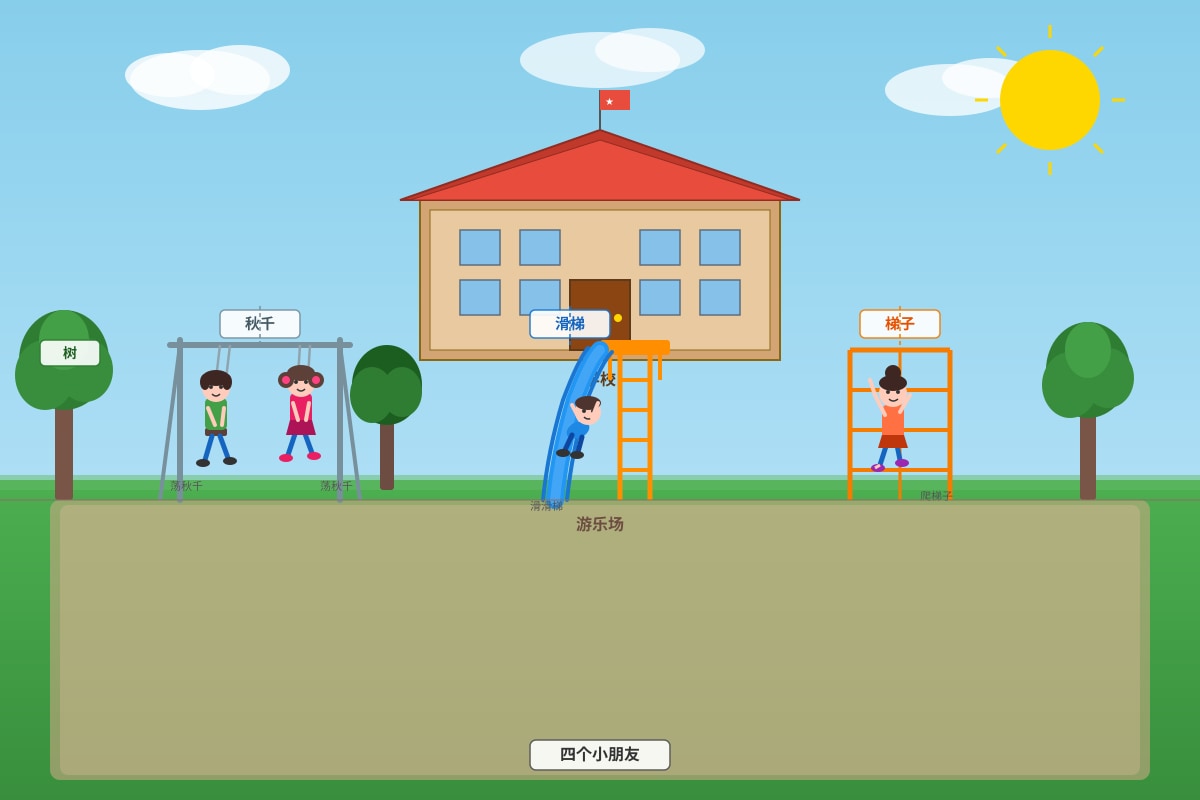
Q1 — Playground Scene (2 marks)
Expected Response Elements:
- Identifies at least three activities: children swinging, sliding, climbing
- Uses vocabulary: 秋千 (swings), 滑梯 (slide), 爬梯子 (climbing ladder), 操场 (playground)
- Describes the setting: school, outdoors, sunny day
Sample Answer: "我看到四个小朋友在学校的操场上玩耍。两个小朋友在荡秋千,一个小朋友在滑滑梯,还有一个小朋友在爬梯子。他们看起来很开心。天空很蓝,操场旁边有大树。"
Key Vocabulary: 荡秋千, 滑滑梯, 爬梯子, 操场, 玩耍
Common Mistakes: Students may only list objects without forming complete sentences. Encourage full sentences with 在 + location + verb structure.
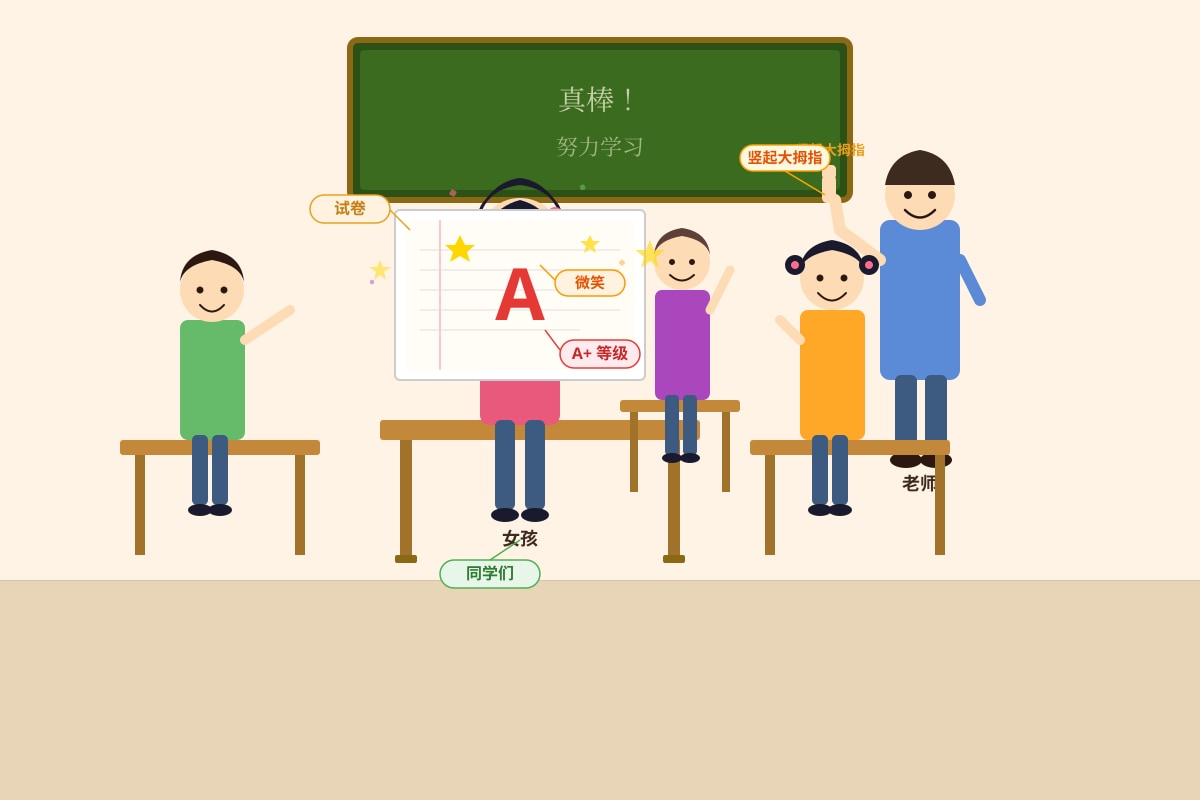
Q2 — Girl with A+ Test Paper (2 marks)
Expected Response Elements:
- Describes the scene: girl holding test paper with A+ grade
- Identifies emotions: happy, proud, excited
- Gives reasons: she did well on the test, teacher and classmates are happy for her
Sample Answer: "这个小女孩考试得了A+,她非常高兴,笑得很大声。她的同学和老师都为她感到骄傲。她一定很努力地学习,所以才能考得这么好。"
Key Vocabulary: 考试, 得A+, 高兴, 骄傲, 努力
Common Mistakes: Students may describe the picture without expressing the girl's feelings. Prompt them to use emotion words: 开心, 兴奋, 自豪.
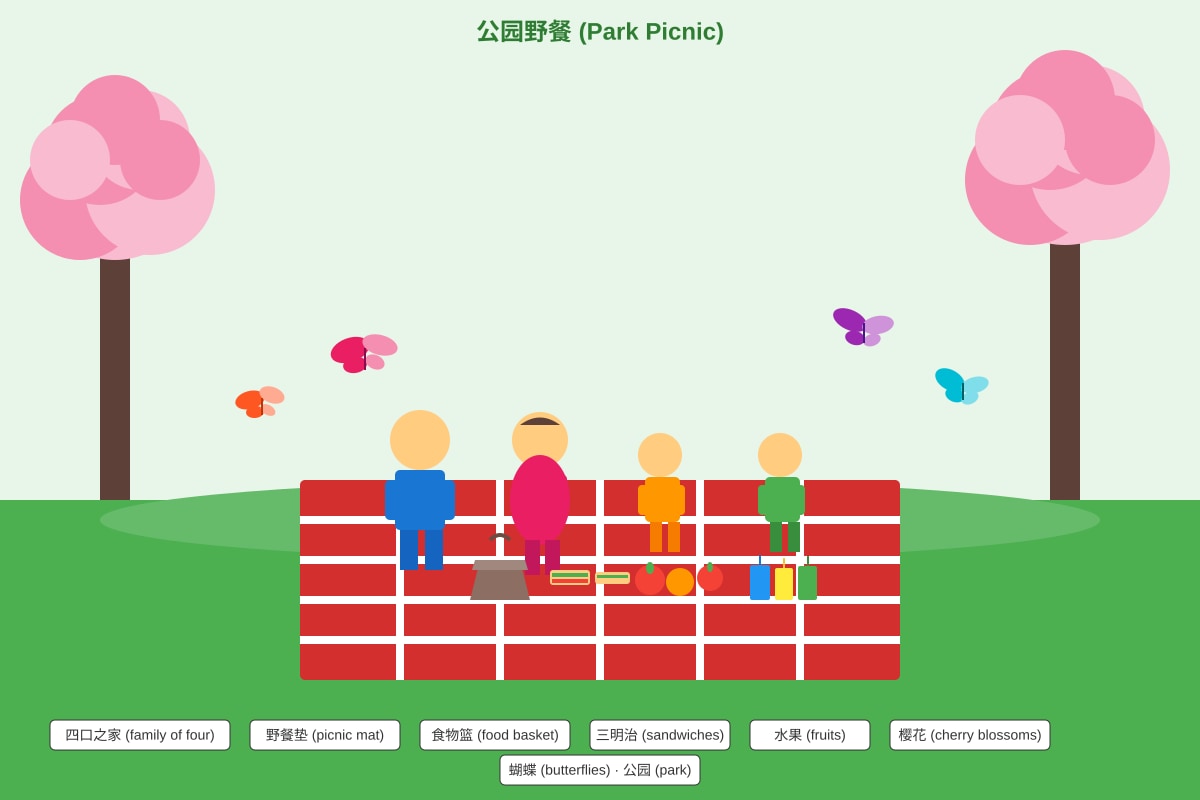
Q3 — Family Picnic (2 marks)
Expected Response Elements:
- Identifies the season: spring (春天) because of cherry blossoms
- Describes activities: family having a picnic, eating food
- Mentions food items: sandwiches, fruits, juice
- Uses vocabulary: 野餐, 春天, 樱花, 家庭
Sample Answer: "这是一个家庭在公园里野餐。我觉得现在是春天,因为树上的樱花开花了。爸爸妈妈和两个孩子坐在红色的野餐垫上,他们在吃三明治、苹果和橙汁。还有蝴蝶在花旁边飞。"
Key Vocabulary: 野餐, 春天, 樱花, 家庭, 公园
Common Mistakes: Students may not connect cherry blossoms to spring. This is a good teaching moment about seasonal indicators.
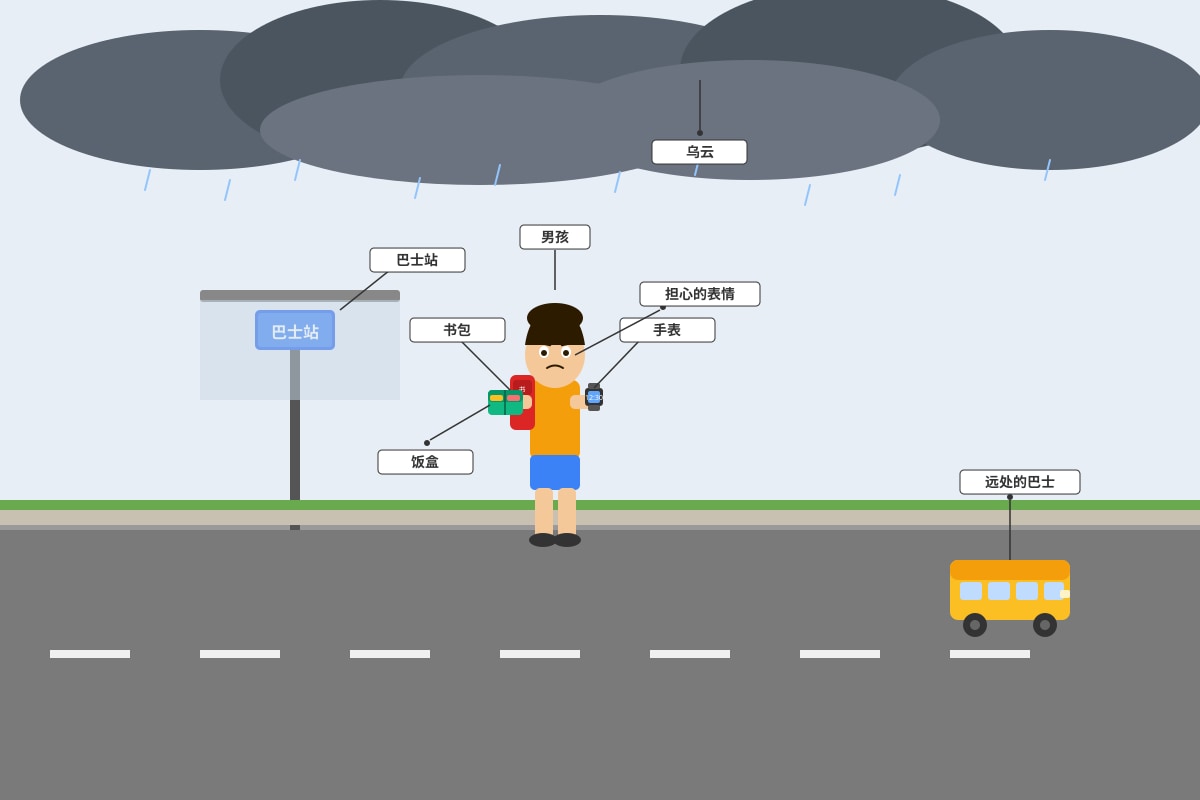
Q4 — Boy at Bus Stop (2 marks)
Expected Response Elements:
- Describes the scene: boy at bus stop, dark clouds, looks worried
- Predicts what might happen next: it might rain, the bus might come late, he might get wet
- Creates a short narrative: e.g., "The boy might run home" or "The bus arrives just in time"
Sample Answer: "一个背着书包的小男孩在等巴士。天上有乌云,快要下雨了。小男孩看起来很着急,因为他看了看手表。我觉得等一下可能会下雨,他可能会被淋湿。也许他会跑回家,或者巴士很快就来了。"
Key Vocabulary: 乌云, 着急, 下雨, 书包, 巴士
Common Mistakes: Students may only describe the current scene without predicting what happens next. Encourage use of 可能 (might) and 也许 (perhaps).
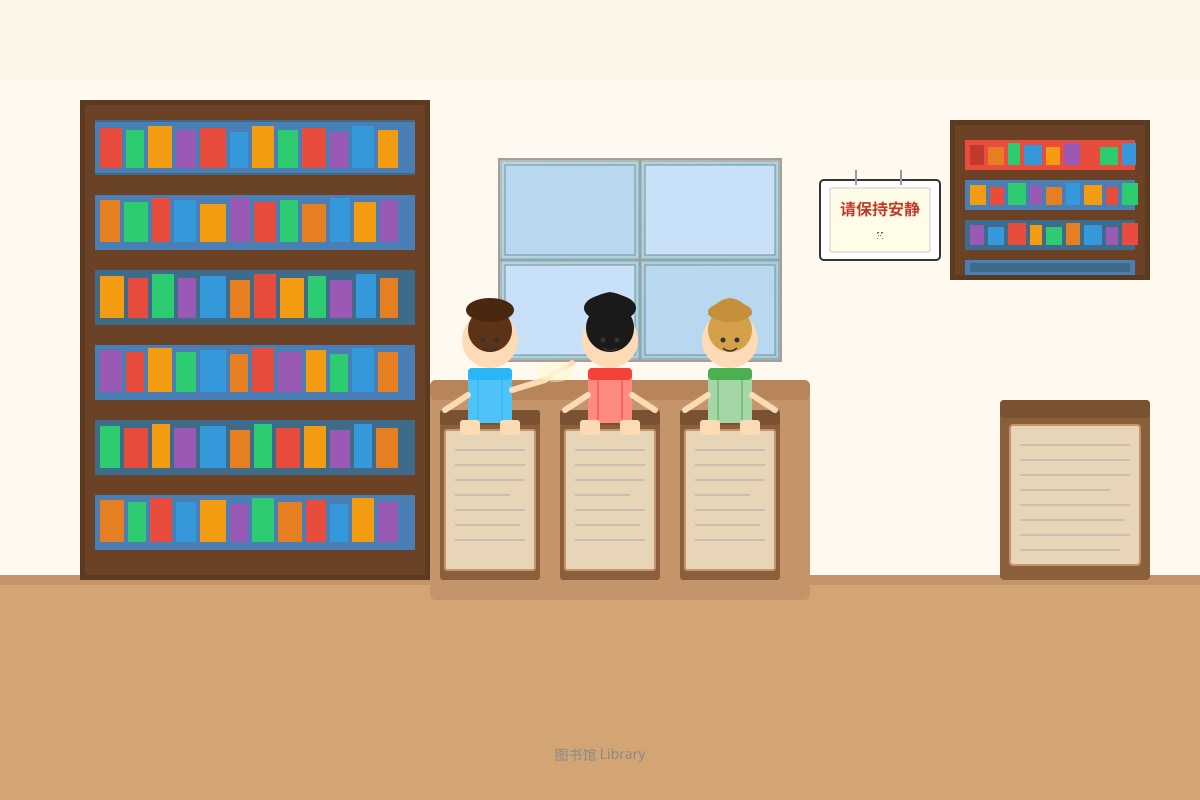
Q5 — Children Reading in Library (2 marks)
Expected Response Elements:
- Describes the scene: children reading books in a library
- Gives opinion: yes, it is a good activity
- Gives reasons: reading is good for learning, library is a quiet place, reading makes us smarter
Sample Answer: "三个小朋友在图书馆里看书。我觉得这是一个很好的活动,因为看书可以让我们学到很多知识。图书馆是一个安静的地方,适合读书。看书还能让我们变得更聪明。"
Key Vocabulary: 图书馆, 看书, 知识, 安静, 聪明
Common Mistakes: Students may give a simple yes/no without reasons. Prompt them to use 因为...所以... structure.
Section B: Scenario-Based Speaking (情景说话)
Q6 — Friend Forgot Lunchbox (2 marks)
Expected Response Elements:
- Shows empathy: "你饿了吗?" / "你还好吗?"
- Offers help: sharing food, going to the school canteen together
- Uses polite and caring language
Sample Answer: "你饿了吗?不要担心,我可以和你分享我的午餐。如果你不够吃,我们可以一起去食堂买一些食物。下次记得带饭盒哦!"
Key Vocabulary: 分享, 午餐, 食堂, 担心
Marking Note: Award marks for both the suggestion and the language used. Empathy and politeness are key assessment criteria at P3 level.
Q7 — Helping a Lost Primary 1 Student (2 marks)
Expected Response Elements:
- Shows kindness and reassurance: "不要哭,我帮你找教室。"
- Takes action: asking the student's class, walking with them to the classroom, finding a teacher
- Uses simple, clear language suitable for a younger child
Sample Answer: "小弟弟/小妹妹,不要哭哦。你读几班呢?我带你去找你的教室。如果找不到,我们可以去找老师帮忙。不要担心,我一定会帮你的。"
Key Vocabulary: 不要哭, 帮忙, 教室, 老师, 担心
Common Mistakes: Students may give instructions without showing empathy. Encourage them to first comfort the younger student before offering solutions.
Q8 — Favourite Festival (2 marks)
Expected Response Elements:
- Names a festival: Chinese New Year, Hari Raya, Deepavali, Mid-Autumn Festival, etc.
- Describes activities: family gatherings, visiting relatives, playing with friends
- Mentions food: ang ku kueh, rendang, murukku, mooncakes, etc.
- Gives reasons for liking it
Sample Answer: "我最喜欢的节日是农历新年。因为农历新年时,我可以和家人一起吃团圆饭,还可以拿红包。我们也会去亲戚家拜年,吃很多好吃的食物,比如年糕和鱼生。我觉得农历新年很热闹,我很开心。"
Key Vocabulary: 农历新年, 团圆饭, 红包, 拜年, 年糕
Marking Note: Accept any valid festival. Look for cultural vocabulary and personal connection to the festival.
Q9 — Resolving a Playground Disagreement (2 marks)
Expected Response Elements:
- Shows willingness to compromise
- Suggests taking turns or combining activities
- Uses polite language: "我们可以..." / "你觉得怎么样?"
- Demonstrates conflict resolution skills
Sample Answer: "我知道你想打羽毛球,但是我的朋友想踢足球。我们可以先踢足球,然后再打羽毛球,你觉得怎么样?或者我们可以找一个两种游戏都能玩的地方。这样我们两个都可以玩到自己喜欢的游戏。"
Key Vocabulary: 踢足球, 打羽毛球, 轮流, 妥协, 一起玩
Common Mistakes: Students may insist on their own preference. Encourage compromise language: 轮流 (take turns), 一起 (together), 你觉得怎么样?(What do you think?).
Q10 — Ordering Food at a Hawker Centre (2 marks)
Expected Response Elements:
- Uses polite greetings: "阿姨/叔叔,你好。"
- Orders food clearly: "我要..." / "请给我..."
- Uses numbers and quantities: "两碗", "三份"
- Says "谢谢" at the end
Sample Answer: "阿姨,你好。我要两碗海南鸡饭,一份炒粿条,和一杯冰柠檬茶。一共多少钱?谢谢阿姨!"
Key Vocabulary: 海南鸡饭, 炒粿条, 冰柠檬茶, 多少钱, 谢谢
Marking Note: This question assesses real-world communicative competence. Award marks for functional language use, not just vocabulary.
Section C: Retelling and Expressing Views (复述与表达看法)
Q11 — Retelling Xiao Hua's Story (2 marks)
Expected Response Elements (must include all three):
- What happened: Xiao Hua went to the library to borrow a dinosaur book but forgot his library card
- How he felt: worried/anxious (着急)
- What he decided: to go back the next morning
Sample Answer: "昨天,小华去图书馆借一本关于恐龙的书。他找到了那本书,非常高兴。可是他忘了带图书证,不能借书。他很着急,赶紧跑回家拿图书证。但是当他回到图书馆时,图书馆已经关门了。小华决定明天一早再去借书。"
Key Vocabulary: 图书馆, 恐龙, 图书证, 着急, 关门
Common Mistakes: Students may retell the story in the wrong order. Check for correct sequence: went to library → found book → forgot card → ran home → library closed → decided to return tomorrow.
Q12 — Passage About Singapore (2 marks)
(a) Summary (1 mark): Expected: The passage is about Singapore being a beautiful, multi-racial country with famous landmarks where people live in harmony.
Sample Answer: "这篇短文介绍了新加坡是一个美丽的多元种族国家,有很多著名的景点,大家和睦相处。"
(b) Personal Response (1 mark): Expected: Student gives a clear opinion (like/dislike) with two valid reasons.
Sample Answer: "我喜欢住在新加坡,因为新加坡很安全,而且有很多好吃的东西。我也喜欢新加坡的公园和游乐场。"
Key Vocabulary: 美丽, 多元种族, 景点, 和睦相处, 安全
Q13 — Clean and Green Week Suggestions (2 marks)
Expected Response Elements:
- At least three practical suggestions
- Explanation of why each is important
- Uses environmental vocabulary
Sample Answer: "第一,我们可以把垃圾丢进垃圾桶,这样学校才会干净。第二,我们可以打扫教室,让学习环境更舒服。第三,我们可以种花草,让学校更美丽。保持学校干净很重要,因为干净的环境让我们更健康,学习也会更专心。"
Key Vocabulary: 垃圾, 垃圾桶, 打扫, 种花草, 环境, 健康
Common Mistakes: Students may list actions without explaining why. Prompt them to use 因为 and 所以 to connect actions and reasons.
Q14 — Storybooks vs Comic Books (2 marks)
Expected Response Elements:
- Clear preference stated
- At least two reasons with explanation
- Uses comparison language: 比, 更, 因为
Sample Answer: "我比较喜欢看故事书,因为故事书有很多有趣的故事,可以让我学到很多道理。故事书的字比较多,可以帮助我认识更多汉字。虽然漫画书很有趣,但是我觉得故事书更有教育意义。"
Key Vocabulary: 故事书, 漫画书, 有趣, 道理, 汉字, 教育意义
Marking Note: Accept either preference. The quality of reasoning matters more than the choice itself.
Q15 — A Memorable Day (2 marks)
Expected Response Elements:
- Describes a specific event
- Mentions who was there
- Explains why it was memorable
- Uses past time markers: 昨天, 上个星期, 去年
Sample Answer: "上个星期六是我的生日,妈妈带我去动物园玩。爸爸和姐姐也一起去了。我们看到了大熊猫、长颈鹿和大象。妈妈还给我买了一个我最喜欢的恐龙蛋糕。那天我非常开心,因为全家人都陪我一起过生日,所以我觉得很难忘。"
Key Vocabulary: 生日, 动物园, 大熊猫, 蛋糕, 难忘, 开心
Common Mistakes: Students may describe a generic day without specific details. Encourage them to include who, what, when, and why it was special.
Section D: Oral Reading and Pronunciation (朗读与发音)
Q16 — Sentence Reading (2 marks)
Target Sentence: "春天来了,花园里的花儿都开了,蝴蝶在花丛中翩翩起舞。"
Key Pronunciation Points:
- 春天 (chūn tiān) — correct "ch" initial, first tone + first tone
- 花园 (huā yuán) — correct "h" initial, first tone + second tone
- 蝴蝶 (hú dié) — correct "h" initial, second tone + second tone
- 翩翩起舞 (piān piān qǐ wǔ) — correct "p" initial, first tone + first tone + third tone + third tone
Marking Focus: Accuracy of initials (ch vs c, h vs f), tones, and smooth delivery.
Q17 — Dialogue Reading (2 marks)
Target Dialogue:
- 小明: "妈妈,我今天在学校学会了骑自行车!"
- 妈妈: "真的吗?你真棒!不过要注意安全哦。"
- 小明: "好的,妈妈。我会在空旷的地方练习的。"
Key Pronunciation Points:
- 骑自行车 (qí zì xíng chē) — correct "q" initial
- 注意安全 (zhù yì ān quán) — correct "zh" initial
- 空旷 (kōng kuàng) — correct "k" initial, first tone + fourth tone
Marking Focus: Expression and tone differentiation between the excited mother and the proud child. Natural conversational rhythm.
Q18 — Poem Reading (2 marks)
Target Poem: 一闪一闪亮晶晶, 满天都是小星星。 挂在天空放光明, 好像许多小眼睛。
Key Pronunciation Points:
- 闪 (shǎn) — correct "sh" initial, third tone
- 晶 (jīng) — correct "j" initial, first tone
- 挂 (guà) — correct "g" initial, fourth tone
- 眼睛 (yǎn jing) — correct "y" initial, neutral tone on second syllable
Marking Focus: Rhythm and musicality. The poem should be read with a gentle, rhythmic quality. Check for correct tones on 闪 (3rd), 晶 (1st), 挂 (4th).
Q19 — Passage Reading (2 marks)
Target Passage: "我的名字叫小美。我今年八岁,在光华小学读书。我最喜欢的科目是美术,因为我喜欢画画。我的梦想是成为一名画家。"
Key Pronunciation Points:
- 名字 (míng zi) — correct "m" initial, neutral tone on second syllable
- 光华 (guāng huá) — correct "g" and "h" initials
- 美术 (měi shù) — correct "m" and "sh" initials
- 梦想 (mèng xiǎng) — correct "m" and "x" initials
Marking Focus: Correct pauses at punctuation (full stops). Each sentence should be read as a complete unit with a brief pause before the next sentence.
Q20 — Tongue Twister (2 marks)
Target: "四是四,十是十,十四是十四,四十是四十。"
Key Pronunciation Points:
- 四 (sì) — alveolar sibilant, fourth tone
- 十 (shí) — retroflex sibilant, second tone
- 十四 (shí sì) — second + fourth tone
- 四十 (sì shí) — fourth + second tone
Marking Focus: The critical distinction is between "s" (alveolar, tongue tip behind upper teeth) and "sh" (retroflex, tongue tip curled back). Students must clearly differentiate 四 (sì) and 十 (shí).
Common Mistakes: Many P3 students confuse 四 and 十. This is a well-known challenge in Mandarin pronunciation. Award partial marks if the student can produce the distinction at least some of the time.
Summary of Marks
| Section | Questions | Marks per Question | Subtotal |
|---|---|---|---|
| A: Picture-Based Speaking | Q1–Q5 | 2 | 10 |
| B: Scenario-Based Speaking | Q6–Q10 | 2 | 10 |
| C: Retelling and Expressing Views | Q11–Q15 | 2 | 10 |
| D: Oral Reading and Pronunciation | Q16–Q20 | 2 | 10 |
| Total | 20 questions | 40 marks |
This answer key is designed for teacher assessment of oral responses. Marking should be holistic, considering pronunciation accuracy, vocabulary range, fluency, organisation, and confidence. This content is syllabus-aligned practice material and is not derived from past-year examination papers.