AI Generated Quiz
Primary 3 Chinese Reading Quiz
Free P3 Chinese Reading quiz, Kimi2.6 AI version, with questions, answers, and syllabus-aligned practice for Singapore students.
These static practice materials are generated from the site's syllabus and paper-generation workflow, with source and model context shown so students and parents can evaluate the material before use.
Questions
Free quiz and exam paper access
Enter your details to view this paper
Your access is remembered on this device.
Answers
Primary 3 Chinese Quiz - Reading (Answer Key)
Name:____________________ Class:____________________ Date:____________________
Total: 40 marks
Section A: 看图选词 (Picture-Based Vocabulary) — Questions 1-5
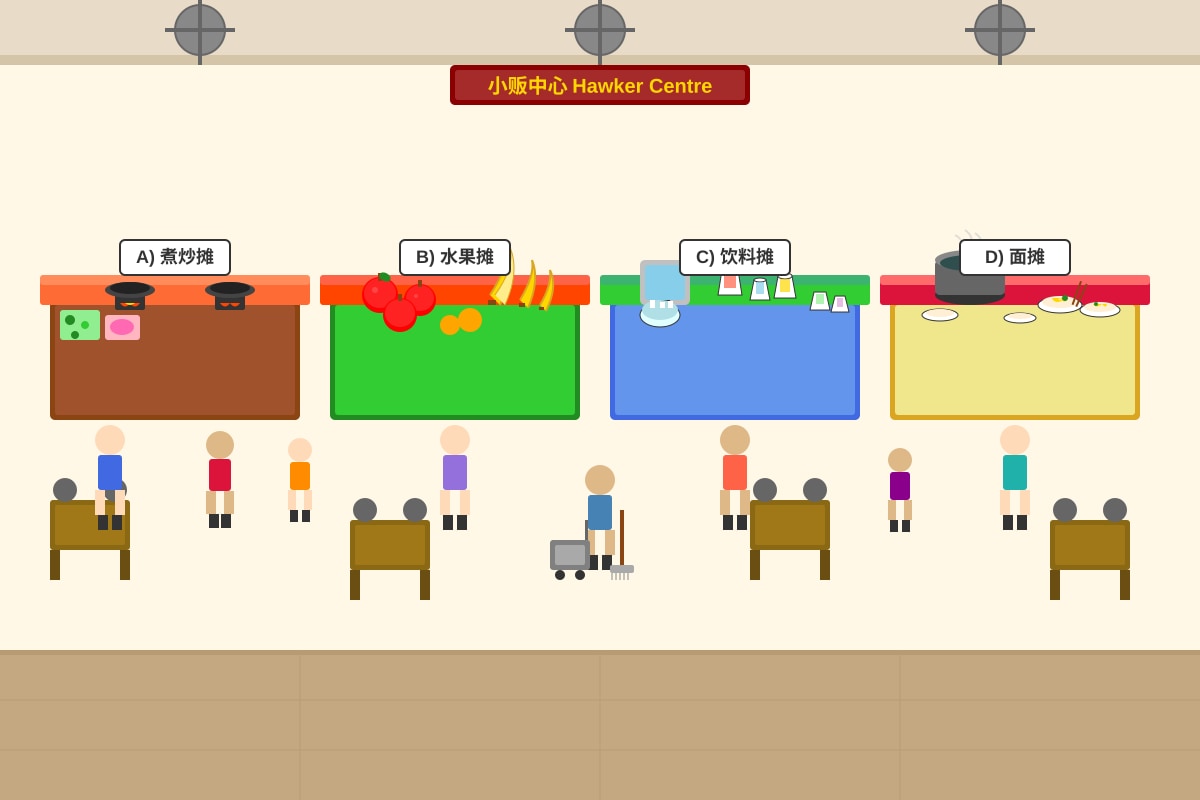
Q1. Answer: B) 面摊 (1 mark)
- The image shows a hawker centre with four stalls. The question asks where Xiaohua and his mother buy lunch.
- Reasoning: Among the options, 水果摊 (fruit stall) sells fruits, not meals; 图书馆 (library) and 公园 (park) are not places to buy food. 面摊 (noodle stall) is a food stall where lunch can be purchased. The image shows the noodle stall with bowls, indicating cooked food.
- Teaching note: 面摊 refers to a noodle stall, common in Singapore hawker centres. Students should recognize the visual cues of bowls and cooking equipment versus raw fruits or drinks.
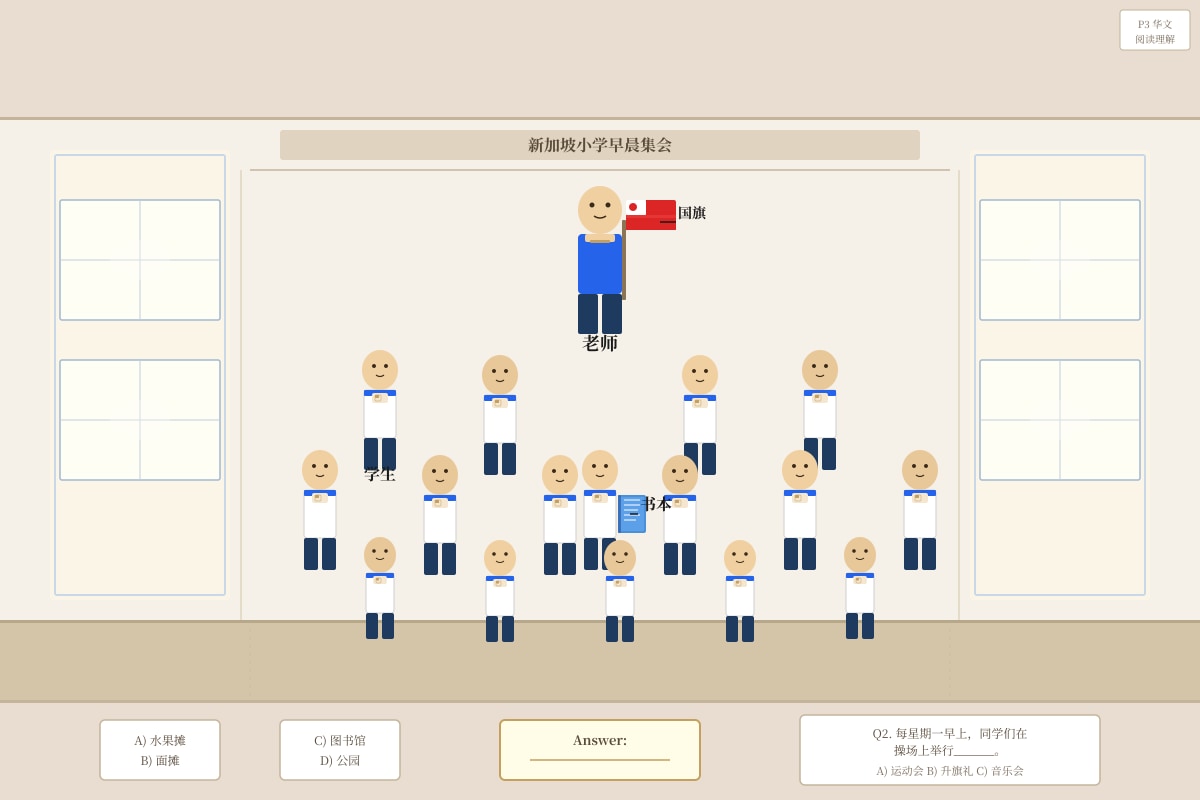
Q2. Answer: B) 升旗礼 (1 mark)
- The image depicts students in rows with a teacher holding a flag during morning assembly.
- Reasoning: 运动会 (sports day) involves athletic activities, not standing in rows; 音乐会 (concert) involves musical instruments; 测验 (test) is an examination. 升旗礼 (flag-raising ceremony) matches the visual of a teacher with a flag and students assembled, which happens every Monday morning in Singapore schools.
- Teaching note: Singapore schools hold 升旗礼 weekly where students sing the national anthem and recite the pledge. The flag is the key visual cue.
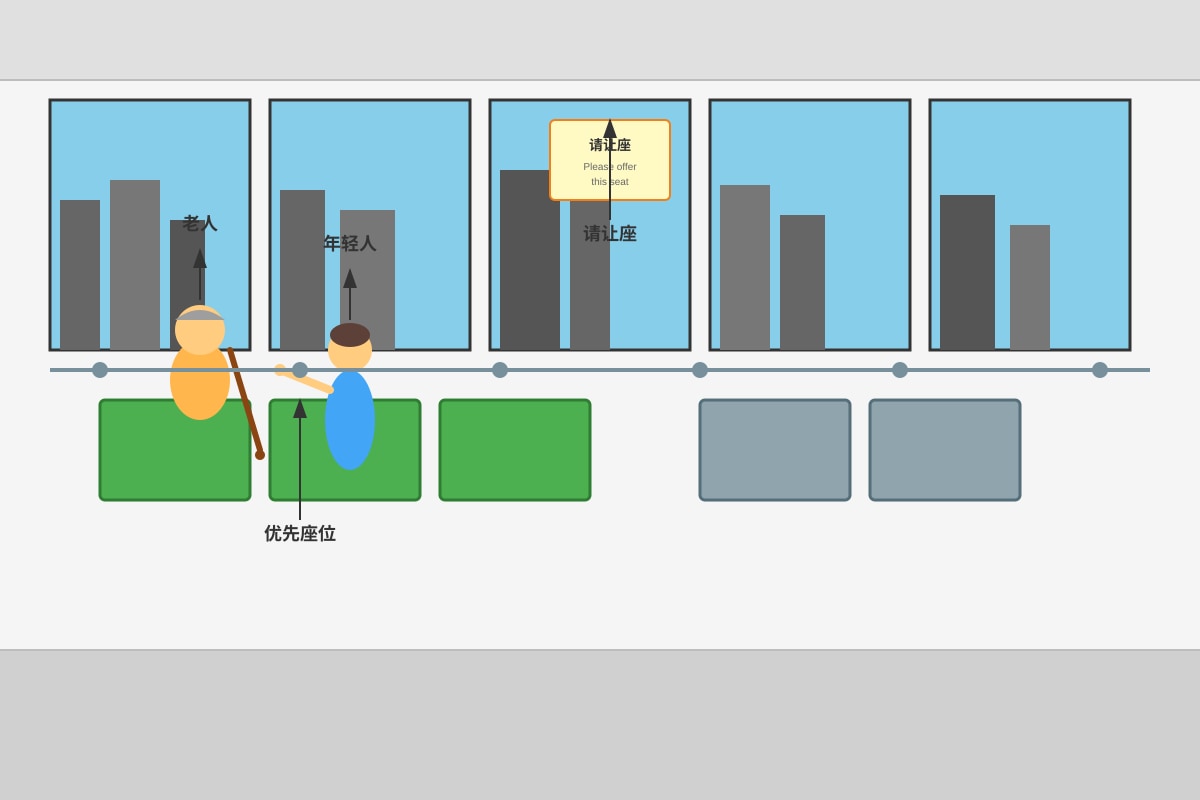
Q3. Answer: A) 座位 (1 mark)
- The image shows MRT priority seats with an elderly passenger and a younger person offering a seat.
- Reasoning: 书包 (schoolbag), 食物 (food), and 玩具 (toy) are not what we offer to those in need on public transport. 座位 (seat) is correct—we should offer our seat to elderly, pregnant women, or those with disabilities.
- Teaching note: This tests social awareness and vocabulary for public transport courtesy. The green priority seats and "Please offer this seat" sign are distinctive Singapore MRT features.
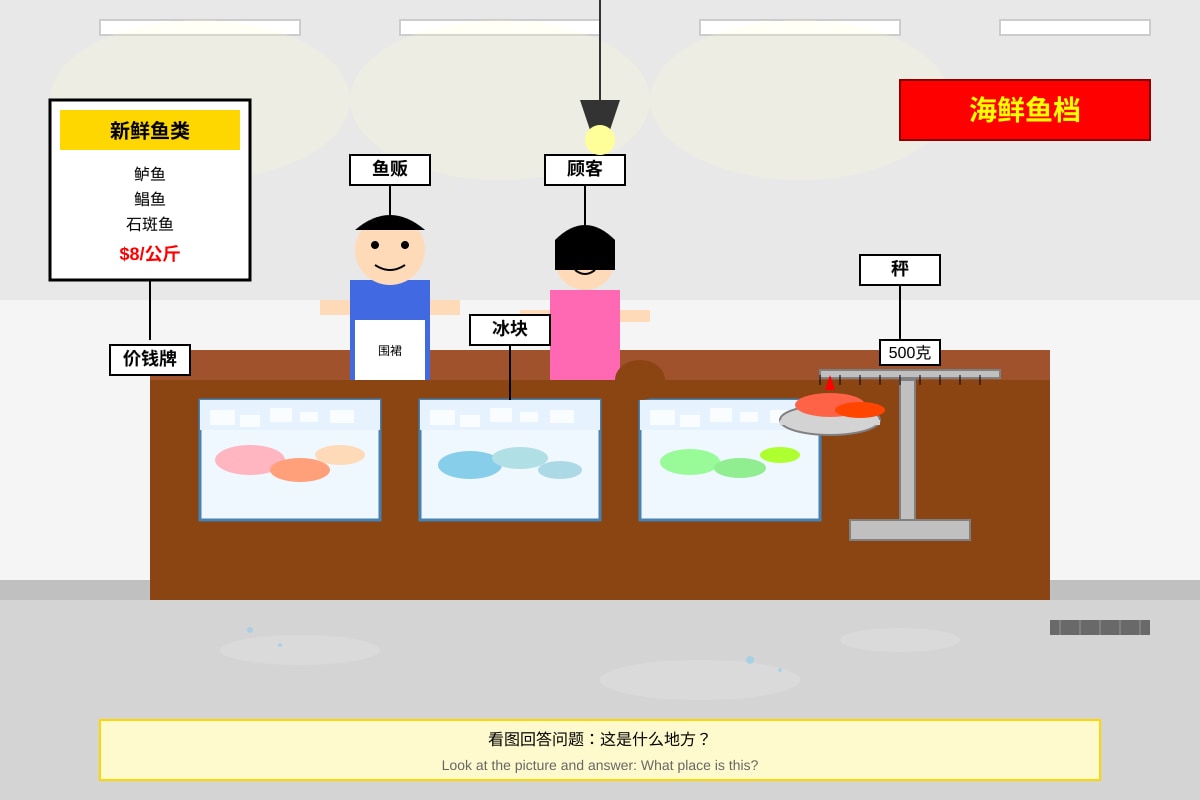
Q4. Answer: B) 菜市场 (1 mark)
- The image shows a traditional wet market with a fishmonger using a weighing scale, ice boxes, and Chinese price signs.
- Reasoning: 超级市场 (supermarket) has packaged goods and refrigerated displays, not open ice boxes; 便利店 (convenience store) is small and doesn't sell fresh fish; 书店 (bookshop) sells books. 菜市场 (wet market/traditional market) matches the traditional scale, open display, and wet floor environment.
- Teaching note: 菜市场 (also called 巴刹 from Malay "pasar") is a traditional Singapore market where fresh produce, meat, and fish are sold with traditional weighing methods.
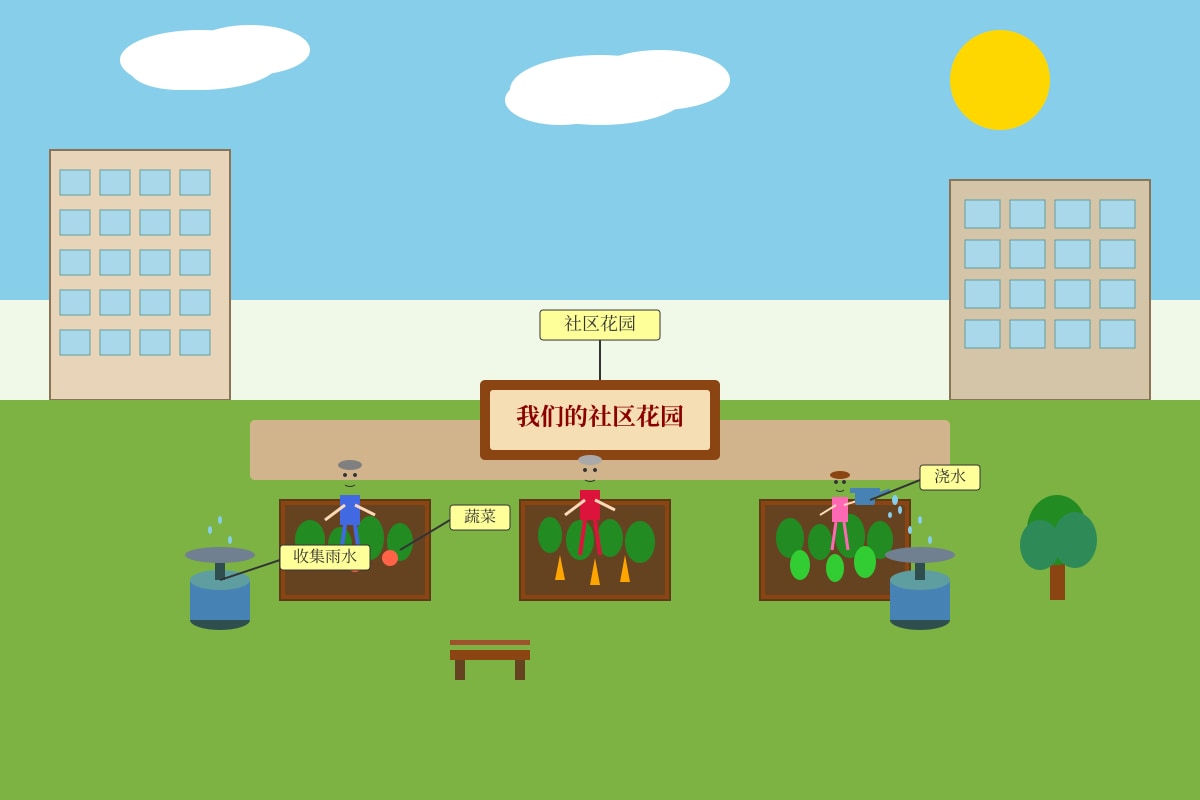
Q5. Answer: C) 社区花园 (1 mark)
- The image shows HDB residents, including elderly and children, gardening together with a "Our Community Garden" sign.
- Reasoning: 农场 (farm) is large-scale commercial agriculture; 花园 (garden) is generic and doesn't emphasize community; 植物园 (botanical garden) is a large public garden like Singapore Botanic Gardens. 社区花园 (community garden) specifically means neighbors gardening together in their estate, matching the HDB setting and communal activity.
- Teaching note: Community gardens are common in Singapore HDB estates, managed by residents for communal planting. The HDB blocks in the background and mixed ages of gardeners are key contextual clues.
Section B: 词语理解 (Vocabulary in Context) — Questions 6-10
Q6. Answer: C) 懂事 (2 marks)
- Method: Analyze the context clue "帮妈妈做家务" (helps mother with housework).
- Step 1: Eliminate clearly opposite meanings: 顽皮 (naughty/mischievous) and 懒惰 (lazy) contradict helping with chores.
- Step 2: Compare remaining options: 胆小 (timid/cowardly) describes personality in fearful situations, not helpful behavior.
- Step 3: 懂事 (sensible/mature/understanding) perfectly describes a child who helps with housework, showing consideration for parents.
- Teaching note: 懂 means "understand"; 懂事 literally means "understands (adult) matters." This is a common praise for well-behaved children who show maturity.
Q7. Answer: B) 急忙 (2 marks)
- Method: Identify the cause-effect relationship between rain and behavior.
- Step 1: Analyze the cause: "下雨了" (it's raining).
- Step 2: Determine logical effect: people move quickly to avoid getting wet.
- Step 3: Evaluate options: 慢慢 (slowly) contradicts urgency; 高兴 (happy) is an emotion, not movement speed; 轻轻 (gently/softly) doesn't fit rain context. 急忙 (hurriedly/in haste) matches the need to quickly enter the classroom.
- Teaching note: 急 means "urgent"; 忙 means "busy/hurried." The 急忙 structure (urgent + busy) creates a word meaning "in a rush." Common mistake: confusing with 匆忙, which is similar but more formal.
Q8. Answer: B) 完成 (2 marks)
- Method: Parse the sentence structure: "太难了" → "用了很长时间" → result.
- Step 1: Recognize the difficulty pattern: difficult problem + time spent + eventual success.
- Step 2: Eliminate illogical outcomes: 放弃 (give up) contradicts spending much time; 忘记 (forget) doesn't follow from effort; 开始 (begin) is opposite of conclusion.
- Step 3: 完成 (complete/finish) logically completes the sequence—you spent time because it was hard, but eventually succeeded.
- Teaching note: The structure "才" (only then/after much effort) signals a successful outcome after difficulty. 完成 is the accomplishment verb that fits this grammatical pattern.
Q9. Answer: A) 珍惜 (2 marks)
- Method: Identify the antonym relationship in the second clause.
- Step 1: Decode "不要浪费时间" = "don't waste time," which implies the first verb should be the opposite of waste.
- Step 2: Analyze options: 花费 (spend/use) is neutral, not the positive opposite of waste; 节省 (save/economize) is close but emphasizes reduction; 增加 (increase) doesn't relate to time management.
- Step 3: 珍惜 (cherish/value) is the emotional and moral opposite of 浪费 (waste)—to treasure rather than squander.
- Teaching note: 珍 means "precious"; 惜 means "pity/regret to lose." Together they mean to value something because it's precious and shouldn't be lost. Common Singapore teaching: "一寸光阴一寸金" (an inch of time is an inch of gold).
Q10. Answer: B) 躲藏 (2 marks)
- Method: Use the context of stranger anxiety in young children.
- Step 1: Identify emotional context: "看到陌生人" (sees a stranger) typically causes fear or shyness in young children.
- Step 2: Evaluate physical responses: 站立 (stand) is neutral, not a reaction to strangers; 奔跑 (run) suggests active escape, not seeking parental protection; 跳跃 (jump) is playful, unrelated.
- Step 3: 躲藏 (hide) specifically describes moving behind someone for protection, matching the preposition "在妈妈身后" (behind mother).
- Teaching note: 躲 means "dodge/avoid"; 藏 means "conceal." The compound describes hiding behavior. The grammar "躲在……后面" (hide behind...) is a common structure for physical position.
Section C: 阅读理解 (Reading Comprehension) — Questions 11-20
Passage 1: 我的学校生活
Q11. Answer: 明华今年九岁,读三年级。 (2 marks)
- Mark breakdown: Age (1 mark) + Level (1 mark)
- Evidence from text: "我叫明华,今年九岁,在新加坡的一所小学读三年级。"
- Teaching note: Literal comprehension question—answer directly from text. Students should locate the introductory sentence where characters typically introduce themselves. Common mistake: writing only one piece of information or inventing details not in the text.
Q12. Answer: 唱国歌,向国旗敬礼。(2 marks)
- Mark breakdown: Each activity (1 mark)
- Evidence from text: "每天早上,我都会和同学们一起参加升旗礼。我们唱国歌,向国旗敬礼。"
- Teaching note: The question specifies "两项活动" (two activities). Students must identify what happens during 升旗礼. The instruction says "after reading, answer" so recalling the specific verbs 唱 and 敬礼 (or their noun forms 国歌, 国旗敬礼) earns marks. Acceptable variations: "参加升旗礼,唱国歌" (1 mark for each correct activity listed).
Q13. Answer: 因为李老师很亲切,她总是用有趣的方法教他们。(3 marks)
- Mark breakdown: 亲切 (1 mark) + 有趣的方法 (1 mark) + 完整句子结构 (1 mark)
- Evidence from text: "我们的华文老师李老师很亲切,她总是用有趣的方法教我们。"
- Teaching note: The question asks "为什么" (why), so the answer must give reasons. Two reasons are stated: (1) teacher is kind/approachable (亲切), (2) teaching methods are interesting (有趣的方法). Students should quote or paraphrase accurately. The causal conjunction "因为" is required for full marks in sentence structure.
Q14. Answer: 李老师带同学们到学校的花园。他们在那里看到了红色的花、绿色的草和蝴蝶。(3 marks)
- Mark breakdown: Location (1 mark) + Three things seen (1 mark each, max 2 marks for things) + complete sentence (1 mark); adjusted: location (1), three things listed with two correct (2)
- Evidence from text: "李老师带我们到学校的花园去观察植物。我们看到了红色的花、绿色的草,还有几只蝴蝶在花丛中飞舞。"
- Teaching note: The things seen are: (1) 红色的花, (2) 绿色的草, (3) 蝴蝶. Students must list three items correctly. The question specifies "三样东西" (three things), so listing fewer loses marks. Acceptable: "花、草、蝴蝶" without colors, or with colors specified.
Q15. Answer: 明华在童子军学到了打绳结和搭帐篷。 (2 marks)
- Mark breakdown: Each skill (1 mark)
- Evidence from text: "上个星期,我们学习了如何打绳结和搭帐篷。"
- Teaching note: Direct extraction. The two skills are connected by 和 in the text. Students should notice "如何" (how to) indicates skills being learned. Common mistake: including "虽然学习打绳结很难" as a skill instead of recognizing it as background information.
Q16. Answer: 这句话告诉我们,做事情遇到困难时,只要不断练习,不放弃,最后一定能成功。(3 marks)
- Mark breakdown: Identifying perseverance/effort (1 mark) + overcoming difficulty (1 mark) + eventual success (1 mark)
- Evidence from text: "很难" (difficulty), "不断练习" (continuous practice), "终于学会了" (finally succeeded)
- Teaching note: This is an inference question requiring moral/lesson extraction. The "虽然……但是……" structure contrasts difficulty with success. The key pattern is: difficulty → persistent effort → success. Students should generalize from the specific situation (knot-tying) to a broader life lesson. Expected answer structure: "虽然……很难,但是只要……就能/就会……"
Passage 2: 新加坡的传统美食
Q17. Answer: 海南鸡饭、叻沙、印度煎饼。(3 marks)
- Mark breakdown: Each food (1 mark)
- Evidence from text: Paragraph 2 introduces 海南鸡饭; Paragraph 3 introduces 叻沙; Paragraph 4 introduces 印度煎饼/Roti Prata.
- Teaching note: Direct scanning question. Each food is introduced with "第一种/第二种/第三种" markers. Students should recognize these enumerative structures. Acceptable: "海南鸡饭、加东叻沙、印度煎饼" (specific variant noted) or "海南鸡饭、叻沙、Roti Prata" (bilingual naming from text).
Q18. Answer: 因为许多新加坡人都喜欢吃海南鸡饭。/因为它味道好极了。(3 marks)
- Mark breakdown: Correct reason from text (2 marks) + complete "因为" sentence (1 mark)
- Evidence from text: "白斩鸡配上香喷喷的油饭……味道好极了。许多新加坡人都喜欢吃海南鸡饭,它甚至被称为我们的'国菜'。"
- Teaching note: Two valid reasons in text: (1) popular among Singaporeans, (2) tastes excellent. The popularity explanation directly precedes the "国菜" label, making it the stronger answer. The causal word "因为" must be used. Students should avoid inventing reasons not stated (e.g., "expensive" or "healthy" without textual support).
Q19. Answer: 因为加东叻沙用椰壳做碗,很特别。(2 marks)
- Mark breakdown: Coconut shell bowl (1 mark) + special/unique feature (1 mark)
- Evidence from text: "我最喜欢加东叻沙,因为那里的叻沙用椰壳做碗,很特别。"
- Teaching note: The reason follows "因为" directly in the author's statement of preference. Key elements: 椰壳做碗 (material/形式) and 很特别 (subjective appreciation). Students must quote both the objective feature and the evaluative comment.
Q20. Answer: [Open-ended, marked on relevance and justification] (2 marks)
- Mark breakdown: Stating preference (1 mark) + giving reason with "因为" (1 mark)
- Sample excellent answer: "我最喜欢海南鸡饭,因为它的鸡肉很嫩滑,配上辣椒很好吃。" (uses text details + personal sensory language)
- Sample acceptable answer: "我喜欢印度煎饼,因为可以蘸咖喱吃,味道很香。" (uses text information)
- Sample weak answer: "我喜欢叻沙。" (no reason given—0 marks for justification)
- Teaching note: This personal response question tests application—connecting text information to personal preference. The answer must include (1) a food name from the passage, and (2) a reason using "因为." Better answers incorporate specific sensory or cultural details from the text. No single correct answer, but the reason must be logically connected to the chosen food.
Marking Summary Table
| Section | Questions | Marks | Question Type |
|---|---|---|---|
| A | 1-5 | 5 | Visual vocabulary (MCQ) |
| B | 6-10 | 10 | Contextual vocabulary (MCQ) |
| C | 11-16 | 15 | Narrative comprehension |
| C | 17-20 | 10 | Expository comprehension |
| Total | 20 | 40 |
Time allocation guidance (internal): Section A: 5 min | Section B: 6 min | Passage 1: 10 min | Passage 2: 9 min | Review: 5 min