From Real Exams Quiz
Primary 3 Chinese Writing Quiz
Free P3 Chinese Writing quiz, Kimi2.6 Exam version, with questions, answers, and syllabus-aligned practice for Singapore students.
These static practice materials are generated from the site's syllabus and paper-generation workflow, with source and model context shown so students and parents can evaluate the material before use.
Questions
Free quiz and exam paper access
Enter your details to view this paper
Your access is remembered on this device.
Answers
Primary 3 Chinese Quiz - Writing — Answer Key
Total Marks: 40
Section A: 汉字书写 (Character Writing) — Questions 1-8
Scoring: 2 marks per question (1 mark per character, must be completely correct; 0.5 mark deduction for minor stroke errors if character is still recognisable)
| Question | Answer | Character Breakdown | Common Errors |
|---|---|---|---|
| 1 | 忘记 | 忘 (wàng): 亡 + 心; 记 (jì): 讠+ 己 | Writing 忘 as 望 (adds 月 wrongly); 记 written with 已 instead of 己 |
| 2 | 眼光 | 眼 (yǎn): 目 + 艮; 光 (ɡuānɡ): ⺌ + 兀 | 眼 missing 目 radical; 光 written as 先 |
| 3 | 申请 | 申 (shēn): single vertical贯穿; 请 (qǐnɡ): 讠+ 青 | 申 written as 由 or 甲; 请 using 清 (adds 氵) |
| 4 | 准备 | 准 (zhǔn): 冫+ 隹; 备 (bèi): 夂 + 田 | 准 written as 谁 (adds 讠); 备 missing 夂 |
| 5 | 感谢 | 感 (ɡǎn): 咸 + 心; 谢 (xiè): 讠+ 射 | 感 missing 心 radical; 谢 right side written incorrectly |
| 6 | 太阳 | 太 (tài): 大 + 丶; 阳 (yánɡ): 阝+ 日 | 太 written as 大 (missing dot); 阳 using 阴 by mistake |
| 7 | 影子 | 影 (yǐnɡ): 景 + 彡; 子 (zi): 子 | 影 left side written as 景 incorrectly; 子 simple but often rushed |
| 8 | 事实 | 事 (shì): 亅贯穿结构; 实 (shí): 宀 + 头 | 事 confusing with 是; 实 written as 卖 |
Teaching Note: These 8 characters/words represent P3 core vocabulary. 忘, 感, 影, 事 are character-formation focus words where understanding the radical helps memory: 心 (emotions in 忘, 感), 彡 (visual/shadow association in 影). Students should practice stroke order, paying attention to 申's central vertical, 准's ice radical 冫, and 影's complex left-right balance.
Section B: 词语搭配 (Word Collocation) — Questions 9-14
Scoring: 2 marks each (correct choice with no explanation needed)
| Question | Answer | Reasoning | Distracter Analysis |
|---|---|---|---|
| 9 | B. 写 | 信 (letter) collocates with 写 (write) as the conventional verb-object pairing | A. 告诉 (tell): takes person as object, not letter; C. 说 (say): similar issue; D. 读 (read): semantically possible but context suggests composition |
| 10 | A. 希望 | 希望 (hope/expect) takes a clause complement, expressing mother's wish for the speaker's early return | B. 看见 (see): takes visible object; C. 知道 (know): takes fact/clause but mother's expectation better; D. 觉得 (feel): expresses opinion not intent |
| 11 | C. 困难 | 很困难 (very difficult) creates cause-effect with 想了很久 (thought for long time) | A/B. 简单/容易: contradict the result clause; D. 辛苦: describes labour/effort, not puzzle complexity |
| 12 | A. 忽然 | 忽然 (suddenly) matches unexpected rain as a changed situation | B/C. 常常/总是: indicate habituality, incompatible with 了 marking completion; D. 慢慢: contradicts rain's suddenness |
| 13 | C. 扫 | 扫得干干净净 (sweep completely clean) is the idomatic collocation for room cleaning | A. 洗: collocates with 衣服, 手; B. 打: 打扫 exists but 打 alone doesn't work; D. 擦: collocates with 桌子, 窗户 |
| 14 | A. 十分 | 十分有趣 (very interesting) is standard intensifier-adjective pairing | B. 可能 (possibly): modal, doesn't intensify; C. 应该 (should): deontic modal; D. 已经 (already): temporal adverb with 了, not bare adjective |
Teaching Note: Questions 9-11 test verb-object and subject-predicate collocation patterns; 12-14 test adverb-adjective and resultative complement structures. Students should build "collocation dictionaries" in their notes, grouping verbs by typical objects (写信, 写信, 写报告; 扫地, 擦桌子, 洗衣服).
Section C: 句子写作 (Sentence Writing) — Questions 15-18
Scoring: 2 marks each (1 mark for correct grammatical structure using the given pattern; 1 mark for semantic coherence and appropriate context)
Marking Descriptor:
| Criterion | Satisfactory (1 mark) | Needs Improvement (0.5 mark) | Incorrect (0 mark) |
|---|---|---|---|
| Pattern usage | Correct structure, conjunctions in proper positions | Minor position errors or one conjunction omitted | Wrong pattern or both conjunctions missing |
| Meaning | Complete, logical sentence with clear subject and predicate | Partial meaning, somewhat unclear | Nonsensical or no meaning conveyed |
| Question | Model Answer | Pattern Analysis | Acceptable Variations |
|---|---|---|---|
| 15 | 虽然今天下雨了,但是我们还是去公园玩。 | 虽然 introduces contrary clause (A); 但是 introduces actual result (B). A and B must be semantically contrasting. | Subject may appear before 虽然 or after; 却 can replace 但是 for higher register; 可是, 不过 also acceptable |
| 16 | 因为我很努力,所以成绩进步了。 | 因为 introduces cause; 所以 introduces effect. Cause must precede effect. | 因此, 因而 can replace 所以; cause-effect order can be reversed with 之所以……是因为 |
| 17 | 妈妈一回家,就开始做饭。 | 一……就…… indicates immediate succession: event B follows event A without delay. Both clauses need verbs. | 刚 can precede 一 for emphasis; 立刻 can follow 就 |
| 18 | 这本书不但内容有趣,而且插图精美。 | 不但……而且…… indicates progressive addition: quality A is true, quality B (stronger or additional) is also true. | 不仅……还/也……; 尚且……何况…… (higher register) |
Common Mistakes to Flag:
- 虽然……但是……: Students write both clauses with same polarity (both positive) without contrast
- 因为……所以……: Omitting 所以, using 因为 alone (acceptable in speech but not formal writing)
- 一……就……: Placing time expressions incorrectly; using with habitual actions without context
- 不但……而且……: Reversing the clauses so the stronger claim comes first; using with contradictory rather than additive qualities
Teaching Note: These four patterns are P3's core complex-sentence targets, building from P2's simple conjunctions (和, 跟, 或者). Students should practice pattern substitution drills: given a simple sentence pair, transform using specified conjunction.
Section D: 看图写话 (Picture-Based Writing) — Questions 19-20
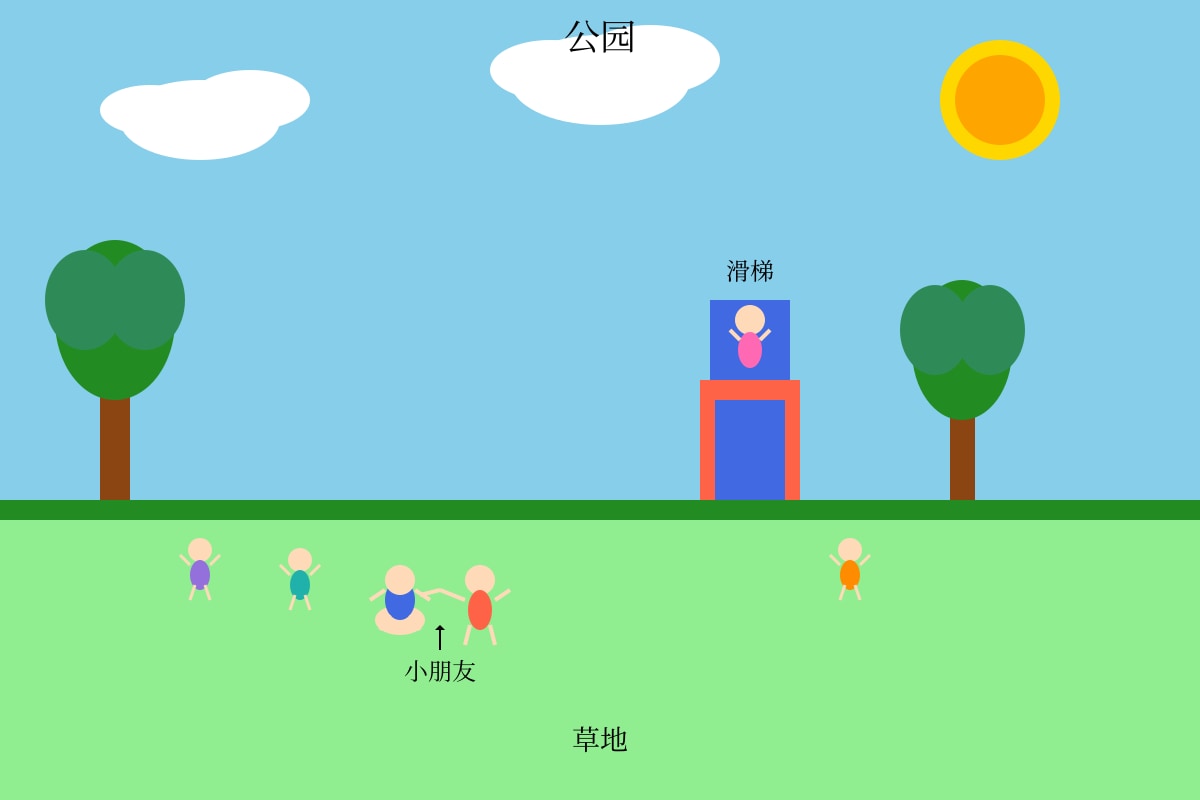
Question 19 (2 marks)
Expected Visual: Q19-fig1 shows: park setting, one child fallen on grass, another child extending helping hand, background children playing on slide and grass, trees and sky visible.
Model Answer: 小林在草地上跌倒了,小明马上走过去帮助他。 (2 marks)
Marking Breakdown:
- Accurately identifies the situation: someone fell, someone helps (0.5 mark)
- Correctly uses 帮助 or 帮忙 (0.5 mark)
- Sentence is grammatically complete with subject and predicate (0.5 mark)
- Description matches visual elements (park/grass context) (0.5 mark)
Alternative Acceptable Answers:
- 一个小朋友摔倒了,另一个小朋友帮助他站起来。 (2 marks)
- 看到同学跌倒了,我赶快跑过去帮助他。 (2 marks — first person acceptable)
Partial Credit (1 mark):
- Uses 帮助 but description incomplete or has minor errors
- Describes scene without using 帮助 (instruction violation but shows comprehension)
Zero Marks:
- No visual reference; completely unrelated content
- Sentence fragment without verb
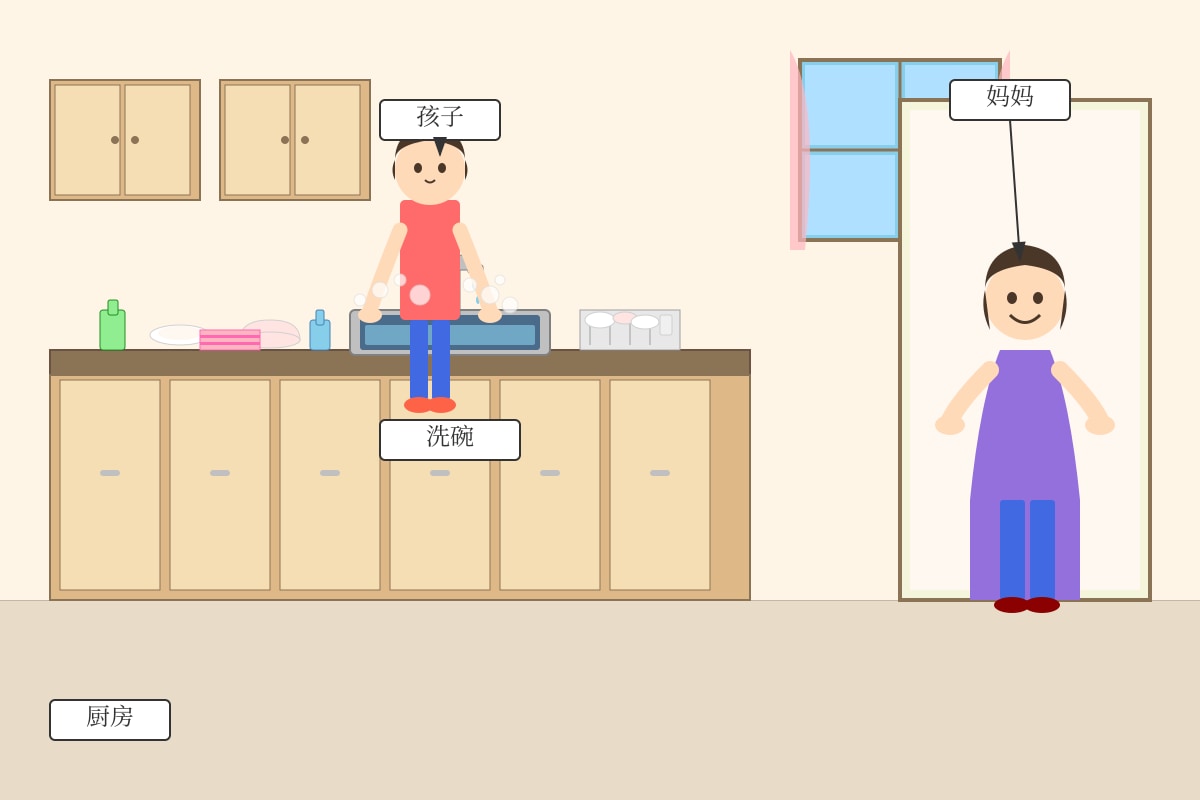
Question 20 (2 marks)
Expected Visual: Q20-fig1 shows: kitchen interior, child at sink with soapy water washing dishes, dish rack with clean dishes nearby, mother watching with smile/approval, kitchen counter with typical items.
Model Answer (4-6 sentences):
晚上,小明在厨房里帮妈妈洗碗。他认真地洗每一个碗,把上面的油渍都洗干净了。妈妈站在一旁,笑着看着他。小明觉得能帮妈妈做家务,自己也很开心。他明白,做家务是家里每个人的责任。
Marking Breakdown (2 marks total):
| Criterion | Marks | Description |
|---|---|---|
| Identifies action: washing dishes | 0.5 | Must mention 洗碗 or equivalent; partial if only says "helping mother" |
| States reason/motivation | 0.5 | Should include: help mother, family responsibility, being good child, learning independence |
| Quantity: 4-6 sentences | 0.5 | Fewer than 4: deduction 0.5; more than 6: acceptable if coherent |
| Coherence and grammar | 0.5 | Logical flow, correct 了/着/过 usage, appropriate conjunctions |
Scaffolded Answer (1.5 marks): 小明在洗碗。他想帮助妈妈。妈妈很高兴。他做完了,很开心。 (4 sentences, basic but meets minimum)
Partial Credit (1 mark):
- Identifies washing dishes but no reason given, or reason given but action misidentified
- 2-3 sentences only but coherent
Common Mistakes to Flag:
- Describing the picture as "cooking" instead of washing dishes — indicates misreading of visual
- Reason given is external (teacher said to) rather than internal (wanting to help family)
- Overwriting: producing too many sentences with repetition rather than development
Teaching Note: Picture-based composition at P3 builds from single-sentence description (P2) to multi-sentence narrative with causal and emotional elements. Students should be taught to "read" pictures in sequence: identify setting (where), characters (who), action (what), possible reason (why), and feeling (how). This mirrors the reading comprehension strategy of 5W1H applied to composition.
Answer Key Summary Table
| Question | Section | Topic | Answer | Marks |
|---|---|---|---|---|
| 1 | A | Character writing | 忘记 | 2 |
| 2 | A | Character writing | 眼光 | 2 |
| 3 | A | Character writing | 申请 | 2 |
| 4 | A | Character writing | 准备 | 2 |
| 5 | A | Character writing | 感谢 | 2 |
| 6 | A | Character writing | 太阳 | 2 |
| 7 | A | Character writing | 影子 | 2 |
| 8 | A | Character writing | 事实 | 2 |
| 9 | B | Word collocation | B | 2 |
| 10 | B | Word collocation | A | 2 |
| 11 | B | Word collocation | C | 2 |
| 12 | B | Word collocation | A | 2 |
| 13 | B | Word collocation | C | 2 |
| 14 | B | Word collocation | A | 2 |
| 15 | C | Sentence pattern | 虽然……但是…… | 2 |
| 16 | C | Sentence pattern | 因为……所以…… | 2 |
| 17 | C | Sentence pattern | 一……就…… | 2 |
| 18 | C | Sentence pattern | 不但……而且…… | 2 |
| 19 | D | Picture writing | 帮助叙事句 | 2 |
| 20 | D | Picture writing | 洗碗段落 (4-6句) | 2 |
Total: 40 marks
Time Management Guidance:
- Section A: 8 minutes (1 min per question)
- Section B: 6 minutes (1 min per question)
- Section C: 8 minutes (2 min per question — require planning)
- Section D: 6 minutes (3 min per question — visual analysis + composition)
- Review: 2 minutes