From Real Exams Quiz
Primary 3 Chinese Writing Quiz
Free P3 Chinese Writing quiz, Exam version, with questions, answers, and syllabus-aligned practice for Singapore students.
These static practice materials are generated from the site's syllabus and paper-generation workflow, with source and model context shown so students and parents can evaluate the material before use.
Questions
Free quiz and exam paper access
Enter your details to view this paper
Your access is remembered on this device.
Answers
Primary 3 Chinese Quiz - Writing: Answer Key
Total Marks: 20
Section A: 词语搭配 (Word Collocation) (5 marks)
Q1. 爱护
(1 mark)
Teaching Note: “爱护” means to care for and protect. We use it with living things or things we should take care of, like plants, animals, or public property. The sentence says we should care for the flowers and trees at school, so “爱护” is the correct choice.
Common Mistake: Students may choose “破坏” because they see “花草树木,” but “破坏” means to destroy, which is the opposite of what we should do.
Q2. 准时
(1 mark)
Teaching Note: “准时” means on time. The sentence says the younger brother never arrives late for school, so he arrives “准时” (on time).
Common Mistake: Students may choose “强壮” (strong), but being strong is not related to arriving at school on time.
Q3. 摆动
(1 mark)
Teaching Note: “摆动” means to swing or wag. Dogs wag their tails when they are happy, so the correct answer is “摆动.”
Common Mistake: Students may choose “破坏” (destroy) or “爱护” (care for), but these verbs do not describe what a dog does with its tail.
Q4. 强壮
(1 mark)
Teaching Note: “强壮” means strong and healthy. Exercise makes the body strong, so the correct answer is “强壮.”
Common Mistake: Students may choose “准时” (on time), but being on time is not related to physical health.
Q5. 破坏
(1 mark)
Teaching Note: “破坏” means to damage or destroy. The sentence says we must not damage public facilities, so the correct answer is “破坏.”
Common Mistake: Students may choose “爱护” (care for), but the sentence uses “不能” (cannot), which means the action is negative. We cannot “破坏” (destroy) public facilities.
Section B: 选词填空 (Fill in the Blanks with the Correct Word) (5 marks)
Q6. 已经
(1 mark)
Teaching Note: “已经” means already. The sentence says the homework is finished, so “已经” (already) is correct. It shows that the action is completed.
Common Mistake: Students may choose “赶快” (quickly), but the sentence is about completing homework, not about doing it quickly.
Q7. 希望
(1 mark)
Teaching Note: “希望” means to hope or wish. The sentence expresses a wish about tomorrow's weather, so “希望” is correct.
Common Mistake: Students may choose “结果” (result), but the sentence is about a wish for the future, not a result.
Q8. 虽然
(1 mark)
Teaching Note: “虽然” means although. The sentence shows a contrast: it is raining, but they still go to school. “虽然……但是……” is a common pattern meaning "although...but..."
Common Mistake: Students may choose “结果” (result), but the sentence shows contrast, not a result.
Q9. 赶快
(1 mark)
Teaching Note: “赶快” means quickly or hurry. When the bell rings, students need to enter the classroom quickly, so “赶快” is correct.
Common Mistake: Students may choose “已经” (already), but the sentence is about an action that needs to happen quickly, not something already done.
Q10. 结果
(1 mark)
Teaching Note: “结果” means as a result or in the end. The sentence shows that because he practiced hard, the result was winning first place. “结果” connects the effort to the outcome.
Common Mistake: Students may choose “虽然” (although), but the sentence shows a cause-and-effect relationship, not a contrast.
Section C: 造句 (Sentence Construction) (5 marks)
Q11. 用“快乐”写一个句子。
(1 mark)
Acceptable Answers (any one):
- 我们在公园里玩得很快乐。
- 今天是我的生日,我感到非常快乐。
- 和家人一起吃饭让我很快乐。
Marking Notes:
- 1 mark: A complete sentence using “快乐” correctly.
- 0 marks: Incomplete sentence, or “快乐” used incorrectly.
Teaching Note: “快乐” means happy or joyful. It is an adjective that describes a feeling. Make sure the sentence has a subject and a verb, and that “快乐” is used to describe someone's feeling.
Q12. 用“因为……所以……”写一个句子。
(1 mark)
Acceptable Answers (any one):
- 因为下雨了,所以我们不能去操场玩。
- 因为我生病了,所以今天没有去上学。
- 因为小明很努力,所以他考试得了满分。
Marking Notes:
- 1 mark: A complete sentence using both “因为” and “所以” correctly, showing a cause-and-effect relationship.
- 0 marks: Only one part used, or the sentence does not show cause and effect.
Teaching Note: “因为……所以……” is used to show cause and effect. “因为” introduces the reason (cause), and “所以” introduces the result (effect). For example: 因为下雨 (cause), 所以我不出门 (effect).
Q13. 用“一边……一边……”写一个句子。
(1 mark)
Acceptable Answers (any one):
- 我一边吃饭,一边看电视。
- 妹妹一边唱歌,一边跳舞。
- 爸爸一边开车,一边听音乐。
Marking Notes:
- 1 mark: A complete sentence using both “一边” and “一边” correctly, showing two actions happening at the same time.
- 0 marks: Only one “一边” used, or the sentence does not show two simultaneous actions.
Teaching Note: “一边……一边……” means "while doing one thing, doing another." It describes two actions happening at the same time. Both actions must be verbs.
Q14. 用“如果”写一个句子。
(1 mark)
Acceptable Answers (any one):
- 如果明天不下雨,我们就去动物园。
- 如果你有困难,我会帮助你。
- 如果我有一百万,我会捐给慈善机构。
Marking Notes:
- 1 mark: A complete sentence using “如果” correctly to express a condition.
- 0 marks: “如果” used incorrectly or the sentence is incomplete.
Teaching Note: “如果” means "if." It introduces a condition. The sentence usually has two parts: the condition (如果...) and the result. For example: 如果下雨 (condition), 我就不去 (result).
Q15. 用“帮助”写一个句子。
(1 mark)
Acceptable Answers (any one):
- 我帮助妈妈做家务。
- 同学之间应该互相帮助。
- 老师经常帮助我学习。
Marking Notes:
- 1 mark: A complete sentence using “帮助” correctly as a verb.
- 0 marks: Incomplete sentence or “帮助” used incorrectly.
Teaching Note: “帮助” means to help. It is a verb. The structure is: 谁 + 帮助 + 谁 + (做) + 什么. For example: 我帮助弟弟做功课。
Section D: 看图写话 (Picture Writing) (5 marks)
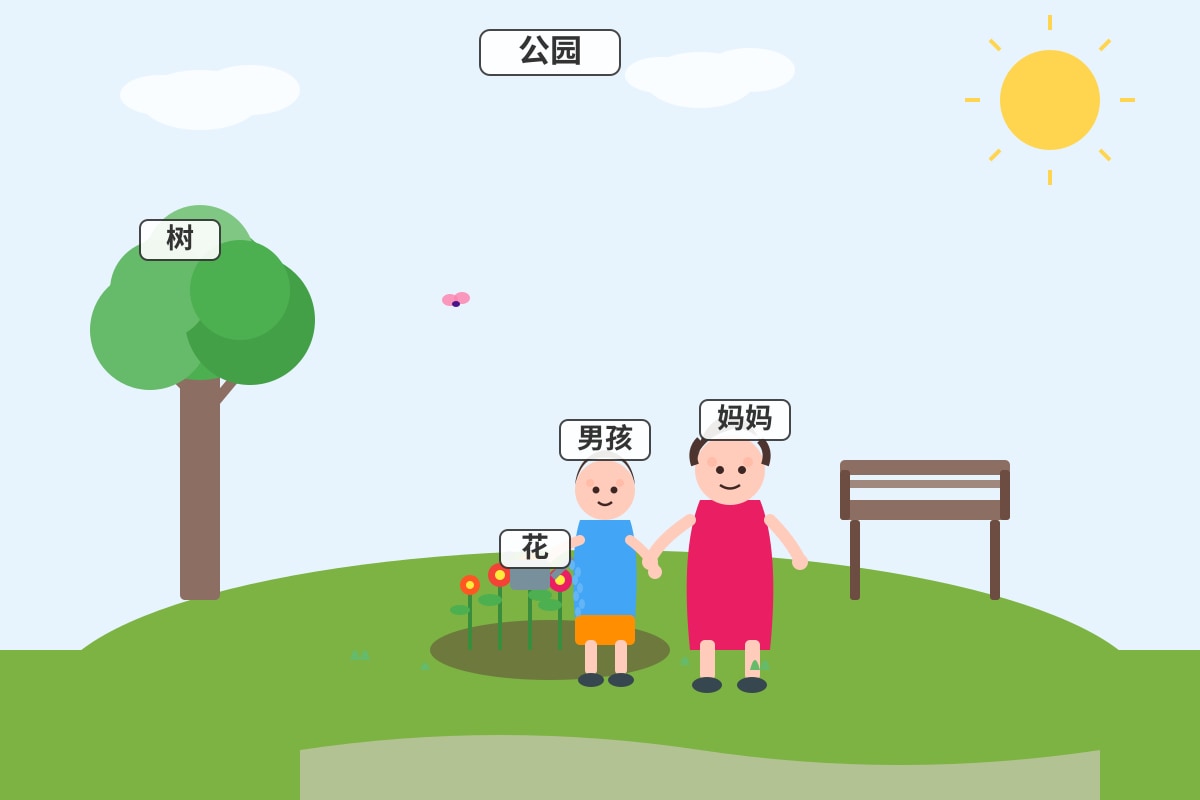
Q16. Look at the picture below. Write one complete sentence describing what you see.
(1 mark)
Expected Visual Features (from image placeholder): A happy boy and his mother in a park. The boy is helping his mother water some flowers. There is a tree and a bench nearby.
Acceptable Answers (any one):
- 男孩在公园里帮妈妈浇花。
- 男孩和妈妈在公园里浇花。
- 公园里有一个男孩和一位妈妈在浇花。
Marking Notes:
- 1 mark: A complete sentence that correctly describes the main action in the picture (boy helping mother water flowers).
- 0 marks: The sentence does not describe the picture, or it is incomplete.
Teaching Note: When writing about a picture, first identify the main action. Ask yourself: Who is in the picture? What are they doing? Where are they? Then write a complete sentence with a subject, verb, and object.
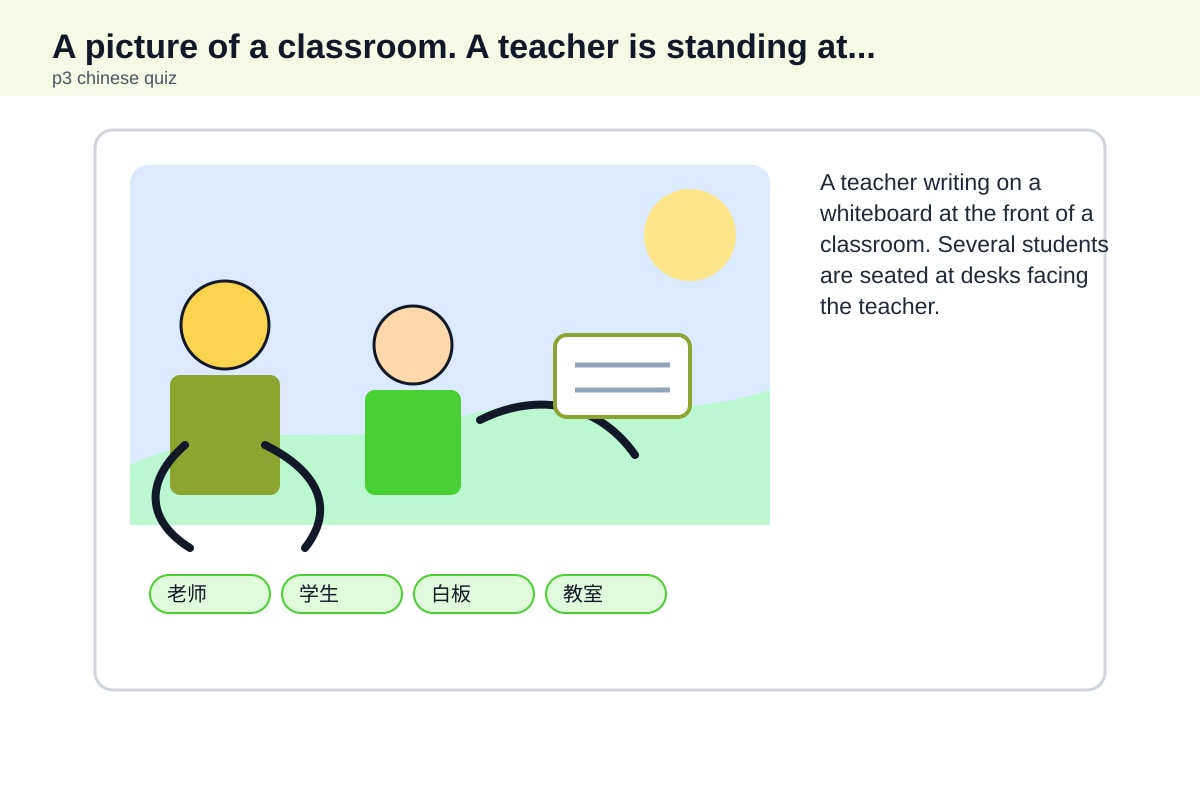
Q17. Look at the picture below. Write one complete sentence describing what is happening.
(1 mark)
Expected Visual Features (from image placeholder): A classroom. A teacher is standing at the front writing on the whiteboard. Students are sitting at their desks listening carefully.
Acceptable Answers (any one):
- 老师在白板上写字,学生们在认真听课。
- 教室里,老师正在白板上写字。
- 学生们坐在座位上听老师讲课。
Marking Notes:
- 1 mark: A complete sentence that correctly describes the main action (teacher writing on whiteboard or students listening).
- 0 marks: The sentence does not describe the picture, or it is incomplete.
Teaching Note: Look for the main action in the picture. Here, the teacher is writing on the whiteboard. You can also describe what the students are doing. A complete sentence needs a subject and a verb.
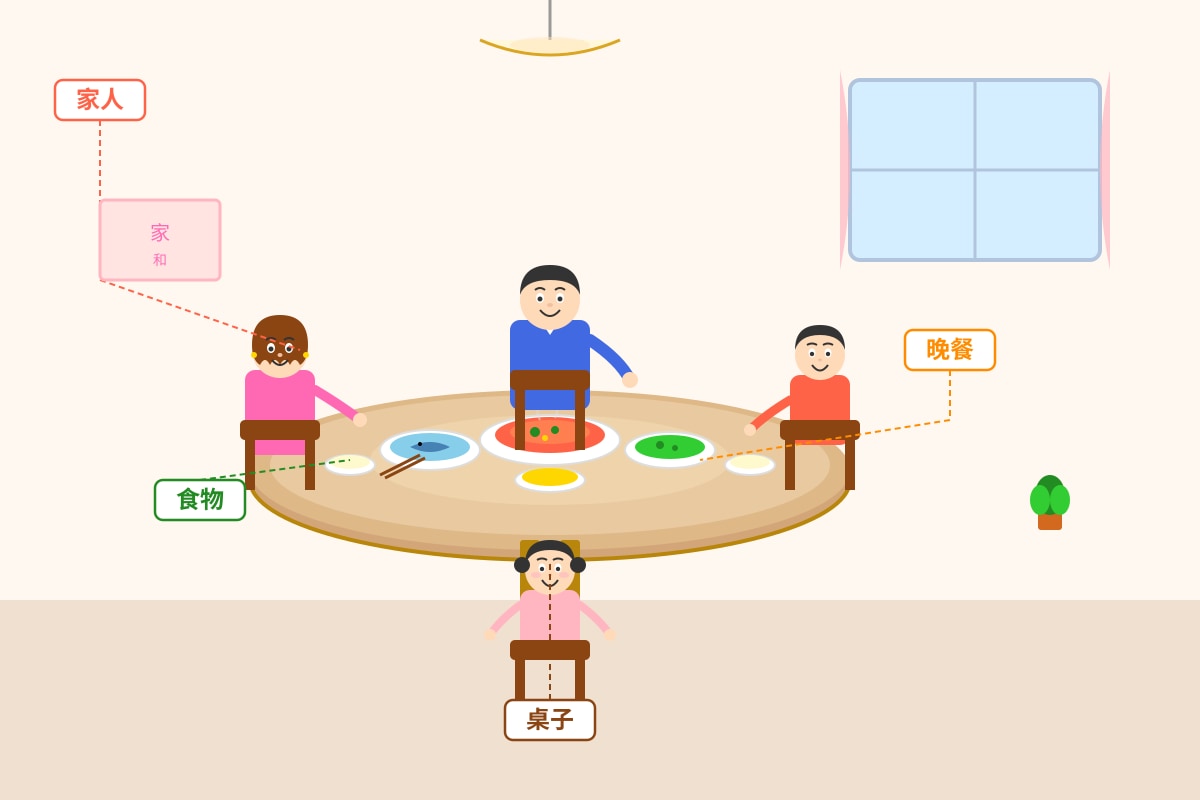
Q18. Look at the picture below. Write one complete sentence describing what is happening.
(1 mark)
Expected Visual Features (from image placeholder): A family eating dinner together at a round table. There are dishes of food on the table. Everyone is smiling.
Acceptable Answers (any one):
- 一家人正在一起吃晚餐。
- 全家人围在桌子旁开心地吃饭。
- 我们一家人每天晚上都一起吃饭。
Marking Notes:
- 1 mark: A complete sentence that correctly describes the main action (family eating dinner together).
- 0 marks: The sentence does not describe the picture, or it is incomplete.
Teaching Note: The key elements in this picture are: family (一家人), eating dinner (吃晚餐), and together (一起). Try to include all three in your sentence.
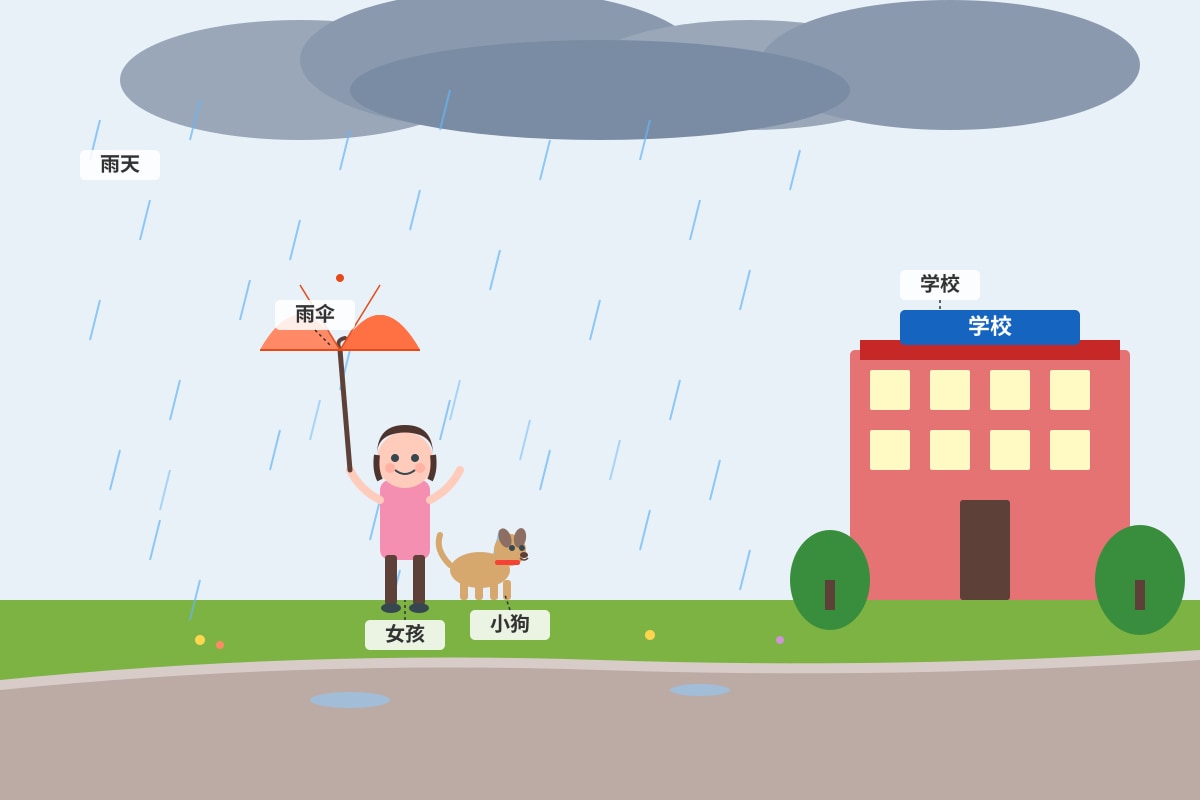
Q19. Look at the picture below. Write two complete sentences describing what is happening.
(2 marks)
Expected Visual Features (from image placeholder): A rainy day. A girl is sharing her umbrella with a small dog. They are walking on a path near a school.
Acceptable Answers (any one set):
- 天下雨了。女孩把雨伞分给小狗用。
- 女孩和小狗共用一把雨伞。他们走在回家的路上。
- 下雨了,女孩撑着一把伞。她和小狗一起走。
Marking Notes:
- 2 marks: Two complete sentences that correctly describe the picture. Both sentences must be grammatically correct and relevant to the picture.
- 1 mark: One complete sentence that correctly describes the picture, or two sentences where one is incomplete or off-topic.
- 0 marks: No correct sentences.
Teaching Note: Look at the picture and identify the key details: it is raining, the girl has an umbrella, and she is sharing it with a dog. Write two separate sentences. Each sentence should have a subject and a verb. For example: 天下雨了。(It is raining.) 女孩把雨伞给小狗用。(The girl shares her umbrella with the dog.)
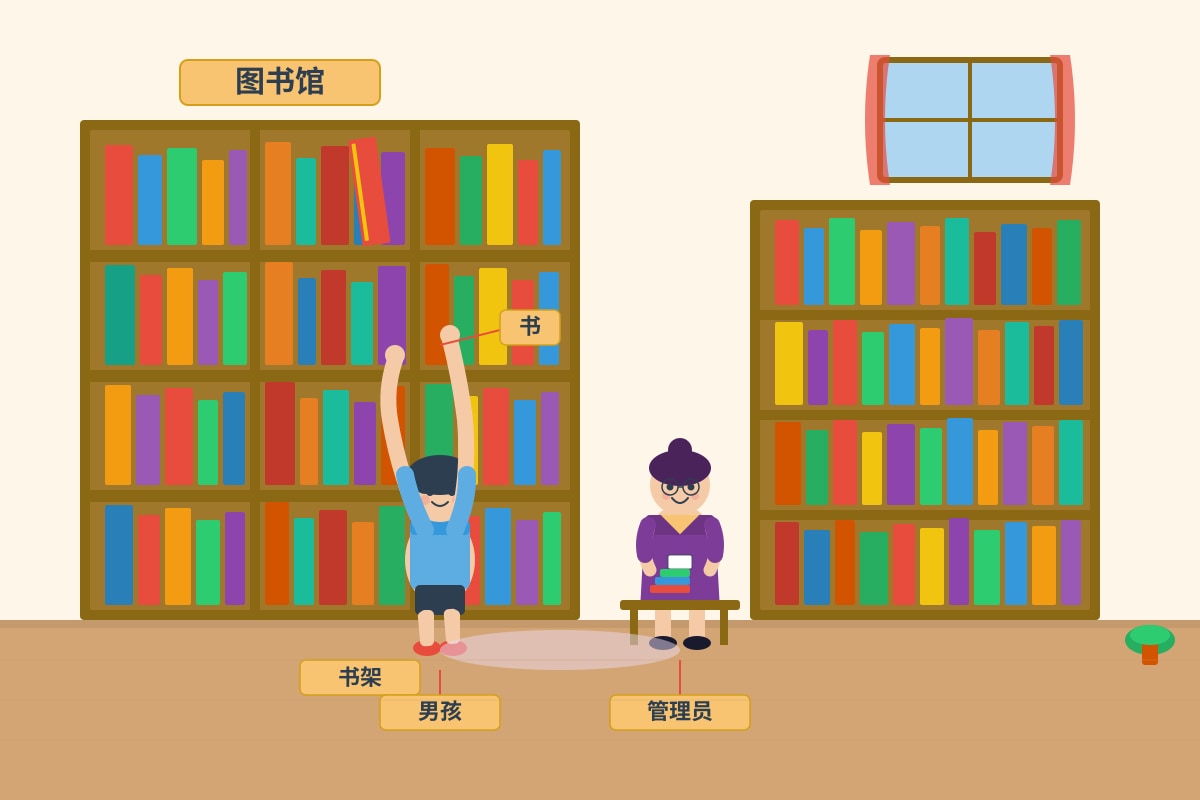
Q20. Look at the picture below. Write two complete sentences describing what is happening.
(2 marks)
Expected Visual Features (from image placeholder): A boy at a library. He is reaching up to take a book from a high shelf. A librarian is standing nearby smiling.
Acceptable Answers (any one set):
- 男孩在图书馆里。他正在从书架上拿书。
- 男孩伸手去拿书架上的书。管理员在旁边看着他。
- 图书馆里,一个男孩在拿书。管理员站在旁边微笑。
Marking Notes:
- 2 marks: Two complete sentences that correctly describe the picture. Both sentences must be grammatically correct and relevant to the picture.
- 1 mark: One complete sentence that correctly describes the picture, or two sentences where one is incomplete or off-topic.
- 0 marks: No correct sentences.
Teaching Note: The key details in this picture are: a boy, a library, reaching for a book, and a librarian. Write two sentences. For example: 男孩在图书馆里。(The boy is in the library.) 他伸手去拿书架上的书。(He is reaching for a book on the shelf.)
END OF ANSWER KEY