From Real Exams Quiz
Primary 3 Chinese 语文应用 Quiz
Free P3 Chinese 语文应用 quiz, Exam version, with questions, answers, and syllabus-aligned practice for Singapore students.
These static practice materials are generated from the site's syllabus and paper-generation workflow, with source and model context shown so students and parents can evaluate the material before use.
Questions
Free quiz and exam paper access
Enter your details to view this paper
Your access is remembered on this device.
Answers
Answer Key: Primary 3 Chinese Quiz - 语文应用
Total Marks: 20
Section A: 辨字测验 (Character Recognition) (5 marks)
Q1. (4) 果
- Marks: 1
- Explanation: The sentence is "妈妈买了许多水______" (Mum bought a lot of ______). The correct word is "水果" (fruit). Option (1) 颗 is a measure word for small round objects. Option (2) 科 means subject/department. Option (3) 渴 means thirsty. Option (4) 果 means fruit. "水果" is a common word for fruit.
- Common mistake: Students may confuse 颗 (kē) with 果 (guǒ) because they sound similar.
Q2. (1) 破
- Marks: 1
- Explanation: The sentence is "弟弟不小心把花瓶打______了" (Younger brother accidentally ______ the vase). The correct word is "打破" (to break). Option (1) 破 means broken. Option (2) 披 means to drape over shoulders. Option (3) 被 is a passive marker. Option (4) 皮 means skin/leather. "打破" is a common verb-object phrase meaning to break something.
- Common mistake: Students may confuse 破 (pò) with 披 (pī) due to similar pronunciation.
Q3. (1) 费
- Marks: 1
- Explanation: The sentence is "我们不应该浪______食物" (We should not ______ food). The correct word is "浪费" (to waste). Option (1) 费 means to waste/expense. Option (2) 沸 means to boil. Option (3) 佛 means Buddha. Option (4) 废 means to abolish/waste (as in废品). "浪费" is a common word meaning to waste.
- Common mistake: Students may confuse 费 (fèi) with 废 (fèi) as they are homophones. However, 浪费 is the standard word for "to waste".
Q4. (2) 兴
- Marks: 1
- Explanation: The sentence is "小明在比赛中得了第一名,他很高______" (Xiao Ming got first place in the competition, he is very ______). The correct word is "高兴" (happy). Option (1) 心 means heart. Option (2) 兴 means excitement/prosperity. Option (3) 性 means nature/gender. Option (4) 星 means star. "高兴" is a common adjective meaning happy.
- Common mistake: Students may write 高心, which is incorrect. The correct character is 兴.
Q5. (2) 关
- Marks: 1
- Explanation: The sentence is "请你把窗户______上" (Please ______ the window). The correct word is "关上" (to close). Option (1) 观 means to observe. Option (2) 关 means to close. Option (3) 管 means to manage. Option (4) 官 means official. "关上" is a common verb-complement phrase.
- Common mistake: Students may confuse 关 (guān) with 观 (guān) because they are homophones.
Section B: 词语选择 (Vocabulary Selection) (5 marks)
Q6. (1) 努力
- Marks: 1
- Explanation: The sentence is "为了准备考试,他每天都______地复习" (To prepare for the exam, he revises ______ every day). The correct word is "努力" (diligently/hard). Option (1) 努力 means hardworking. Option (2) 美丽 means beautiful. Option (3) 快乐 means happy. Option (4) 热闹 means lively. "努力地复习" (revise diligently) is a common collocation.
- Common mistake: Students may choose 快乐 (happy) if they don't understand the context of exam preparation.
Q7. (1) 总是
- Marks: 1
- Explanation: The sentence is "这道数学题太难了,我______做不出来" (This math problem is too difficult, I ______ can't solve it). The correct word is "总是" (always). Option (1) 总是 means always. Option (2) 已经 means already. Option (3) 以前 means before. Option (4) 将来 means future. The sentence implies a repeated or ongoing situation, so "总是" (always) fits best.
- Common mistake: Students may choose 已经 (already) if they think the problem has been attempted once.
Q8. (3) 告诉
- Marks: 1
- Explanation: The sentence is "老师______我们要爱护环境" (The teacher ______ us to care for the environment). The correct word is "告诉" (told). Option (1) 讨论 means discuss. Option (2) 准备 means prepare. Option (3) 告诉 means tell. Option (4) 谈天 means chat. "老师告诉我们要..." (The teacher told us to...) is a common sentence structure.
- Common mistake: Students may choose 讨论 (discuss) if they think the teacher discussed the topic with the class.
Q9. (4) 终于
- Marks: 1
- Explanation: The sentence is "他______知道自己错了,主动向朋友道歉" (He ______ realized he was wrong and took the initiative to apologize to his friend). The correct word is "终于" (finally). Option (1) 如果 means if. Option (2) 只有 means only. Option (3) 果然 means as expected. Option (4) 终于 means finally/at last. The sentence implies a process of realization, so "终于" (finally) is the best fit.
- Common mistake: Students may choose 果然 (as expected) if they think the outcome was predictable.
Q10. (2) 美丽
- Marks: 1
- Explanation: The sentence is "这个公园里有很多______的花朵" (There are many ______ flowers in this park). The correct word is "美丽" (beautiful). Option (1) 有趣 means interesting. Option (2) 美丽 means beautiful. Option (3) 快乐 means happy. Option (4) 热闹 means lively. "美丽的花朵" (beautiful flowers) is a common collocation.
- Common mistake: Students may choose 有趣 (interesting) if they think of flowers as interesting.
Section C: 看图选词 (Picture-Based Vocabulary Selection) (5 marks)
Q11. (2) 扶着
- Marks: 1
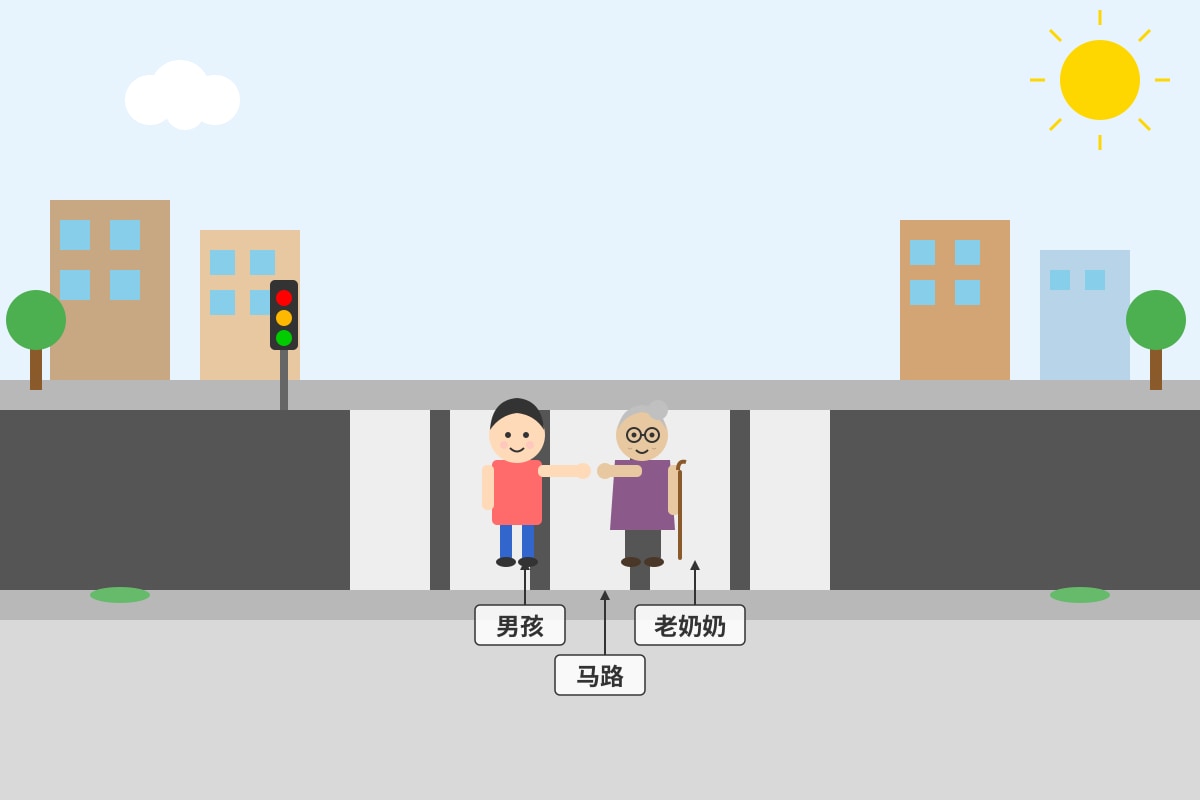
- Explanation: The picture shows a boy helping an elderly woman cross the street. The correct word is "扶着" (to support/help walk). Option (1) 扶起来 means to help someone up (from the ground). Option (2) 扶着 means to support while walking. Option (3) 翻开 means to turn over/open (a book). Option (4) 跌倒 means to fall down. The boy is supporting the woman while walking, so "扶着" is correct.
- Common mistake: Students may choose 扶起来 if they think the woman fell down.
Q12. (3) 浇
- Marks: 1
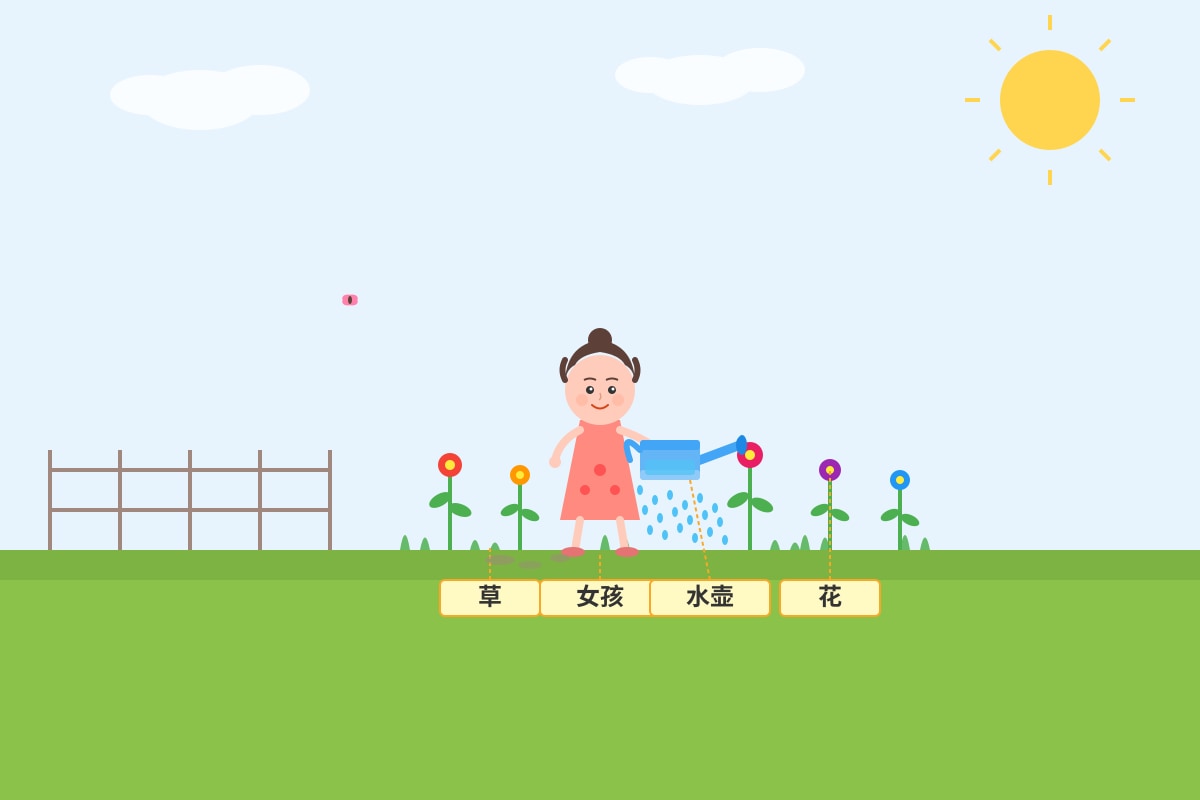
- Explanation: The picture shows a girl watering plants. The correct word is "浇" (to water). Option (1) 喝 means to drink. Option (2) 倒 means to pour. Option (3) 浇 means to water (plants). Option (4) 洗 means to wash. "浇花" (water flowers) is a common phrase.
- Common mistake: Students may choose 倒 (pour) if they don't know the specific word for watering plants.
Q13. (1) 打
- Marks: 1
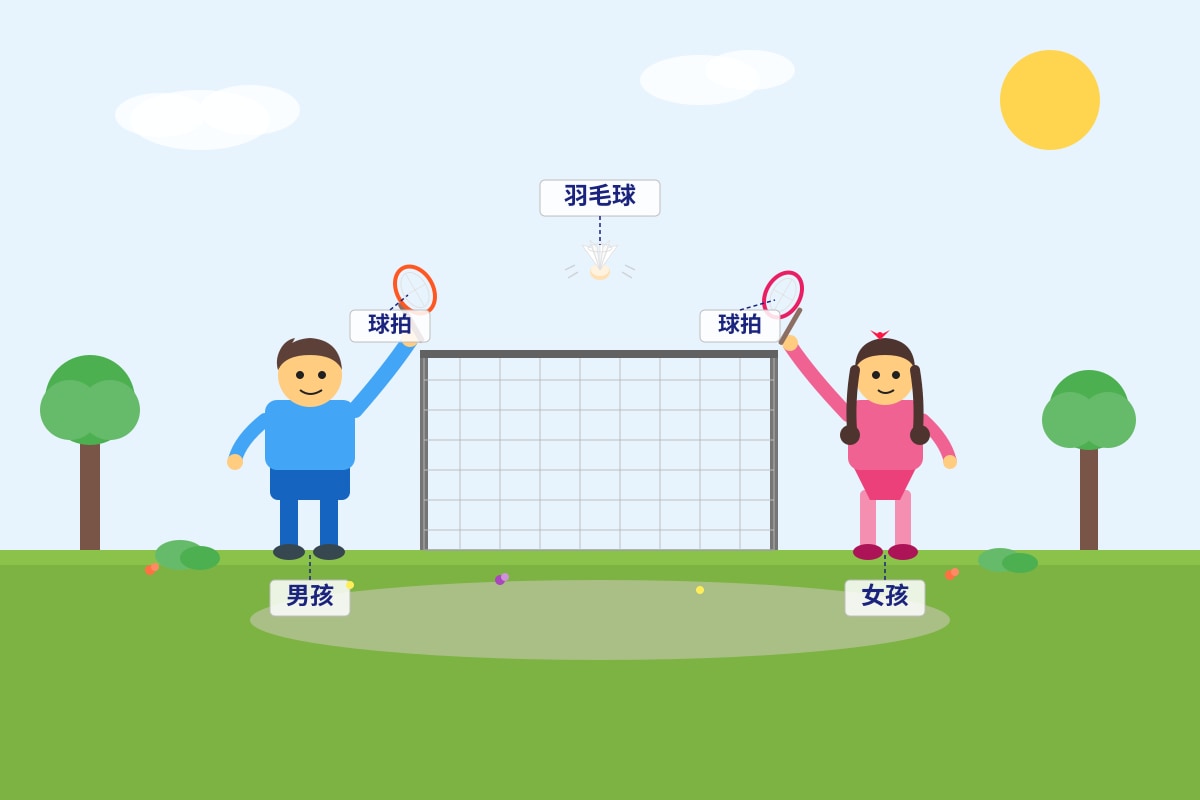
- Explanation: The picture shows children playing badminton. The correct word is "打" (to play a racket sport). Option (1) 打 is used for racket sports (打羽毛球). Option (2) 踢 is used for kicking sports (踢足球). Option (3) 拍 means to pat/clap. Option (4) 丢 means to throw. In Chinese, "打" is the correct verb for badminton.
- Common mistake: Students may choose 拍 (pat) because a racket is used to hit the shuttlecock.
Q14. (2) 快乐
- Marks: 1
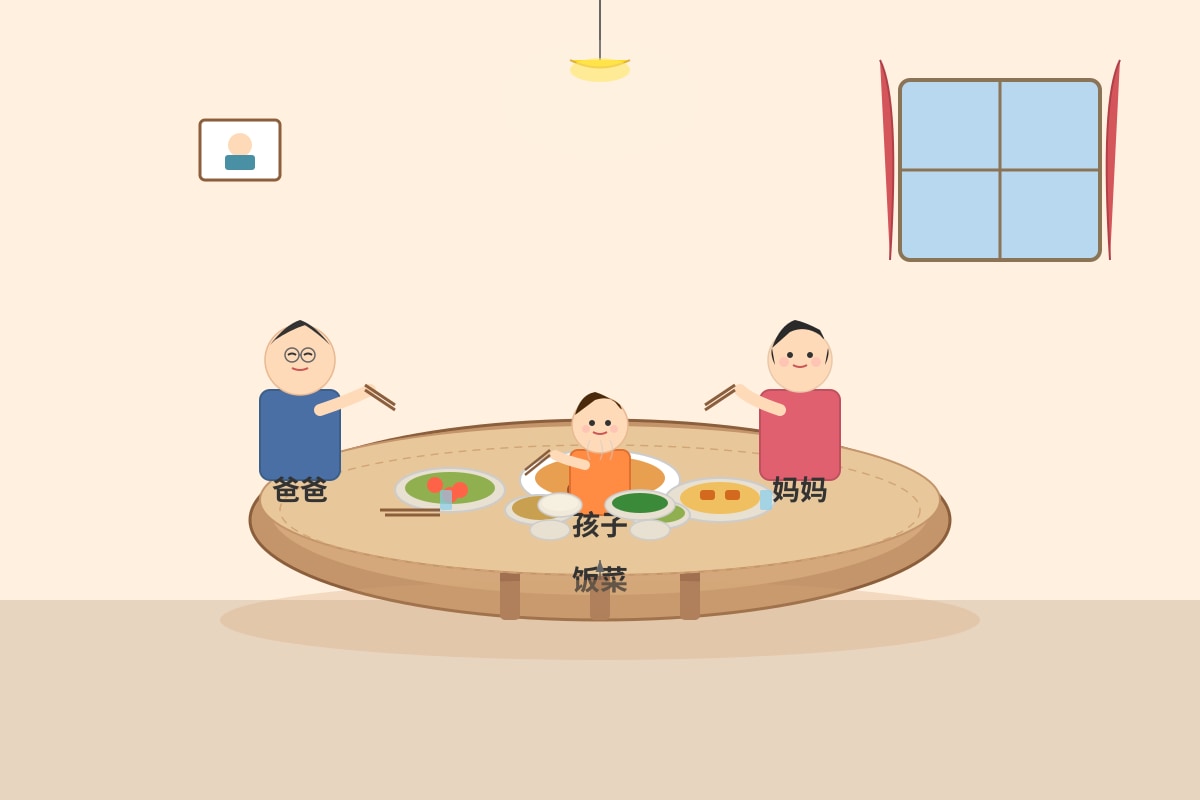
- Explanation: The picture shows a happy family having dinner. The correct word is "快乐" (happily). Option (1) 安静 means quietly. Option (2) 快乐 means happily. Option (3) 着急 means anxiously. Option (4) 难过 means sadly. The smiling faces indicate happiness, so "快乐" is correct.
- Common mistake: Students may choose 安静 (quiet) if they think dinner time is quiet.
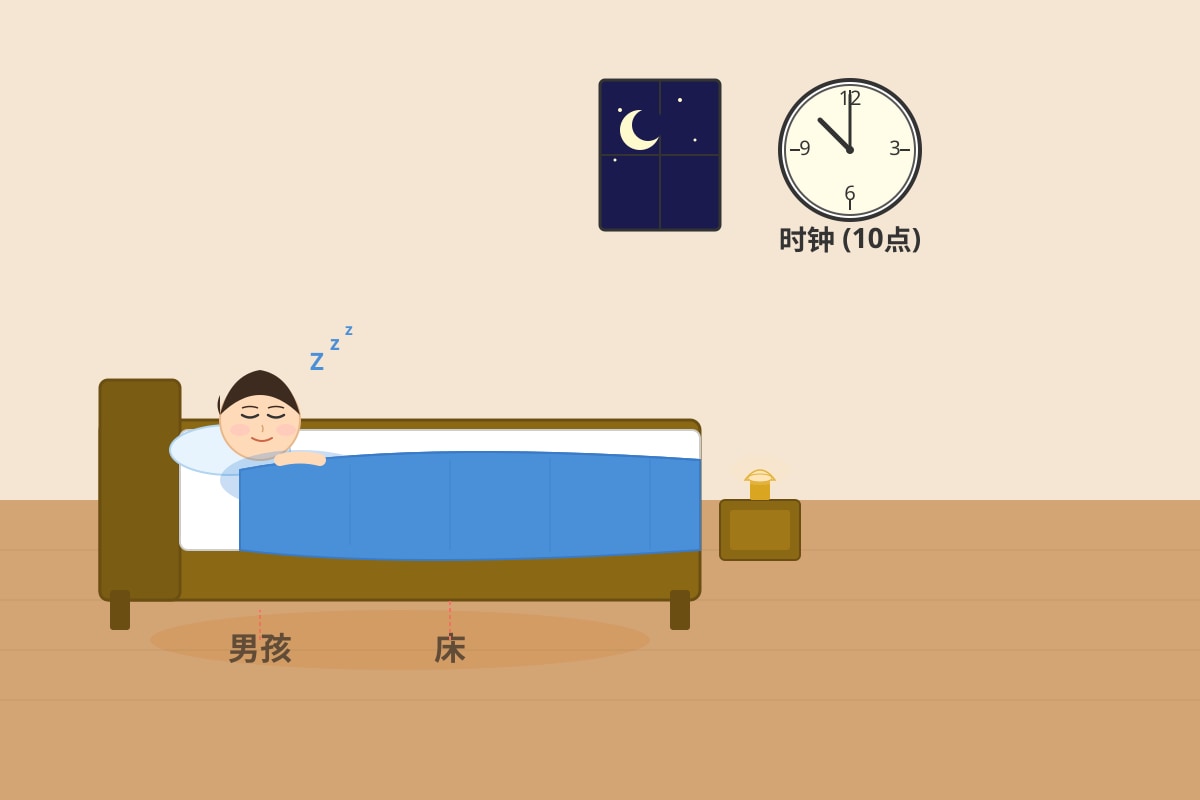
Q15. (3) 睡觉
- Marks: 1
- Explanation: The picture shows a boy sleeping in bed at 10 PM. The correct word is "睡觉" (sleep). Option (1) 起床 means wake up. Option (2) 上学 means go to school. Option (3) 睡觉 means sleep. Option (4) 吃饭 means eat. The boy is in bed with eyes closed, so "睡觉" is correct.
- Common mistake: Students may choose 起床 (wake up) if they don't look carefully at the picture.
Section D: 词语搭配 (Word Collocation) (5 marks)
Q16. (1) 环境
- Marks: 1
- Explanation: "爱护环境" (care for the environment). This is a common collocation. 爱护 (to care for) + 环境 (environment).
- Common mistake: Students may match 爱护 with 身体 (body), but "爱护身体" (care for one's body) is less common than "爱护环境" in this context.
Q17. (3) 尾巴
- Marks: 1
- Explanation: "摆动尾巴" (wag the tail). This is a common collocation for animals. 摆动 (to wag/swing) + 尾巴 (tail).
- Common mistake: Students may match 摆动 with 身体 (body), but "摆动身体" (swing body) is less specific.
Q18. (4) 身体
- Marks: 1
- Explanation: "强壮身体" (strong body). This is a common collocation. 强壮 (strong) + 身体 (body).
- Common mistake: Students may match 强壮 with 环境 (environment), but "强壮环境" is not a correct collocation.
Q19. (6) 起点
- Marks: 1
- Explanation: "回到起点" (return to the starting point). This is a common collocation. 回到 (return to) + 起点 (starting point).
- Common mistake: Students may match 回到 with 任务 (task), but "回到任务" is not a correct collocation.
Q20. (5) 任务
- Marks: 1
- Explanation: "完成任务" (complete the task). This is a common collocation. 完成 (complete) + 任务 (task).
- Common mistake: Students may match 完成 with 起点 (starting point), but "完成起点" is not a correct collocation.