AI Generated Exam Paper
Primary 3 Chinese Practice Paper 5
Free P3 Chinese Practice Paper 5, Kimi2.6 AI version, with questions, answers, and syllabus-aligned practice for Singapore students.
These static practice materials are generated from the site's syllabus and paper-generation workflow, with source and model context shown so students and parents can evaluate the material before use.
Questions
Free quiz and exam paper access
Enter your details to view this paper
Your access is remembered on this device.
Answers
TuitionGoWhere Practice Paper - Chinese Primary 3 Answer Key
Version 5 of 5 | Total Marks: 60
Section A: Vocabulary and Character Recognition (15 marks)
| Question | Answer | Marks | Notes |
|---|---|---|---|
| 1 | B | 1 | 巴剎 (bā shā) is the local Singapore term for wet market. "超级市场" is supermarket (usually has air-con), "图书馆" is library, "游乐场" is playground. |
| 2 | A | 1 | 伤 (shāng) means injured/wounded. 场 (chǎng) is field/venue, 扬 (yáng) is to raise, 汤 (tāng) is soup. Common confusion: 伤 and 汤 share similar pronunciation but different radicals (亻vs 氵). |
| 3 | C | 1 | 垃圾 (lā jī) means garbage. The radical 土 (earth/ground) indicates waste. Common mistake: confusing 垃 with 拉 (pull, hand radical 扌). |
| 4 | B | 1 | 乘凉 (chéng liáng) means to enjoy the cool. 棵 is measure word for plants (tree classifier), 颗 is small round objects, 课 is lesson, 恳 is sincere. |
| 5 | B | 1 | 买 (mǎi) means to buy. 卖 (mài) means to sell (opposite), 读 (dú) is to read, 实 (shí) is real/fruit. Context clue: "新衣服给我" indicates receiving, so buying. |
Common mistakes for Q1-Q5: Students often confuse characters with similar pronunciation (音近字) or similar shape (形近字). Emphasize radical recognition: 氵for water/liquid, 扌for hand actions, 土 for earth/waste.
| Question | Answer | Marks | Notes |
|---|---|---|---|
| 6 | 虽然外面下着大雨,但是同学们都准时到了学校。/ 同学们虽然都准时到了学校,但是外面下着大雨。(语序合理即可) | 2 | Structure check: Must use "虽然……但是……" correctly. 1 mark for correct conjunction pairing, 1 mark for logical meaning. The contrast is between "heavy rain" (difficulty) and "arrived on time" (result despite difficulty). |
| 7(a) | 紧张 | 1 | First time on stage → nervous feeling. |
| 7(b) | 自豪 | 1 | National team winning → proud feeling. |
| 8(a) | B | 1 | Picture shows classroom setting with blackboard writing. |
| 8(b) | C | 1 | Chalk (粉笔) is used on blackboard. Context: school classroom activity. |
| 9 | 2 → 1 → 4 → 3 / ②①④③ | 2 | Logical sequence: 先交代背景(放学回家种花)→ 然后放种子 → 最后浇水 → 结果发芽. Scoring: 2 marks for fully correct; 1 mark if only 1-2 positions wrong; 0 marks if completely wrong. |
| 10 | (Sample answer) 做早操的时候,我们先排队站好,再伸伸手臂,然后弯弯腰,最后跳起来。 | 2 | Marking breakdown: 1 mark for using all four sequence words (先…再…然后…最后…); 1 mark for logical, complete meaning about morning exercises. Accept other reasonable sequences. |
Section B: Reading Comprehension (25 marks)
Passage A: 小明的环保日
| Question | Answer | Marks | Notes |
|---|---|---|---|
| 11 | 星期六/周六 | 1 | Direct information from first paragraph. Accept either 星期六 or 周六. |
| 12 | 小明、小华、小丽 | 2 | Scoring: 2 marks for all 3 names correct; 1 mark for 2 correct; 0 marks for 0-1 correct. Must match text exactly. Common error: writing out of order is acceptable. |
| 13 | (Any three of): (1)捡地上的纸屑和塑料瓶; (2)扫落叶; (3)找到零食包装袋; (4)把垃圾分类放好; (5)代表小组上台发言 | 3 | Scoring: 1 mark per valid activity from text. Must be specific (not just "捡垃圾"). Activities must be from the story events, not general knowledge. |
| 14 | 两类:可以回收再利用的(塑料瓶和废纸)和厨余垃圾(果皮和剩饭)。塑料瓶和废纸放进回收垃圾桶;果皮和剩饭放进厨余垃圾桶。 | 4 | Marking breakdown: 2 marks for identifying two categories with examples; 2 marks for correct bin assignment. Partial credit: 1 mark for bins if categories unclear but attempt made. |
| 15 | 句子:"今天虽然很辛苦,但是我们学到了很多环保知识。我希望每个人都能爱护环境,让我们的校园变得更美丽。" 心情:开心/满足/有成就感/自豪 (因为虽然辛苦但学到了东西,还希望大家一起保护环境) | 3 | Marking breakdown: 1 mark for correct quotation; 2 marks for emotion analysis (must mention contrast between "辛苦" and positive outcome). Accept: 开心, 自豪, 满足, 有责任感. |
| 16 | 同意。因为环保需要长期坚持,不是做一次就可以的。/ 同意,因为如果不天天做,环境就会变脏。 (言之有理即可) | 2 | Marking breakdown: 1 mark for stating agreement (or disagreement with reasonable explanation); 1 mark for explanation connecting to daily habit. Must show understanding that environmental protection requires sustained effort. |
Passage B: 新加坡的端午节
| Question | Answer | Marks | Notes |
|---|---|---|---|
| 17 | 农历五月初五;屈原 | 2 | Scoring: 1 mark for date; 1 mark for person. Accept "五月初五" or "屈原" alone if that's what's asked, but question asks both so need both. |
| 18 | 两项活动:赛龙舟和吃粽子。 (1)赛龙舟:为了纪念屈原,人们划船去打捞他的身体; (2)吃粽子:人们投放粽子到江里,希望鱼不要咬屈原的身体。 | 4 | Marking breakdown: 2 marks for two activities; 2 marks for origins (1 per origin). Must connect to text: 赛龙舟→打捞身体; 粽子→不让鱼咬身体. Partial: 1 mark per partially correct origin. |
| 19 | (1)福建肉粽:五花肉、香菇、咸蛋黄; (2)广东碱水粽:蘸白糖或糖浆吃; (3)娘惹粽:蓝色蝶豆花糯米,香料和猪肉 | 3 | Scoring: 1 mark per粽子type with correct 1-2 features. No mark if only name without features. |
| 20 | 意思:现在年轻家庭挂艾草和菖蒲的习俗比较少了/很多人不知道这个习俗了。 传承方法:(言之有理即可,如:长辈教晚辈、学校举办文化活动、自己主动学习传统文化) | 1 | Scoring: 0.5 mark for correct interpretation; 0.5 mark for reasonable preservation method. Accept any practical suggestion. |
Section C: Sentence Construction and Writing (20 marks)
| Question | Answer/Guidance | Marks | Notes |
|---|---|---|---|
| 21(a) | Sample: 我的妈妈不但会做饭,而且还会做蛋糕。 | 2 | Marking breakdown: 1 mark for correct "不但……而且……" structure with no missing/ wrong word; 1 mark for logical, complete meaning showing progressive relationship. Common error: using for contrast instead of progression. |
| 21(b) | Sample: 因为下雨了,所以我没有去公园。 | 2 | Marking breakdown: 1 mark for correct "因为……所以……" cause-effect structure; 1 mark for logical meaning. The "因为" clause must show cause, "所以" clause must show effect. |
| 21(c) | Sample: 弟弟一会儿画画,一会儿玩玩具,总是静不下来。 | 2 | Marking breakdown: 1 mark for correct "一会儿……一会儿……"交替 structure; 1 mark for showing two alternating activities. |
| 21(d) | Sample: 虽然我很累,但是我还是要把作业做完。 | 2 | Marking breakdown: 1 mark for correct "虽然……但是……" contrast structure; 1 mark for logical meaning showing unexpected result despite difficulty. |
21 total: 8 marks. Mark each (a)-(d) independently.
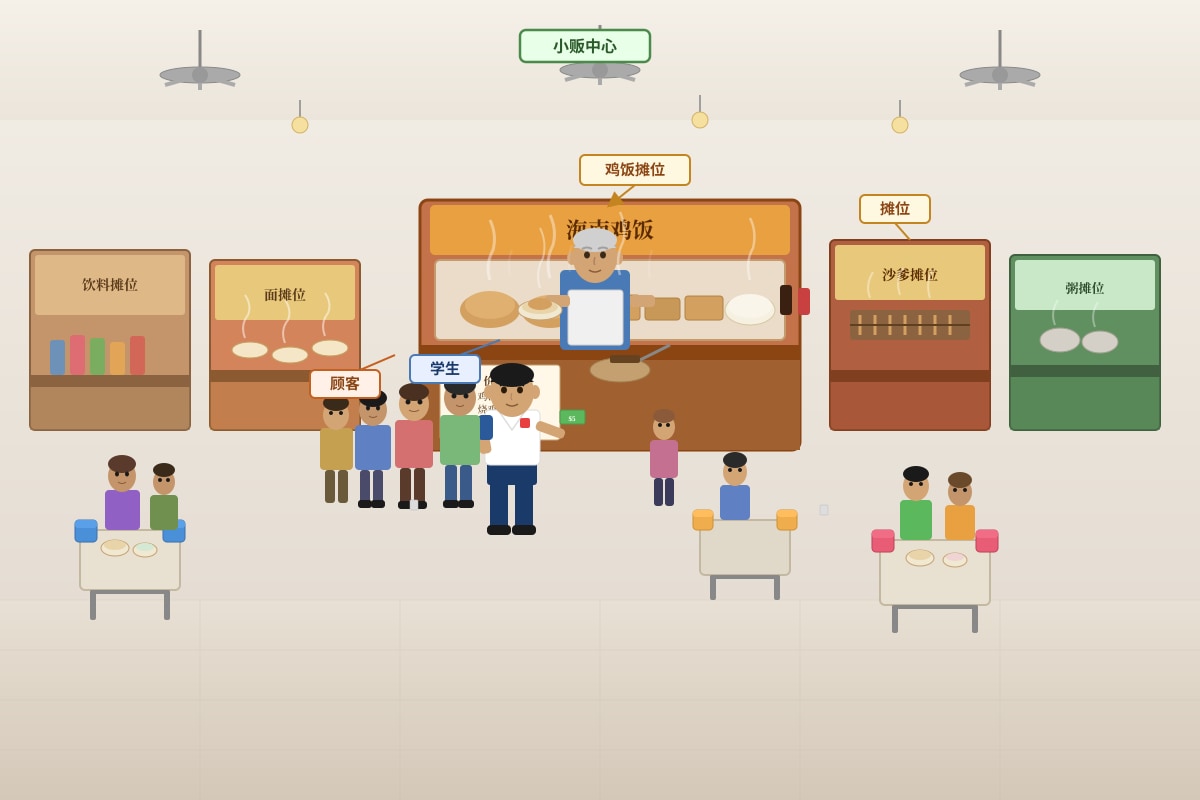
22. 看图写话 (12 marks)
Marking descriptors:
| Band | Marks | Description |
|---|---|---|
| A | 10-12 | - All 5 prompts addressed clearly and in detail<br>- 5 or more complete sentences with clear sequence<br>- Appropriate vocabulary with some descriptive words<br>- Few or no grammar/spelling errors<br>- Shows understanding of hawker centre context and respect for elderly |
| B | 7-9 | - 4-5 prompts addressed, some with less detail<br>- 4-5 complete sentences<br>- Generally appropriate vocabulary<br>- Some minor grammar/spelling errors that don't impede meaning<br>- Shows basic understanding of scene |
| C | 4-6 | - 2-3 prompts addressed<br>- 3-4 sentences, may be incomplete or simple<br>- Limited vocabulary, mostly basic descriptions<br>- Several grammar/spelling errors<br>- Partial understanding of scenario |
| D | 1-3 | - 0-2 prompts addressed<br>- 1-3 simple/incomplete sentences<br>- Very limited vocabulary<br>- Frequent errors affecting meaning<br>- Minimal engagement with image |
| 0 | 0 | Blank, irrelevant, or completely undecipherable |
Prompt coverage checklist:
- 地方:小贩中心/熟食中心 ✓
- 小男孩在做什么:排队买鸡饭/给钱买菜 ✓
- 老板:年长/和蔼/在摊位后忙碌/穿围裙 ✓
- 对话:礼貌用语,如"叔叔,我要一份鸡饭""多少钱""谢谢" ✓
- 食物和心情:鸡饭/开心/期待/觉得香 ✓
Sample response (Band A example):
下午放学后,小明来到家附近的小贩中心买晚餐。他走到一间鸡饭摊位前,看见一位头发花白的老板正在熟练地切着鸡肉。小明礼貌地说:"叔叔,请给我一包鸡饭。"老板笑着回答:"好的,小朋友,等一等。"过了一会儿,热腾腾的鸡饭准备好了。小明付了钱,接过鸡饭,开心地向老板道谢。他闻着香喷喷的鸡饭,迫不及待地想要回家和家人一起享用。
Key features to award high marks:
- Use of sensory details (热腾腾, 香喷喷)
- Dialogue shows politeness and cultural appropriateness
- Clear sequence of events
- Emotional description (开心, 迫不及待)
- Recognition of multi-generational Singapore context
Total Marks Verification:
- Section A: 5 × 1 + 5 × 2 = 5 + 10 = 15 ✓
- Section B: 15 + 10 = 25 ✓
- Section C: 8 + 12 = 20 ✓
- Grand Total: 15 + 25 + 20 = 60 ✓
Duration verification: 75 minutes total
- Section A: ~15 min (quick MCQ and short answers)
- Section B: ~30 min (two passages with written responses)
- Section C: ~30 min (sentence construction + essay)
- Built-in review buffer: included in estimates