AI Generated Exam Paper
Primary 3 Chinese Practice Paper 4
Free P3 Chinese Practice Paper 4, HY3 AI version, with questions, answers, and syllabus-aligned practice for Singapore students.
These static practice materials are generated from the site's syllabus and paper-generation workflow, with source and model context shown so students and parents can evaluate the material before use.
Questions
Free quiz and exam paper access
Enter your details to view this paper
Your access is remembered on this device.
Answers
TuitionGoWhere Practice Paper — Chinese Primary 3 (Version 4) Answer Key
Subject: Chinese
Level: Primary 3
Total Marks: 40
Section A: 选词填空 (10 marks)
A1. (1) 安静 [1]
Teaching note: “安静” means quiet. Library needs quiet, so (1) fits. (2) 热闹 = lively, wrong place. (3)(4) do not describe reading manner.
A2. (1) 打翻 [1]
“打翻” means knock over, causing water to spill. Others: (2) 打开 open, (3) 拿走 take away, (4) 洗净 wash – none cause spill.
A3. (1) 决定 [1]
“决定” = decide. They decided to go because weather good. (2) 忘记 forget, (3) 希望 hope, (4) 认为 think – not logical with “因为天气好”.
A4. (1) 美味 [1]
“美味” = delicious. Food finished shows tasty. Others not for food.
A5. (1) 希望 [1]
“希望” = hope/wish. Future dream of being doctor. (2) 已经 already, (3) 总是 always, (4) 以前 before – wrong tense.
A6. (1) 赶快 [1]
“赶快” = hurry. After school rush to do homework. (2) 慢慢 slow, (3) 从来 never, (4) 偶尔 occasionally – less fitting.
A7. (1) 题目 [1]
“题目” = title. From title guess story type. (2) 作者 author, (3) 价格 price, (4) 页数 pages – not used to guess content.
A8. (1) 喜欢 [1]
“喜欢” = like. Grandpa likes drinking tea and reading. Others negative or unrelated.
A9. (1) 开心 [1]
“开心” = happy. Bird sings happily. Others mismatch emotion.
A10. (1) 朗读 [1]
“朗读” = read aloud. Teacher asks to read text fluently. (2) 观看 watch, (3) 聆听 listen, (4) 绘画 draw – not for text.
Section B: 阅读理解 (20 marks)
B1. 小猫被困在树上(下不来) [1]
From “看见一只小猫被困在树上下不来”.
B2. 管理员 [1]
“管理员来了,用梯子把小猫抱了下来”.
B3. 新加坡的组屋区 [1]
“小英的家住在新加坡的组屋区”.
B4. 小猫“喵”了一声,好像在说谢谢 [1]
Last sentence.
B5. 农历五月五日 [1]
“每年农历五月五日”.
B6. 滨海湾 [1]
“去滨海湾看龙舟比赛”.
B7. 吃粽子、赛龙舟(写出两项) [2]
Marking: 1 mark each, any two from 吃粽子/赛龙舟.
B8. 很漂亮,鼓声有力,很开心 [1]
“龙舟很漂亮,鼓声很有力,我很开心”.
B9. 到图书馆借书 [1]
“每天放学后,他都会到图书馆借书”.
B10. 讲故事 [1]
“比赛讲故事,得了第一名”.
B11. 读书让他知道很多新知识 [1]
Direct quote.
B12. 故事书和科学书 [1]
“看过很多故事书和科学书”.
B13. 邻居 [1]
“小兔白白和灰灰是邻居”.
B14. 胡萝卜 [1]
“白白种了胡萝卜”.
B15. 互相送了一些给对方 [1]
“他们互相送了一些给对方”.
B16. 雨后(草地长出小蘑菇时) [1]
“雨后,草地上长出小蘑菇。小美和哥哥撑着伞出去”.
B17. 小伞 [1]
“蘑菇像小伞一样”.
B18. 炎热,常下大雨 [1]
“天气炎热。午后常常下一场大雨”.
B19. 伞 [1]
“撑着伞出去”.
B20. 大自然真奇妙! [1]
Last sentence.
Section C: 推断与预测 (10 marks)
C1. 示例:小松鼠可能遇到危险,但它很勇敢,去帮助别人或克服困难。 [2]
Marking: 1 mark for linking “勇敢” to action, 1 mark for reasonable guess from title.
C2. 因为天黑了,可能害怕或怕晚回家被骂,所以赶快跑。 [2]
Marking: 1 mark infer from “天越来越黑”, 1 mark reasonable cause.
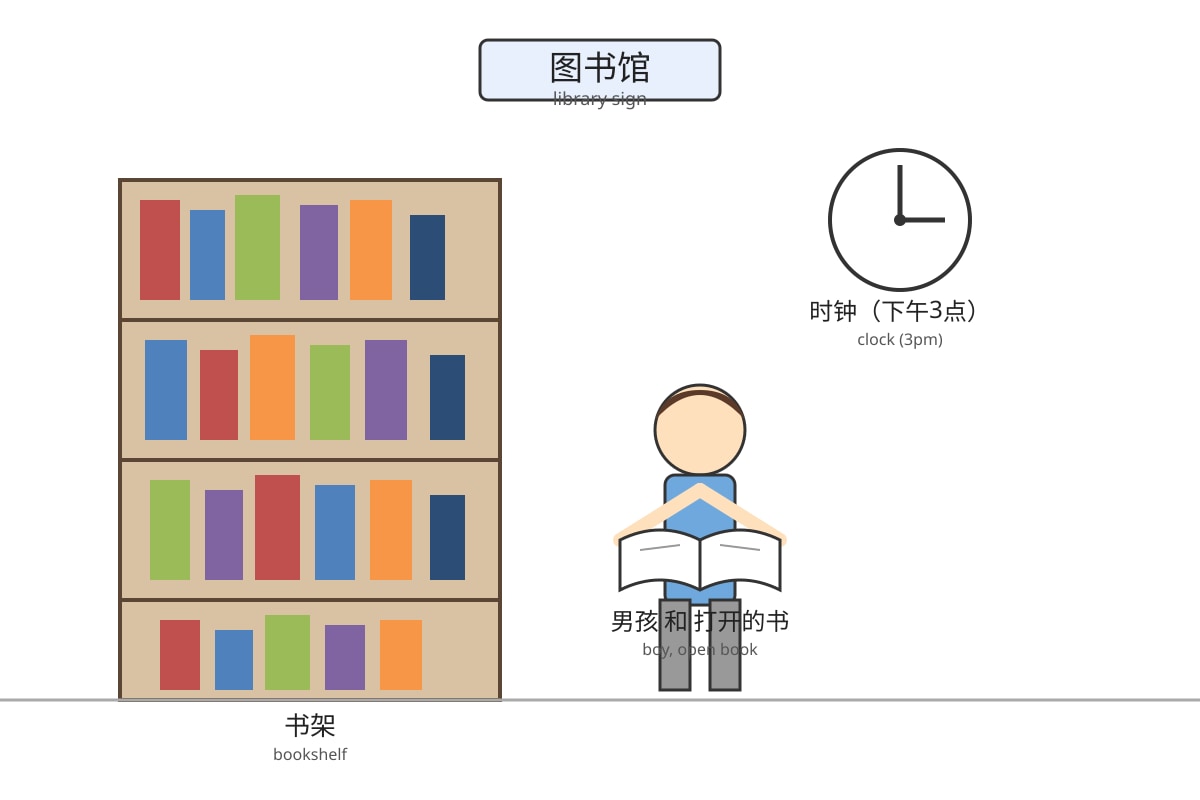
C3. 男孩在图书馆;他在看书(拿着打开的书)。 [2]
Image must show: library sign, bookshelf, boy with open book, clock 3pm. Answer from visual: location = library, action = reading.
C4. 示例:小明可能去玩、看书或跟家人去公园。 [2]
Marking: 1 mark for “不用上学” link, 1 mark plausible activity.
C5. 示例:可能是小孩丢了红包;他会回头找、问别人或请父母帮忙。 [2]
Marking: 1 mark guess who, 1 mark reasonable search method.