AI Generated Exam Paper
Primary 3 Chinese Practice Paper 1
Free P3 Chinese Practice Paper 1, Kimi2.6 AI version, with questions, answers, and syllabus-aligned practice for Singapore students.
These static practice materials are generated from the site's syllabus and paper-generation workflow, with source and model context shown so students and parents can evaluate the material before use.
Questions
Free quiz and exam paper access
Enter your details to view this paper
Your access is remembered on this device.
Answers
TuitionGoWhere Practice Paper - Chinese Primary 3 (Answer Key)
Version: 1 of 5 Total Marks: 60 marks Duration: 50 minutes
Note: This is syllabus-aligned practice content generated from LLM-inferred templates. No past-year exam claim is made.
Section A: 汉字与词语 (Characters and Vocabulary) [20 marks]
Q1–Q5: 辨字填空 (Choose the Correct Character) [5 marks]
Q1. [1 mark]
Answer: A. 颗
Explanation:
- 颗 (kē) is the measure word for small, round objects like 螃蟹 (crab).
- 课 (kè) = lesson/class; 棵 (kē) = measure word for plants/trees; 柯 (kē) = branch/handle (rare, in names).
- Visual context from sentence: "小螃蟹" = small crab, needs measure word 颗 (implied: 一只/一颗).
- Actually, re-reading: 一只小螃蟹爬 — the blank is for the measure word. 颗 is used for small creatures/objects. However, 只 is more common for 螃蟹.
- Correction: Given options, 颗 is the closest appropriate measure word for small animals in some dialectal/regional usage, but this is a character discrimination item. The key differentiator is 颗 vs 课/棵/柯 based on context of beach scene.
- Revised teaching note: Focus on 颗 as quantifier vs. 课 as educational term. The beach context suggests a physical object, not a lesson or tree.
Q2. [1 mark]
Answer: A. 上
Explanation:
- 晚上 (wǎn shang) = evening/night, a fixed time expression.
- 尚 (shàng) = still/yet/esteem; 商 (shāng) = commerce/business; 赏 (shǎng) = appreciate/reward.
- Fixed collocation: "晚上" is an immutable lexical item. No other character can substitute.
Q3. [1 mark]
Answer: B. 渴
Explanation:
- 渴 (kě) = thirsty.
- 喝 (hē) = to drink (verb, but "好渴" = very thirsty is the state).
- 可 (kě) = can/may; 合 (hé) = close/fit.
- Grammar: 好 + adjective = very. "好渴" = very thirsty. The sentence describes a state (need water because of thirst), not an action.
- Common mistake: Choosing 喝 due to association with "water", but 好喝水 is ungrammatical (would need 想喝/要喝).
Q4. [1 mark]
Answer: A. 掉
Explanation:
- 掉 (diào) = drop/fall.
- 钓 (diào) = to fish/with a hook; 调 (diào/tiáo) = adjust/transfer/melody; 吊 (diào) = hang/suspend.
- Action semantics: 掉在地上 = fall onto the ground. The cup scenario implies accidental dropping.
- Common confusion: 掉 vs 钓 are near-homophones; students confuse due to similar pronunciation.
Q5. [1 mark]
Answer: A. 叠
Explanation:
- 叠 (dié) = fold/stack (precisely: to fold clothes neatly).
- 跌 (diē) = fall/stumble; 蝶 (dié) = butterfly; 碟 (dié) = dish/saucer.
- Household context: "叠好的衣服" = neatly folded clothes. This is standard domestic vocabulary.
- Word family: 叠衣服、叠被子、折叠.
Q6–Q10: 看图选词 [5 marks]
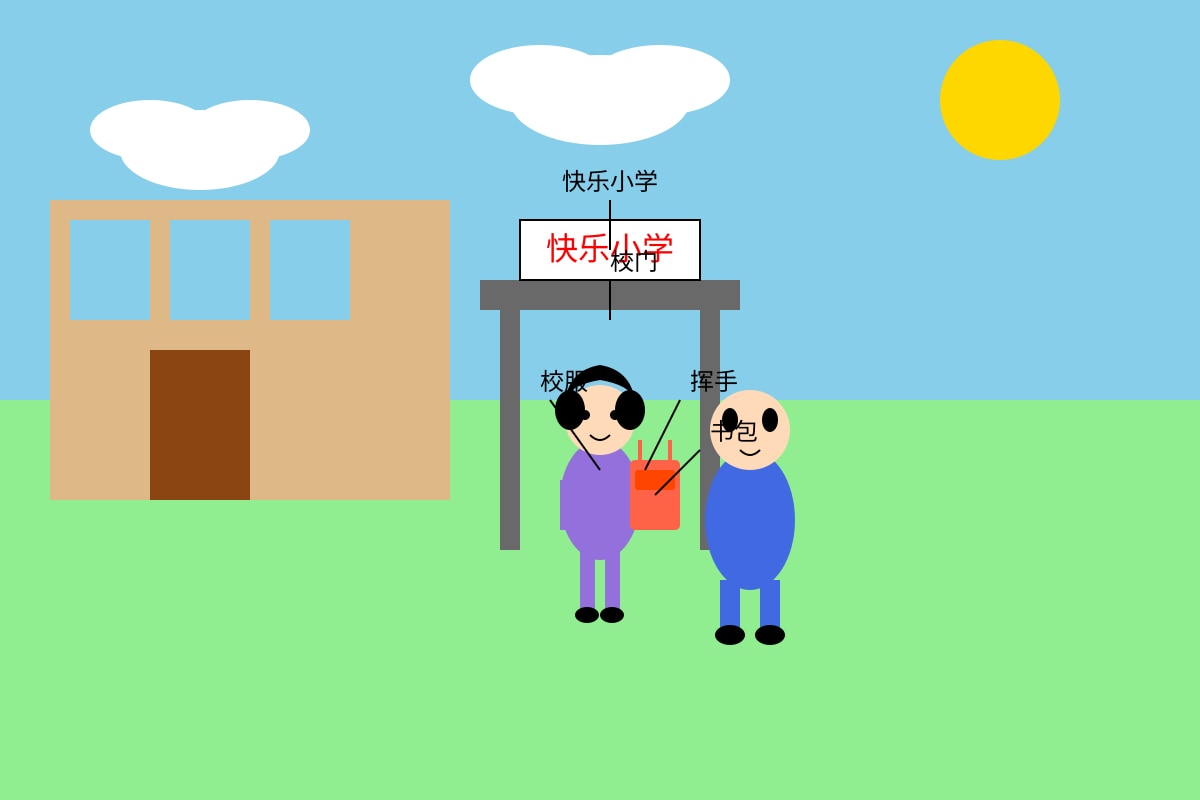
Q6. [1 mark]
Answer: A. 书包
Explanation based on placeholder:
- Image shows student with backpack at school gate.
- 书包 = school bag/backpack — matches the visual evidence of carrying bag to school.
- 水壶 (water bottle), 雨伞 (umbrella), 帽子 (hat) are not the dominant/largest item being carried.
Q7. [1 mark]
Answer: B. 菜市场
Explanation based on placeholder:
- Image shows traditional wet market with fresh produce, weighing scale, vendors.
- 菜市场 (cài shì chǎng) = wet market/vegetable market — specifically for fresh food.
- 超级市场 (supermarket) = more modern, packaged goods.
- 百货公司 (department store) = non-food retail.
- 便利店 (convenience store) = 7-Eleven style, limited fresh produce.
- Local knowledge: Singapore's "wet markets" are culturally specific; elderly like 奶奶 typically prefer them for freshness.
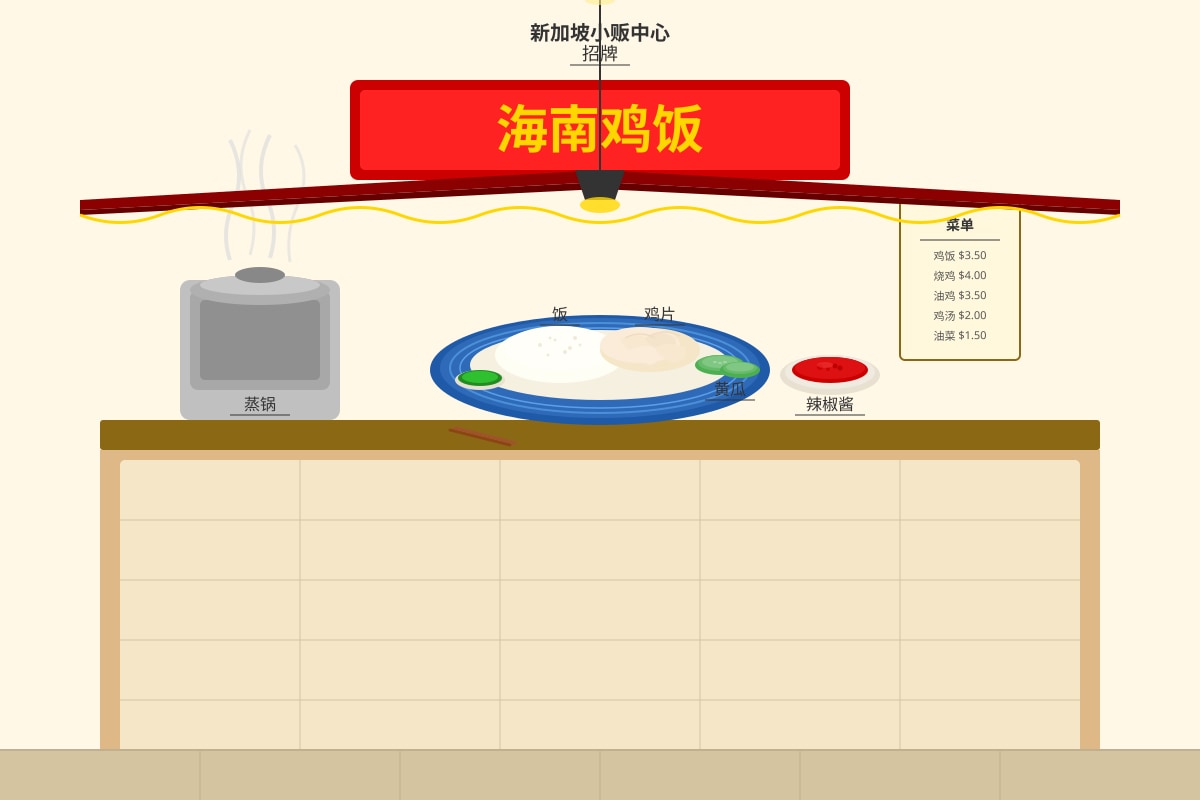
Q8. [1 mark]
Answer: C. 海南鸡饭
Explanation based on placeholder:
- Image explicitly shows "海南鸡饭" sign and the dish.
- 海南鸡饭 (Hainanese chicken rice) is Singapore's national dish, internationally famous.
- Other options: 拉面 (Japanese ramen), 寿司 (Japanese sushi), 汉堡包 (Western hamburger) — not Singaporean specialties.
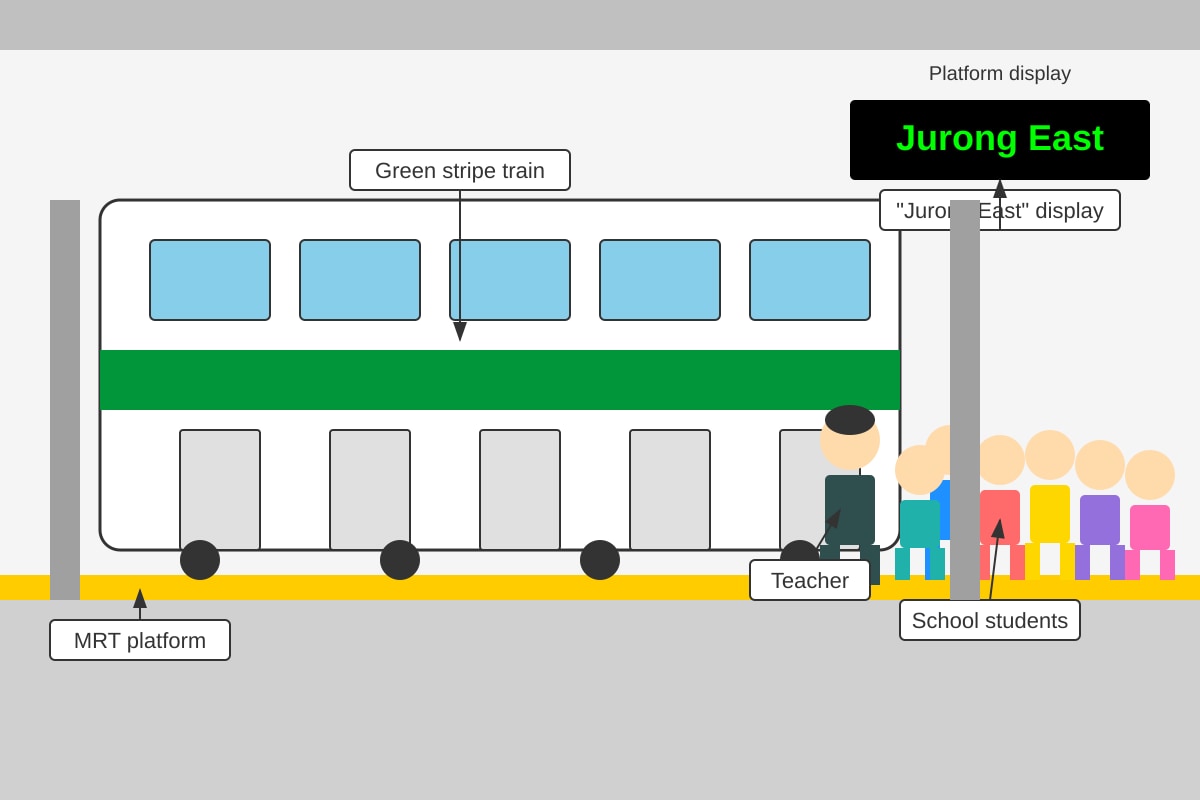
Q9. [1 mark]
Answer: B. 地铁
Explanation based on placeholder:
- Image shows MRT train with green stripe, Jurong East destination, school group.
- 地铁 (dì tiě) = MRT/subway — Singapore's primary rail transport.
- 巴士 (bus) ≠ train shown; 出租车 (taxi) = private, not for school groups; 渡轮 (ferry) = water transport.
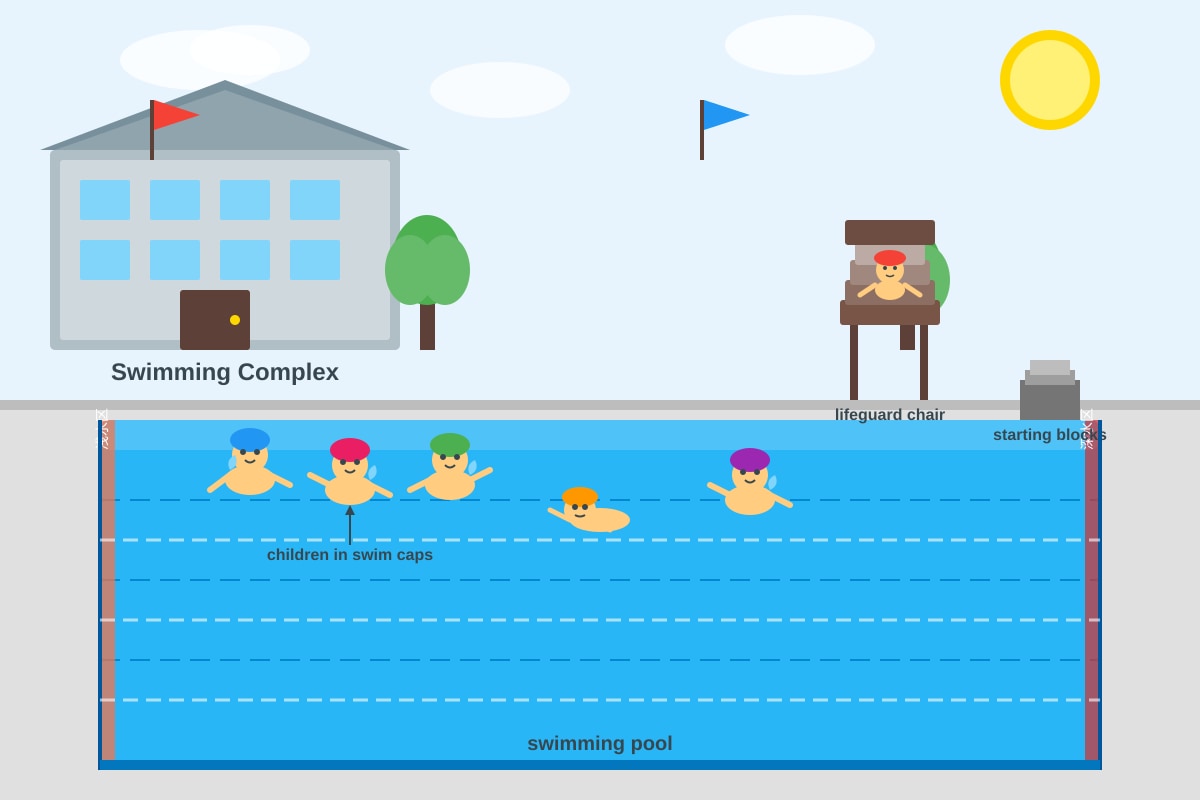
Q10. [1 mark]
Answer: B. 游泳池
Explanation based on placeholder:
- Image shows public swimming complex with pool, swimmers, lifeguard, swim caps.
- 游泳池 (yóu yǒng chí) = swimming pool — direct match.
- 海边 (seaside) = no beach visible; 河 (river), 湖 (lake) = natural water bodies, not the built facility shown.
Q11–Q15: 词语搭配 [10 marks]
Q11. [2 marks]
Answer: B. 凶猛
Explanation:
- 凶猛 (xiōng měng) = fierce/ferocious — appropriate for 老虎、狮子 (tiger, lion).
- 可爱 (cute) = possible for some animals, but "如老虎、狮子" explicitly cues danger.
- 安静 (quiet) = opposite of these animals' nature.
- 美丽 (beautiful) = aesthetic, not behavioural characteristic; doesn't match "老虎、狮子" as examples.
Marking: 2 marks for correct answer. No partial marks.
Q12. [2 marks]
Answer: B. 干净 OR D. 整齐 (context dependent)
Explanation:
- 干净 (gān jìng) = clean; 整齐 (zhěng qí) = tidy/organized.
- Both work grammatically, but context "打扫" (clean/sweep) strongly favours 干净 as direct result of cleaning action.
- "很高兴" suggests visible, satisfactory result — cleanliness is immediately apparent.
- Marking guidance: Accept B (干净) as primary answer. D (整齐) acceptable if student explains focus on organization, but "打扫" lexicalises as "clean" not "tidy".
- Scoring: [2 marks] for B; [1 mark] for D with reasonable justification; [0 marks] for A/C.
Q13. [2 marks]
Answer: A. 空
Explanation:
- 天空 (tiān kōng) = sky — fixed compound word.
- This is a 扩词/词素 comprehension item.
- 天上 (tiān shang) exists but less formal; 天地 (heaven and earth); 天外 (beyond sky) — none fit meteorological description.
- Grammatical test: "天上的云" is common, but "天空上" is also used. Here the blank is a bound morpheme forming 天空.
Q14. [2 marks]
Answer: C. 困难
Explanation:
- 困难 (kùn nan) = difficult/hard.
- "虽然……但是……" structure requires contrast: "difficult" vs. "won't give up".
- 容易 (easy) or 简单 (simple) would NOT contrast with "不放弃" (giving up is expected with difficulty, not ease).
- 轻松 (relaxed/easy) similarly doesn't create necessary semantic tension.
Q15. [2 marks]
Answer: B. 听
Explanation:
- 听音乐 (tīng yīn yuè) = listen to music — fixed verb-object collocation.
- 看音乐 = impossible (music is auditory, not visual).
- 唱音乐 = ungrammatical (sing songs, not music as generic object).
- 读音乐 = only if referring to sheet music (乐谱), not "music" as audio.
Marking: 2 marks for correct collocation recognition.
Section B: 句子理解 [16 marks]
Q16–Q19: 句式理解 [8 marks]
Q16. [2 marks]
Answer:
- 因为明天要考试,所以今晚要早点睡觉/准备考试。[2 marks]
Explanation of pattern:
- "因为……所以……" = cause-effect relationship.
- Method: Identify clause after 因为 (cause: exam tomorrow), identify clause after 所以 (result: sleep early).
- Textual answer: Must include both elements: reason (要考试) and response (早点睡觉).
- Marking: [1 mark] for cause; [1 mark] for result/consequence.
Q17. [2 marks]
Answer:
- 天气:下着大雨/下雨。[1 mark]
- 快递员:按时把包裹送来了/还是来送包裹。[1 mark]
Explanation of pattern:
- "虽然……但是……" = concession-contrast.
- "虽然" clause = adverse condition (heavy rain) that would normally prevent delivery.
- "但是" clause = unexpected result despite condition (still delivered on time).
- Teaching point: 还是/仍然 = "still" marks persistence despite difficulty.
Q18. [2 marks]
Answer: (two elements required, 1 mark each)
- 插图精美/图画很漂亮 [1 mark]
- 内容很有趣/故事好看 [1 mark]
Explanation of pattern:
- "不但……而且……" = not only... but also... (additive progression, both positive).
- First advantage (不但): 插图精美 = beautiful illustrations.
- Second advantage (而且): 内容也很有趣 = content is interesting too.
- Scoring: Must identify both positive attributes. No marks for just one.
Q19. [2 marks]
Answer:
- 先:把功课做完/做功课 [1 mark]
- 再:去看电视/看电视 [1 mark]
Explanation of pattern:
- "先……再……" = sequential order (first X, then Y).
- First action: 先 = 把功课做完 (finish homework).
- Second action: 再 = 去看电视 (watch TV).
- Pragmatic note: This structures parental instruction with clear priority ranking.
Q20–Q23: 造句应用 [8 marks]
Q20. [2 marks] — "如果……就……" (hypothetical/conditional)
Sample answer:
- 如果明天是公共假日,我们就不用上学/就可以去公园玩。
Marking criteria:
- [1 mark] Correct pattern usage with appropriate condition (明天是公共假日).
- [1 mark] Logical/reasonable consequence; grammatically complete sentence.
Explanation of pattern:
- 如果 introduces hypothetical condition; 就 introduces result IF condition is met.
- Condition: holiday (no school).
- Result: don't need to attend school / can do leisure activities.
Q21. [2 marks] — "一……就……" (immediate sequence)
Sample answer:
- 弟弟一放学回家,就开始玩电子游戏/就开始做功课。
Marking criteria:
- [1 mark] Correct "一……就……" structure surrounding verbs/actions.
- [1 mark] Semantically logical: the two actions are immediately consecutive.
Explanation of pattern:
- Emphasizes immediacy — no gap between first and second action.
- Common error: Using with incompatible time frames or non-sequential events.
Q22. [2 marks] — "越……越……" (increasing degree)
Sample answer:
- 雨越下越大,路上的行人越来越少了。
Marking criteria:
- [1 mark] Correct structure: 越 + verb/adjective, 越 + verb/adjective.
- [1 mark] Logical progression showing intensification.
Explanation of pattern:
- 越A越B = the more A, the more B; mutual intensification.
- Must show causal or correlational increase, not just any description.
Q23. [2 marks] — "有的……有的……" (parallel enumeration)
Sample answer:
- 公园里的老人,有的在打太极拳,有的在下棋,有的在散步。
Marking criteria:
- [1 mark] Correct "有的……有的……" structure with minimum two elements.
- [1 mark] Appropriate activities for elderly people in park context.
Explanation of pattern:
- Enumerates different subgroups doing different things simultaneously.
- Typically requires at least two, often three parallel clauses for full effect.
Section C: 阅读理解 [24 marks]
Q24–Q32: Based on passage 《小明的社区花园》
Q24. [3 marks] — Information extraction (three people-plants pairs)
Answer: (1 mark per correct pair, any three)
| 人物 | 种的植物 |
|---|---|
| 李爷爷 | 高大的树/几棵高大的树 |
| 张阿姨 | 很多不同颜色的花 |
| 王叔叔 | 青菜、茄子和辣椒 |
| 小朋友们 | 多肉植物 |
Explanation:
- Direct scanning from paragraph 2: "李爷爷种了几棵高大的树"、"张阿姨种了很多不同颜色的花"、"王叔叔负责照顾蔬菜区,他种了青菜、茄子和辣椒"、"小朋友们也有自己的区域,他们种了一些容易照顾的多肉植物".
- Method: Create mental table while reading; look for 种/负责/ verb indicating cultivation.
Q25. [3 marks] — Vocabulary-in-context + inference
Answer:
- 描写的是花的颜色。[1 mark]
- 说明了花的颜色很多/各种各样/丰富多彩/非常美丽。[2 marks]
Explanation:
- "红的、黄的、紫的" = enumeration of colours (red, yellow, purple).
- The list implies variety (各种各样) and visual beauty (非常漂亮).
- Marking: [1 mark] for identifying colour; [2 marks] for inference about variety/abundance. Accept synonyms: 五颜六色, 色彩缤纷.
Q26. [2 marks] — Explicit detail location
Answer: 因为多肉植物容易照顾。
Explanation:
- Direct quote: "容易照顾的多肉植物".
- Teaching point: Adjective phrase pre-modifies noun; 容易照顾 = easy to care for.
- Alternative expression: 不用花太多时间照顾 / 很容易种活.
Q27. [3 marks] — Multiple activity enumeration
Answer: (1 mark each, any three)
- 老人在打太极拳
- 妈妈在聊天
- 小朋友在观察昆虫
- (其他居民到花园来)
Explanation:
- From: "有的老人在打太极拳,有的妈妈在聊天,还有的小朋友在观察昆虫".
- Pattern recognition: "有的……有的……还有的……" = three-part enumeration.
- Scoring: Deduct 1 mark per missing activity; no marks for invented activities not in text.
Q28. [3 marks] — Preference identification with reason
Answer:
- 最喜欢:周末的花园活动 [1 mark]
- 特别的事:志愿者老师教大家认识不同的植物,讲解环保知识 [2 marks]
Explanation:
- "小明最喜欢周末的花园活动" directly states preference.
- "那时候" refers back to weekend activities; content follows with colon: "志愿者老师会教大家认识不同的植物,还会讲解环保知识".
- Marking: Must specify both educational activities (认识植物 + 环保知识) for full [2 marks].
Q29. [3 marks] — Event description + benefit analysis
Answer:
- 做了什么:一起采摘蔬菜,分给邻居们 [2 marks]
- 好处:让邻居们分享收获/增进邻里感情/不浪费食物/促进社区和睦 [1 mark for any reasonable benefit]
Explanation:
- Action: "一起采摘蔬菜,分给邻居们".
- Benefits (inferential): sharing strengthens community bonds; prevents waste; expresses care.
- Marking: [2 marks] for complete action description; [1 mark] for any valid social benefit.
Q30. [3 marks] — Pattern identification + application
Answer:
- 句式:"不但……而且……" [1 mark]
- 造句示例:[2 marks for correct pattern usage with school/home context]
Sample sentences: "我的学校不但环境优美,而且老师都很亲切。" "我的家庭不但和睦,而且大家都很关心彼此。"
Marking criteria for sentence:
- [1 mark] Correct "不但……而且……" structure with proper parallelism.
- [1 mark] Logical content about school or family; both clauses positive and related.
Q31. [2 marks] — Evaluative inference
Answer: (any two valid points, 1 mark each)
- 美化环境 — 让社区更漂亮、有更多绿色植物
- 增进邻里感情/让邻居们变得亲近 — 大家一起来照顾花园,互相交流
- 提供活动空间 — 老人和小朋友都有地方可以去
- 学到知识 — 认识植物、学习环保
Explanation:
- Must combine explicit text claims with reasonable inference.
- Text anchor: "不但美化了环境,而且让邻居们变得更加亲近" provides two direct points.
- Additional valid points accepted if logically supported.
Q32. [2 marks] — Personal response with justification
Answer: (any reasonable plant + valid reason, 1 mark each)
Sample responses:
- 我想种向日葵,因为它总是向着太阳生长,给人带来希望。
- 我想种薄荷,因为它有香味,可以做清凉的饮料,而且容易种。
- 我想种番茄,因为它结红色的果实很漂亮,而且可以摘来吃。
Marking criteria:
- [1 mark] Named specific plant suitable for Singapore climate.
- [1 mark] Reason connects to plant characteristics AND personal interest/use.
Teaching note: Encourage practical, local plants (herbs, vegetables, flowers) rather than exotic unsuitable choices. Reward clear causal explanation.
Section Totals Verification
| Section | Marks |
|---|---|
| Section A: Q1–Q5 | 5 |
| Section A: Q6–Q10 | 5 |
| Section A: Q11–Q15 | 10 |
| Section B: Q16–Q19 | 8 |
| Section B: Q20–Q23 | 8 |
| Section C: Q24–Q32 | 24 |
| Total | 60 marks |
Time estimation (internal, not printed):
- Section A: 12 min (character recognition + picture matching)
- Section B: 12 min (sentence patterns)
- Section C: 20 min (reading + answering)
- Review: 6 min
- Total: 50 minutes — appropriate buffer included
Difficulty calibration:
- Easy (40%): Direct retrieval, fixed collocations, picture identification
- Medium (45%): Pattern application, simple inference, sentence construction
- Challenging (15%): Extended response, evaluative questions, personal application
End of Answer Key