From Real Exams Exam Paper

Primary 3 Chinese Semestral Assessment 2 (End of Year) Paper 5

Free Kimi AI-generated P3 Chinese SA2 Paper 5 with questions, answers, and syllabus-aligned practice for Singapore students preparing for exams.

These static practice materials are generated from the site's syllabus and paper-generation workflow, with source and model context shown so students and parents can evaluate the material before use.

Primary 3 Chinese From Real Exams Generated by Kimi K2.6 Free Updated 2026-06-09

Questions

<!-- TuitionGoWhere generation metadata: stage=3-1; model=moonshotai/kimi-k2.6:free; model_label=Kimi K2.6 Free; generated=2026-06-06; Sources: Stage 2-1 real exam-derived templates and Stage 2-2 exam-enriched syllabus. -->

TuitionGoWhere Exam Practice (AI) - SA2 年终评估

Version: 5 of 5

Subject: Chinese Language (华文)
Level: Primary 3 (小学三年级)
Paper: Reading Comprehension and Language Application (阅读与语文应用)
Duration: 50 minutes
Total Marks: 60 marks


Name: _________________________ Class: _______ Date: ___________


INSTRUCTIONS TO CANDIDATES

  1. Write your name, class, and date in the spaces provided above.
  2. This paper consists of THREE sections: Section A, Section B, and Section C.
  3. Answer ALL questions.
  4. Write your answers clearly in the spaces provided.
  5. For multiple-choice questions, shade or circle the correct option.

SECTION A: 语文应用 (Language Application)

[20 marks]

Instructions: Choose the correct answer for each question. Each question carries 1 mark.


Questions 1–5: 辨字测验 (Character Recognition)

Choose the correct character to complete each sentence.

Question 1 [1 mark]

小明的书包里有一______苹果。

A. 颗 B. 科 C. 渴 D. 刻

Answer: ___________


Question 2 [1 mark]

请不要把垃______丢在地上。

A. 拉 B. 位 C. 立 D. 圾

Answer: ___________


Question 3 [1 mark]

妈妈______了一件新衣服给我。

A. 披 B. 皮 C. 坡 D. 被

Answer: ___________


Question 4 [1 mark]

我______了带雨伞,结果淋湿了。

A. 望 B. 忘 C. 王 D. 往

Answer: ___________


Question 5 [1 mark]

湖水很______,可以看到鱼儿在游。

A. 泡 B. 包 C. 饱 D. 清

Answer: ___________


Questions 6–10: 词语搭配 (Word Collocation)

Choose the word that best matches the given description or context.

Question 6 [1 mark]

形容一个人很勇敢,我们可以用:

A. 胆小 B. 勇敢 C. 懒惰 D. 骄傲

Answer: ___________


Question 7 [1 mark]

"把东西放回原______" 应该填:

A. 处 B. 外 C. 位 D. 回

Answer: ___________


Question 8 [1 mark]

天气很热,我想______一杯冰水。

A. 喝 B. 看 C. 拿 D. 送

Answer: ___________


Question 9 [1 mark]

弟弟______在沙发上睡着了。

A. 坐 B. 躺 C. 站 D. 走

Answer: ___________


Question 10 [1 mark]

这个故事很______,我听了还想再听。

A. 无聊 B. 好听 C. 困难 D. 简单

Answer: ___________


Questions 11–15: 看图选词 (Picture-Based Vocabulary)

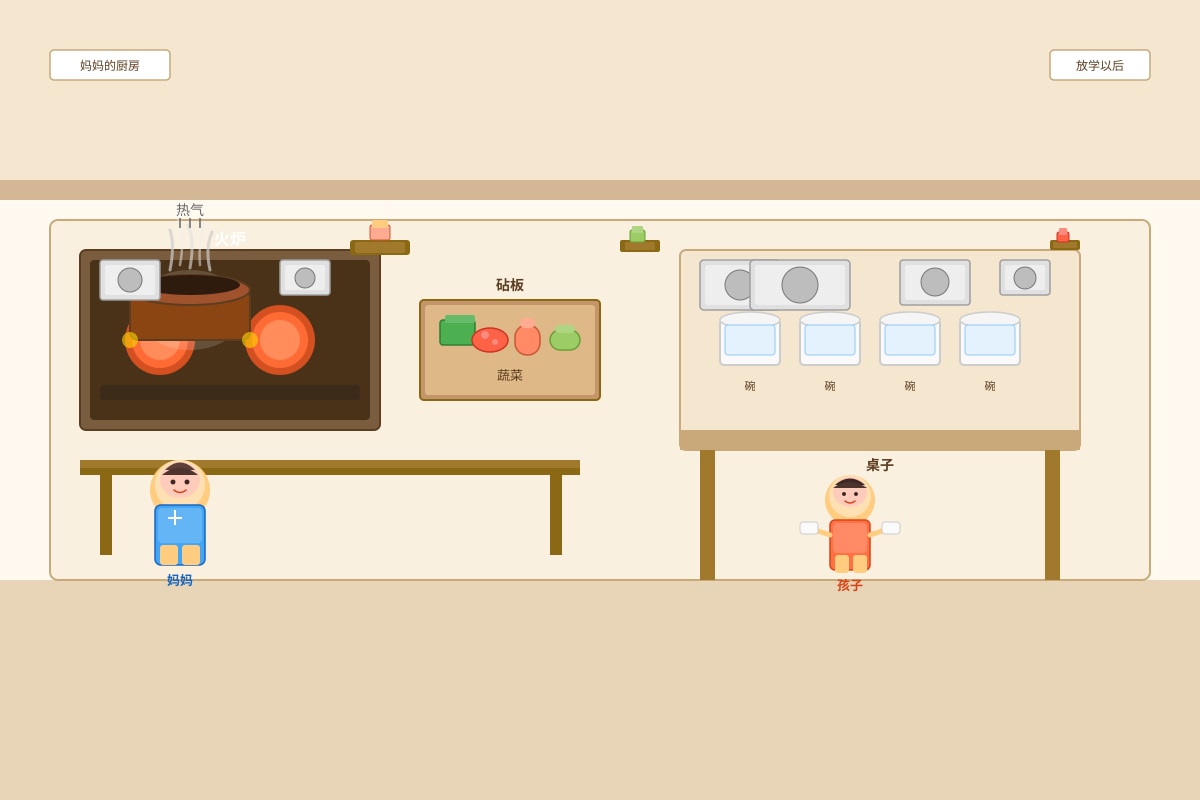
<image_placeholder> id: Q11-fig1 type: diagram linked_question: Q11-Q15 description: A simple scene showing a kitchen with a woman cooking at a stove, steam rising from a pot, vegetables on a cutting board, and a child setting the table labels: stove (火炉), pot (锅), steam (热气), vegetables (蔬菜), cutting board (砧板), child (孩子), table (桌子), bowls (碗) values: none must_show: cooking action, steam indicating hot food, child placing bowls on table, various vegetables on counter </image_placeholder>

Question 11 [1 mark]

妈妈在厨房里______晚饭。

A. 洗 B. 做 C. 买 D. 吃

Answer: ___________


Question 12 [1 mark]

桌子上放着几个______。

A. 筷子 B. 碗 C. 椅子 D. 门

Answer: ___________


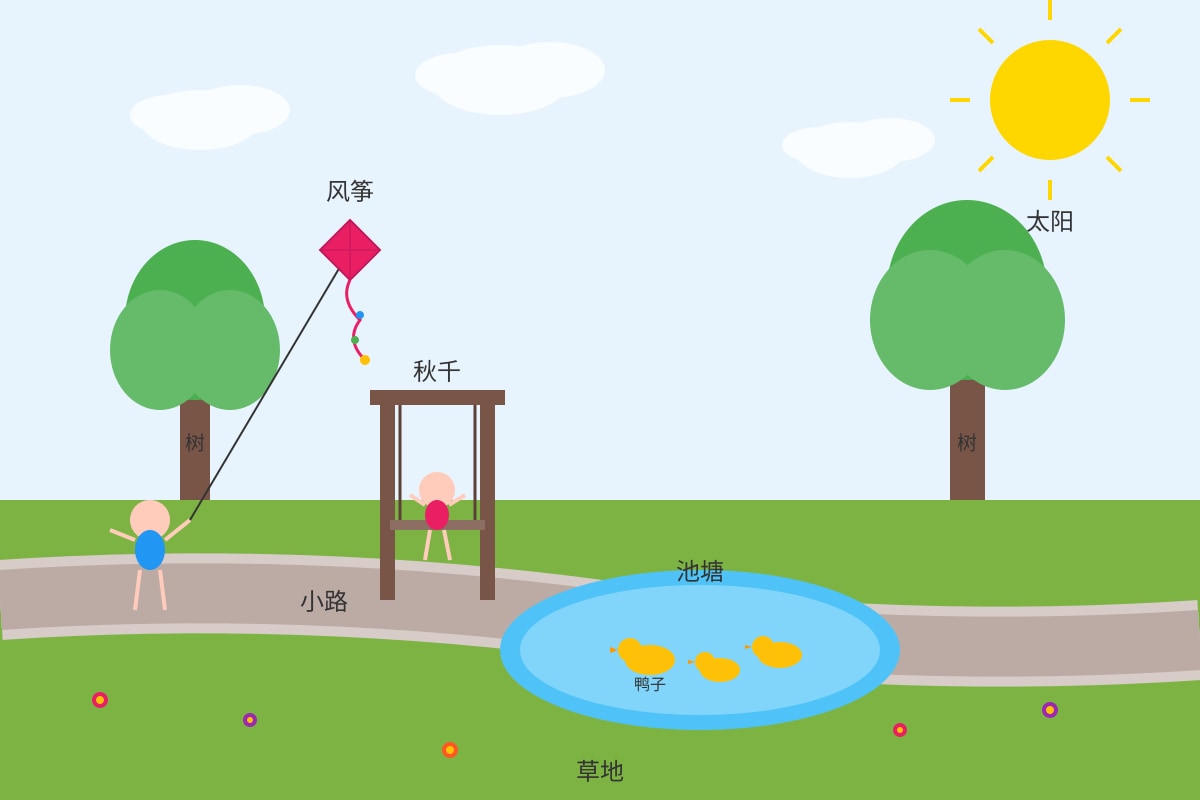
<image_placeholder> id: Q13-fig1 type: diagram linked_question: Q13-Q15 description: A park scene with children playing, a boy flying a kite, a girl on a swing, trees, a pond with ducks, and a path labels: kite (风筝), swing (秋千), pond (池塘), ducks (鸭子), trees (树), path (小路), grass (草地), sun (太阳) values: none must_show: boy running with kite in air, girl on swing moving, ducks swimming in pond, clear weather with sun </image_placeholder>

Question 13 [1 mark]

天气很好,小朋友们到______去玩。

A. 学校 B. 公园 C. 商场 D. 医院

Answer: ___________


Question 14 [1 mark]

天空中飞着一只彩色的______。

A. 小鸟 B. 飞机 C. 风筝 D. 气球

Answer: ___________


Question 15 [1 mark]

池塘里有几只______在游来游去。

A. 鱼 B. 鸭子 C. 青蛙 D. 乌龟

Answer: ___________


Questions 16–20: 词语辨析 (Word Discrimination)

Choose the most appropriate word to fill in the blank.

Question 16 [1 mark]

这道题目很______,我想了很久才做出来。

A. 简单 B. 容易 C. 困难 D. 快乐

Answer: ___________


Question 17 [1 mark]

他______起书包,快步走向学校。

A. 背 B. 看 C. 写 D. 放

Answer: ___________


Question 18 [1 mark]

爸爸的脸上______着微笑。

A. 有 B. 挂 C. 写 D. 画

Answer: ___________


Question 19 [1 mark]

春天来了,花儿都______了。

A. 落 B. 开 C. 谢 D. 掉

Answer: ___________


Question 20 [1 mark]

老师的话让我______了很大的启发。

A. 有 B. 得 C. 受到 D. 给

Answer: ___________


SECTION B: 阅读理解 (Reading Comprehension - Short Passages)

[24 marks]

Instructions: Read each passage carefully, then answer the questions that follow.


Passage 1: 小明的周末

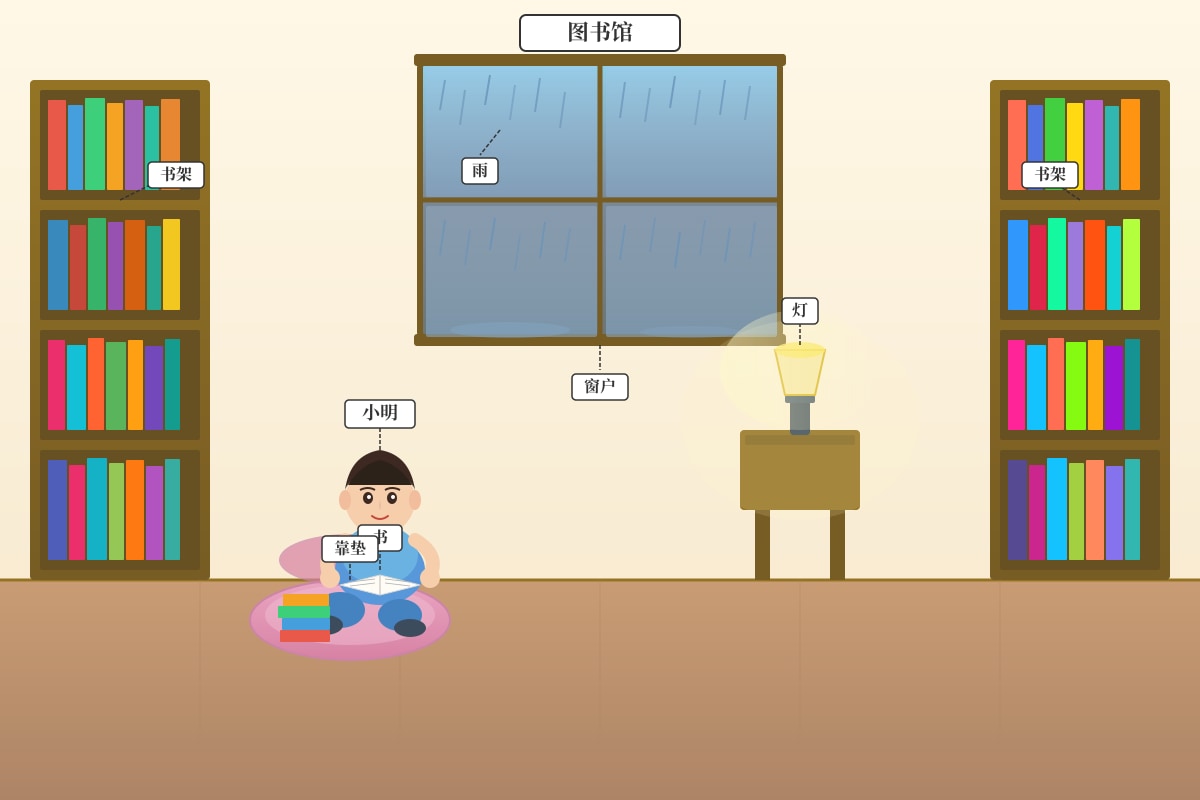
<image_placeholder> id: P1-fig1 type: source_image linked_question: Passage 1 Q21-Q25 description: A photograph-style illustration of a boy reading books in a library, with shelves of books, a window showing rain outside, and a cozy reading corner with a lamp and cushion labels: boy (小明), books (书), shelves (书架), window (窗户), rain (雨), lamp (灯), cushion (靠垫), library (图书馆) values: none must_show: boy sitting comfortably with open book, clearly in library setting, rain visible through window indicating staying indoors due to weather, warm lighting from lamp </image_placeholder>

小明很喜欢看书。每到周末,他都会去图书馆借书。上个星期六,天下着大雨,不能去公园玩。小明就待在家里,读了一本很有趣的故事书。

这本书讲的是一个勇敢的小男孩,他帮助村里的人解决了困难。小明读完后,觉得很感动。他想,以后也要像故事里的男孩一样,做一个乐于助人的人。

星期天,雨停了,小明和妈妈一起去图书馆还书。他又借了三本新书,准备下个周末继续阅读。


Question 21 [2 marks]

小明为什么上个星期六待在家里?


Answer: _________________________________________________________


Question 22 [2 marks]

小明读的故事书讲的是一个怎样的人?用两个词语形容。


Answer: _________________________________________________________


Question 23 [2 marks]

"小明觉得很感动"中的"感动"是什么意思?


Answer: _________________________________________________________


Question 24 [3 marks]

从文中找出表示时间顺序的词语,并说说小明周末做了什么。


Answer: _________________________________________________________


Question 25 [3 marks]

小明从故事中学到了什么?你会向他学习什么?


Answer: _________________________________________________________


Passage 2: 爱护环境

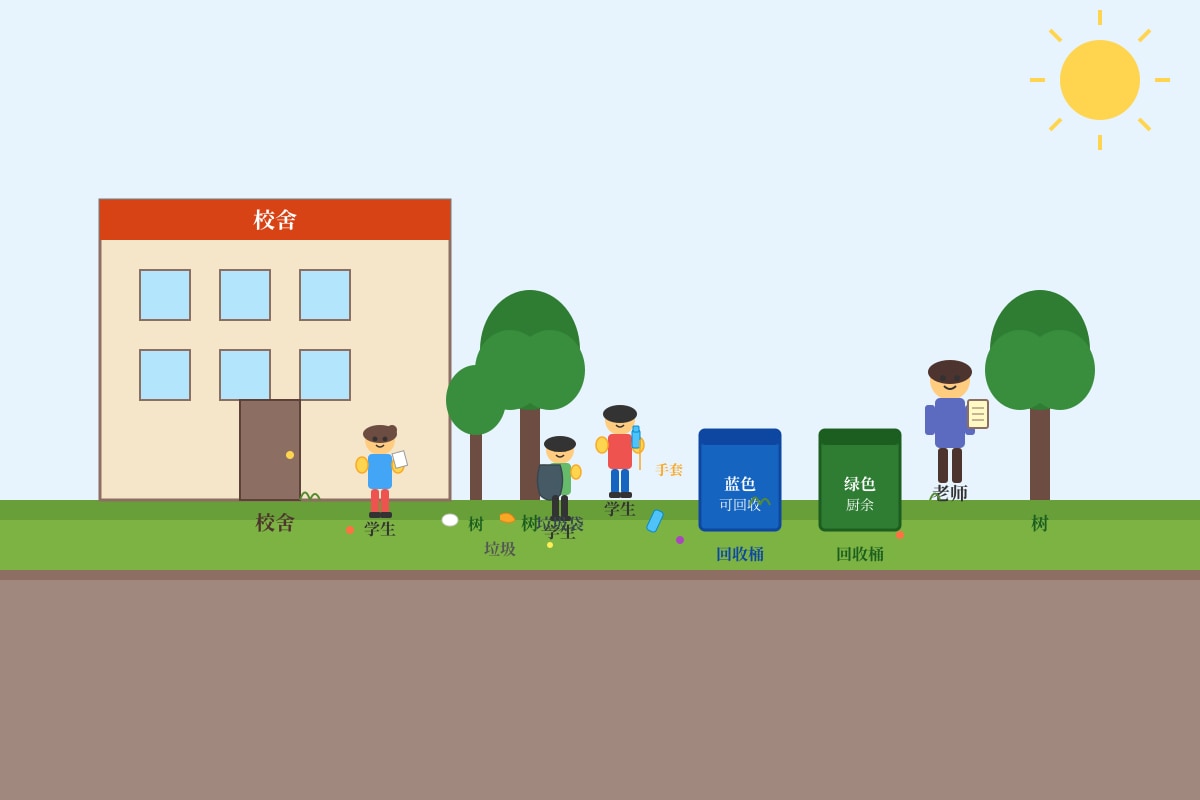
<image_placeholder> id: P2-fig1 type: diagram linked_question: Passage 2 Q26-Q32 description: An illustration of a school cleanup activity scene with children wearing gloves, picking up litter into trash bags, recycling bins with labels, and a teacher supervising, with a school building in background and trees labels: children (学生), gloves (手套), litter (垃圾), trash bags (垃圾袋), recycling bins (回收桶), teacher (老师), school building (校舍), trees (树), blue bin (蓝色-可回收), green bin (绿色-厨余) values: none must_show: multiple children actively picking up different types of waste, color-coded recycling bins with Chinese labels, teacher with clipboard, clean school environment being maintained </image_placeholder>

星期五是学校的"环保日"。三年级的同学们在老师的带领下,到校园里清理垃圾。

小红和小华一组,他们戴上手套,拿着垃圾袋,仔细地检查每个角落。小红发现地上有一个塑料瓶,她捡起来,想了想,把它放进了蓝色的回收桶。小华看到草丛里有一张废纸,也赶紧捡了起来。

老师看到同学们都很认真,满意地点了点头。她说:"垃圾分好类,环境更美丽。大家今天做得很好!"

活动结束后,校园里变得干干净净。同学们虽然有点累,但是看到整洁的校园,心里都很高兴。


Question 26 [2 marks]

三年级的同学们在什么时候进行环保活动?


Answer: _________________________________________________________


Question 27 [2 marks]

小红把塑料瓶放进了哪个颜色的桶?为什么?


Answer: _________________________________________________________


Question 28 [2 marks]

"老师满意地点了点头"说明老师心里怎么想?


Answer: _________________________________________________________


Question 29 [3 marks]

从文中找出两个描写同学们认真做事的词语或句子。


Answer: _________________________________________________________


Question 30 [3 marks]

为什么同学们"虽然有点累,但是心里都很高兴"?


Answer: _________________________________________________________


Question 31 [4 marks]

读了这篇短文,你觉得在日常生活中,我们还可以怎么做来保护环

Answer: _________________________________________________________


SECTION C: 阅读理解 (Reading Comprehension - Longer Passage)

[16 marks]

Instructions: Read the passage carefully, then answer ALL the questions.


Passage 3: 小松鼠找朋友

<image_placeholder> id: P3-fig1 type: diagram linked_question: Passage 3 Q32-Q37 description: A storybook-style illustration of a forest scene with a small squirrel standing alone on a branch, looking at other animals in the distance - a rabbit eating carrots, birds flying together, and a hedgehog curled up, with autumn leaves and acorns scattered around labels: squirrel (小松鼠), branch (树枝), rabbit (兔子), carrots (胡萝卜), birds (小鸟), hedgehog (刺猬), autumn leaves (落叶), acorns (橡果), forest (森林), distance (远处) values: none must_show: squirrel positioned slightly apart/aside looking toward group animals, rabbit with food, birds in flight pair or group, autumn setting with fallen leaves, clear forest environment </image_placeholder>

森林里住着一只小松鼠,名字叫松松。松松有很多坚果,但是他没有朋友,常常一个人坐在树枝上发呆。

有一天,松松看到兔子小白正在草地上吃胡萝卜。松松想和小白做朋友,就从树上跳下来,走到小白面前说:"小白,我可以和你一起吃吗?我有好吃的坚果。"

小白抬起头,看了看松松,摇摇头说:"对不起,我只喜欢吃胡萝卜,不喜欢吃坚果。而且我现在很忙,要准备过冬的食物。"说完,小白就蹦蹦跳跳地离开了。

松松很难过,坐在大树下哭了起来。这时,一只小鸟飞过来,问:"小松鼠,你怎么了?"松松把事情的经过告诉了小鸟。小鸟说:"每个动物喜欢的东西不一样,你不能只给別人自己喜欢的东西,要了解別人需要什么。"

松松听了,擦干了眼泪。第二天,他看到小白还在找胡萝卜,就主动帮小白一起挖。小白很开心,对松松说:"谢谢你!你愿意做我的朋友吗?"

松松高兴地点点头。从此,森林里多了一对好朋友。


Question 32 [2 marks]

松松为什么想和小白做朋友?从文中找出原因。


Answer: _________________________________________________________


Question 33 [2 marks]

小白为什么拒绝了松松?说出两个原因。


Answer: _________________________________________________________


Question 34 [3 marks]

小鸟给松松提了什么建议?用自己的话说一说。


Answer: _________________________________________________________


Question 35 [3 marks]

"松松很难过,坐在大树下哭了起来"——这时松松的心情怎么样?后来他的心情有什么变化?


Answer: _________________________________________________________


Question 36 [4 marks]

松松是怎样和小白成为好朋友的?你觉得松松的做法对吗?为什么?


Answer: _________________________________________________________


Question 37 [2 marks]

这个故事告诉我们什么道理?联系生活,说说你和同学之间应该怎样相处。


Answer: _________________________________________________________


END OF PAPER

Have you:

  • Written your name, class, and date?
  • Checked all your answers?
  • Ensured your handwriting is clear?

Section Marks:

  • Section A: ______ / 20
  • Section B: ______ / 24
  • Section C: ______ / 16
  • Total: ______ / 60

Answers

<!-- TuitionGoWhere generation metadata: stage=3-1; model=moonshotai/kimi-k2.6:free; model_label=Kimi K2.6 Free; generated=2026-06-06; Sources: Stage 2-1 real exam-derived templates and Stage 2-2 exam-enriched syllabus. -->

TuitionGoWhere Exam Practice (AI) - SA2 年终评估

ANSWER KEY - Version 5 of 5

Subject: Chinese Language (华文)
Level: Primary 3 (小学三年级)
Paper: Reading Comprehension and Language Application (阅读与语文应用)
Total Marks: 60 marks


SECTION A: 语文应用 (Language Application) [20 marks]


Questions 1–5: 辨字测验 (Character Recognition)

Question 1 [1 mark]

正确答案:A. 颗

解析: "颗"是量词,用于颗粒状或圆形的东西,如"一颗苹果"。"科"指学科;"渴"指口渴;"刻"指时刻或雕刻。根据句子"书包里有一______苹果",需要量词来修饰苹果,因此选"颗"。

常见错误: 学生可能混淆"颗"和"棵"("棵"用于植物)。


Question 2 [1 mark]

正确答案:D. 圾

解析: "垃圾"是固定词语,读作 lā jī,指废弃物。"拉"是动作;"位"指位置;"立"指站立。句子中说"不要把……丢在地上",明显指废弃物,所以是"垃圾"。

常见错误: 学生可能误选"拉",因为发音相同。


Question 3 [1 mark]

正确答案:A. 披

解析: "披"指披在身上或覆盖,如"披衣服"。"皮"指皮肤或表皮;"坡"指斜坡;"被"指被子或被动(介词)。句子"______了一件新衣服"表示穿衣服的动作,"披衣服"是常用搭配。

常见错误: 学生可能误选"被",但"被"作动词时一般用"盖被子",不用于衣服。


Question 4 [1 mark]

正确答案:B. 忘

解析: "忘"指忘记,如"忘记带伞"。"望"指希望或看;"王"指国王;"往"指前往。句子说"______了带雨伞,结果淋湿了",说明是没带伞导致淋湿,因此是"忘记"。

常见错误: 学生可能混淆"忘"和"望",两个字形状和读音都相近。


Question 5 [1 mark]

正确答案:D. 清

解析: "清"指清澈、清楚。"泡"指泡沫或浸泡;"包"指包裹;"饱"指吃饱。句子说"可以看到鱼儿在游",说明水很清澈,因此选"清"。

常见错误: 学生可能误选"泡",但"泡"不能形容水的透明度。


Questions 6–10: 词语搭配

Question 6 [1 mark]

正确答案:B. 勇敢

解析: "勇敢"表示有勇气,不怕困难。"胆小"是反义词;"懒惰"指不爱劳动;"骄傲"指自满。题目要求形容勇敢的人,因此选"勇敢"。


Question 7 [1 mark]

正确答案:A. 处

解析: "原处"指原来的地方,"放回原处"是固定搭配。"外"指外面;"位"指位置(但不说"原位");"回"是动词。完整词语是"放回原处"。


Question 8 [1 mark]

正确答案:A. 喝

解析: "喝"指饮用液体。"看"指观看;"拿"指拿取;"送"指赠送。冰水是用来喝的,因此选"喝"。这是动词和宾语的搭配关系。


Question 9 [1 mark]

正确答案:B. 躺

解析: "躺"指身体平卧。"坐"指坐下;"站"指站立;"走"指行走。句子说"在沙发上睡着了",睡着时最自然的姿势是躺下,"躺在沙发上"最符合语境。


Question 10 [1 mark]

正确答案:B. 好听

解析: "好听"指声音或故事吸引人。"无聊"指没意思(与"还想再听"矛盾);"困难"指难度大;"简单"指容易。句子说"听了还想再听",说明很吸引人,因此是"好听"。


Questions 11–15: 看图选词
<image_placeholder> id: Q11-fig1 type: diagram linked_question: Q11-Q15 description: A simple scene showing a kitchen with a woman cooking at a stove, steam rising from a pot, vegetables on a cutting board, and a child setting the table labels: stove (火炉), pot (锅), steam (热气), vegetables (蔬菜), cutting board (砧板), child (孩子), table (桌子), bowls (碗) values: none must_show: cooking action, steam indicating hot food, child placing bowls on table, various vegetables on counter </image_placeholder>

Question 11 [1 mark]

正确答案:B. 做

解析: "做晚饭"指准备晚餐。"洗"不符合(图中在炉灶前);"买"指购买(场景在家中);"吃"是已经做好。图片显示妈妈在炉灶前,有热气,说明正在烹饪,因此是"做晚饭"。

图意对应: 炉火、锅、热气 = 正在做饭。


Question 12 [1 mark]

正确答案:B. 碗

解析: 图片中孩子正在摆放的是碗。"筷子"细长难辨认;"椅子"太大;"门"不在桌上。从图片可见桌上摆放着圆形餐具,且有多个,是"碗"。

图意对应: 桌上圆形餐具,多个,孩子正在摆放 = 碗。

<image_placeholder> id: Q13-fig1 type: diagram linked_question: Q13-Q15 description: A park scene with children playing, a boy flying a kite, a girl on a swing, trees, a pond with ducks, and a path labels: kite (风筝), swing (秋千), pond (池塘), ducks (鸭子), trees (树), path (小路), grass (草地), sun (太阳) values: none must_show: boy running with kite in air, girl on swing moving, ducks swimming in pond, clear weather with sun </image_placeholder>

Question 13 [1 mark]

正确答案:B. 公园

解析: 图片显示秋千、池塘、草地、放风筝等,这些都是公园常见设施。"学校"一般有教学楼;"商场"是购物地方;"医院"有医疗标志。综合判断是"公园"。

图意对应: 秋千、池塘、放风筝 = 公园场景。


Question 14 [1 mark]

正确答案:C. 风筝

解析: 图片中男孩手中有线,空中飞着彩色、有尾巴的物品,这是风筝。"小鸟"不会由人控制;"飞机"不会这么小且在公园;"气球"一般是圆形无尾巴。形状和操控方式都表明是"风筝"。

图意对应: 有线的、彩色、尾巴、在空中 = 风筝。


Question 15 [1 mark]

正确答案:B. 鸭子

解析: 图片池塘中,几只动物有扁嘴、会游泳、身体浮在水面,是鸭子。"鱼"不会露头呼吸;"青蛙"会跳且体型小;"乌龟"有壳且游得慢。从外形(扁嘴、白毛/黄毛可辨)判断是鸭子。

图意对应: 扁嘴、浮水、群居、池塘 = 鸭子。


Questions 16–20: 词语辨析

Question 16 [1 mark]

正确答案:C. 困难

解析: "困难"指难度大,需要努力解决。"简单"和"容易"是反义词(与"想很久"矛盾);"快乐"指心情。句子说"想了很久才做出来",说明题目难,因此是"困难"。


Question 17 [1 mark]

正确答案:A. 背

解析: "背起书包"是固定搭配,指把书包背在背上。"看书包"不合理;"写书包"不通;"放书包"是放下而非带走。句子说"快步走向学校",说明要背着书包去上学。


Question 18 [1 mark]

正确答案:B. 挂

解析: "挂着微笑"是生动描写,指脸上带着微笑。"有"太普通;"写"和"画"不符合实际。这是常用的拟人化/形象化表达,微笑像东西一样"挂"在脸上。


Question 19 [1 mark]

正确答案:B. 开

解析: "开花"是固定词语,指花朵开放。"落"和"掉"是秋天的现象(与"春天来了"矛盾);"谢"指凋谢。春天是开花的季节,因此选"开"。


Question 20 [1 mark]

正确答案:C. 受到

解析: "受到启发"是固定搭配,指得到启发。"有"搭配不当;"得"是助动词;"给"方向相反(我给别人)。老师的话让我"受到"(接受得到)启发。


SECTION B: 阅读理解 (Short Passages) [24 marks]


Passage 1: 小明的周末
<image_placeholder> id: P1-fig1 type: source_image linked_question: Passage 1 Q21-Q25 description: A photograph-style illustration of a boy reading books in a library, with shelves of books, a window showing rain outside, and a cozy reading corner with a lamp and cushion labels: boy (小明), books (书), shelves (书架), window (窗户), rain (雨), lamp (灯), cushion (靠垫), library (图书馆) values: none must_show: boy sitting comfortably with open book, clearly in library setting, rain visible through window indicating staying indoors due to weather, warm lighting from lamp </image_placeholder>

Question 21 [2 marks]

参考答案: 因为上个星期六天下着大雨,不能去公园玩,所以小明待在家里。

评分标准:

  • 1分:提到"天下着大雨"或"不能去公园"
  • 1分:完整因果关系(大雨 → 不能外出 → 待在家)

解析: 从文章第二句"上个星期六,天下着大雨,不能去公园玩。小明就待在家里"直接提取因果关系。注意"就"字表示承接,说明前面是原因。


Question 22 [2 marks]

参考答案: 勇敢、乐于助人(或:帮助别人、热心)

评分标准:

  • 1分:写出"勇敢"
  • 1分:写出"乐于助人"或意思相近的词

解析: 文中直接描述"一个勇敢的小男孩,他帮助村里的人解决了困难"。"勇敢"是原文词语;"帮助……解决困难"即"乐于助人"。学生用自己的话如"喜欢帮助别人"也可接受。


Question 23 [2 marks]

参考答案: "感动"指心里受到触动,觉得温暖或想流泪。文中指小明被故事中男孩的行为打动,心里很有感触。

评分标准:

  • 1分:解释词义(心里受到触动/被打动/觉得温暖)
  • 1分:结合文中内容说明(被男孩帮助他人的行为打动)

解析: "感动"是心理动词,指情感上受到触动。教学要点:解释时先给基本义,再结合语境。文中"感动"的原因是小明认同并敬佩故事主人公的品质。


Question 24 [3 marks]

参考答案:

  • 时间顺序词语:上个星期六、星期天
  • 星期六:天下大雨,小明待在家里读故事书
  • 星期天:雨停了,小明和妈妈去图书馆还书,又借了三本新书

评分标准:

  • 1分:找出两个时间词
  • 1分:说出星期六做的事
  • 1分:说出星期天做的事

解析: 时间顺序是叙事的基本线索。教学要点:教学生找表示时间的词语(星期、日期、早晚等),再对应事件。这是"时间顺序"阅读策略。


Question 25 [3 marks]

参考答案:

  • 学到的:要做一个乐于助人的人 / 像故事里的男孩一样帮助别人
  • 我会学习的方面:(示例)①同学有困难时主动帮忙;②不计较个人得失;③从自己能做到的小事做起

评分标准:

  • 1分:说出小明学到的(乐于助人)
  • 2分:联系自身,具体说出学什么(需有具体内容,不能只说"向他学习")

解析: 开放性问题,但要基于文本。文中说"以后也要……做一个乐于助人的人",这是核心。学生回答时要具体,不能泛泛而谈。常见错误:只说"学习他的勇敢"但不展开。


Passage 2: 爱护环境

<image_placeholder> id: P2-fig1 type: diagram linked_question: Passage 2 Q26-Q31 description: An illustration of a school cleanup activity scene with children wearing gloves, picking up litter into trash bags, recycling bins with labels, and a teacher supervising, with a school building in background and trees labels: children (学生), gloves (手套), litter (垃圾), trash bags (垃圾袋), recycling bins (回收桶), teacher (老师), school building (校舍), trees (树), blue bin (蓝色-可回收), green bin (绿色-厨余) values: none must_show: multiple children actively picking up different types of waste, color-coded recycling bins with Chinese labels, teacher with clipboard, clean school environment being maintained </image_placeholder>

Question 26 [2 marks]

参考答案: 三年级的同学们在星期五(学校的"环保日")进行环保活动。

评分标准:

  • 1分:说出"星期五"或"环保日"
  • 1分:完整表述(时间+活动)

解析: 文章首句直接给出信息。"在老师的带领下"是附加信息,非必要。注意"星期五"和"环保日"是同一时间的不同表述。


Question 27 [2 marks]

参考答案: 红色的桶(或:蓝色的回收桶)。因为塑料瓶是可回收垃圾,应该放进可回收垃圾桶。

评分标准:

  • 1分:说出颜色/桶的种类
  • 1分:解释原因(可回收/塑料瓶属于可回收垃圾)

解析: 文中说"蓝色的回收桶","回收"即可回收。教学要点:联系生活常识,新加坡/中国蓝色桶一般为可回收物。学生说"蓝色的桶"或"回收桶"都给分,但需解释"塑料瓶可以回收利用"。

注意: 若学生根据图意判断颜色,文中写"蓝色",需图文结合。


Question 28 [2 marks]

参考答案: 说明老师心里很欣慰、很满意,觉得同学们做得很好。

评分标准:

  • 1分:理解"满意"的心情(欣慰、高兴、认可)
  • 1分:说明原因(同学们认真/做得很好)

解析: "满意地点头"是神态描写,表示认可。教学要点:通过动作描写理解人物心理,这是"通过细节推断情感"的阅读策略。


Question 29 [3 marks]

参考答案:

  • "戴上手套,拿着垃圾袋"(准备认真)
  • "仔细地检查每个角落"(做事细致)
  • "赶紧捡了起来"(行动迅速) (写出任意两个即可)

评分标准:

  • 1.5分 × 2 = 3分:每个词语/句子0.5分,解释为什么体现认真1分

解析: 需从文中找具体描写。"仔细地"是副词直接修饰;"戴上、拿着"是准备动作体现认真;"赶紧"体现积极主动。


Question 30 [3 marks]

参考答案: 因为同学们看到校园变得干干净净、整洁美丽,自己的劳动有了成果,所以即使身体累,心里也很高兴。

评分标准:

  • 1分:提到"校园变干净/整洁"
  • 1分:提到"劳动有成果/付出有收获"
  • 1分:解释"累但高兴"的对比关系(付出与收获)

解析: "虽然……但是……"是转折关系,重点在"但是"后的内容。教学要点:理解转折复句的语义重点,以及情感变化的原因(劳动成果带来的满足感)。


Question 31 [4 marks]

参考答案:

  • 日常生活中可以:①做好垃圾分类;②少用一次性用品;③节约用水用电;④爱护花草树木;⑤提醒家人和朋友保护环境
  • (需结合具体生活例子,不少于两点)

评分标准:

  • 2分:提出2个及以上具体做法(每点1分,最多2分)
  • 2分:说明理由或具体做法(为什么这么做/怎么做)

解析: 开放性问题,需联系生活实际。"具体"是关键,如不说"要环保",而说"吃饭自带餐具,不用一次性筷子"。常见错误:只说"要爱护环境"但不具体。


SECTION C: 阅读理解 (Longer Passage) [16 marks]


Passage 3: 小松鼠找朋友
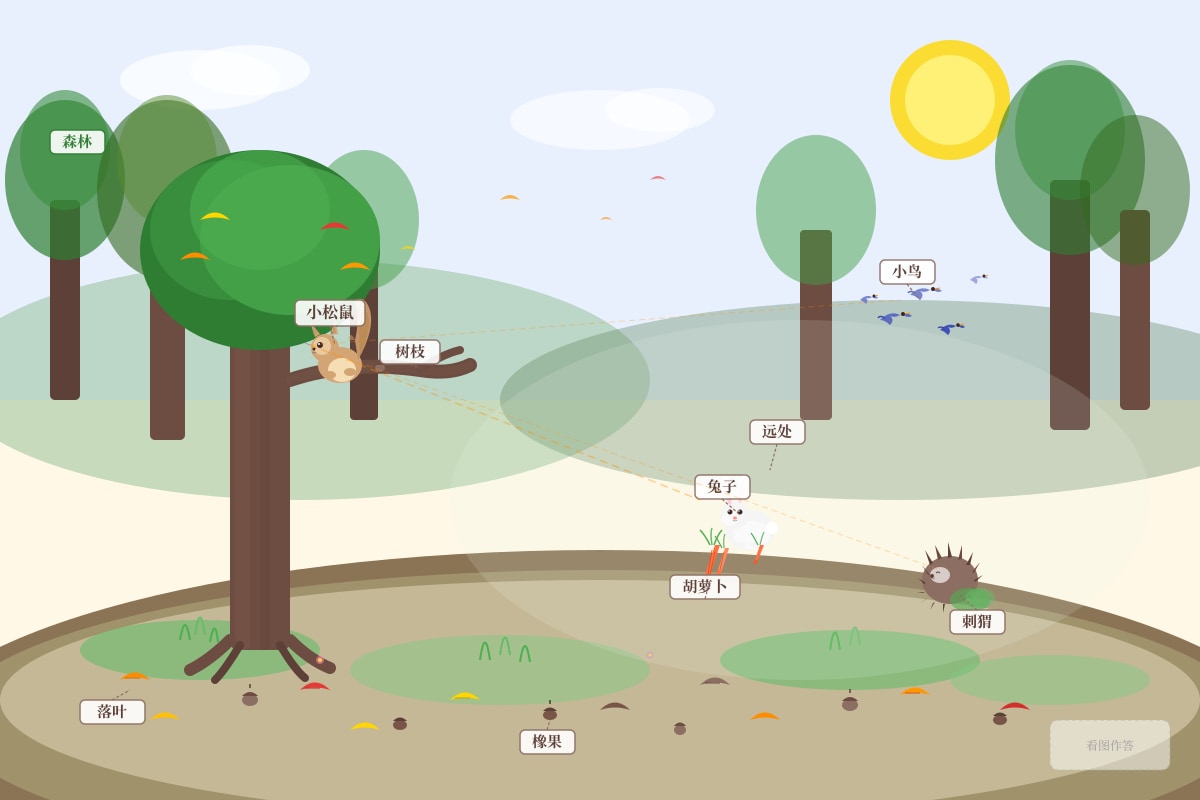
<image_placeholder> id: P3-fig1 type: diagram linked_question: Passage 3 Q32-Q37 description: A storybook-style illustration of a forest scene with a small squirrel standing alone on a branch, looking at other animals in the distance - a rabbit eating carrots, birds flying together, and a hedgehog curled up, with autumn leaves and acorns scattered around labels: squirrel (小松鼠), branch (树枝), rabbit (兔子), carrots (胡萝卜), birds (小鸟), hedgehog (刺猬), autumn leaves (落叶), acorns (橡果), forest (森林), distance (远处) values: none must_show: squirrel positioned slightly apart/aside looking toward group animals, rabbit with food, birds in flight pair or group, autumn setting with fallen leaves, clear forest environment </image_placeholder>

Question 32 [2 marks]

参考答案: 因为松松没有朋友,常常一个人坐在树枝上发呆,他感到孤单,所以想和小白做朋友。

评分标准:

  • 1分:说出"没有朋友"或"常常一个人"
  • 1分:说出"孤单/寂寞/想有人陪"

解析: 文章首段交代背景。"没有朋友"是客观事实;"发呆"暗示寂寞心情。教学生从开头找人物动机,这是叙事文的常见写法。


Question 33 [2 marks]

参考答案:

  • 原因一:小白只喜欢吃胡萝卜,不喜欢吃坚果
  • 原因二:小白很忙,要准备过冬的食物

评分标准:

  • 1分 × 2 = 2分:每个原因1分

解析: 小白的回答包含两个层次:①口味不同(主观偏好);②客观忙碌。教学生从对话中提取多个信息点,注意"而且"表示并列追加。


Question 34 [3 marks]

参考答案: 小鸟建议松松不要只给别人自己喜欢的东西,要了解别人需要什么,给别人真正需要的东西。

评分标准:

  • 1分:提到"不能只给自己喜欢的东西"
  • 1分:提到"了解别人需要什么"
  • 1分:用自己的话完整表述(不是照抄原文)

解析: "用自己的话"是评分关键。原文是"你不能只给別人自己喜欢的东西,要了解別人需要什么"。学生需理解后转述,如"要知道朋友喜欢什么,不要强行给不需要的东西"。

教学要点: 这是故事寓意所在——换位思考。


Question 35 [3 marks]

参考答案:

  • 这时的心情:难过、伤心、失望(被拒绝了)
  • 后来的变化:听了小鸟的话后明白了,擦干眼泪去帮助别人;最后小白愿意做朋友,松松变得很高兴

评分标准:

  • 1分:说出"难过/伤心/失望"
  • 1分:说出后面的变化(明白道理/去帮忙/高兴)
  • 1分:完整描述变化过程

解析: 心情变化线索:难过(哭)→ 听建议 → 行动(帮忙挖胡萝卜)→ 高兴(成为朋友)。教学生梳理情感变化线,这是叙事文阅读的重要策略。


Question 36 [4 marks]

参考答案:

  • 做法:第二天,松松看到小白找胡萝卜,就主动帮小白一起挖。小白很开心,邀请松松做朋友。
  • 评价:松松的做法很对。
  • 原因:①他学会了换位思考,了解小白的需要;②他用行动表示友好,不是空口说;③他主动帮助别人,真诚待人

评分标准:

  • 1分:说出松松的具体做法
  • 1分:做出评价(对/很好/应该学习)
  • 2分:说明理由(每点1分,需具体内容)

解析: 评价类开放题,但需基于文本寓意。"对不对"要明确判断,理由要结合故事主题(了解需要、主动帮助、真诚待人)。


Question 37 [2 marks]

参考答案:

  • 道理:与人相处要了解别人的需要,真诚帮助别人,不能只想着自己。
  • 联系生活:和同学相处时,要了解同学的喜好,不强迫别人接受自己的意见;同学有困难时主动帮忙;分享时要考虑对方是否需要。

评分标准:

  • 1分:说出道理(了解需要/真诚帮助/换位思考)
  • 1分:联系生活具体说明

解析: 这是寓意概括+迁移应用题。道理要从具体情节升华:松鼠给坚果→只给自己喜欢的;帮忙挖胡萝卜→了解需要→成功交友。生活中避免"强加于人",学会"投其所好"(正面的)。


TOTAL MARKS VERIFICATION

SectionMarks
Section A (Q1-20)20
Section B (Q21-31)24
Section C (Q32-37)16
TOTAL60

ANSWER SUMMARY TABLE

QAnswerMarks
1A1
2D1
3A1
4B1
5D1
6B1
7A1
8A1
9B1
10B1
11B1
12B1
13B1
14C1
15B1
16C1
17A1
18B1
19B1
20C1
21大雨/不能去公园2
22勇敢、乐于助人2
23心里受到触动2
24时间词+两天活动3
25乐于助人+自身学习3
26星期五/环保日2
27蓝色/可回收2
28满意/欣慰2
29两个认真做事的描写3
30校园变干净/付出有收获3
31具体环保做法(开放)4
32没有朋友/孤单2
33不喜欢坚果/要准备过冬2
34了解别人需要(用自己的话)3
35难过→明白→高兴3
36帮忙挖胡萝卜+对+理由4
37道理+联系生活2