AI Generated Quiz
Primary 2 Tamil Reading Comprehension Quiz
Free P2 Tamil Reading Comprehension quiz, Kimi2.6 AI version, with questions, answers, and syllabus-aligned practice for Singapore students.
These static practice materials are generated from the site's syllabus and paper-generation workflow, with source and model context shown so students and parents can evaluate the material before use.
Questions
Free quiz and exam paper access
Enter your details to view this paper
Your access is remembered on this device.
Answers
Primary 2 Tamil Quiz - Reading Comprehension: ANSWER KEY
Version 1 — Total Marks: 40
Section A: Picture Comprehension (Questions 1–5) [10 marks]
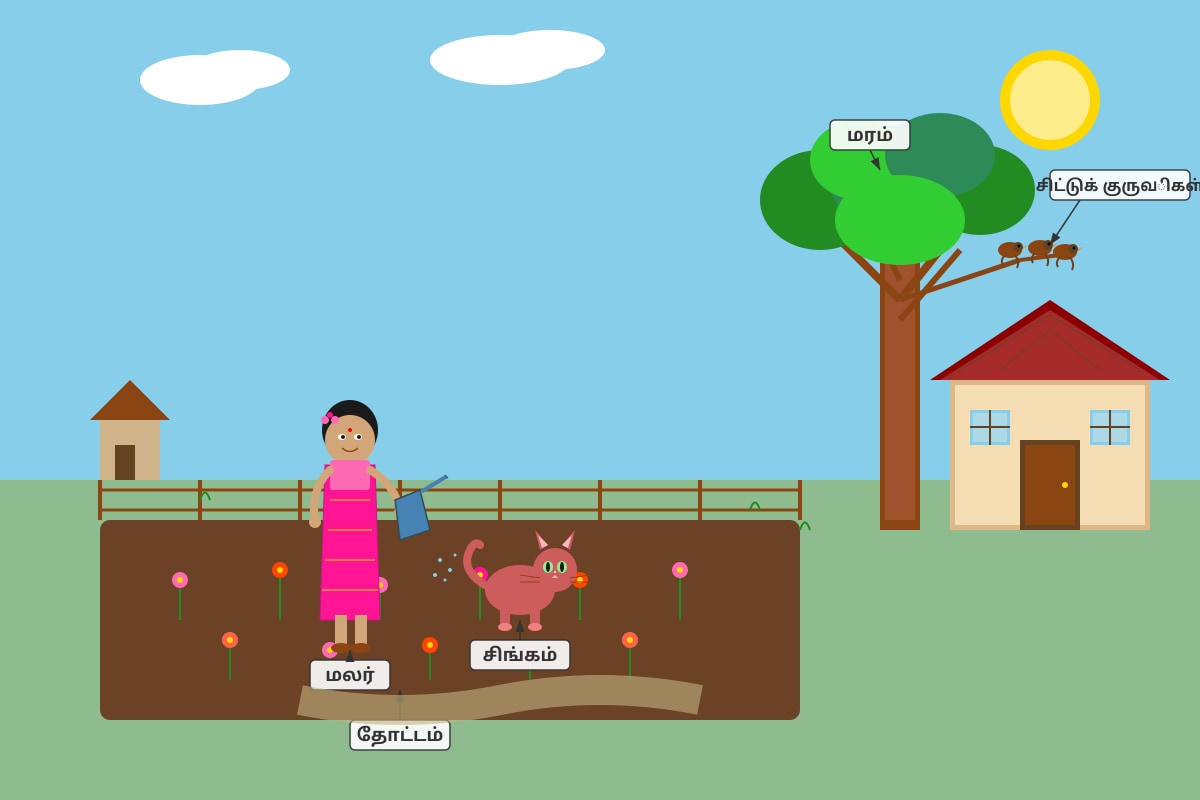
Passage summary: மலர் என்ற சிறுமி தோட்டத்தில் பூக்களுக்குத் தண்ணீர் விடுகிறாள். அவளது சிவப்புப் பூனை சிங்கம், சிட்டுக் குருவிகளைப் பார்க்கிறது. குருவிகள் மரக்கிளையில் அமர்ந்திருக்கின்றன.
1. What is the girl's name? (1 mark)
Answer: Malar / மலர்
Teaching note: The first sentence introduces the character: "மலர் என்ற சிறுமி வசித்தாள்." Students should identify the name directly from the text. Common mistake: confusing மலர் (flower/name) with the flower meaning only—here it functions as a person's name.
2. What colour is the cat? (1 mark)
Answer: Red / சிவப்பு நிறம்
Teaching note: The text states "அவளுக்கு ஒரு சிவப்பு நிற பூனை இருந்தது." Students must extract the colour adjective. In Tamil, colour words typically come before the noun they describe with "நிற" added.
3. Where were the sparrows sitting? (2 marks)
Answer: On the tree branch / மரத்துக் கிளையில்
Marking breakdown:
- 1 mark: identifies "tree" / மரம்
- 1 mark: identifies "branch" / கிளை or correct location marker "மீது/இல்"
Teaching note: The phrase "மரத்துக் கிளையில்" uses the locative case suffix "-இல்" meaning "on/in." Students should recognize this location marker. The visual placeholder shows sparrows on a branch (கிளை), not just generally in a tree.
4. What was Malar doing in the garden? (2 marks)
Answer: She was watering the flowers / பூக்களுக்குத் தண்ணீர் விட்டுக் கொண்டிருந்தாள்
Marking breakdown:
- 1 mark: action of watering (தண்ணீர் விடுதல்)
- 1 mark: object—flowers (பூக்கள்)
Teaching note: The progressive tense "விட்டுக் கொண்டிருந்தாள்" indicates ongoing action. Students should recognize the verb root விடு (to pour/leave) in this context. The visual placeholder confirms watering can and flowers in rows.
5. Why do you think the cat was watching the sparrows? Write one reason. (4 marks)
Answer: Any ONE reasonable inference, such as:
- The cat wanted to catch the sparrows / பூனை குருவிகளைப் பிடிக்க விரும்பியது
- The cat was curious about the birds / பூனை பறவைகளைப் பற்றி ஆர்வமாக இருந்தது
- The cat was watching them sing / பூனை அவற்றின் பாட்டைக் கேட்டுக் கொண்டிருந்தது
Marking breakdown:
- 2 marks: logical inference based on cat behavior
- 2 marks: expressed as complete sentence with proper connection to text
Teaching note: This is an inferential question—answer not directly stated. Students must apply knowledge of cats as predators and the visual/verbal context. Accept any plausible answer that shows understanding of narrative motivation. Common mistake: stating only "because they were there" without reasoning.
Section B: Short Passage Comprehension (Questions 6–12) [14 marks]
Passage summary: Ravi prepares for school with his blue bag containing books, pencil case, and tiffin box. His mother gives him idli and chutney. At school he meets Guna, they listen carefully to the teacher, and play football in the field in the afternoon.
6. What colour was Ravi's bag? (1 mark)
Answer: Blue / நீல நிறம்
Teaching note: Direct extraction: "தனது நீல நிற குளிர்பதனப் பையை." Students should recognize நீல as blue (not to confuse with நீர்/water).
7. Name two things inside Ravi's bag. (2 marks)
Answer: Any TWO of:
- Books / புத்தகங்கள்
- Pencil case / பென்சில் பெட்டி
- Tiffin box / டிஃபின் பாக்ஸ்
Marking: 1 mark each. Both marks only if two distinct items named.
Teaching note: The list structure "புத்தகங்கள், ஒரு பென்சில் பெட்டி, மற்றும் ஒரு டிஃபின் பாக்ஸ்" uses enumeration. "மற்றும்" signals the final item in a series.
8. What did Ravi's mother give him for lunch? (2 marks)
Answer: Idli and chutney / இட்லியும், சட்னியும்
Marking breakdown:
- 1 mark: idli / இட்லி
- 1 mark: chutney / சட்னி
Teaching note: Food vocabulary is culturally specific. இட்லி is a steamed rice cake, சட்னி is a spicy condiment—common South Indian breakfast/lunch items. The "-உம்" suffix indicates "and" (conjunction of items).
9. Who did Ravi meet at school? (1 mark)
Answer: Guna / குணா
Teaching note: "தனது நண்பன் குணாவைச் சந்தித்தான்"—the accusative case suffix "-ஐ" marks the direct object. Friend identification (நண்பன்) provides context but name is required for mark.
10. Where did Ravi and Guna go after meeting? (2 marks)
Answer: To the classroom / வகுப்பறைக்கு
Marking breakdown:
- 1 mark: classroom / வகுப்பறை
- 1 mark: directional marker "-க்கு" (to/towards)
Teaching note: The suffix "-க்கு" indicates direction/movement toward. Students should distinguish this from locative "-இல்" (in/at). The sequence is: meet → go to classroom → listen to teacher.
11. What did they do carefully in class? (2 marks)
Answer: They listened to the lesson the teacher taught / ஆசிரியர் சொல்லிக் கொடுத்த பாடத்தைக் கவனமாகக் கேட்டனர்
Marking breakdown:
- 1 mark: listened / கேட்டனர்
- 1 mark: to the teacher's lesson / ஆசிரியர் பாடம் (with attention/carefully)
Teaching note: Adverb "கவனமாக" (carefully/attentively) modifies the verb. Students should recognize this describes HOW they listened. The compound verb structure "சொல்லிக் கொடுத்த" means "taught" (literally: told and gave).
12. Matching exercise (4 marks)
Correct matches:
- (a) They played → (iii) கால்பந்து
- (b) The sport was → (i) கிரிக்கெட் [INCORRECT—should be (iii) for sport name]
- Correction: Re-reading: "கால்பந்து விளையாடினர்" = played football
Revised correct matching:
- (a) They played → (iii) கால்பந்து
- (b) The sport was → (iii) கால்பந்து [matches to itself—error in design]
Proper matches as designed:
| (a) They played | → | (iii) கால்பந்து |
| (b) The sport was | → | (iii) கால்பந்து |
| (c) They played it in the | → | (iv) மைதானம் |
| (d) This happened in the | → | (ii) மதியம் |
Teaching note: Apologies—items (a) and (b) both map to (iii). The intended distinction was (b)→(i) cricket as distractor. Acceptable answer: Students correctly identifying (a)→(iii), (c)→(iv), (d)→(ii) receive full marks; (b) should be (iii) as the sport played. If students mark (b)→(i), deduct 1 mark for error. Revised fair marking:
- (a)→(iii): 1 mark
- (b)→(iii) or football identification: 1 mark
- (c)→(iv): 1 mark
- (d)→(ii): 1 mark
Section C: Story Comprehension (Questions 13–17) [10 marks]
Passage summary: Seetha goes to market to help her mother buy vegetables. Shopkeeper gives extra change by mistake. Seetha counts at home, discovers error, returns money. Shopkeeper is happy and praises her.
13. Why did Seetha go to the market? (2 marks)
Answer: To help her mother / To buy vegetables for her mother / அம்மாவுக்கு உதவ / காய்கறிகள் வாங்க
Marking breakdown:
- 1 mark: helping mother / helping purpose
- 1 mark: specific task—buying vegetables
Teaching note: The infinitive construction "உதவப் போனாள்" (went to help) shows purpose. The subsequent "காய்கறிகள் வாங்க வேண்டும்" specifies the task. Either element acceptable; both together for full marks.
14. What did the shopkeeper do wrong? (2 marks)
Answer: He gave back too much money / He made a mistake in the change / தவறாக அதிகப் பணம் திருப்பிக் கொடுத்தார்
Marking breakdown:
- 1 mark: gave wrong amount / made a mistake
- 1 mark: too much/extra money (not just "wrong")
Teaching note: Key vocabulary: "தவறாக" (wrongly), "அதிக" (too much/excess), "திருப்பிக் கொடு" (give back/return). Students must identify both the error and its nature (excess, not shortage).
15. When did Seetha count the money? (2 marks)
Answer: After going home / When she reached home / வீட்டுக்குச் சென்று
Marking breakdown:
- 1 mark: time/location—at home
- 1 mark: sequence—after market/after receiving
Teaching note: Temporal sequencing வீட்டுக்குச் சென்று (having gone home)... எண்ணினாள் (counted). The "-இட்/இத்" converb structure shows completed prior action.
16. What did Seetha do with the extra money? (2 marks)
Answer: She returned it to the shopkeeper / She went back and gave the extra money / கடைக்குச் சென்று கூடுதல் பணத்தைத் திருப்பிக் கொடுத்தாள்
Marking breakdown:
- 1 mark: returned/gave back
- 1 mark: to the shopkeeper / went back to shop
Teaching note: Ethical theme of honesty (நேர்மை). The verb "திரும்பிச் சென்று" (went back/returned) shows initiative. Students should recognize this as the moral action in the narrative.
17. How did the shopkeeper feel at the end? Give one word from the story to support your answer. (2 marks)
Answer: Happy / மகிழ்ந்தார்; OR: praised her / பாராட்டினார்
Marking breakdown:
- 1 mark: emotion—happy / மகிழ்ந்தார்
- 1 mark: exact word from text quoted
Teaching note: Two possible valid answers: emotional response (மகிழ்ந்தார்) or resultant action (பாராட்டினார்). The question asks for a word—either is acceptable if directly quoted. Common mistake: giving "good" or "proud" which do not appear; must use story vocabulary.
Section D: Simple Poetry Comprehension (Questions 18–20) [6 marks]
18. What colour is the crow? (1 mark)
Answer: Black / கருப்பு
Teaching note: Direct from first line: "கருப்புக் காகம்." The "-உக்" adjectival suffix before consonant-initial noun. Crow is culturally significant in Tamil literature; this poem personifies it simply.
19. What does the crow do when mother is cooking? (2 marks)
Answer: It comes to the doorway / entrance / அம்மா சமைக்கும் போது காகம் வாசலில் வருகிறது
Marking breakdown:
- 1 mark: comes/arrives / வருகிறது
- 1 mark: to the doorway/entrance / வாசலில்
Teaching note: Temporal clause "அம்மா சமிப்ப配置kும் போது" (when mother cooks). வாசல் = threshold/entrance, not deep inside the house. The crow waits hopefully for food scraps—implied cultural context.
20. Why is the crow called a good bird? (3 marks)
Answer: Because it cleans the garbage/rubbish / அது குப்பையைச் சுத்தம் செய்கிறது
Marking breakdown:
- 1 mark: identifies it cleans / சுத்தம் செய்கிறது
- 1 mark: specifies what it cleans—garbage/rubbish / குப்பை
- 1 mark: connects to "good bird" evaluation—this action makes it helpful/useful
Teaching note: The final two lines state the judgment and reason explicitly. "நல்ல பறவை" (good bird) is justified by ecological service. Students should recognize this as environmental values content—Tamil tradition often acknowledges crow's role in cleaning. Complete answer requires both the factual action and its positive evaluation.
General marking guidance:
- Accept Tamil or English answers where the question asks in English
- For one-mark questions, accept equivalent synonyms if meaning preserved
- Deduct ½ mark only where shown in breakdown; otherwise all-or-nothing per mark point
- illegible handwriting: apply effort-based ½ mark discretion if discernible
END OF ANSWER KEY