AI Generated Quiz
Primary 2 Tamil Reading Comprehension Quiz
Free P2 Tamil Reading Comprehension quiz, AI version, with questions, answers, and syllabus-aligned practice for Singapore students.
These static practice materials are generated from the site's syllabus and paper-generation workflow, with source and model context shown so students and parents can evaluate the material before use.
Questions
Free quiz and exam paper access
Enter your details to view this paper
Your access is remembered on this device.
Answers
Answer Key - Primary 2 Tamil Quiz - Reading Comprehension
Total Marks: 20
Section A: Short Passages (Questions 1-10)
Passage 1: குமார்
1. குமார் யார்?
- Correct Answer: B) ஒரு சிறுவன்
- Marks: 1
- Explanation: The passage starts with "குமார் ஒரு சிறுவன்" which means "Kumar is a boy." The word "சிறுவன்" means a young boy or a male child. Option A (ஒரு பெண் - a girl) is incorrect because the passage clearly says "சிறுவன்". Option C (ஒரு ஆசிரியர் - a teacher) and Option D (ஒரு நாய் - a dog) are not mentioned in the passage.
2. குமாருக்கு எது மிகவும் பிடிக்கும்?
- Correct Answer: B) விளையாட்டு
- Marks: 1
- Explanation: The passage says "அவனுக்கு விளையாட்டு மிகவும் பிடிக்கும்" which means "He likes sports very much." The word "மிகவும்" means "very much" and "பிடிக்கும்" means "likes." Option A (படிப்பு - studies) is also mentioned as something he likes, but the passage says "விளையாட்டு மிகவும் பிடிக்கும்" (likes sports very much), and later says "படிப்பும் பிடிக்கும்" (also likes studies). The question asks for what he likes "மிகவும்" (very much), which is sports.
3. குமார் காலையில் என்ன செய்கிறான்?
- Correct Answer: B) பந்தை விளையாடுகிறான்
- Marks: 1
- Explanation: The passage says "காலையில் எழுந்ததும் அவன் பந்தை விளையாடுகிறான்" which means "After waking up in the morning, he plays ball." Option A (படிக்கிறான் - reads) and Option D (பள்ளிக்குச் செல்கிறான் - goes to school) are not mentioned as morning activities. Option C (தூங்குகிறான் - sleeps) is the opposite of what he does after waking up.
4. மாலையில் குமார் எங்கே விளையாடுகிறான்?
- Correct Answer: C) பூங்காவில்
- Marks: 1
- Explanation: The passage says "மாலையில் அவன் தன் நண்பர்களுடன் பூங்காவில் ஓடி விளையாடுகிறான்" which means "In the evening, he runs and plays in the park with his friends." The word "பூங்காவில்" means "in the park." Option A (வீட்டில் - at home), Option B (பள்ளியில் - at school), and Option D (கடையில் - at the shop) are not mentioned in the passage.
5. குமார் எப்படிப்பட்ட மாணவன்?
- Correct Answer: C) நல்ல மாணவன்
- Marks: 1
- Explanation: The passage ends with "அவன் நல்ல மாணவன்" which means "He is a good student." The word "நல்ல" means "good." Option A (கெட்ட மாணவன் - bad student), Option B (சோம்பேறி மாணவன் - lazy student), and Option D (சிறிய மாணவன் - small student) are not mentioned in the passage.
Passage 2: எங்கள் வீடு
6. இந்தப் பத்தியில் யாரைப் பற்றி சொல்லப்பட்டுள்ளது?
- Correct Answer: B) ஒரு வீட்டைப் பற்றி
- Marks: 1
- Explanation: The passage begins with "இது எங்கள் வீடு" which means "This is our house." The entire passage describes the house, who lives in it, and what is in front of it. Option A (ஒரு பள்ளியைப் பற்றி - about a school), Option C (ஒரு கடையைப் பற்றி - about a shop), and Option D (ஒரு பூங்காவைப் பற்றி - about a park) are incorrect because the passage is clearly about a house.
7. எங்கள் வீட்டில் யார் யார் வசிக்கிறார்கள்?
- Correct Answer: B) அம்மா, அப்பா, தாத்தா, பாட்டி மற்றும் நான்
- Marks: 1
- Explanation: The passage says "எங்கள் வீட்டில் அம்மா, அப்பா, தாத்தா, பாட்டி மற்றும் நான் வசிக்கிறோம்" which means "In our house, mother, father, grandfather, grandmother, and I live." The word "மற்றும்" means "and." Option A (அம்மா மற்றும் அப்பா மட்டும் - only mother and father), Option C (தாத்தா மற்றும் பாட்டி மட்டும் - only grandfather and grandmother), and Option D (நான் மட்டும் - only I) are incomplete.
8. எங்கள் வீட்டின் முன் என்ன உள்ளது?
- Correct Answer: B) ஒரு பெரிய மரம்
- Marks: 1
- Explanation: The passage says "எங்கள் வீட்டின் முன் ஒரு பெரிய மரம் உள்ளது" which means "In front of our house, there is a big tree." The word "பெரிய" means "big" and "மரம்" means "tree." Option A (ஒரு குளம் - a pond), Option C (ஒரு சிறிய பூங்கா - a small park), and Option D (ஒரு பெரிய கடை - a big shop) are not mentioned.
9. அந்த மரத்தில் என்ன வசிக்கின்றன?
- Correct Answer: C) பறவைகள்
- Marks: 1
- Explanation: The passage says "அந்த மரத்தில் பறவைகள் வசிக்கின்றன" which means "Birds live in that tree." The word "பறவைகள்" means "birds." Option A (அணில்கள் - squirrels), Option B (பூனைகள் - cats), and Option D (நாய்கள் - dogs) are not mentioned in the passage.
10. எனக்கு எந்தச் சத்தம் மிகவும் பிடிக்கும்?
- Correct Answer: B) பறவைகளின் சத்தம்
- Marks: 1
- Explanation: The passage says "ஒவ்வொரு காலையிலும் பறவைகளின் சத்தம் கேட்கும். எனக்கு அந்தச் சத்தம் மிகவும் பிடிக்கும்" which means "Every morning, the sound of birds is heard. I like that sound very much." The word "பறவைகளின் சத்தம்" means "the sound of birds." Option A (கார் சத்தம் - car sound), Option C (இசை சத்தம் - music sound), and Option D (மழை சத்தம் - rain sound) are not mentioned.
Section B: Picture-Based Comprehension (Questions 11-15)
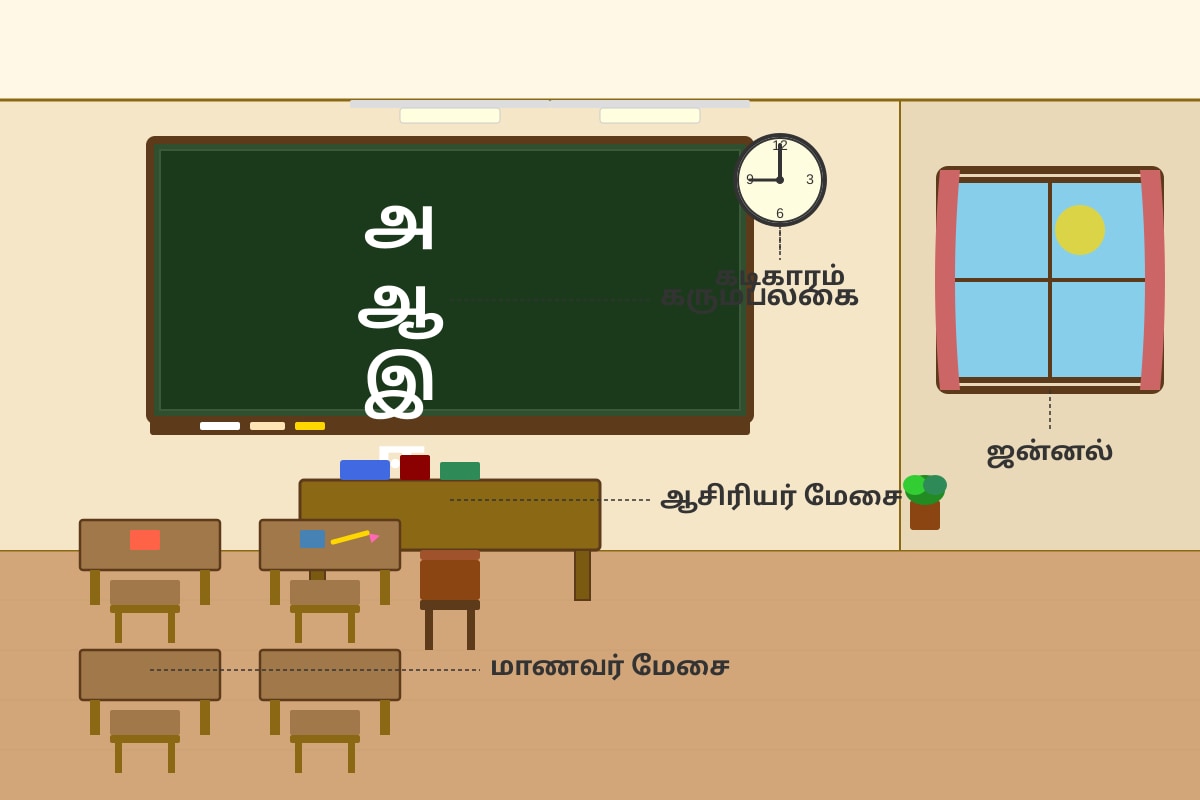
11. படத்தில் நீங்கள் என்ன பார்க்கிறீர்கள்?
- Correct Answer: B) ஒரு வகுப்பறை
- Marks: 1
- Explanation: The image shows a classroom setting with a teacher's desk, blackboard, student desks, and a clock. The word "வகுப்பறை" means "classroom." Option A (ஒரு பூங்கா - a park), Option C (ஒரு நூலகம் - a library), and Option D (ஒரு விளையாட்டு மைதானம் - a playground) do not match the classroom elements shown in the picture.
12. கரும்பலகையில் என்ன எழுதப்பட்டுள்ளது?
- Correct Answer: B) தமிழ் எழுத்துகள்
- Marks: 1
- Explanation: The image description states that the blackboard has the Tamil letters "அ ஆ இ ஈ" written on it. These are Tamil vowels (உயிரெழுத்துகள்). The word "தமிழ் எழுத்துகள்" means "Tamil letters." Option A (எண்கள் - numbers), Option C (படங்கள் - pictures), and Option D (பெயர்கள் - names) are not what is written on the blackboard according to the image description.
13. கடிகாரம் எத்தனை மணியைக் காட்டுகிறது?
- Correct Answer: B) 9:00
- Marks: 1
- Explanation: The image description states that the clock shows 9:00. The word "கடிகாரம்" means "clock." Option A (8:00), Option C (10:00), and Option D (11:00) are incorrect times based on the image description.
14. வகுப்பறையில் யாருடைய மேசை முன்னால் உள்ளது?
- Correct Answer: B) ஆசிரியர் மேசை
- Marks: 1
- Explanation: The image description states that the teacher's desk (ஆசிரியர் மேசை) is at the front of the classroom. In a typical classroom, the teacher's desk is placed at the front near the blackboard. Option A (மாணவர் மேசை - student desk), Option C (தலைமையாசிரியர் மேசை - principal's desk), and Option D (சமையல்காரர் மேசை - cook's desk) are incorrect.
15. படத்தில் உள்ள வகுப்பறையில் எத்தனை வரிசை மாணவர் மேசைகள் உள்ளன?
- Correct Answer: C) நான்கு வரிசை
- Marks: 1
- Explanation: The image description states that there are four rows of student desks and chairs. The word "வரிசை" means "row." Option A (இரண்டு வரிசை - two rows), Option B (மூன்று வரிசை - three rows), and Option D (ஐந்து வரிசை - five rows) are incorrect based on the image description.
Section C: Longer Passage (Questions 16-20)
16. ராணி எங்கே வசிக்கிறாள்?
- Correct Answer: C) சிங்கப்பூரில்
- Marks: 1
- Explanation: The passage says "அவள் தன் குடும்பத்துடன் சிங்கப்பூரில் வசிக்கிறாள்" which means "She lives in Singapore with her family." The word "சிங்கப்பூரில்" means "in Singapore." Option A (மலேசியாவில் - in Malaysia), Option B (இந்தியாவில் - in India), and Option D (சீனாவில் - in China) are not mentioned in the passage.
17. ராணியின் தம்பியின் பெயர் என்ன?
- Correct Answer: B) ராஜா
- Marks: 1
- Explanation: The passage says "ராணிக்கு ஒரு தம்பி உண்டு. அவன் பெயர் ராஜா" which means "Rani has a younger brother. His name is Raja." The word "தம்பி" means "younger brother." Option A (ராணி - Rani) is the sister's name. Option C (குமார் - Kumar) and Option D (சீதா - Seetha) are not mentioned in the passage.
18. ராஜாவுக்கு எத்தனை வயது?
- Correct Answer: B) மூன்று வயது
- Marks: 1
- Explanation: The passage says "ராஜாவுக்கு மூன்று வயது" which means "Raja is three years old." The word "மூன்று" means "three." Option A (இரண்டு வயது - two years old), Option C (நான்கு வயது - four years old), and Option D (ஐந்து வயது - five years old) are incorrect.
19. ராணி தன் தம்பிக்கு என்ன செய்து காட்டுகிறாள்?
- Correct Answer: C) புத்தகங்களைப் படித்துக் காட்டுகிறாள்
- Marks: 1
- Explanation: The passage says "அவள் தம்பிக்கு புத்தகங்களைப் படித்துக் காட்டுகிறாள்" which means "She reads books to her younger brother." The word "புத்தகங்களைப் படித்துக் காட்டுகிறாள்" means "reads books aloud/showing." Option A (பாட்டு பாடுகிறாள் - sings songs), Option B (படம் வரைகிறாள் - draws pictures), and Option D (விளையாட்டு காட்டுகிறாள் - shows games) are not mentioned in the passage.
20. ராணி தன் தம்பியை எப்படி நேசிக்கிறாள்?
- Correct Answer: C) மிகவும்
- Marks: 1
- Explanation: The passage ends with "ராணி தன் தம்பியை மிகவும் நேசிக்கிறாள்" which means "Rani loves her younger brother very much." The word "மிகவும்" means "very much" or "greatly." Option A (கொஞ்சம் - a little), Option B (நிறைய - a lot - though similar, "மிகவும்" is the exact word used), and Option D (சிறிது - a small amount) are not the words used in the passage. The passage uses "மிகவும்" which specifically means "very much."
Common Mistakes to Note:
- Students may confuse "சிறுவன்" (boy) with "சிறுமி" (girl). Remind them to look for gender-specific words.
- Students may choose answers based on general knowledge rather than what is stated in the passage. Emphasize that answers must come from the passage.
- For question 2, students might choose "படிப்பு" (studies) because it is also mentioned, but the question asks for what he likes "மிகவும்" (very much), which is "விளையாட்டு" (sports).
- For question 20, students might choose "நிறைய" (a lot) which is similar in meaning, but the exact word used in the passage is "மிகவும்" (very much). Teach students to find the exact word from the passage.