AI Generated Exam Paper
Primary 2 Tamil Practice Paper 3
Free P2 Tamil Practice Paper 3, Kimi2.6 AI version, with questions, answers, and syllabus-aligned practice for Singapore students.
These static practice materials are generated from the site's syllabus and paper-generation workflow, with source and model context shown so students and parents can evaluate the material before use.
Questions
Free quiz and exam paper access
Enter your details to view this paper
Your access is remembered on this device.
Answers
TuitionGoWhere Practice Paper - Tamil Primary 2
Answer Key and Marking Scheme
Version 3 of 5
Section A: Vocabulary and Word Meaning (10 marks)
1. B) School (1 mark)
Teaching note: "பள்ளி" (paḷḷi) is the common Tamil word for school. It is one of the first institutional words Primary 2 students learn. Students often confuse this with "பல்லவி" (pallavi, a type of song) due to similar sounds, so focus on the 'ḷ' sound.
2. B) அம்மா (1 mark)
Teaching note: "அம்மா" (ammā) = mother. "அப்பா" (appā) = father. "சகோதரன்" (sagōtaraṉ) = brother. "சகோதரி" (sagōtari) = sister. These family terms form a core vocabulary set in Primary 2.
3. D) Water (1 mark)
Teaching note: "நீர்" (nīr) = water. This is a classical Tamil word still in daily use; students may also know "தண்ணீர்" (thaṇṇīr, colloquial for water). In formal and literary contexts, "நீர்" is preferred.
4. B) Fruit (1 mark)
Teaching note: "பழம்" (paḻam) = fruit. Common examples: வாழைப்பழம் (banana), மாம்பழம் (mango). Do not confuse with "பழைய" (palaiya) which means "old."
5. C) Dog (1 mark)
Teaching note: "நாய்" (nāy) = dog. "பூனை" (pūṉai) = cat. "கிளி" (kiḷi) = parrot/bird. "மீன்" (mīṉ) = fish. Animal vocabulary expands in Primary 2 beyond pets to farm and wild animals.
6. C) மகிழ்ச்சி (1 mark)
Teaching note: "மகிழ்ச்சி" (makiḻcci) = happiness/joy. "சோகம்" (sōkam) = sadness. "கோபம்" (kōpam) = anger. "பயம்" (payam) = fear. These emotion words help students express feelings in Tamil.
7. B) Book (1 mark)
Teaching note: "புத்தகம்" (puttakam) = book. Related: "நூல்" (nūl) also means book (more formal/literary). Students use this word daily in school contexts.
8. B) பெரிய (1 mark)
Teaching note: "பெரிய" (periya) = big/large. "சிறிய" (siṟiya) = small. "நீளமான" (nīḷamāṉa) = long. "குள்ளமான" (kuḷḷamāṉa) = short (height). These adjective pairs are taught together as opposites.
9. B) House (1 mark)
Teaching note: "வீடு" (vīḍu) = house/home. Related: "குடிசை" (kuṭicai) = hut, "அரண்மனை" (araṇmaṉai) = palace. "வீடு" is the most common term for Primary 2 level.
10. C) நண்பன் (1 mark)
Teaching note: "நண்பன்" (naṇpaṉ) = friend (male). "நண்பி" (naṇpi) = friend (female). "பகைவன்" (paivaṉ) = enemy. "சத்துரு" (saturu) = enemy/foe (literary). "அயலான்" (ayalāṉ) = stranger/neighbor.
Section B: Match and Fill (10 marks)
11. Match each Tamil word with its correct meaning. (2 marks)
| Answer | Matching | |
|---|---|---|
| (a) | (ii) Tree | மரம் = maraṃ = tree |
| (b) | (i) Sun | சூரியன் = cūriyaṉ = sun |
| (c) | (iv) Moon | நிலா = nilā = moon |
| (d) | (iii) Star | நட்சத்திரம் = naṭcattiram = star |
| (e) | (v) Rain | மழை = maḻai = rain |
Marking: ½ mark per correct match; total 2 marks (rounded down if needed, or award ½ mark increments)
Teaching note: These nature words form a thematic vocabulary cluster. Students should recognize the pattern: celestial objects (sun, moon, star) and weather/nature elements (rain, tree). Emphasize the ற/ட/ண sound distinctions in "நட்சத்திரம்."
12. C) அம்மாவுடைய (2 marks)
Teaching note: "அம்மாவுடைய" = mother's (possessive). The suffix "-உடைய" (uṭaiya) indicates possession. "அண்ணனுடைய" = elder brother's. "அக்காவுடைய" = elder sister's. "தந்தையுடைய" = father's. The context clue "Kamala" is a female name suggesting a mother's name.
Common mistake: Students may select "தந்தையுடைய" without reading the name carefully. Teach students to look for gender clues in names.
13. A) பால் (2 marks)
Teaching note: "பால்" (pāl) = milk. "குளிர்ந்த பால்" = cold milk. The collocation "குளிர்ந்த" (cold) + drink/liquid is natural. "சாப்பாடு" (sāppāṭu) = food (usually hot/eaten, not "drunk"). "பழம்" = fruit (not drunk). "காய்கறி" (kāykaṟi) = vegetable.
Reasoning step: The verb "குடித்தேன்" (kuṭittēṉ) = I drank, requires a liquid object. Only "பால்" fits this semantic restriction.
14. B) சகோதரன் (2 marks)
Teaching note: "சகோதரன்" (sagōtaraṉ) = brother (male). The context clue "அவன்" (avaṉ) = he/him (masculine pronoun) confirms male gender. "தங்கை" (taṅkai) = younger sister (female). "அக்கா" (akkā) = elder sister (female). "மருமகள்" (marumakaḷ) = daughter-in-law.
Reasoning step: "அவன்" (he) → male → brother. This demonstrates pronoun-gender agreement, a key Primary 2 grammar skill.
15. C) பேனா (2 marks)
Teaching note: "பேனா" (pēṉā) = pen. "நான் பேனாவால் எழுதுகிறேன்" = I write with a pen (instrumental). "புத்தகம்" = book (you don't write with a book). "மேசை" = table. "கதிரை" (katairai) = chair.
Section C: Picture Vocabulary and Sentence Writing (20 marks)
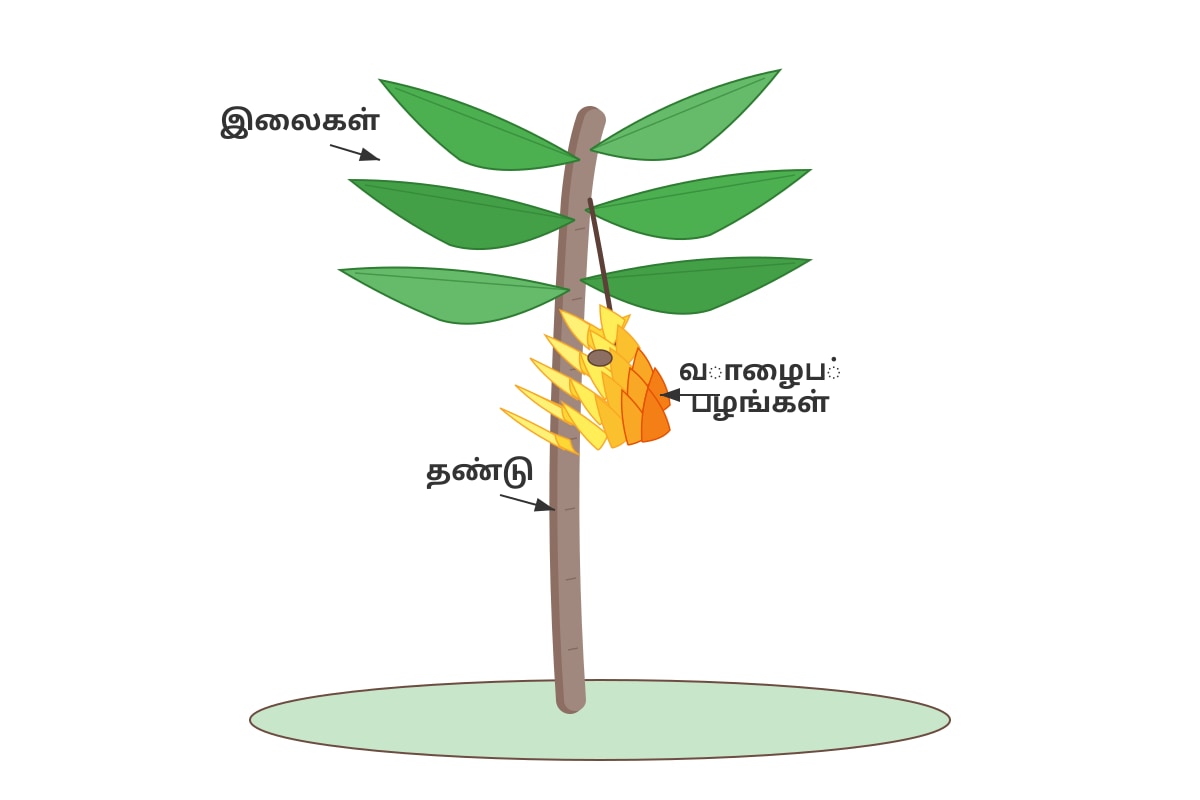
16. வாழைமரம் or வாழை (2 marks)
Accept: வாழை (vāḻai) = banana; வாழைமரம் (vāḻaimaram) = banana tree; வாழைப்பழம் (vāḻaippaḻam) = banana fruit
Teaching note: The image shows a banana tree (வாழைமரம்) with a bunch of bananas (வாழைக்குலை). Any answer identifying the banana/tree/fruit earns credit. The arrow points to the fruit bunch, so "வாழைப்பழம்" is most precise, but Primary 2 level accepts "வாழை" or "வாழைமரம்."
Marking: 2 marks for correct identification; 1 mark for partial identification (e.g., just "tree" or "fruit" without specifying banana)
Expected visual features: Tree with characteristic large oblong leaves, curved trunk, hanging bunch of elongated fruits. Student should recognize distinctive shape even if rendered simply.
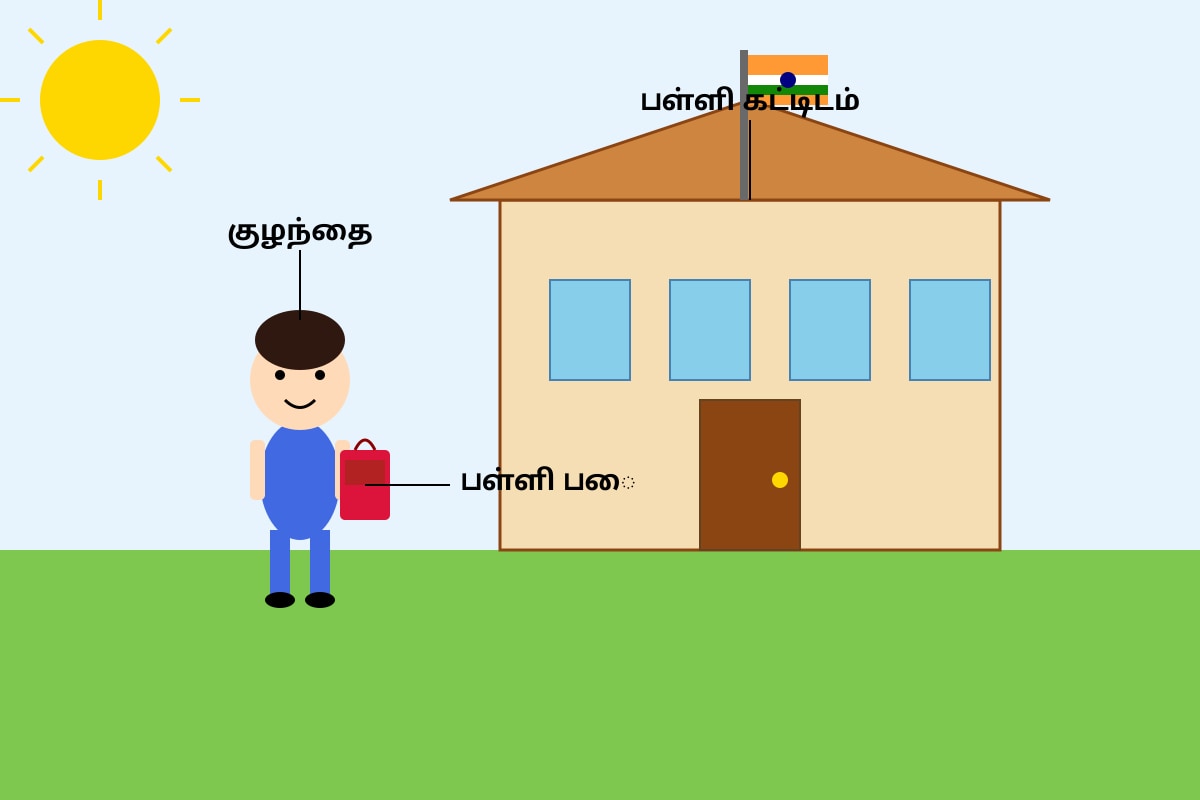
17. மாணவன் or மாணவி or பள்ளி or மாணவர் (2 marks)
Accept: Any school-related vocabulary that accurately describes the image: மாணவன் (māṇavaṉ) = student (boy), மாணவி (māṇavi) = student (girl), பள்ளி (paḷḷi) = school, கூடம் (kūṭam) = classroom
Teaching note: The image depicts a student in uniform with school bag at a school building. The central subject is the student going to school. Gender-neutral "மாணவர்" (māṇavar) or identifying the setting as "பள்ளி" are acceptable.
Marking: 2 marks for precise identification; 1 mark for related but less precise answer
Expected visual features: Child figure in uniform (shirt and shorts/skirt), carrying a bag, standing before a building with a school-like appearance (flag, steps, windows).
18. Sample sentence using "மகிழ்ச்சி" (4 marks)
Example answer: "நான் பள்ளியில் மகிழ்ச்சியாக இருக்கிறேன்." (I am happy at school.) Or: "எனது பிறந்தநாள் அன்று மகிழ்ச்சி அதிகமாக இருந்தது." (There was much happiness on my birthday.)
Marking descriptors (4 marks):
- 4 marks: Complete, grammatically correct sentence with "மகிழ்ச்சி" used correctly in appropriate context; sentence shows understanding of meaning (joy/happiness)
- 3 marks: Sentence mostly correct with minor grammar error; word used appropriately
- 2 marks: Sentence attempts correct usage but has significant grammar issues; meaning still discernible
- 1 mark: Word present but sentence structure very weak or meaning unclear
- 0 marks: Word not used, or completely incorrect usage
Teaching note: "மகிழ்ச்சி" is a noun meaning "happiness/joy." Common constructions: "மகிழ்ச்சியாக" (happily - adverb), "மகிச்சியான" (happy - adjective), "மகிழ்ச்சி அடைந்தேன்" (I felt happy). Students often confuse with the verb "மகிழ்" (to enjoy); teach the noun-adverb distinction.
Common mistake: "நான் மகிழ்ச்சி" without verb (incomplete sentence). Correct: "நான் மகிழ்ச்சியாக இருக்கிறேன்" or "மகிழ்ச்சி எனக்கு வந்தது."
19. Opposite words (4 marks total)
(a) "இது ஒரு பெரிய வீடு." → Opposite: சிறிய (2 marks)
Teaching note: "பெரிய" (periya) = big; "சிறிய" (siṟiya) = small. This is a primary antonym pair taught together. Accept: குட்டையான (kuṭṭaiyāṉa = short, small - less common).
(b) "நாளை குளிரான நாள்." → Opposite: வெப்பமான or சூடான (2 marks)
Teaching note: "குளிரான" (kuḷirāṉa) = cold; "வெப்பமான" (veppamāṉa) = hot/warm; "சூடான" (cūṭāṉa) = hot. Accept: கதகதப்பான (katakappāṉa = warm). These weather adjectives describe Singapore's climate variations and help students talk about their environment.
Common mistake: Students may write "குளிர்ச்சி" (coldness, noun) instead of the adjective form. Ensure grammatical parallelism: adjective ↔ adjective.
20. Two sentences about family using at least three Tamil vocabulary words (10 marks total = 5 marks per sentence)
Marking descriptors per sentence (5 marks each):
| Criterion | Marks |
|---|---|
| Sentence is complete and grammatically correct | 2 marks |
| At least one appropriate family vocabulary word used correctly | 1 mark |
| Additional vocabulary word(s) used appropriately (to reach minimum 3 across both sentences) | 1 mark |
| Sentence shows meaning and makes sense in context | 1 mark |
Teaching note: This question assesses productive vocabulary use in authentic context. Students must demonstrate they can move from recognition (Sections A-B) to active production.
Example high-scoring response:
Sentence 1: "என் அம்மா எனக்கு சாப்பாடு செய்கிறாள்." (My mother cooks food for me.)
- Family words: அம்மா (mother)
- Other vocabulary: சாப்பாடு (food), செய்கிறாள் (makes/cooks - grammar verb)
Sentence 2: "என் அப்பா பள்ளிக்கூடத்திற்கு என்னை காரில் அழைத்துச் செல்கிறார்." (My father takes me to school in the car.)
- Family words: அப்பா (father)
- Other vocabulary: பள்ளிக்கூடம் (school), கார் (car)
Minimum three vocabulary words across both sentences: Could be three family words, or two family words plus one other topic word.
Common mistakes to flag:
- Writing single words instead of full sentences (0 marks for that sentence)
- Using English words instead of Tamil (deduct 1 mark per significant lapse)
- Grammatical errors that obscure meaning (deduct up to 2 marks)
- Vocabulary words used in wrong context (e.g., "அம்மா" for a male figure)
Mark Summary
| Section | Question Range | Marks | Key Topic |
|---|---|---|---|
| A | 1–10 | 10 | Vocabulary recognition |
| B | 11–15 | 10 | Vocabulary matching, contextual selection, grammar |
| C | 16–20 | 20 | Visual identification, sentence production, antonyms, extended writing |
| TOTAL | 40 |
Duration check: Estimated 30–35 minutes working time + 10 minutes review buffer = 40–45 minutes total. Section A: ~8 min, Section B: ~10 min, Section C: ~17 min.
End of Answer Key