AI Generated Quiz
Primary 2 Mathematics Length Mass Volume Quiz
Free P2 Maths Length Mass Volume quiz, AI version, with questions, answers, and syllabus-aligned practice for Singapore students.
These static practice materials are generated from the site's syllabus and paper-generation workflow, with source and model context shown so students and parents can evaluate the material before use.
Questions
Free quiz and exam paper access
Enter your details to view this paper
Your access is remembered on this device.
Answers
Primary 2 Mathematics Quiz - Length Mass Volume: Answer Key
Total Marks: 20
Section A: Length (Questions 1 to 5)
1. C. metres (m)
- Marks: 1
- Explanation: Metres (m) are used to measure longer lengths, like the length of a classroom. Grams measure mass, litres measure volume, and kilograms measure mass. So, metres is the correct unit for length.
- Common mistake: Students might choose grams or kilograms because they are common units, but they measure mass, not length.
2. B. A ruler that is 30 cm long
- Marks: 1
- Explanation: 30 cm is longer than 15 cm. The ruler is twice as long as the pencil.
- Common mistake: Students might not compare the numbers correctly. Remind them that a bigger number means a longer length when using the same unit (cm).
3. 200 cm
- Marks: 1
- Explanation: 1 m = 100 cm. So, 2 m = 2 × 100 cm = 200 cm.
- Working: 2 × 100 = 200
- Common mistake: Students might think 1 m = 10 cm or 1 m = 1000 cm. Emphasise that 1 metre is equal to 100 centimetres.
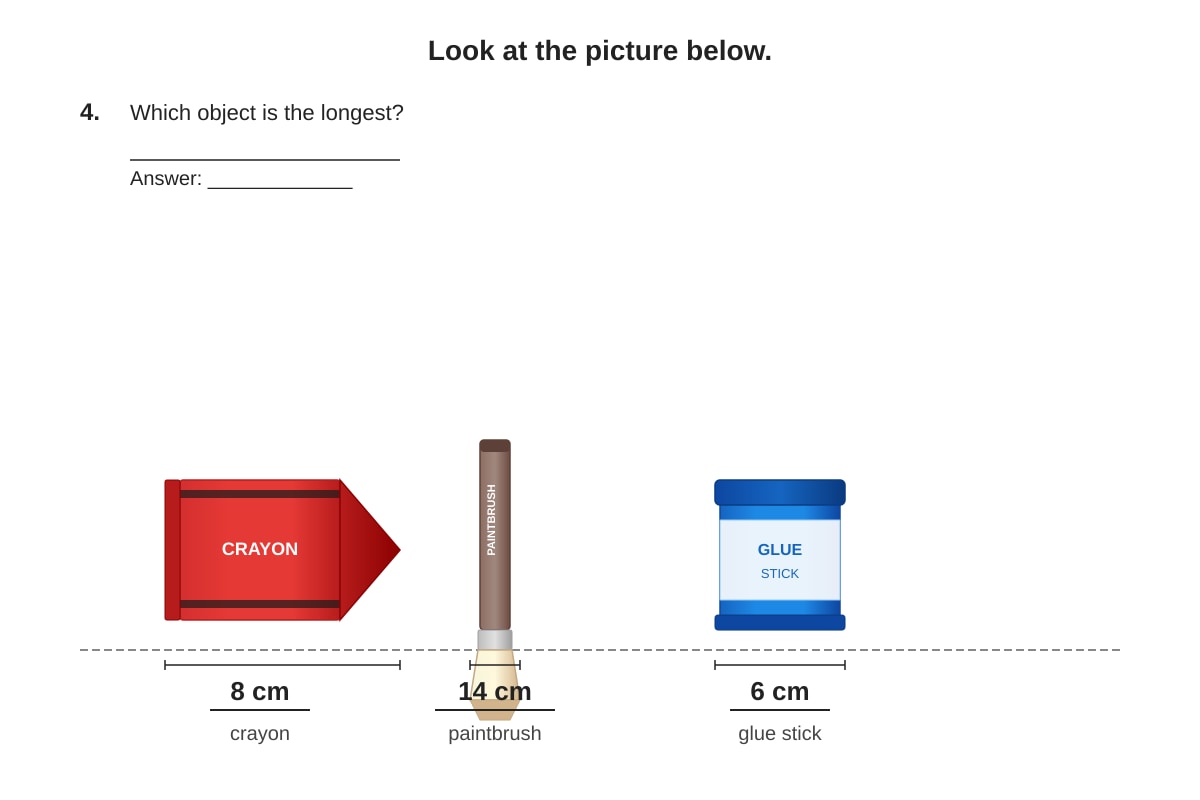
4. The paintbrush
- Marks: 1
- Explanation: The paintbrush is 14 cm long, the crayon is 8 cm long, and the glue stick is 6 cm long. 14 cm is the longest.
- Common mistake: Students might misread the labels or not compare all three lengths.
5. 80 cm
- Marks: 1
- Explanation: Total length = 50 cm + 30 cm = 80 cm.
- Working: 50 + 30 = 80
- Common mistake: Students might subtract instead of adding. The word "total" means we need to add the lengths together.
Section B: Mass (Questions 6 to 10)
6. C. kilograms (kg)
- Marks: 1
- Explanation: Kilograms (kg) are used to measure the mass of heavier objects like a bag of rice. Metres measure length, litres measure volume, and centimetres measure length.
- Common mistake: Students might choose litres because rice is a substance, but litres measure volume of liquids, not mass.
7. 2 kg
- Marks: 1
- Explanation: Difference = 3 kg - 1 kg = 2 kg. The watermelon is 2 kg heavier.
- Working: 3 - 1 = 2
- Common mistake: Students might add instead of subtract. "How much heavier" means we find the difference by subtracting.
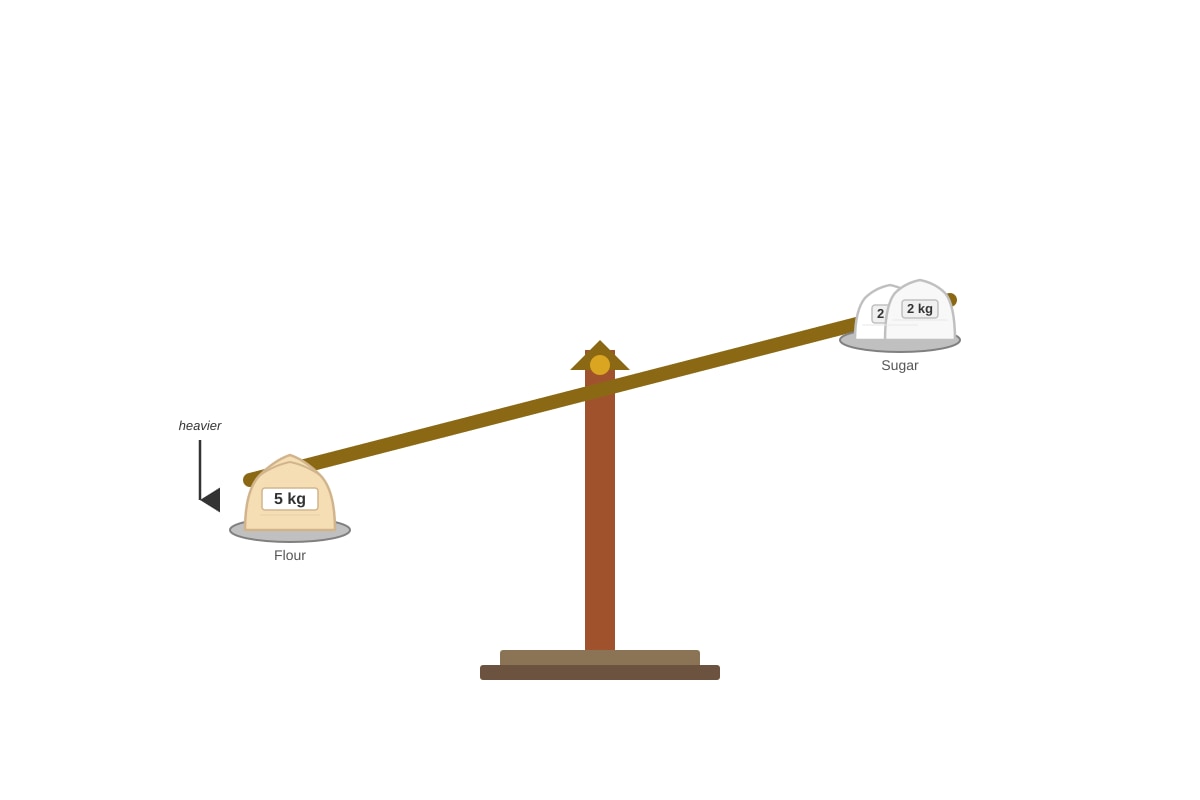
8. 4 kg
- Marks: 1
- Explanation: Each bag of sugar is 2 kg. Total mass = 2 kg + 2 kg = 4 kg.
- Working: 2 + 2 = 4
- Common mistake: Students might only count one bag of sugar or misread the labels.
9. 600 g
- Marks: 1
- Explanation: Total mass = 400 g + 200 g = 600 g.
- Working: 400 + 200 = 600
- Common mistake: Students might forget to include the unit (g) in their answer.
10. C. They are the same
- Marks: 1
- Explanation: Both bags have a mass of 1 kg. Even though feathers are lighter than stones, the bags have the same mass because they both weigh 1 kg.
- Common mistake: Students might think stones are heavier because they are denser. Emphasise that mass is the amount of matter, and 1 kg of anything has the same mass as 1 kg of anything else.
Section C: Volume (Questions 11 to 15)
11. B. litres (ℓ)
- Marks: 1
- Explanation: Litres (ℓ) are used to measure the volume of liquids like water. Grams measure mass, metres measure length, and kilograms measure mass.
- Common mistake: Students might choose grams or kilograms because they are common, but they measure mass, not volume.
12. 15 ℓ
- Marks: 1
- Explanation: Total volume = 10 ℓ + 5 ℓ = 15 ℓ.
- Working: 10 + 5 = 15
- Common mistake: Students might subtract instead of adding. "Added" means we need to add the volumes.
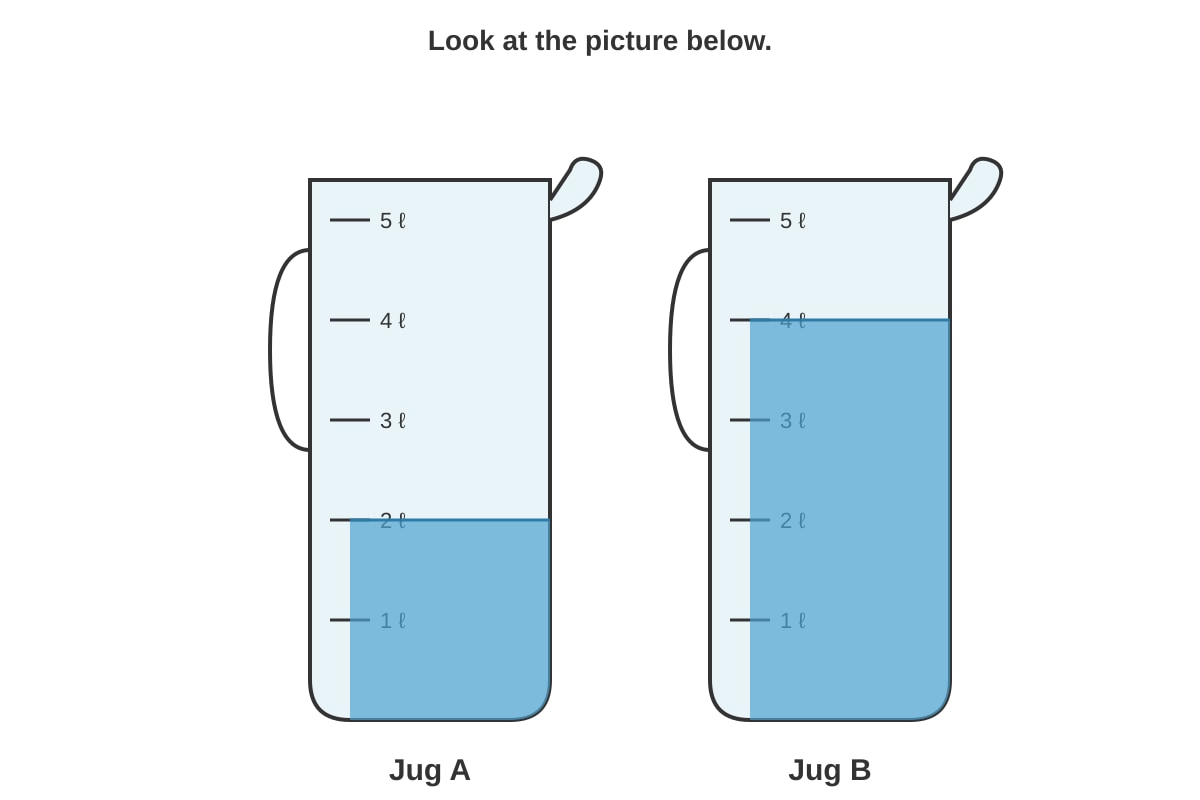
13. Jug B
- Marks: 1
- Explanation: Jug B has 4 ℓ of water, and Jug A has 2 ℓ of water. 4 ℓ is more than 2 ℓ.
- Common mistake: Students might misread the water levels or not compare the numbers correctly.
14. 1000 ml
- Marks: 1
- Explanation: 1 ℓ = 1000 ml.
- Common mistake: Students might think 1 ℓ = 100 ml or 1 ℓ = 10 ml. Emphasise that 1 litre is equal to 1000 millilitres.
15. 5 ℓ
- Marks: 1
- Explanation: Difference = 8 ℓ - 3 ℓ = 5 ℓ. The pail has 5 ℓ more water.
- Working: 8 - 3 = 5
- Common mistake: Students might add instead of subtract. "How much more" means we find the difference by subtracting.
Section D: Mixed Questions (Questions 16 to 20)
16. 50 cm, 1 m, 150 cm, 2 m
- Marks: 1
- Explanation: First, convert all measurements to the same unit (cm): 2 m = 200 cm, 1 m = 100 cm, 150 cm = 150 cm, 50 cm = 50 cm. Then arrange: 50 cm, 100 cm (1 m), 150 cm, 200 cm (2 m).
- Working: 2 m = 200 cm, 1 m = 100 cm. Order: 50 cm, 100 cm, 150 cm, 200 cm.
- Common mistake: Students might not convert all measurements to the same unit before comparing. Remind them to use the same unit for accurate comparison.
17. 3 kg 500 g
- Marks: 1
- Explanation: 2 kg + 1 kg = 3 kg. 0 g + 500 g = 500 g. Total = 3 kg 500 g.
- Working: 2 kg + 1 kg = 3 kg. 0 g + 500 g = 500 g. Total = 3 kg 500 g.
- Common mistake: Students might forget to add the grams separately or might incorrectly convert 500 g to 0.5 kg without showing the mixed unit.
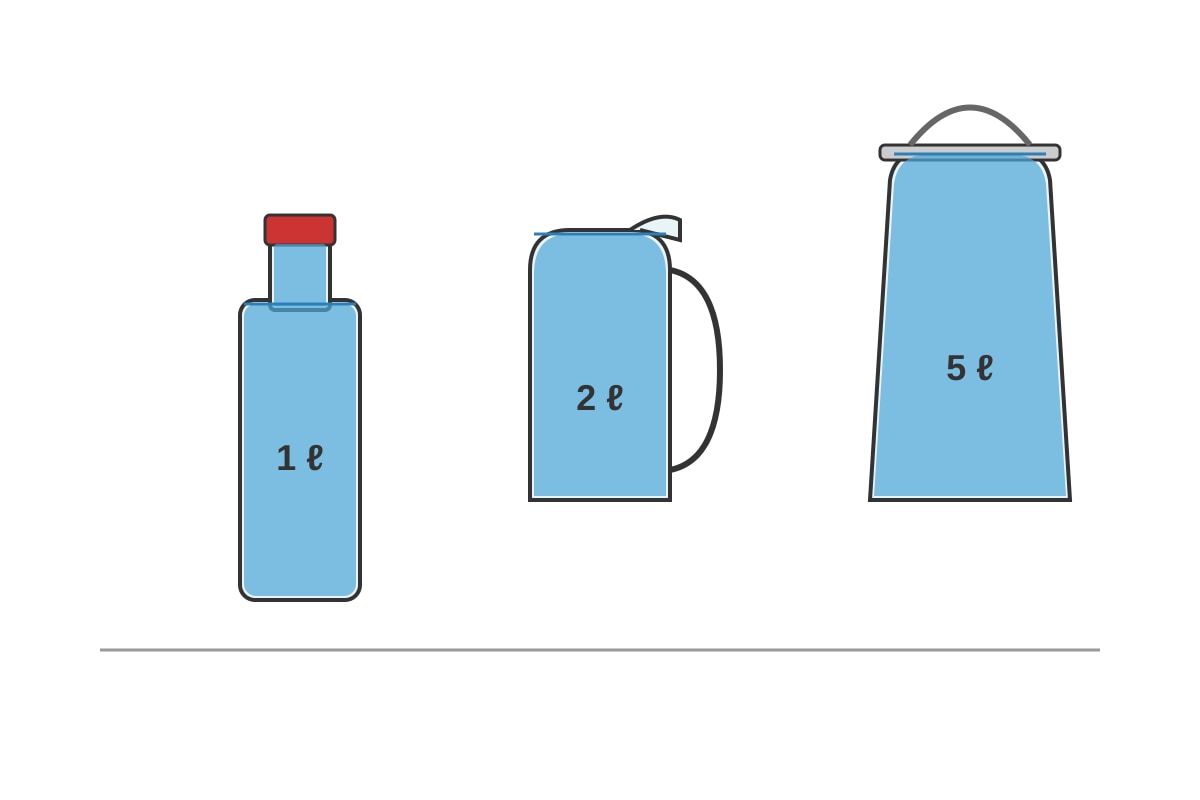
18. 8 ℓ
- Marks: 1
- Explanation: Total volume = 1 ℓ + 2 ℓ + 5 ℓ = 8 ℓ.
- Working: 1 + 2 + 5 = 8
- Common mistake: Students might misread the labels or forget to add all three volumes.
19. 3 m
- Marks: 1
- Explanation: The rope is 2 m longer than the string. So, rope length = 1 m + 2 m = 3 m.
- Working: 1 + 2 = 3
- Common mistake: Students might subtract instead of add. "Longer than" means we add the difference to the original length.
20. 3 kg
- Marks: 1
- Explanation: Difference = 7 kg - 4 kg = 3 kg. The dog is 3 kg heavier.
- Working: 7 - 4 = 3
- Common mistake: Students might add instead of subtract. "Difference" means we subtract the smaller number from the larger number.