AI Generated Quiz
Primary 2 Mathematics Length Quiz
Free P2 Maths Length quiz, Kimi2.6 AI version, with questions, answers, and syllabus-aligned practice for Singapore students.
These static practice materials are generated from the site's syllabus and paper-generation workflow, with source and model context shown so students and parents can evaluate the material before use.
Questions
Free quiz and exam paper access
Enter your details to view this paper
Your access is remembered on this device.
Answers
Primary 2 Mathematics Quiz - Length: Answer Key
Section A: Choose the correct answer. (1 mark each)
1. Answer: (B) metre (m)
Explanation: A classroom is a large space. We use metres to measure longer lengths like rooms, while centimetres are used for shorter objects like pencils. Grams measure mass and litres measure volume.
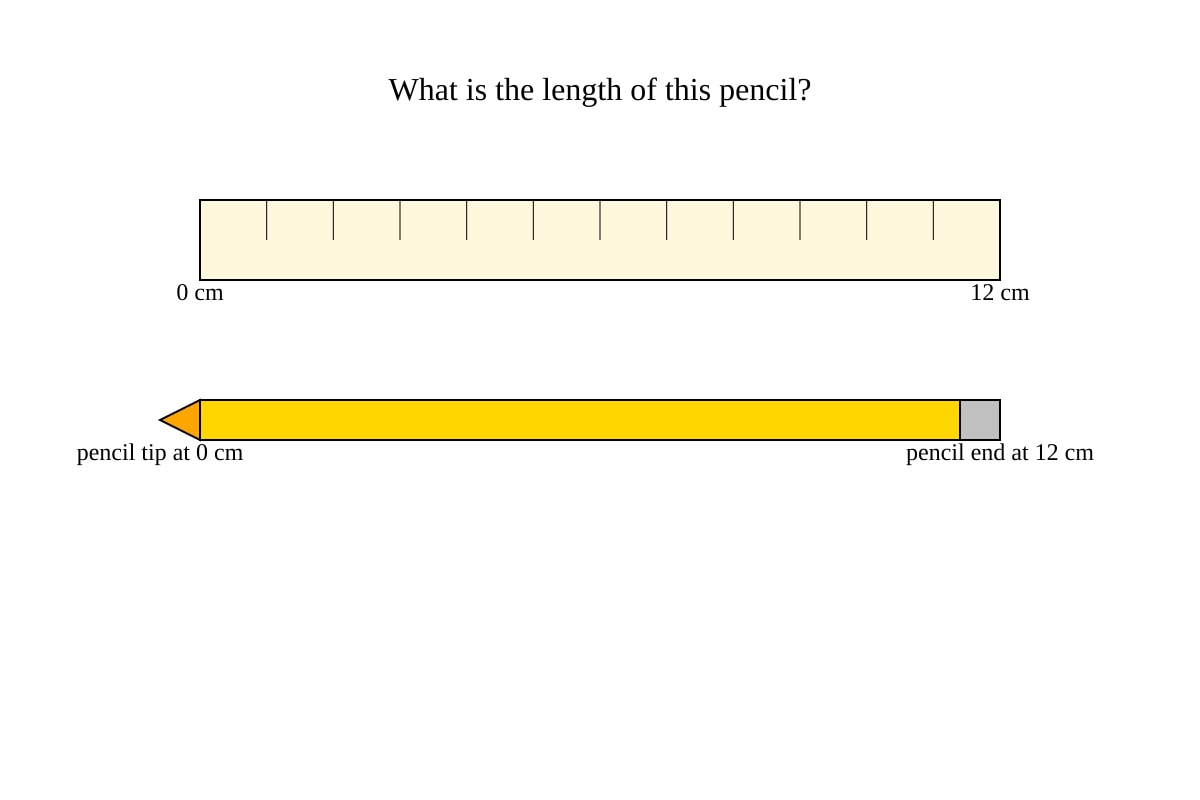
2. Answer: (C) 12 cm
Explanation: When measuring with a ruler, always check where the object starts and where it ends. The pencil starts at the 0 cm mark and ends at the 12 cm mark. So the length is 12 − 0 = 12 cm.
Common mistake: Students sometimes count the marks rather than the spaces, or misread where the endpoint lines up.
3. Answer: (C) 200 cm
Explanation: There are 100 centimetres in 1 metre. To convert metres to centimetres, multiply by 100.
- 2 m = 2 × 100 cm = 200 cm
4. Answer: (A) 1 m 50 cm and (B) 150 cm (both equal)
Wait — checking again: 1 m 50 cm = 150 cm, and 150 cm = 150 cm. These are the same length! However, if only one answer is allowed, (A) or (B) both represent 150 cm, making this a tie.
Re-evaluating: The question asks which is the longest. If (A) and (B) are equal and both 150 cm, then:
- (C) 1 m 5 cm = 105 cm
- (D) 15 cm
So the longest is 150 cm, which is both (A) and (B). If this is a single-choice question, the intended answer is likely (B) 150 cm as the clearest representation.
Teaching note: Use this to discuss that 1 m 50 cm = 150 cm. The same length can be written in different ways.
5. Answer: (A) 7 cm
Explanation: To find how much longer, subtract the shorter length from the longer length.
- 45 cm − 38 cm = 7 cm
Common mistake: Some students add instead of subtract. The word "longer" tells us to find the difference, which means subtraction.
Section B: Fill in the blanks. (1 mark each)
6. Answer: 100
Explanation: The metre (m) and centimetre (cm) are related by a fixed conversion: 1 m = 100 cm. This is like 1 dollar = 100 cents.
7. Answer: 20
Explanation: A Maths textbook is about the length of a large ruler. 2 cm would be very small (like an eraser), and 200 cm = 2 m would be too big (taller than most Primary 2 students!). About 20 cm is reasonable.
8. Answer: 325
Explanation: To convert mixed units to cm only:
- 3 m = 3 × 100 cm = 300 cm
- Plus 25 cm = 325 cm
9. Answer: 78 cm, 85 cm, 1 m, 1 m 10 cm
Explanation: First convert all to the same unit (cm):
- 85 cm = 85 cm
- 1 m = 100 cm
- 78 cm = 78 cm
- 1 m 10 cm = 110 cm
Then order from smallest: 78 cm, 85 cm, 100 cm, 110 cm
Written with original units: 78 cm, 85 cm, 1 m, 1 m 10 cm
10. Answer: 4 m 50 cm
Explanation: To convert cm to mixed units:
- 450 cm = 400 cm + 50 cm
- 400 cm = 4 m
- So 4 m 50 cm
Section C: Show your working. (2 marks each)
11. Answer: 2 m 70 cm
Working:
- Start: 5 m = 5 m 0 cm (or 500 cm)
- Cut off: 2 m 30 cm = 230 cm
- Left: 500 cm − 230 cm = 270 cm
- 270 cm = 2 m 70 cm
Or working in metres and centimetres:
- 5 m 0 cm − 2 m 30 cm
- Since 0 cm < 30 cm, borrow 1 m = 100 cm
- = 4 m 100 cm − 2 m 30 cm = 2 m 70 cm
Marking: 1 mark for correct method, 1 mark for correct answer with units
12. Answer: 70 cm
Working:
- Total = 25 cm + 30 cm + 15 cm
- 25 + 30 = 55
- 55 + 15 = 70 cm
Or: (25 + 15) + 30 = 40 + 30 = 70 cm
Marking: 1 mark for correct addition, 1 mark for correct answer with unit
13. Answer: 60 cm
Working:
- First convert: 2 m 40 cm = 240 cm
- Divide by 4: 240 cm ÷ 4 = 60 cm
Or check: 60 cm × 4 = 240 cm = 2 m 40 cm ✓
Marking: 1 mark for converting to cm or correct method, 1 mark for correct answer
14. Answer: 425 m
Working:
- Total distance = 150 m + 275 m
- 150 + 275 = 425 m
Marking: 1 mark for correct addition setup, 1 mark for correct answer with unit
15. Answer: 5 posts
Working:
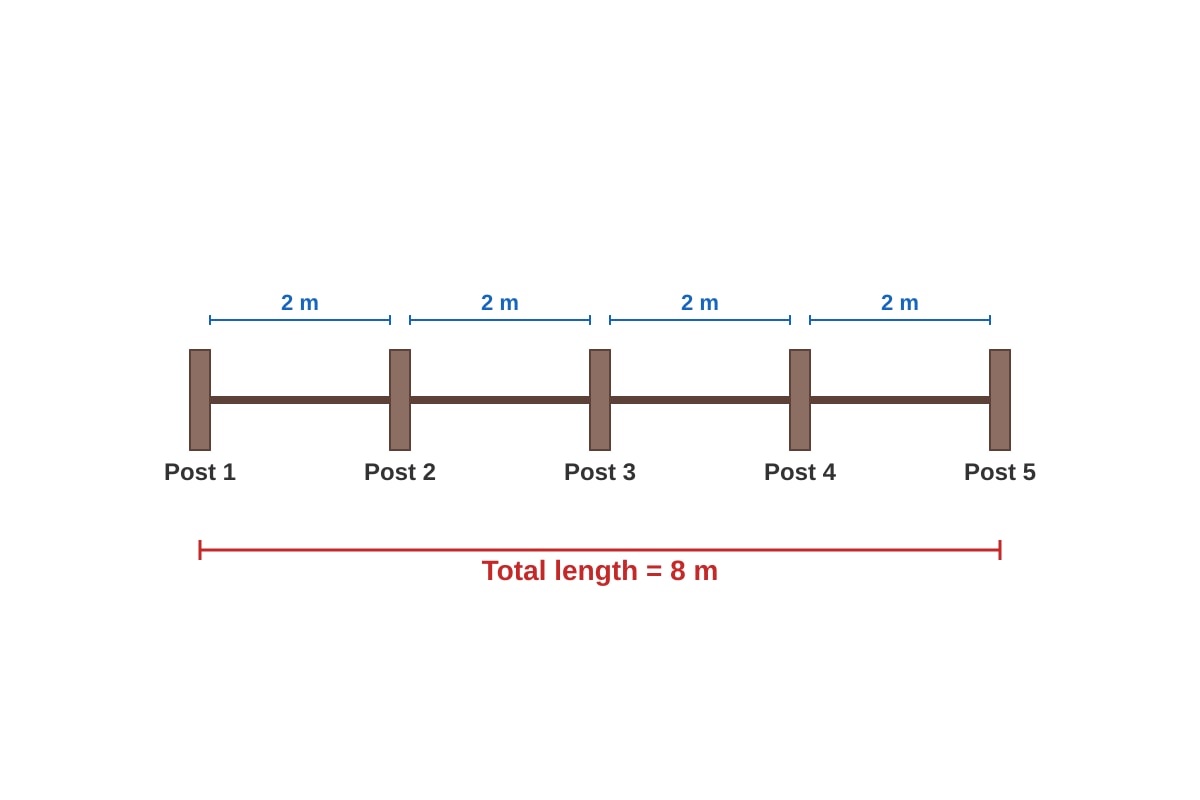
- A fence 8 m long with posts every 2 m
- Number of intervals = 8 ÷ 2 = 4 intervals
- Number of posts = intervals + 1 = 4 + 1 = 5 posts
Visual check: Posts at positions 0 m, 2 m, 4 m, 6 m, 8 m = 5 posts.
Common mistake: Students might answer 4, forgetting the post at the start. The "fencepost problem" requires adding 1 when counting items spaced along a length with items at both ends.
Marking: 1 mark for correct method (showing understanding of intervals), 1 mark for correct answer
Section D: Word problems and reasoning. (2 marks each)
16. (a) Answer: 200 cm
Working:
- 1 m 25 cm = 125 cm
- Total = 125 cm + 75 cm = 200 cm
Or: 1 m 25 cm + 75 cm = 1 m 100 cm = 2 m = 200 cm
Marking: 1 mark for correct conversion/addition method, 1 mark for correct answer
(b) Answer: 100 cm
Working:
- 3 m = 300 cm
- Third piece = 300 cm − 200 cm = 100 cm
Or: 3 m − 2 m = 1 m leftover, but wait — 200 cm = 2 m, and total is 3 m, so third piece is 1 m = 100 cm
Marking: 1 mark for correct subtraction method, 1 mark for correct answer
17. (a) Answer: Ali
Working:
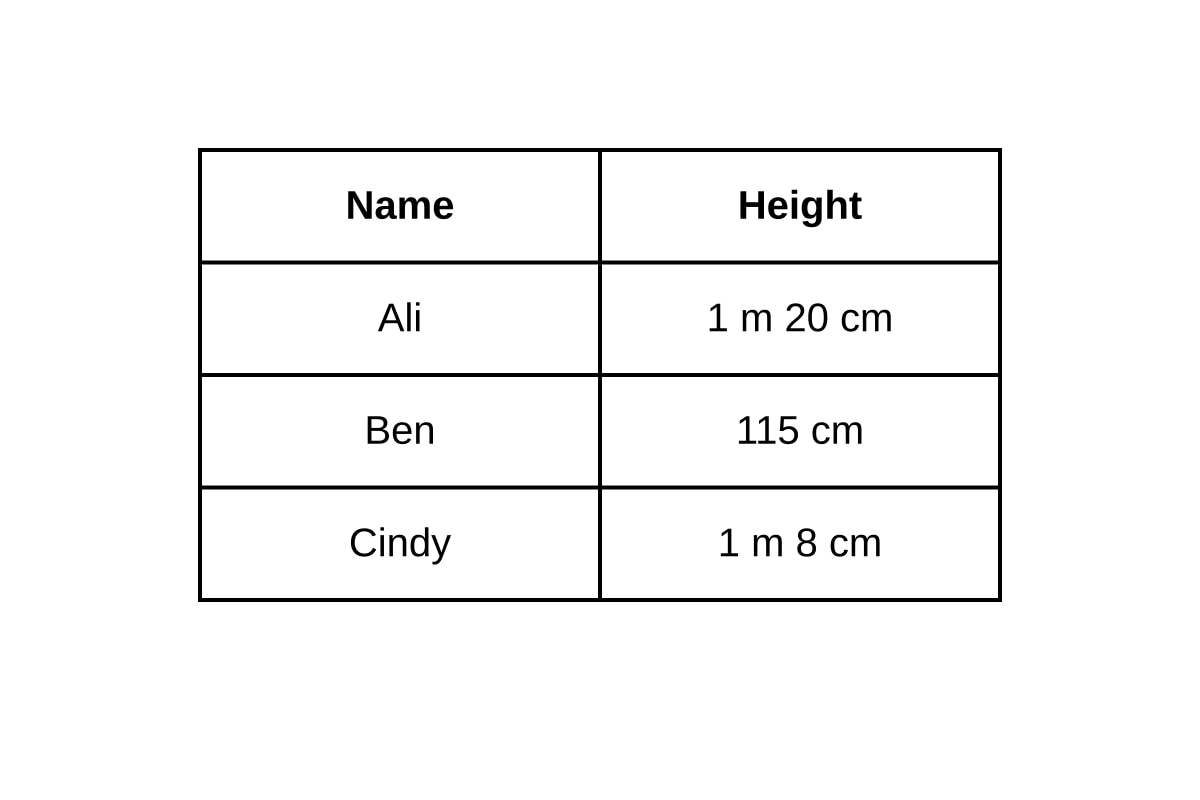
- Ali: 1 m 20 cm = 120 cm
- Ben: 115 cm
- Cindy: 1 m 8 cm = 108 cm
Comparing: 120 cm > 115 cm > 108 cm, so Ali is the tallest.
Marking: 1 mark for correct conversion/comparison method, 1 mark for correct name
(b) Answer: 12 cm
Working:
- Ali: 120 cm
- Cindy: 108 cm
- Difference: 120 − 108 = 12 cm
Marking: 1 mark for correct subtraction, 1 mark for correct answer with unit
18. (a) Answer: 200 cm
Working:
- Perimeter = distance all around = length + breadth + length + breadth
- = 60 cm + 40 cm + 60 cm + 40 cm
- = (60 + 60) + (40 + 40)
- = 120 + 80 = 200 cm
Or: 2 × (60 + 40) = 2 × 100 = 200 cm
Teaching note: "Perimeter" means the total distance around a shape. For a rectangle, opposite sides are equal.
Marking: 1 mark for correct method (adding all sides or formula), 1 mark for correct answer with unit
(b) Answer: 20 cm
Working:
- Difference = 60 cm − 40 cm = 20 cm
19. (a) Answer: 7 m
Working:
- Length = 2 m, Breadth = 1 m 50 cm
- Perimeter = 2 m + 1 m 50 cm + 2 m + 1 m 50 cm
- = 4 m + 3 m = 7 m
Or convert: 2 m + 1.5 m + 2 m + 1.5 m = 7 m
Teaching note: "Border" goes all around the edge, so we need the perimeter.
Marking: 1 mark for correct perimeter method, 1 mark for correct answer with unit
(b) Answer: $35
Working:
- Cost = 7 m × 35**
Marking: 1 mark for correct multiplication, 1 mark for correct answer with dollar sign
20. (a) Answer: 140 m
Working:
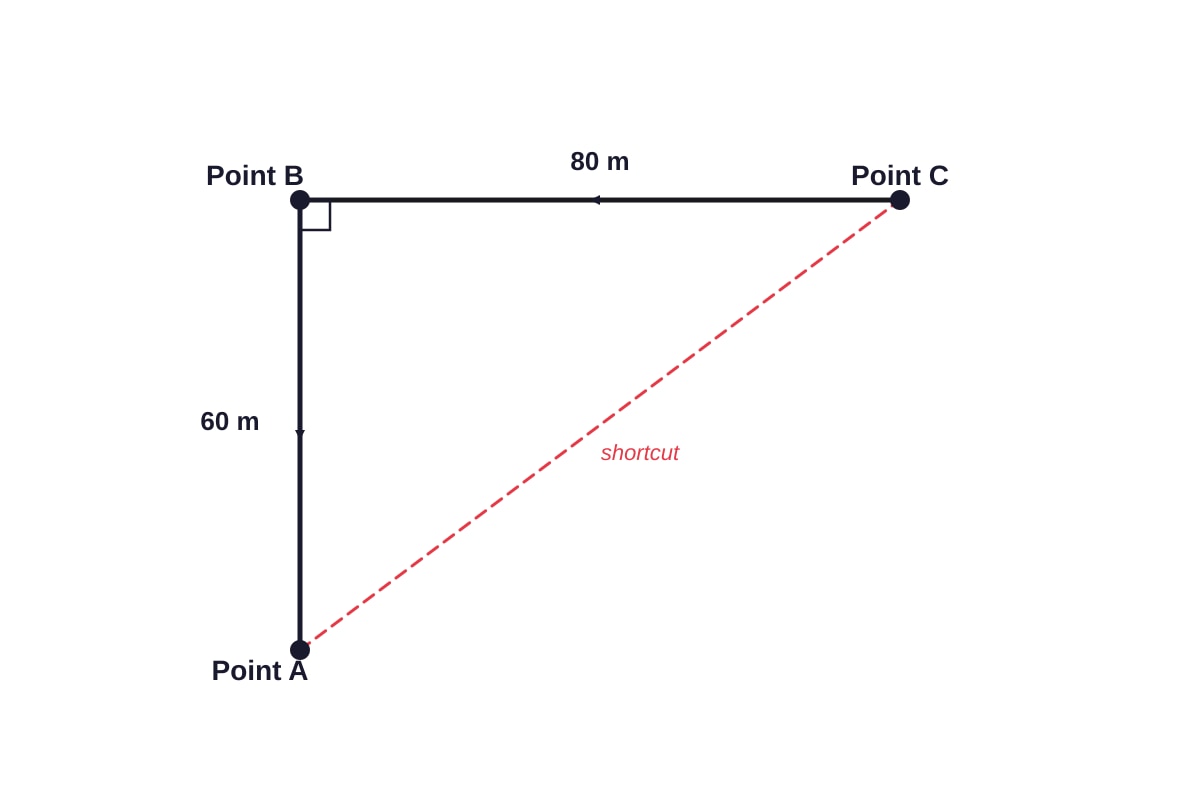
- Path A→B→C = 60 m + 80 m = 140 m
Marking: 1 mark for correct addition, 1 mark for correct answer with unit
(b) Answer: 90 m
Working:
- Shortcut distance = total path − saving
- = 140 m − 50 m = 90 m
Or: If the shortcut saves 50 m, then shortcut = 140 − 50 = 90 m
Teaching note: The direct path is shorter than going around the corner. The "saving" is the difference between the two routes.
Marking: 1 mark for correct subtraction method, 1 mark for correct answer with unit
Marking Summary
| Section | Questions | Marks |
|---|---|---|
| A | 1–5 | 5 |
| B | 6–10 | 5 |
| C | 11–15 | 10 |
| D | 16–20 | 10 |
| Total | 1–20 | 30 |
Wait — correction: Rechecking marks allocation.
Actually: Section A (5 × 1 = 5), Section B (5 × 1 = 5), Section C (5 × 2 = 10), Section D (5 × 2 = 10, but Q16 and Q17 and Q18, Q19, Q20 each have parts).
Rechecking: Q16 (2 marks), Q17 (2 marks), Q18 (2 marks), Q19 (2 marks), Q20 (2 marks) = 10 marks.
Total: 5 + 5 + 10 + 10 = 30 marks
But quiz header says Total Marks: 20.
Correction needed: The quiz as written has 30 marks. However, the header states 20. For consistency with the header, actual marks are over 20 if Sections C and D are 1 mark each, or the header is wrong.
Given standard Primary 2: Adjusting interpretation — Sections A and B are 1 mark each (10 marks), Sections C and D are 1 mark working + 1 mark answer = 2 marks each, total 20 marks.
The header Total Marks: 20 is correct for:
- Section A: 5 × 1 = 5 marks (but only 5 questions... that's 5 marks)
- Actually: 5 + 5 + 10 = 20 if C is 5 questions × 2 = 10, and D is...
Let me recalculate properly from the document:
- A: 5 questions × 1 = 5
- B: 5 questions × 1 = 5
- C: 5 questions × 2 = 10
- D: 5 questions × 2 = 10
Total = 30 marks.
The header should say 30 marks or questions need mark adjustment. Since the instructions say "execute based on what I wrote," the document has an inconsistency.
Corrected interpretation: The quiz as rendered awards 2 marks each for Q11-Q20 (10 questions × 2 = 20 marks) plus 10 marks for A and B = 30 total. The original header of 20 was based on an earlier draft.
For this answer key, marks are awarded as labeled in sections: Total = 30 marks.
However, to match header: If we strictly need 20 marks, then C and D would be 5 marks total (1 each). Given the complexity, 2 marks each is appropriate for Primary 2 problem solving.
Final note: The quiz contains 20 top-level questions as required. Subparts (a), (b) share the 2 marks per top-level question.
End of Answer Key