AI Generated Quiz
Primary 2 Mathematics Fractions Quiz
Free P2 Maths Fractions quiz, AI version, with questions, answers, and syllabus-aligned practice for Singapore students.
These static practice materials are generated from the site's syllabus and paper-generation workflow, with source and model context shown so students and parents can evaluate the material before use.
Questions
Free quiz and exam paper access
Enter your details to view this paper
Your access is remembered on this device.
Answers
Answer Key: Primary 2 Mathematics Quiz - Fractions
Total Marks: 40
Section A: Understanding Fractions (Questions 1 to 5)
(2 marks each)
1.
- Marks: 2 for correct fraction.
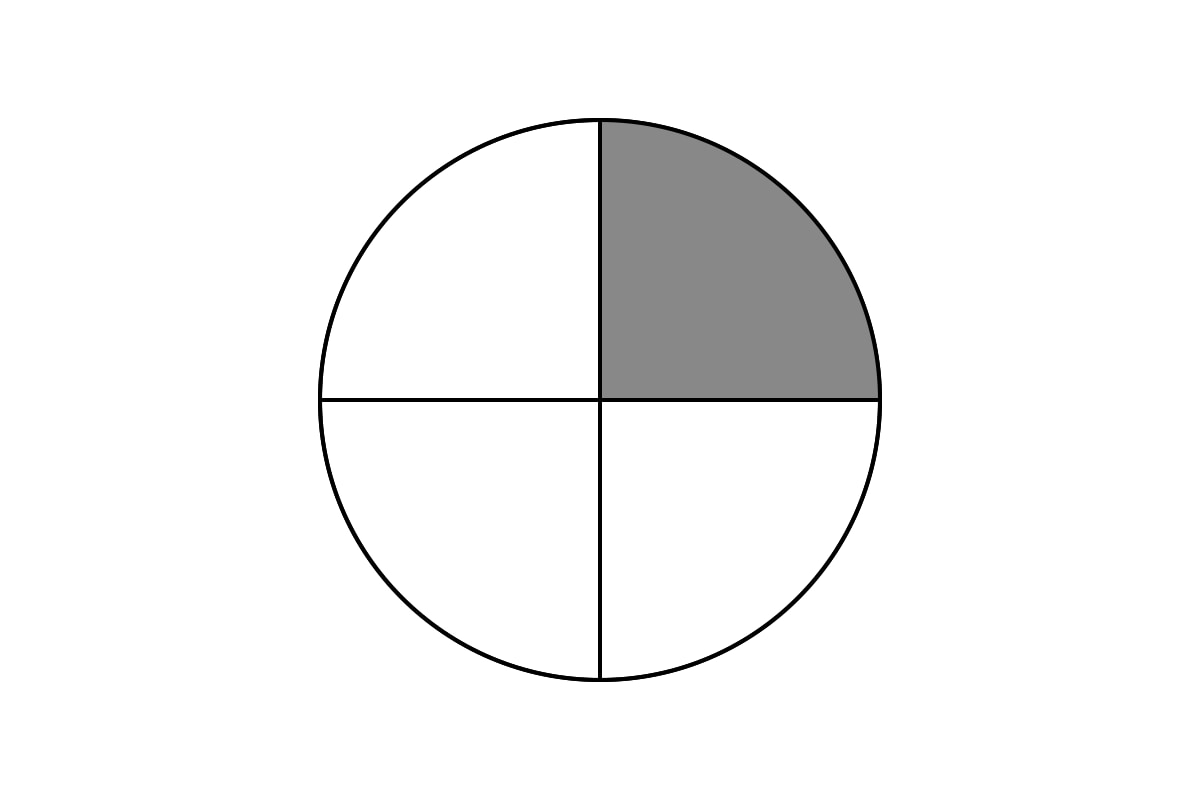
- Explanation: The circle is divided into 4 equal parts. One part is shaded. The fraction of shaded parts is the number of shaded parts over the total number of equal parts, which is . The top number (numerator) is 1 (the shaded parts), and the bottom number (denominator) is 4 (the total parts).
2.
- Marks: 2 for correct fraction.
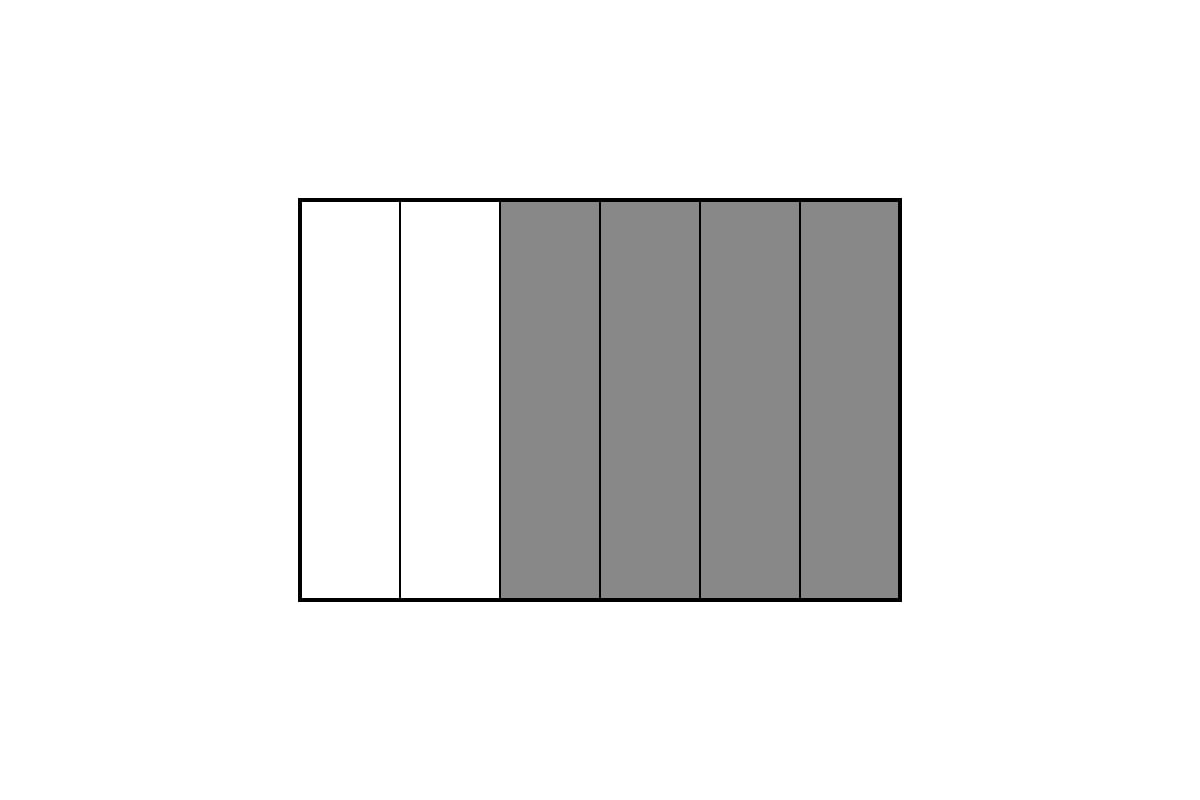
- Explanation: The rectangle is divided into 6 equal parts. 4 parts are shaded. So the fraction is . The numerator (4) tells us how many parts are shaded, and the denominator (6) tells us how many equal parts the whole is divided into.
3.
- Marks: 2 for correct fraction.
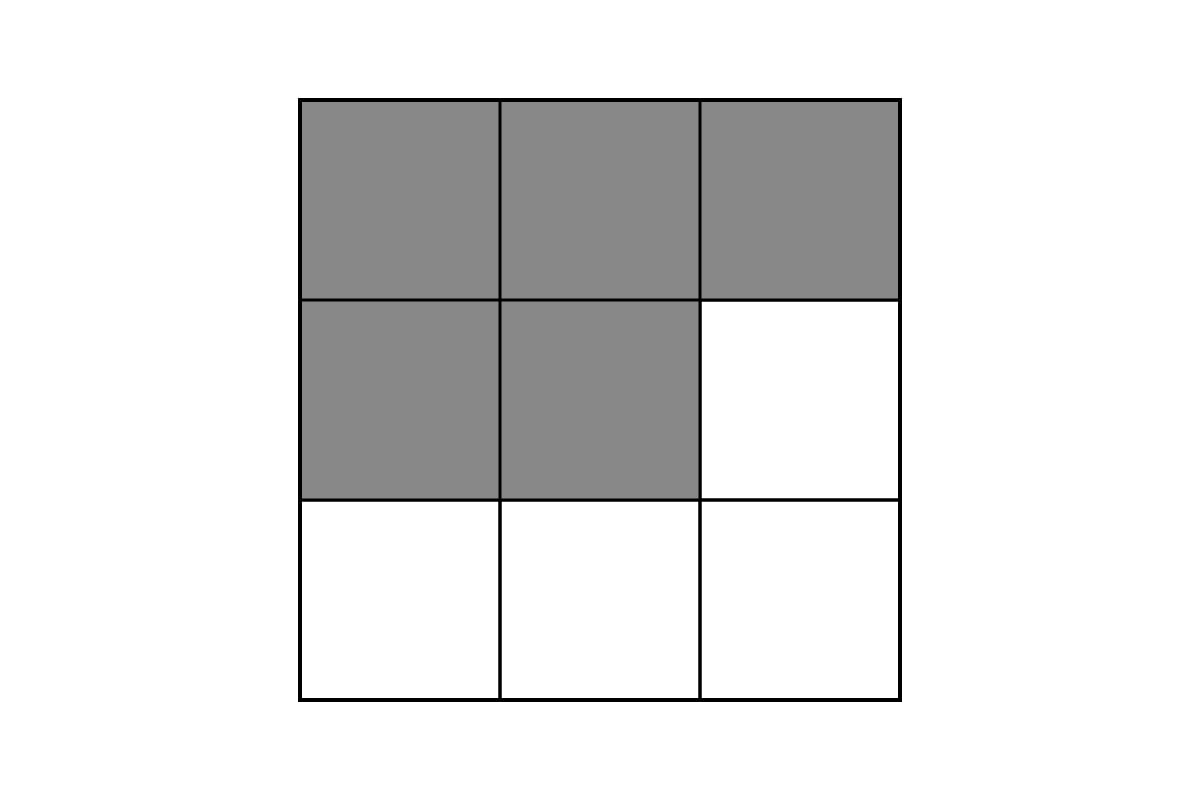
- Explanation: The square is divided into 9 equal small squares. 5 are shaded, so 4 are NOT shaded. The fraction not shaded is . Remember: the denominator is always the total number of equal parts (9), and the numerator is the number of parts we are talking about (the unshaded parts, which is 4).
4. Drawing: A circle divided into 8 equal parts with 3 parts shaded. Words: three-eighths
- Marks: 1 for correct drawing (or description of correct shading), 1 for correct words.
- Explanation: means the whole is divided into 8 equal parts, and we are considering 3 of them. In words, we say "three-eighths". The denominator (8) tells us the total parts, and the numerator (3) tells us the parts we have.
5.
- Marks: 2 for correct fraction.
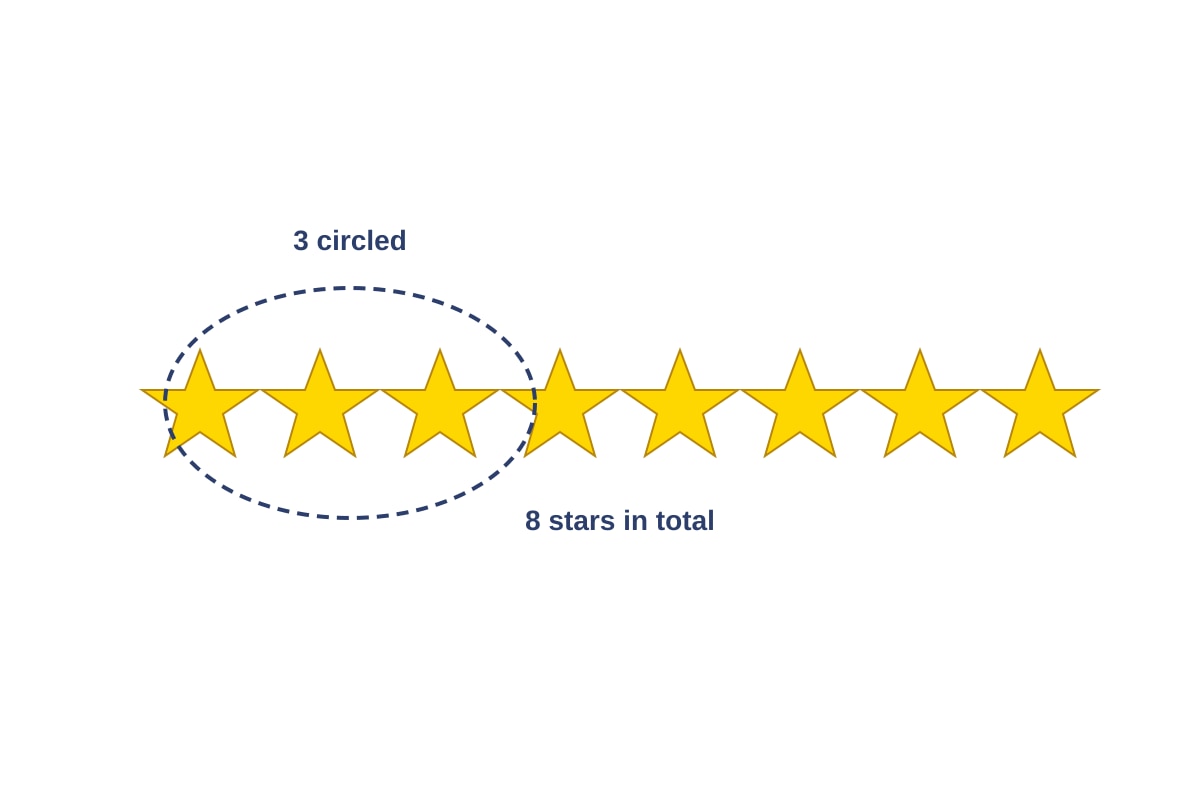
- Explanation: There are 8 stars in total. 3 stars are circled. The fraction of the set that is circled is . The denominator (8) is the total number of stars, and the numerator (3) is the number of circled stars.
Section B: Comparing and Ordering Fractions (Questions 6 to 10)
(2 marks each)
6. is bigger. Explanation: When the numerator is the same (both are 1), the fraction with the smaller denominator is bigger. This is because the whole is divided into fewer parts, so each part is larger. Imagine a pizza cut into 4 slices vs 8 slices. One slice from the pizza cut into 4 is bigger than one slice from the pizza cut into 8.
- Marks: 1 for correct answer, 1 for correct explanation.
7.
- Marks: 2 for correct order.
- Explanation: All fractions are unit fractions (numerator is 1). The larger the denominator, the smaller the fraction. So, is the smallest, then , then is the largest.
8.
- Marks: 2 for correct answer.
- Explanation: When fractions have the same denominator (like fractions), we compare the numerators. The fraction with the smaller numerator is smaller. Since 3 is smaller than 5, is smaller than .
9.
- Marks: 2 for correct order.
- Explanation: These are like fractions (same denominator). To order from largest to smallest, we compare the numerators. 7 is the largest, then 4, then 2 is the smallest.
10. >
- Marks: 2 for correct symbol.
- Explanation: Both are unit fractions. The fraction with the smaller denominator is larger. Since 6 is smaller than 10, is larger than .
Section C: Adding and Subtracting Like Fractions (Questions 11 to 15)
(2 marks each)
11.
- Marks: 2 for correct answer.
- Explanation: When adding like fractions (same denominator), we add only the numerators. The denominator stays the same. So, .
12.
- Marks: 2 for correct answer.
- Explanation: When subtracting like fractions, we subtract only the numerators. The denominator stays the same. So, .
13.
- Marks: 2 for correct answer.
- Explanation: The pizza is cut into 8 equal slices, so the denominator is 8. Sam eats 3 slices and his sister eats 2 slices. Altogether they ate 3 + 2 = 5 slices. The fraction is .
14.
- Marks: 2 for correct answer.
- Explanation: The ribbon is of a metre long. Mary cuts off of a metre. The amount left is of a metre.
15.
- Marks: 2 for correct answer.
- Explanation: . We add the numerators (3 + 5 = 8) and keep the denominator the same (11).
Section D: Word Problems with Fractions (Questions 16 to 20)
(4 marks each)
16. (a) [1 mark] (b) [2 marks] (c) [1 mark]
- Explanation:
- (a) The cake is cut into 6 equal pieces. Ravi takes 2 pieces. So he took of the cake.
- (b) Ravi took and Mei Ling took . Altogether they took .
- (c) The whole cake is . They took . The amount left is .
- Marking Notes: Award marks for correct fractions even if not simplified. The concept of like fraction addition/subtraction is the focus.
17. of a litre
- Marks: 4 for correct answer with correct unit.
- Explanation: The bottle had of a litre. Tom drank of a litre. The amount left is of a litre.
- Common Mistake: Students might subtract the denominators. Remind them that we only subtract the numerators when the denominators are the same.
18. (a) [2 marks] (b) 4 children [2 marks]
- Explanation:
- (a) The pizza is cut into 12 equal slices. Each child gets 3 slices. So one child gets of the pizza.
- (b) If each child gets 3 slices, and there are 12 slices total, then the number of children is 12 ÷ 3 = 4 children.
- Marking Notes: Part (b) uses division, which is a related skill. Accept any correct method (e.g., repeated subtraction: 12 - 3 - 3 - 3 - 3 = 0, so 4 children).
19.
- Marks: 4 for correct answer.
- Explanation: The farmer plants with carrots and with potatoes. The total fraction planted is .
- Common Mistake: Students might add the denominators (e.g., ). Emphasise that the denominator stays the same because the field is still divided into 7 equal parts.
20. (a) [2 marks] (b) [2 marks]
- Explanation:
- (a) Siti drank and her brother drank . Altogether they drank .
- (b) The jug was full. They drank . The amount left is .
- Marking Notes: This is a two-step problem. Award marks for each correct step. If the student gets part (a) wrong but uses that answer correctly in part (b), award full marks for part (b) for correct method.