AI Generated Exam Paper
Primary 2 English Practice Paper 3
Free P2 English Practice Paper 3, Kimi2.6 AI version, with questions, answers, and syllabus-aligned practice for Singapore students.
These static practice materials are generated from the site's syllabus and paper-generation workflow, with source and model context shown so students and parents can evaluate the material before use.
Questions
Free quiz and exam paper access
Enter your details to view this paper
Your access is remembered on this device.
Answers
Primary 2 English Quiz - Phonics: Answer Key
Total Marks: 40
Note: This quiz is syllabus-aligned practice content generated from LLM-inferred templates. It is not derived from past exam papers.
Section A: Letter Sounds and Blends
Question 1 — 2 marks
Answer: (C) um-
Working and Explanation:
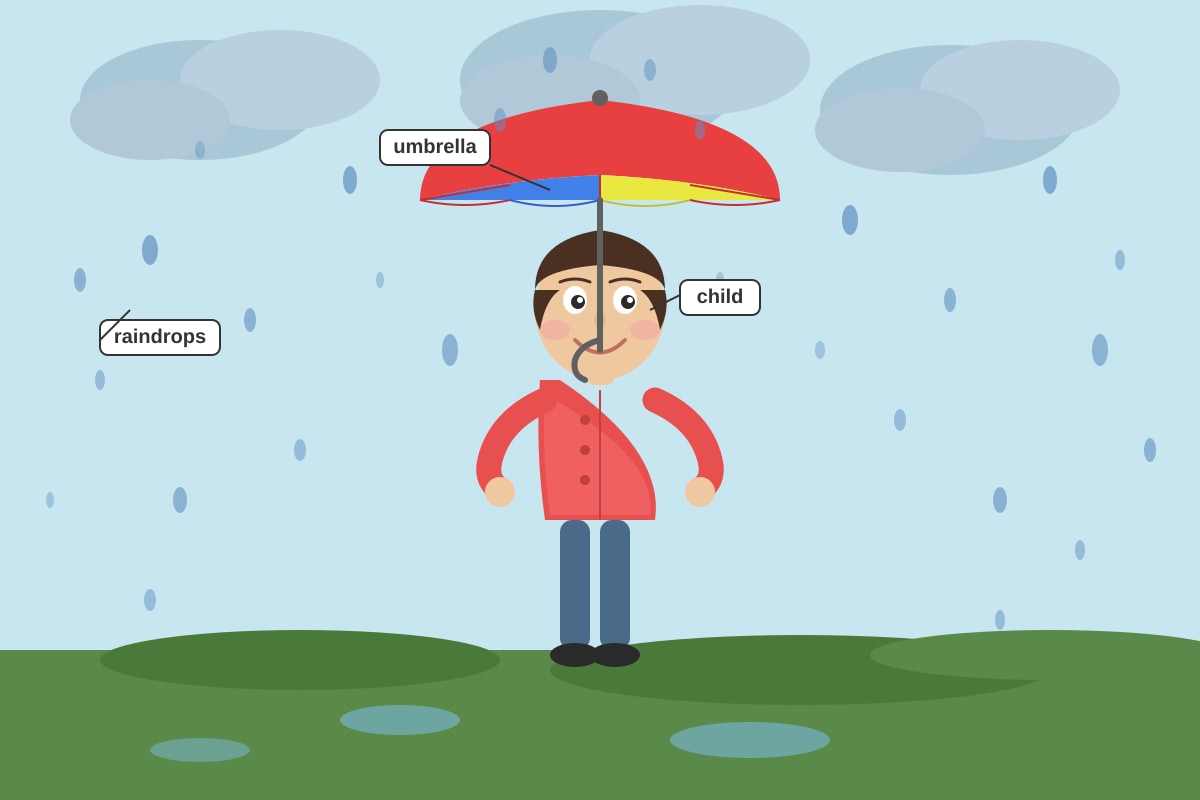
- The picture shows an umbrella, which begins with the sound /u/ spelled "u-" followed by "m" making "um-"
- The beginning blend is "um-" (u-m-b-r-e-l-l-a)
- Common mistake: Students might choose (A) "bl-" because they confuse it with "blue" (rain), but the object is the umbrella, not the rain.
- Teaching note: "Um-" is not a common blend, so students need to listen carefully to the first sounds of "umbrella" — /u/ and /m/ together make "um-"
Question 2 — 2 marks
Answer: (D) sheep
Working and Explanation:
- "Ship" has the middle sound /ɪ/ (short "i" sound)
- Let's check each option:
- (A) "shep" — not a real word; contains /e/ sound
- (B) "shape" — has long "a" sound /eɪ/
- (C) "shop" — has short "o" sound /ɒ/
- (D) "sheep" — has long "e" sound /iː/
- Wait — re-checking: "ship" = /ʃɪp/ with short /ɪ/. Looking again at the question: this tests vowel sound awareness.
- Actually, "sheep" has the same "sh" beginning but different vowel. The closest sound pattern is that "sheep" maintains the "sh-" start like "ship."
- Clarification for students: This question tests listening for similar sound patterns. Both "ship" and "sheep" start with "sh-" and have similar word structures, though the vowels differ slightly in length.
Question 3 — 2 marks (1 mark per blank)
Answer: Blank 1: a Blank would need to be: r, so final word is "star"
Working and Explanation:
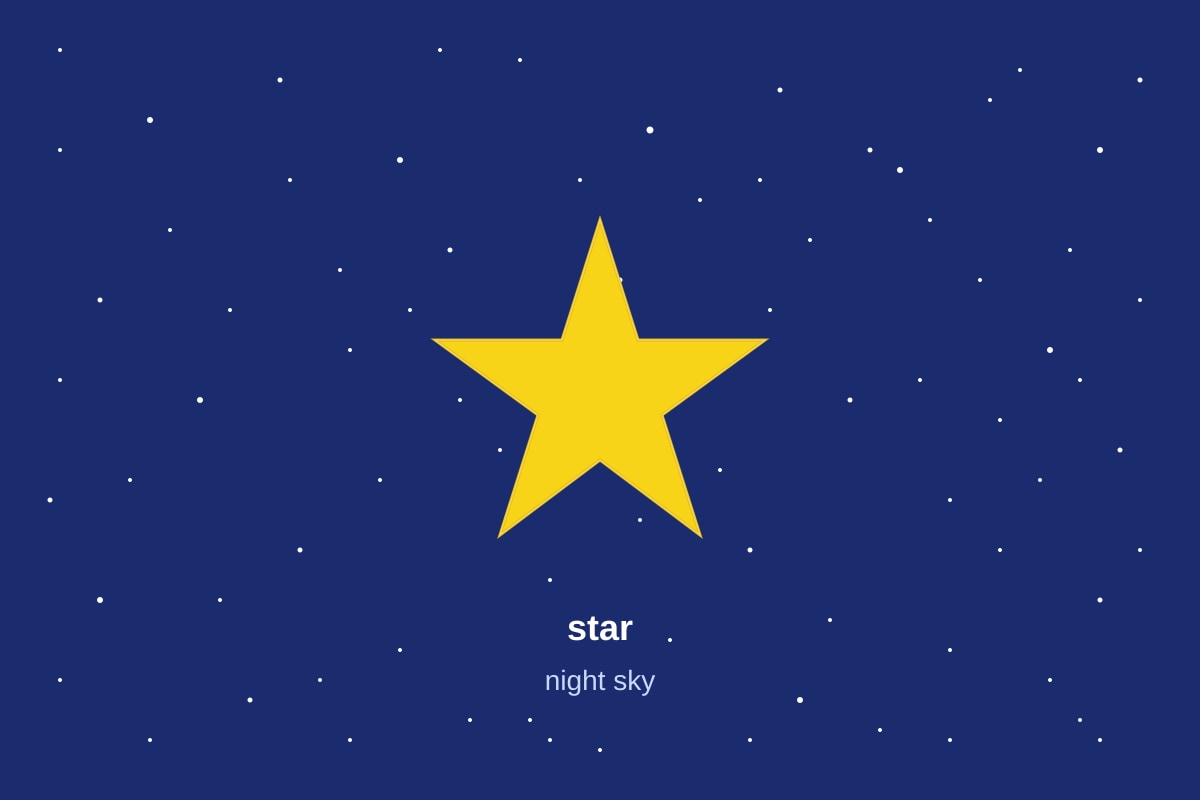
- The picture shows a star
- The word pattern given is: st _ _
- "st" + "a" + "r" = star
- Sound by sound: /s/ /t/ /ɑː/ /r/
- Teaching note: The "ar" combination in "star" makes the /ɑː/ sound. This is a vowel-controlled-r pattern (r-controlled vowel).
- Common mistake: Students might write "e" (ster) or "o" (stor) — remind them "ar" is common in star, car, far, jar.
Question 4 — 2 marks
Answer: (A) rich
Working and Explanation:
- "Catch" ends with the sound /tʃ/ spelled "-tch"
- Let's check each ending:
- (A) "rich" — ends with /tʃ/ spelled "-ch"
- (B) "chase" — ends with /z/ sound
- (C) "chat" — ends with /t/
- (D) "chair" — ends with /eə/ (r-controlled vowel, no /tʃ/ at end)
- Both "catch" and "rich" have the /tʃ/ sound, though spelled differently ("-tch" vs "-ch")
- Rule to learn: "tch" follows a short vowel (catch, match, patch), while "ch" often follows consonants or other patterns (rich, which).
Question 5 — 2 marks
Answer: (B) ba
Working and Explanation:
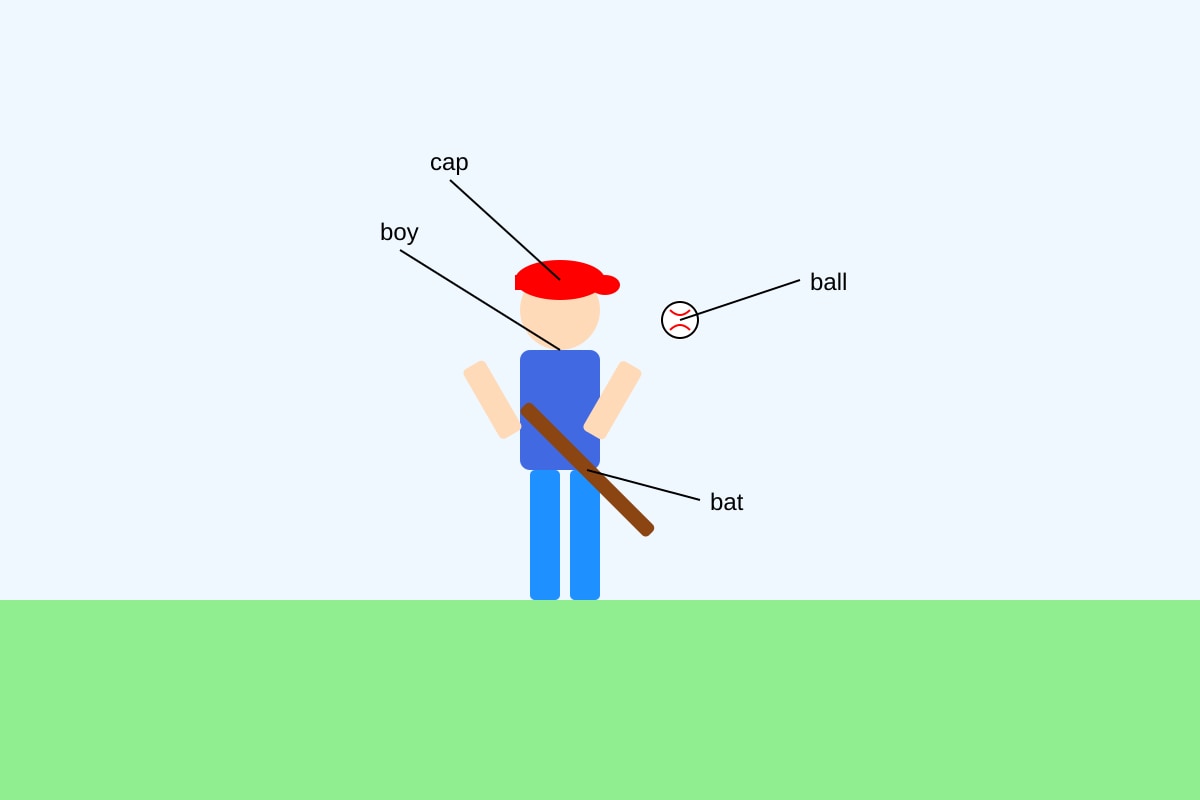
- The word is bat — picture shows a boy with a baseball bat
- Sound by sound: /b/ /æ/ /t/
- The beginning sound is /bæ/ spelled "ba"
- (A) "st" — would make "stat" not "bat"
- (C) "at" — this is the ending, not the beginning
- (D) "bt" — not a real blend in English
- Teaching note: "Bat" follows the CVC (Consonant-Vowel-Consonant) pattern: b-a-t. The beginning blend is "ba" which is the consonant plus the vowel.
Section B: Vowel Sounds and Digraphs
Question 6 — 2 marks
Answer: (C) cane
Working and Explanation:
- "Cake" has the long "a" sound /eɪ/ (the "a" says its name)
- This pattern occurs with "magic e" or vowel-consonant-e pattern
- Let's check:
- (A) "cat" — short /æ/ sound (no magic e)
- (B) "cap" — short /æ/ sound
- (C) "cane" — long /eɪ/ sound because of silent "e" at the end (c-a-n-e)
- (D) "catch" — short /æ/ sound
- Rule to learn: When a word ends in "e" and has one consonant before it, the vowel usually says its name (long sound): cane, made, late, date.
- Common mistake: Students confuse "can" with "cane" — the silent "e" makes all the difference!
Question 7 — 2 marks
Answer: (A) oo
Working and Explanation:
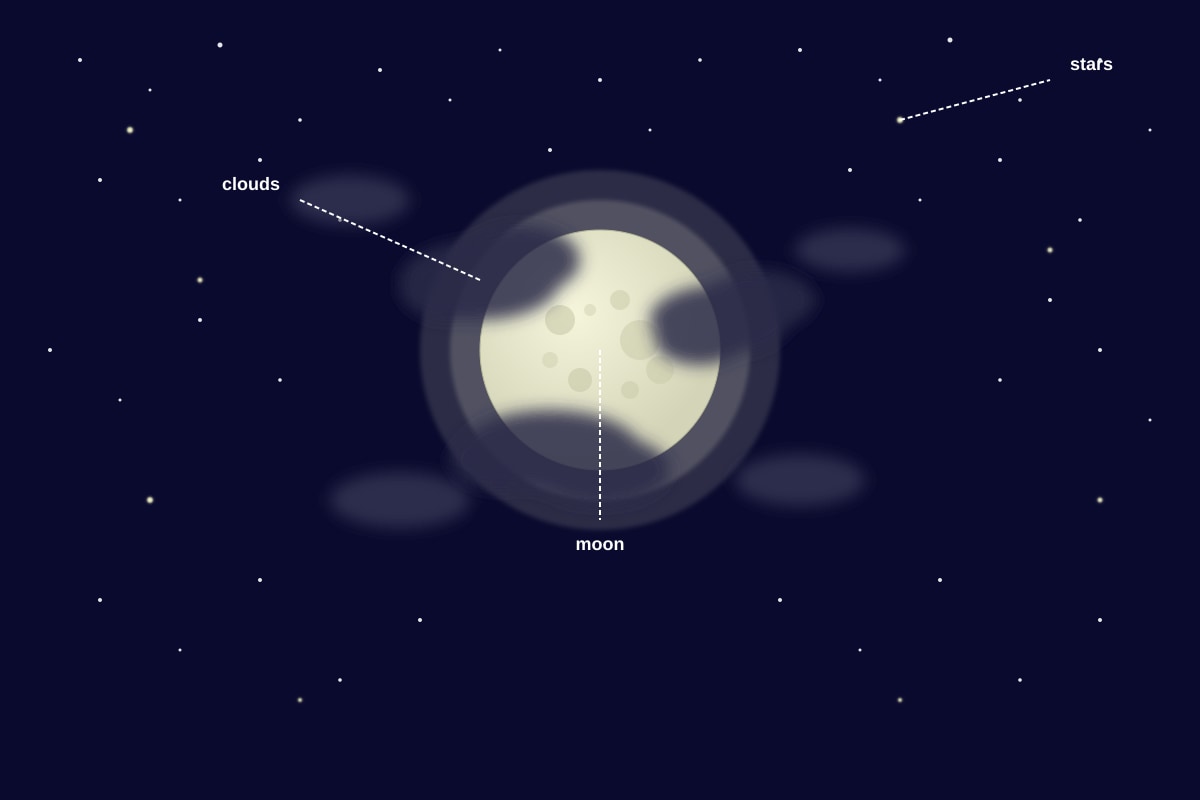
- The picture shows the moon
- The sound is /uː/ (long "oo" sound)
- The spelling is: m-oo-n
- (B) "ou" — would be "moun" like "mountain" — wrong sound
- (C) "oa" — would be "moan" — wrong sound
- (D) "ee" — would be "meen" — not a real word, wrong sound
- Teaching note: "oo" is a digraph (two letters, one sound). The "oo" can make /uː/ (moon, soon, spoon) or /ʊ/ (book, look, cook). "Moon" uses the long /uː/ sound.
Question 8 — 2 marks
Answer: (C) green
Working and Explanation:
- "Tree" has the "ee" digraph making the /iː/ sound (long "e")
- Let's check:
- (A) "bread" — "ea" makes /e/ sound (short)
- (B) "great" — "ea" makes /eɪ/ sound (long "a")
- (C) "green" — "ee" makes /iː/ sound — same as "tree"!
- (D) "break" — "ea" makes /eɪ/ sound
- Teaching note: "ee" and "ea" both can make /iː/, but "ea" has multiple pronunciations. "Green" and "tree" both use "ee" for a reliable /iː/ sound.
- Extension: Other "ee" words: see, bee, free, three, street.
Question 9 — 2 marks (1 mark per blank)
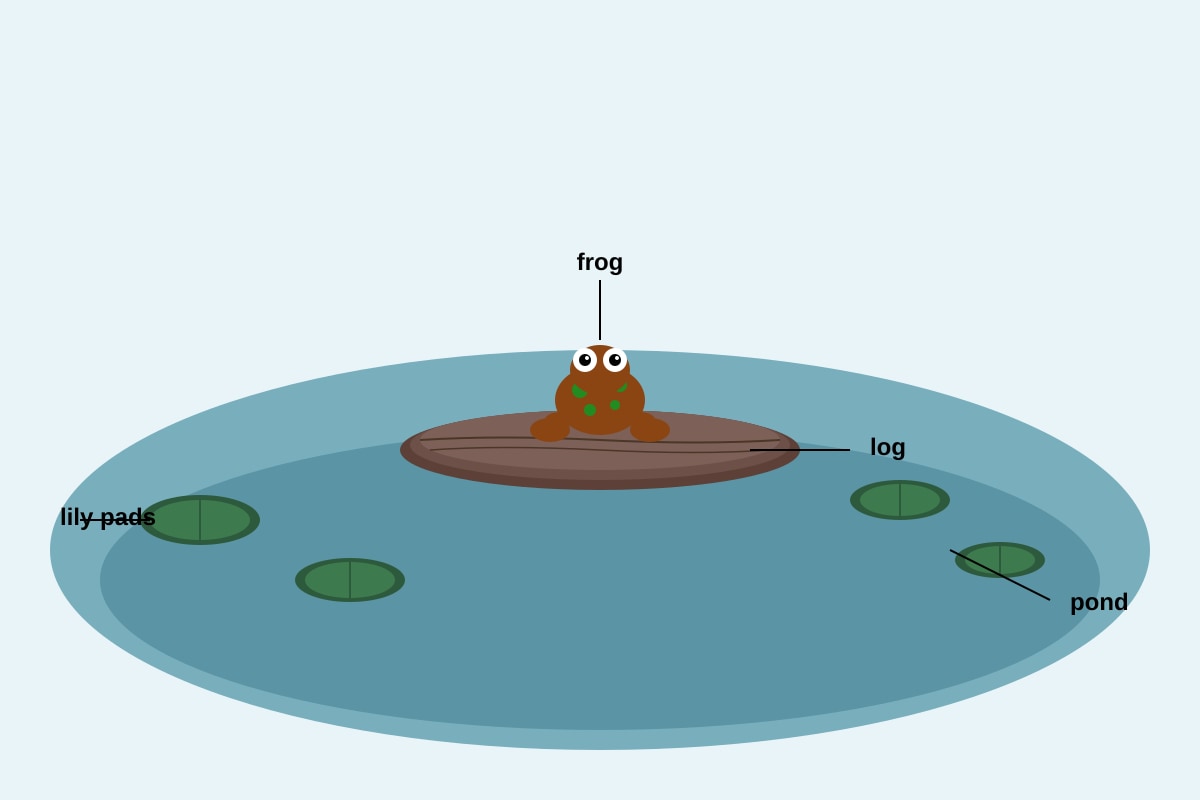
Answer: Blank 1: o, Blank would need to be: g — word is "frog"
Working and Explanation:
- Picture shows a frog on a log
- Pattern: fr _ _
- "fr" + "o" + "g" = frog
- Sound by sound: /f/ /r/ /ɒ/ /g/
- (A) "i" — "frig" not a real word
- (B) "a" — "frag" not common
- Teaching note: "Frog" is another CVC pattern after the blend "fr-". The "fr" blend combines two consonant sounds /f/ and /r/ together smoothly.
Question 10 — 2 marks
Answer: (D) chip
Working and Explanation:
- "Ship" starts with /ʃ/ spelled "sh"
- Let's check where the /ʃ/ sound appears:
- (A) "shop" — starts with "sh" /ʃɒp/
- (B) "fish" — ends with "sh" /fɪʃ/
- (C) "dash" — ends with "sh" /dæʃ/
- (D) "chip" — starts with "ch" /tʃɪp/ — this is /tʃ/, NOT /ʃ/!
- Critical distinction: "sh" = /ʃ/ (unvoiced, no t-sound) while "ch" = /tʃ/ (affricate, like a quick "t" + "sh")
- Teaching tip: Touch your throat — "sh" is smooth air; "ch" has a small stop before the rush of air.
Section C: Word Patterns and Rhyming
Question 11 — 2 marks
Answer: (C) kite
Working and Explanation:
- "Light" ends with /aɪt/ spelled "-ight"
- To rhyme, a word needs the same ending sound from the stressed vowel onward
- Let's check:
- (A) "lid" — /ɪd/ — different vowel and ending
- (B) "late" — /eɪt/ — different vowel sound
- (C) "kite" — /aɪt/ — same /aɪt/ ending! ✓
- (D) "let" — /et/ — completely different
- Rhyme rule: Rhyming words share everything from the vowel sound to the end: l-ight and k-ite
- Teaching note: "Kite" and "light" are spelled differently but sound the same at the end. English has many spelling patterns for the same sound.
Question 12 — 2 marks
Answer: (B) l — word is "light"
Working and Explanation:
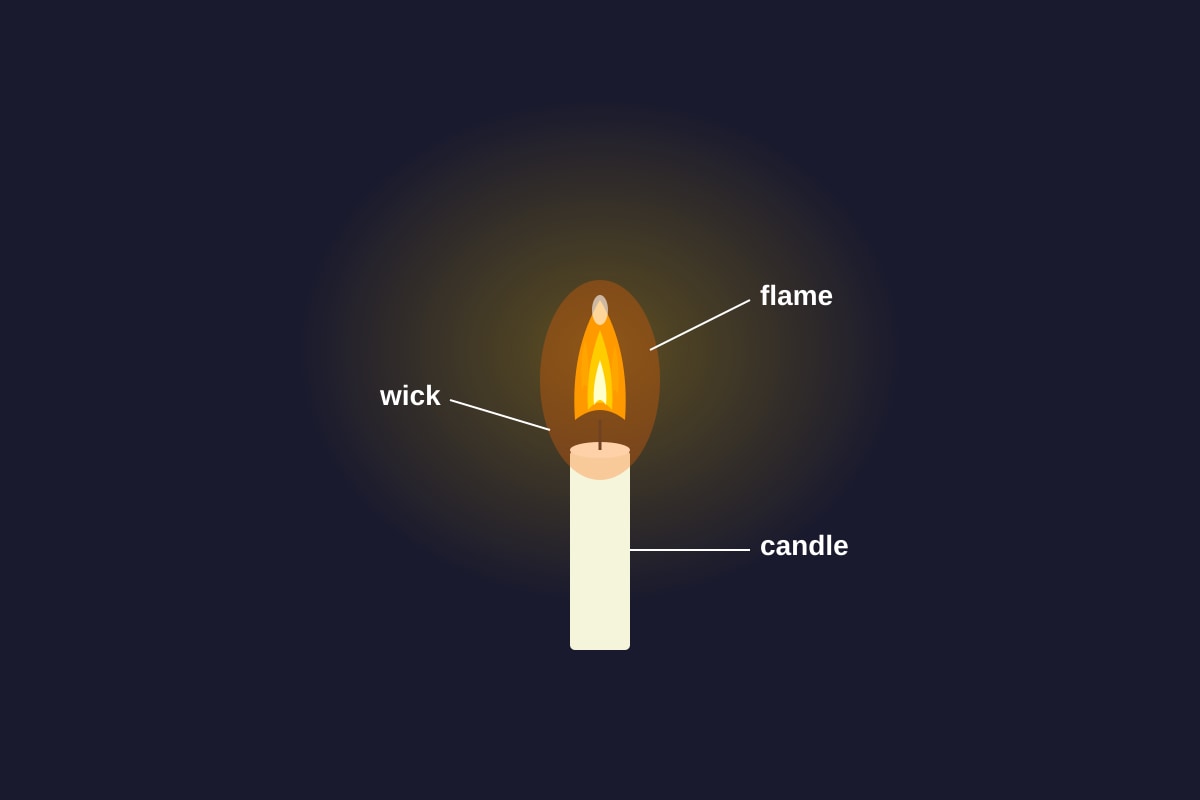
- Picture shows a candle flame / light
- Pattern: _ _ ight
- The word is "light"
- "l" + "i" + "ght" = light
- (A) "fight" — would match a打架 picture, not a candle
- (C) "night" — would match moon/stars
- (D) "right" — would match correct/check picture
- Teaching note: "-ight" is a common word family. The "gh" is silent! The letters "igh" together make /aɪ/.
- Other -ight words: night, right, sight, tight, flight, bright.
Question 13 — 2 marks
Answer: (B) They all end with the same sound.
Working and Explanation:
- Cat: /kæt/ — ends in /æt/
- Hat: /hæt/ — ends in /æt/
- Mat: /mæt/ — ends in /æt/
- All three: different beginnings (c-, h-, m-) but same ending sound /æt/
- (A) False — c, h, m are different starting letters
- (C) False — they all have "a" as the middle letter, but the question asks about the sound pattern, not just spelling
- (D) False — no silent letters in these words
- Teaching note: This is the "at" word family. Recognizing rhyming patterns helps students read new words by analogy.
Question 14 — 2 marks
Answer: (C) pen
Working and Explanation:
- The "an" family: words with the /æn/ ending sound
- Let's check:
- (A) "pan" — /pæn/ — belongs to "-an" family ✓
- (B) "man" — /mæn/ — belongs to "-an" family ✓
- (C) "pen" — /pen/ — has /e/ sound, not /æ/ — does NOT belong ✗
- (D) "tan" — /tæn/ — belongs to "-an" family ✓
- Teaching note: "Pen" belongs to the "-en" family (ten, men, hen, den, pen). Students must listen to the vowel sound carefully — /e/ vs /æ/ are different!
Question 15 — 2 marks
Answer: (C) ball
Working and Explanation:
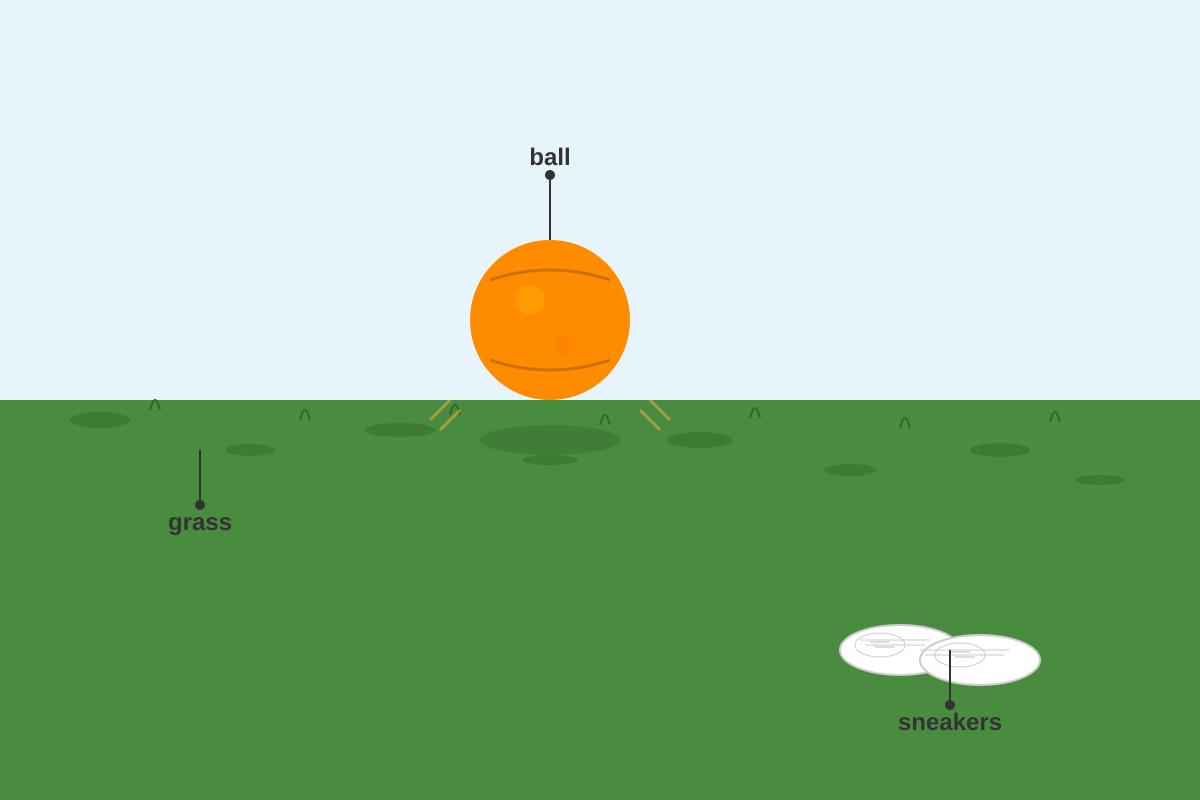
- Picture shows a ball
- The "-all" pattern: /ɔːl/ sound
- (A) "bell" — "-ell" family /el/
- (B) "bull" — "-ull" family /ʊl/
- (C) "ball" — "-all" family /ɔːl/ — matches the picture! ✓
- (D) "bill" — "-ill" family /ɪl/
- Teaching note: "-all" words often have the same vowel sound: ball, call, fall, hall, mall, tall, wall. Notice how the "a" before "ll" makes the /ɔː/ sound.
Section D: Sound Identification and Blending
Question 16 — 2 marks
Answer: (B) cat
Working and Explanation:
- Given sounds: /k/ + /æ/ + /t/
- Blend smoothly: k-a-t → cat
- (A) "tack" — sounds are /t/ /æ/ /k/ — different order!
- (C) "act" — sounds are /æ/ /k/ /t/ — different order!
- (D) "kit" — sounds are /k/ /ɪ/ /t/ — different vowel!
- Blending technique: Say the sounds quickly and smoothly, connecting them without gaps. Start slow: k...a...t then faster: ka-t then cat.
Question 17 — 2 marks
Answer: (B) 4 sounds
Working and Explanation:
- Word: "brush" — let's segment the sounds
- b — /b/ (1 sound)
- r — /r/ (2nd sound)
- u — /ʌ/ (3rd sound)
- sh — /ʃ/ (4th sound — digraph, two letters = one sound)
- Total: 4 sounds (/b/ /r/ /ʌ/ /ʃ/)
- Teaching note: "sh" is a digraph — two letters working together to make one sound. Do NOT count "s" and "h" separately.
- Common mistake: Students often count letters instead of sounds. "Brush" has 5 letters but only 4 sounds!
Question 18 — 2 marks
Answer: (A) thank
Working and Explanation:
- "Think" starts with "th" making /θ/ (voiceless "th" — tongue between teeth, air out)
- Let's check:
- (A) "thank" — starts with "th" /θæŋk/ — same! ✓
- (B) "tank" — starts with "t" /tæŋk/ — different
- (C) "tent" — starts with "t" /tent/ — different
- (D) "tree" — starts with "tr" /triː/ — different
- Important: "Th" has TWO pronunciations:
- /θ/ in think, thank, thick, thin, three (voiceless — whisper)
- /ð/ in this, that, then, the, they (voiced — vocal cords vibrate)
- "Think" and "thank" both use /θ/.
Question 19 — 2 marks (1 mark for identifying the word, 1 mark for correct letter writing; partial credit: 0.5 mark if letters are correct but order confused)
Answer: d / o / g — word is "dog"
Working and Explanation:
- Picture shows a dog
- Given sounds: /d/ + /ɒ/ + /g/
- Letters: d + o + g = dog
- This is a CVC (Consonant-Vowel-Consonant) word — the basic building block of early reading.
- Teaching note: In CVC words, the vowel is usually short: /ɒ/ in dog, /æ/ in cat, /e/ in pen, /ɪ/ in pig.
- Sound-letter match:
- /d/ → letter d
- /ɒ/ → letter o
- /g/ → letter g
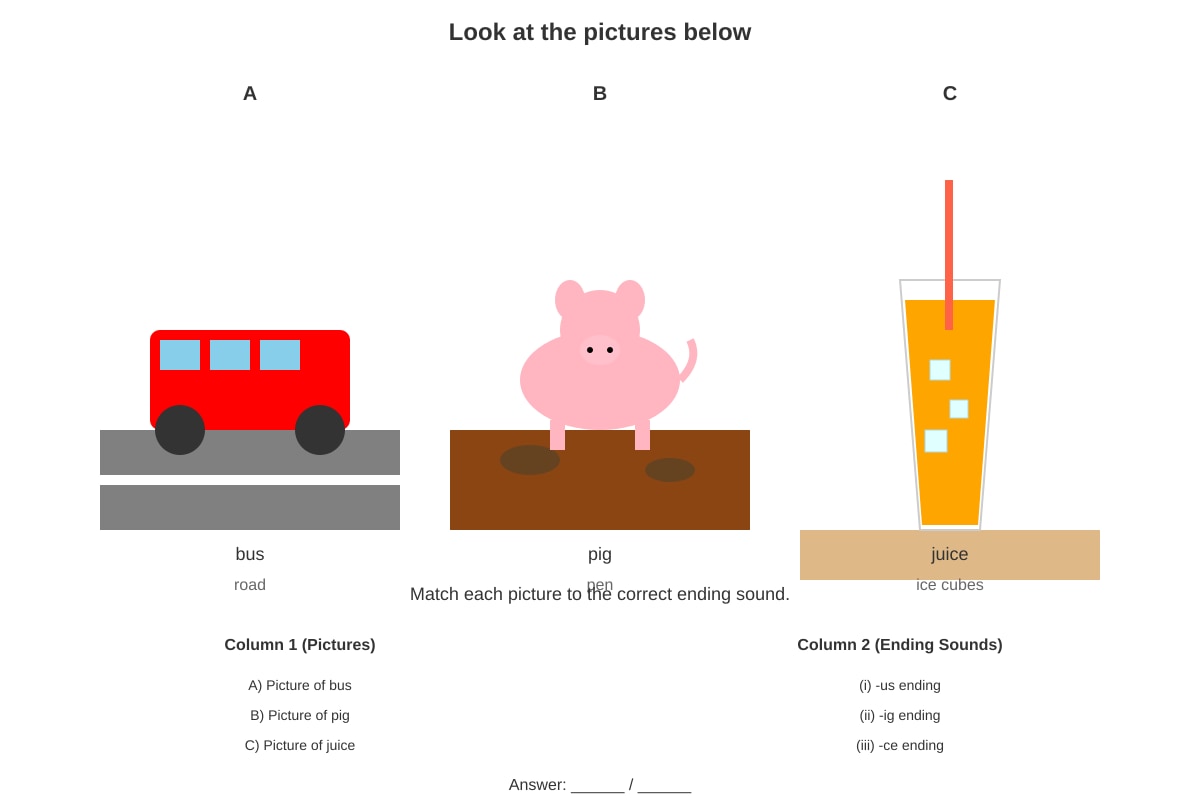
Question 20 — 2 marks (partial credit: 0.5–1 mark for 1–2 correct matches)
Answer:
- A matches with (ii) — -us ending ("bus" ends with "-us" /ʌs/)
- B matches with (i) — -ig ending ("pig" ends with "-ig" /ɪg/)
- C matches with (iii) — -ce ending ("juice" ends with "-ce" /s/ sound)
Working and Explanation:
| Picture | Word | Ending Letters | Ending Sound Match |
|---|---|---|---|
| A — bus | bus | -us | (ii) -us: /ʌs/ |
| B — pig | pig | -ig | (i) -ig: /ɪg/ |
| C — juice | juice | -ce | (iii) -ce: /s/ |
- Teaching note about "juice": The "ce" ending makes the /s/ sound (soft c). This is different from "bus" where "s" makes /s/ directly, and "pig" where "g" makes /g/.
- Pattern recognition: Even though the spellings differ (-us, -ig, -ce), students should focus on the final sound. However, this matching asks for the written ending pattern, so students match "bus" with "-us" visually and phonically.
MARKING SUMMARY
| Section | Questions | Marks |
|---|---|---|
| A — Letter Sounds and Blends | 1–5 | 10 |
| B — Vowel Sounds and Digraphs | 6–10 | 10 |
| C — Word Patterns and Rhyming | 11–15 | 10 |
| D — Sound Identification and Blending | 16–20 | 10 |
| TOTAL | 20 questions | 40 marks |
**Durati