AI Generated Exam Paper
Primary 2 Chinese Practice Paper 1
Free P2 Chinese Practice Paper 1, Kimi2.6 AI version, with questions, answers, and syllabus-aligned practice for Singapore students.
These static practice materials are generated from the site's syllabus and paper-generation workflow, with source and model context shown so students and parents can evaluate the material before use.
Questions
Free quiz and exam paper access
Enter your details to view this paper
Your access is remembered on this device.
Answers
TuitionGoWhere Practice Paper - Answer Key
Subject: Chinese Level: Primary 2
Paper: Practice Paper - Hanyu Pinyin & Foundation Skills
Version: 1 of 5 Total Marks: 60
Section A: Pinyin Recognition (20 marks)
1. C) péng you (2 marks)
Teaching note: "朋" is péng (second tone, back nasal sound eng). "友" in "朋友" is read as a neutral tone (you), not third tone yǒu. This is a common pattern in spoken Chinese where the second syllable becomes lighter.
Common mistake: Choosing B (péng yǒu) — students often forget the neutral tone rule for "朋友".
2. B) Back nasal sound (后鼻音) (2 marks)
Teaching note: "风" is pronounced fēng. The final is "eng", which belongs to the back nasal sounds (后鼻音: ang, eng, ing, ong). Front nasal sounds (前鼻音) are an, en, in, un, ün.
Key concept: Back nasal sounds are produced with the tongue back and air exiting through the nose; the "ng" sound is clearly audible.
3. A) kuài lè (2 marks)
Teaching note: "快乐" = kuài lè. Both characters keep their full tones — fourth tone for both. "乐" here means "happy" (lè), not "music" (yuè).
Common mistake: Confusing with "音乐" (yīn yuè) where "乐" means music.
4. B) shù (2 marks)
Teaching note: "树" has the initial "sh" (not s) and final "u" with fourth tone. The retroflex initial "sh" is different from the dental "s".
5. A) bāng máng (2 marks)
Teaching note: Both syllables keep their full tones: bāng (first tone) + máng (second tone). "忙" is not neutral tone here.
6. A) hǎo (2 marks)
Teaching note: "很好" = hěn hǎo. "好" means "good" here, so it's third tone hǎo. It changes to hào only when meaning "to like" (爱好).
7. D) 长 (cháng) (2 marks)
Teaching note: "长" in 长 (cháng) has final "ang" — a back nasal sound. The others: 山 (shān, an = front), 门 (mén, en = front), 三 (sān, an = front).
8. A) yīn yuè (2 marks)
Teaching note: "音乐" = yīn yuè. Both are full tones; "乐" here means music (yuè), not happy (lè). The initial is "y" not "yīng".
9. B) zhòng (2 marks)
Teaching note: "种田" = zhòng tián (to plant fields). "种" as a verb meaning "to plant" is fourth tone zhòng. As a noun meaning "seed/kind" it's third tone zhǒng (种子).
10. B) hái (2 marks)
Teaching note: "还" meaning "still/yet" is hái (second tone). "还" meaning "to return" is huán. In "他还小" (he is still young), it means "still" → hái.
Section B: Pinyin Application & Writing (24 marks)
11. chūn (3 marks)
Marking: 1 mark for correct initial "ch", 1 mark for correct final "un", 1 mark for correct first tone mark.
Teaching note: "春" = chūn (first tone). Note: The "u" after "ch" is actually "un" where the "n" is absorbed in pinyin writing — the full form is chūn. First tone is a high flat tone.
12. bāng (3 marks)
Marking: 1 mark for initial "b", 1 mark for final "ang", 1 mark for first tone.
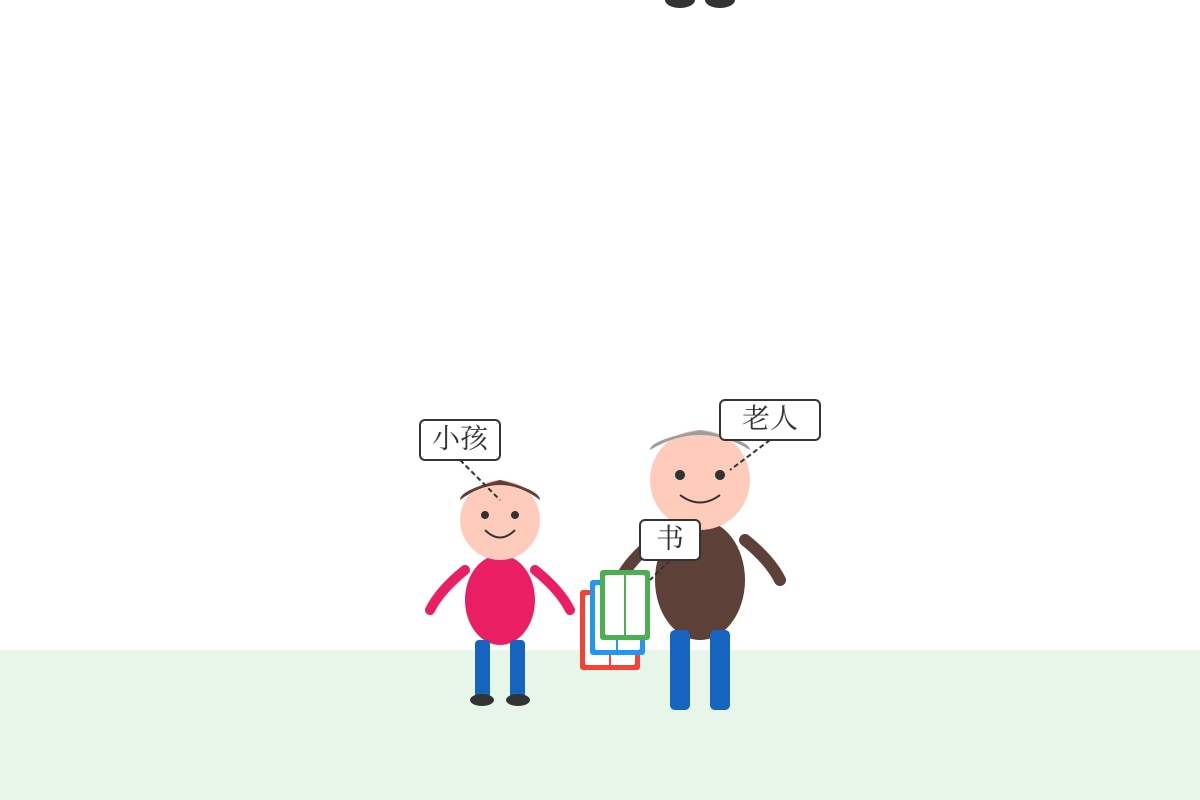
Teaching note: From the image (child helping elderly), "帮忙" = bāng máng. The question asks specifically for "帮" = bāng (first tone, back nasal "ang").
Expected image: Two figures — child helping elderly person, labels "小孩" and "老人", books present.
13. 飞 / fēi (3 marks)
Marking: 1 mark for correct character "飞", 2 marks for correct pinyin fēi (or 3 marks if only pinyin requested — check exactly: write "飞", pinyin is fēi).
Actually: The blank asks for the character. So: Character "飞" (2 marks), self-check: pinyin is fēi (1 mark implicit understanding).
Teaching note: "飞" = fēi (first tone, final "ei"). Means "to fly". The sentence "小鸟会飞" = "Little birds can fly."
14. Correct character: 正 / Pinyin: zhèng (3 marks)
Marking: 1.5 marks for correct character "正", 1.5 marks for correct pinyin zhèng (fourth tone).
Teaching note: "正在" = zhèng zài (in the process of). "正" here is fourth tone, meaning "right/exactly" in the time expression. The neutral tone option "zheng" offered is a distractor — "正" keeps its full tone.
15. cháng (3 marks)
Marking: 1 mark for initial "ch", 1 mark for final "ang", 1 mark for second tone.
Teaching note: "长" meaning "tall" is cháng (second tone). The other pronunciation zhǎng (third tone) means "to grow" or "elder" (长大, 校长). For height, use cháng with second tone.
Common mistake: Writing zhǎng — students confuse the two meanings and pronunciations.
16. men (3 marks)
Marking: 1 mark for "m" initial, 1 mark for "en" final, 1 mark for neutral tone (no tone mark).
Teaching note: "我们" = wǒ men. "们" as a plural suffix is ALWAYS neutral tone (men, no tone mark). This is a strict rule in Mandarin — suffixes like 们, 子, 头 are typically neutral.
17. māo / shuì (3 marks)
Marking: 1.5 marks each.
- 猫 (māo): first tone, initial "m", final "ao"
- 睡 (shuì): fourth tone, initial "sh" (retroflex), final "ui"
Teaching note: "小猫在睡觉" = "The kitten is sleeping." Both full tones; "觉" in "睡觉" is jué normally but in compound it's jiào — wait, the question asks for "shuì" only.
Correction: The question gives "shuì" as hint pinyin. Student writes character or confirms? Re-reading: "小____ (māo) 在____ (shuì) 觉" — they need to recognize the pinyin corresponds to 猫 and 睡.
Actually marking: Student should write that they recognize 猫 = māo and 睡 = shuì. The blanks confirm they can match pinyin to meaning/context.
18. (3 marks)
Pinyin sentence: wǒ ài chī píng guǒ (or acceptable variations with correct word order)
Chinese sentence: 我爱吃苹果。
Marking: 1.5 marks for correct pinyin arrangement, 1.5 marks for correct Chinese sentence.
Teaching note: Standard word order: Subject (我) + Verb phrase (爱吃) + Object (苹果). "爱吃" = ài chī (love to eat). "苹果" = píng guǒ (apple), both third tones with tone sandhi — first "苹" becomes second tone in speech, but pinyin writes original tones.
Section C: Pinyin in Context (16 marks)
19. (8 marks total)
(a) hǎo (2 marks)
Marking: 1 mark for hǎo, 1 mark for third tone.
(b) jīn tiān (2 marks)
Marking: 1 mark for jīn (first tone, front nasal), 1 mark for tiān (first tone).
(c) wǒ (2 marks)
Marking: 1 mark for wǒ, 1 mark for third tone.
(d) No (2 marks)
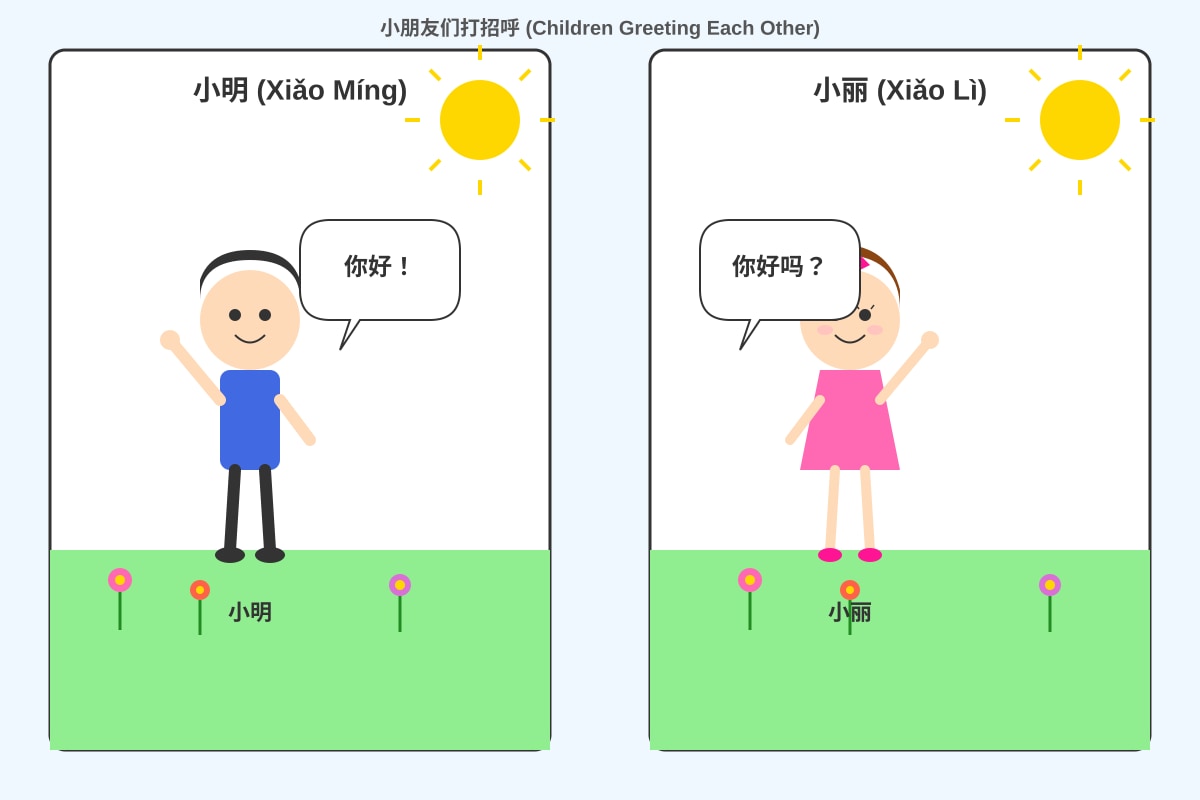
Explanation: "吗" is a question particle that turns a statement into a yes/no question. It does NOT change the basic meaning of "你去学校" (you go to school). It only changes the sentence type from statement to question.
Expected image: Two children waving, labels 小明 and 小丽, speech bubbles with "你好!" and "你好吗?", outdoor scene.
20. (8 marks total)
(a) chūn tiān (2 marks)
Marking: 1 mark each for chūn and tiān.
(b) tài yáng (2 marks)
Marking: 1 mark for tài (fourth tone), 1 mark for yáng (second tone, back nasal).
(c) Neutral tone / 轻声 (2 marks)
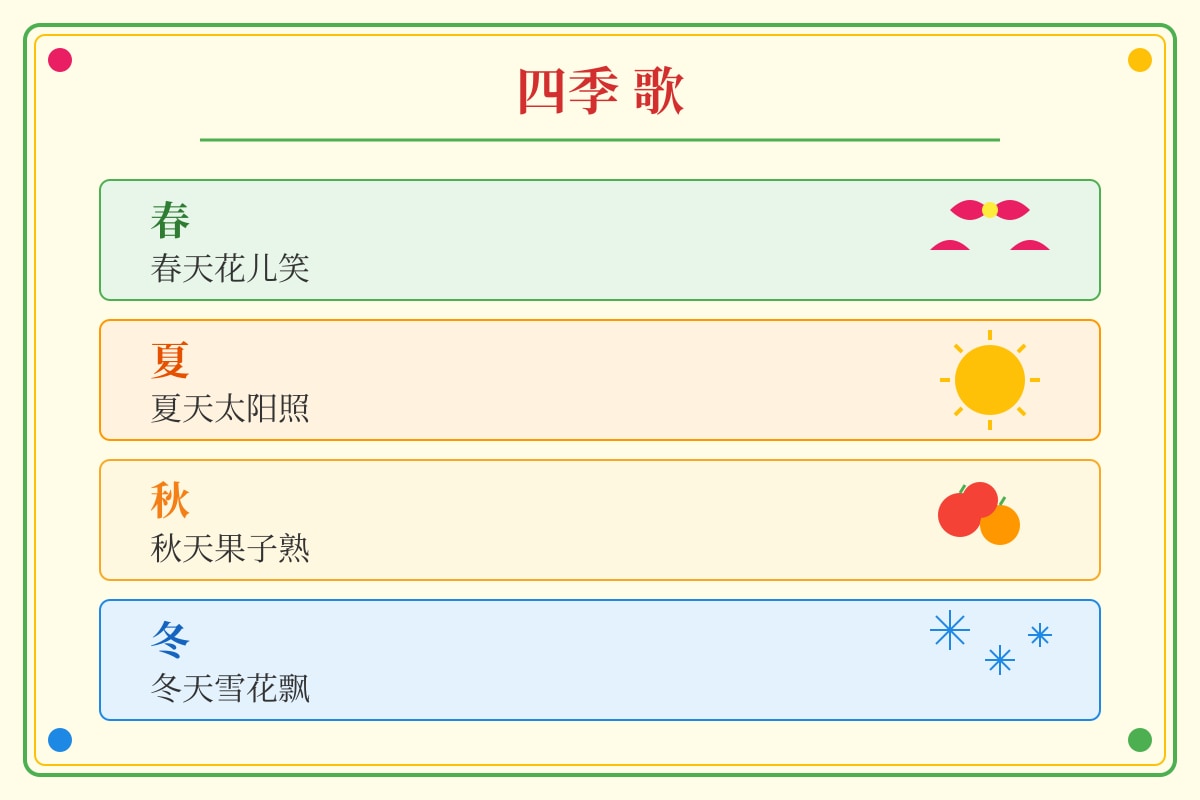
Explanation: In "花儿", the "儿" is pronounced as a neutral tone (no full tone), attached to "花" creating a "flower" diminutive. It's NOT the full "ér" sound. This is called 儿化音 (erhua), common in Beijing-influenced standard Chinese and taught as 儿化韵.
Teaching note: Students should recognize this as a special pronunciation pattern where "儿" loses its independent syllable status and merges with the preceding syllable as a slight "r" quality. For P2, accepting "neutral tone" or "轻声" is sufficient.
(d) xuě huā piāo (2 marks)
Marking: 1 mark for xuě huā, 1 mark for piāo (first tone).
Teaching note: "雪花" = xuě huā (snow flower/flake), third + first tone. "飘" = piāo (first tone), meaning "to flutter/drift."
Expected image: Four stanzas with seasonal decorations, clear labels 春 夏 秋 冬, large readable text.
Section Totals Check
| Section | Calculated | Answer Key |
|---|---|---|
| A (Q1-10, 2×10) | 20 | 20 ✓ |
| B (Q11-16, 3×6 + Q17-18, 3×2) | 18 + 6 = 24 | 24 ✓ |
| C (Q19-20, 8×2) | 16 | 16 ✓ |
| Total | 60 | 60 ✓ |
Note: This practice paper was generated from inferred syllabus-aligned templates. It has not been derived from official past-year examination papers.