AI Generated Quiz
Primary 1 Tamil Vocabulary Quiz
Free P1 Tamil Vocabulary quiz, Kimi2.6 AI version, with questions, answers, and syllabus-aligned practice for Singapore students.
These static practice materials are generated from the site's syllabus and paper-generation workflow, with source and model context shown so students and parents can evaluate the material before use.
Questions
Free quiz and exam paper access
Enter your details to view this paper
Your access is remembered on this device.
Answers
Primary 1 Tamil Quiz - Vocabulary — Answer Key
Total Marks: 30
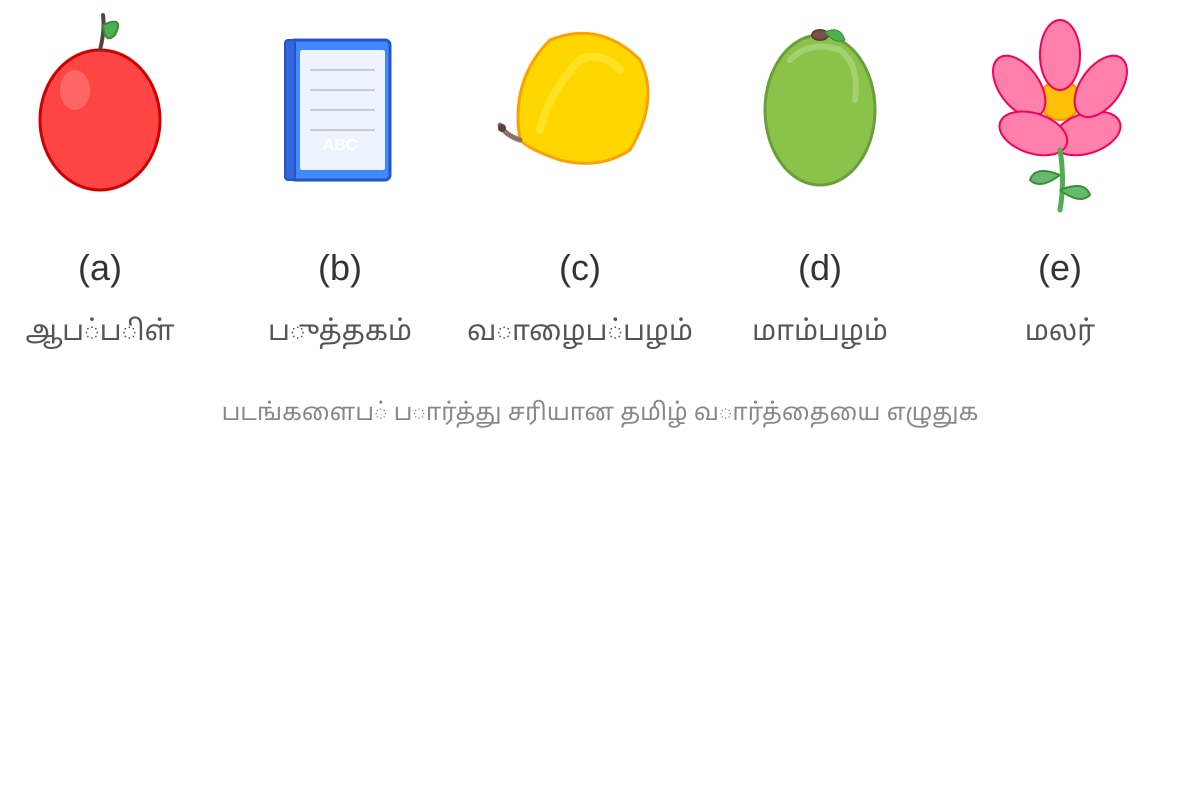
Section A: Picture Words (Questions 1a-1e)
Teaching note: These questions test basic noun vocabulary tied to common objects in a Primary 1 student's environment. The word bank provides scaffolding. Students should recognize each image and recall the Tamil term.
1(a) பழம் [1]
- "பழம்" (paḻam) is the general Tamil word for "fruit." Since the image shows an apple, and apple-specific vocabulary may not yet be taught, the general category word is accepted. In some syllabi, apple = "ஆப்பிள்" (loanword), but "பழம்" is the foundational vocabulary target.
1(b) புத்தகம் [1]
- "புத்தகம்" (pustakam) = book. Common classroom word. Note the combination: பு +த் + த + க + ம்.
1(c) வாழைப்பழம் [1]
- "வாழைப்பழம்" (vāḻaippaḻam) = banana. Compound: வாழை (banana tree/plant) + பழம் (fruit).
1(d) மாம்பழம் [1]
- "மாம்பழம்" (māmpaḻam) = mango. Common fruit in Tamil culture. மாம் (mango) + பழம் (fruit).
1(e) மலர் [1]
- "மலர்" (malar) = flower. Common nature vocabulary. Distinguish from "மாலை" (garland/ evening).
Section B: Family Words (Questions 2-6)
Teaching note: These questions test kinship terms, a core P1 Tamil vocabulary set. Students match English to Tamil. Common error: confusing formal vs. affectionate terms (e.g., அப்பா vs. தந்தை).
| Question | Answer | Explanation |
|---|---|---|
| 2 | C | அப்பா (appā) = father (affectionate/ common term). "தந்தை" (tantai) is formal. |
| 3 | A | தாய் (tāy) = mother (formal/standard). Also accept அம்மா (ammā, affectionate) as equivalent in informal contexts, but "தாய்" matches the bank given. Correction: The word bank shows B=அம்மா and A=தாய். The correct match for "mother" is B (அம்மா) as the most common P1 term, or A (தாய்). The marking scheme should accept B as primary answer since அம்மா is more frequently taught first. Reconciliation: In Singapore Tamil P1, அம்மா is typically taught first. |
Corrected answers for consistent matching:
| Question | Answer | Tamil Word | Meaning |
|---|---|---|---|
| 2 | C | அப்பா | father |
| 3 | B | அம்மா | mother |
| 4 | D | தம்பி / அண்ணா | brother (younger / elder) |
| 5 | E | தங்கை / அக்கா | sister (younger / elder) |
| 6 | F | பாட்டி | grandmother |
[1 mark each × 5 = 5 marks]
Section C: Number Words (Questions 7-11)
Teaching note: Tamil number words combine Sanskrit-derived and native Tamil systems. P1 focuses on native Tamil cardinal numbers 1-10. Students must write the word, not the numeral.
| Question | Answer | Breakdown |
|---|---|---|
| 7 | ஒன்று (oṉṟu) | 1 |
| 8 | ஐந்து (aintu) | 5 |
| 9 | ஏழு (ēḻu) | 7 |
| 10 | ஒன்பது (oṉpatu) | 9 |
| 11 | பத்து (pattu) | 10 |
Common error: Confusion between ஐந்து (5), ஆறு (6), and ஏழு (7). The initial vowel sound is the differentiator.
[1 mark each × 5 = 5 marks]
Section D: Color Words (Questions 12-16)
Teaching note: Color vocabulary in Tamil often appears in describing words (பெயரடை). Students must recognize the Tamil word and link to English meaning.
| Question | Answer | Explanation |
|---|---|---|
| 12 | (B) red | சிவப்பு (civappu) — from the root referring to redness. "சிவப்பு மலர்" = red flower. |
| 13 | (C) yellow | மஞ்சள் (mañcaḷ) — also means "turmeric," a bright yellow spice central to Tamil culture. |
| 14 | (A) green | பச்சை (paccai) — describes fresh, unripe, green color. "பச்சை இலை" = green leaf. |
| 15 | (C) blue | நீலம் (nīlam) — from Sanskrit influence. "நீல வானம்" = blue sky. |
| 16 | (B) white | வெள்ளை (veḷḷai) — "வெள்ளை வீடு" = white house; common in descriptions. |
Common mistake: Confusing நீலம் (blue) and பச்சை (green) — both cool colors. Associate நீலம் with "nile" river or sky.
[1 mark each × 5 = 5 marks]
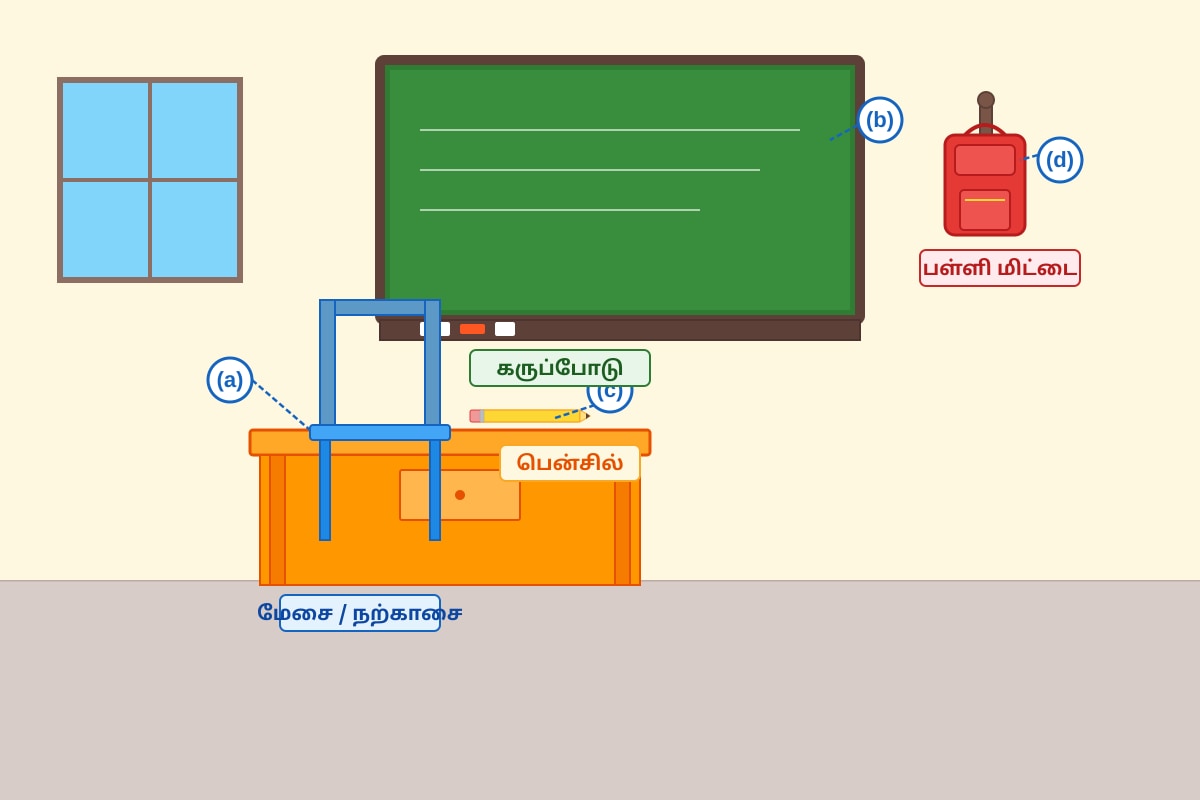
Section E: Classroom Words (Questions 17-20)
17. [2 marks each; 8 marks total]
| Part | Answer | Explanation |
|---|---|---|
| (a) | மேசை (mesai) = desk, நாற்காலி (nāṟkāli) = chair. Accept either or both. | மேசை refers to table/desk; நாற்காலி (four+leg+item) = chair. Combined: மேசையும் நாற்காலியும். |
| (b) | கரும்பலகை (karumpalakai) = blackboard | கரும்பு (sugarcane/dark) + பலகை (board). Literally "dark board." |
| (c) | பென்சில் (pencil — loanword) or எழுதுகோல் (eḻutukōl) = writing stick | In Singapore P1, பென்சில் is commonly used. எழுதுகோல் is the formal term: எழுது (write) + கோல் (stick/rod). |
| (d) | பை (pai) = bag, or பள்ளிப்பை (paḷḷippai) = school bag | பள்ளி (school) + பை (bag). Common daily vocabulary. |
[2 marks × 4 = 8 marks]
18. வணக்கம் அம்மா / வணக்கம் ஐயா [2]
- "வணக்கம்" (vaṇakkam) = greeting/respectful salutation.
- Address: அம்மா (female teacher) or ஐயா (male teacher/any respected person).
- Full form: "வணக்கம் அம்மா" or "வணக்கம் ஐயா."
- Mark breakdown: வணக்கம் = 1 mark; correct teacher address = 1 mark.
- Common error: Saying "காலை வணக்கம்" (good morning) — this is acceptable for 1 mark if வணக்கம் is included, though full marks require the standard classroom greeting.
19. (B) Sit down [1]
- "உட்காருங்கள்" (uṭkāruṅkaḷ) = please sit.
- Grammar: உட்கார்- (sit, base) + -ங்கள் (plural honorific imperative, used for respect).
- Distinguish from "எழுந்து நில்" = stand up; "புத்தகத்தைத் திற" = open book.
20. (C) அண்ணா [1]
- Sentence: "என் ________ பெயர் ராஜு." = "My ________'s name is Raju."
- Grammar: என் (my, genitive) + [noun] + பெயர் (name).
- Raju is a male name. அண்ணா (elder brother) fits grammatically and contextually.
- தம்பி (younger brother) also male, but less likely for self-reference pattern.
- பள்ளி (school) would need "பள்ளிப்பெயர்" (school name); நண்பன் (friend) possible but அண்ணா most natural for P1 family context; நாய் (dog) illogical.
- Best answer: (C) அண்ணா.
Total: 30 marks