AI Generated Quiz
Primary 1 Tamil Language Use Quiz
Free P1 Tamil Language Use quiz, LongCat AI version, with questions, answers, and syllabus-aligned practice for Singapore students.
These static practice materials are generated from the site's syllabus and paper-generation workflow, with source and model context shown so students and parents can evaluate the material before use.
Questions
Free quiz and exam paper access
Enter your details to view this paper
Your access is remembered on this device.
Answers
Primary 1 Tamil Quiz - Language Use
Answer Key and Teaching Notes
Section A: Letter Recognition and Matching (Questions 1–5)
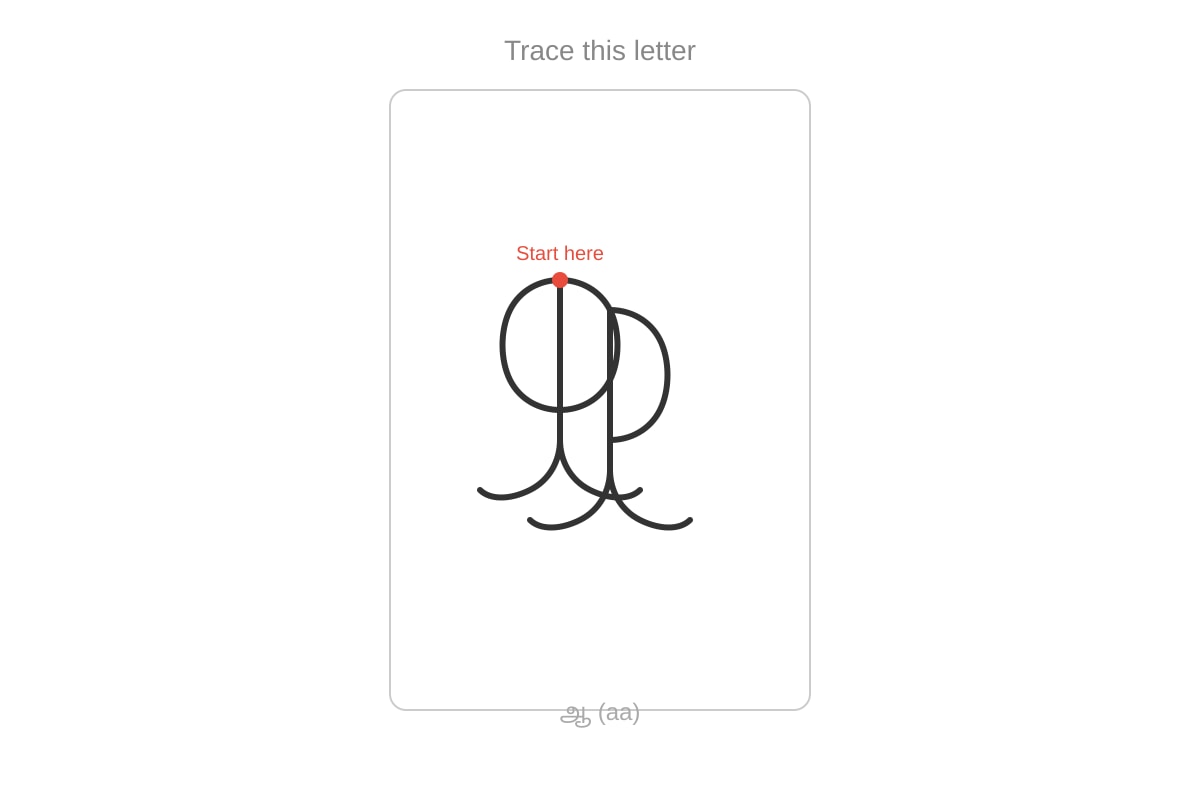
1. Answer: ஆ (ā)
Teaching Notes: This is the Tamil vowel letter ஆ, pronounced "ā" (like the "a" in "father" but longer). It is the long form of அ. Students should recognise the characteristic curved base with the long vowel marker (ா) extending to the right. This is one of the 12 உயிரெழுத்து (vowel letters) in Tamil.
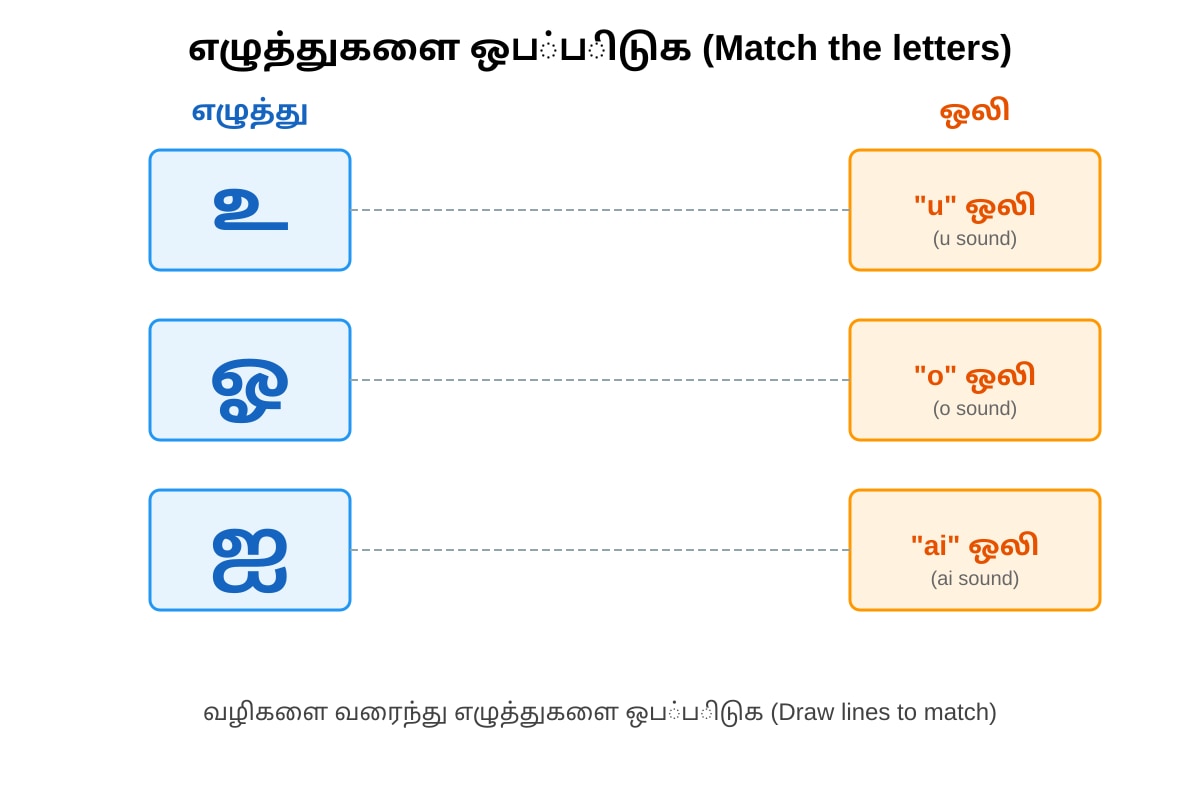
2. Answer: உ → "u" sound | ஓ → "o" sound | ஐ → "ai" sound
Teaching Notes: The 12 Tamil vowel letters (உயிரெழுத்து) each have a distinct sound:
- உ makes the "u" sound (as in "put").
- ஓ makes the "o" sound (as in "go").
- ஐ makes the "ai" sound (as in "eye").
Students should practise saying each letter aloud to internalise the sounds. A common mistake is confusing ஓ (o) with ஒ (short o). At Primary 1, focus on recognition and basic pronunciation.
3. Answer: அ
Teaching Notes: அ is the first உயிரெழுத்து (vowel letter) in Tamil. The other options — ம (ma), க (ka), and ச (sa) — are all மெய்யெழுத்து (consonant letters). Vowel letters can stand alone as sounds, while consonant letters need to combine with vowel markers to form syllables. This distinction is fundamental in Tamil literacy.
4. Answer: க
Teaching Notes: The Tamil consonant letter க makes the "ka" sound. In the Tamil alphabet, consonants are called மெய்யெழுத்து (body letters) because they need a "body" (vowel marker) to be pronounced fully. On its own, க is technically pronounced with a short "a" sound (க = ka). Students should learn the 18 consonant letters and their sounds progressively.
5. Answer: 12
Teaching Notes: There are 12 உயிரெழுத்து (vowel letters) in Tamil: அ, ஆ, இ, ஈ, உ, ஊ, எ, ஏ, ஐ, ஒ, ஓ, ஔ. These are the foundation of Tamil phonics. Students should memorise these through songs and rhymes. A common mnemonic is to group them in short-long pairs: அ-அா, இ-ஈ, உ-ஊ, எ-ஏ, ஐ, ஒ-ஓ, ஔ.
Section B: Word Building and Vocabulary (Questions 6–10)
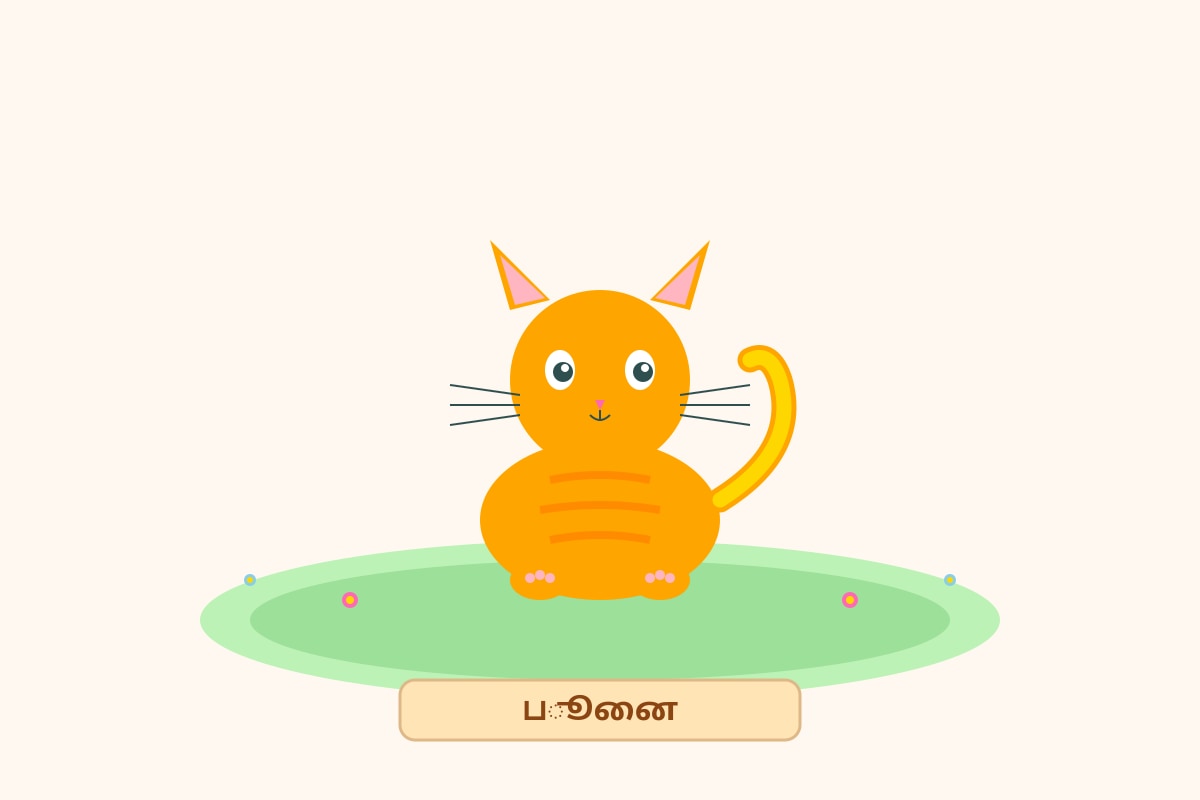
6. Answer: பூனை (pūṉai — cat)
Teaching Notes: பூனை is a basic Tamil vocabulary word meaning "cat." It is formed by combining the consonant ப் (p) with the vowel ஊ (ū) to make பூ, then adding னை (ṉai). This is an example of உயிர்மெய்யெழுத்து (consonant-vowel combined letter). At Primary 1, students learn to associate common animals with their Tamil names through pictures and repetition.
7. Answer: ா (the long vowel marker "ā")
Teaching Notes: The complete word is கால் (kāl — leg). The base consonant is க் (k), and when combined with the long vowel ஆ (ā), it becomes கா (kā). Adding ல் (l) gives கால். The missing element is the vowel marker ா which attaches to க to change the sound from "ka" to "kā." This demonstrates how Tamil uses vowel markers (called உயிர்மெகாரம்) to modify consonant sounds.
8. Answer: Water
Teaching Notes: நீர் (nīr) means "water" in Tamil. This is a high-frequency word that students encounter daily. Note that நீர் is also used in compound words like தண்ணீர் (taṇṇīr), which is the more colloquial term for water. At Primary 1, either நீர் or தண்ணீர் is acceptable. Students should learn basic nouns for everyday objects.
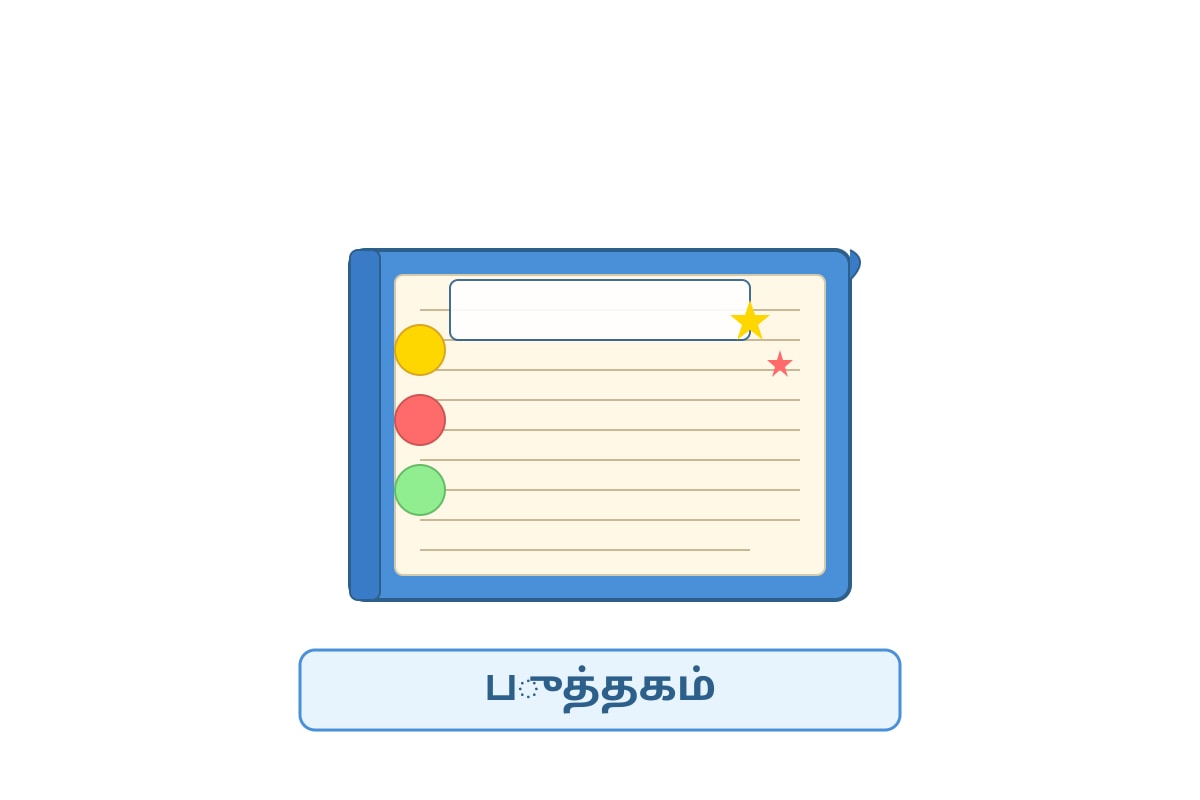
9. Answer: புத்தகம் (puththagam — book)
Teaching Notes: புத்தகம் means "book." The other options in the box are மரம் (tree) and வீடு (house). Students must match the picture to the correct word. This type of question tests vocabulary recognition and picture-word association, which is a key skill at the Primary 1 level. Encourage students to say the word aloud when matching.
10. Answer: பழம் (paḻam — fruit)
Teaching Notes: When the letters ம் (m), ப் (p), and ழ (ḻa) are combined with the appropriate vowel markers, they form பழம் (paḻam), meaning "fruit." The letter ழ is a unique Tamil consonant not found in many other Indian languages. This question tests students' ability to combine letters into meaningful words, which is a core skill in Tamil literacy development.
Section C: Reading and Comprehension (Questions 11–15)
11. Answer: அம்மா (Amma — Mother)
Teaching Notes: The sentence அம்மா சமைக்கிறாள் translates to "Mother is cooking." அம்மா means "mother" and சமைக்கிறாள் means "is cooking" (the verb சமை = to cook, with the present tense marker -க்கிறாள்). This question tests basic sentence comprehension. Students should identify the subject (அம்மா) as the person performing the action.
12. Answer: (a)
Image features needed: The image must clearly show three distinct pictures: (a) a cow on grass, (b) a dog on a chair, and (c) a bird in the sky. The correct answer is (a) because the sentence says "The cow is walking on the grass."
Teaching Notes: This question tests reading comprehension through picture selection. Students must read the sentence, understand its meaning, and identify the matching picture. The key words are ஆடு (cow), புல்லில் (on grass), and நடக்கிறது (is walking). Common mistakes include selecting (b) if the student only focuses on the animal without reading the action.
13. Answer: தமிழ் (Tamil)
Teaching Notes: The passage reads: "My name is Kumar. I go to school. I like Tamil." The key sentence is எனக்கு தமிழ் பிடிக்கும் (I like Tamil). This tests students' ability to extract specific information from a short passage. At Primary 1, passages are kept very simple with familiar vocabulary. Students should practise reading for specific details.
14. Answer: தவறு (False)
Teaching Notes: The sentence நாய் பறக்கிறது means "The dog is flying." This is false because dogs cannot fly. Dogs walk, run, sit, or sleep — but they do not fly. This question tests comprehension and real-world knowledge. Students should understand that the statement does not match reality. In Tamil, சரி means "correct/true" and தவறு means "wrong/false."
15. Answer: சோறு (rice)
Teaching Notes: The sentence நான் சோறு சாப்பிடுகிறேன் means "I eat rice." சோறு (rice) is the most logical choice because it is a food item that one eats. நீர் (water) is drunk, not eaten (the verb for drink is குடிக்கிறேன்). பழம் (fruit) could also be eaten, but சோறு is the most common and contextually appropriate answer for a daily meal. This question tests vocabulary in context and verb-noun collocation.
Section D: Writing and Language Use (Questions 16–20)
16. Answer: பையன் தண்ணீர் குடிக்கிறான். (The boy drinks water.) Accept any grammatically correct simple sentence describing the image, e.g., பையன் குடிக்கிறான். (The boy drinks.)
Teaching Notes: This question assesses students' ability to construct a simple Tamil sentence from a picture. A basic Tamil sentence follows Subject-Object-Verb (SOV) order. The student should identify the subject (பையன் = boy), the object (தண்ணீர் = water), and the verb (குடிக்கிறான் = drinks). At Primary 1, students are expected to write simple sentences with correct word order. Award 2 marks for a complete, grammatically correct sentence; 1 mark for a partially correct attempt.
17. Answer: மரங்கள் (marangaḷ — trees)
Teaching Notes: In Tamil, the plural of மரம் (tree) is formed by adding -ங்கள் (-ngaḷ) to make மரங்கள் (trees). The general rule for forming plurals of inanimate nouns is to add -கள் (-gaḷ) or -ங்கள் (-ngaḷ) depending on the ending letter. Since மரம் ends in ம், the plural marker -ங்கள் is used (the ம் + ங்கள் combination follows Tamil sandhi rules). This is a foundational grammar concept.
18. Answer: Any suitable place in Tamil, e.g., வேலைக்கு (to work), சந்தைக்கு (to the market), பள்ளிக்கு (to school), வீட்டிற்கு (home).
Teaching Notes: This is an open-ended question testing students' ability to use vocabulary in context. The sentence pattern is "Father is going to _____." Students need to fill in a place. Common answers include வேலைக்கு (to work), சந்தைக்கு (to market), or பள்ளிக்கு (to school). The suffix -க்கு indicates direction ("to"). Award 2 marks for a correct and sensible answer; 1 mark for a partially correct attempt.
19. Answer: அம்மா புத்தகம் படிக்கிறாள். (Mother reads a book.)
Teaching Notes: Tamil follows Subject-Object-Verb (SOV) word order. The correct arrangement is: Subject (அம்மா = Mother) + Object (புத்தகம் = book) + Verb (படிக்கிறாள் = reads). The verb படிக்கிறாள் is in the third-person feminine present tense form, which agrees with அம்மா (mother). This question tests students' understanding of basic Tamil sentence structure.
20.
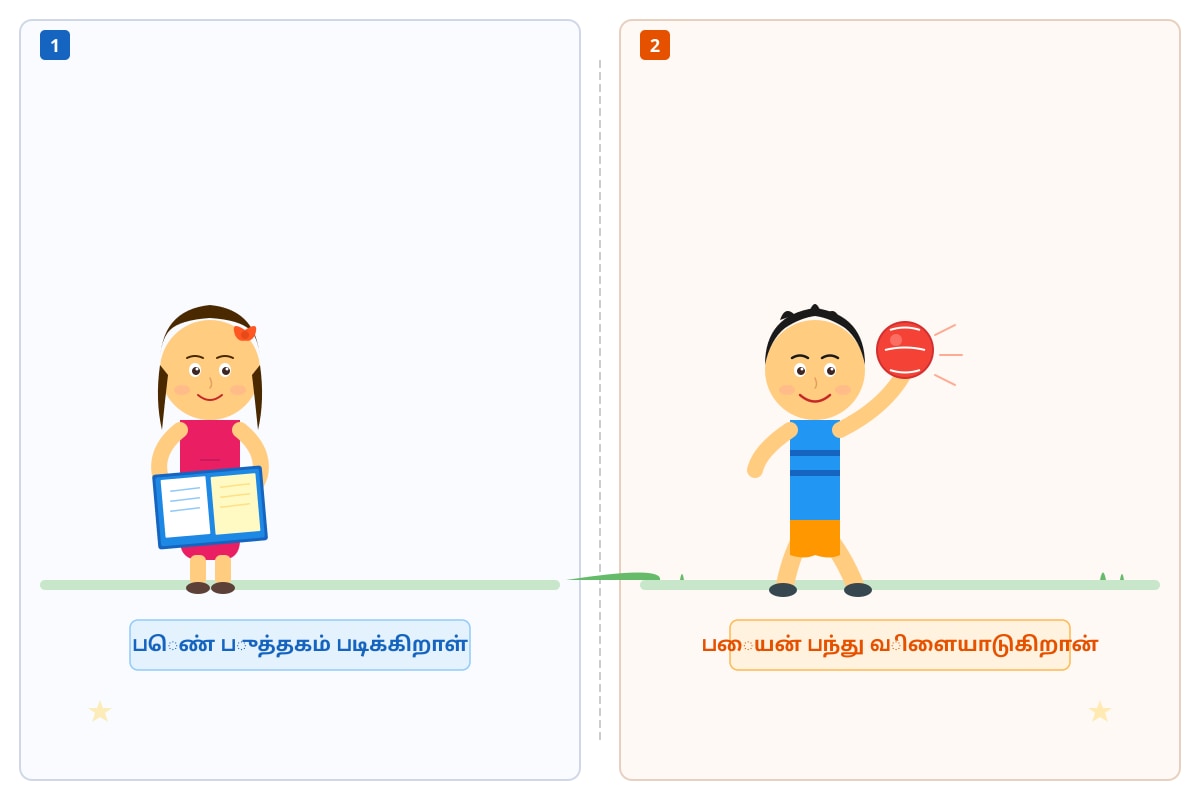
- Sentence 1 (Picture 1): பெண் புத்தகம் படிக்கிறாள். (The girl reads a book.)
- Sentence 2 (Picture 2): பையன் பந்து விளையாடுகிறான். (The boy plays with a ball.) Accept any grammatically correct simple sentences describing each picture.
Marking Scheme:
- Sentence 1: 1.5 marks (1 mark for correct subject + object, 0.5 mark for correct verb/grammar)
- Sentence 2: 1.5 marks (1 mark for correct subject + object, 0.5 mark for correct verb/grammar)
Teaching Notes: This is the highest-mark question (3 marks) and tests students' ability to write two independent sentences based on visual stimuli. Each sentence should follow the SOV pattern. For Picture 1, the subject is பெண் (girl), the object is புத்தகம் (book), and the verb is படிக்கிறாள் (reads — feminine form). For Picture 2, the subject is பையன் (boy), the object is பந்து (ball), and the verb is விளையாடுகிறான் (plays — masculine form). Note the gender agreement in Tamil verbs: -ஆள் for feminine subjects and -ஆன் for masculine subjects. Award partial credit for partially correct sentences.
Mark Summary
| Section | Questions | Marks per Question | Section Total |
|---|---|---|---|
| A | 1–5 | 1 mark each | 5 marks |
| B | 6–10 | 2 marks each | 10 marks |
| C | 11–15 | 2 marks each | 10 marks |
| D | 16–19 | 2 marks each | 8 marks |
| D | 20 | 3 marks | 3 marks |
| Total | 20 questions | 40 marks |
This quiz was generated as syllabus-aligned practice content. No past-paper evidence was available for Primary 1 Tamil; questions are inferred from the interpreted syllabus and are designed to support formative assessment at the Primary 1 level.