AI Generated Quiz
Primary 1 Tamil Language Use Quiz
Free P1 Tamil Language Use quiz, Kimi2.6 AI version, with questions, answers, and syllabus-aligned practice for Singapore students.
These static practice materials are generated from the site's syllabus and paper-generation workflow, with source and model context shown so students and parents can evaluate the material before use.
Questions

Free quiz and exam paper access
Enter your details to view this paper
Your access is remembered on this device.
Answers
Primary 1 Tamil Quiz - Language Use — Answer Key
Version: Syllabus-aligned practice content (not exam-derived)
Total Marks: 40 marks
Section A: Letter Recognition and Matching (Questions 1–5)
1. B — மாம்பழம் = mango [1 mark]
Teaching note: மா = ma, ம் = m, ப = pa, ழ = zha, ம் = m. Four letters. The image shows four fruits; students must match the Tamil word to the correct picture.
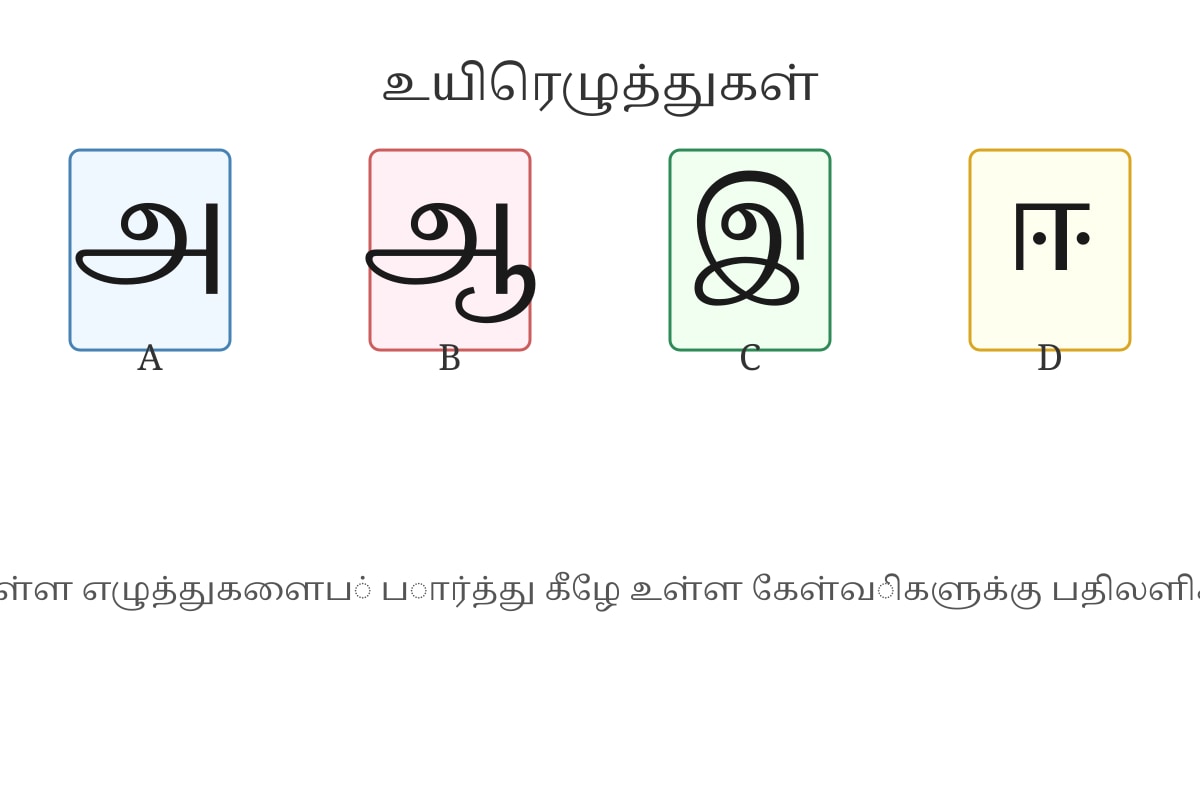
2. B — ஆ [1 mark]
Teaching note: The Tamil vowel letters (உயிரெழுத்து) are: அ (a), ஆ (aa), இ (i), ஈ (ii). ஆ is the second letter, written with an extended curve on the right side of அ. Common mistake: confusing இ (short i, simpler shape) with ஈ (long ii, has a tail).
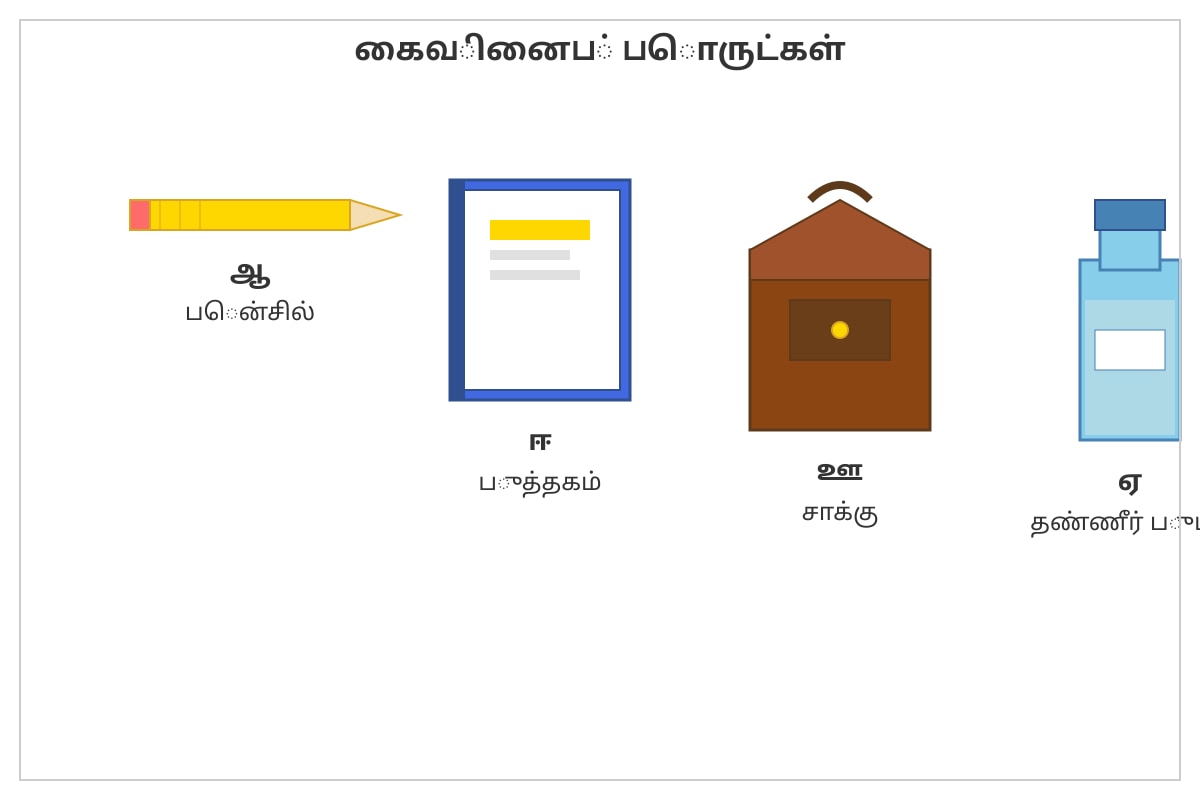
3. B — புத்தகம் = book [1 mark]
Teaching note: பு = pu, த் = t, த = ta, க = ka, ம் = m. Five letters. Students learn this as a school vocabulary word. The visual shows four classroom items.
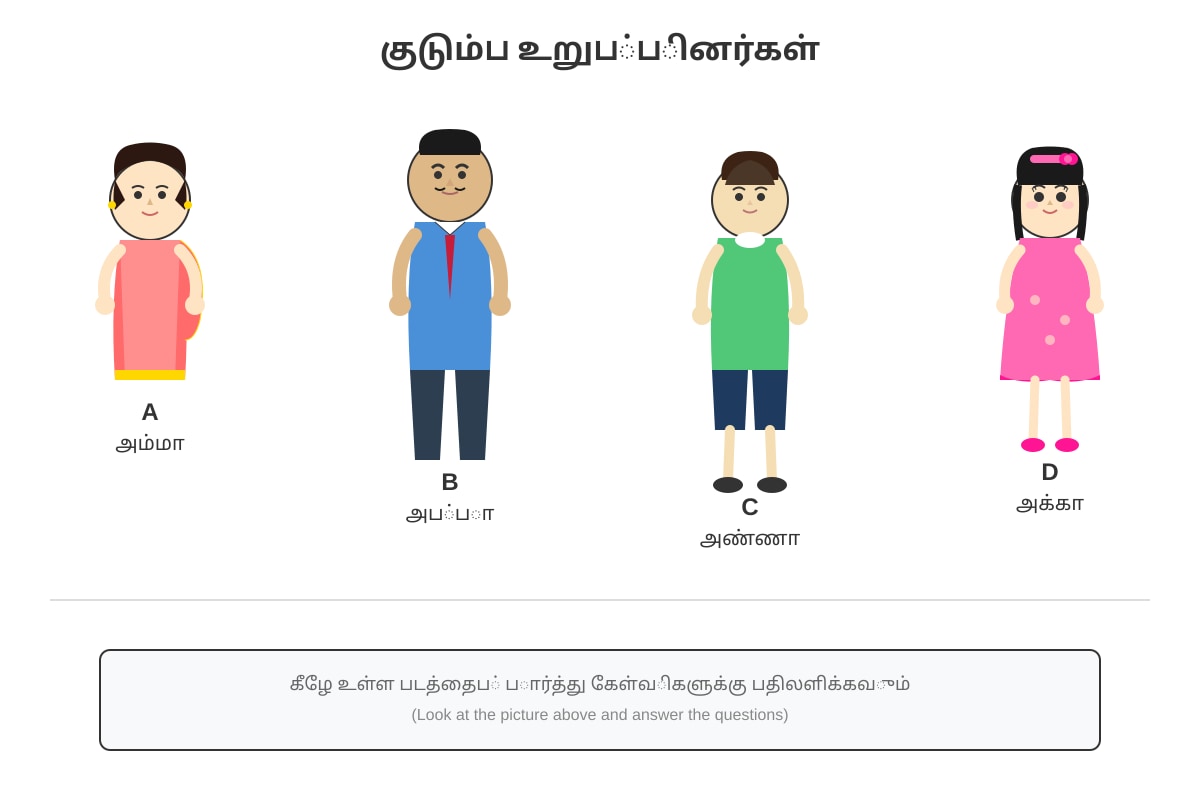
4. A — அம்மா = mother [1 mark]
Teaching note: அ = a, ம் = m, ம் = m, ஆ = aa. Common pattern in Tamil: double consonant ம் indicates nasalized sound. Family vocabulary is foundational for P1 Tamil.
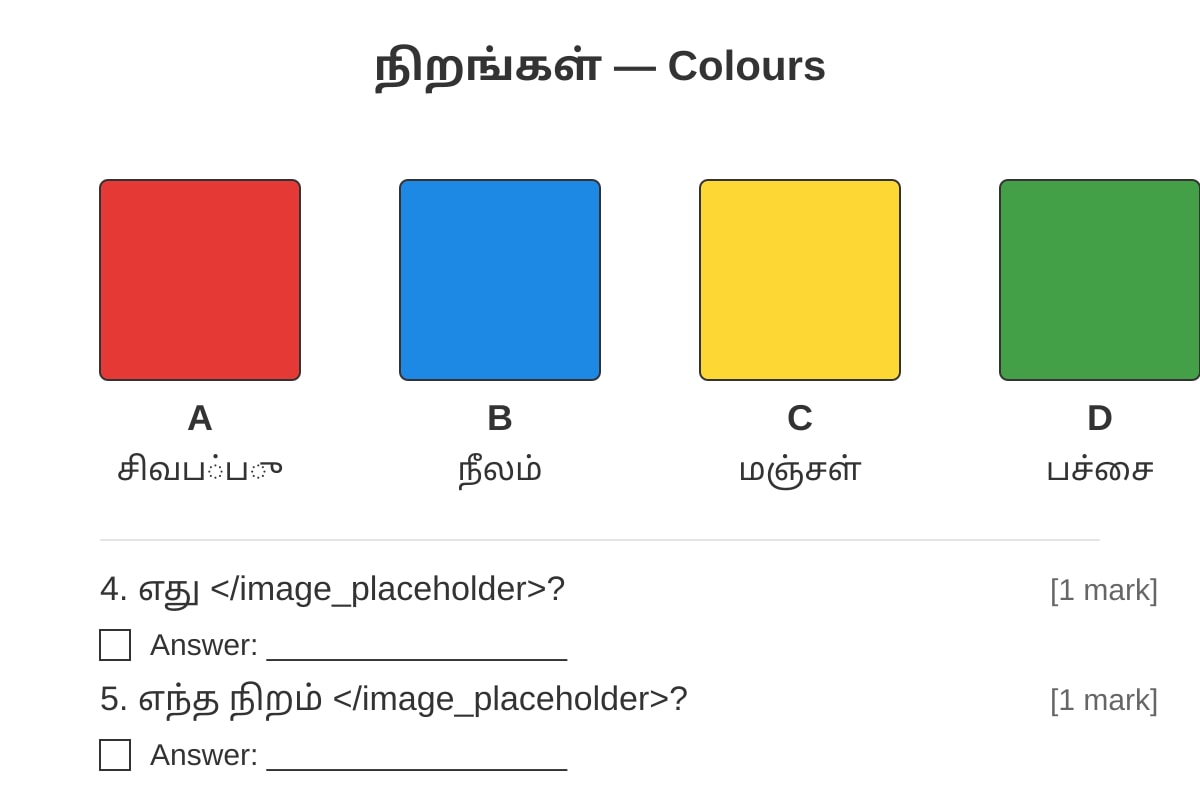
5. C — மஞ்சள் = yellow [1 mark]
Teaching note: ம = ma, ஞ் = ñ, ச = ca, ள் = ḷ. The color yellow (மஞ்சள்) is also the word for turmeric, connecting to cultural learning about spices and traditional uses.
Section B: Fill in the Blanks and Simple Writing (Questions 6–10)
6. சாத்துக்குடி (or ஆப்பிள் in formal Tamil; சாத்துக்குடி is common Singapore usage) [2 marks]
Marking breakdown: [1] First letter correct (ச or ஆ), [1] complete word with correct letters.
Teaching note: சா = sā, த் = t, து = tu, க் = k, கு = ku, டி = ṭi. Tamil apple names vary by region; Singapore schools often use both. The word structure shows compound letters (கு = க் + உ).
7. எப்படி — "எப்படி நலமா?" = "How are you?" [2 marks]
Marking breakdown: [1] correct question word, [1] proper spelling.
Teaching note: எ = e, ப் = p, ப = pa, டி = ṭi. This is a foundational greeting pattern. The full greeting structure is: [Question word] + [noun/adjective] + [question marker]? Common mistake: writing "எப்டி" (colloquial) instead of formal "எப்படி."
8. க = "ka" (the letter name is கா or simply referred to by its sound க) [2 marks]
Accept: "ka" or "க" or "கா"
Marking breakdown: [1] identifying it as a consonant (மெய்யெழுத்து), [1] correct sound/name.
Teaching note: க is the first consonant (மெய்யெழுத்து) in the Tamil alphabet. It represents the hard 'k' sound. With different vowel additions: க + அ = க (ka), க + ஆ = கா (kā), க + இ = கி (ki), etc.
9. ஒன்று, இரண்டு, மூன்று [2 marks]
Marking breakdown: [1] any two correct, [2] all three correct. Deduct [1] for English numerals only.
Teaching note:
- ஒன்று = oṉṟu (one): ஒ + ன் + ற + ு
- இரண்டு = iṟaṇḍu (two): இ + ர + ண் + ட + ு
- மூன்று = mūṉṟu (three): ம் + ஊ + ன் + ற + ு
Numbers 1-10 are core P1 vocabulary. Common mistake: confusing இரண்டு (two) with ஐந்து (five) due to similar starting shapes.
10. 4 (four letters) or நான்கு எழுத்துக்கள் [2 marks]
Marking breakdown: [1] correct number, [1] identifying the letters or showing understanding.
Teaching note: அ = a [1], ம் = m [2], ம் = m [3], ஆ = aa [4]. The double ம் is actually one grapheme cluster (ம்ம) — two ம் symbols but representing a doubled/geminated consonant. For P1 simplicity, we count visible symbols. Advanced answer: 3 phonemic units (a-m-mā) but 4 written symbols.
Section C: Simple Reading and Response (Questions 11–15)
11. Book (or "notebook/textbook") [2 marks]
Marking breakdown: [1] general reading context correct, [1] precise meaning.
Teaching note: பு = pu, த் = t, த = ta, க = ka, ம் = m. Five letters. This is a concrete noun learned in the school context. Students should recognize the pattern "என் ___" = "my ___" showing possession.
12. B) When meeting someone [2 marks]
Teaching note: வணக்கம் (vaṇakkam) is the universal Tamil greeting, derived from வணங்குதல் (to bow/respect). Used when meeting, leaving, or seeking attention — similar to "namaste" in cultural function. Morning-specific greeting: காலை வணக்கம் (kālai vaṇakkam). Bedtime: இரவு வணக்கம் (iravu vaṇakkam). Eating: சாப்பாடு (sāppāḍu) context, no special greeting required.
13. பள்ளிக்குச் செல்கிறான் / He is going to school / School [2 marks]
Marking breakdown: [1] identifying school (பள்ளி), [1] correct action (going) or full context.
Teaching note: பள்ளி = school (paḷḷi); க்கு = to (dative case suffix); ச் = sandhi connector; செல் = go; கிறான் = present continuous masculine. The sentence structure [Subject] + [Destination+க்கு] + [Verb+கிறான்] is a foundational P1 pattern. Common mistake: confusing செல்கிறான் (going) with வருகிறான் (coming).
14. சனிக்கிழமை (Saturday) [2 marks]
Marking breakdown: [1] correct day concept, [1] correct Tamil name.
Teaching note: Days of the week in Tamil follow Hindu planetary names:
- ஞாயிற்றுக்கிழமை (Sunday - Sun)
- திங்கட்கிழமை (Monday - Moon)
- செவ்வாய்க்கிழமை (Tuesday - Mars)
- புதன்கிழமை (Wednesday - Mercury)
- வியாழக்கிழமை (Thursday - Jupiter)
- வெள்ளிக்கிழமை (Friday - Venus) ← given
- சனிக்கிழமை (Saturday - Saturn)
"கிழமை" = day/week. Common mistake: confusing Sunday (ஞாயிறு) with Monday (திங்கள்).
15. eating / சாப்பிடுகிறார் = eating [2 marks]
Marking breakdown: [1] correct verb identification, [1] present continuous understanding.
Teaching note: சா = sā, ப் = p, பி = bi, டு = ṭu, கி = ki, றா = ṟā, ர் = r. The verb சாப்பிடு (sāppiṭu = to eat) + கிறார் (present continuous respectful) shows the honorific suffix for parents/elders. P1 students learn that -கிறார் marks respectful present tense, distinguished from -கிறான் (male), -கிறாள் (female), -கிறேன் (self).
Section D: Basic Grammar and Usage (Questions 16–20)
16. B) A girl [2 marks]
Teaching note: Tamil pronoun system by gender/animacy:
- அவன் (avaṉ) = he (boy)
- அவள் (avaḷ) = she (girl) ← correct
- அது (atu) = it (animal/thing)
- அவர் (avar) = they/honorific (elders)
The ending -ள் marks feminine gender. Common mistake: confusing அவள் with அவல் (aval = she, alternate form) or அவர் (respectful, gender-neutral for adults).
17. This / "it" / "this thing" [2 marks]
Marking breakdown: [1] demonstrative meaning, [1] proximal deixis (near speaker).
Teaching note: இ = i (proximal/near speaker) +து = tu (neuter ending). The Tamil demonstrative system:
- இ- series = near speaker: இது (this), இவன் (this boy), இவள் (this girl)
- அ- series = near listener/far: அது (that), அவன் (that boy), அவள் (that girl)
P1 students learn இ/அ spatial contrast through pointing activities.
18. "நான் பள்ளிக்குச் செல்கிறேன்." [2 marks]
Marking breakdown: [1] identifying end of sentence, [1] correct symbol (முற்றுப்புள்ளி / full stop).
Teaching note: முற்றுப்புள்ளி (muṟṟuppuḷḷi = full stop) marks sentence completion. Other Tamil punctuation:
- வினாக்குறி (?) = question mark
- ஆச்சரியக்குறி (!) = exclamation mark
- அடையாளக்குறி (,) = comma
P1 students learn that statements end with . and questions end with ? Pattern recognition: "நான்___" sentences are typically statements (I ___).
19. அக் [1 mark] or அக [1 mark] — technically அ + க் = அக் (ak) which requires a vowel to be pronounceable; common teaching form: அக (aka) when vowel அ is attached. [2 marks]
Full correct answer: அக (if assuming automatic அ vowel) or அக் (pure consonant cluster)
Marking breakdown: [1] correct letter combination, [1] understanding that consonant needs vowel or showing the compound form.
Teaching note: This is the உயிர்மெெய்யெழுத்து (compound letter) system:
- உயிரெழுத்து (vowel) + மெய்யெழுத்து (consonant) = உயிர்மெய்யெழுத்து
- அ + க் = அக (aka) — the implicit அ vowel attaches
- ஆ + க் = ஆக (ākā)
- இ + க் = இக (ika)
The pure form அக் appears before consonants in medial position (அக்கா = akka, where க் + க = doubled). P1 teaches this through phonics blending.
20. B) சமைக்கிறார் (cooking) [2 marks]
Marking breakdown: [1] correct verb choice, [1] context-appropriate action.
Teaching note: சமை = cook + க்கிறார் = present continuous honorific. சமையலறை (samaiyal aṟai) = kitchen: சமை = cooking, யல = verbal noun suffix, அறை = room.
Logical reasoning: Kitchen (சமையலறை) → cooking (சமைக்கிறார்). Other options are semantically impossible: sleeping in kitchen (unusual), playing in kitchen (unsafe), running in kitchen (unsafe). This tests real-world knowledge combined with vocabulary.
Total: 40 marks
Note: This content is syllabus-aligned for Singapore Primary 1 Tamil. No past-year paper evidence was found for this level; these questions are inferred from the MOE Tamil syllabus framework for P1 language learning outcomes.