AI Generated Quiz

Primary 1 Mathematics Time Quiz

Free AI-Generated Kimi K2 6 Free Primary 1 Mathematics Time quiz with questions and answers for Singapore students. This page is rendered as a direct URL so the questions and answers can be discovered without pressing in-page buttons.

These static practice materials are generated from the site's syllabus and paper-generation workflow, with source and model context shown so students and parents can evaluate the material before use.

Primary 1 Mathematics AI Generated Generated by Kimi K2 6 Free Updated 2026-06-07

Questions

<!-- TuitionGoWhere generation metadata: stage=5-1; model=moonshotai/kimi-k2.6:free; model_label=Kimi K2.6 Free; generated=2026-06-06; Sources: Stage 4-0 LLM templates, syllabus context, and Stage 2 evidence where available. -->

Primary 1 Mathematics Quiz - Time

Name: _________________________________

Class: _________________________________

Date: _________________________________

Score: ______ / 20

Duration: 30 minutes

Total Marks: 20

Instructions:

  • Answer all questions.
  • Write your answers clearly in the spaces provided.
  • Show your working where asked.

Section A: Telling Time (8 marks)

Questions 1–8 (1 mark each)


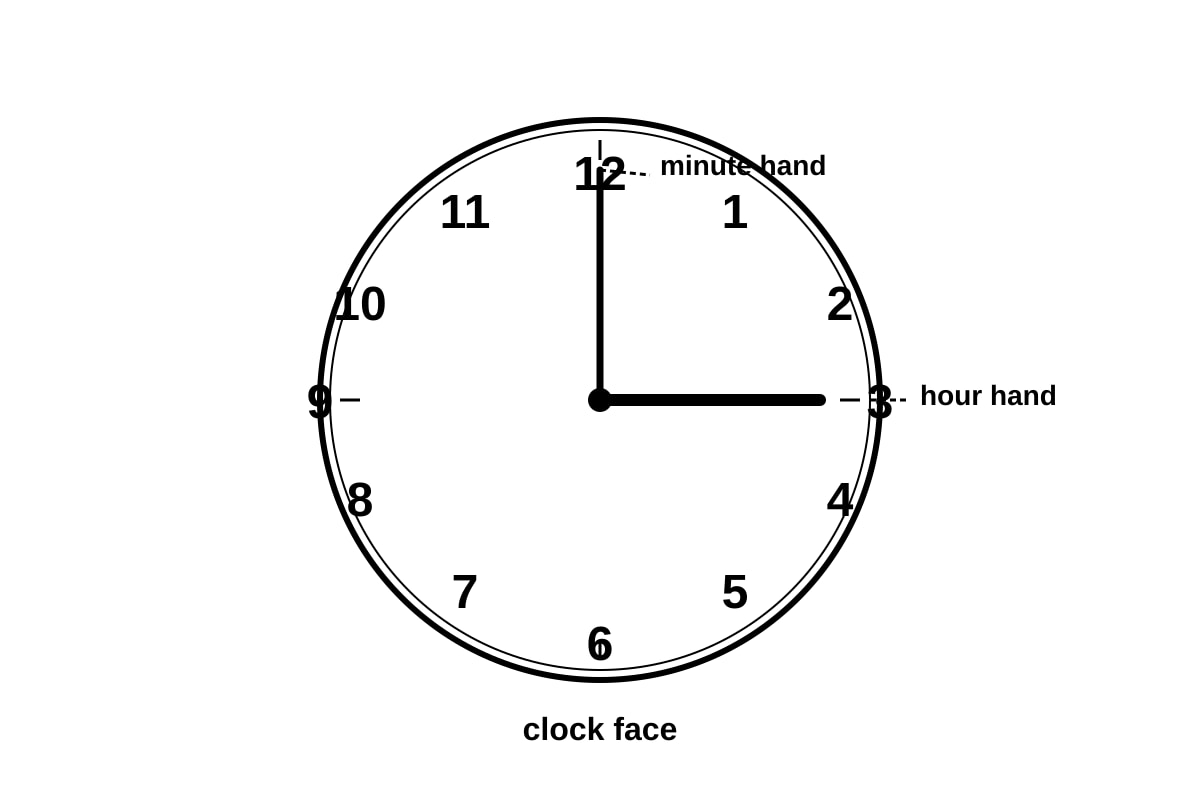
1. Look at the clock face below. What time does it show?

<image_placeholder> id: Q1-fig1 type: diagram linked_question: Q1 description: A simple analog clock face showing 3:00 with hour hand pointing at 3 and minute hand pointing at 12 labels: clock face, numbers 1-12, hour hand (shorter), minute hand (longer) values: hour hand at 3, minute hand at 12 must_show: Clear black hands, number labels around clock face, distinct hour and minute hands with hour hand shorter </image_placeholder>

Answer: _________________________________


2. Look at the clock face below. What time does it show?

<image_placeholder> id: Q2-fig1 type: diagram linked_question: Q2 description: A simple analog clock face showing 9:00 with hour hand pointing at 9 and minute hand pointing at 12 labels: clock face, numbers 1-12, hour hand, minute hand values: hour hand at 9, minute hand at 12 must_show: Clear black hands, number labels, distinct hour and minute hands with hour hand shorter </image_placeholder>

Answer: _________________________________


3. The minute hand points to 12. The hour hand points to 6. What time is it?

Answer: _________________________________


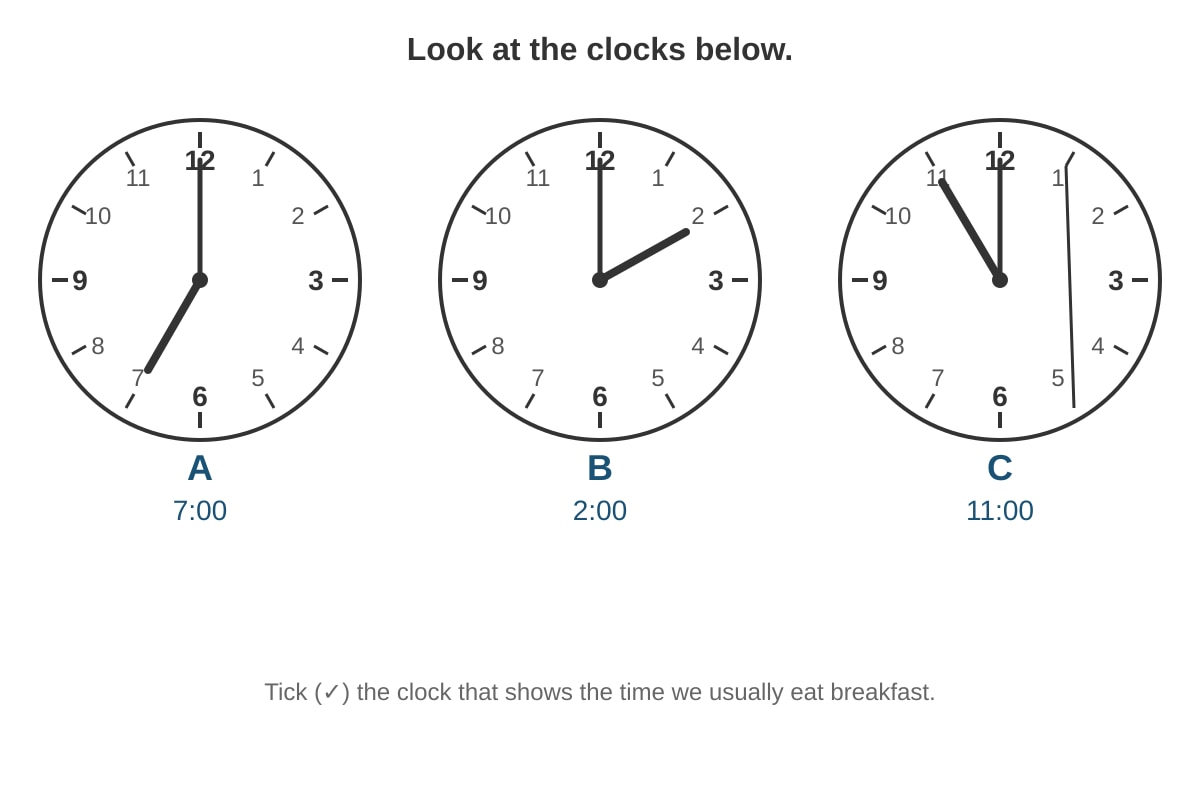
4. At what time do we usually eat breakfast? Tick the correct clock.

<image_placeholder> id: Q4-fig1 type: diagram linked_question: Q4 description: Three analog clock faces labeled A, B, and C showing different times labels: Clock A: 7:00, Clock B: 2:00, Clock C: 11:00 values: A: hour hand at 7, minute hand at 12; B: hour hand at 2, minute hand at 12; C: hour hand at 11, minute hand at 12 must_show: Three clearly labeled clocks (A, B, C) with distinct hands, all showing o'clock times </image_placeholder>

A [ ] B [ ] C [ ]


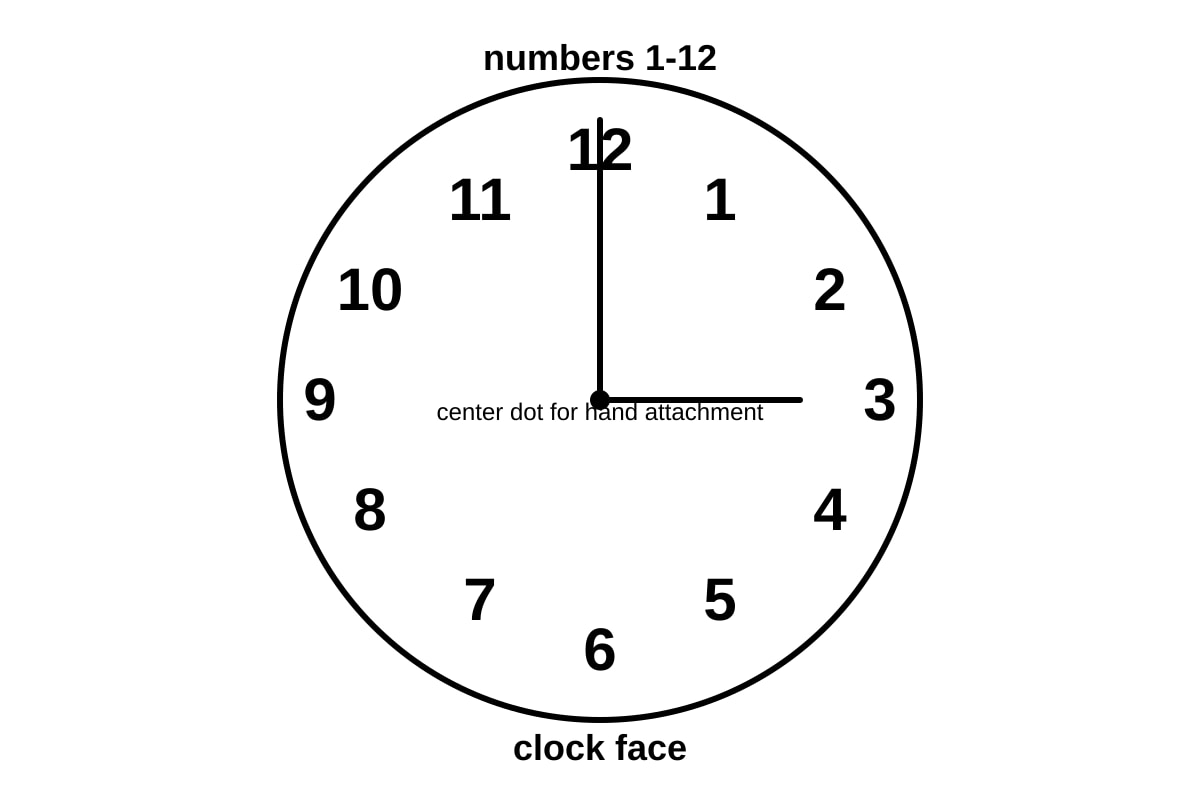
5. Draw the hands on the clock face to show 4 o'clock.

<image_placeholder> id: Q5-fig1 type: diagram linked_question: Q5 description: A blank analog clock face with numbers 1-12 but no hands labels: clock face, numbers 1-12, center dot for hand attachment values: none shown must_show: Complete clock face with numbers 1-12 in correct positions, center point for attaching hands </image_placeholder>


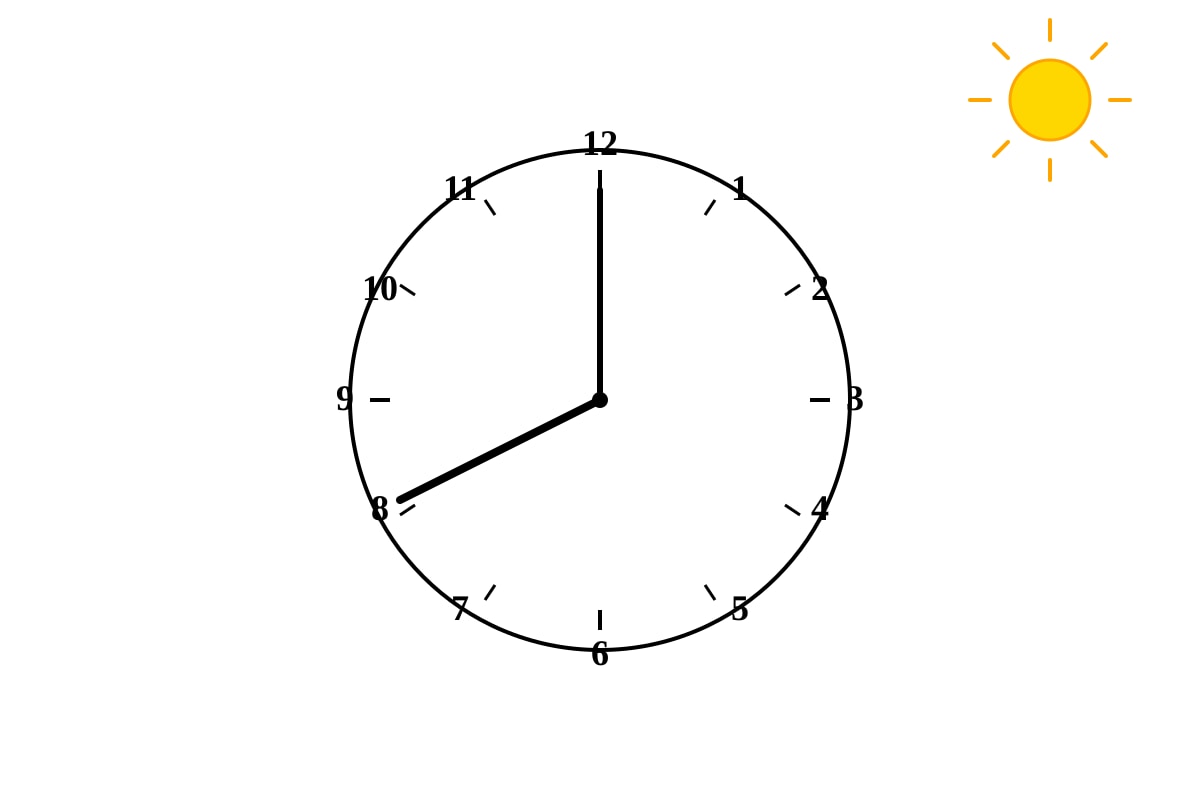
6. Is this clock showing morning or night? Tick your answer.

<image_placeholder> id: Q6-fig1 type: diagram linked_question: Q6 description: An analog clock face showing 8:00 with a small sun icon in the corner labels: clock face, numbers 1-12, hour hand at 8, minute hand at 12, sun icon in top right corner values: time is 8:00, sun icon present must_show: Clock showing 8:00 with clear sun symbol to indicate daytime </image_placeholder>

Morning [ ] Night [ ]


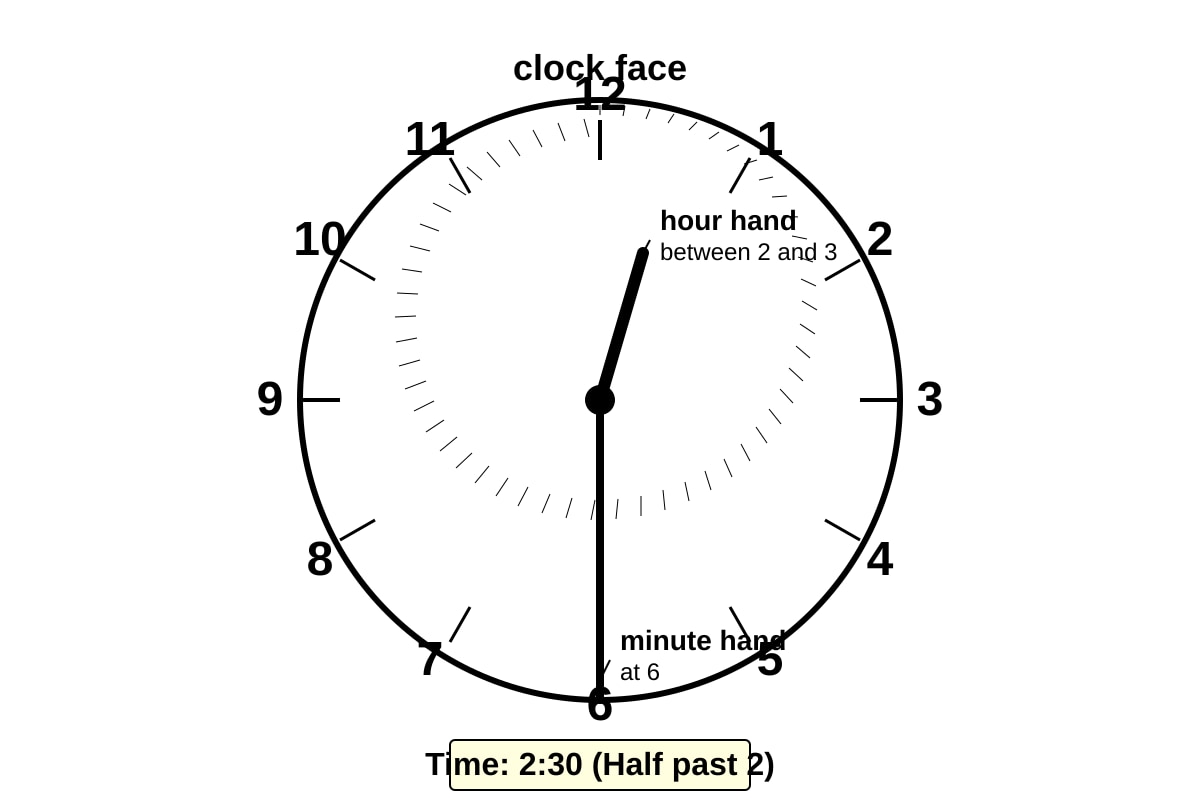
7. Look at the clock. It shows half past 2.

<image_placeholder> id: Q7-fig1 type: diagram linked_question: Q7 description: An analog clock face showing 2:30 with hour hand halfway between 2 and 3, minute hand at 6 labels: clock face, numbers 1-12, hour hand between 2 and 3, minute hand at 6 values: hour hand halfway between 2 and 3, minute hand at 6 must_show: Distinct hands with minute hand longer pointing at 6, hour hand shorter pointing halfway between 2 and 3 </image_placeholder>

Where is the minute hand pointing?

Answer: _________________________________


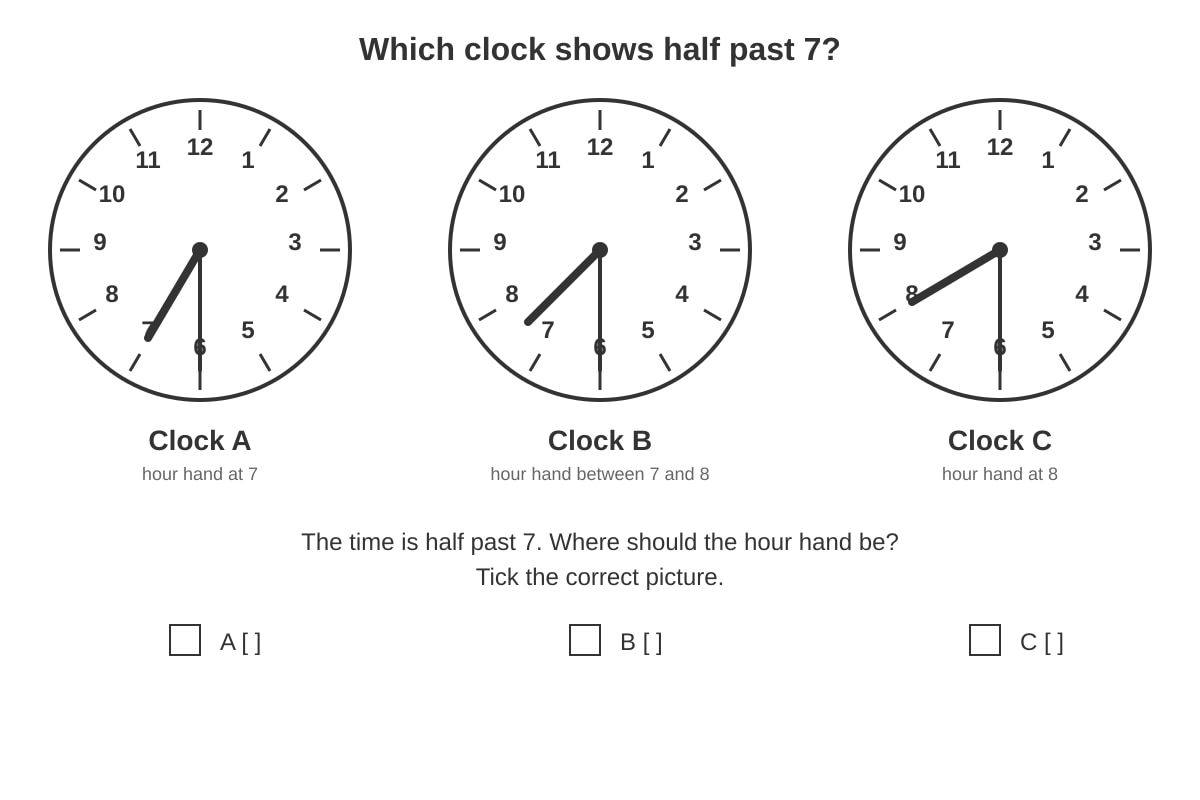
8. The time is half past 7. Where should the hour hand be? Tick the correct picture.

<image_placeholder> id: Q8-fig1 type: diagram linked_question: Q8 description: Three clock faces showing different hour hand positions for approximately 7:30 labels: Clock A: hour hand at 7, minute hand at 6; Clock B: hour hand halfway between 7 and 8, minute hand at 6; Clock C: hour hand at 8, minute hand at 6 values: A: hour hand at 7; B: hour hand between 7 and 8; C: hour hand at 8; all with minute hand at 6 must_show: Three labeled clocks (A, B, C) all showing minute hand at 6 but different hour hand positions </image_placeholder>

A [ ] B [ ] C [ ]


Section B: Writing Time (6 marks)

Questions 9–14 (1 mark each)


9. Write this time in numbers: seven o'clock

Answer: _________________________________


10. Write this time in numbers: half past ten

Answer: _________________________________


11. Write this time in words: 5:00

Answer: _________________________________


12. Write this time in words: 12:30

Answer: _________________________________


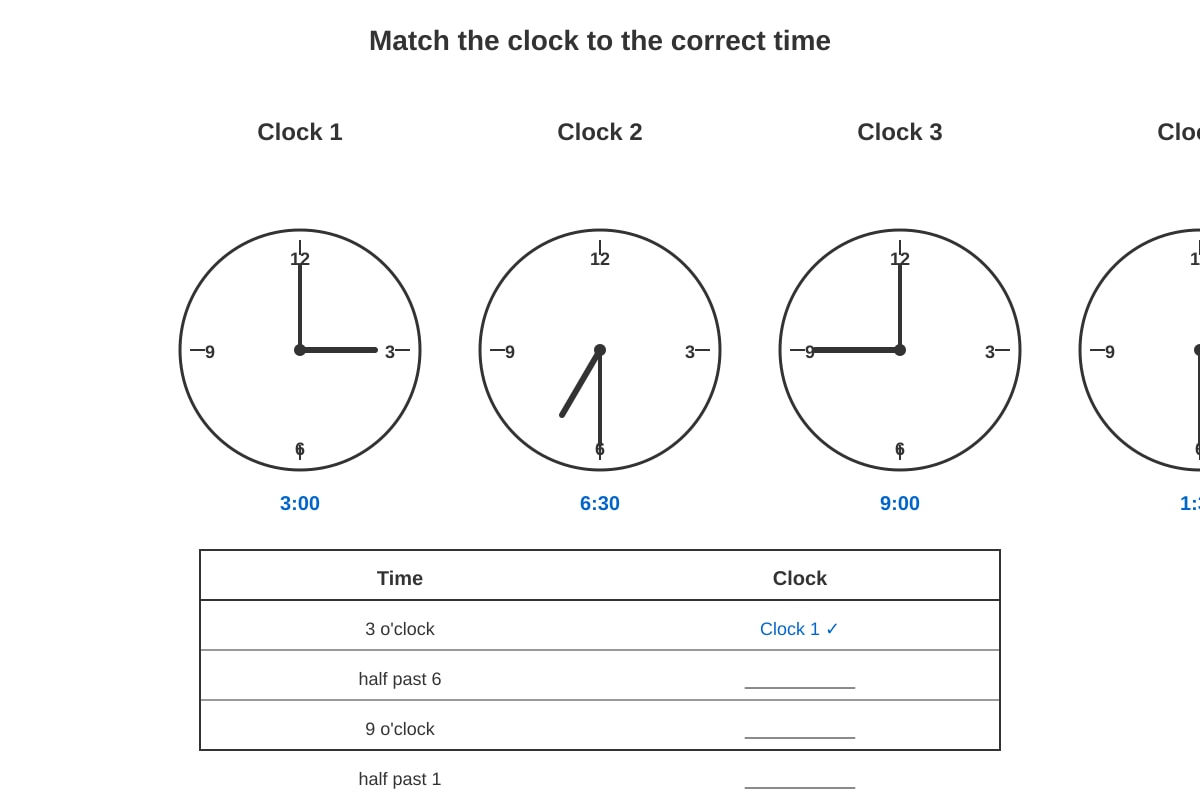
13. Match the clock to the correct time. One is done for you.

<image_placeholder> id: Q13-fig1 type: diagram linked_question: Q13 description: Four analog clock faces labeled Clock 1, Clock 2, Clock 3, Clock 4 showing different times labels: Clock 1: 3:00, Clock 2: 6:30, Clock 3: 9:00, Clock 4: 1:30 values: Clock 1: hour at 3, minute at 12; Clock 2: hour between 6 and 7, minute at 6; Clock 3: hour at 9, minute at 12; Clock 4: hour between 1 and 2, minute at 6 must_show: Four clearly labeled clocks with distinct times including both o'clock and half-past times </image_placeholder>

3 o'clockClock 1 ✓
half past 6___________
9 o'clock___________
half past 1___________

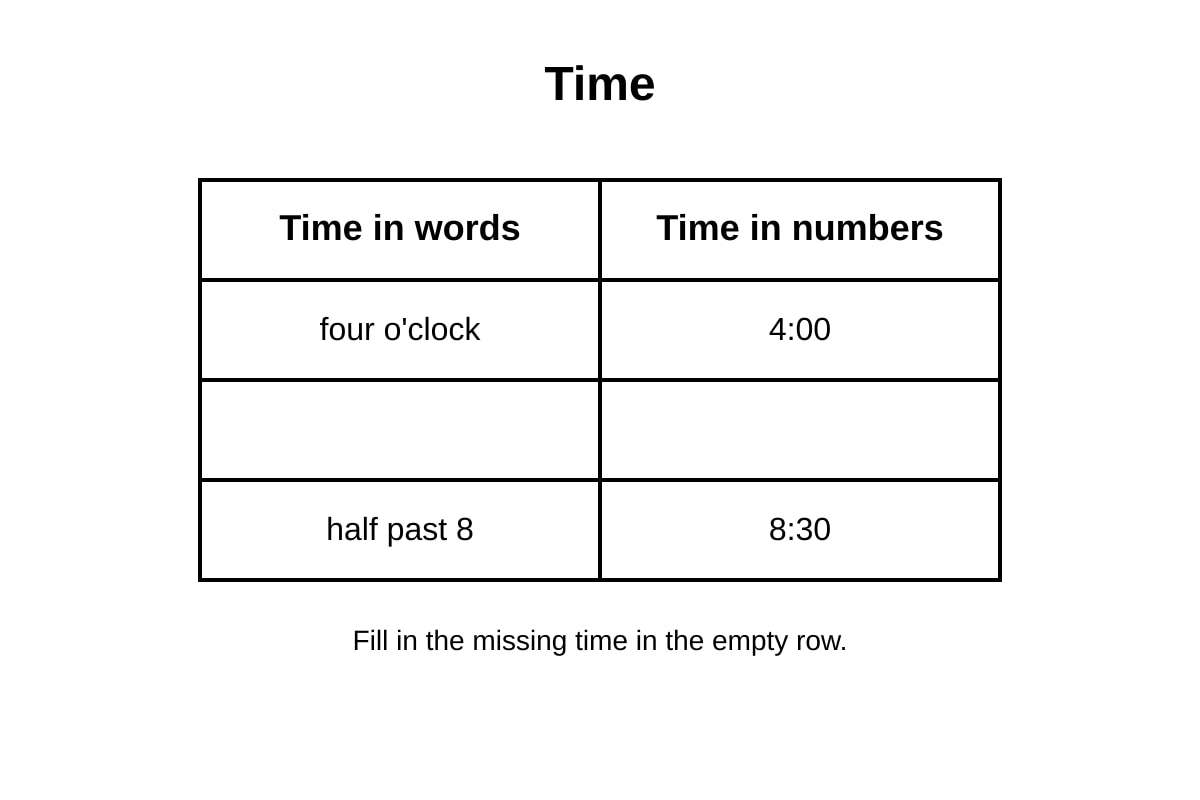
14. Fill in the missing time.

<image_placeholder> id: Q14-fig1 type: table linked_question: Q14 description: A simple table with two columns: Time in words, and Time in numbers, with one row blank labels: Column 1: Time in words, Column 2: Time in numbers values: Row 1: four o'clock, 4:00; Row 2: [blank], [blank]; Row 3: half past 8, 8:30 must_show: Three rows with middle row empty for student to fill based on pattern, clear column headers </image_placeholder>

The time between 4:00 and 8:30 is _________________________________.


Section C: Using Time (6 marks)

Questions 15–20 (1 mark each)


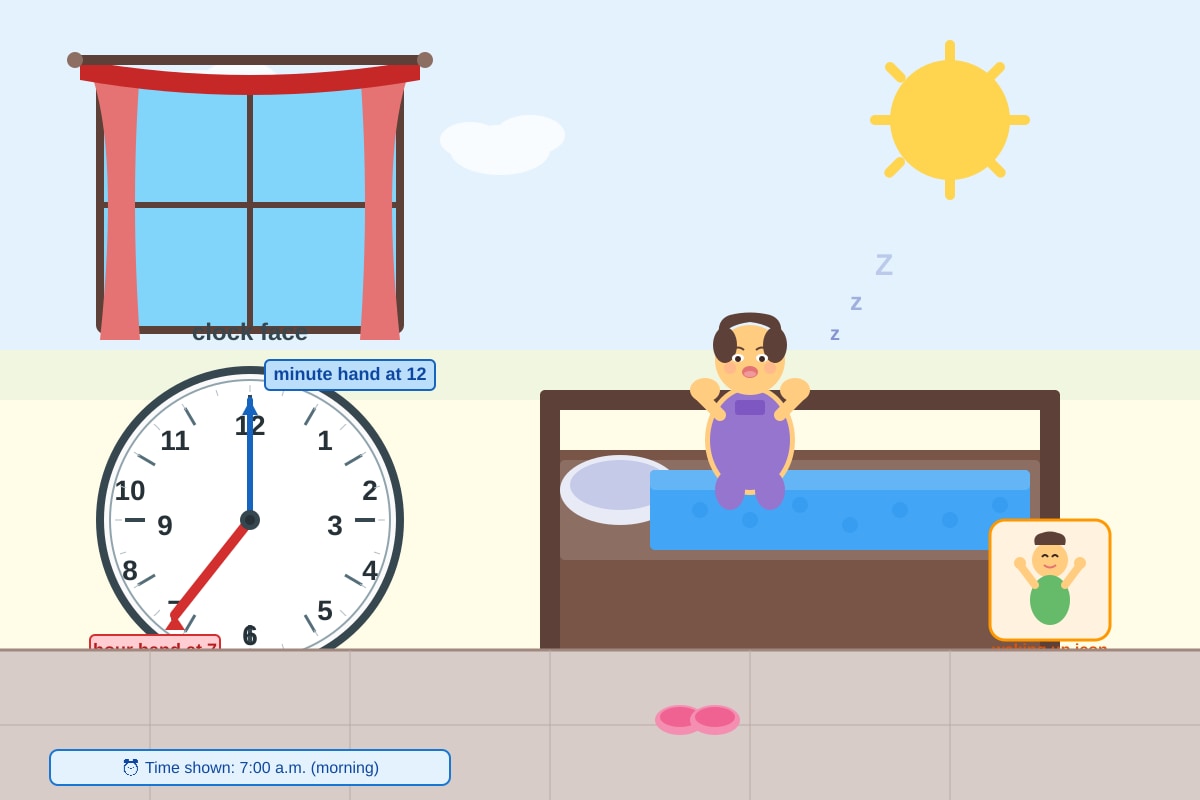
15. School starts at 7:30 a.m. The clock below shows what time Mina wakes up.

<image_placeholder> id: Q15-fig1 type: diagram linked_question: Q15 description: An analog clock face showing 7:00 with hour hand at 7 and minute hand at 12, and a small child waking up icon labels: clock face, numbers 1-12, hour hand at 7, minute hand at 12, waking up icon values: time is 7:00, context is morning wake up must_show: Clock showing 7:00 with clear visual context of morning/waking up </image_placeholder>

How many minutes does Mina have before school starts?

Answer: _________________________________ minutes


16. Ravi's football practice starts at 5:00 p.m. He needs to leave home 30 minutes before that. What time should he leave home?

Answer: _________________________________


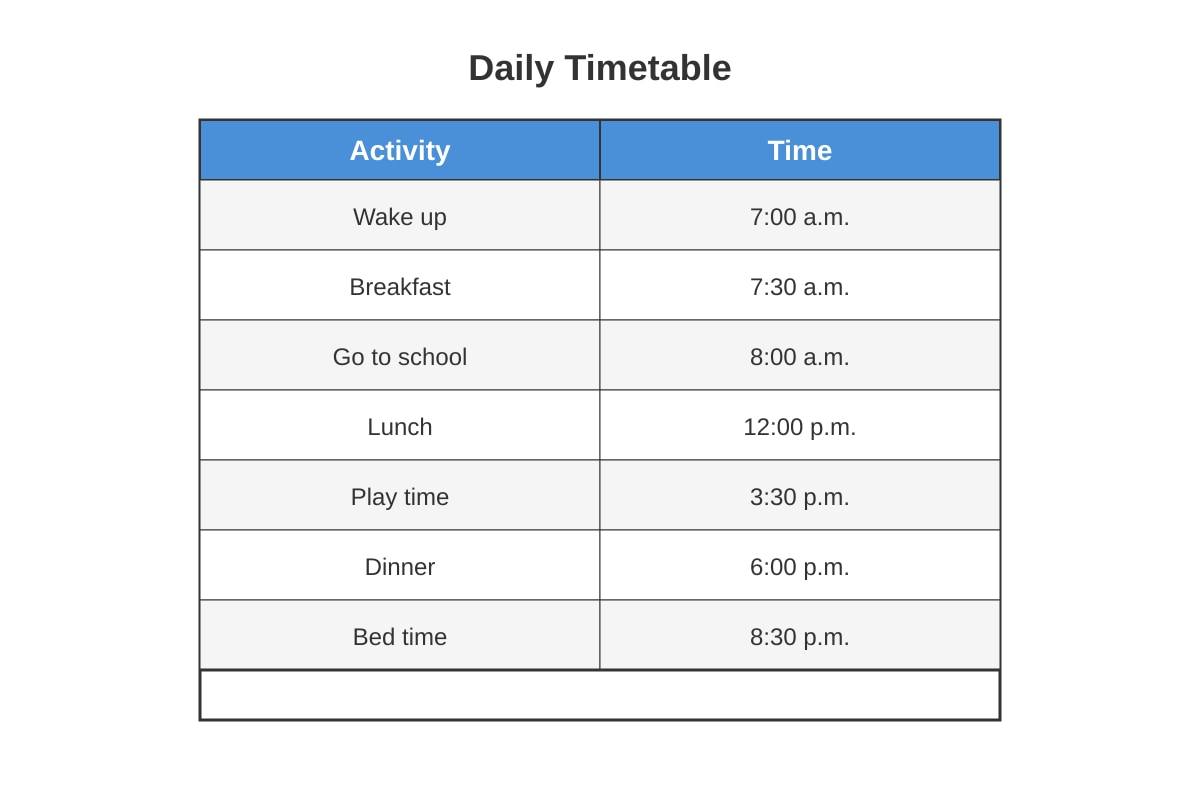
17. Look at the daily timetable.

<image_placeholder> id: Q17-fig1 type: table linked_question: Q17 description: A simple daily timetable for a Primary 1 student showing activities and times labels: Activity column, Time column; rows: Wake up (7:00), Breakfast (7:30), Go to school (8:00), Lunch (12:00), Play time (3:30), Dinner (6:00), Bed time (8:30) values: Times as listed above, using 12-hour format with am/pm indicated where helpful (morning/afternoon/evening context) must_show: Clear two-column table with readable times, structured daily routine </image_placeholder>

What time does the child play?

Answer: _________________________________


18. Using the same timetable from Question 17, how many hours are there between lunch and dinner?

Workings: _________________________________

Answer: _________________________________ hours


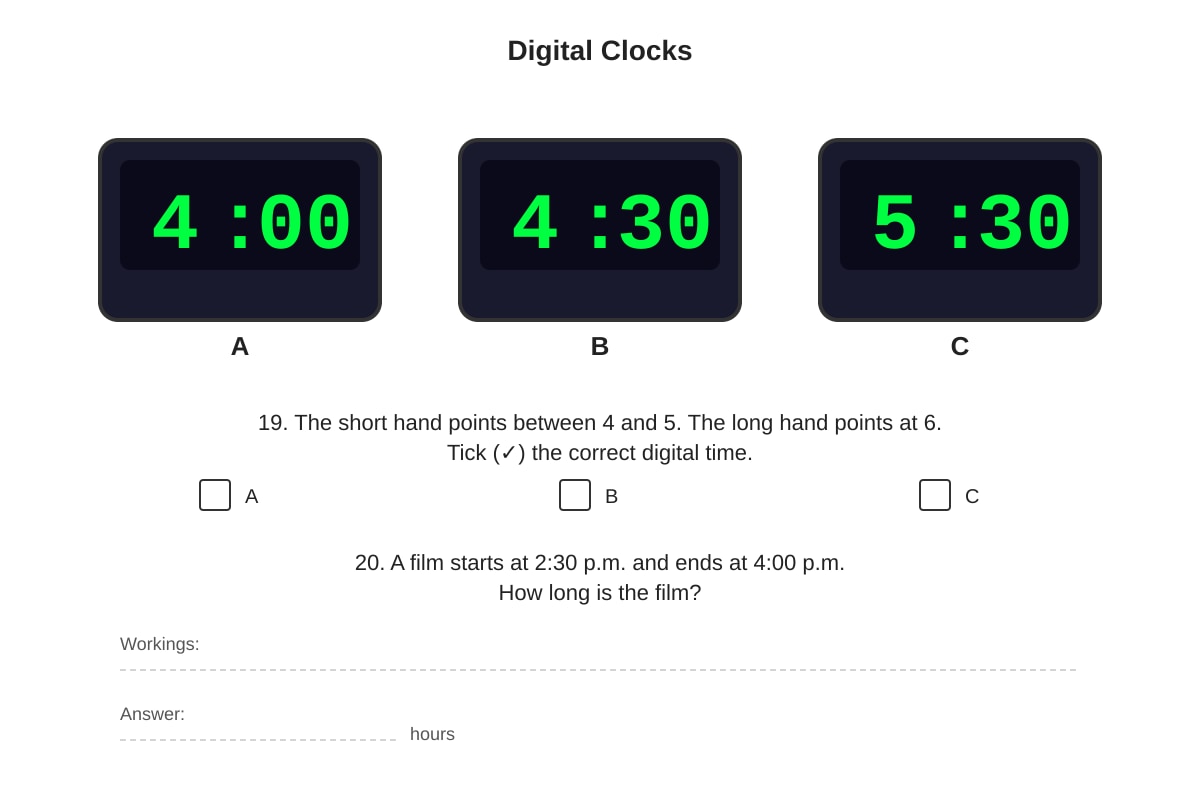
19. The short hand points between 4 and 5. The long hand points at 6. Tick the correct digital time.

<image_placeholder> id: Q19-fig1 type: diagram linked_question: Q19 description: Three digital clock displays showing different times labels: Digital A: 4:00, Digital B: 4:30, Digital C: 5:30 values: A shows 4:00, B shows 4:30, C shows 5:30 must_show: Three clearly labeled digital displays (A, B, C) with colon separating hours and minutes </image_placeholder>

A [ ] B [ ] C [ ]


20. A film starts at 2:30 p.m. and ends at 4:00 p.m. How long is the film?

Workings: _________________________________

Answer: _________________________________ hour(s) and _________________________________ minutes


End of Quiz

Total: 20 marks

Answers

<!-- TuitionGoWhere generation metadata: stage=5-1; model=moonshotai/kimi-k2.6:free; model_label=Kimi K2.6 Free; generated=2026-06-06; Sources: Stage 4-0 LLM templates, syllabus context, and Stage 2 evidence where available. -->

Primary 1 Mathematics Quiz - Time: Answer Key


Section A: Telling Time (8 marks)


1. [1 mark]

Answer: 3 o'clock (or 3:00)

Teaching Note: When the minute hand (the longer hand) points to 12, this means "o'clock." The hour hand (the shorter hand) tells us which hour it is. Here, the hour hand points to 3, so it is 3 o'clock.

Common mistake: Confusing the hour hand and minute hand. Remind students: the hour hand is shorter and moves slowly; the minute hand is longer.


2. [1 mark]

Answer: 9 o'clock (or 9:00)

Teaching Note: The minute hand at 12 means o'clock. The hour hand points to 9. In the morning this is 9 a.m.; at night it is 9 p.m.


3. [1 mark]

Answer: 6 o'clock (or 6:00)

Teaching Note: No picture needed here—students must visualise from description. Minute hand at 12 = o'clock. Hour hand at 6 = 6 o'clock. This tests whether students can apply the rule without a visual prompt.


4. [1 mark]

Answer: A (Clock A, showing 7:00)

Teaching Note: Breakfast is eaten in the morning. 7:00 (7 o'clock) is a typical breakfast time. 2:00 is afternoon (lunch time), and 11:00 is nearly noon. Students should connect daily routines to realistic times.

Marking note: Both tick in A box and writing "A" are acceptable.


5. [1 mark]

Correct drawing: Hour hand pointing at 4, minute hand pointing at 12

Teaching Note: For o'clock times, the minute hand must always point to 12. The hour hand points to the hour number. Since both hands originate from the center, students should draw them clearly meeting at the center point.

Marking note: Award mark if minute hand at 12 and hour hand at 4 (minor wobbles acceptable). Deduct if hands are swapped (long hand at 4, short hand at 12).


6. [1 mark]

Answer: Morning [✓]

Teaching Note: The sun icon shows daytime. At 8:00 with the sun, this is 8 o'clock in the morning (8 a.m.). Without the sun, it could be 8 at night (8 p.m.). Context clues help us decide.


7. [1 mark]

Answer: 6 (or "pointing at 6")

Teaching Note: For half past times, the minute hand always points at 6. "Half past" means 30 minutes past the hour, and since each number on the clock represents 5 minutes, 6 × 5 = 30 minutes. The hour hand moves halfway between numbers to show it is halfway through the hour.


8. [1 mark]

Answer: B (Clock B, hour hand halfway between 7 and 8)

Teaching Note: At half past 7 (7:30), the hour hand is no longer exactly at 7. It has moved halfway toward 8 because 30 minutes is half of the full hour. The minute hand at 6 confirms this is a half-past time. Clock A would be 7:30 only at exactly 7:30 start of minute movement; realistically the hour hand moves continuously. Clock C shows approximately half past 8.


Section B: Writing Time (6 marks)


9. [1 mark]

Answer: 7:00 (or 0700)

Teaching Note: "Seven o'clock" written in digital form has the hour number, a colon, then "00" for the minutes. For o'clock times, there are zero minutes past the hour.


10. [1 mark]

Answer: 10:30

Teaching Note: "Half past ten" means 30 minutes after 10 o'clock. In digital time, this is 10:30. The hour stays as 10 (not 11) because it is still in the tenth hour, just halfway through.

Common mistake: Writing 11:30. Remind students: the hour only changes after 60 minutes, at the next o'clock.


11. [1 mark]

Answer: five o'clock (or 5 o'clock)

Teaching Note: Digital time 5:00 with "00" minutes means o'clock. The colon separates hours from minutes. When minutes are zero, we say the hour number followed by "o'clock."


12. [1 mark]

Answer: half past twelve (or half past 12)

Teaching Note: "12:30" means 30 minutes past 12. We say "half past twelve" because 30 minutes is half of 60 minutes. It can also be said as "twelve thirty," but "half past twelve" is the focus at P1 level.


13. [1 mark] — 3 correct matches required

3 o'clockClock 1 ✓
half past 6Clock 2
9 o'clockClock 3
half past 1Clock 4

Teaching Note: To match correctly: (a) identify if it's o'clock (minute hand at 12) or half past (minute hand at 6), then (b) read the hour from the hour hand position. For half-past times, look at which number the hour hand has passed—if it's between 6 and 7, it's half past 6.

Marking: All 3 correct = 1 mark; 1–2 correct = 0 marks (all-or-nothing to encourage careful checking, or award ½ mark if school's policy permits partial credit).


14. [1 mark]

Answer: half past six and 6:30 (or six thirty)

Teaching Note: The pattern shows o'clock, then ?, then half past. The middle time should be halfway between 4:00 and 8:30. Students may also reason: the sequence alternates or simply fills in a reasonable time. Accept "6:30" and "half past 6" as correct. Alternative acceptable answers that fit the pattern: 6 o'clock / 6:00 if student sees even spacing pattern.

Clarification: The table structure suggests finding the time between. Between 4:00 and 8:30, the midpoint is 6:15, but P1 students work with o'clock and half-past only. The intended answer is half past six / 6:30 as a reasonable middle time in daily routine context. If student writes 6:00 and "six o'clock," accept as valid pattern completion.


Section C: Using Time (6 marks)


15. [1 mark]

Answer: 30 minutes (or half an hour)

Teaching Note: School starts at 7:30 a.m. Mina wakes at 7:00 a.m. From 7:00 to 7:30 is 30 minutes. On a clock face, this is the distance from 12 to 6 (the minute hand moving halfway around).

Working method: 7:30 − 7:00 = 0:30, which is 30 minutes.


16. [1 mark]

Answer: half past four (or 4:30 p.m., or half past 4)

Teaching Note: If practice starts at 5:00 p.m. and Ravi leaves 30 minutes before, we subtract 30 minutes. 5:00 − 30 minutes = 4:30. "Before" means going backward in time. 4:30 p.m. can also be said as "half past four in the afternoon."


17. [1 mark]

Answer: 3:30 (or half past 3, or 3:30 p.m.)

Teaching Note: Students must read information directly from a table. The row "Play time" shows 3:30. This tests data retrieval from a simple timetable—an important life skill.


18. [1 mark] — 1 mark for correct answer with or without working

Answer: 6 hours

Working:

  • Lunch: 12:00
  • Dinner: 6:00 (which is 18:00 in 24-hour time, or 6:00 p.m.)
  • From 12:00 p.m. to 6:00 p.m.: count 1, 2, 3, 4, 5, 6 hours

Teaching Note: From noon to 6 p.m. is 6 hours. Students can count on their fingers: 1 o'clock, 2 o'clock, 3 o'clock, 4 o'clock, 5 o'clock, 6 o'clock — that's 6 hours.

Alternative working: 6:00 − 12:00 requires understanding of a.m./p.m., so counting forward is preferred at P1.


19. [1 mark]

Answer: B (4:30)

Teaching Note:

  • Short hand between 4 and 5 → it is after 4 o'clock but before 5 o'clock, so hour is 4.
  • Long hand at 6 → 30 minutes, so "half past."
  • Together: half past 4, which is 4:30.

Clock A (4:00) would have both hands pointing exactly—the hour hand exactly at 4. Clock C (5:30) would have hour hand between 5 and 6.


20. [1 mark] — working shown, 2 blanks to fill

Answer: 1 hour and 30 minutes (or 1½ hours, or 90 minutes)

Working:

  • From 2:30 p.m. to 3:30 p.m. = 1 hour
  • From 3:30 p.m. to 4:00 p.m. = 30 minutes
  • Total: 1 hour + 30 minutes = 1 hour 30 minutes

Teaching Note: Breaking time durations into chunks is the P1-friendly method. Jump first to the next hour (2:30 → 3:30 = 1 hour), then add the remaining minutes (3:30 → 4:00 = 30 minutes).

Marking note: "1" and "30" in the two blanks = 1 mark. If student writes "2" and "0" (incorrectly calculating 4:00 − 2:30 = 2:00), explain that time subtraction is not like regular subtraction—60 minutes = 1 hour.


Total Marks: 20

Cognitive demand summary:

  • Section A (Q1–Q8): Visual recognition of clock faces, direct pattern matching
  • Section B (Q9–Q14): Symbolic translation between word and digital forms
  • Section C (Q15–Q20): Simple time arithmetic and timetable reading (applying knowledge)