AI Generated Quiz
Primary 1 Mathematics Shapes Quiz
Free P1 Maths Shapes quiz, MiniMax AI version, with questions, answers, and syllabus-aligned practice for Singapore students.
These static practice materials are generated from the site's syllabus and paper-generation workflow, with source and model context shown so students and parents can evaluate the material before use.
Questions
Free quiz and exam paper access
Enter your details to view this paper
Your access is remembered on this device.
Answers
Primary 1 Mathematics Quiz - Shapes - Answer Key
Total Marks: 30
Marking Note: For each question, 1 mark is awarded per correct answer unless stated otherwise. Spelling of shape names must be correct (e.g., "triangle", "rectangle", "circle"). Accept "square" but not "box". Accept "half circle" (two words) or "semicircle". Accept "quarter circle" (two words) or "quarter-circle".
Section A: Identifying Shapes
Concept Recap: A shape is the outline of a 2D (flat) figure. We name shapes by how they look. Recognising shapes is a key skill in P1 Geometry.
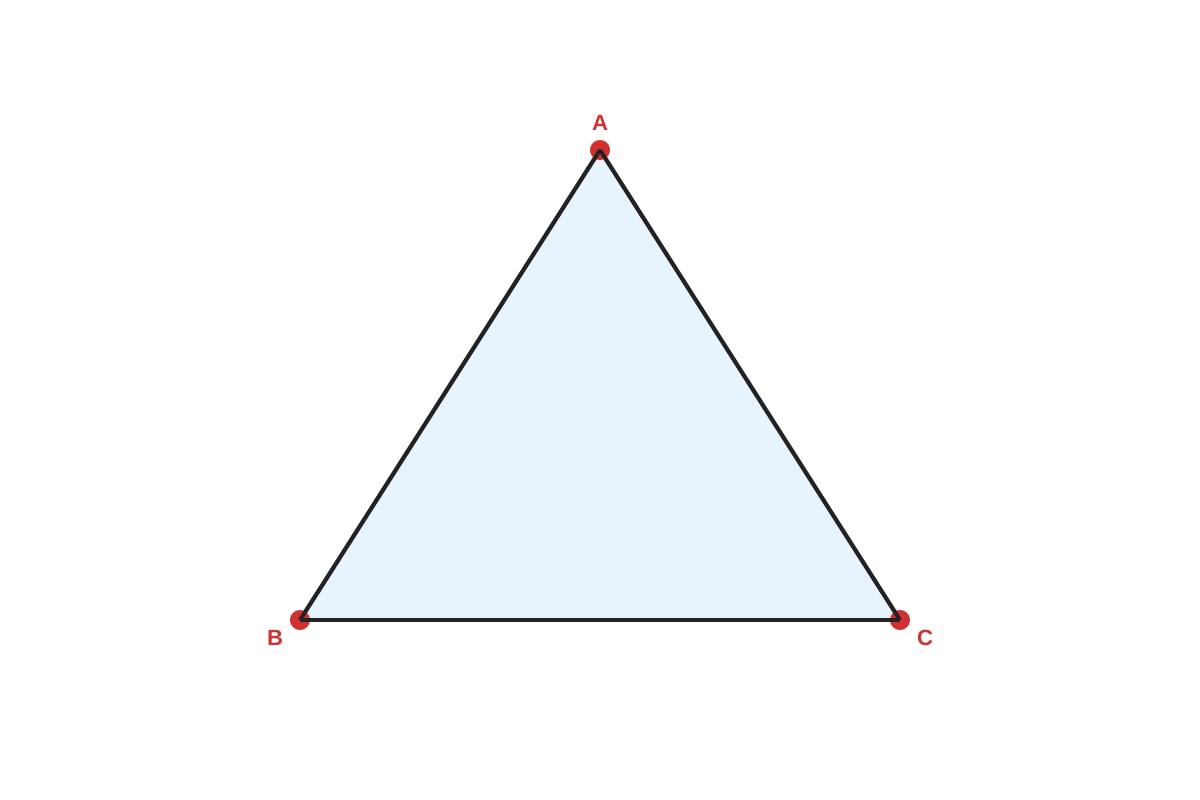
1. Triangle
- 1 mark
- Teaching Note: A shape with 3 straight sides and 3 corners is always a triangle. "Tri" means three.
2. Circle
- 1 mark
- Teaching Note: A circle is a round shape. It is special because it has no straight sides and no corners (no pointed parts).
3. Square
- 1 mark
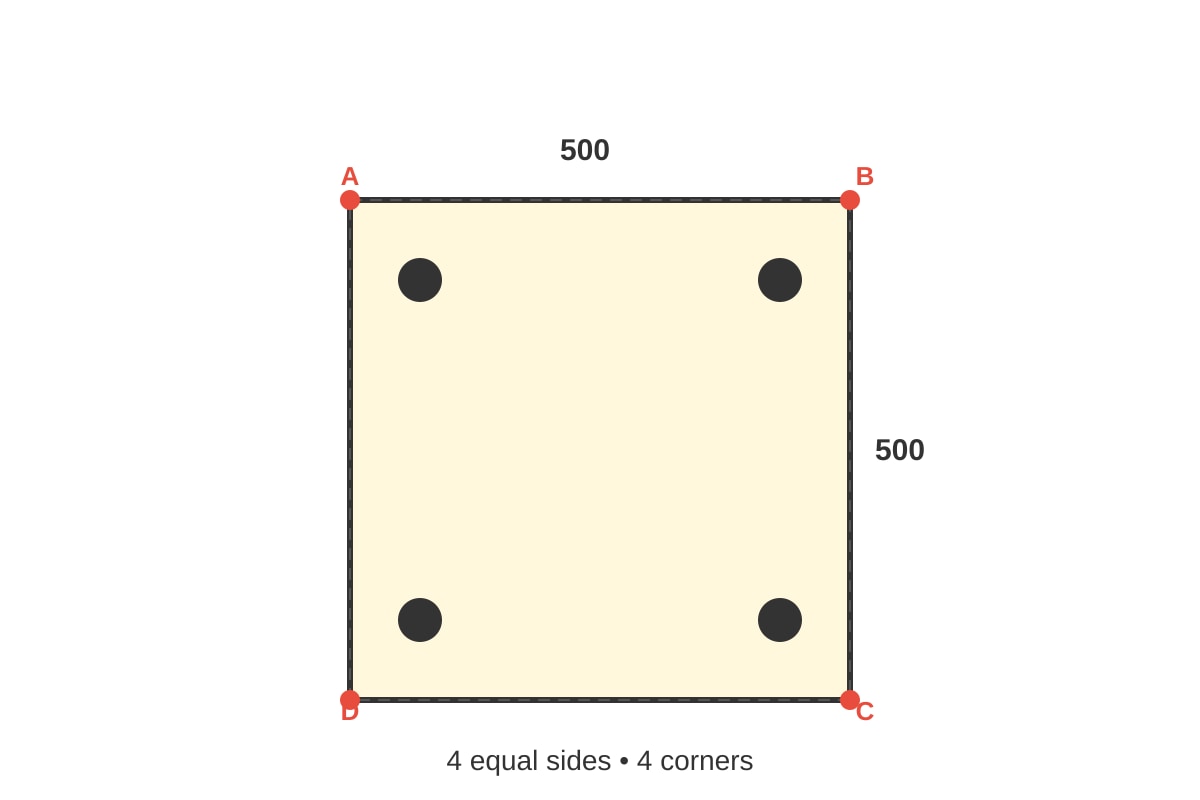
- Teaching Note: A square has 4 sides that are all equal in length and 4 corners. A square is a special type of rectangle, but for P1, treat it as its own shape.
4. Rectangle
- 1 mark
- Teaching Note: A rectangle has 4 sides and 4 corners. The opposite sides are equal in length, but the long sides are longer than the short sides (unless it is a square).
5. Half circle
- 1 mark
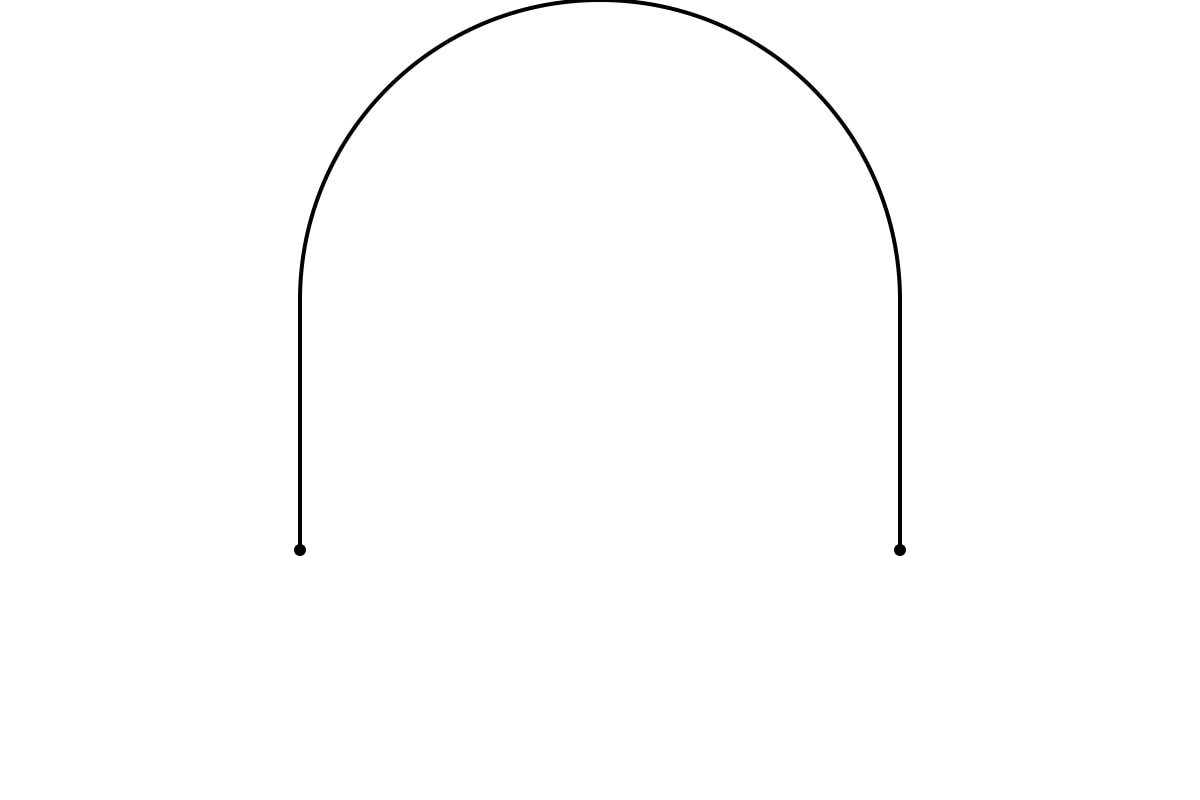
- Teaching Note: When you cut a circle into 2 equal parts, each part is called a half circle. It has 1 straight side and 1 curved side.
6. Quarter circle
- 1 mark
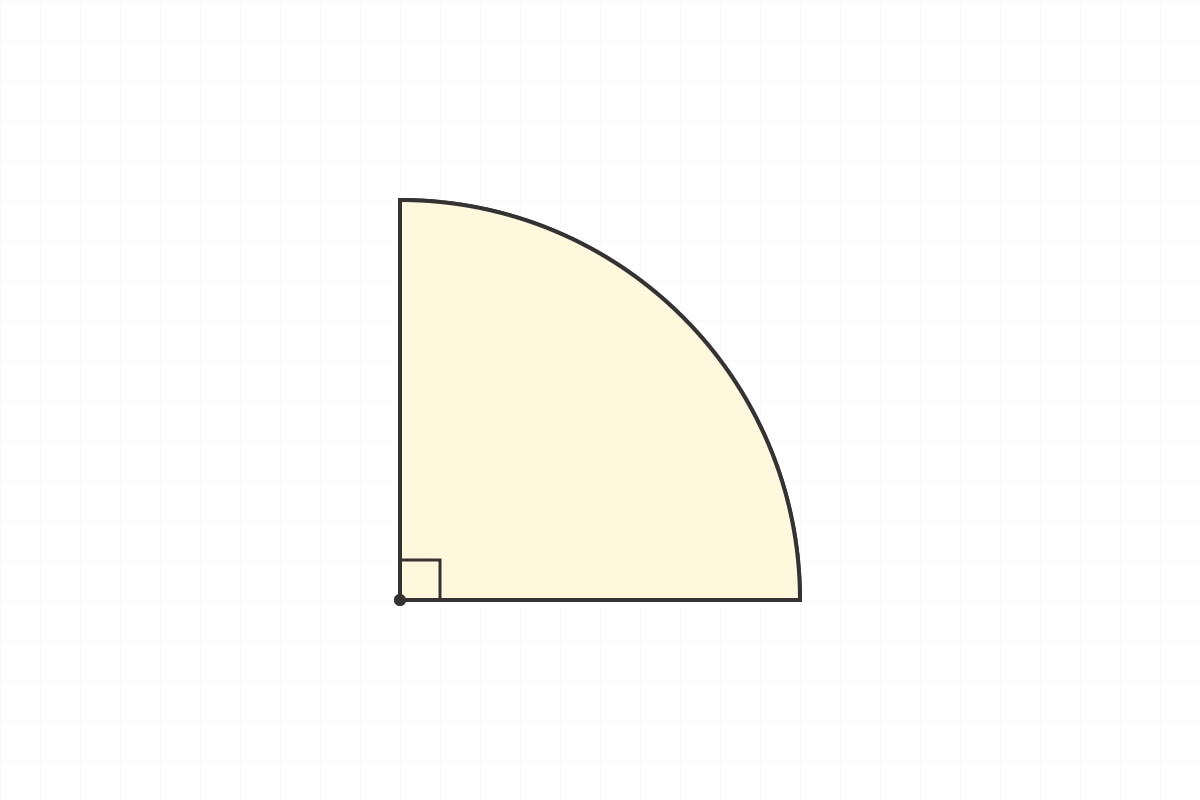
- Teaching Note: When you cut a circle into 4 equal parts, each part is called a quarter circle. It has 2 straight sides and 1 curved side.
Section B: Counting Sides and Corners
Concept Recap: Sides are the straight or curved lines that form a shape. Corners (also called vertices) are the points where two sides meet. Circles have no sides and no corners.
7. 3
- 1 mark
- Teaching Note: The triangle in the picture (Q7-fig1) has 3 corners, one at each tip. Each corner is where two straight sides meet.
- Common Mistake: Some students count the inside of a triangle as a corner. Only count the pointed parts.
8. 4
- 1 mark
- Teaching Note: A square has 4 equal straight sides. This is a defining property of a square.
- Common Mistake: Confusing sides with corners. "Sides" are the lines; "corners" are the points.
9. 4
- 1 mark
- Teaching Note: All rectangles have exactly 4 sides, even though the sides are not all equal in length.
10. 0 (zero)
- 1 mark
- Teaching Note: A circle is perfectly round and has no corners and no straight sides.
- Common Mistake: Students may write "1" or "4". Remind them that circles are smooth all the way around with no pointed parts.
Section C: Describing Shapes
Concept Recap: We can describe shapes by counting their straight sides, curved sides, and corners. This helps us tell shapes apart.
11. (a) Half circle — 1 mark (b) 1 — 1 mark
- Total: 2 marks
- Teaching Note: A half circle has 1 straight side (the cut edge) and 1 curved side (the round part). The two ends of the straight side are the 2 corners.
- Expected visual (Q11-fig1): A dome shape with a flat bottom (straight side) and a curved top.
12. (a) Quarter circle — 1 mark (b) 1 — 1 mark
- Total: 2 marks
- Teaching Note: A quarter circle has 2 straight sides (the two cuts) and 1 curved side (the round edge). The two straight sides meet at 1 corner.
- Expected visual (Q12-fig1): A pie-slice or pizza-slice shape.
Section D: Shapes in Real Life
Concept Recap: Many everyday objects look like basic 2D shapes. Recognising shapes in real life helps us connect maths to the world around us.
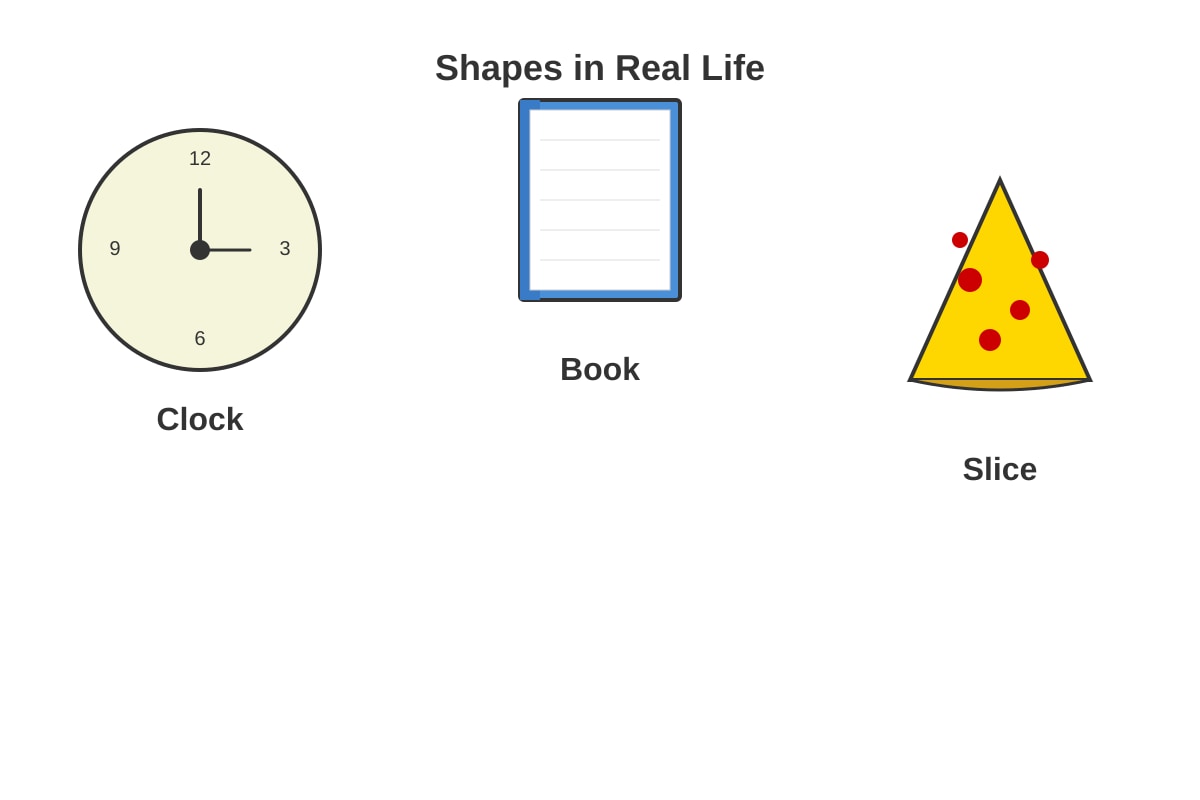
13. (a) The Clock — 1 mark (b) The Book — 1 mark
- Total: 2 marks
- Teaching Note: A clock face is round like a circle. A book is shaped like a rectangle (longer than it is wide).
- Expected visual (Q13-fig1): Three objects — clock, book, triangular slice.
14. (a) 3 — 1 mark (b) 3 — 1 mark
- Total: 2 marks
- Teaching Note: A traffic sign (warning sign) shaped like a triangle has 3 straight sides and 3 corners. A triangle always has 3 of each.
Section E: Sorting and Classifying Shapes
Concept Recap: We can sort shapes by their names or by their properties. This is a key skill in geometry.
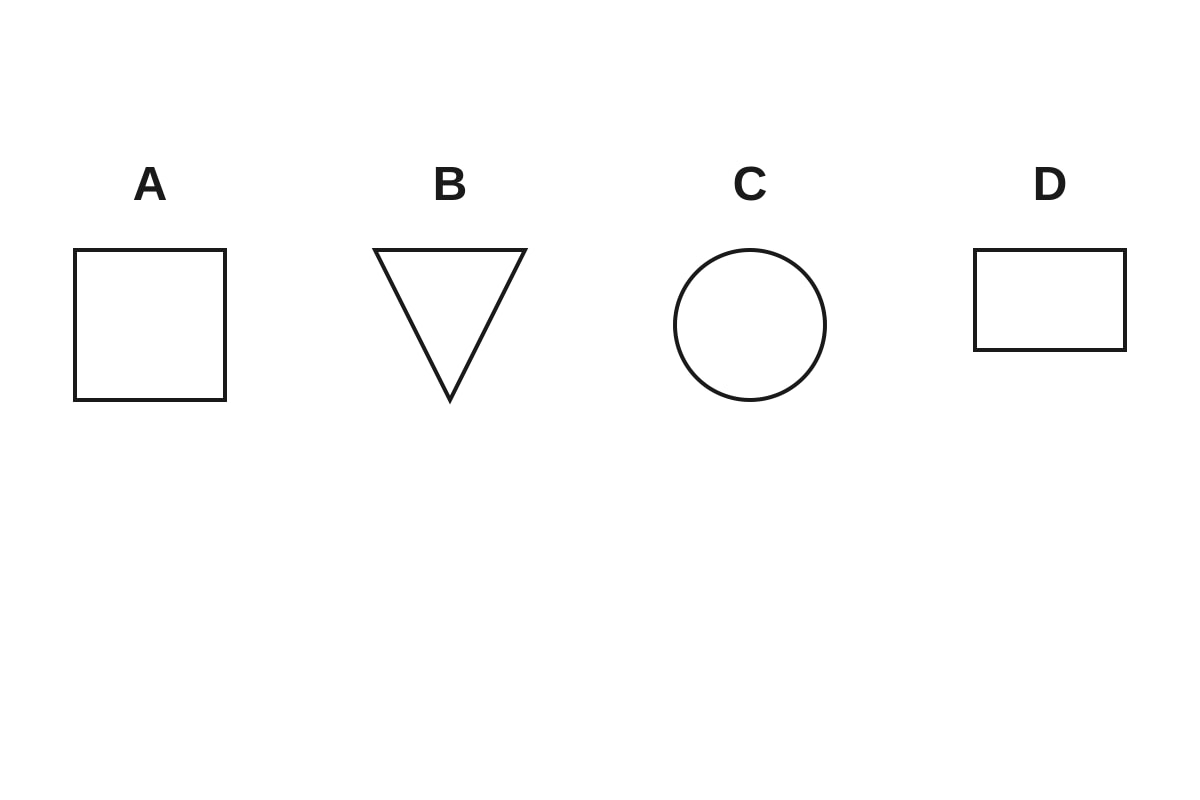
15. (a) B — 1 mark (b) C — 1 mark (c) D — 1 mark
- Total: 3 marks
- Teaching Note: Look at the order in the picture: A is a square, B is a triangle, C is a circle, D is a rectangle. Students should match each letter to the correct shape name.
- Expected visual (Q15-fig1): 4 shapes labelled A (square), B (triangle), C (circle), D (rectangle), in that order.
- Common Mistake: Confusing the square and rectangle. A square has all 4 sides equal; a rectangle has 2 long sides and 2 short sides.
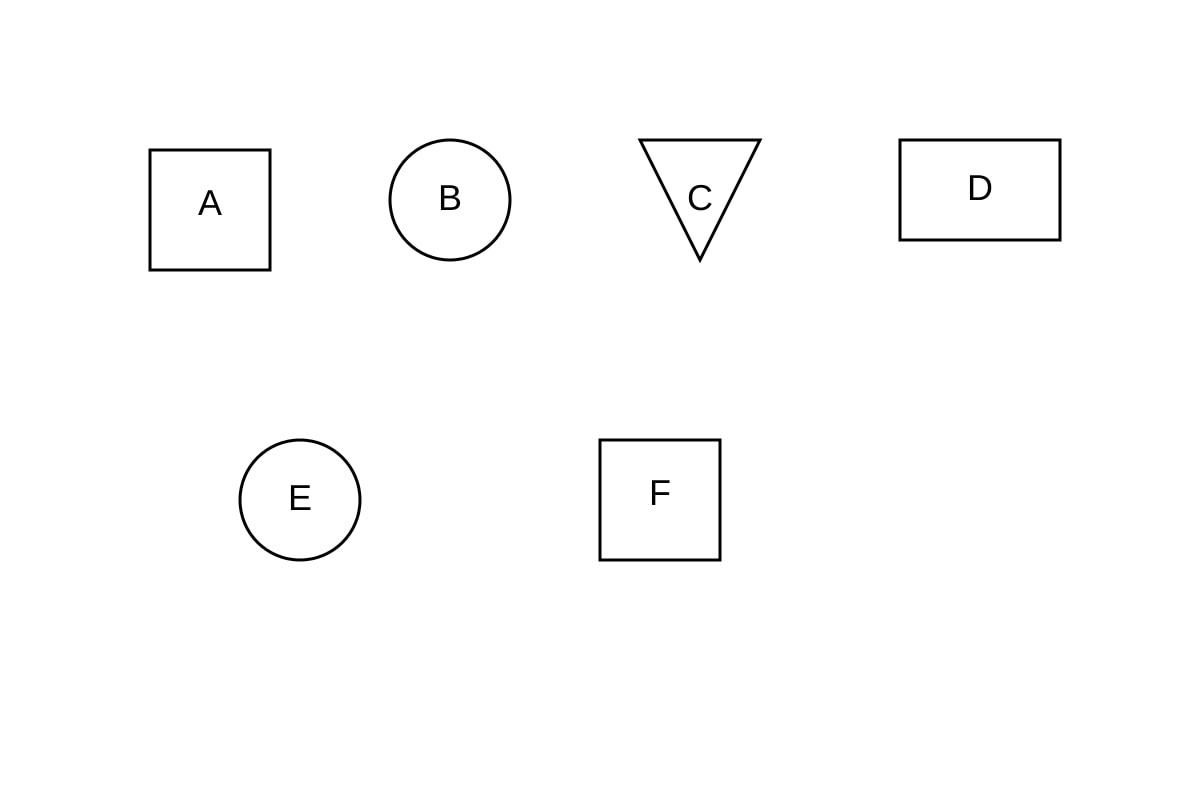
16. (a) 2 — 1 mark (b) 2 — 1 mark (c) 1 — 1 mark
- Total: 3 marks
- Teaching Note: Count carefully. Each correct count earns 1 mark.
- Expected visual (Q16-fig1): 2 squares, 1 triangle, 2 circles, 1 rectangle. Total of 6 shapes.
- Common Mistake: Students may miscount circles and squares. Remind them to count each shape type one at a time.
Section F: Combining Shapes
Concept Recap: We can make new shapes by joining two or more basic shapes together. This is called combining or composing shapes.
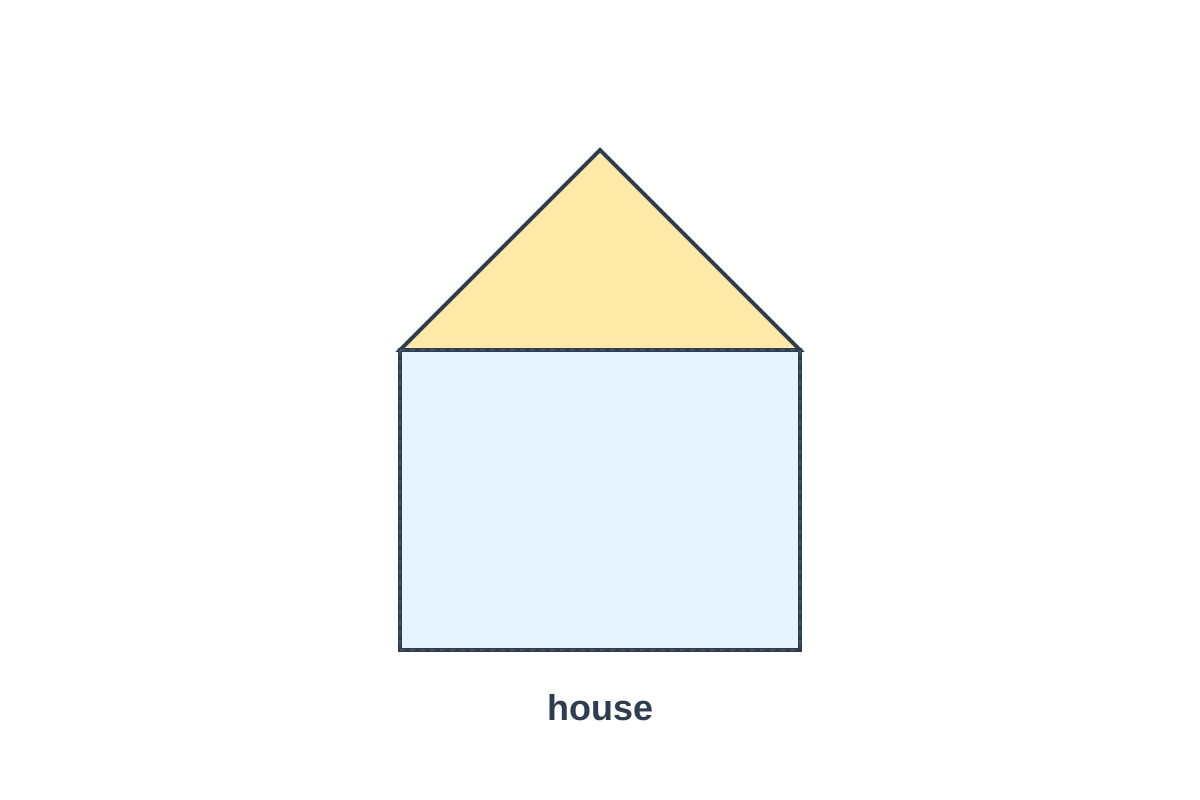
17. (a) Triangle — 1 mark (b) Square — 1 mark
- Total: 2 marks
- Teaching Note: A common house shape uses a square for the body and a triangle for the roof. The triangle sits on top of the square, sharing the top side of the square.
- Expected visual (Q17-fig1): A house made of 1 square (body) and 1 triangle (roof).
Section G: Properties of Shapes
Concept Recap: Properties are the special features of a shape, like the number of sides or corners. Comparing properties helps us tell shapes apart.
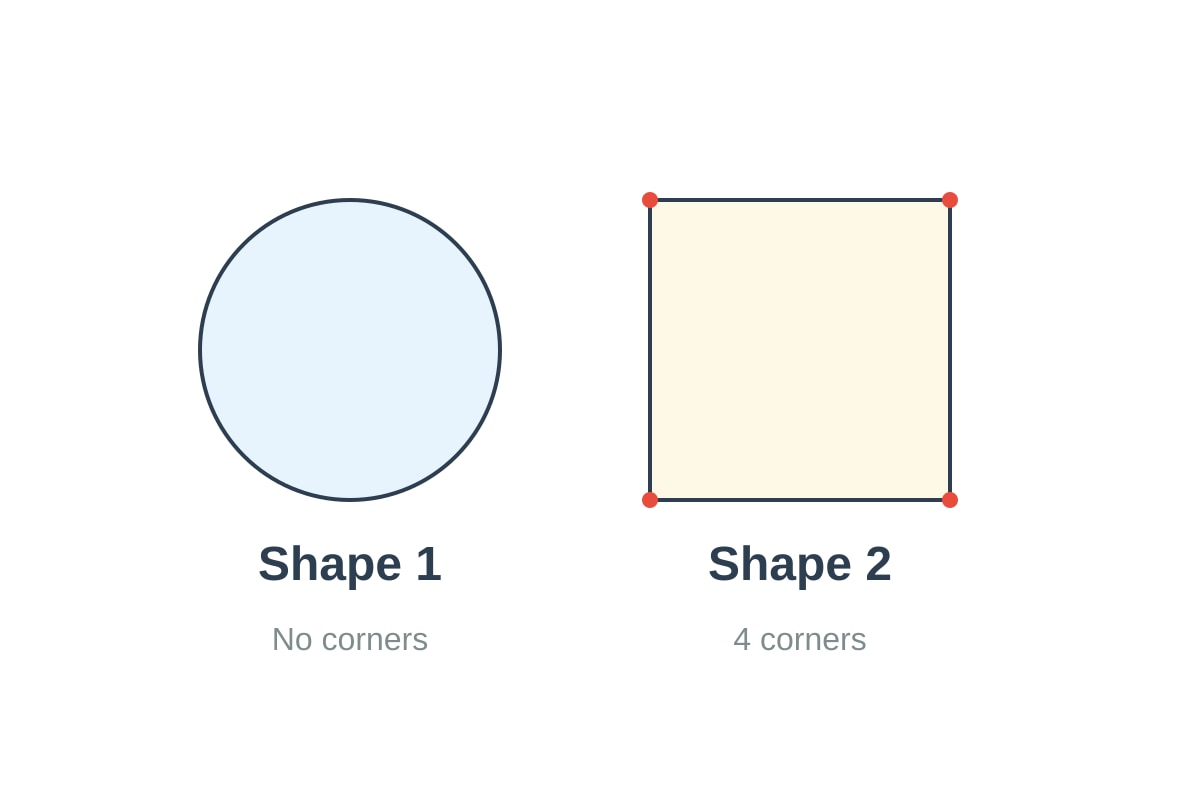
18. (a) Shape 1 (the circle) — 1 mark (b) Shape 2 (the square) — 1 mark
- Total: 2 marks
- Teaching Note: A circle has 0 corners because it is round. A square has 4 corners, one at each corner where two sides meet at a right angle.
- Expected visual (Q18-fig1): A circle labelled "Shape 1" and a square labelled "Shape 2" for clear comparison.
Section H: Word Problems
Concept Recap: When we read a word problem, we look for clues (numbers of sides, corners, equal/unequal) to identify the shape. This connects words to shape properties.
19. (a) Square — 1 mark (b) 4 — 1 mark
- Total: 2 marks
- Teaching Note: A shape with 4 equal sides and 4 corners is a square. A square always has 4 corners.
- Marking: Spelling: accept "square". For (b), accept "4" or "four".
20. (a) Half circle — 1 mark (b) Yes — 1 mark
- Total: 2 marks
- Teaching Note: When a circle is cut into 2 equal parts, each part is a half circle. Each part has a curved side (the round part of the original circle) and a straight side (the cut).
- Marking: For (a), accept "half circle", "semicircle", or "half of a circle". For (b), the answer "Yes" is correct because each half circle still has the curved edge from the original circle.
Marking Summary
| Section | Questions | Marks per Q | Total |
|---|---|---|---|
| A | 1–6 | 1 | 6 |
| B | 7–10 | 1 | 4 |
| C | 11–12 | 2 | 4 |
| D | 13–14 | 2 | 4 |
| E | 15–16 | 3 | 6 |
| F | 17 | 2 | 2 |
| G | 18 | 2 | 2 |
| H | 19–20 | 2 | 4 |
| Total | 30 |