AI Generated Quiz

Primary 1 Mathematics Shapes Quiz

Free AI-Generated Kimi K2 6 Free Primary 1 Mathematics Shapes quiz with questions and answers for Singapore students. This page is rendered as a direct URL so the questions and answers can be discovered without pressing in-page buttons.

These static practice materials are generated from the site's syllabus and paper-generation workflow, with source and model context shown so students and parents can evaluate the material before use.

Primary 1 Mathematics AI Generated Generated by Kimi K2 6 Free Updated 2026-06-07

Questions

<!-- TuitionGoWhere generation metadata: stage=5-1; model=moonshotai/kimi-k2.6:free; model_label=Kimi K2.6 Free; generated=2026-06-06; Sources: Stage 4-0 LLM templates, syllabus context, and Stage 2 evidence where available. -->

Primary 1 Mathematics Quiz - Shapes

Name: _________________________________

Class: _________________________________

Date: _________________________________

Score: ________ / 25

Duration: 25 minutes

Total Marks: 25 marks

Instructions:

  • Read each question carefully.
  • Write your answers in the spaces provided.
  • Show your working where asked.

Section A: Naming Shapes (Questions 1–8)

Choose or write the correct answer. Each question carries 1 mark.


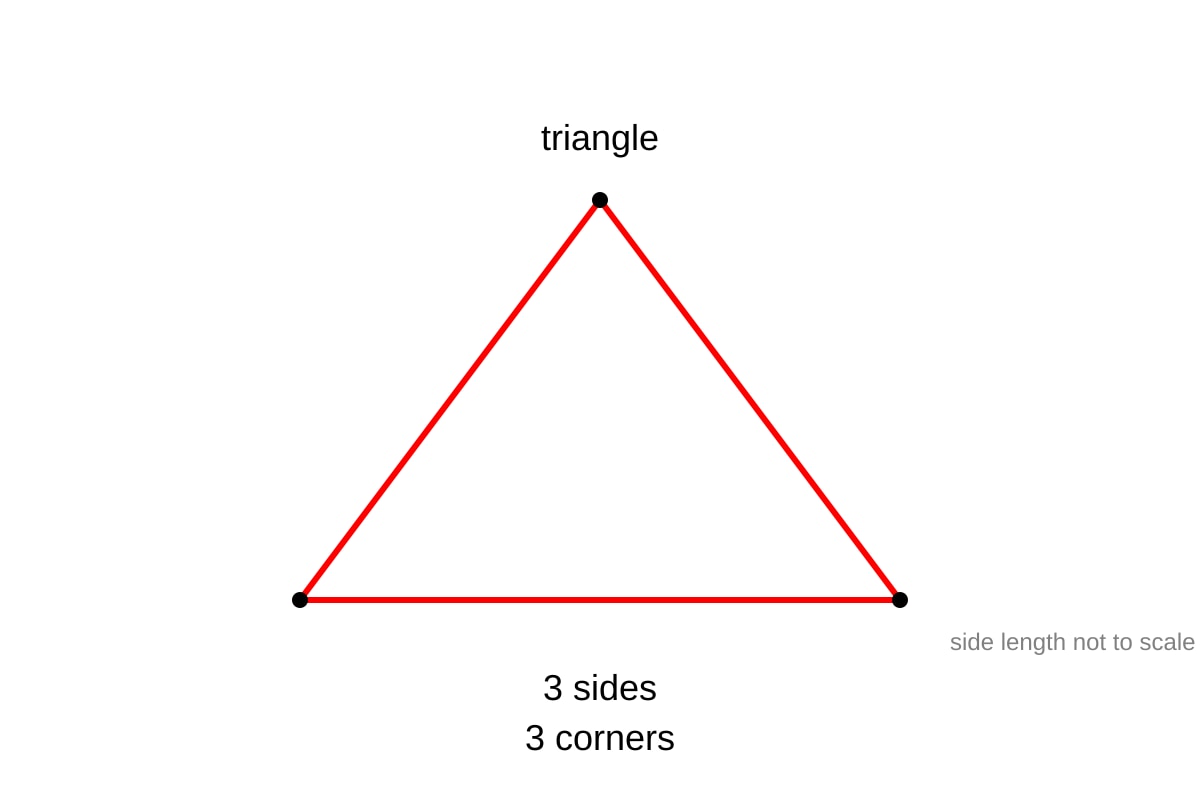
1. Look at the shape below. What is its name?

<image_placeholder> id: Q1-fig1 type: diagram linked_question: Q1 description: A red triangle with three straight sides, pointing upward labels: triangle, 3 sides, 3 corners values: side length not to scale must_show: closed shape with three straight sides, three corners (vertices), labelled with small dots at corners; one side horizontal at base </image_placeholder>

Answer: _________________________________ (1 mark)


2. How many straight sides does a rectangle have?

Answer: _________________________________ (1 mark)


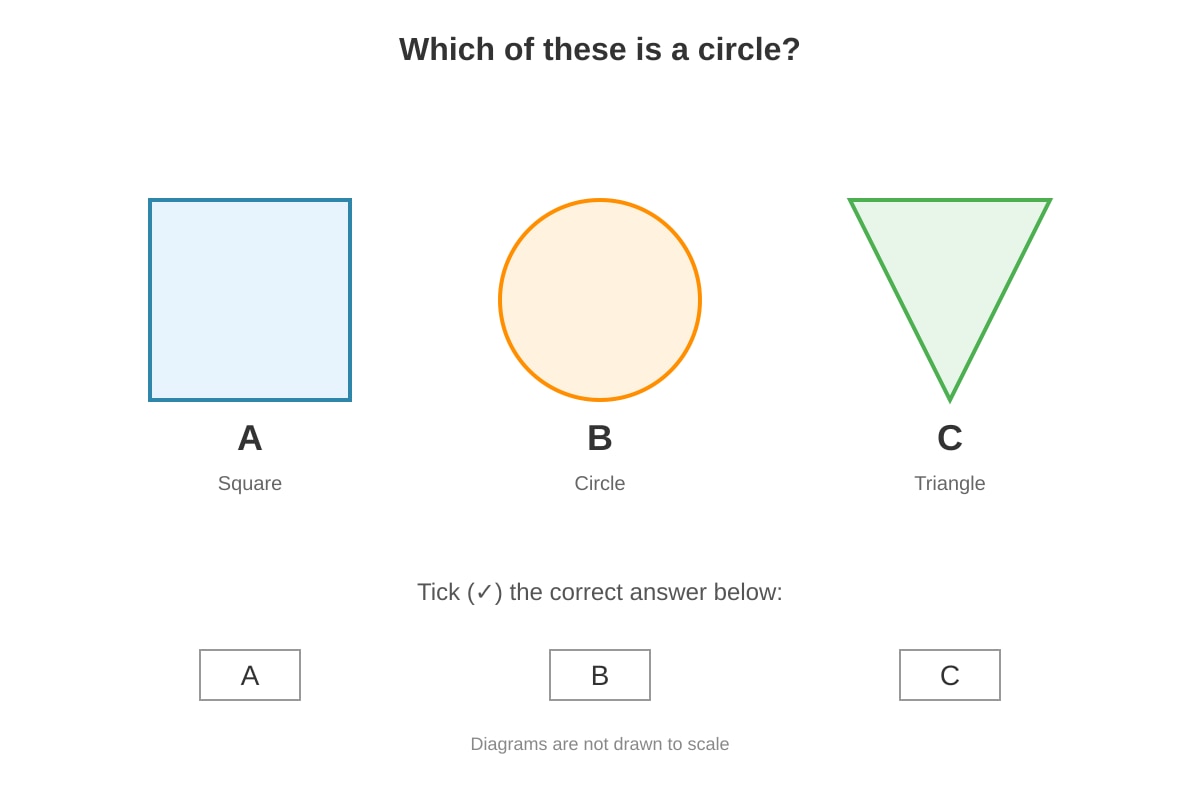
3. Which of these is a circle? Tick (✓) the correct answer.

<image_placeholder> id: Q3-fig1 type: diagram linked_question: Q3 description: Three shapes labeled A, B, and C for students to identify which is a circle labels: A, B, C values: not to scale must_show: Shape A: square with 4 equal straight sides; Shape B: perfect circle with curved edge, no corners; Shape C: triangle with 3 straight sides; all shapes same approximate size, clearly labeled A, B, C below each shape </image_placeholder>

Answer: ________ (1 mark)


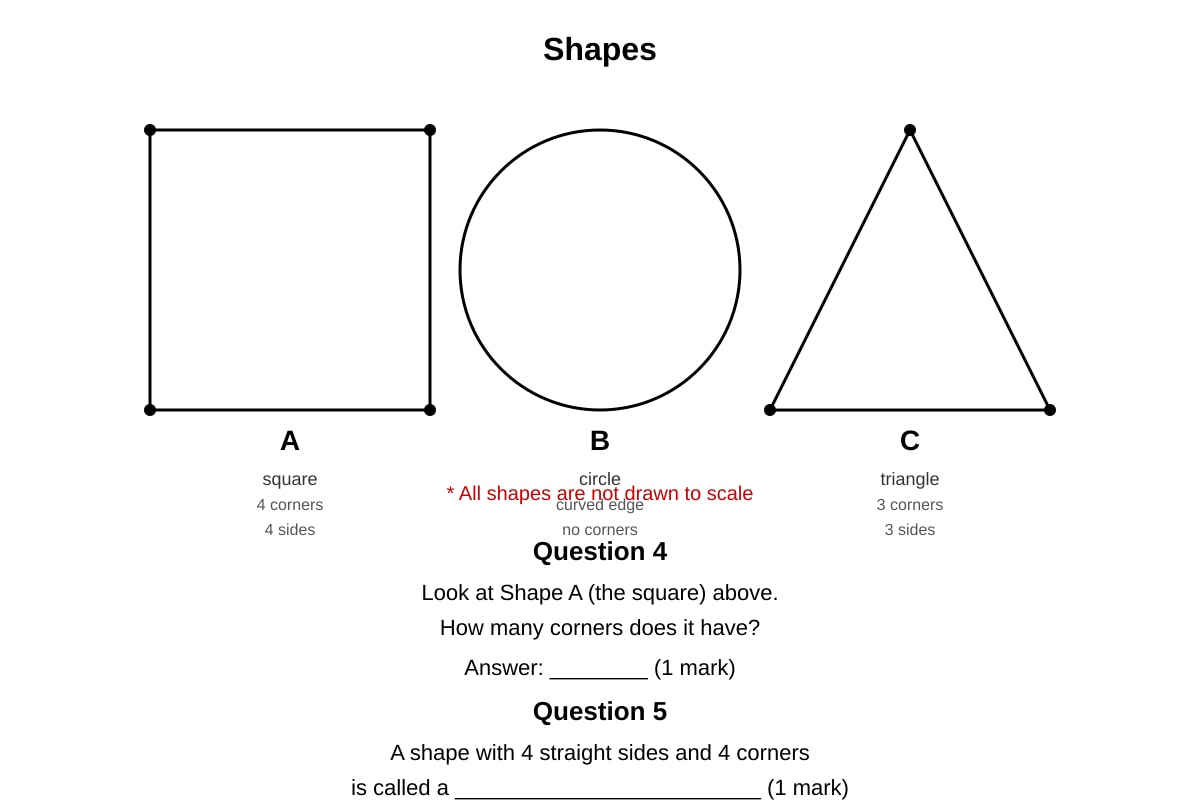
4. Look at the shape. How many corners does it have?

<image_placeholder> id: Q4-fig1 type: diagram linked_question: Q4 description: A square in standard orientation with one side horizontal at bottom labels: square, 4 corners, 4 sides values: not to scale must_show: closed shape with 4 equal straight sides, 4 right-angle corners marked with small dots; sides horizontal and vertical </image_placeholder>

Answer: _________________________________ (1 mark)


5. A shape with 4 straight sides and 4 corners is called a _________________________. (1 mark)


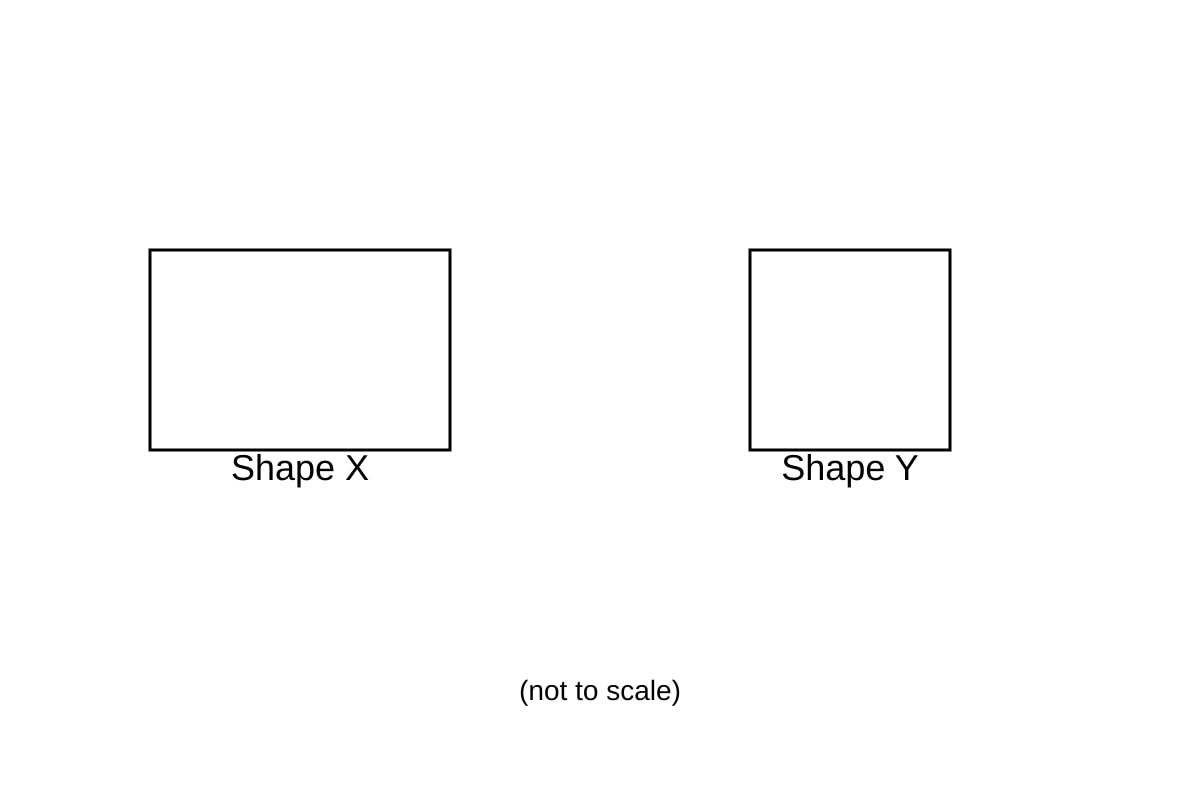
6. Look at the two shapes. Write "same" or "different" in the box.

<image_placeholder> id: Q6-fig1 type: diagram linked_question: Q6 description: Two shapes side by side for comparison - a rectangle and a square labels: Shape X, Shape Y values: not to scale must_show: Shape X: rectangle with longer horizontal sides and shorter vertical sides (not a square); Shape Y: square with 4 equal sides; both shapes clearly labeled X and Y below each; both in standard orientation with horizontal base </image_placeholder>

These shapes are _________________________. (1 mark)


7. Which shape has NO corners? Tick (✓) the correct answer.

  • A) Triangle
  • B) Rectangle
  • C) Circle
  • D) Square

Answer: ________ (1 mark)


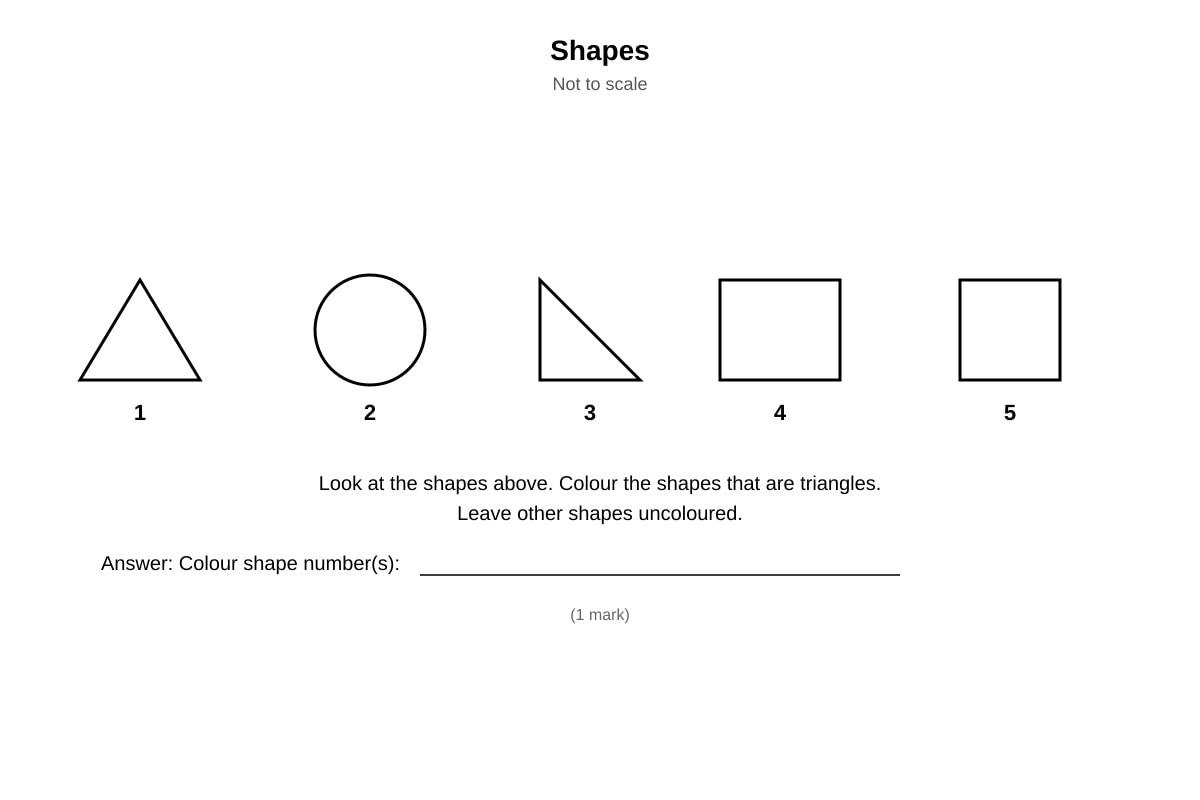
8. Colour the shapes that are triangles. Leave other shapes uncoloured.

<image_placeholder> id: Q8-fig1 type: diagram linked_question: Q8 description: A set of 5 mixed shapes for students to identify triangles labels: shapes 1 to 5 values: not to scale must_show: Shape 1: triangle (equilateral-like, pointing up); Shape 2: circle; Shape 3: triangle (right-angled scalene, different orientation from Shape 1); Shape 4: rectangle; Shape 5: square; all five shapes arranged in one row, numbered 1, 2, 3, 4, 5 below each </image_placeholder>

Answer: Colour shapes number(s): _________________________________ (1 mark)


Section B: Describing Shapes (Questions 9–14)

Answer in the spaces. Each question carries 2 marks.


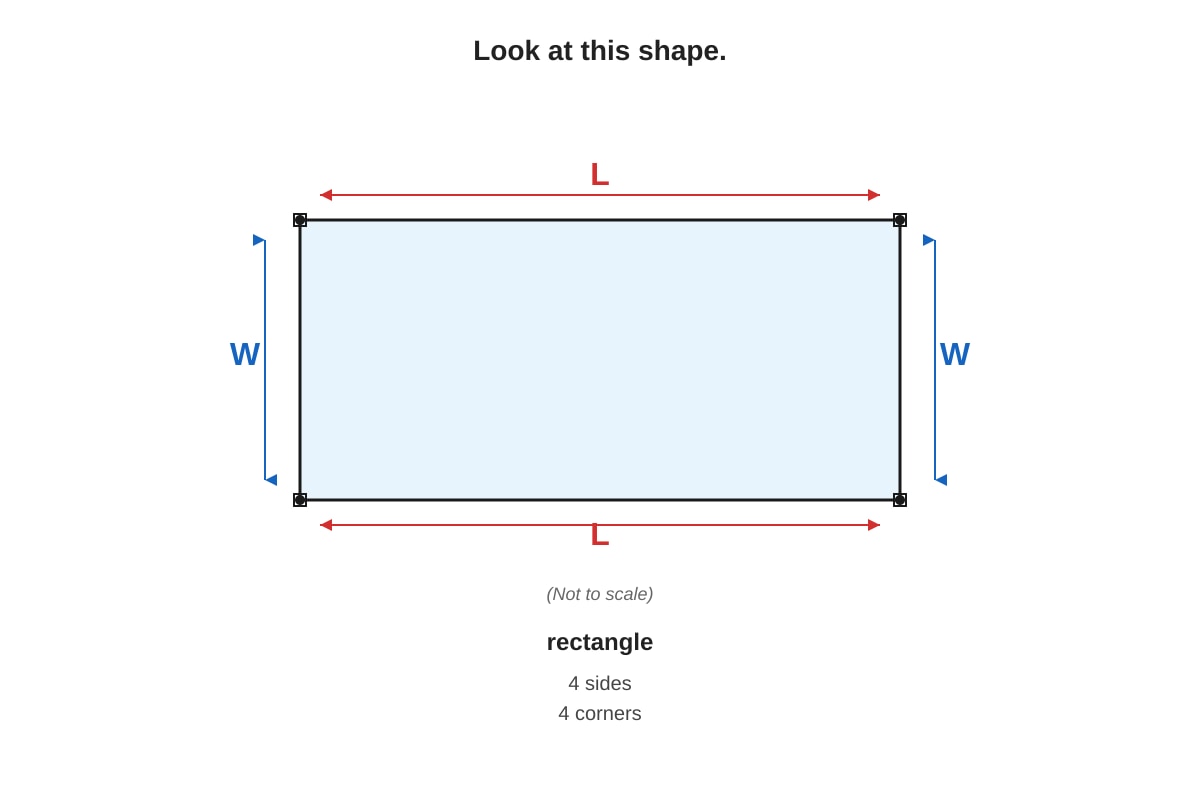
9. Look at this shape.

<image_placeholder> id: Q9-fig1 type: diagram linked_question: Q9 description: A rectangle with longer horizontal sides labels: rectangle, length, width, 4 sides, 4 corners values: not to scale; labeled with letter L on long side and W on short side must_show: closed shape with 4 straight sides, opposite sides equal in length (longer horizontal, shorter vertical), 4 right-angle corners marked with dots; sides labeled: long sides marked "L", short sides marked "W"; arrows or color coding to show opposite sides match </image_placeholder>

(a) What is the name of this shape? (1 mark)

Answer: _________________________________

(b) Write "long" or "short" to describe each side. (1 mark)

This shape has 2 _________________________ sides and 2 _________________________ sides.


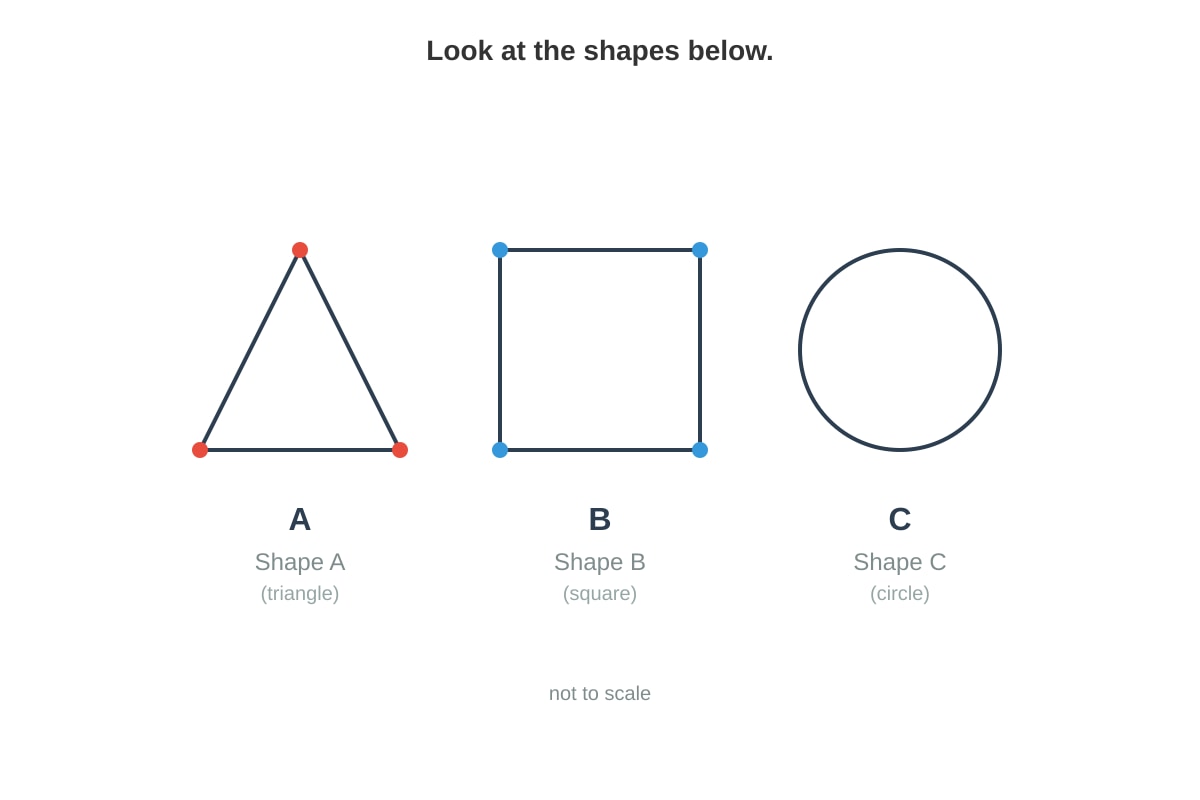
10. Look at the shapes below.

<image_placeholder> id: Q10-fig1 type: diagram linked_question: Q10 description: Three shapes arranged horizontally - triangle, square, and circle labels: Shape A (triangle), Shape B (square), Shape C (circle) values: not to scale must_show: Shape A: triangle with 3 straight sides, 3 corners (labeled A); Shape B: square with 4 equal straight sides, 4 corners (labeled B); Shape C: circle with curved edge, no corners (labeled C); all shapes approximately same height, clearly labeled A, B, C below each; small dots at corners of A and B </image_placeholder>

(a) Which shape has the most sides? Write A, B, or C. (1 mark)

Answer: ________

(b) Which shape has a curved side? Write A, B, or C. (1 mark)

Answer: ________


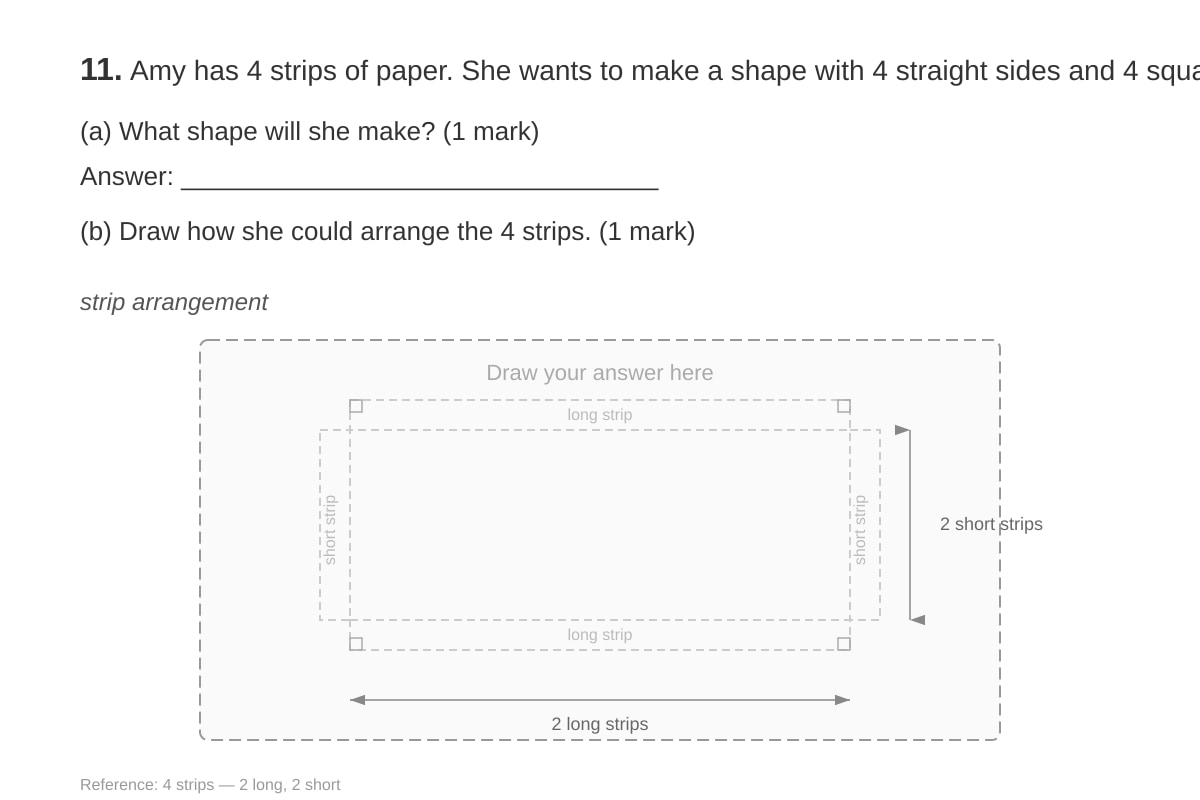
11. Amy has 4 strips of paper. She wants to make a shape with 4 straight sides and 4 square corners.

(a) What shape will she make? (1 mark)

Answer: _________________________________

(b) Draw how she could arrange the 4 strips. (1 mark)

<image_placeholder> id: Q11-fig1 type: diagram linked_question: Q11 description: Blank space for student drawing of rectangle formed by 4 strips labels: strip arrangement values: 4 strips, 2 long and 2 short must_show: empty rectangular frame with light dotted lines suggesting where strips go; or blank space with "Draw your answer here" label </image_placeholder>


12. Look at this pattern made with shapes.

<image_placeholder> id: Q12-fig1 type: diagram linked_question: Q12 description: Pattern of alternating triangle and circle shapes in a row labels: pattern, repeating shapes values: triangle, circle, triangle, circle, triangle, circle, triangle (7 shapes shown) must_show: Row of 7 shapes from left to right: triangle (pointing up), circle, triangle (pointing up), circle, triangle (pointing up), circle, triangle (pointing up); shapes evenly spaced; first 6 shapes clearly show alternating pattern, 7th shape is triangle revealing the continuation </image_placeholder>

(a) What comes next in the pattern? Circle your answer: triangle / circle (1 mark)

(b) What was the pattern rule? (1 mark)

Answer: _________________________________


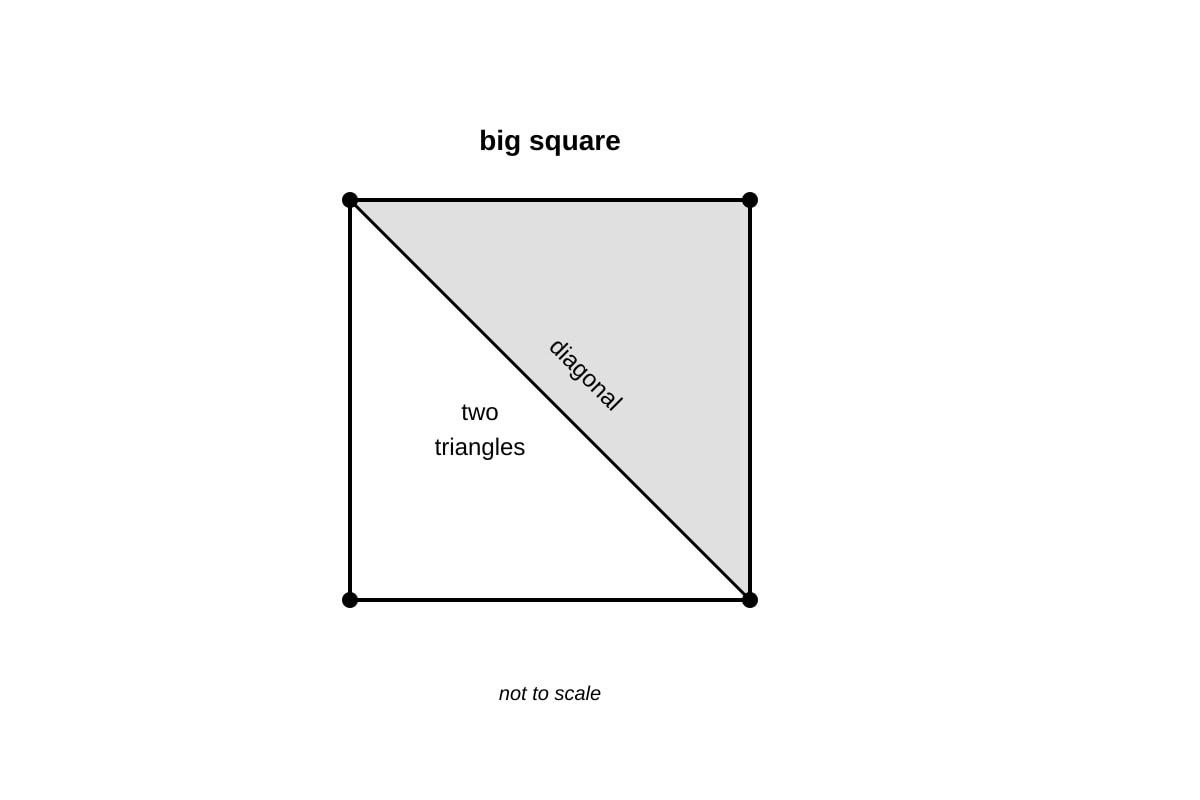
13. The shape below is made from two smaller shapes.

<image_placeholder> id: Q13-fig1 type: diagram linked_question: Q13 description: A square divided by a diagonal line into two triangles labels: big square, two triangles, diagonal values: not to scale must_show: A square with one diagonal line from top-left corner to bottom-right corner, dividing it into two triangles; dots at all four corners of square and at ends of diagonal; light shading different for each triangle (e.g., left triangle light grey, right triangle white); outline of original square shown with bold line </image_placeholder>

(a) Name the two small shapes. (1 mark)

Answer: _________________________________

(b) How many sides does the big shape have? (1 mark)

Answer: _________________________________


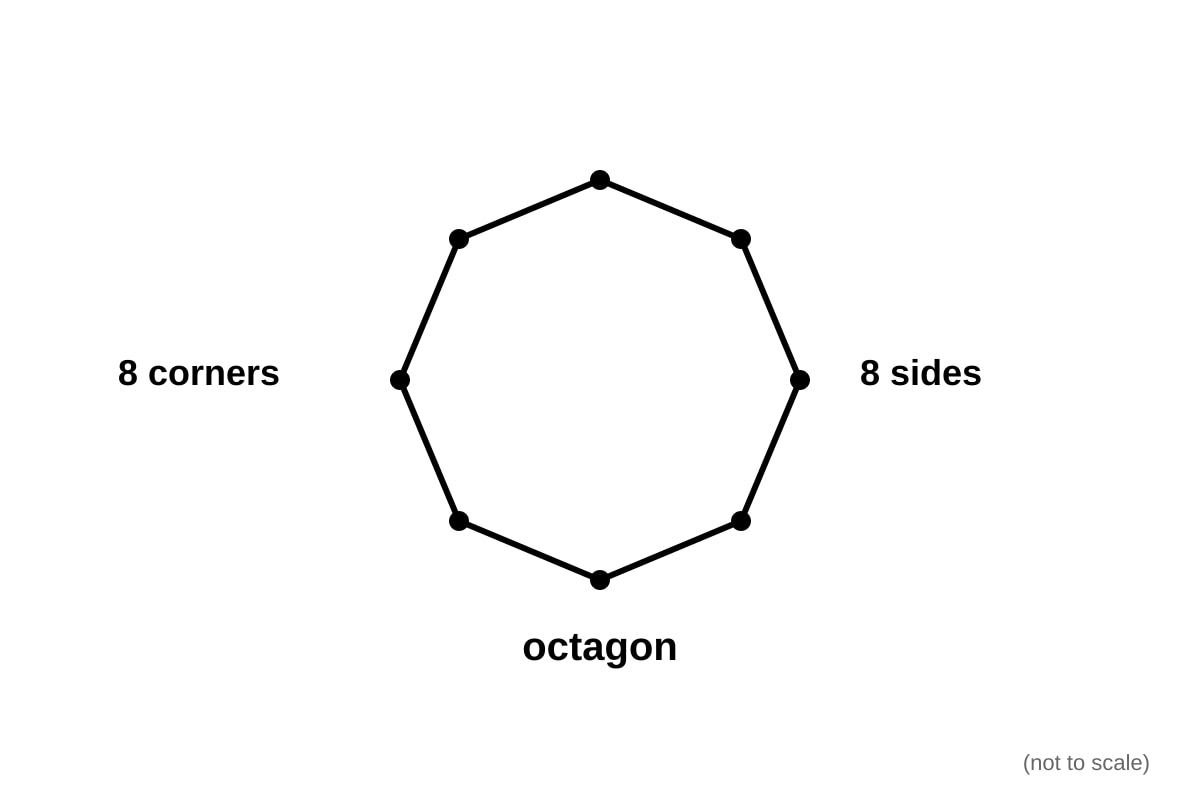
14. Look at this road sign shape.

<image_placeholder> id: Q14-fig1 type: diagram linked_question: Q14 description: An octagonal stop sign shape (simplified for P1 - shown as basic 8-sided shape) labels: 8 sides, 8 corners, octagon values: not to scale; 8 sides must_show: Regular octagon shape with 8 equal straight sides and 8 corners; each corner marked with a small dot; sides slightly thicker for visibility; one side horizontal at top; no text on the sign itself </image_placeholder>

(a) Count and write how many sides this shape has. (1 mark)

Answer: _________________________________ sides

(b) Write whether this shape has straight sides or curved sides. (1 mark)

Answer: _________________________________ sides


Section C: Working with Shapes (Questions 15–20)

Solve these problems. Show your thinking. Each question carries 2–3 marks.


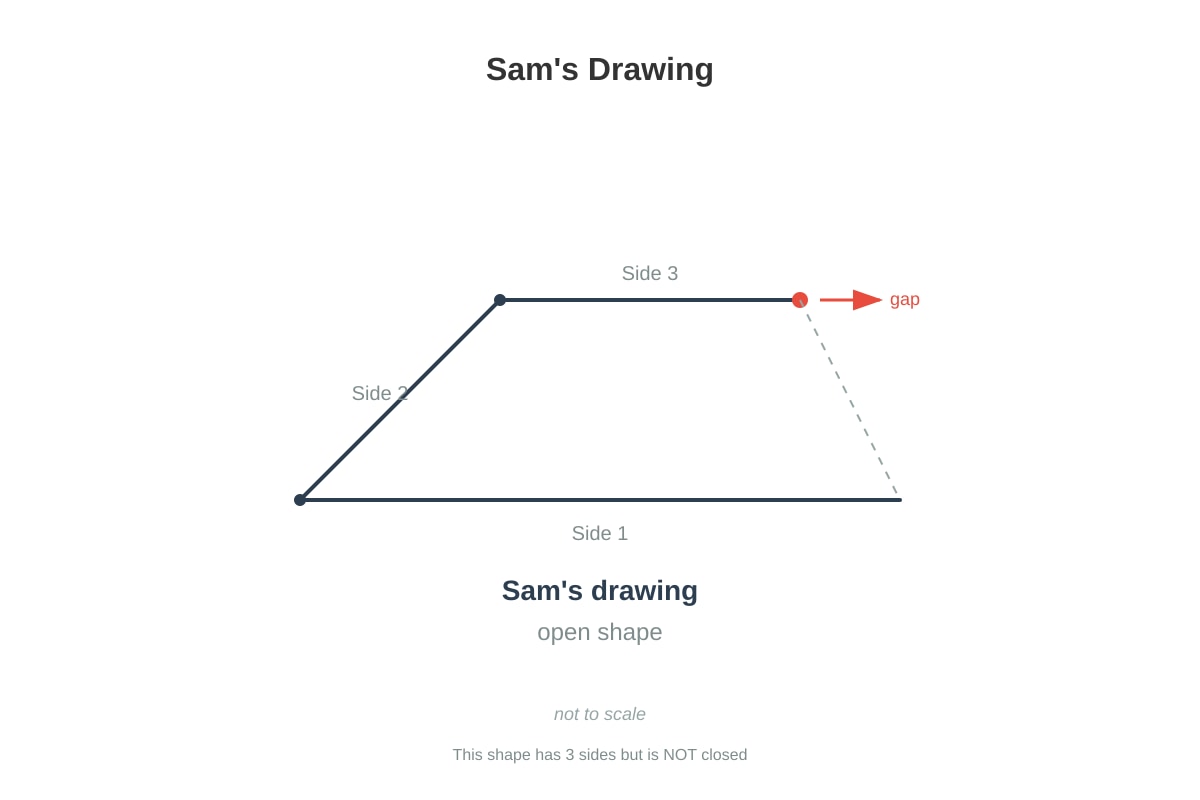
15. Sam wants to draw a shape with 3 straight sides. He draws this:

<image_placeholder> id: Q15-fig1 type: diagram linked_question: Q15 description: An open shape with 3 sides that does not close - two lines meet at one point but third side doesn't connect labels: Sam's drawing, open shape values: not to scale must_show: Three straight line segments: horizontal bottom line, diagonal line up from left end, horizontal line from top of diagonal going right but NOT connecting back to right end of bottom line; gap visible at upper right; small gap marked with arrow or highlighted; ends of lines not connected </image_placeholder>

(a) Has Sam drawn a triangle? Circle: Yes / No (1 mark)

(b) Explain why or why not. (1 mark)

Answer: _________________________________


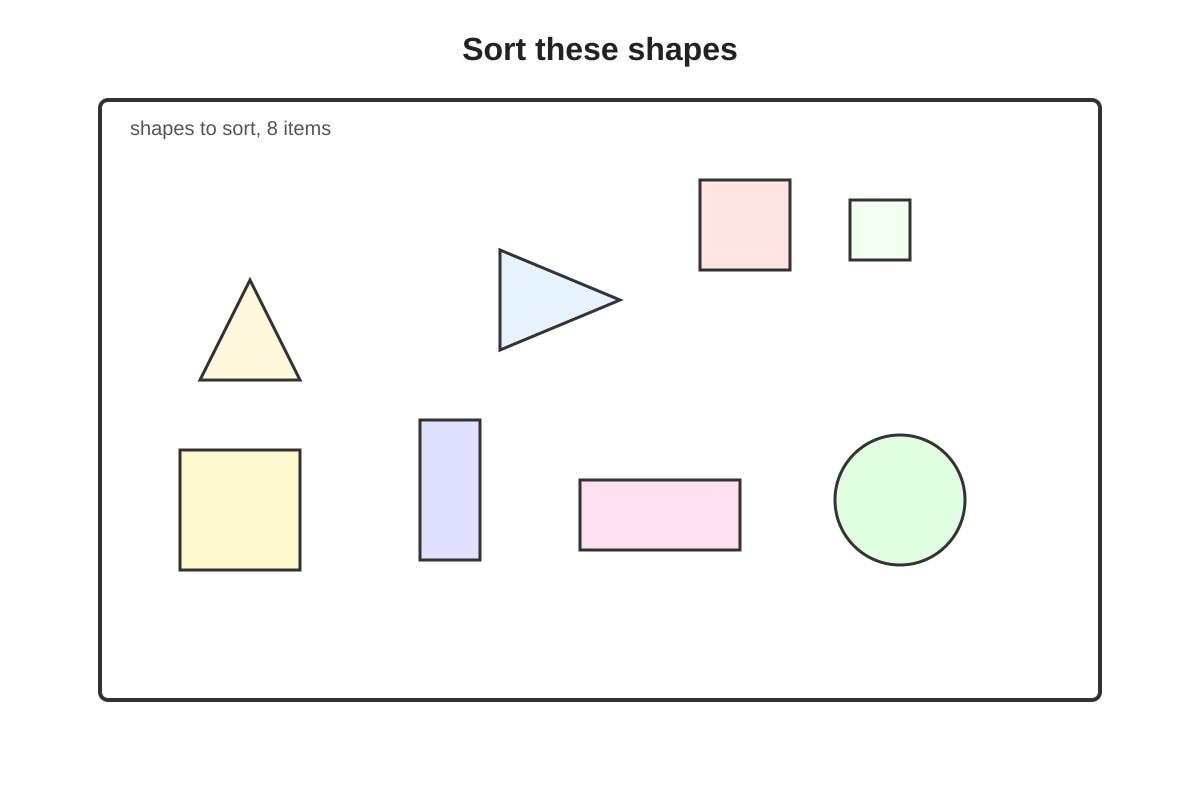
16. Look at the shapes in the box.

<image_placeholder> id: Q16-fig1 type: diagram linked_question: Q16 description: A collection of 8 assorted 2D shapes in a "box" area for sorting labels: shapes to sort, 8 items values: 2 triangles, 3 squares, 2 rectangles, 1 circle must_show: Box boundary with 8 shapes inside arranged somewhat randomly: two triangles (one pointing up, one pointing right), three squares (different sizes okay), two rectangles (one tall, one wide/horizontal), one circle; all clearly drawn with bold outlines; no labels on individual shapes inside box; "Sort these shapes" label above box </image_placeholder>

Sort the shapes. Write how many of each shape.

ShapeHow many?
Triangle
Circle
Square
Rectangle

(2 marks)


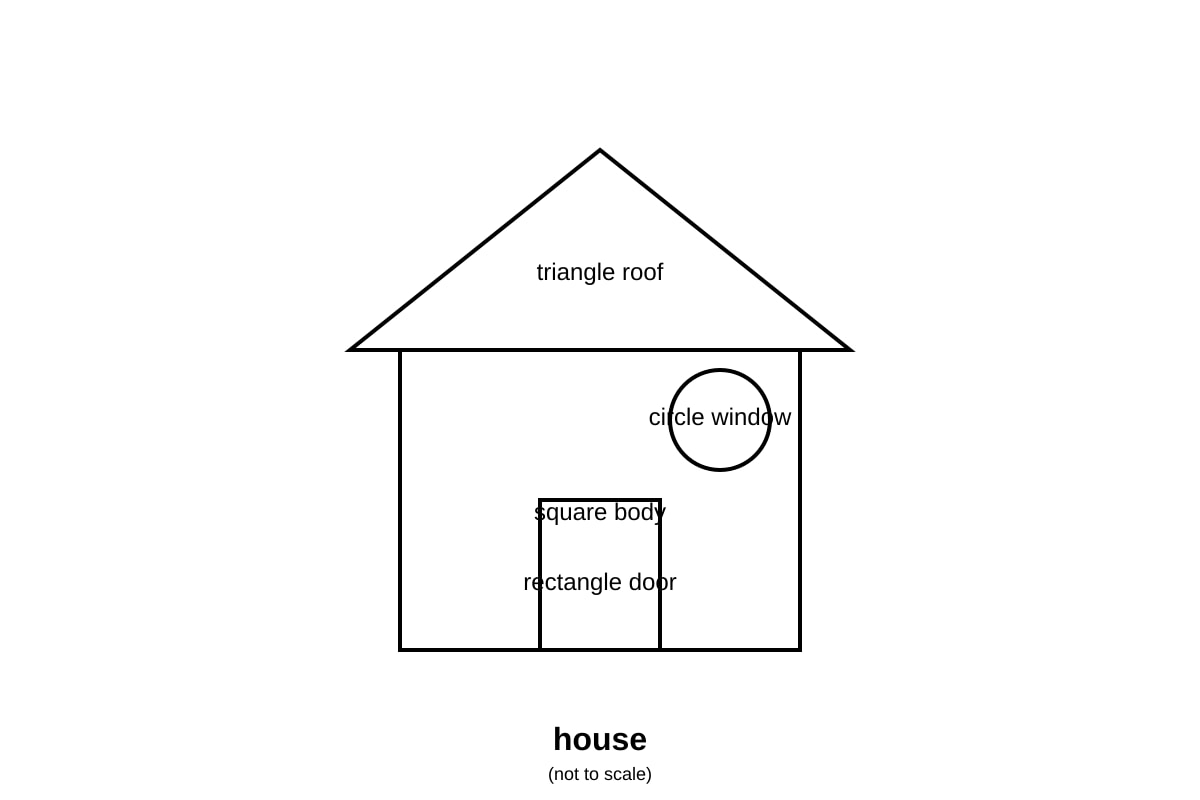
17. Look at this picture made with shapes.

<image_placeholder> id: Q17-fig1 type: diagram linked_question: Q17 description: A simple house picture composed of composite shapes - square body and triangle roof labels: house, triangle roof, square body, rectangle door, circle window values: not to scale must_show: Simple house figure: square body (base), triangle roof on top (pointing up, base matches square width), small rectangle door in center bottom of square body, small circle window in upper right of square body; all shapes clearly outlined with bold lines; shape types distinguishable; no shading or minimal shading </image_placeholder>

(a) How many triangles are in the picture? (1 mark)

Answer: _________________________________

(b) How many rectangles are in the picture? (1 mark)

Answer: _________________________________

(c) What shape is the door? (1 mark)

Answer: _________________________________


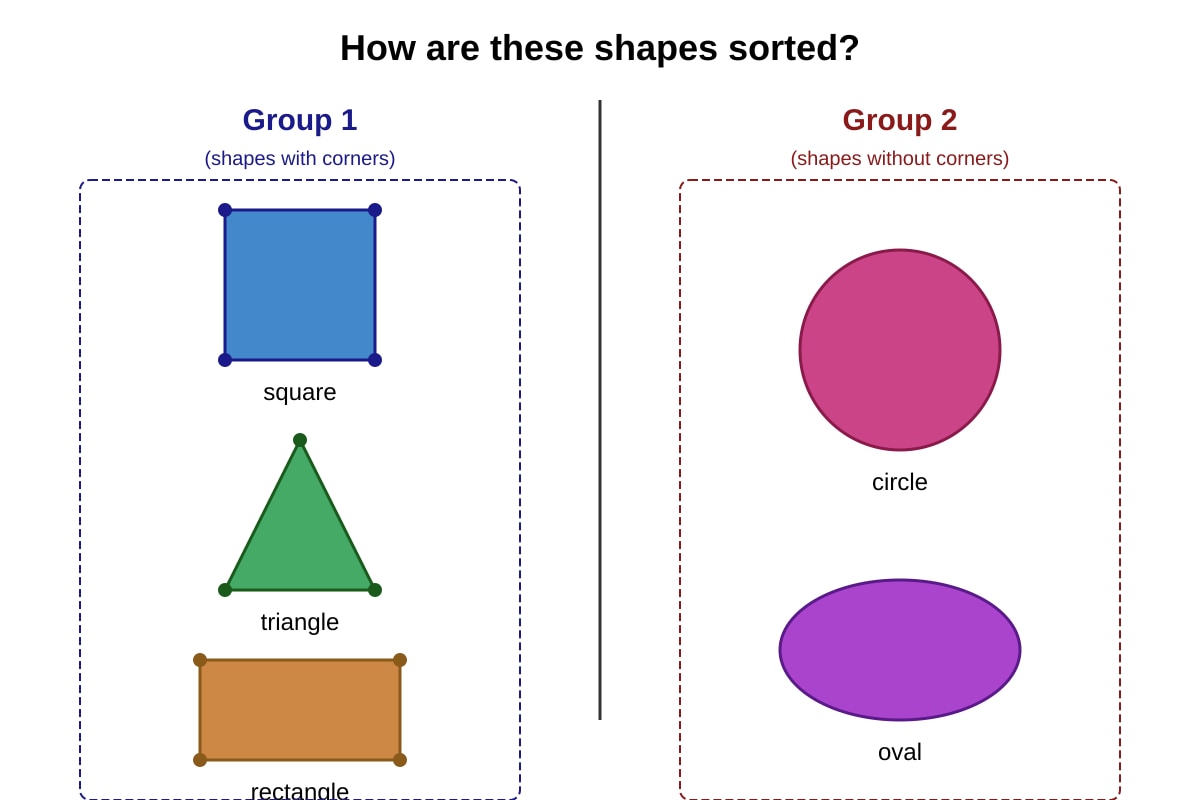
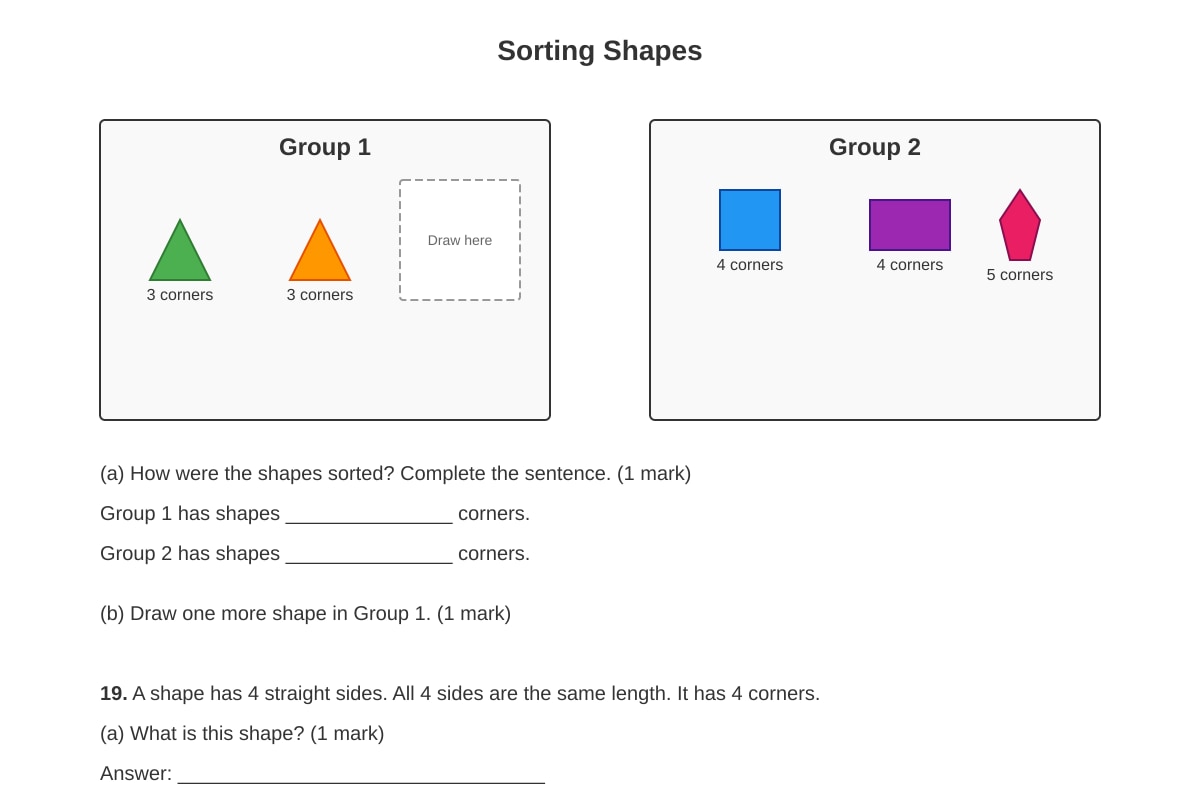
18. These shapes are sorted into two groups.

<image_placeholder> id: Q18-fig1 type: diagram linked_question: Q18 description: Two labeled groups with shapes sorted by a property - Group 1 and Group 2 labels: Group 1 (shapes with corners), Group 2 (shapes without corners) values: Group 1: square, triangle, rectangle; Group 2: circle, oval (or just circle repeated) must_show: Left side labeled "Group 1" with square, triangle, rectangle stacked vertically - all with dots at corners; Right side labeled "Group 2" with circle and another circle or simple curved shape; clear separation between groups; title "How are these shapes sorted?" </image_placeholder>

(a) How were the shapes sorted? Complete the sentence. (1 mark)

Group 1 has shapes _________________________ corners.

Group 2 has shapes _________________________ corners.

(b) Draw one more shape in Group 1. (1 mark)

<image_placeholder> id: Q18-fig2 type: diagram linked_question: Q18 description: Blank space for student to draw additional shape for Group 1 labels: draw here values: blank space must_show: Empty rectangular area with "Draw your shape here" label; dotted boundary for drawing space </image_placeholder>


19. A shape has 4 straight sides. All 4 sides are the same length. It has 4 corners.

(a) What is this shape? (1 mark)

Answer: _________________________________

(b) Draw this shape in the box. (1 mark)

<image_placeholder> id: Q19-fig1 type: diagram linked_question: Q19 description: Empty box for student to draw a square labels: draw here values: blank space must_show: Square frame with "Draw your shape here" inside; or empty space with clear boundary lines for drawing </image_placeholder>

(c) Is this shape also a rectangle? Circle: Yes / No (1 mark)

Explain: _________________________________


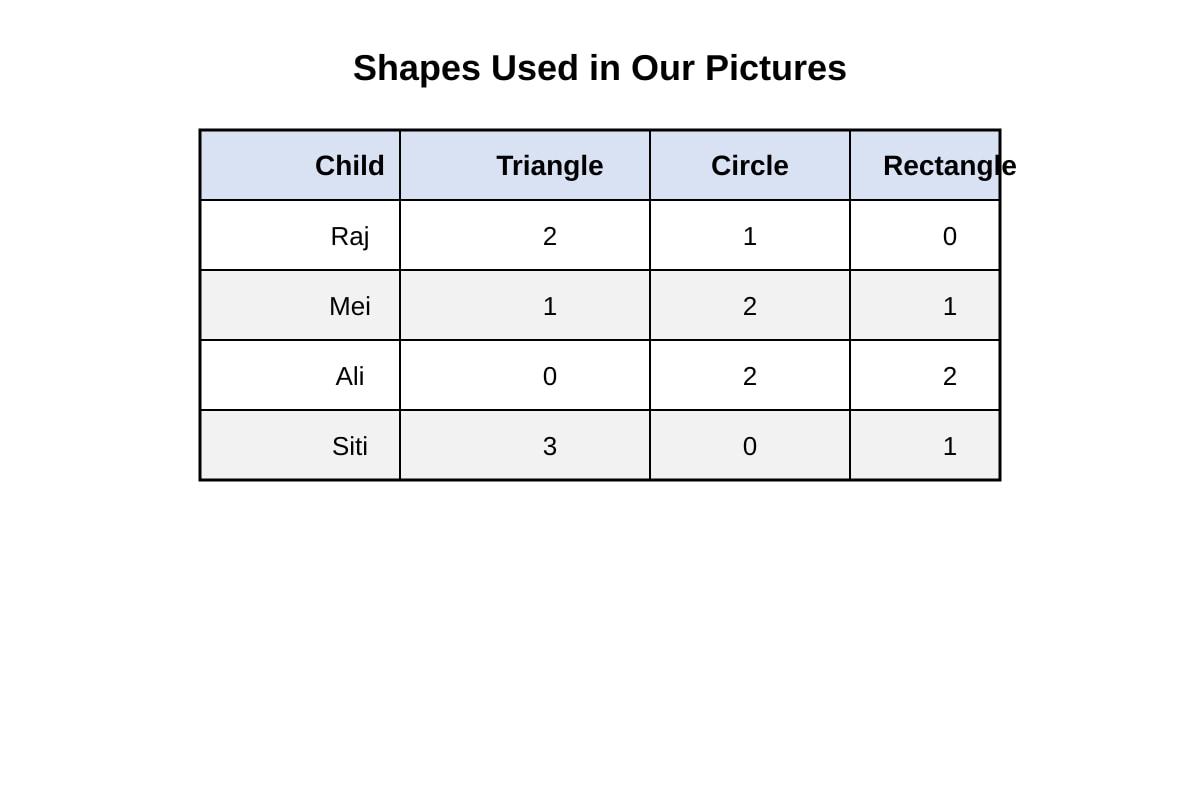
20. Look at the table. Some children used shapes to make a picture.

<image_placeholder> id: Q20-fig1 type: table linked_question: Q20 description: Table showing shapes used by four children to make pictures labels: Raj, Mei, Ali, Siti; columns for triangle, circle, rectangle values:

  • Raj: 2 triangles, 1 circle, 0 rectangles
  • Mei: 1 triangle, 2 circles, 1 rectangle
  • Ali: 0 triangles, 2 circles, 2 rectangles
  • Siti: 3 triangles, 0 circles, 1 rectangle must_show: Clean table with 4 rows (children names) and 3 columns (shape types) plus header row; cells contain numbers only; clear grid lines; title "Shapes Used in Our Pictures" </image_placeholder>

(a) Who used the most triangles? (1 mark)

Answer: _________________________________

(b) How many circles did Raj and Ali use altogether? Show your working: (2 marks)


Answer: _________________________________


END OF QUIZ

Answers

<!-- TuitionGoWhere generation metadata: stage=5-1; model=moonshotai/kimi-k2.6:free; model_label=Kimi K2.6 Free; generated=2026-06-06; Sources: Stage 4-0 LLM templates, syllabus context, and Stage 2 evidence where available. -->

Primary 1 Mathematics Quiz - Shapes: Answer Key

Total Marks: 25 marks


Section A: Naming Shapes

1. Answer: triangle (1 mark)

Explanation: This shape has 3 straight sides and 3 corners. A shape with 3 straight sides joined together to make a closed shape is called a triangle. The word "tri" means three, which helps us remember it has 3 sides. Look at the corners (where two sides meet) — there are 3 of them, shown by the small dots.

Common mistake: Some students say "pyramid" — that is a 3D shape, not a flat (2D) shape like this one.


2. Answer: 4 (or "four") (1 mark)

Explanation: A rectangle is a flat shape with 4 straight sides and 4 corners. Count the sides: 1, 2, 3, 4. The opposite sides of a rectangle are the same length — two sides are longer and two sides are shorter.

Teaching point: All rectangles (including squares) have exactly 4 straight sides. We never count "0" for a side.


3. Answer: B (1 mark)

Explanation:

  • Shape A is a square — it has 4 straight sides and 4 corners. Not a circle.
  • Shape B is a circle — it has one curved side going all the way round and no corners. ✓ This is correct.
  • Shape C is a triangle — it has 3 straight sides and 3 corners. Not a circle.

A circle is special because it has no straight sides and no corners at all. It is perfectly round.


4. Answer: 4 (or "four") (1 mark)

Explanation: The shape shown is a square. Count the corners where two sides meet: top-left, top-right, bottom-left, bottom-right. There are 4 corners, marked with small dots in the diagram. Every square has 4 corners and 4 straight sides.


5. Answer: quadrilateral OR square OR rectangle (accept any 4-sided shape name; "quadrilateral" or "square" or "rectangle" accepted) (1 mark)

Best answer: quadrilateral or square/rectangle

Explanation: A shape with 4 straight sides and 4 corners is a quadrilateral. At Primary 1, students most commonly learn these as square or rectangle. Both have 4 straight sides and 4 corners. The specific name depends on whether all sides are equal (square) or opposite sides are equal with different lengths (rectangle).

Note: "Quadrilateral" is the general name for all 4-sided shapes. "Square" and "rectangle" are types of quadrilaterals.


6. Answer: different (1 mark)

Explanation: These shapes are different.

  • Shape X is a rectangle — it has 2 longer sides and 2 shorter sides.
  • Shape Y is a square — all 4 sides are the same length.

Both shapes have 4 straight sides and 4 corners, but their side lengths are different. A square is a special rectangle where all sides happen to be equal, but when we look at them, they look different because one is "long and thin" and one is "the same all round."

Common mistake: Some students say "same" because both have 4 sides. They are the same TYPE of shape family (both quadrilaterals), but they are different in appearance and properties.


7. Answer: C (1 mark)

Explanation:

  • A) Triangle — has 3 corners ❌
  • B) Rectangle — has 4 corners ❌
  • C) Circle — has NO corners
  • D) Square — has 4 corners ❌

A circle is the only common shape with no corners at all. Its edge is one smooth curve all the way round.


8. Answer: 1 and 3 (or "1, 3" or shading shapes 1 and 3) (1 mark)

Explanation: Triangles are shapes with 3 straight sides and 3 corners.

  • Shape 1: 3 straight sides, 3 corners = TRIANGLE ✓
  • Shape 2: curved, no corners = CIRCLE ✗
  • Shape 3: 3 straight sides, 3 corners = TRIANGLE ✓ (even though it looks different from Shape 1, it's still a triangle!)
  • Shape 4: 4 straight sides, 4 corners = RECTANGLE ✗
  • Shape 5: 4 equal straight sides, 4 corners = SQUARE ✗

Teaching point: Triangles can look different (tall, wide, pointing different directions) but they always have 3 sides and 3 corners.


Section B: Describing Shapes

9. (a) Answer: rectangle (1 mark)

Explanation: This shape has 4 straight sides with opposite sides equal. The longer sides are opposite each other, and the shorter sides are opposite each other. This is a rectangle. It looks like a "stretched square" or a door shape.

(b) Answer: long, short (both words in correct positions for 1 mark)

or short, long (if matching the description order in the question)

Explanation: Looking at the labels: "L" marks the longer sides and "W" marks the shorter (width) sides. A rectangle always has:

  • 2 long sides (the top and bottom, or the left pair depending on orientation)
  • 2 short sides (the width)

The opposite sides of a rectangle are equal in length. This is different from a square where all 4 sides are the same length.


10. (a) Answer: B (1 mark)

Explanation:

  • Shape A (triangle): 3 sides
  • Shape B (square): 4 sides
  • Shape C (circle): 0 sides (curved)

Shape B has the most sides (4).

(b) Answer: C (1 mark)

Explanation:

  • Shape C (circle) has a curved side. It goes all the way round smoothly with no straight parts and no corners.
  • Shapes A and B only have straight sides.

11. (a) Answer: rectangle (accept "square" if student reasons all strips same length, but best answer is "rectangle" given context of 4 strips likely being 2 pairs) (1 mark)

Explanation: With 4 strips of paper, if Amy makes a shape with 4 straight sides and 4 square corners, she makes a rectangle. If all 4 strips were the same length, she would make a square (which is a special type of rectangle).

Teaching point: Both rectangles and squares have 4 straight sides and 4 square corners. The difference is whether all sides are equal (square) or opposite sides are equal (rectangle).

(b) Marking guidance: (1 mark)

Award mark for drawing showing:

  • 4 straight strips arranged as a closed shape with 4 corners
  • Sides roughly meeting at corners to form a rectangle-like shape
  • Does not need to be perfectly drawn

Expected drawing: Two longer horizontal strips (top and bottom) with two shorter vertical strips (left and right) connecting them at 4 corners.


12. (a) Answer: triangle (1 mark)

Explanation: The pattern is: triangle, circle, triangle, circle, triangle, circle, triangle...

After position 6 (circle), position 7 is already shown as triangle. So position 8 would be circle, but the question asks what comes next in the pattern shown — looking at position 7 which IS a triangle in the sequence shown.

Wait — re-reading: the pattern shown is T, C, T, C, T, C, T (7 shapes). What comes next after the 7th? The 8th would be circle.

Clarification: If question asks what follows the visible pattern, the next shape (8th) is circle. However if asking to identify the 7th shown shape, it's triangle.

Given pattern rule in (b), circle is the continuation. Accept circle as answer for "what comes next" after position 7.

Marking note: Accept circle as correct for "next in pattern." The 7th shape is triangle but the pattern continues with circle.

(b) Answer: The shapes go / alternate / repeat: triangle, circle, triangle, circle... (or equivalent description of repeating pattern) (1 mark)

Explanation: The pattern rule is that the shapes repeat or alternate: one triangle, one circle, one triangle, one circle, and so on. Patterns that repeat in a regular way help us predict what comes next.


13. (a) Answer: triangles (accept "two triangles" or "triangle" if singular intended) (1 mark)

Explanation: When a square is cut by a diagonal line from corner to corner, it makes two triangles. Each triangle has 3 sides and 3 corners. Look at the picture: the diagonal line divides the square into two equal (or congruent) triangular parts.

(b) Answer: 4 (1 mark)

Explanation: Before cutting, the big shape was a square. A square has 4 straight sides. Even though we drew a line inside it, the outside boundary still has 4 sides. Count the bold outer edges: 1, 2, 3, 4.

Common mistake: Some students count the diagonal inside as a side too, but it's not on the outside boundary. The big shape is still a 4-sided figure.


14. (a) Answer: 8 (1 mark)

Explanation: This shape is an octagon. Count the straight sides carefully, going around: 1, 2, 3, 4, 5, 6, 7, 8. It has 8 sides. "Octa-" means 8 (like an octopus has 8 arms).

(b) Answer: straight (1 mark)

Explanation: An octagon has straight sides. If you trace from one corner to the next, you go in a straight line, then turn, then another straight line. There are no curves. All 8 sides are straight lines.


Section C: Working with Shapes

15. (a) Answer: No (1 mark)

(b) Explanation: Sam has not drawn a triangle because a triangle must be a closed shape. His shape is open — the three sides do not meet to make a complete shape. There is a gap where the last side should connect. (1 mark)

Explanation: For a shape to be a triangle (or any polygon), all the sides must join up with no gaps. Sam's drawing has three line segments, but they don't form a closed figure. It's like starting to draw a triangle but not finishing it.

Teaching point: This tests the understanding that polygons are closed figures. Open shapes are not proper 2D shapes in geometry.


16. Answer table:

ShapeHow many?
Triangle2
Circle1
Square3
Rectangle2

(2 marks — 1 mark for all correct, or 0.5 mark for 2-3 correct)

Explanation: Count carefully from the box:

  • Triangles: Look for 3-sided shapes → there are 2 (one pointing up, one pointing to the side)
  • Circles: Look for round shapes with no corners → there is 1
  • Squares: Look for 4 equal sides with 4 corners → there are 3
  • Rectangles: Look for 4 sides with opposite sides equal, longer and shorter → there are 2 (not counting squares as rectangles at this level, or if counted differently, adjust)

Note: At P1 level, squares and rectangles are often treated as distinct categories. If student counts squares separately from rectangles, 3 squares and 2 rectangles is correct.


17. (a) Answer: 1 (1 mark)

Explanation: The roof is a triangle. There is 1 triangle in the picture. The roof is the part on top of the house that points upward like an arrow.

(b) Answer: 2 (accept "1" if only counting body as rectangle and excluding door; or "3" if counting door, body, and combined) — best answer: 2 or 3 depending on interpretation (1 mark)

Clarification marking:

  • 2 rectangles: the main body (large) and the door (small) are both rectangles
  • OR 1 rectangle: if only counting the house body and treating door separately

Most expected: 1 (body) or 2 (body + door). Accept reasonable answers with explanation.

(c) Answer: rectangle (1 mark)

Explanation: The door is a rectangle — it has 4 straight sides with 4 square corners, and it's longer than it is wide (or oriented vertically as a typical door).


18. (a) Answer: (1 mark)

Group 1 has shapes with corners.

Group 2 has shapes without corners.

Explanation: This is sorting by the property of having corners or not. Group 1 contains polygons (triangle, square, rectangle) which all have corners where sides meet. Group 2 contains the circle which has a smooth curve with no corners.

(b) Marking guidance: (1 mark)

Award mark for drawing any shape with corners:

  • Triangle, square, rectangle, other polygon
  • Must be a closed shape with straight sides and corners

Expected drawing: A triangle or another 4-sided shape with clear corners.


19. (a) Answer: square (1 mark)

Explanation: A shape with 4 equal straight sides and 4 corners where all sides are the same length is a square. This is the special property of a square — not just 4 sides, but 4 equal sides.

Comparison: A rectangle also has 4 sides and 4 corners, but its sides are not all equal (opposite sides are equal, but adjacent sides are different).

(b) Marking guidance: (1 mark)

Award mark for drawing:

  • A closed shape with 4 equal-looking sides
  • 4 corners that look roughly like right angles (square corners)
  • Reasonably regular appearance (not obviously a rectangle or diamond/rhombus)

(c) Answer: Yes (1 mark)

Explanation: A square is a special type of rectangle. This is because:

  • A rectangle needs: 4 straight sides, 4 square corners, opposite sides equal
  • A square has: 4 straight sides, 4 square corners, AND all 4 sides equal

Since a square meets ALL the requirements of a rectangle (plus one extra), it is a rectangle. It's like how a poodle is a type of dog — a square is a type of rectangle.

Teaching note: This is an important mathematical relationship, though challenging for P1. Accept "Yes" with any reasonable explanation, or even "No" with reasoning about different appearances if student is not yet ready for this abstraction.


20. (a) Answer: Siti (1 mark)

Explanation: Looking at the triangle column:

  • Raj: 2 triangles
  • Mei: 1 triangle
  • Ali: 0 triangles
  • Siti: 3 triangles ← most

Siti used the most triangles.

(b) Working and Answer: (2 marks)

Working:

  • Raj used 1 circle
  • Ali used 2 circles
  • Altogether: 1+2=31 + 2 = 3

Answer: 3 circles (or just "3")

Marking breakdown:

  • 1 mark: correct method shown (identifying 1 and 2, attempt to add)
  • 1 mark: correct final answer 3

Common mistake: Adding all children's circles including Mei (2). The question asks for Raj and Ali only, so 1+2=31 + 2 = 3, not 1+2+2=51 + 2 + 2 = 5.


END OF ANSWER KEY