AI Generated Quiz
Primary 1 Mathematics Multiplication Division Quiz
Free P1 Maths Multiplication Division quiz, AI version, with questions, answers, and syllabus-aligned practice for Singapore students.
These static practice materials are generated from the site's syllabus and paper-generation workflow, with source and model context shown so students and parents can evaluate the material before use.
Questions
Free quiz and exam paper access
Enter your details to view this paper
Your access is remembered on this device.
Answers
Primary 1 Mathematics Quiz - Multiplication Division: Answer Key
Total Marks: 20
Section A: Multiplication (Questions 1 - 5)
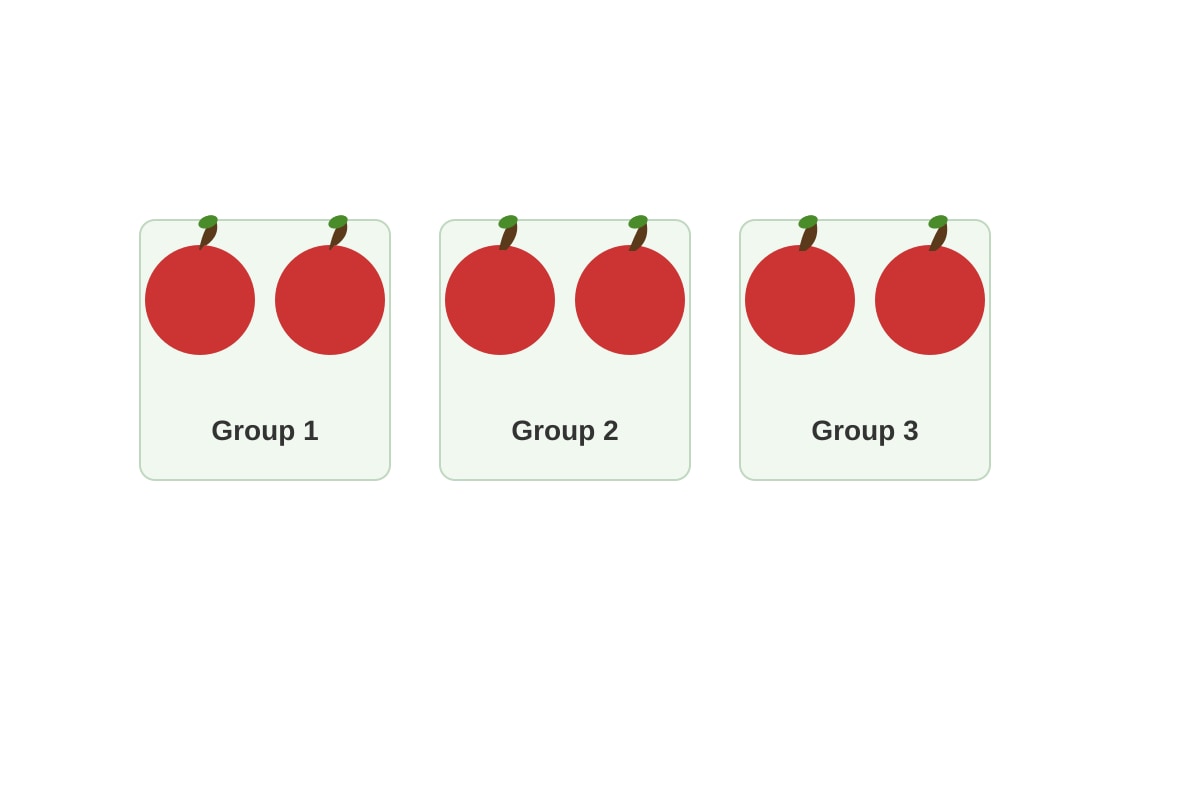
Question 1
Answer: Addition: 2 + 2 + 2 = 6; Multiplication: 3 × 2 = 6 Marks: 1
Teaching Notes:
- The picture shows 3 groups of 2 apples.
- Addition sentence: Count the apples in each group and add them: 2 + 2 + 2 = 6.
- Multiplication sentence: We have 3 groups, and each group has 2 apples. So we write 3 × 2 = 6.
- Key idea: Multiplication is repeated addition. "3 groups of 2" is the same as "2 + 2 + 2".
Marking Notes:
- Award 1 mark for both correct sentences. If only one is correct, award ½ mark.
Question 2
Answer: 10 Marks: 1
Teaching Notes:
- 5 × 2 means "5 groups of 2" or "2 + 2 + 2 + 2 + 2".
- Counting: 2, 4, 6, 8, 10.
- So 5 × 2 = 10.
Question 3
Answer: 12 biscuits Marks: 1
Teaching Notes:
- There are 4 plates, and each plate has 3 biscuits.
- This is "4 groups of 3".
- Multiplication: 4 × 3 = 12.
- Repeated addition: 3 + 3 + 3 + 3 = 12.
- Answer: 12 biscuits.
Marking Notes:
- Award 1 mark for the correct final answer. Working shown is encouraged but not required for the mark.
Question 4
Answer: (B) 5 + 5 + 5 Marks: 1
Teaching Notes:
- 3 × 5 means "3 groups of 5".
- Repeated addition: 5 + 5 + 5.
- Option (A) is 3 + 5 which is only one group of 3 and one group of 5.
- Option (C) is 3 + 3 + 5 which is not equal groups.
- Option (D) is 5 × 5 which is "5 groups of 5".
Question 5
Answer: 2 Marks: 1
Teaching Notes:
- 2 × 6 means "2 groups of 6" = 6 + 6 = 12.
- 6 × 2 means "6 groups of 2" = 2 + 2 + 2 + 2 + 2 + 2 = 12.
- Both equal 12, so the missing number is 2.
- Key idea: Multiplication can be done in any order (commutative property). 2 × 6 = 6 × 2.
Section B: Division (Questions 6 - 10)
Question 6
Answer: 4 sweets Marks: 1
Teaching Notes:
- 12 sweets shared equally among 3 children.
- We divide: 12 ÷ 3 = 4.
- Check: 3 × 4 = 12, so each child gets 4 sweets.
- Answer: 4 sweets.
Marking Notes:
- Award 1 mark for the correct final answer. Working shown is encouraged.
Question 7
Answer: 5 Marks: 1
Teaching Notes:
- 10 ÷ 2 means "10 shared equally into 2 groups".
- Think: 2 × ? = 10. We know 2 × 5 = 10.
- So 10 ÷ 2 = 5.
Question 8
Answer: 4 boxes Marks: 1
Teaching Notes:
- 8 pencils, 2 pencils in each box.
- This is grouping: how many groups of 2 are in 8?
- 8 ÷ 2 = 4.
- Check: 4 × 2 = 8.
- Answer: 4 boxes.
Question 9
Answer: (A) 20 shared equally among 4 groups Marks: 1
Teaching Notes:
- The ÷ symbol means division, which is sharing equally.
- 20 ÷ 4 means 20 items shared equally among 4 groups.
- Option (B) "20 groups of 4" is 20 × 4, which is multiplication.
- Option (C) is addition.
- Option (D) "4 groups of 20" is 4 × 20.
Question 10
Answer: 15 Marks: 1
Teaching Notes:
- We need to find the number that, when divided by 5, gives 3.
- Think backwards: 3 × 5 = 15.
- Check: 15 ÷ 5 = 3. ✓
- Answer: 15.
Section C: Word Problems (Questions 11 - 15)
Question 11
Answer: 16 legs Marks: 1
Teaching Notes:
- 1 spider has 8 legs. 2 spiders have 2 groups of 8 legs.
- 2 × 8 = 16.
- Repeated addition: 8 + 8 = 16.
- Answer: 16 legs.
Question 12
Answer: 5 oranges Marks: 1
Teaching Notes:
- 15 oranges shared equally into 3 bags.
- 15 ÷ 3 = 5.
- Check: 3 × 5 = 15.
- Answer: 5 oranges.
Question 13
Answer: 20 chairs Marks: 1
Teaching Notes:
- 4 rows, 5 chairs in each row.
- This is "4 groups of 5".
- 4 × 5 = 20.
- Repeated addition: 5 + 5 + 5 + 5 = 20.
- Answer: 20 chairs.
Question 14
Answer: 3 stickers Marks: 1
Teaching Notes:
- 18 stickers shared equally among 6 children.
- 18 ÷ 6 = 3.
- Check: 6 × 3 = 18.
- Answer: 3 stickers.
Question 15
Answer: 18 pens Marks: 1
Teaching Notes:
- 1 packet has 6 pens. 3 packets have 3 groups of 6 pens.
- 3 × 6 = 18.
- Repeated addition: 6 + 6 + 6 = 18.
- Answer: 18 pens.
Section D: Mixed Practice (Questions 16 - 20)
Question 16
Answer: 16 Marks: 1
Teaching Notes:
- 4 × 4 means "4 groups of 4".
- Repeated addition: 4 + 4 + 4 + 4 = 16.
- Answer: 16.
Question 17
Answer: 7 Marks: 1
Teaching Notes:
- 14 ÷ 2 means "14 shared equally into 2 groups".
- Think: 2 × ? = 14. We know 2 × 7 = 14.
- So 14 ÷ 2 = 7.
Question 18
Answer: 4 Marks: 1
Teaching Notes:
- We need 5 × ? = 20.
- Count by 5s: 5, 10, 15, 20. That is 4 jumps.
- So 5 × 4 = 20.
- Answer: 4.
Question 19
Answer: 16 Marks: 1
Teaching Notes:
- We need ? ÷ 4 = 4.
- Think backwards: 4 × 4 = 16.
- Check: 16 ÷ 4 = 4. ✓
- Answer: 16.
Question 20
Answer: 3 marbles Marks: 1
Teaching Notes:
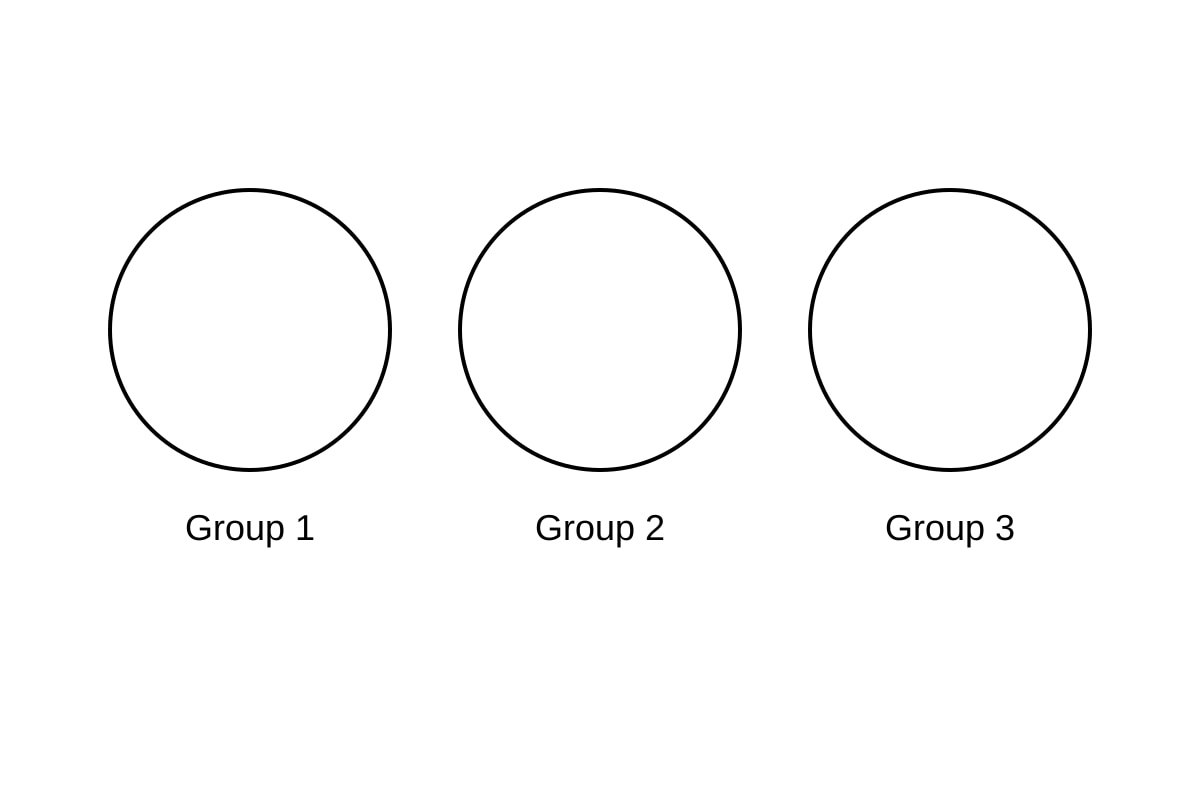
- The picture should show 3 empty group circles.
- 9 marbles shared equally among 3 groups.
- 9 ÷ 3 = 3.
- Each group gets 3 marbles.
- Answer: 3 marbles.
Marking Notes:
- Award 1 mark for the correct final answer. The drawing is for the student's own visualisation; the written answer is what is marked.
END OF ANSWER KEY