AI Generated Exam Paper
Primary 1 Mathematics Practice Paper 4
Free P1 Maths Practice Paper 4, Nemo3 AI version, with questions, answers, and syllabus-aligned practice for Singapore students.
These static practice materials are generated from the site's syllabus and paper-generation workflow, with source and model context shown so students and parents can evaluate the material before use.
Questions

Free quiz and exam paper access
Enter your details to view this paper
Your access is remembered on this device.
Answers
TuitionGoWhere Practice Paper - Mathematics Primary 1 (Answer Key)
Subject: Mathematics
Level: Primary 1
Paper: Practice Paper 4 (Numbers up to 100)
Total Marks: 40
Section A: Multiple Choice Questions (10 marks)
1. Answer: (3) 18
Explanation: Count each star carefully. There are 3 rows of 6 stars each. 6 + 6 + 6 = 18 stars in total.
Marking: 1 mark for correct answer.
2. Answer: (3) 50
Explanation: In the number 58, the digit 5 is in the tens place. The value of a digit in the tens place is the digit × 10. So, 5 × 10 = 50.
Common mistake: Choosing (1) 5 confuses the digit with its value.
Marking: 1 mark for correct answer.
3. Answer: (2) 24
Explanation: Compare the tens digit first. 24 has 2 tens, while 42, 34, and 43 have 3 or 4 tens. 2 tens is the smallest.
Marking: 1 mark for correct answer.
4. Answer: (2) 18
Explanation: The pattern increases by 2 each time: 12 (+2) → 14 (+2) → 16 (+2) → 18 (+2) → 20.
Marking: 1 mark for correct answer.
5. Answer: (2) 12
Explanation: Total children = 25. Boys = 13. Girls = Total − Boys = 25 − 13 = 12.
Common mistake: Choosing (4) 38 adds instead of subtracts.
Marking: 1 mark for correct answer.
6. Answer: (2) 69
Explanation: The number just before 70 is one less than 70. 70 − 1 = 69.
Marking: 1 mark for correct answer.
7. Answer: (1) 47
Explanation: 4 tens = 40. 7 ones = 7. 40 + 7 = 47.
Marking: 1 mark for correct answer.
8. Answer: (1) 38, 58, 83, 85
Explanation: Compare tens first: 38 (3 tens), 58 (5 tens), 83 (8 tens), 85 (8 tens). For 83 and 85, compare ones: 3 < 5. Order: 38, 58, 83, 85.
Marking: 1 mark for correct answer.
9. Answer: (1) 21
Explanation: Total apples = 36. Red apples = 15. Green apples = Total − Red = 36 − 15 = 21.
Marking: 1 mark for correct answer.
10. Answer: (1) 46
Explanation: "Forty-six" means 4 tens and 6 ones = 40 + 6 = 46.
Marking: 1 mark for correct answer.
Section B: Short Answer Questions (20 marks)
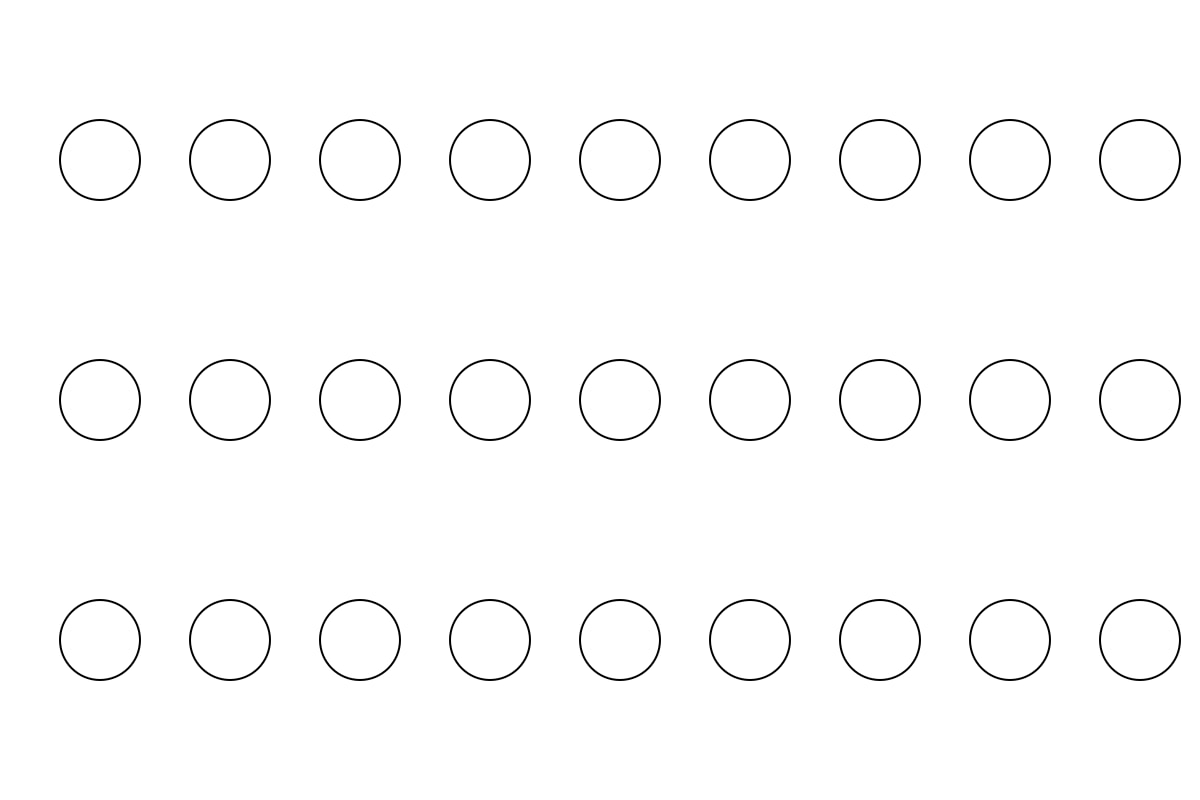
11. Numerals: 27
Words: twenty-seven
Explanation: Count the circles. There are 3 rows of 9 circles. 9 + 9 + 9 = 27. In words, 27 is written as "twenty-seven" (hyphen between twenty and seven).
Marking: 1 mark for correct numeral, 1 mark for correct spelling of words (accept "twenty seven" without hyphen).
12. (a) 63 = 6 tens 3 ones
(b) 80 = 8 tens 0 ones
Explanation: For 63, the digit 6 is in the tens place (6 tens = 60), digit 3 is in the ones place (3 ones = 3). For 80, the digit 8 is in the tens place (8 tens = 80), digit 0 is in the ones place (0 ones = 0).
Marking: 1 mark each part (½ mark per blank).
13. (a) 45 < 54
(b) 72 > 27
(c) 99 = 99
(d) 61 > 16
Explanation: Compare tens first. (a) 4 tens < 5 tens. (b) 7 tens > 2 tens. (c) Same number. (d) 6 tens > 1 ten.
Marking: ½ mark each correct symbol (total 2 marks).
14. (a) 5, 10, 15, 20, 25, 30
(b) 80, 70, 60, 50, 40, 30
Explanation: (a) Pattern increases by 5 (counting in fives). (b) Pattern decreases by 10 (counting backwards in tens).
Marking: 1 mark each part (½ mark per blank).
15. (a) 34 + 16 = 50
(b) 60 − 18 = 42
Explanation: (a) Find the difference: 50 − 34 = 16. (b) Find the starting number: 42 + 18 = 60.
Marking: 1 mark each part.
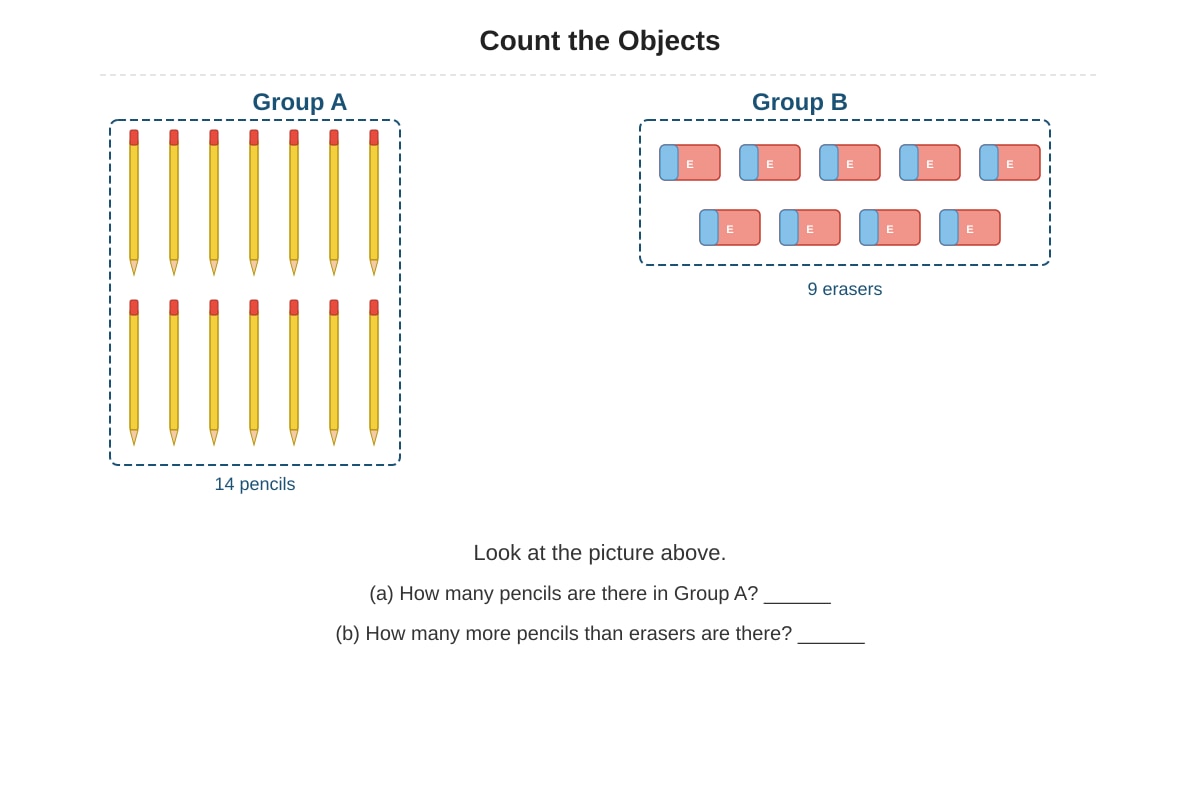
16. (a) 14
(b) 5
Explanation: (a) Count the pencils in Group A: 14. (b) Difference = Pencils − Erasers = 14 − 9 = 5.
Marking: 1 mark each part.
17. 1st, 2nd, 3rd, 4th, 5th, 6th, 7th, 8th, 9th, 10th
Explanation: Ordinal numbers show position. After 3rd comes 4th, then 6th, then 8th. Note the spelling: 4th (not 4rd), 6th, 8th.
Marking: ½ mark each correct ordinal (total 2 marks).
18. Working: 48 − 23 = 25
Answer: 25 stickers
Explanation: Start with 48 stickers. Subtract the 23 used. 48 − 20 = 28, then 28 − 3 = 25. Or use column subtraction.
Marking: 1 mark for correct working/method, 1 mark for correct answer with unit.
19. Working: 35 + 24 = 59
Answer: 59 beads
Explanation: Add the red beads and blue beads. 35 + 20 = 55, then 55 + 4 = 59. Or use column addition: 5+4=9 ones, 3+2=5 tens → 59.
Marking: 1 mark for correct working/method, 1 mark for correct answer with unit.
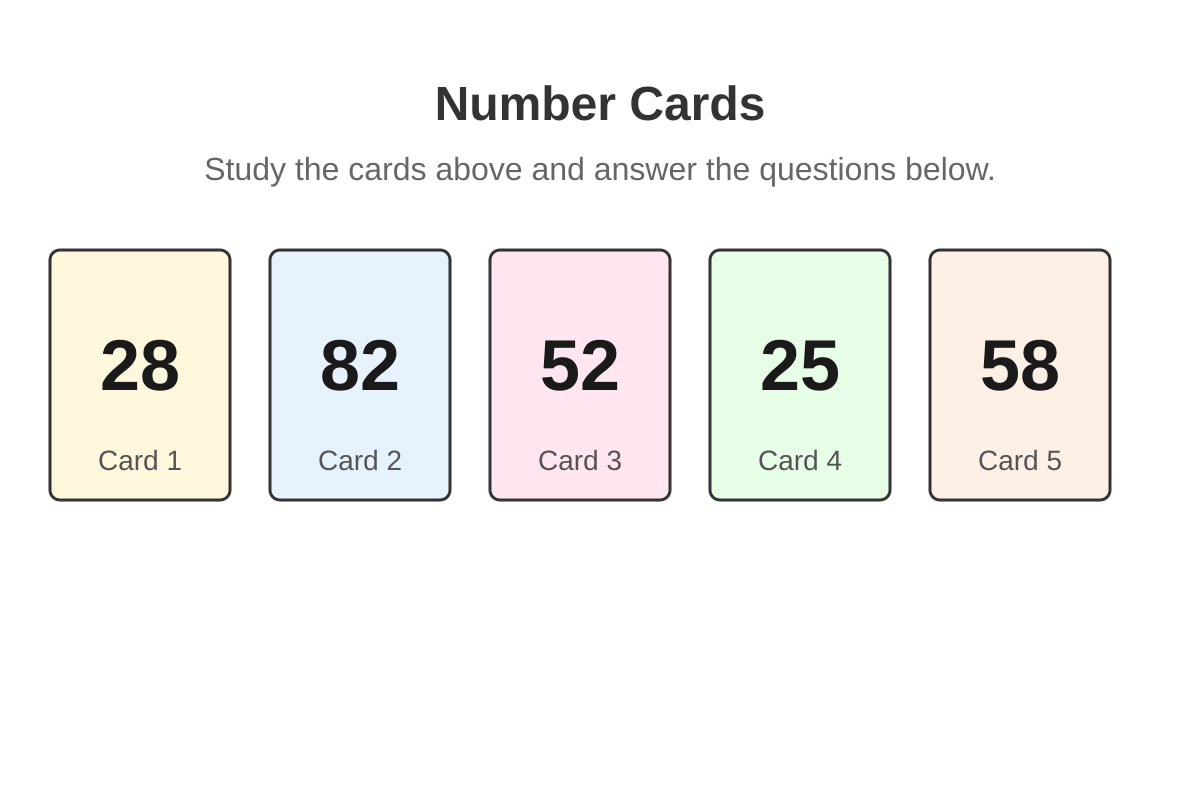
20. (a) Card 2 (82)
(b) Card 4 (25)
Explanation: Compare all numbers: 28, 82, 52, 25, 58. Greatest is 82 (Card 2). Smallest is 25 (Card 4).
Marking: 1 mark each part.
Section C: Word Problems (10 marks)
21. Working: 26 + 15 = 41
Answer: 41 marbles
Explanation: Sam starts with 26 marbles. He buys 15 more. "More" means addition. 26 + 10 = 36, 36 + 5 = 41.
Marking: 1 mark for correct operation and working, 1 mark for correct answer with unit.
22. Working: 54 − 28 = 26
Answer: 26 birds
Explanation: Start with 54 birds. 28 fly away, so subtract. 54 − 20 = 34, 34 − 8 = 26.
Marking: 1 mark for correct operation and working, 1 mark for correct answer with unit.
23. Working: 36 + 27 = 63
Answer: 63 crayons
Explanation: Two boxes, find total. "Altogether" means addition. 36 + 20 = 56, 56 + 7 = 63.
Marking: 1 mark for correct operation and working, 1 mark for correct answer with unit.
24. Working: 62 − 35 = 27
Answer
<stage5_exam_answers_md>
TuitionGoWhere Practice Paper - Mathematics Primary 1 (Answer Key)
Subject: Mathematics
Level: Primary 1
Paper: Practice Paper 4 (Numbers up to 100)
Total Marks: 40
Section A: Multiple Choice Questions (10 marks)
1. Answer: (3) 18
Explanation: Count each star carefully. There are 3 rows of 6 stars each. 6 + 6 + 6 = 18 stars in total.
Marking: 1 mark for correct answer.
2. Answer: (3) 50
Explanation: In the number 58, the digit 5 is in the tens place. The value of a digit in the tens place is the digit × 10. So, 5 × 10 = 50.
Common mistake: Choosing (1) 5 confuses the digit with its value.
Marking: 1 mark for correct answer.
3. Answer: (2) 24
Explanation: Compare the tens digit first. 24 has 2 tens, while 42, 34, and 43 have 3 or 4 tens. 2 tens is the smallest.
Marking: 1 mark for correct answer.
4. Answer: (2) 18
Explanation: The pattern increases by 2 each time: 12 (+2) → 14 (+2) → 16 (+2) → 18 (+2) → 20.
Marking: 1 mark for correct answer.
5. Answer: (2) 12
Explanation: Total children = 25. Boys = 13. Girls = Total − Boys = 25 − 13 = 12.
Common mistake: Choosing (4) 38 adds instead of subtracts.
Marking: 1 mark for correct answer.
6. Answer: (2) 69
Explanation: The number just before 70 is one less than 70. 70 − 1 = 69.
Marking: 1 mark for correct answer.
7. Answer: (1) 47
Explanation: 4 tens = 40. 7 ones = 7. 40 + 7 = 47.
Marking: 1 mark for correct answer.
8. Answer: (1) 38, 58, 83, 85
Explanation: Compare tens first: 38 (3 tens), 58 (5 tens), 83 (8 tens), 85 (8 tens). For 83 and 85, compare ones: 3 < 5. Order: 38, 58, 83, 85.
Marking: 1 mark for correct answer.
9. Answer: (1) 21
Explanation: Total apples = 36. Red apples = 15. Green apples = Total − Red = 36 − 15 = 21.
Marking: 1 mark for correct answer.
10. Answer: (1) 46
Explanation: "Forty-six" means 4 tens and 6 ones = 40 + 6 = 46.
Marking: 1 mark for correct answer.
Section B: Short Answer Questions (20 marks)
11. Numerals: 27
Words: twenty-seven
Explanation: Count the circles. There are 3 rows of 9 circles. 9 + 9 + 9 = 27. In words, 27 is written as "twenty-seven" (hyphen between twenty and seven).
Marking: 1 mark for correct numeral, 1 mark for correct spelling of words (accept "twenty seven" without hyphen).
12. (a) 63 = 6 tens 3 ones
(b) 80 = 8 tens 0 ones
Explanation: For 63, the digit 6 is in the tens place (6 tens = 60), digit 3 is in the ones place (3 ones = 3). For 80, the digit 8 is in the tens place (8 tens = 80), digit 0 is in the ones place (0 ones = 0).
Marking: 1 mark each part (½ mark per blank).
13. (a) 45 < 54
(b) 72 > 27
(c) 99 = 99
(d) 61 > 16
Explanation: Compare tens first. (a) 4 tens < 5 tens. (b) 7 tens > 2 tens. (c) Same number. (d) 6 tens > 1 ten.
Marking: ½ mark each correct symbol (total 2 marks).
14. (a) 5, 10, 15, 20, 25, 30
(b) 80, 70, 60, 50, 40, 30
Explanation: (a) Pattern increases by 5 (counting in fives). (b) Pattern decreases by 10 (counting backwards in tens).
Marking: 1 mark each part (½ mark per blank).
15. (a) 34 + 16 = 50
(b) 60 − 18 = 42
Explanation: (a) Find the difference: 50 − 34 = 16. (b) Find the starting number: 42 + 18 = 60.
Marking: 1 mark each part.
16. (a) 14
(b) 5
Explanation: (a) Count the pencils in Group A: 14. (b) Difference = Pencils − Erasers = 14 − 9 = 5.
Marking: 1 mark each part.
17. 1st, 2nd, 3rd, 4th, 5th, 6th, 7th, 8th, 9th, 10th
Explanation: Ordinal numbers show position. After 3rd comes 4th, then 6th, then 8th. Note the spelling: 4th (not 4rd), 6th, 8th.
Marking: ½ mark each correct ordinal (total 2 marks).
18. Working: 48 − 23 = 25
Answer: 25 stickers
Explanation: Start with 48 stickers. Subtract the 23 used. 48 − 20 = 28, then 28 − 3 = 25. Or use column subtraction.
Marking: 1 mark for correct working/method, 1 mark for correct answer with unit.
19. Working: 35 + 24 = 59
Answer: 59 beads
Explanation: Add the red beads and blue beads. 35 + 20 = 55, then 55 + 4 = 59. Or use column addition: 5+4=9 ones, 3+2=5 tens → 59.
Marking: 1 mark for correct working/method, 1 mark for correct answer with unit.
20. (a) Card 2 (82)
(b) Card 4 (25)
Explanation: Compare all numbers: 28, 82, 52, 25, 58. Greatest is 82 (Card 2). Smallest is 25 (Card 4).
Marking: 1 mark each part.
Section C: Word Problems (10 marks)
21. Working: 26 + 15 = 41
Answer: 41 marbles
Explanation: Sam starts with 26 marbles. He buys 15 more. "More" means addition. 26 + 10 = 36, 36 + 5 = 41.
Marking: 1 mark for correct operation and working, 1 mark for correct answer with unit.
22. Working: 54 − 28 = 26
Answer: 26 birds
Explanation: Start with 54 birds. 28 fly away, so subtract. 54 − 20 = 34, 34 − 8 = 26.
Marking: 1 mark for correct operation and working, 1 mark for correct answer with unit.
23. Working: 36 + 27 = 63
Answer: 63 crayons
Explanation: Two boxes, find total. "Altogether" means addition. 36 + 20 = 56, 56 + 7 = 63.
Marking: 1 mark for correct operation and working, 1 mark for correct answer with unit.
24. Working: 62 − 35 = 27
Answer: 27 stickers
Explanation: Lily starts with 62 stickers. She gives 35 away, so subtract. 62 − 30 = 32, 32 − 5 = 27.
Marking: 1 mark for correct operation and working, 1 mark for correct answer with unit.
25. Working: 45 − 18 = 27
Answer: 27 girls
Explanation: Total children = 45. Boys = 18. Girls = Total − Boys = 45 − 18 = 27.
Marking: 1 mark for correct operation and working, 1 mark for correct answer with unit.
End of Answer Key
Total Marks: 40