AI Generated Exam Paper
Primary 1 Mathematics Practice Paper 3
Free P1 Maths Practice Paper 3, Kimi2.6 AI version, with questions, answers, and syllabus-aligned practice for Singapore students.
These static practice materials are generated from the site's syllabus and paper-generation workflow, with source and model context shown so students and parents can evaluate the material before use.
Questions
Free quiz and exam paper access
Enter your details to view this paper
Your access is remembered on this device.
Answers
TuitionGoWhere Practice Paper - Mathematics Primary 1 (Version 3)
Answer Key and Marking Scheme
Total Marks: 40 marks
Section A: Counting and Number Recognition (10 marks)
1. 13 stars [2 marks]
Working/Explanation: Count each star one by one: 1, 2, 3, 4, 5, 6, 7, 8, 9, 10, 11, 12, 13. There are two rows of 5 stars (which makes 10) plus 3 more stars, so 10 + 3 = 13. Students may also count by grouping: five, ten, and three more.
Common mistake: Rushing and double-counting or skipping a star. Encourage students to touch each star or mark it as they count.
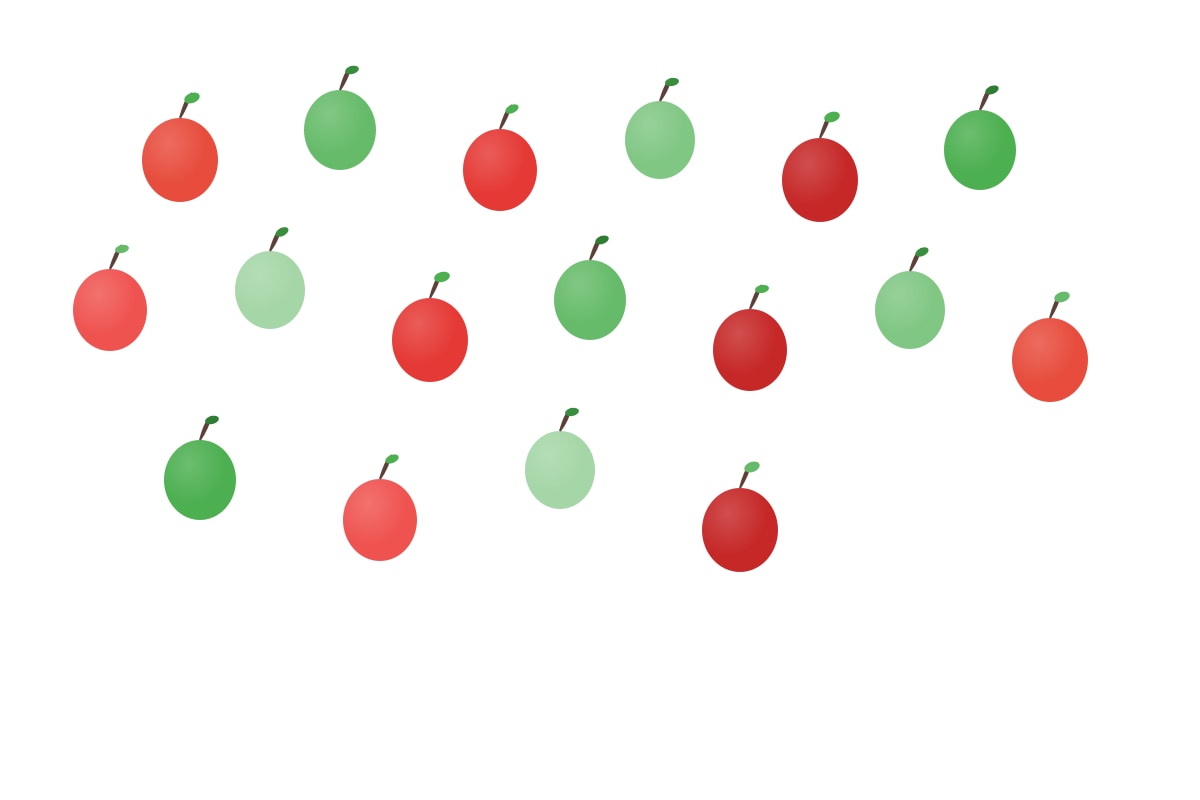
2. 17 apples [2 marks]
Working/Explanation: The image shows 17 apples scattered in a group. Students should count carefully from 1 to 17, touching or pointing to each apple as they count. The apples are a mix of red and green, but students count all apples regardless of color.
Expected visual features: 17 visible apples, some red and some green, arranged so none completely hide another. Students may group them mentally (e.g., ten and seven more) to help counting.
Common mistake: Counting only one color of apples. Remind students to count ALL objects in the picture.
3. 30 [1 mark]
Working/Explanation: "Just after 29" means the next number when counting forward: 29, 30. When we count, we add 1 each time. So 29 + 1 = 30.
Key concept: Number sequence and counting forward by 1.
4. 49 [1 mark]
Working/Explanation: "Just before 50" means the number that comes right before it when counting: 48, 49, 50. We subtract 1 from 50: 50 − 1 = 49.
Key concept: Number sequence and counting backward by 1.
5. 27, 28 [2 marks]
Working/Explanation: The sequence counts up by 1 each time: 24, 25, 26, so next is 26 + 1 = 27, then 27 + 1 = 28, then 29, 30. Check: 24, 25, 26, 27, 28, 29, 30 ✓
Mark breakdown: 1 mark for each correct missing number.
5(b) The numbers go up by 1 each time / The numbers increase by 1 / It is counting forward by ones [2 marks]
Working/Explanation: To find the pattern, look at the difference between consecutive numbers: 25 − 24 = 1, 26 − 25 = 1, 29 − 28 = 1, 30 − 29 = 1. Each number is 1 more than the previous number. This is called a counting pattern or sequence with a constant difference of 1.
Acceptable answers: "Add 1 each time," "the numbers get bigger by 1," "counting by ones," "increasing by 1."
Mark breakdown: 2 marks for clear explanation of +1 pattern; 1 mark for partial description.
Section B: Place Value (10 marks)
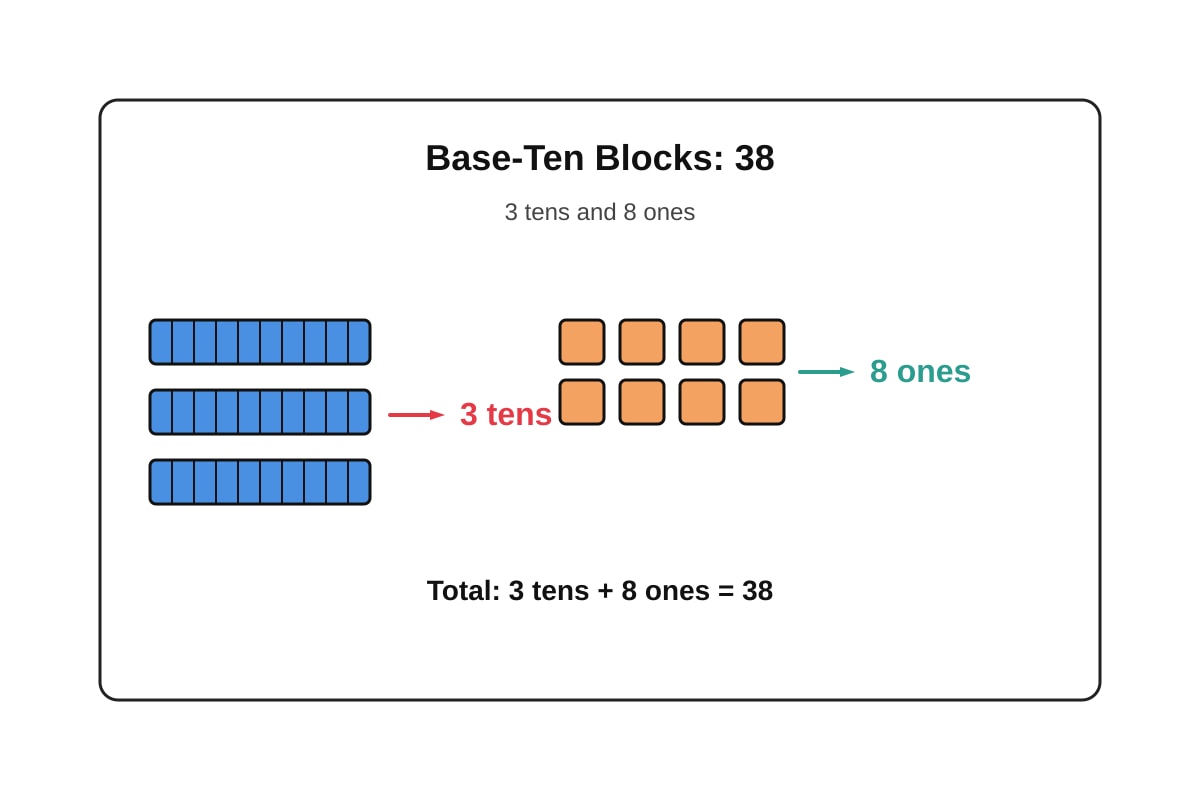
6(a) 3 tens [1 mark]
Working/Explanation: In the number 38, the digit 3 is in the tens place. The image shows 3 ten-sticks (long rods), where each ten-stick represents 10. So there are 3 tens in 38.
Key concept: Place value - the position of a digit tells us its value. In 38: 3 is in the tens place, 8 is in the ones place.
6(b) 8 ones [1 mark]
Working/Explanation: In the number 38, the digit 8 is in the ones place. The image shows 8 one-cubes (single cubes). So there are 8 ones in 38.
Expected visual features: 3 ten-sticks and 8 one-cubes clearly shown and labeled.
Extension: 38 = 3 tens + 8 ones = 30 + 8 = 38
7. 60 (or 6 tens) [2 marks]
Working/Explanation: In 65, the digit 6 is in the tens place. The value of a digit in the tens place is: digit × 10. So 6 × 10 = 60. The value is 60, not just 6.
Common mistake: Answering "6" instead of "60." This confuses the digit (the symbol 6) with the value (what it represents, which is 60). The question asks for "value," not "digit."
Key concept: Value = digit × place value. For tens place: value = digit × 10.
8. 7 (or 7 ones) [2 marks]
Working/Explanation: In 47, the digit 7 is in the ones place. The value of a digit in the ones place is: digit × 1. So 7 × 1 = 7. The value is 7.
Note: Some students may say "7 ones" - this is correct and shows deeper understanding. Either "7" or "7 ones" or "7 ones = 7" is acceptable.
Key concept: In the ones place, the digit represents itself (digit × 1).
9. 52 [2 marks]
Working/Explanation:
- 5 tens = 5 × 10 = 50
- 2 ones = 2 × 1 = 2
- Total: 50 + 2 = 52
We can also write this as: 5 tens and 2 ones = 52
Method: Write the tens digit first, then the ones digit. Place value tells us: tens digit goes on the left, ones digit goes on the right.
Common mistake: Writing 25 (reversing digits) or writing 502 (not understanding place value). Remind students: tens always on the left, ones on the right.
10. 83, 80 [2 marks]
Working/Explanation: We need to find numbers where 8 is in the tens place (the left digit).
- 83: 8 is in tens place ✓, 3 is in ones place
- 38: 3 is in tens place ✗, 8 is in ones place
- 58: 5 is in tens place ✗, 8 is in ones place
- 80: 8 is in tens place ✓, 0 is in ones place
- 28: 2 is in tens place ✗, 8 is in ones place
So circle 83 and 80.
Marking: 2 marks for both correct; 1 mark for one correct with one incorrect (or missing the second); 0 marks if only incorrect answers circled.
Key concept: The tens place is always the left digit in a two-digit number.
Section C: Comparing and Ordering Numbers (10 marks)
11. 45 [2 marks]
Working/Explanation: Compare 54 and 45 using place value:
- 54: 5 tens and 4 ones = 50 + 4
- 45: 4 tens and 5 ones = 40 + 5
Compare tens first: 5 tens > 4 tens, so 54 > 45, which means 45 < 54.
Therefore, 45 is smaller.
Method: Always compare the tens digit first. The number with the smaller tens digit is the smaller number. If tens are equal, compare ones.
12. 27, 37, 72, 73 [2 marks]
Working/Explanation:
- First, look at tens digits: 27 and 37 have 2 tens and 3 tens (smaller), while 72 and 73 have 7 tens (bigger).
- Compare 27 and 37: 2 tens < 3 tens, so 27 < 37
- Compare 72 and 73: both have 7 tens, so compare ones: 2 < 3, so 72 < 73
Order: 27, 37, 72, 73
Mark breakdown: 2 marks for fully correct order; 1 mark if only one number out of place; 0 marks for more errors.
Method tip: When ordering, first group by tens digit, then order within each group.
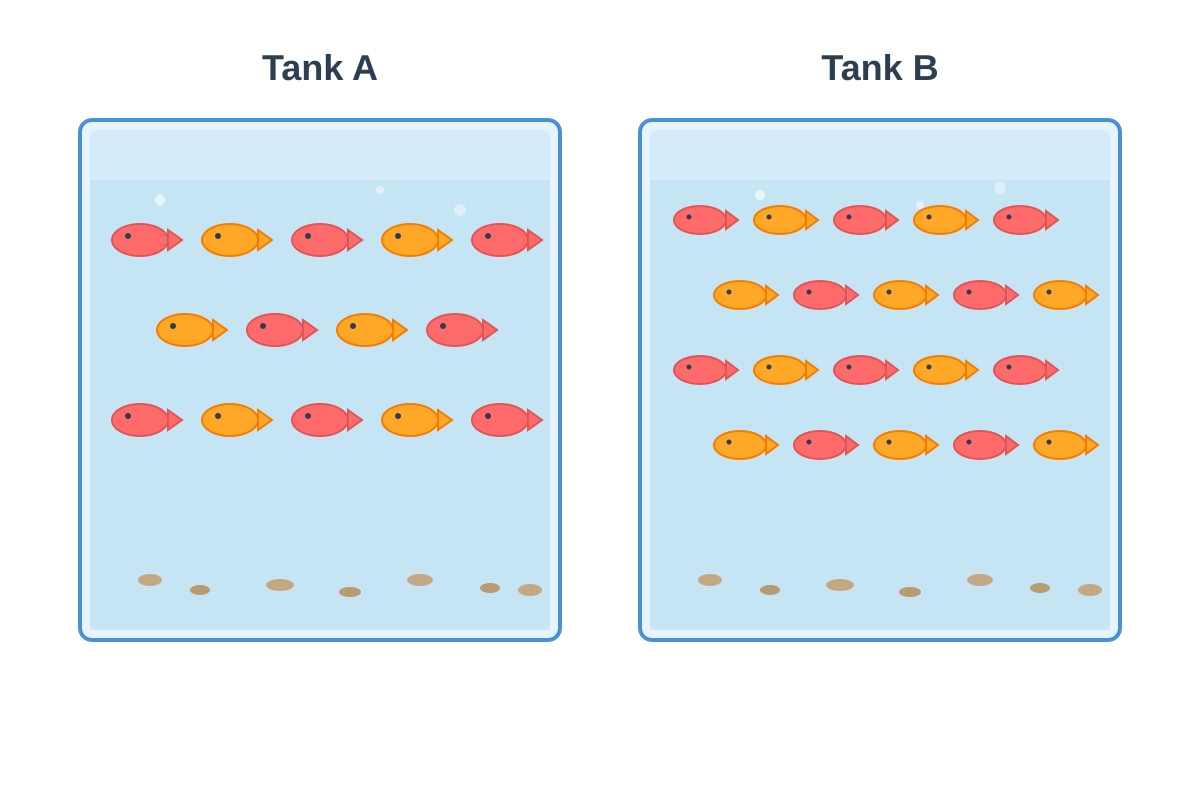
13(a) Tank B [1 mark]
Working/Explanation: By counting or visual comparison: Tank A has 15 fish, Tank B has 23 fish. Since 23 > 15, Tank B has more fish. Students may count or see that Tank B's group looks larger.
Expected visual features: Tank A with 15 visible fish, Tank B with 23 visible fish. No number labels on tanks.
13(b) 8 more fish [2 marks]
Working/Explanation:
- Tank A: 15 fish
- Tank B: 23 fish
- Difference: 23 − 15 = 8
Or using counting on: from 15, count up to 23: 16, 17, 18, 19, 20, 21, 22, 23. That's 8 numbers, so 8 more.
Show your working: 23 − 15 = 8, or 15 + ? = 23, so ? = 8
Common mistake: Answering "23" (the total in B) instead of "8 more." Read carefully: "how many MORE" asks for difference, not total.
Mark breakdown: 1 mark for correct method shown; 1 mark for correct answer of 8.
14(a) Ben [1 mark]
Working/Explanation:
- Ben: 34 stickers = 3 tens and 4 ones = 30 + 4
- Siti: 43 stickers = 4 tens and 3 ones = 40 + 3
Compare tens: 3 tens < 4 tens, so 34 < 43. Ben has fewer stickers.
14(b) less than (or 34 < 43) [1 mark]
Working/Explanation: Since Ben (34) has fewer than Siti (43), we say 34 is less than 43. The symbol < means "less than," with the small point facing the smaller number.
Key concept: < means less than, > means greater than. The symbol opens toward the bigger number.
15. < [1 mark]
Working/Explanation: 56 vs 65:
- 56: 5 tens and 6 ones
- 65: 6 tens and 5 ones
5 tens < 6 tens, so 56 < 65.
15(b) = [1 mark]
Working/Explanation: 38 vs 38. These are the same number. When two numbers are equal, we use the = sign.
Section D: Number Patterns and Ordinal Numbers (10 marks)
16. 25, 30, 35 [2 marks]
Working/Explanation: Find the pattern: 10 − 5 = 5, 15 − 10 = 5, 20 − 15 = 5. The pattern increases by 5 each time (counting in fives, or the 5 times table).
Continue: 20 + 5 = 25, 25 + 5 = 30, 30 + 5 = 35.
Check: 5, 10, 15, 20, 25, 30, 35 ✓
Mark breakdown: 2 marks for all three correct; 1 mark for two correct; 0 marks for one or zero correct.
Key concept: 5 times table: 5, 10, 15, 20, 25, 30, 35, ...
17. 54 [2 marks]
Working/Explanation: Find the constant difference:
- 45 − 42 = 3
- 48 − 45 = 3
- 51 − 48 = 3
The pattern increases by 3 each time. So: 51 + 3 = 54. Check: 54 + 3 = 57 ✓
Sequence: 42, 45, 48, 51, 54, 57
17(b) 3 [1 mark]
Working/Explanation: As shown above, each number is 3 more than the previous number. This is found by subtracting consecutive pairs.
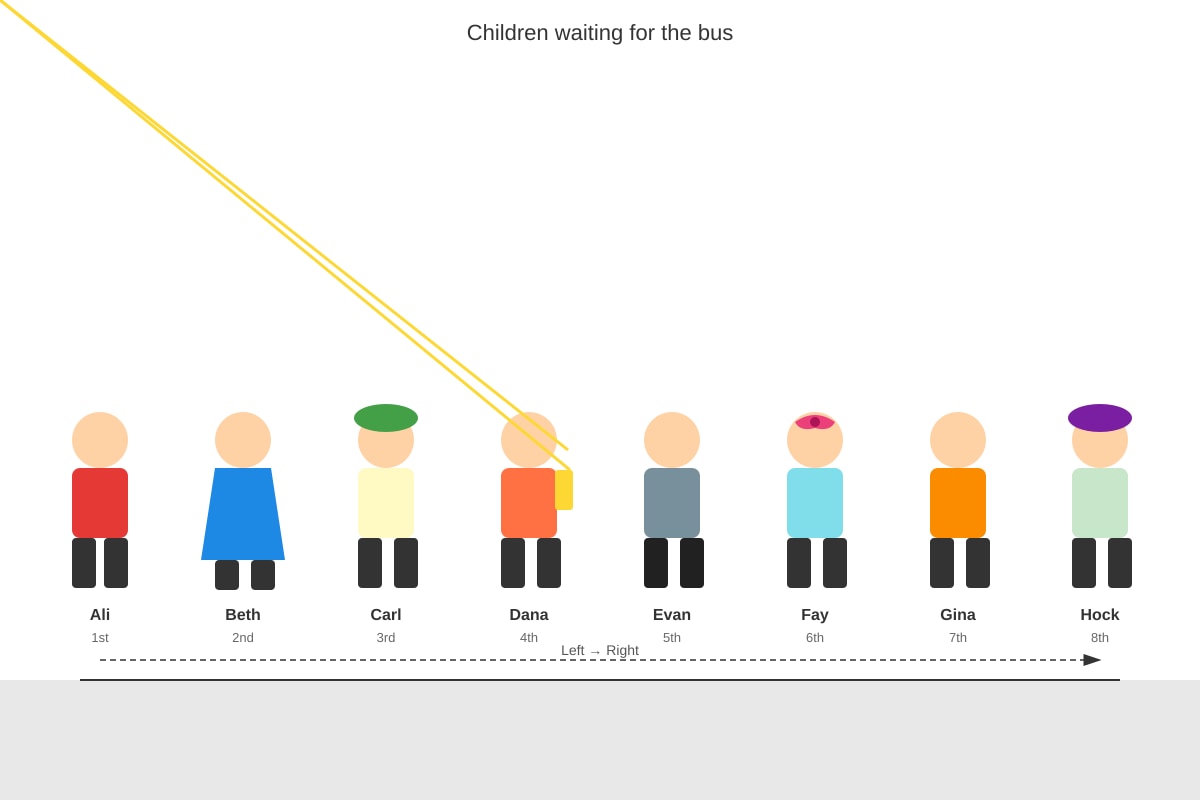
18(a) Carl [1 mark]
Working/Explanation: From the left (starting from Ali): 1st-Ali, 2nd-Beth, 3rd-Carl. So Carl is in 3rd position.
Expected visual features: Queue from left to right: Ali (red), Beth (blue), Carl (green cap), Dana (yellow), Evan (black), Fay (pink), Gina (orange), Hock (purple). The 3rd child from left wears a green cap and is labeled/identifiable as Carl.
Key concept: Ordinal numbers tell position, not quantity. "3rd" means the one in position 3, not 3 items total.
18(b) 4th [1 mark]
Working/Explanation: Counting from the left: 1st-Ali, 2nd-Beth, 3rd-Carl, 4th-Dana. Dana is in 4th position.
Common mistake: Counting Dana herself (saying "3rd" because there are 3 people before her). Remind students: the position number includes counting that person too.
19. 10 children [2 marks]
Working/Explanation:
- Mei finished 6th: this means 5 runners finished before her (1st, 2nd, 3rd, 4th, 5th)
- 3 runners finished after her (7th, 8th, 9th places)
- Total: 5 (before) + 1 (Mei) + 3 (after) = 9 runners? No, careful counting:
Actually: Places 1, 2, 3, 4, 5, 6(Mei), 7, 8, 9. That's 9 places? But 6 + 3 = 9 runners after includes Mei? No.
Correct method: If Mei is 6th, there are 5 people ahead. 3 people finished after her. Total = 5 + 1 + 3 = 9? Or: the last finisher is in position 6 + 3 = 9th place. So there are 9 runners total?
Wait - let me recalculate: 6th place means 5 people before. 3 people after. Total = 5 + 1 (Mei) + 3 = 9.
Actually, let me verify: positions 1,2,3,4,5,6,7,8,9 = 9 positions. Yes, 9 children.
But the answer should be: 6 + 3 = 9. The 3 runners after Mei are in positions 7, 8, 9. So the last position is 9th, meaning 9 children total.
Hmm, let me re-read: "Mei finished in 6th place. There were 3 runners who finished after her."
If Mei is 6th, the next is 7th, then 8th, then 9th. That's 3 runners after her (7th, 8th, 9th). Total children = 9.
Working:
- Mei: 6th place
- After Mei: 7th, 8th, 9th = 3 runners
- Total positions = 9
- Total children = 9
Alternatively: 6 + 3 = 9.
Common mistake: Answering 6 + 3 = 9 but not understanding why, or saying "9th" instead of "9 children." The question asks "how many children," so answer is 9, not 9th.
Actually, let me double-check my own arithmetic: 6 + 3 = 9. Yes. But wait, does "3 runners finished after her" include people in positions 7, 8, 9? That's 3 people. So last place is 9th. 9 positions = 9 children.
Hmm, but I want to make sure. Let me recount: if Mei is 6th, she is ONE person. Before her: positions 1,2,3,4,5 = 5 people. After her: 3 people = positions 7,8,9. Total: 5 + 1 + 3 = 9. ✓
Mark breakdown: 1 mark for correct method (showing 6 + 3 or counting positions); 1 mark for correct answer 9.
20(a) 54, 66, 68, 70 [2 marks]
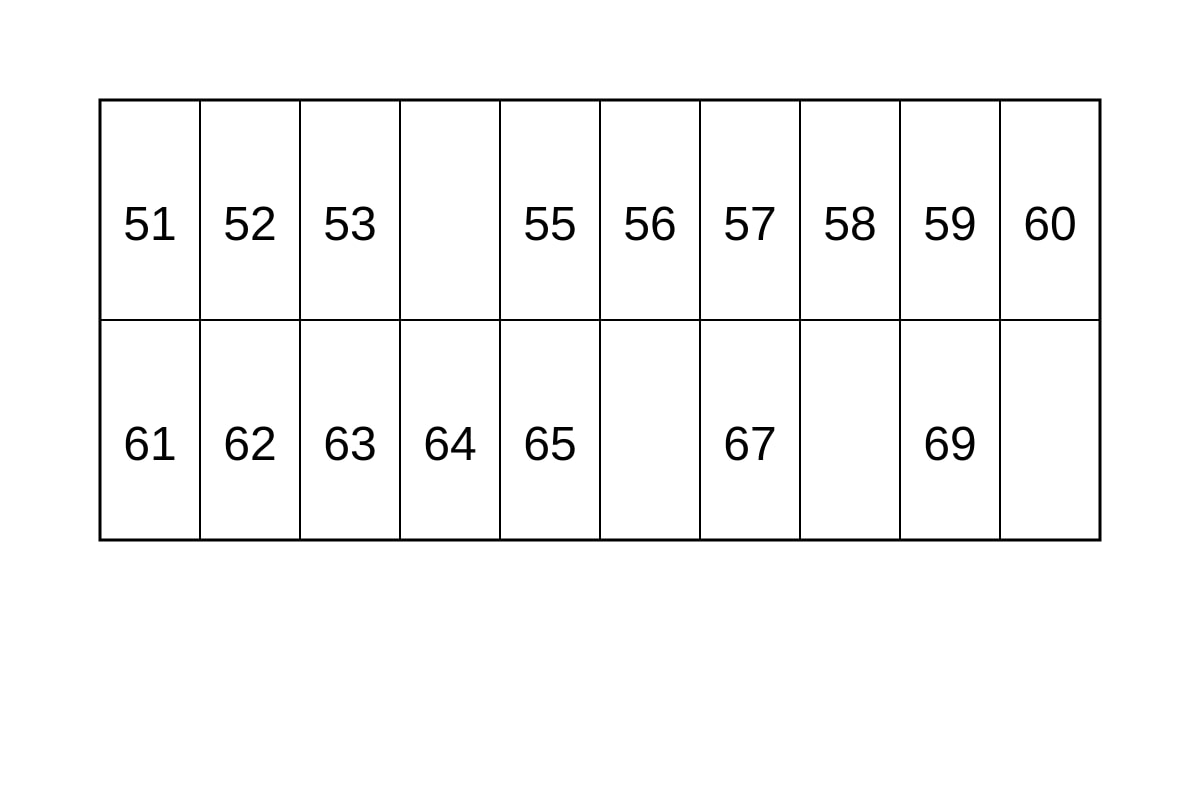
Working/Explanation: The hundreds chart shows numbers 51-70 in a 10-column grid. Reading left to right, top to bottom:
- Row 1: 51, 52, 53, [54], 55, 56, 57, 58, 59, 60
- Row 2: 61, 62, 63, 64, 65, [66], [67], [68], 69, [70]
Wait, let me check: blank spaces at 54, 66, 68, 70.
Expected visual features: Grid with 10 columns. Missing numbers should be filled by counting pattern.
Mark breakdown: 2 marks for all four correct; 1 mark for three correct; 0 marks for fewer.
20(b) 65 [1 mark]
Working/Explanation: On a hundreds chart, moving down one row adds 10. From 55, move down to the number directly below: 55 + 10 = 65.
Alternatively, 55 is in position: row 1, column 6. Directly below is row 2, column 6 = 65.
Key concept: In a hundreds chart, numbers increase by 10 when moving down one row, and by 1 when moving right one column.
Mark Summary
| Section | Marks |
|---|---|
| Section A (Q1-5) | 10 |
| Section B (Q6-10) | 10 |
| Section C (Q11-15) | 10 |
| Section D (Q16-20) | 10 |
| Total | 40 |
This practice paper is syllabus-aligned content generated by TuitionGoWhere AI. It is not derived from official past-year examination papers. It is designed for practice and skill-building purposes.