AI Generated Exam Paper
Primary 1 Mathematics Practice Paper 2
Free P1 Maths Practice Paper 2, Nemo3 AI version, with questions, answers, and syllabus-aligned practice for Singapore students.
These static practice materials are generated from the site's syllabus and paper-generation workflow, with source and model context shown so students and parents can evaluate the material before use.
Questions

Free quiz and exam paper access
Enter your details to view this paper
Your access is remembered on this device.
Answers
Primary 1 Mathematics Quiz - Numbers (Answer Key)
Total Marks: 30
Section A: Multiple Choice Questions (5 × 1 mark = 5 marks)
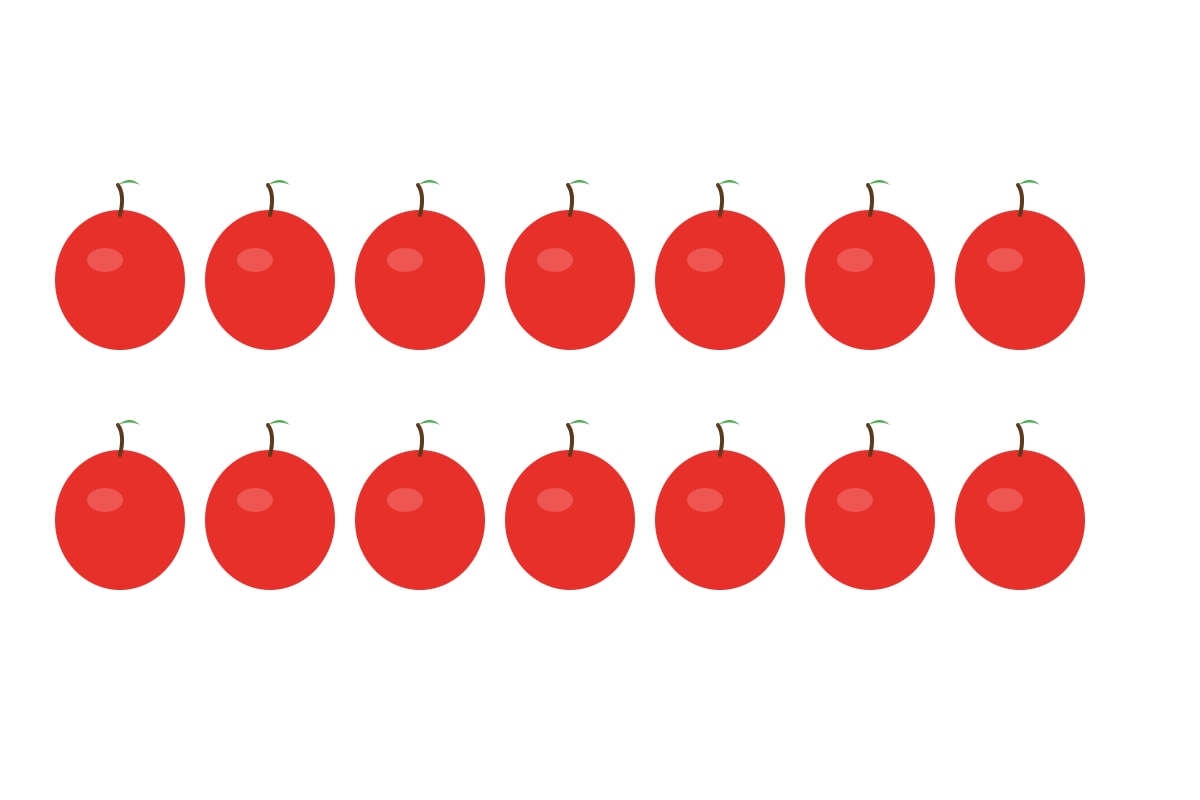
1. Answer: (3) 14
Explanation: Count each apple one by one. There are 7 apples in the first row and 7 apples in the second row. 7 + 7 = 14 apples altogether.
Marking: 1 mark for correct answer.
2. Answer: (3) 60
Explanation: In the number 63, the digit 6 is in the tens place. The value of a digit in the tens place is the digit × 10. So, 6 × 10 = 60.
Common mistake: Choosing (1) 6 confuses the digit with its value.
Marking: 1 mark for correct answer.
3. Answer: (1) 48
Explanation: Compare the tens digit first. 48 has 4 tens, 84 has 8 tens, 57 has 5 tens, 75 has 7 tens. The smallest tens digit is 4, so 48 is the smallest number.
Marking: 1 mark for correct answer.
4. Answer: (2) 18
Explanation: The pattern increases by 2 each time: 12 (+2) → 14 (+2) → 16 (+2) → 18 (+2) → 20 (+2) → 22.
Marking: 1 mark for correct answer.
5. Answer: (3) Card C
Explanation: The number that comes just before 50 is 49. Card C shows 49.
Marking: 1 mark for correct answer.
Section B: Short Answer Questions (10 × 2 marks = 20 marks)
6. Numerals: 23
Words: twenty-three
Explanation: Count the stars carefully. There are 5 groups of 4 stars (20) plus 3 more stars = 23 stars. In words, numbers 21–29 are written with a hyphen: twenty-three.
Marking: 1 mark for correct numerals, 1 mark for correct words (spelling must be correct).
7. (a) 54 = 5 tens 4 ones
(b) 8 tens 2 ones = 82
Explanation:
(a) The number 54 has 5 in the tens place (5 tens = 50) and 4 in the ones place (4 ones = 4).
(b) 8 tens = 80, 2 ones = 2. 80 + 2 = 82.
Marking: 1 mark each part.
8. 36, 39, 63, 93
Explanation: Compare tens digits first: 36 and 39 have 3 tens; 63 has 6 tens; 93 has 9 tens. Among 36 and 39, compare ones: 6 < 9, so 36 comes before 39. Order: 36, 39, 63, 93.
Marking: 2 marks for fully correct order; 1 mark if only one error.
9. 25, 30, 35, 40, 45, 50
Explanation: The pattern increases by 5 each time (counting in fives). 35 + 5 = 40, 40 + 5 = 45.
Marking: 1 mark for each correct missing number (40 and 45).
10. (a) Circle 72
(b) Circle 81
Explanation:
(a) Compare 27 (2 tens), 72 (7 tens), 57 (5 tens). 7 tens is the greatest → 72.
(b) Compare 81 (8 tens), 18 (1 ten), 48 (4 tens). 8 tens is the greatest → 81.
Marking: 1 mark each part.
11. Answer: 56
Explanation: "10 more than 46" means add 10 to 46. 46 + 10 = 56. On a number chart, this is one row down from 46.
Marking: 2 marks for correct answer; 1 mark for correct method (46 + 10) but calculation error.
12. Answer: 33
Explanation: "5 less than 38" means subtract 5 from 38. 38 − 5 = 33. Count back 5 from 38: 37, 36, 35, 34, 33.
Marking: 2 marks for correct answer; 1 mark for correct method (38 − 5) but calculation error.
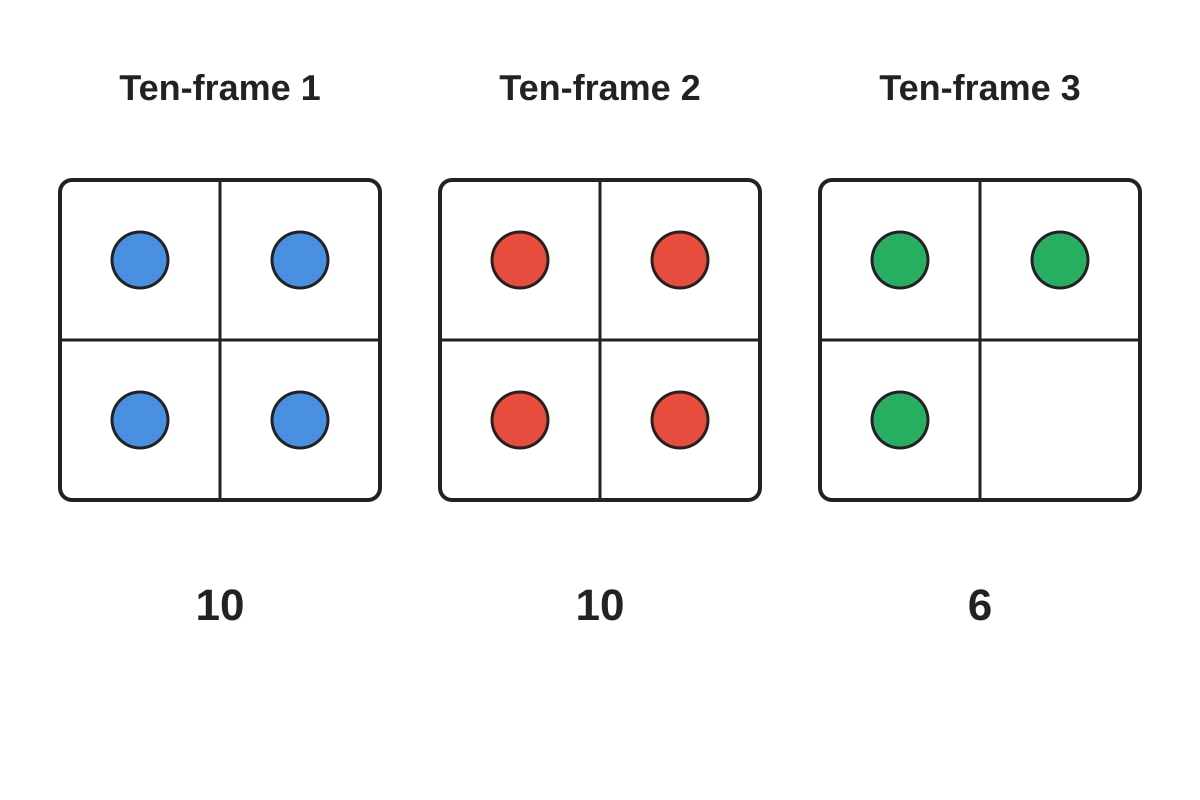
13. Answer: 26
Explanation: First ten-frame: 10 counters. Second ten-frame: 10 counters. Third ten-frame: 6 counters. Total = 10 + 10 + 6 = 26.
Marking: 2 marks for correct answer; 1 mark for correct method (10 + 10 + 6) but addition error.
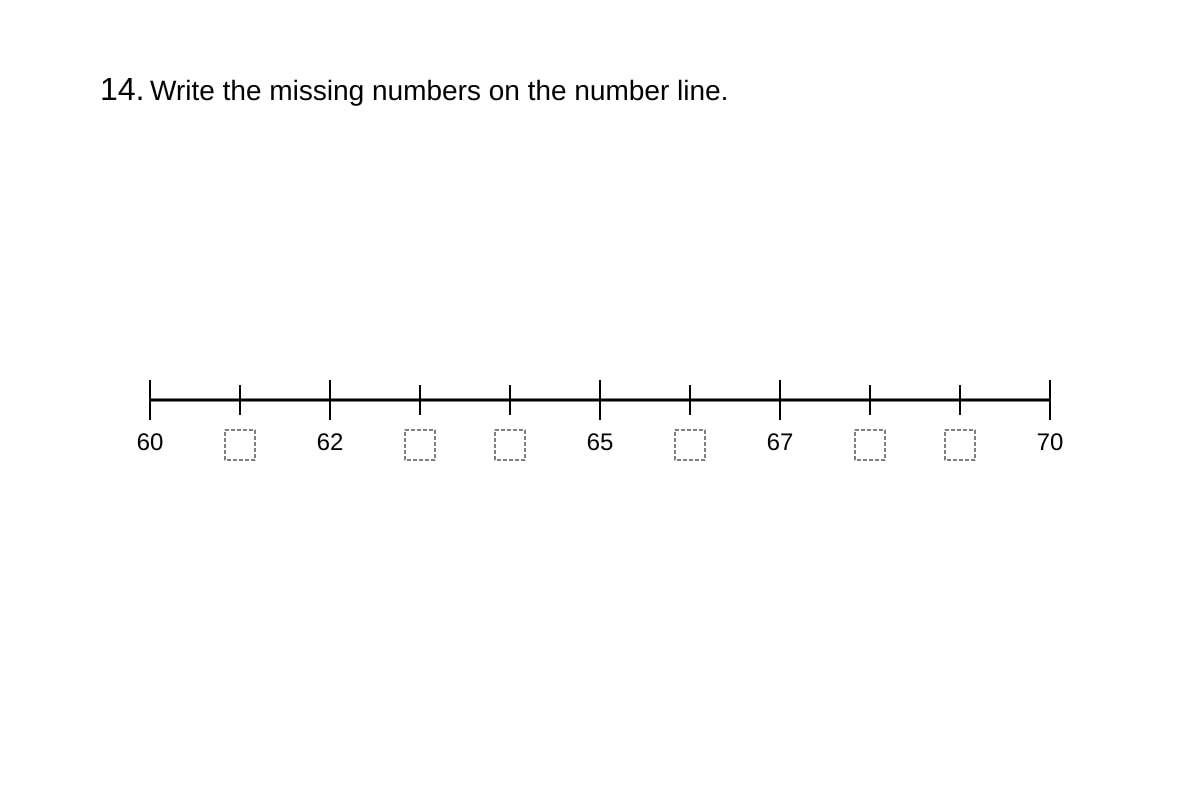
14. Missing numbers: 61, 63, 64, 66, 68, 69
Explanation: The number line goes from 60 to 70 by ones. Fill in each missing integer: after 60 is 61, after 62 is 63, then 64, after 65 is 66, after 67 is 68, then 69, then 70.
Marking: 2 marks for all 6 correct; 1 mark for 4–5 correct.
15. Answer: 13 girls
Explanation: Total children = 28. Boys = 15. Girls = Total − Boys = 28 − 15 = 13.
Check: 15 + 13 = 28 ✓
Marking: 1 mark for correct equation (28 − 15), 1 mark for correct answer with unit "girls".
16. (a) 4th
(b) 7th
Explanation:
(a) Ordinal numbers in order: 1st, 2nd, 3rd, 4th, 5th.
(b) Counting backwards: 10th, 9th, 8th, 7th, 6th.
Marking: 1 mark each part.
Section C: Word Problems (2 × 2 marks + 1 × 3 marks = 7 marks)
17. Number equation: 36 + 24 = 60
Answer: 60 beads
Explanation: "Altogether" means add. Red beads = 36, Blue beads = 24. 36 + 24 = 60.
Working:
36
+ 24
———
60
Marking: 1 mark for correct equation, 1 mark for correct answer with unit.
18. Number equation: 45 − 18 = 27
Answer: 27 books
Explanation: "Taken away" means subtract. Start with 45, subtract 18. 45 − 18 = 27.
Working (regrouping):
45 → 3 tens 15 ones
− 18 → 1 ten 8 ones
———
27 → 2 tens 7 ones
Marking: 1 mark for correct equation, 1 mark for correct answer with unit.
19. Number equation: (3 × 10) − 12 = 18
or 10 + 10 + 10 − 12 = 18
Answer: 18 pencils
Explanation:
Step 1: Find total pencils. 3 boxes × 10 pencils = 30 pencils. (Or 10 + 10 + 10 = 30)
Step 2: Subtract pencils given away. 30 − 12 = 18 pencils left.
Marking: 1 mark for correct total (30), 1 mark for correct subtraction (30 − 12), 1 mark for final answer with unit "pencils".
Common mistake: Forgetting the second step and answering 30.
End of Answer Key