AI Generated Exam Paper
Primary 1 Mathematics Practice Paper 2
Free P1 Maths Practice Paper 2, Kimi2.6 AI version, with questions, answers, and syllabus-aligned practice for Singapore students.
These static practice materials are generated from the site's syllabus and paper-generation workflow, with source and model context shown so students and parents can evaluate the material before use.
Questions

Free quiz and exam paper access
Enter your details to view this paper
Your access is remembered on this device.
Answers
TuitionGoWhere Practice Paper - Mathematics Primary 1
Answer Key and Marking Scheme
Version: 2 of 5
Total Marks: 50
Section A: Choose the Correct Answer (1 mark each)
| Question | Answer | Working/Explanation |
|---|---|---|
| 1 | B) 60 | When counting, the number after 59 is 60. Think: 58, 59, 60. "After" means the next number going up. |
| 2 | B) 70 | In 74, the digit 7 is in the tens place. The value of 7 in the tens place is . Common mistake: Choosing A (7) confuses the digit with its place value. |
| 3 | B) 38 | Compare tens first: 38 has 3 tens; 83 has 8 tens. Since , we know . So 38 is smaller. |
| 4 | C) 16 | Count the stars one by one: 1, 2, 3, 4, 5, 6, 7, 8, 9, 10, 11, 12, 13, 14, 15, 16. Strategy: Mark each star as you count to avoid double-counting. |
| 5 | C) 45 < 54 | Compare tens: 45 has 4 tens; 54 has 5 tens. Since , we have . The symbol "<" means "is less than." |
| 6 | A) 58 | The pattern counts up by 1: 55, 56, 57, 58, 59. The missing number is 58. |
| 7 | B) 63 | 6 tens = ; 3 ones = . Altogether: . |
| 8 | B) E | Count from the left: 1st = A, 2nd = B, 3rd = C, 4th = D, 5th = E. Ordinal numbers tell position. |
| 9 | B) 17, 27, 72 | Compare tens: 17 has 1 ten (smallest), 27 has 2 tens, 72 has 7 tens (biggest). So: 17 < 27 < 72. |
| 10 | A) 47 | 4 tens = 40; 7 ones = 7. Number = . |
Section A Total: 10 marks
Section B: Write Your Answers (2 marks each)
11. 73 (2 marks)
- "Seventy" means 70 (7 tens)
- "Three" means 3 (3 ones)
Marking: 2 marks for correct answer. Deduct 1 mark if written as "703" (confusing place value).
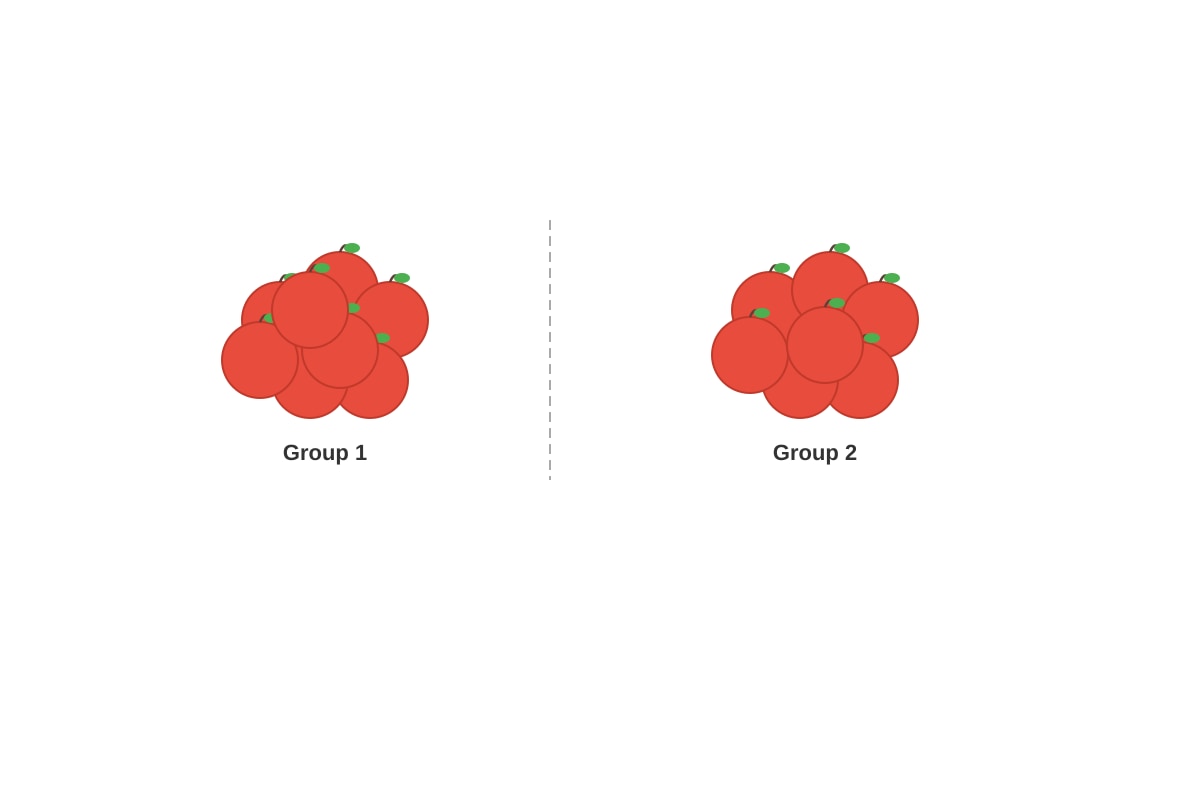
12. 15 apples (2 marks)
- Group 1: 8 apples
- Group 2: 7 apples
- Altogether:
Strategy: Count each group separately, then add. Can also count all objects from 1 to 15.
Marking: 2 marks for correct answer with reasoning shown; 1 mark for correct final answer without visible working.
13. 52 (2 marks)
- Digits available: 5 and 2
- Two possibilities: 52 or 25
- For biggest number, put larger digit in tens place: 52
- Check:
Marking: 2 marks for correct answer; 1 mark if answer is 25 (shows understanding of two-digit formation but wrong objective).
14. 16, 22 (2 marks)
- Pattern: counting up by 2 (even numbers)
- 12, 14, 16, 18, 20, 22, 24
- Working: ;
Marking: 1 mark for each correct answer.
15. Tom has more stickers; 9 more (2 marks)
- Tom: 43 stickers; Jerry: 34 stickers
- Compare: 43 > 34 (both have 4 and 3, but 43 has 4 tens vs 3 tens, so 43 > 34)
- How many more:
Marking: 1 mark for "Tom"; 1 mark for "9 more". Deduct 1 mark if only one part correct.
16. 91, 90, 19, 9 (2 marks)
- Compare tens place first: 91 and 90 both have 9 tens (biggest group)
- Then 19 has 1 ten; 9 has 0 tens (smallest)
- Between 91 and 90: (same tens, compare ones: )
Marking: 2 marks for fully correct order; 1 mark if reverse order (smallest to biggest) or one number out of place.
Section B Total: 12 marks
Section C: Problems and Working (7 marks each)
17. (7 marks total)
(a) 100 beads (2 marks)
- 10 rows × 10 beads per row = total beads
- Working:
Marking: 2 marks for correct answer with multiplication or repeated addition shown.
(b) 75 beads (3 marks)
- Start with: 100 beads
- Taken out: 25 beads
- Left:
Step-by-step:
Marking: 1 mark for correct method; 1 mark for correct subtraction steps; 1 mark for final answer.
(c) Yes, 15 beads in each bag (2 marks)
- Remaining beads: 75
- Divide by 5 bags:
Check: ✓
Marking: 1 mark for correct division method; 1 mark for correct answer with verification.
18. (7 marks total)
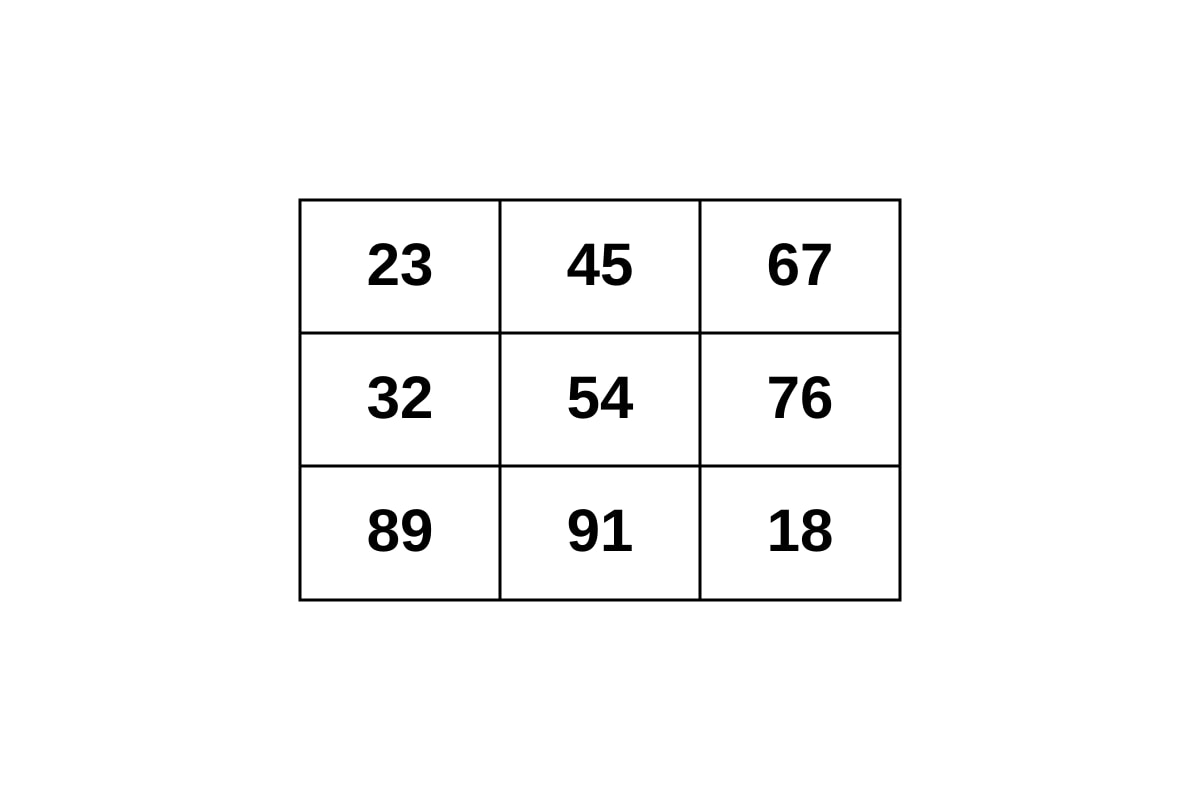
Expected table features: 3×3 grid with numbers 23, 45, 67 (top row); 32, 54, 76 (middle row); 89, 91, 18 (bottom row)
(a) 23 and 32 should be circled (2 marks)
- "2 tens" means the digit in tens place is 2
- 23: 2 tens and 3 ones ✓
- 32: 3 tens and 2 ones ✗ (this has 3 tens, not 2)
- Correction: Only 23 has exactly 2 tens
Re-evaluation: Let me recheck.
- 23: 2 tens, 3 ones ✓
- 32: 3 tens, 2 ones ✗
Answer: 23 (2 marks)
Marking: 2 marks for circling only 23; 1 mark if 32 also circled (confuses digit with place value).
(b) Ninety-one (2 marks)
- Compare all numbers: 23, 45, 67, 32, 54, 76, 89, 91, 18
- Largest: 91 (9 tens, which is more than any other number's tens)
- In words: ninety-one
Marking: 1 mark for identifying 91; 1 mark for correct spelling in words.
(c) 18; eighteen (2 marks)
- Smallest: 18 (1 ten and 8 ones, smallest tens digit)
- In numerals: 18
- In words: eighteen
Marking: 1 mark for numerals; 1 mark for words.
(d) 5 numbers (1 mark)
- Numbers bigger than 50: 67, 54, 76, 89, 91
- Count: 67 (✓), 54 (✓), 76 (✓), 89 (✓), 91 (✓) → 5 numbers
Marking: 1 mark for correct count; allow follow-through if (b) error made but method consistent.
19. (7 marks total)
(a) 4 (2 marks)
- Houses numbered 1, 2, 3, 4, 5, 6, 7 along the street
- 4th from left: 1st, 2nd, 3rd, 4th → house number 4
Marking: 2 marks for correct answer. 1 mark if answer is "house 4" but position described incorrectly.
(b) 7 houses (2 marks)
- From house 1 to house 7, you pass: house 1, 2, 3, 4, 5, 6, 7
- Total: 7 houses
Common mistake: Answering 6 (counting gaps, not houses).
Marking: 2 marks for correct answer; 1 mark for method showing list of houses.
(c) 2, 4, 6 (3 marks)
- Even numbers: numbers ending in 0, 2, 4, 6, 8
- From 1–7: check each: 1 (odd), 2 (even), 3 (odd), 4 (even), 5 (odd), 6 (even), 7 (odd)
- Yellow houses: 2, 4, 6
Marking: 1 mark for recognizing even numbers; 1 mark per two correct answers; 3 marks for all three correct.
20. (7 marks total)
(a) 7 (2 marks)
- Ones digit = 2 (given)
- Tens digit = ones digit + 5 =
Marking: 2 marks for correct answer; 1 mark for correct method with arithmetic error.
(b) 72 (2 marks)
- Tens digit: 7; Ones digit: 2
- Number =
Marking: 1 mark for correct digits; 1 mark for correct place value combination.
(c) 82 (3 marks)
- Number: 72
- 10 more than 72:
Method:
- 10 more means add 1 ten
- 72 has 7 tens and 2 ones
- Add 1 ten: 8 tens and 2 ones = 82
Working: or
Marking: 1 mark for understanding "10 more"; 1 mark for correct addition method; 1 mark for final answer.
Section C Total: 28 marks
Grand Total: 50 marks
| Section | Marks |
|---|---|
| A | 10 |
| B | 12 |
| C | 28 |
| Total | 50 |
Common Error Summary
| Error Type | Prevention Tip |
|---|---|
| Confusing digit and value (e.g., saying "7" instead of "70") | Always ask: "Where is the digit? What place is it in?" |
| Counting gaps instead of objects | Touch or mark each object as you count it |
| "After" vs "before" | "After" = next number up; "Before" = number just before |
| Comparing without checking tens first | Always compare the tens digit first, then ones if tens are equal |
| Writing numbers as words | Break into tens part + ones part, then join |