AI Generated Exam Paper
Primary 1 Malay Practice Paper 1
Free P1 Malay Practice Paper 1, Kimi2.6 AI version, with questions, answers, and syllabus-aligned practice for Singapore students.
These static practice materials are generated from the site's syllabus and paper-generation workflow, with source and model context shown so students and parents can evaluate the material before use.
Questions
Free quiz and exam paper access
Enter your details to view this paper
Your access is remembered on this device.
Answers
Primary 1 Malay Quiz - Vocabulary (Answer Key)
Total Marks: 20 marks Version: 1 of 5
Section A: Pilih Gambar yang Betul — Answers 1-5
| Question | Answer | Explanation | Marks |
|---|---|---|---|
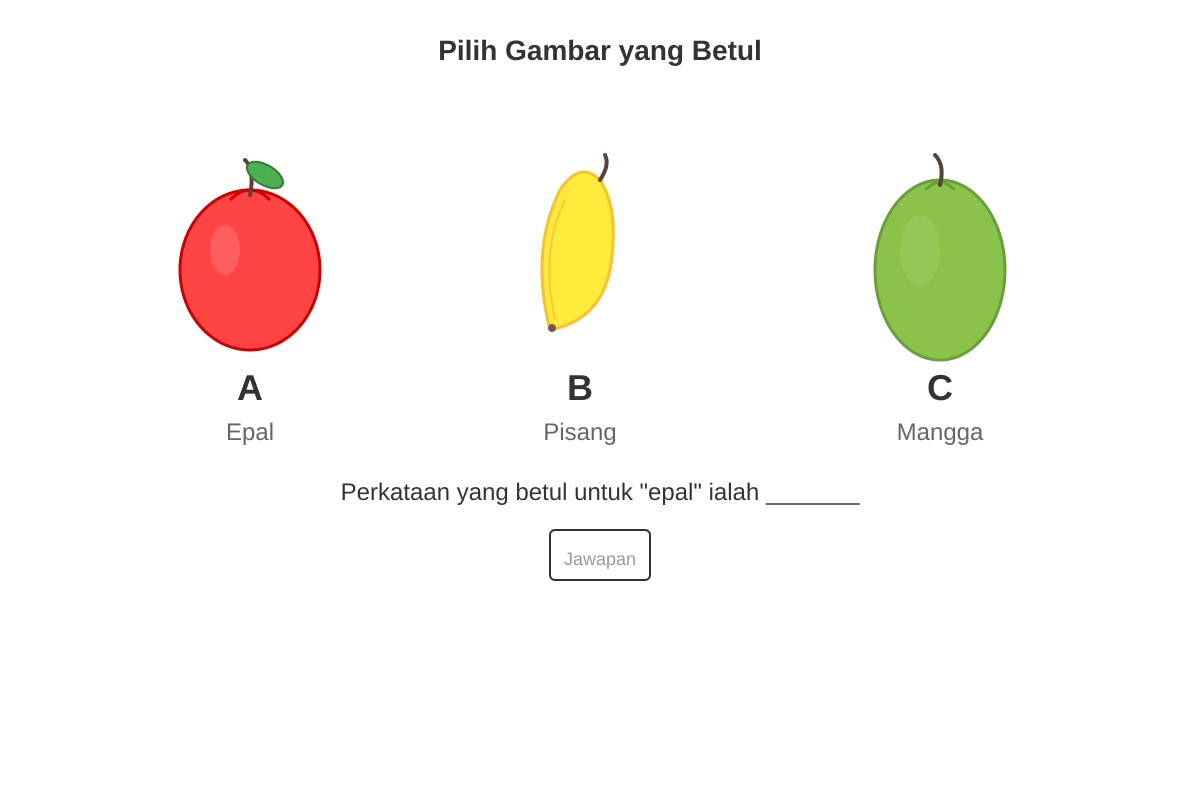
| 1 | A | "Epal" = apple. The image shows three fruits: A is an apple (epal), B is a banana (pisang), C is a mango (mangga). | 1 |
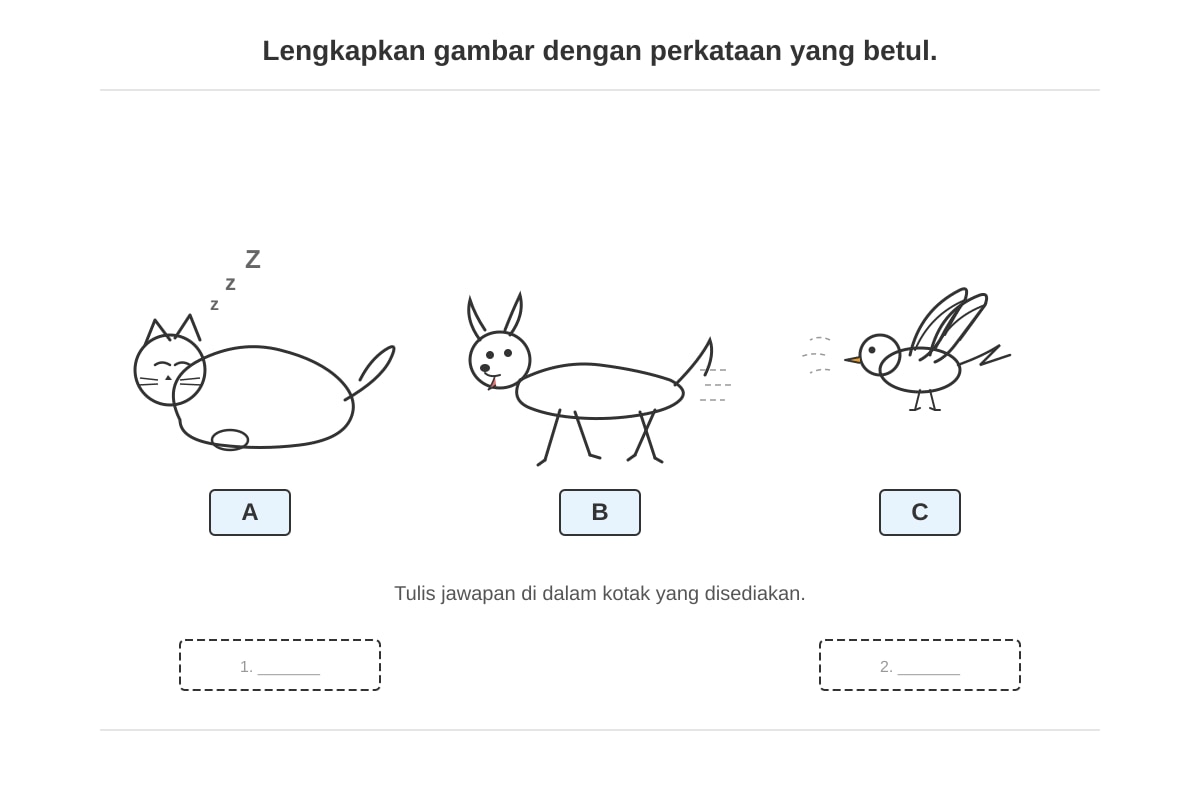
| 2 | C | "Burung" = bird. Image A shows a cat (kucing), B shows a dog (anjing), C shows a bird (burung). Birds fly with wings, unlike four-legged mammals. | 1 |
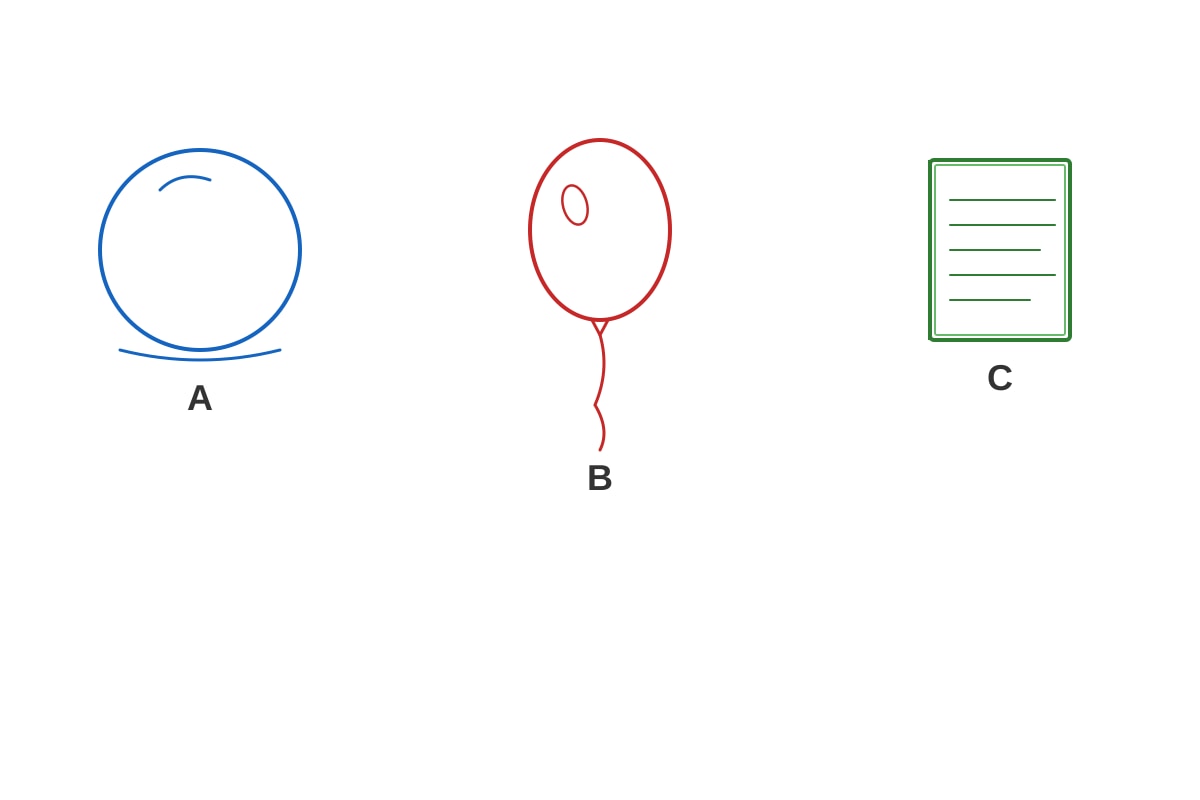
| 3 | C | "Buku" = book. Image A is a ball (bola), B is a balloon (belon), C is a book (buku). A book has pages for reading. | 1 |
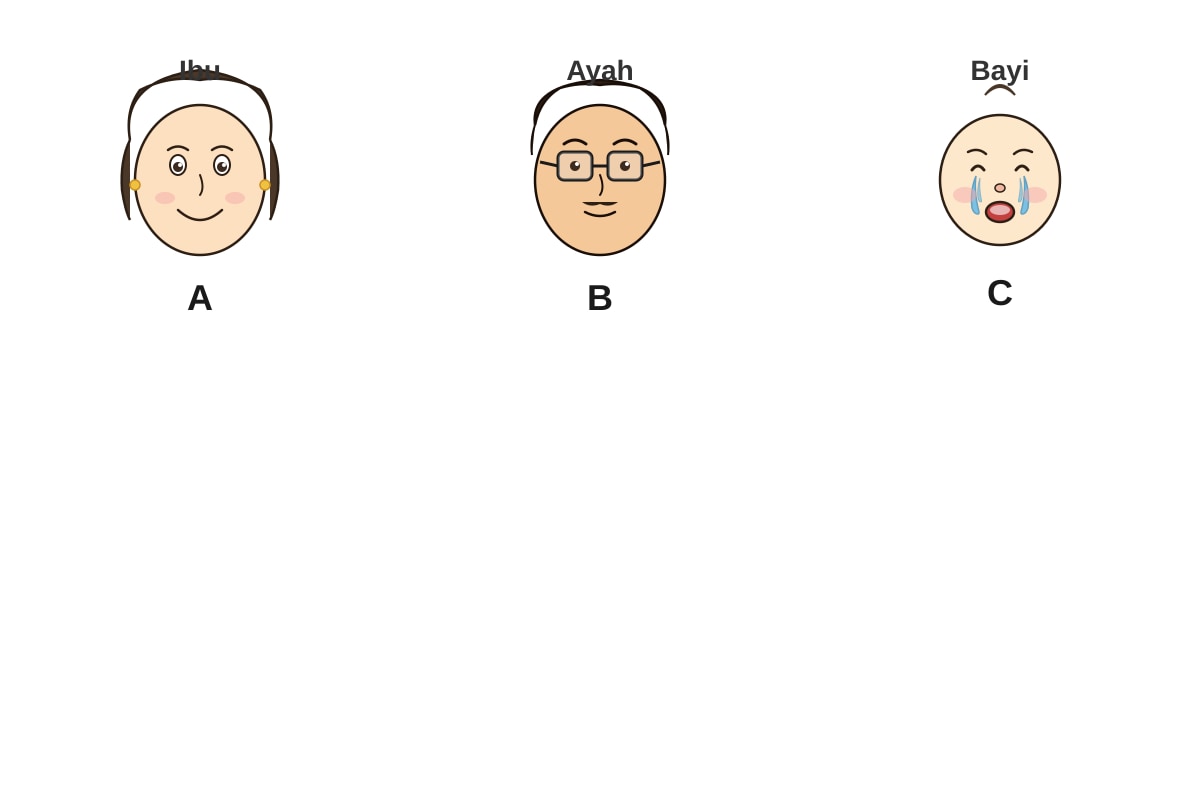
| 4 | A | "Ibu" = mother. Image A shows a woman's smiling face (mother/ibu), B shows a man with glasses (father/ayah), C shows a baby (bayi). Mother's face features softer, feminine appearance. | 1 |
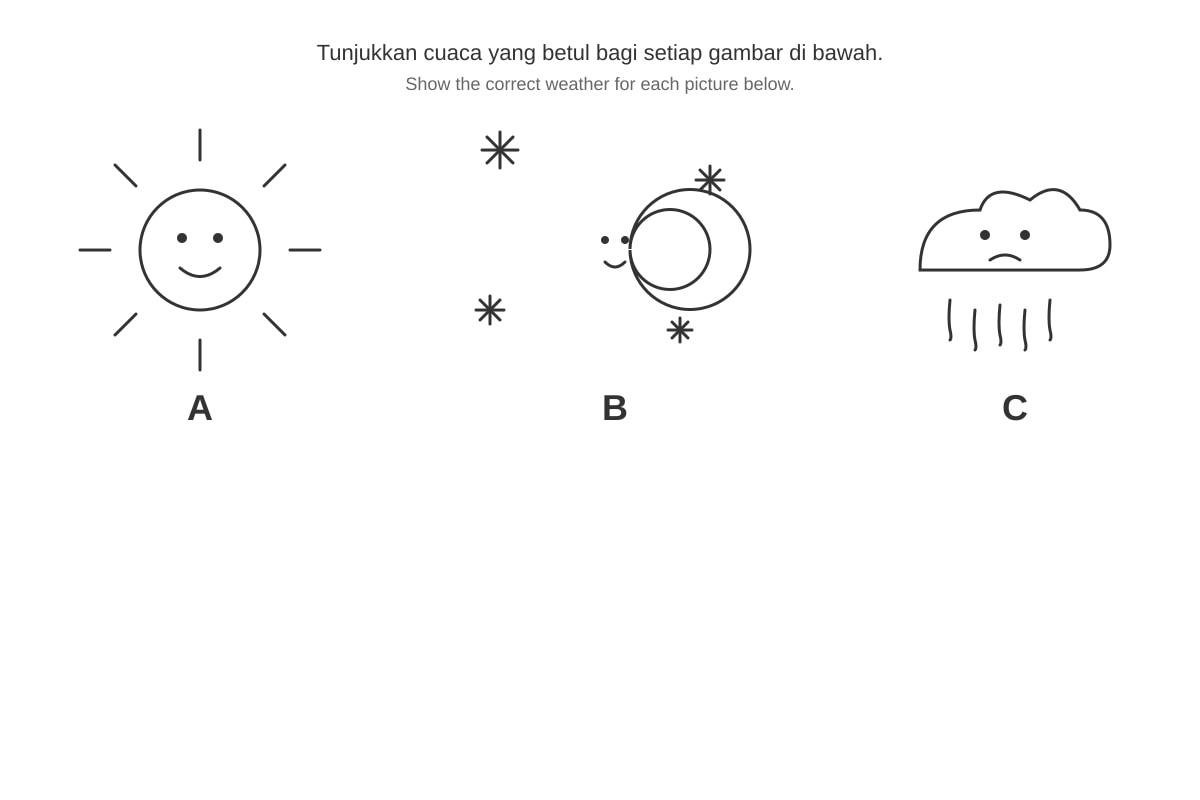
| 5 | C | "Hujan" = rain. Image A is the sun (matahari), B is the moon and stars (bulan dan bintang), C is a cloud with rain drops (awan dengan hujan). Rain falls from clouds. | 1 |
Section A Total: 5 marks
Section B: Padankan Perkataan dengan Maksud — Answers 6-10
| Question | Answer | Word | Meaning | Connecting Logic | Marks |
|---|---|---|---|---|---|
| 6 | 3 | makan | eating/putting food in mouth | "Makan" specifically refers to consuming food by placing it in the mouth; key action word for daily routine | 1 |
| 7 | 4 | tidur | resting on bed at night | "Tidur" = sleep/rest; done on a bed (katil), typically at night (waktu malam); opposite of being awake | 1 |
| 8 | 1 | lari | running/moving fast using feet | "Lari" = run; involves rapid leg movement (bergerak dengan cepat menggunakan kaki); faster than walking (jalan) | 1 |
| 9 | 5 | mandi | bathing/using water and soap to clean body | "Mandi" = bathe; requires water (air) and soap (sabun) to clean (bersihkan) the body (badan) | 1 |
| 10 | 2 | tengok | looking/using eyes to see | "Tengok" = look/see; action performed with the eyes (mata); informal synonym for "lihat" | 1 |
Common mistake for Q10: Students may confuse "tengok" with "tangan" (hand). Emphasize that "tengok" relates to eyes/vision.
Section B Total: 5 marks
Section C: Isikan Tempat Kosong — Answers 11-15
| Question | Answer | Full Sentence | Vocabulary Teaching Note | Marks |
|---|---|---|---|---|
| 11 | panas | Hari ini cuaca sangat panas. Saya berpeluh. | "Panas" = hot/warm; context clue "berpeluh" (sweating) indicates high temperature. Weather vocabulary. | 1 |
| 12 | baru | Adik saya memakai baju baru. Baju lama sudah kecil. | "Baru" = new; contrast word "lama" (old) in second sentence signals the opposite meaning. Clothes vocabulary. | 1 |
| 13 | besar | Rumah kami adalah besar. Banyak bilik di dalamnya. | "Besar" = big/large; context clue "banyak bilik" (many rooms) indicates spaciousness. Size adjective. | 1 |
| 14 | sejuk | Ais krim ini sangat sejuk. Saya suka makan. | "Sejuk" = cold/cool; ais krim (ice cream) is frozen, therefore cold. Temperature vocabulary. | 1 |
| 15 | kecil | Semut itu sangat kecil. Sukar untuk melihatnya. | "Kecil" = small; context clue "sukar untuk melihatnya" (difficult to see) indicates tiny size. Opposite of "besar." | 1 |
Section C Total: 5 marks
Section D: Kenal Pasti Kumpulan Perkataan — Answers 16-18
| Question | Answer | Category Analysis | Why Others Belong | Marks |
|---|---|---|---|---|
| 16 | kereta | Vehicles vs. Animals | "Kereta" = car (vehicle/transport). Others are all animals: kucing (cat), anjing (dog), burung (bird), ikan (fish). These are living creatures that can move independently, eat, and grow. | 1 |
| 17 | meja | Colors vs. Furniture | "Meja" = table (furniture/object). Others are all colors: merah (red), biru (blue), hijau (green), kuning (yellow). These describe how something looks, not a physical object. | 1 |
| 18 | air | Solid Food vs. Drink | "Air" = water (beverage/drink). Others are all solid foods: nasi (rice), roti (bread), mee (noodles), kuih (cake/pastry). Water is consumed as a drink rather than eaten as food. | 1 |
Teaching extension for Q18: Some students may argue "air" belongs because we consume it with meals. Clarify that the grouping principle is solid food (makanan) versus drink (minuman).
Section D Total: 3 marks
Section E: Susun Perkataan — Answers 19-20
| Question | Answer | Step-by-Step Construction | Grammar Notes | Marks |
|---|---|---|---|---|
| 19 | Saya suka makan epal. | Step 1: Identify subject = "saya" (I) → starts sentence<br>Step 2: Identify verb phrase = "suka makan" (like to eat)<br>Step 3: Identify object = "epal" (apple) → ends sentence<br>Ordered: [Subject] + [Verb phrase] + [Object] | Malay sentence structure follows Subject-Verb-Object pattern. "Suka" (like) needs another verb after it: "suka + [verb]" = like to [do something]. "Makan epal" = eat apple. | 1 |
| 20 | Ada sebuah rumah besar di kampung kami. | Step 1: Identify existence word "Ada" (There is/are) → starts sentence<br>Step 2: Identify quantity "sebuah" (one/a) → goes before noun<br>Step 3: Identify noun "rumah" (house) with adjective "besar" (big)<br>Step 4: Identify place marker "di" (at/in)<br>Step 5: Identify location "kampung kami" (our village)<br>Ordered: [Existence] + [Quantity] + [Noun+Adj] + [Place marker] + [Location] | "Ada" is used to show existence. "Sebuah" is the classifier for buildings/houses (classifier "buah" for non-animate objects). "Di" functions as a preposition for location. | 1 |
Alternative acceptable answer for Q20: "Di kampung kami ada sebuah rumah besar." (This places location first, which is also grammatically acceptable in Malay for emphasis, though less common for Primary 1 level.)
Common mistake for Q20: Students may write "Ada rumah sebuah besar" — incorrect classifier placement. The classifier "sebuah" must immediately precede the noun it modifies.
Section E Total: 2 marks
GRAND TOTAL VERIFICATION
| Section | Question Range | Marks |
|---|---|---|
| A | 1-5 | 5 |
| B | 6-10 | 5 |
| C | 11-15 | 5 |
| D | 16-18 | 3 |
| E | 19-20 | 2 |
| TOTAL | 1-20 | 20 |
Duration check: 20 questions × ~1.5 minutes = 30 minutes. Appropriate for Primary 1 with review time included.
This answer key is designed for teaching and self-study purposes. Stage 5 syllabus-aligned content — not derived from past-year papers (no Stage 3 evidence available for this level/group).