AI Generated Quiz
Primary 1 English Vocabulary Quiz
Free P1 English Vocabulary quiz, Kimi2.6 AI version, with questions, answers, and syllabus-aligned practice for Singapore students.
These static practice materials are generated from the site's syllabus and paper-generation workflow, with source and model context shown so students and parents can evaluate the material before use.
Questions

Free quiz and exam paper access
Enter your details to view this paper
Your access is remembered on this device.
Answers
Primary 1 English Quiz - Vocabulary: Answer Key
Total Marks: 20
Section A: Picture-Word Matching (Questions 1–5)
Q1: bag (1 mark)
- Expected visual: A backpack/school bag with straps.
- Answer: bag
- Teaching note: A bag is something we use to carry things. At school, we use a school bag to carry books and pencils. The picture shows a bag with straps that goes on your back.
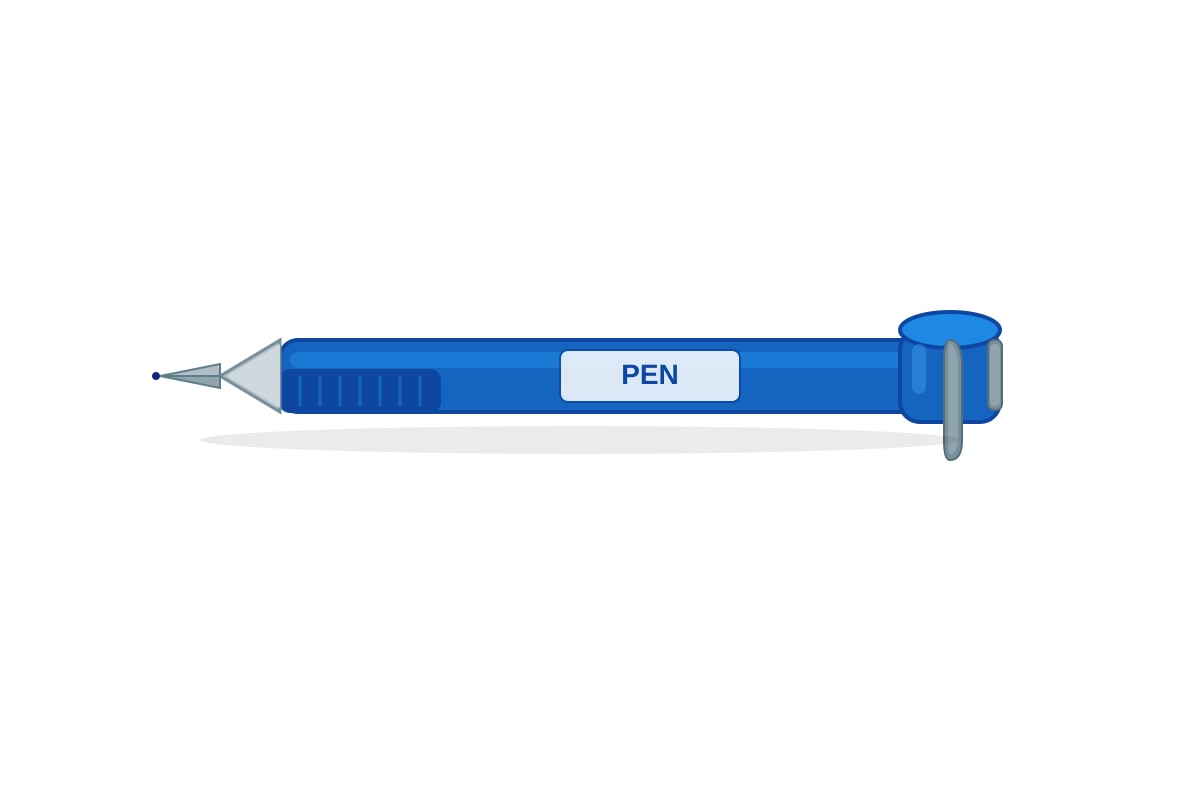
Q2: pen (1 mark)
- Expected visual: A pen with a cap.
- Answer: pen
- Teaching note: A pen is a tool we use for writing. It has ink inside. The picture shows a pen with a cap that you can take on and off.
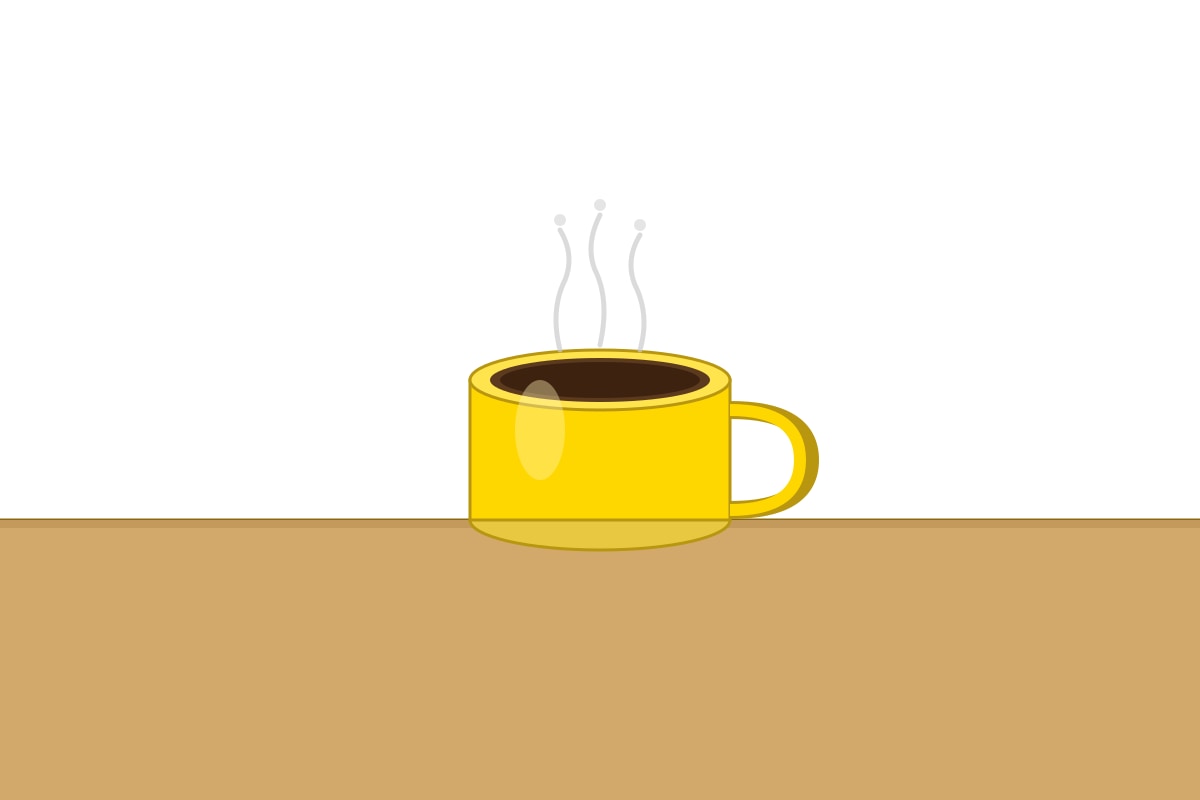
Q3: cup (1 mark)
- Expected visual: A mug/cup with a handle, steam rising.
- Answer: cup
- Teaching note: A cup is something we drink from. It has a handle so we can hold it without getting hot. We might drink water, milk, or tea from a cup.
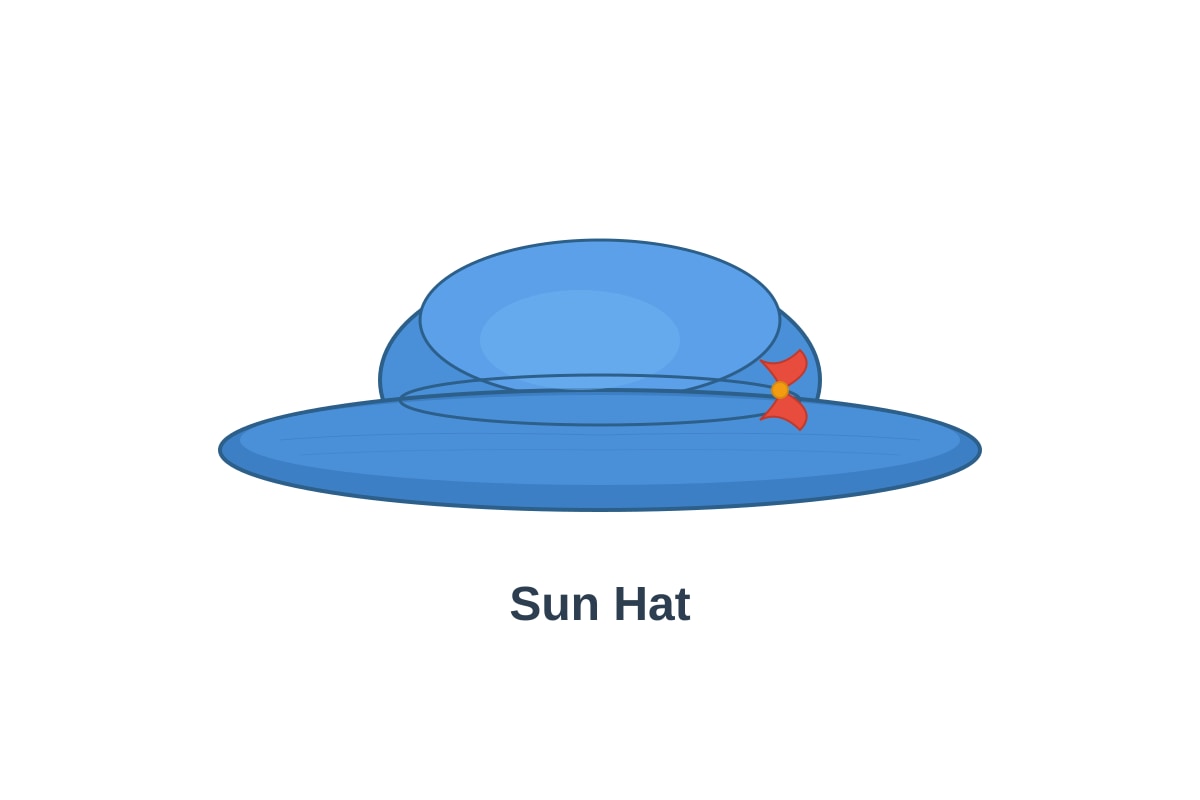
Q4: hat (1 mark)
- Expected visual: A hat with a brim on top.
- Answer: hat
- Teaching note: A hat is something we wear on our head. It can protect us from the sun or keep us warm. The picture shows a hat with a wide brim.
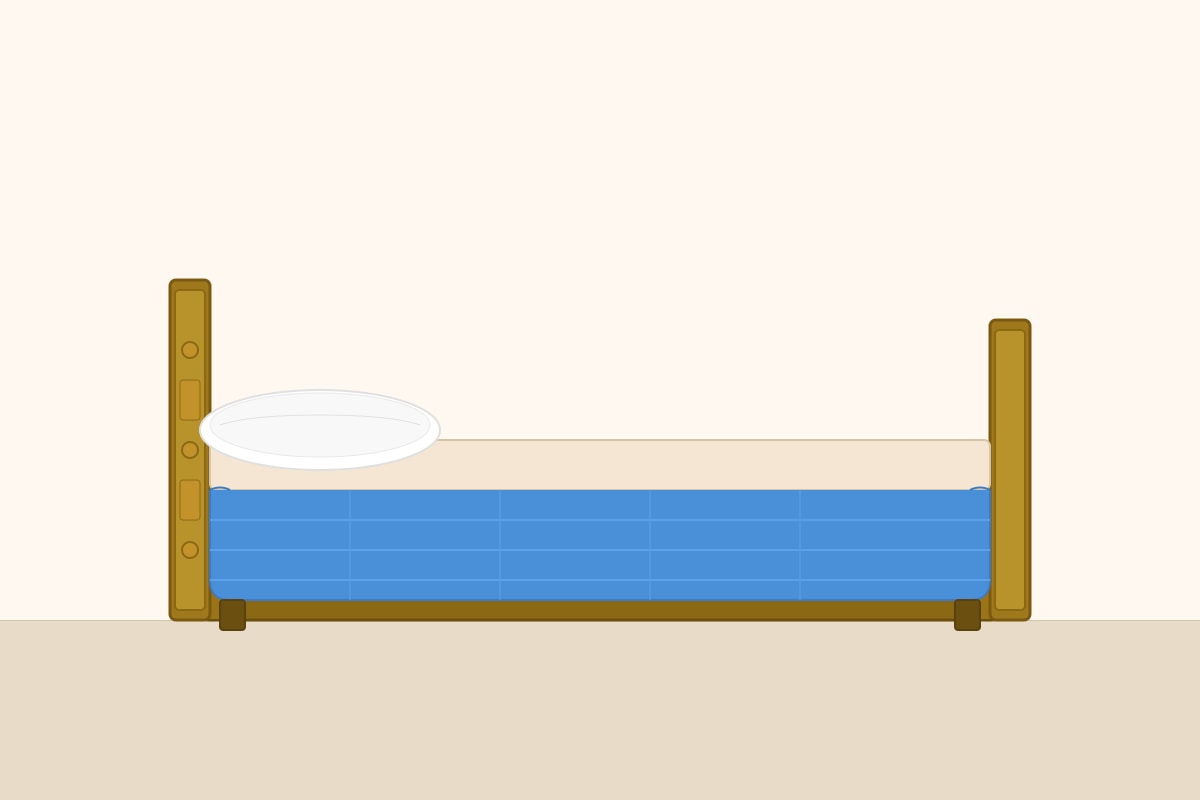
Q5: bed (1 mark)
- Expected visual: A bed with pillow and blanket.
- Answer: bed
- Teaching note: A bed is furniture where we sleep. The picture shows a bed with a pillow for your head and a blanket to keep you warm.
Section B: Choosing the Right Word (Questions 6–10)
Q6: B) mouse (1 mark)
- Teaching note: Cats are known to chase small animals. A mouse is a small animal that cats like to chase.
- Why others are wrong: A tree, house, and chair are not things that cats chase. They are too big or not alive.
Q7: C) glass (1 mark)
- Teaching note: We drink from a glass. A glass is a container made of glass or plastic that holds liquids.
- Why others are wrong: A shoe, book, and door are not things we drink from. They are used for other purposes.
Q8: A) kitchen (1 mark)
- Teaching note: The kitchen is the room in a house where we cook food. It has a stove, refrigerator, and sink.
- Why others are wrong: A garden is for plants, a toilet is for washing up, and a bedroom is for sleeping. We do not cook in these places.
Q9: B) soap (1 mark)
- Teaching note: Soap is what we use with water to clean our hands. It makes bubbles and removes dirt and germs.
- Why others are wrong: Sand, mud, and paint would make our hands dirtier, not cleaner!
Q10: C) dog (1 mark)
- Teaching note: Dogs bark. "Bark" is the sound a dog makes. Different animals make different sounds.
- Why others are wrong: Cats meow, birds chirp or tweet, and fish do not make sounds we can hear. Only dogs bark.
Section C: Opposite Words (Questions 11–14)
Q11: big (1 mark)
- Teaching note: Opposite words are words that mean different things. "Small" means not big. If something is small, it is not big. If something is big, it is not small.
- Memory tip: An ant is small. An elephant is big.
Q12: hot (1 mark)
- Teaching note: "Cold" means not hot. Ice is cold. Fire is hot. These are opposites.
- Common mistake: Some students write "warm." Warm is between hot and cold, not truly opposite.
Q13: happy (1 mark)
- Teaching note: "Sad" means not happy. When you smile, you are happy. When you cry, you might be sad. These feelings are opposites.
- Extension: We can feel many feelings. Happy and sad are two important opposite feelings.
Q14: fast (1 mark)
- Teaching note: "Slow" means not fast. A tortoise moves slowly. A hare moves fast. The story of the Tortoise and the Hare teaches us about fast and slow.
- Common mistake: Some students write "quick." Quick means the same as fast, not opposite.
Section D: Word Groups (Questions 15–17)
Q15: carrot (1 mark)
- Teaching note: Apple, banana, and orange are all fruits. They grow on trees or plants and are sweet. A carrot is a vegetable, not a fruit. It grows underground and is orange and crunchy.
- Skill: Grouping words by category helps us learn vocabulary.
Q16: table (1 mark)
- Teaching note: Dog, cat, and rabbit are all animals. They are living things that move and need food and water. A table is furniture—it is not alive and cannot move by itself.
Q17: book (1 mark)
- Teaching note: Run, jump, and sleep are all actions—things we do with our bodies. A book is an object, something we can hold and read. It is not an action.
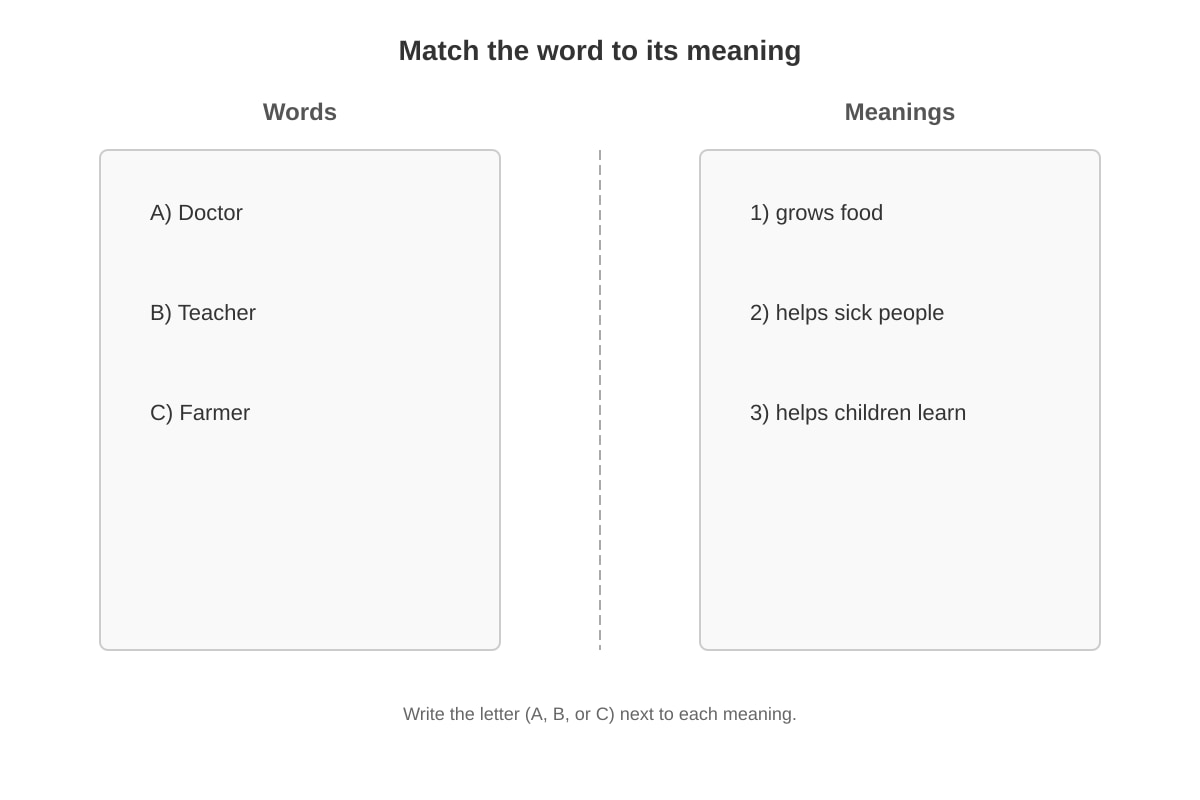
Section E: Simple Definitions (Questions 18–20)
Q18: A (1 mark)
- Teaching note: A doctor is a person who helps us when we are sick or hurt. They work in hospitals and clinics.
- Match: A) Doctor = 2) helps sick people
Q19: B (1 mark)
- Teaching note: A teacher is a person who helps children learn at school. They teach us to read, write, and do many things.
- Match: B) Teacher = 3) helps children learn
Q20: C (1 mark)
- Teaching note: A farmer grows food on a farm. They grow vegetables, fruits, and grains. They might also take care of animals like cows and chickens.
- Match: C) Farmer = 1) grows food
Marking summary:
- Section A: 5 marks
- Section B: 5 marks
- Section C: 4 marks
- Section D: 3 marks
- Section E: 3 marks
- Total: 20 marks