AI Generated Quiz
Primary 1 English Vocabulary Quiz
Free P1 English Vocabulary quiz, GLM5.3 AI version, with questions, answers, and syllabus-aligned practice for Singapore students.
These static practice materials are generated from the site's syllabus and paper-generation workflow, with source and model context shown so students and parents can evaluate the material before use.
Questions
Free quiz and exam paper access
Enter your details to view this paper
Your access is remembered on this device.
Answers
Primary 1 English Quiz - Vocabulary — Answer Key
Total Marks: 28
Teaching note for helpers: this quiz practises P1 vocabulary — naming words (nouns), action words (verbs), describing words (adjectives), opposites, and using words in sentences. All content is syllabus-based practice, not past-year paper material.
Answer 1.
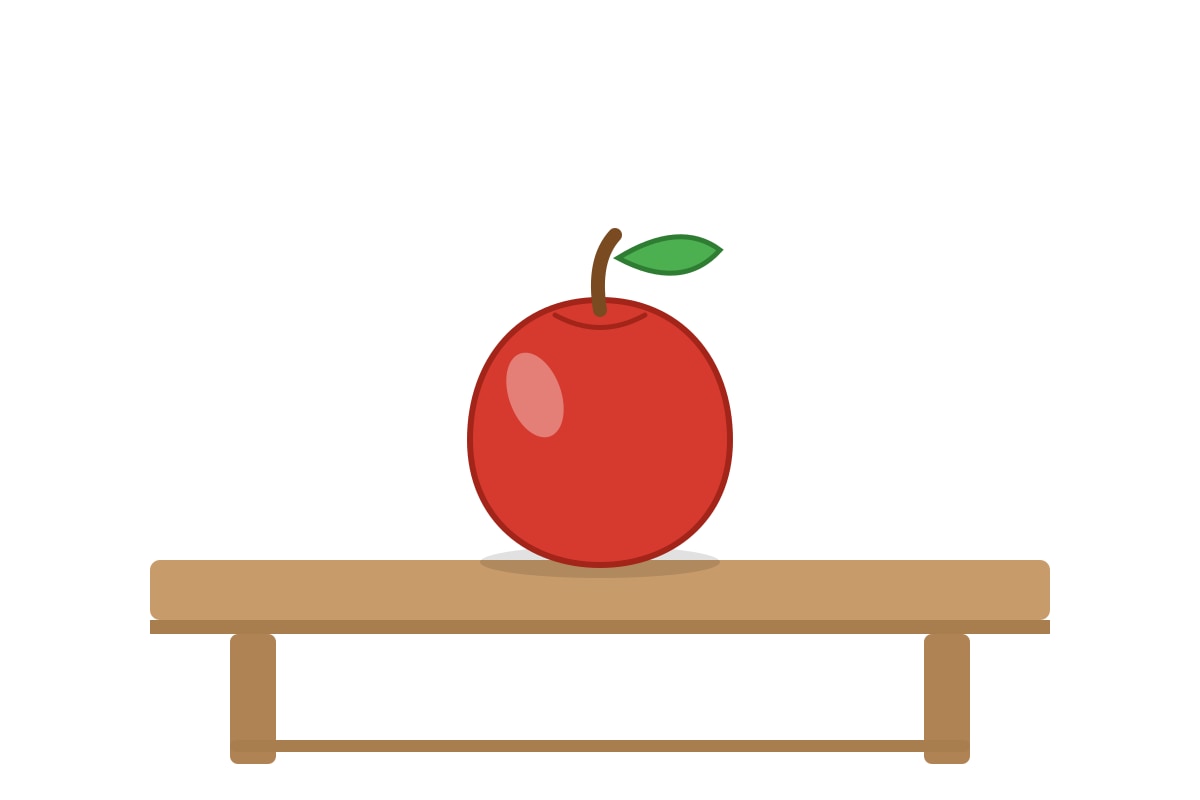
B) apple — 1 mark. The picture shows one apple. Teaching point: read all four choices before circling. Common mistake: choosing "ball" because both are round; look at the stem and shape that make it an apple.
Answer 2.
B) table — 1 mark. Naming words name people, places, or things. "Run" and "jump" are action words; "happy" describes a feeling. Only "table" names a thing. Common mistake: picking an action word because it appears first.
Answer 3.
Animals: dog, cat, rabbit. Food: bread, milk, cake. — 2 marks. Marking: 1 mark for all three animals placed correctly; 1 mark for all three foods placed correctly. Teaching point: ask "Is it alive?" — living creatures are animals; things we eat or drink are food. Milk is a drink, so it belongs in Food.
Answer 4.
hat — 1 mark. "I wear a hat on my head." Teaching point: try each word in the blank and check it makes sense — shoes go on feet, not heads.
Answer 5.
banana — 1 mark. Car, bus, and lorry are all things that take people on roads. A banana is a fruit, so it does not belong. Teaching point: find what three words share, then pick the odd one out.
Answer 6.
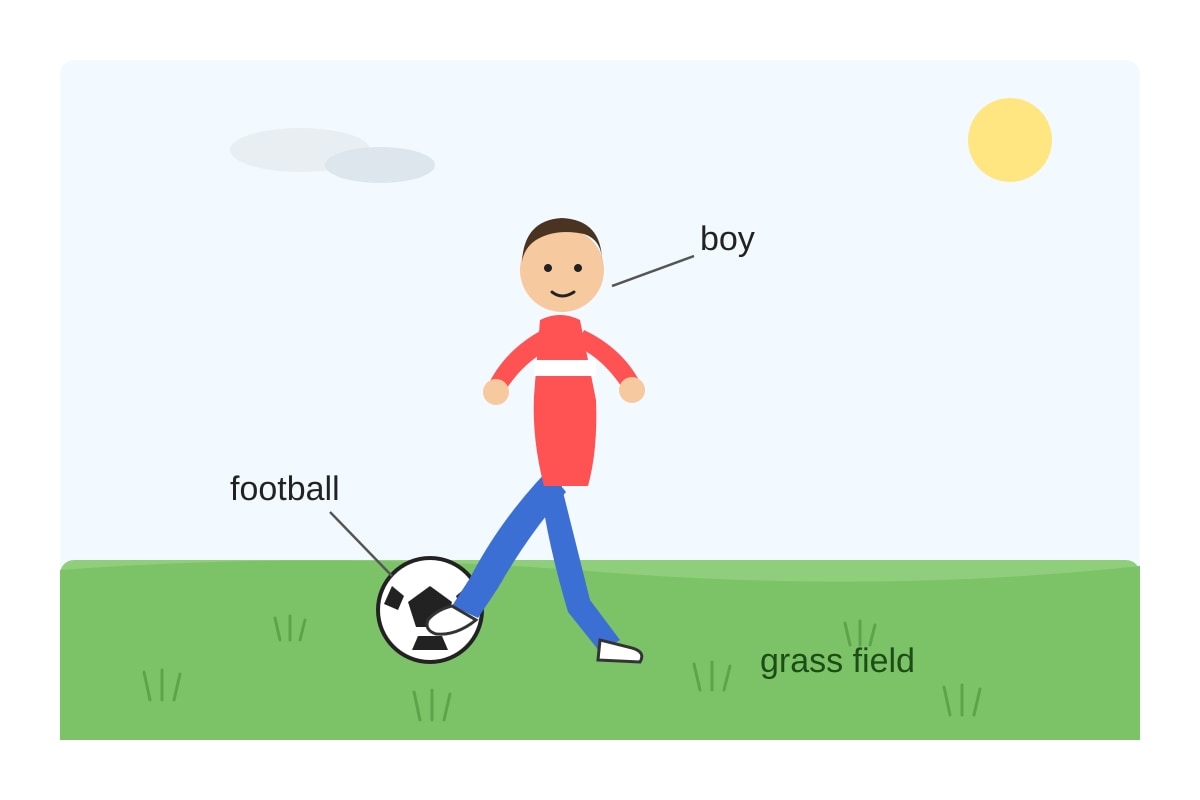
B) kicking — 1 mark. The picture shows the boy's foot striking the football. Expected visual: one boy, one football, foot contacting the ball. Common mistake: choosing "running"; running happens near the ball, but the contact shows kicking.
Answer 7.
A) swims — 1 mark. "The fish swims in the water." Teaching point: think about where each action can happen — fish live and move in water, so they swim; birds fly; people run.
Answer 8.
B) huge — 1 mark. Describing words tell us size, colour, or feel. An elephant is very large, so "huge" fits best. "Tiny" is the opposite; "wet" does not describe elephants in general.
Answer 9.
fluffy and cold — 2 marks (1 mark for each describing word circled). "Fluffy" tells us how the cat feels; "cold" tells us the temperature of the floor. Teaching point: test each word — naming words (cat, floor) name things; describing words add detail about them.
Answer 10.
sweet; sour — 2 marks (1 mark per blank). Honey tastes sweet; a lemon tastes sour. Teaching point: these are taste words. Try each word in both blanks — swapping them gives wrong facts, which shows why word meaning matters.
Answer 11.
B) small — 1 mark. Opposites mean the opposite. Big ↔ small. "Tall" and "long" describe size in one direction, but the direct opposite of big is small.
Answer 12.
cold — 1 mark. Hot ↔ cold. Common mistake: misspelling as "colt" or "codl"; remind pupils to sound it out: c-o-l-d.
Answer 13.
day → B (night); up → A (down); happy → D (sad); open → C (close) — 2 marks. Marking: 1 mark for any two correct matches; 2 marks for all four correct. Teaching point: say each pair aloud together — hearing the contrast helps remember the opposite.
Answer 14.
B) school — 1 mark. A school is where children learn. A market sells goods; a zoo shows animals. Teaching point: match the clue phrase ("where children learn") to the place it describes.
Answer 15.
B) kitten — 1 mark. Baby animal words: cat → kitten, dog → puppy, hen → chick. Common mistake: choosing "puppy" because both are baby animals; match the baby to the correct parent animal.
Answer 16.
red and blue — 1 mark (both circled). Red and blue are colours. Chair and table are naming words for furniture. Accept either order.
Answer 17.
Sample answers: "I play with my friends at the park." / "We play football after school." Marking (3 marks):
- 1 mark — the word "play" is used correctly as an action in the sentence.
- 1 mark — capital letter at the start and a full stop at the end.
- 1 mark — the sentence makes sense (a complete idea with someone doing the playing). Award marks independently; a sensible sentence with correct punctuation but slightly unusual wording still earns its marks.
Answer 18.
smell — 1 mark. "I use my nose to smell the flowers." Teaching point: match each sense to its body part — eyes see, ears hear, nose smells, tongue tastes, skin touches.
Answer 19.
B) umbrella — 1 mark. We use an umbrella to stay dry in rain. A ruler measures; a pillow is for sleeping. Teaching point: use the situation ("it is raining") to pick the useful object.
Answer 20.
(1) sun (2) sand (3) shells — 3 marks (1 mark per blank). Method: read the whole story first, then test each word from the box in each blank.
- Blank 1 shines in the sky → sun.
- Blank 2 is used to build a beach castle → sand.
- Blank 3 are pretty things picked up by the sea → shells. "Kite" and "tree" are extra words that do not fit any blank. Common mistake: putting "kite" in blank 3 because kites are at the beach too — reread the sentence to check the meaning fits.