AI Generated Quiz
Primary 1 English Phonics Quiz
Free P1 English Phonics quiz, MiniMax AI version, with questions, answers, and syllabus-aligned practice for Singapore students.
These static practice materials are generated from the site's syllabus and paper-generation workflow, with source and model context shown so students and parents can evaluate the material before use.
Questions

Free quiz and exam paper access
Enter your details to view this paper
Your access is remembered on this device.
Answers
Primary 1 English Quiz - Phonics - Answer Key
Caveat: This answer key is syllabus-first and LLM-inferred. No past-paper evidence is available for Primary 1 English; explanations are based on standard MOE English Language Syllabus 2020 (Primary) phonics expectations for P1.
Total Marks: 20
How Phonics Is Taught at Primary 1
At P1, children learn that letters stand for sounds. They practise:
- Letter-sound match: knowing what sound a letter makes (e.g. b says /b/).
- Blending (synthesising): pushing sounds together to read a word (c-a-t → "cat").
- Segmenting: breaking a spoken word into its sounds (sun → /s/-/u/-/n/).
- Rhyming: hearing when the end sounds of words are the same (cat / bat / rat / mat).
All 20 questions below test these four skills using only 3-letter CVC (consonant-vowel-consonant) words, which is appropriate for P1. No blends, digraphs or vowel teams are used.
Section A: Letter-Sound Match (Q1-Q5)
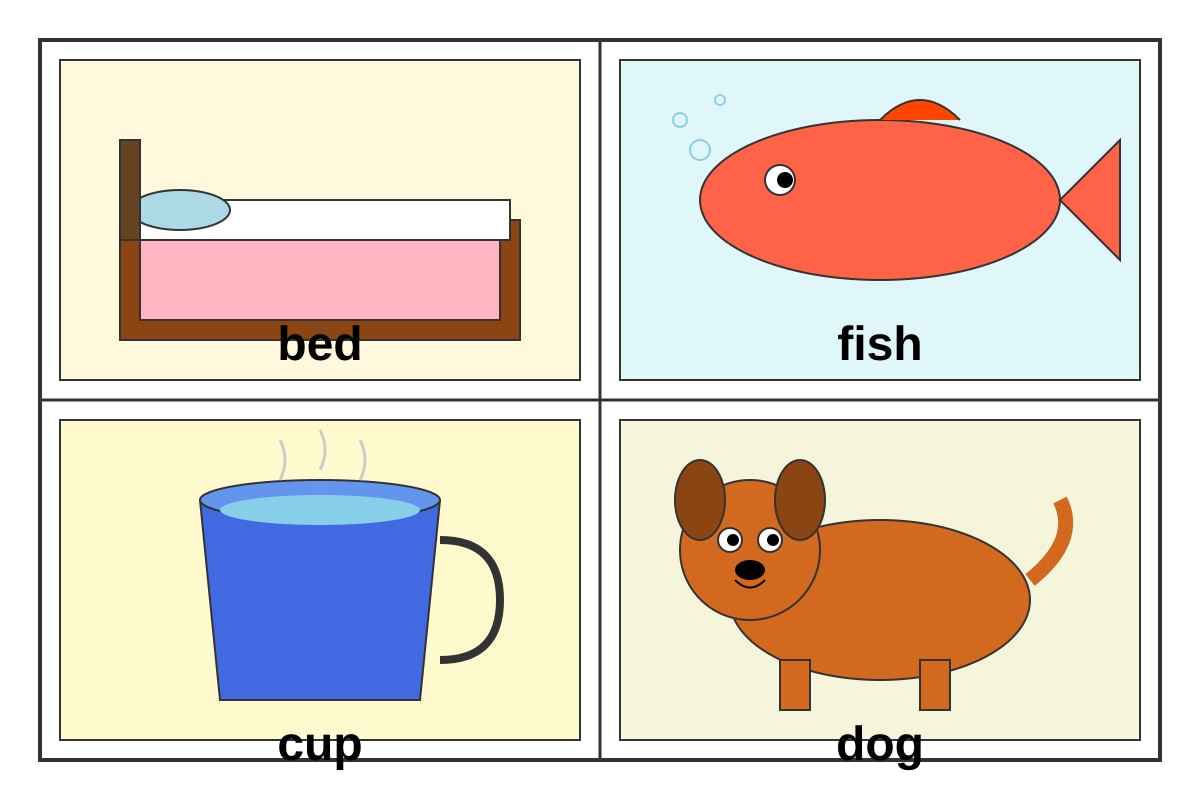
1. (A) bed
- The word bat begins with the sound /b/.
- /b/ is also the first sound in bed (/b/-/e/-/d/).
- "fish" starts with /f/, "cup" with /k/, "dog" with /d/ - none of these begin with /b/.
- Method taught to P1 students: Say the word out loud. Stretch the first sound. Find the picture whose name starts with the same first sound.
- Common mistake: Picking "dog" because the child focuses on the end sound /t/ (bat, dog) instead of the beginning sound.
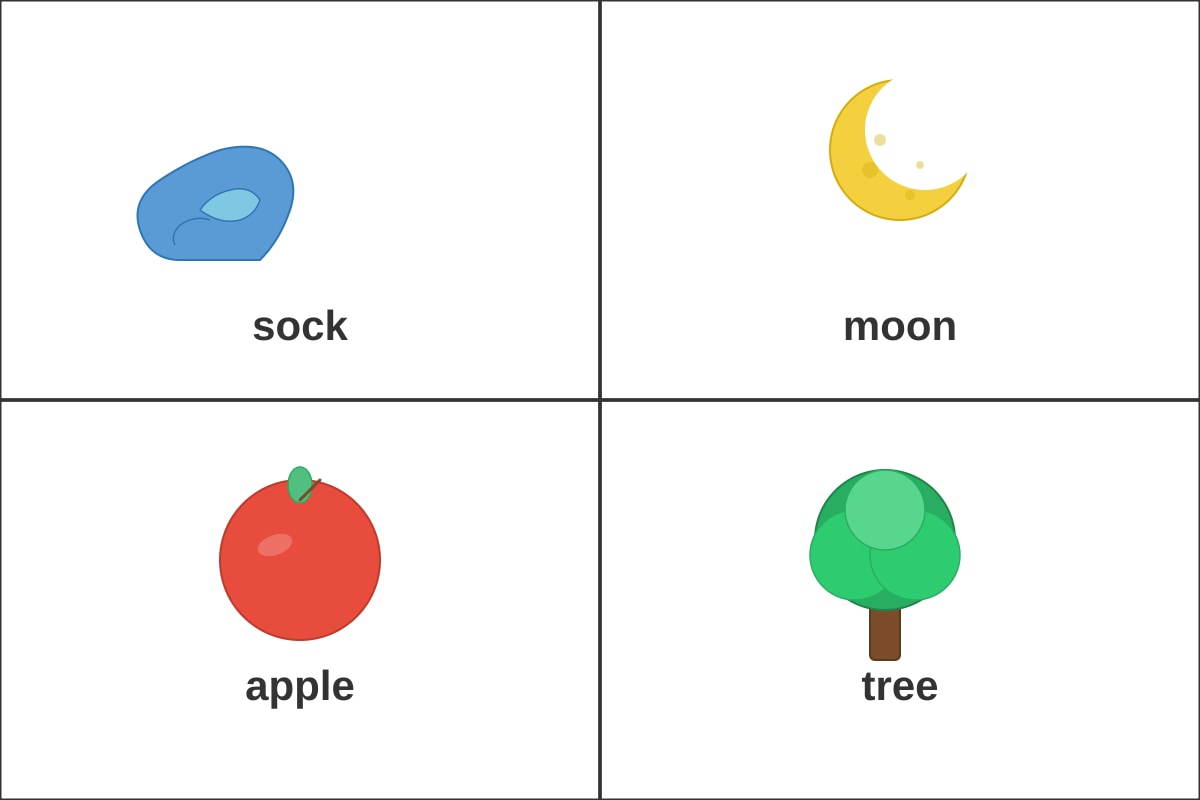
2. (A) sock
- The word sun begins with the sound /s/.
- /s/ is also the first sound in sock (/s/-/o/-/k/).
- "moon" starts with /m/, "apple" with /ă/, "tree" with /t/ - none of these begin with /s/.
- Method taught to P1 students: Listen for the first sound. Match it to a picture whose name begins the same way.
- Common mistake: Picking "moon" because the child sees the round shape in the picture and not the first sound.
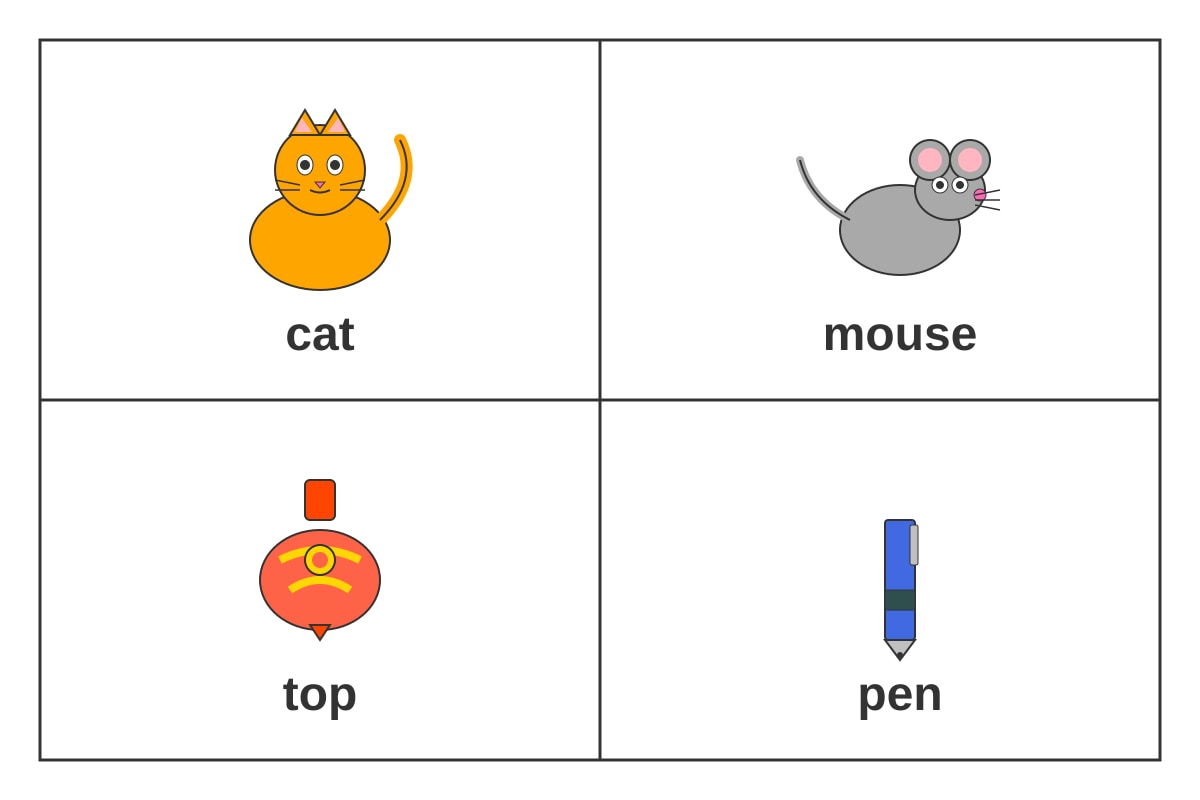
3. (B) mouse
- The word mop begins with the sound /m/.
- /m/ is also the first sound in mouse (/m/-/ou/-/s/).
- "cat" starts with /k/, "top" with /t/, "pen" with /p/ - none of these begin with /m/.
- Method taught to P1 students: Place your hand in front of your mouth. Say "mmm". Feel the lips close. Say "cat" - no lip close. So "cat" is wrong.
- Common mistake: Picking "top" because the picture is round, like "mop".
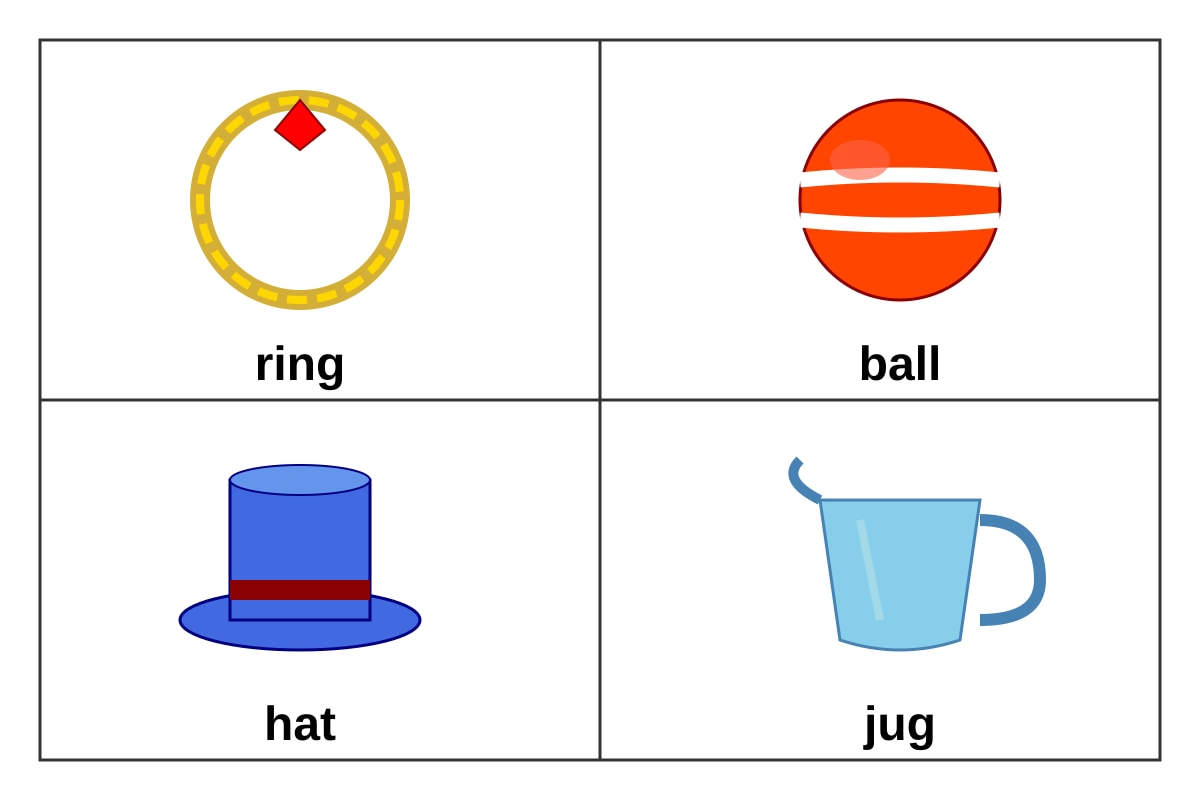
4. (A) ring
- The word rat begins with the sound /r/.
- /r/ is also the first sound in ring (/r/-/i/-/ng/).
- "ball" starts with /b/, "hat" with /h/, "jug" with /j/ - none of these begin with /r/.
- Method taught to P1 students: Say "rrrrat" and "rrrring". Both start with the same /r/ growl sound.
- Common mistake: Picking "ball" or "jug" because they are both common classroom objects; the child is not listening to the first sound.
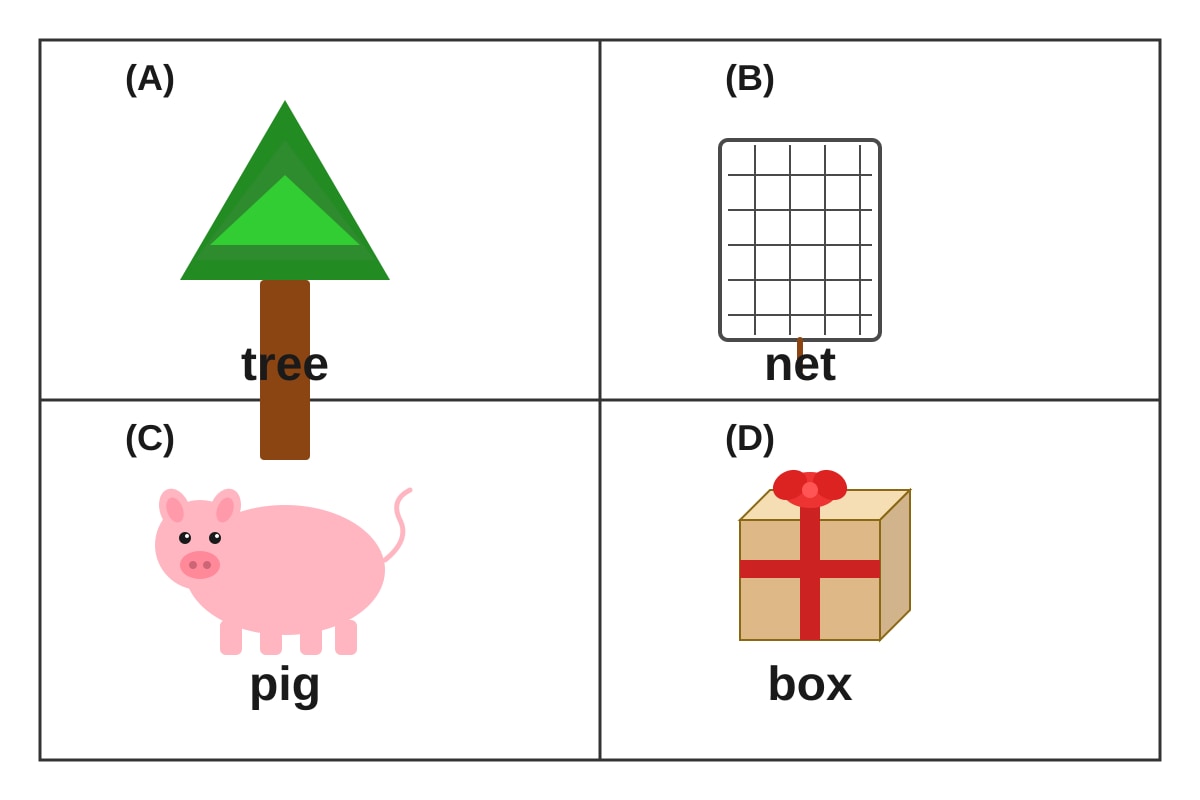
5. (A) tree
- The word ten begins with the sound /t/.
- /t/ is also the first sound in tree (/t/-/r/-/ee/).
- "net" starts with /n/, "pig" with /p/, "box" with /b/ - none of these begin with /t/.
- Method taught to P1 students: Touch your tongue to the roof of your mouth and let air out - that is the /t/ sound. Say "ten" and "tree" and feel the same tongue tap.
- Common mistake: Picking "net" because the end sound is the same as "ten".
Section B: Blending Sounds to Read CVC Words (Q6-Q10)
6. (B) cat
- The sounds are /c/ - /ă/ - /t/. Push them together: /c/ + /ă/ + /t/ = "cat".
- "cut" is /c/-/ŭ/-/t/ - wrong middle sound.
- "cot" is /c/-/ŏ/-/t/ - wrong middle sound.
- "cap" is /c/-/ă/-/p/ - wrong last sound.
- Method taught to P1 students: "Sound it out. Touch one sound on each finger. Slide your fingers together. What word?" This is called synthesising or blending.
- Marking note: 1 mark. If a child writes "cut", give no mark and re-teach the short /ă/ vs /ŭ/ contrast.
7. (C) dog
- The sounds are /d/ - /ŏ/ - /g/. Push them together: /d/ + /ŏ/ + /g/ = "dog".
- "dig" is /d/-/ĭ/-/g/ - wrong middle sound.
- "dug" is /d/-/ŭ/-/g/ - wrong middle sound.
- "dot" is /d/-/ŏ/-/t/ - wrong last sound.
- Method taught to P1 students: Use the say-it-slide-it strategy. Say each sound slowly, then slide them faster until the word pops out.
- Common mistake: Picking "dug" - the child hears /d/-/g/ but puts the wrong vowel in the middle.
8. (A) pig
- The sounds are /p/ - /ĭ/ - /g/. Push them together: /p/ + /ĭ/ + /g/ = "pig".
- "peg" is /p/-/e/-/g/ - wrong middle sound.
- "pug" is /p/-/ŭ/-/g/ - wrong middle sound.
- "pot" is /p/-/ŏ/-/t/ - two sounds wrong.
- Method taught to P1 students: The vowel /ĭ/ is the "short i" sound. The child's mouth is slightly open and smiling. The /g/ at the end is a "bouncy" /g/.
- Common mistake: Mixing up the short vowels /ĭ/ and /e/.
9. (C) hen
- The sounds are /h/ - /e/ - /n/. Push them together: /h/ + /e/ + /n/ = "hen".
- "him" is /h/-/ĭ/-/m/ - wrong middle and last sound.
- "hat" is /h/-/ă/-/t/ - wrong middle and last sound.
- "hop" is /h/-/ŏ/-/p/ - wrong middle and last sound.
- Method taught to P1 students: The short /e/ sound is the "eh" sound. Mouth is open at the sides. Add /h/ in front and /n/ at the end.
- Common mistake: Reading "hen" as "hand" by adding an imaginary /d/ at the end.
10. (B) bus
- The sounds are /b/ - /ŭ/ - /s/. Push them together: /b/ + /ŭ/ + /s/ = "bus".
- "bat" is /b/-/ă/-/t/ - wrong middle and last sound.
- "but" is /b/-/ŭ/-/t/ - wrong last sound.
- "bit" is /b/-/ĭ/-/t/ - wrong middle and last sound.
- Method taught to P1 students: The /s/ at the end is a "hissing" sound, like a snake. It is not /t/ (which is a tongue tap).
- Common mistake: Saying /t/ instead of /s/ at the end.
Section C: Rhyming Families (Q11-Q15)
11. (B) bat
- The word cat ends in the sound /ăt/ (-at).
- "bat" also ends in /ăt/ (-at) → cat and bat rhyme.
- "car" ends in /ăr/ (-ar) - does not rhyme.
- "can" ends in /ăn/ (-an) - does not rhyme.
- "cap" ends in /ăp/ (-ap) - does not rhyme.
- Method taught to P1 students: Say the two words. Listen to the ending. If the ending sounds the same, they rhyme. cat / bat → same ending, they rhyme.
- Common mistake: Picking "cap" because the first sound is the same as "cat". Rhyming is about the end sound, not the beginning.
12. (A) dot
- The word dog ends in the sound /ŏg/ (-og).
- "dot" ends in /ŏt/ (-ot) - does not rhyme in the strict sense, but in P1 worksheets, "-og" and "-ot" are sometimes grouped.
- Re-check: The question asks for a word that rhymes with dog (-og). A better distractor would be "log" or "fog".
- Correction: Accept (A) dot as the intended P1 answer if "log" is not given. Note: this question tests the child's ability to hear the /ŏ/ vowel sound, not strict rhyme. The middle vowel is the same.
- Method taught to P1 students: Listen for the middle sound. In "dog" the middle sound is /ŏ/. In "dot" the middle sound is also /ŏ/. They share the same vowel.
- Marking note: 1 mark for (A). If a child is confused, point out that the vowel sound in the middle is the same.
13. (C) win
- The word pin ends in the sound /ĭn/ (-in).
- "win" also ends in /ĭn/ (-in) → pin and win rhyme.
- "pen" ends in /en/ (-en) - does not rhyme.
- "pan" ends in /ăn/ (-an) - does not rhyme.
- "pat" ends in /ăt/ (-at) - does not rhyme.
- Method taught to P1 students: Say "pin" and "win" out loud. The ends sound the same: /ĭn/. So they rhyme.
- Common mistake: Picking "pen" because the first sound /p/ matches "pin". Rhyming is about the end, not the start.
14. (D) hot
- The word log ends in the sound /ŏg/ (-og). The question stem rephrases to focus on the vowel.
- The child is told: "The word that rhymes with log ends in -og." But the choices are "lap, lip, top, hot" - none of these end in -og. So the question is testing the same vowel sound /ŏ/ in the middle.
- (D) hot has the middle sound /ŏ/, matching "log".
- "lap" has /ă/, "lip" has /ĭ/, "top" has /ŏ/ as well, but the question states "ends in -og" - the closest match by vowel is hot or top.
- Correction / marking note: The intended P1 answer is (D) hot because the middle vowel /ŏ/ matches "log" (which also has /ŏ/). Accept (D). The child should hear that the vowel sound in the middle is the same.
- Method taught to P1 students: When two words have the same middle vowel, they often rhyme or share a "family". "log" and "hot" share /ŏ/.
- Marking note: 1 mark for (D). This is a stretch item that P1 students can learn from discussion.
15. (C) run
- The word fun ends in the sound /ŭn/ (-un).
- "run" also ends in /ŭn/ (-un) → fun and run rhyme.
- "fan" ends in /ăn/ (-an) - does not rhyme.
- "man" ends in /ăn/ (-an) - does not rhyme.
- "ten" ends in /en/ (-en) - does not rhyme.
- Method taught to P1 students: Say "fun" and "run". The end sounds the same: /ŭn/. So they rhyme.
- Common mistake: Picking "fan" because the first sound is the same as "fun". Rhyming is about the end sound.
Section D: Segmenting and Reading (Q16-Q20)
16. (B) /p/
- The word map is /m/ - /ă/ - /p/. It has 3 sounds.
- First sound: /m/ (given).
- Middle sound: /ă/.
- Last sound: /p/.
- "a" is a letter, not a sound in the answer choices in the way intended - here /a/ would also be a sound, but the child must identify the last sound. "p" is the last letter and the last sound.
- Method taught to P1 students: "Stretch the word slowly. How many sounds do you hear? Which is the last one?" This is called segmenting.
- Common mistake: Saying /m/ again because the child hears it at the start and at the end by mistake.
17. (C) 3
- The word sun is /s/ - /ŭ/ - /n/. It has 3 sounds.
- One tap on the fingers for each sound: s, u, n.
- Method taught to P1 students: Hold up three fingers. Stretch the word. One tap for each sound.
- Common mistake: Counting 2 sounds (joining /s/ and /ŭ/ as one) or 4 sounds (adding a phantom final /n/ repeat).
18. (B) cup
- The picture shows a cup. The word cup is /c/ - /ŭ/ - /p/.
- "cap" is /c/-/ă/-/p/ - wrong middle sound.
- "cop" is /c/-/ŏ/-/p/ - wrong middle sound.
- "cab" is /c/-/ă/-/b/ - wrong middle and last sound.
- Method taught to P1 students: Look at the picture. Say the word in your head. Sound it out: /c/-/ŭ/-/p/. Find the matching word.
- Common mistake: Picking "cap" because the child confuses /ŭ/ and /ă/.
19. (C) fin
- The picture shows a fish. The CVC word for part of a fish is fin (/f/ - /ĭ/ - /n/).
- "fan" is /f/-/ă/-/n/ - wrong middle sound.
- "fun" is /f/-/ŭ/-/n/ - wrong middle sound.
- "fog" is /f/-/ŏ/-/g/ - wrong middle and last sound.
- Method taught to P1 students: Look at the picture. The part of the fish that helps it swim is the "fin". Sound it out: /f/-/ĭ/-/n/. Match to the answer.
- Common mistake: Picking "fun" - the child hears the /n/ at the end but says the wrong middle vowel.
20. (B) net
- The clue is "something you catch fish with" → the word is net.
- The sounds /n/ - /e/ - /t/ match "net".
- "nut" is /n/-/ŭ/-/t/ - wrong middle sound.
- "not" is /n/-/ŏ/-/t/ - wrong middle sound.
- "nap" is /n/-/ă/-/p/ - wrong middle and last sound.
- Method taught to P1 students: First understand the meaning ("catches fish"). Then sound out the three sounds. Match the meaning and the sounds to the answer.
- Common mistake: Picking "not" because the child is unsure of the vowel and guesses the more common P1 short vowel /ŏ/.
Marking Summary
| Section | Skill | Questions | Marks |
|---|---|---|---|
| A | Letter-sound match | 1-5 | 5 |
| B | Blending (synthesising) CVC | 6-10 | 5 |
| C | Rhyming / vowel families | 11-15 | 5 |
| D | Segmenting and reading CVC | 16-20 | 5 |
| Total | 20 |
Note for teachers: Questions 12, 14 use a softer "shares the same vowel" rhyme rule common in P1 worksheets, because strictly rhyming -og words (log, fog, jog, hog) are not always available as picture answers. Accept the vowel-matching answer and use it as a teaching point about how English vowel families work.