AI Generated Quiz
Primary 1 English Phonics Quiz
Free P1 English Phonics quiz, Kimi2.6 AI version, with questions, answers, and syllabus-aligned practice for Singapore students.
These static practice materials are generated from the site's syllabus and paper-generation workflow, with source and model context shown so students and parents can evaluate the material before use.
Questions

Free quiz and exam paper access
Enter your details to view this paper
Your access is remembered on this device.
Answers
Primary 1 English Quiz - Phonics: Answer Key
Total Marks: 20
Section A: Letter Sounds and Matching (Questions 1–5)
Q1. Answer: s (1 mark)
Explanation: The letter 's' makes the /s/ sound, as in "sun" or "sit." The other letters make different sounds: 't' = /t/, 'f' = /f/, 'p' = /p/. Common mistake: Students sometimes confuse the letter name "ess" with the sound /s/.
Q2. Answer: B) man (1 mark)
Explanation: "Man" begins with the /m/ sound. "Cat" begins with /k/, "rat" with /r/, and "sun" with /s/. To find the correct answer, say each word slowly and listen to the first sound: m-m-man.
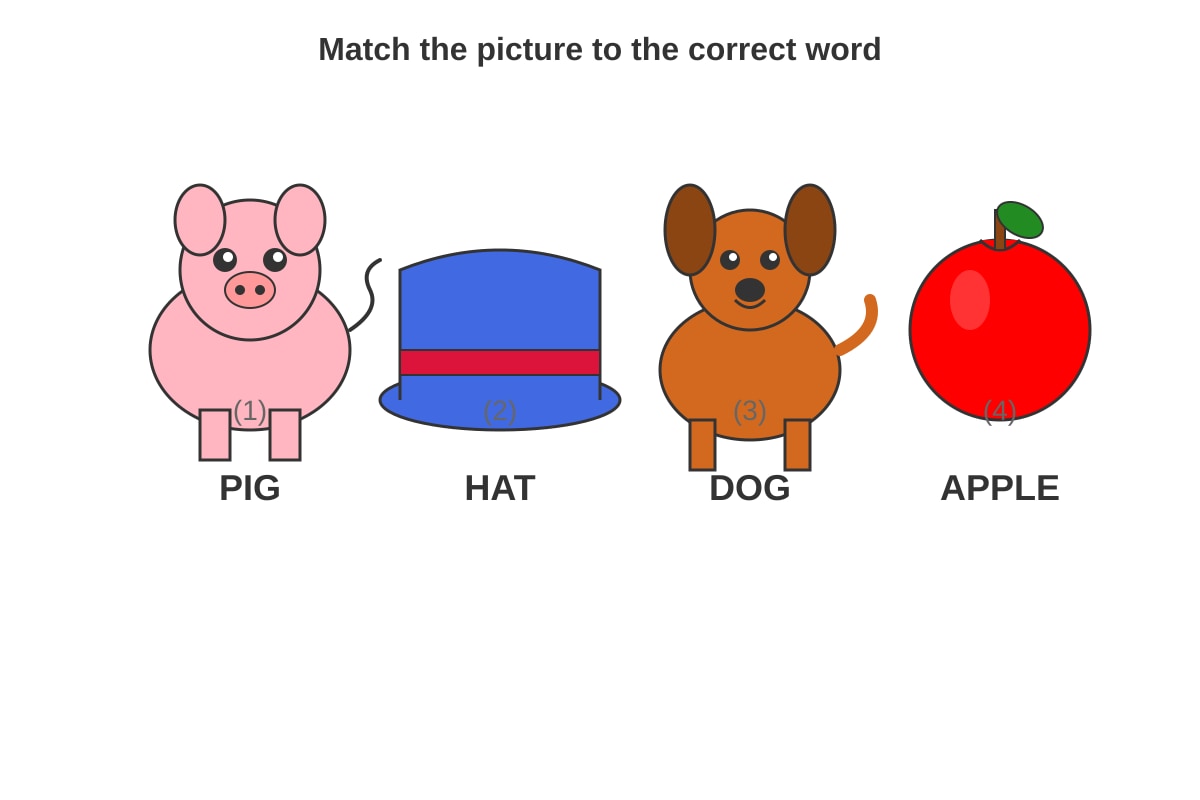
Q3. Answer: 2 (the second picture, labeled HAT) (1 mark)
Explanation: The four pictures are: 1-PIG (/p/), 2-HAT (/h/), 3-DOG (/d/), 4-APPLE (/æ/). The question asks for the hat picture, which is number 2. The /h/ sound is made by the letter 'h'.
Q4. Answer: C) /b/ (1 mark)
Explanation: The letter 'b' makes the /b/ sound, as in "bat" or "big." Be careful not to confuse: 'd' says /d/, 'p' says /p/ (a quiet, popping sound with air), and 't' says /t/. 'b' and 'd' can look like mirror images, but they make completely different sounds.
Q5. Answer: pen (1 mark)
Explanation: "Cake," "cat," and "cup" all begin with the hard /k/ sound (made by the letter 'c' before a, o, or u). "Pen" begins with /p/. This rule is called the "hard c" rule: 'c' sounds like /k/ before a, o, u and like /s/ before e, i, y.
Section B: CVC Words and Blending (Questions 6–12)
Q6. Answer: a (cat) (1 mark)
Explanation: The word is c-a-t. The middle sound is the short vowel /æ/. CVC words follow the pattern: Consonant-Vowel-Consonant. "Cat" is one of the first CVC words students learn. Common mistake: Writing 'o' (cot) or 'u' (cut) instead of 'a'.
Q7. Answer: sun (1 mark)
Explanation: Blend the three sounds smoothly together: /s/ - /u/ - /n/ = "sun." This is called blending—pushing the sounds together quickly to hear the whole word. Practice by saying each sound slowly, then faster: sss-u-nn, sss-un, sun!
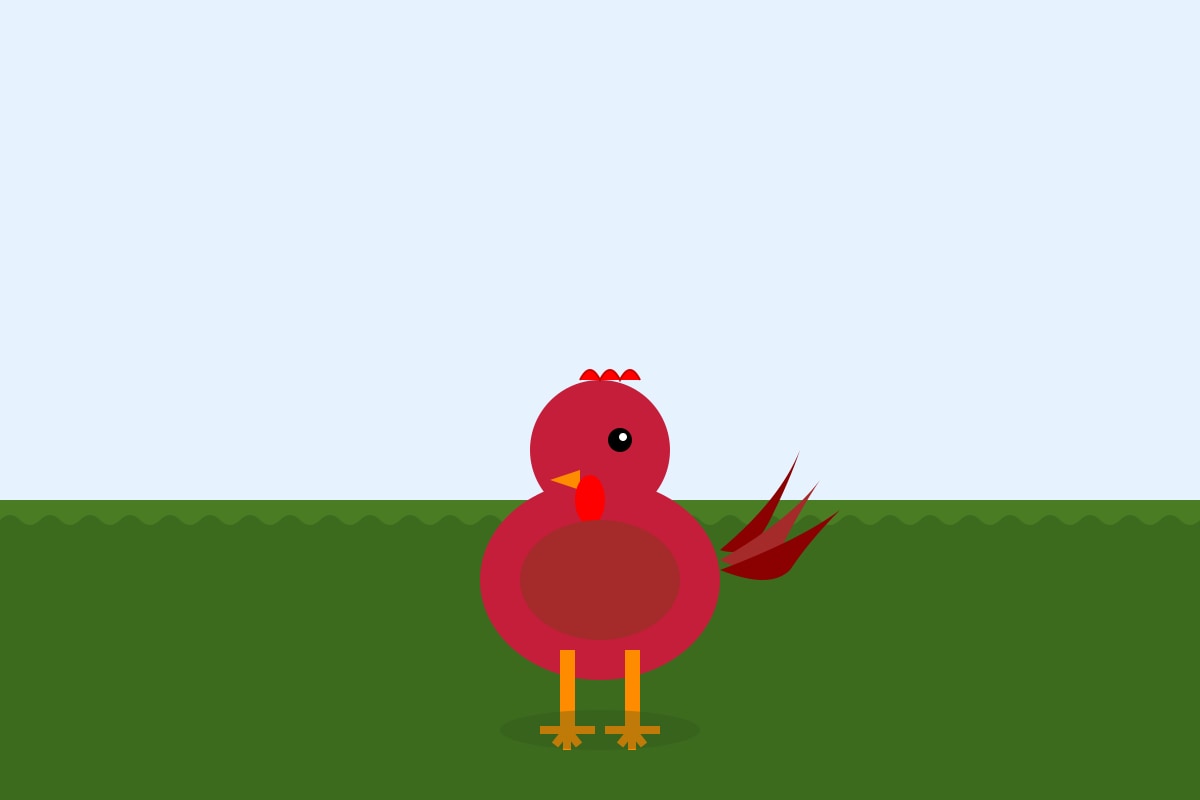
Q8. Answer: hen (1 mark)
Explanation: The picture shows a hen (a female chicken). This is a CVC word: h-e-n. The beginning sound is /h/, the middle is short /e/, and the ending is /n/. Other three-letter animal words: cat, dog, pig, rat.
Q9. Answer: C) map (1 mark)
Explanation: Words rhyme when their ending sounds match from the vowel onward. "Tap" ends with /æp/. "Map" also ends with /æp/. "Top" ends with /ɒp/, "tip" with /ɪp/, and "ten" with /ɛn/. To check: tap = t-æp, map = m-æp—the ending "ap" is the same.
Q10. Answer: a (hat) (1 mark)
Explanation: H-a-t spells "hat." The middle sound is the short vowel /æ/. Other possibilities with different middle sounds: h-e-t (not a common word), h-i-t, h-o-t, h-u-t. "Hat" is the most familiar word for P1 students.
Q11. Answer: Beginning: /r/ (or 'r'), Ending: /n/ (or 'n') (1 mark)
Explanation: "Run" = r-u-n. The beginning sound is /r/ made by letter 'r'. The ending sound is /n/ made by letter 'n'. The middle sound is the short vowel /ʌ/. When segmenting a word, we break it into its individual sounds: /r/ - /ʌ/ - /n/.
Q12. Answer: cat (1 mark)
Explanation: "Dog," "log," and "frog" all rhyme (they end in /ɒg/). "Cat" ends in /æt/ and does not rhyme with the others. To check rhyming, look at the spelling pattern and say the ending aloud: d-og, l-og, fr-og, c-at. The first three share "-og."
Section D: Digraphs and Special Sounds (Questions 13–16)
Q13. Answer: D) All of the above (1 mark)
Explanation: The digraph 'sh' makes the /ʃ/ sound (a quiet, hushing sound). "Ship" = /ʃɪp/, "shop" = /ʃɒp/, and "sheep" = /ʃiːp/ all begin with this sound. A digraph is two letters that work together to make ONE new sound—not the individual sounds of 's' and 'h' blended.
Q14. Answer: chin (1 mark)
Explanation: "Chin" begins with the /tʃ/ sound (the "ch" digraph). "This" and "thin" begin with 'th' /ð/ or /θ/, and "shin" begins with 'sh' /ʃ/. The 'ch' digraph makes a sound like a train: "ch-ch-ch." Practice: chin, chop, chat, chip.
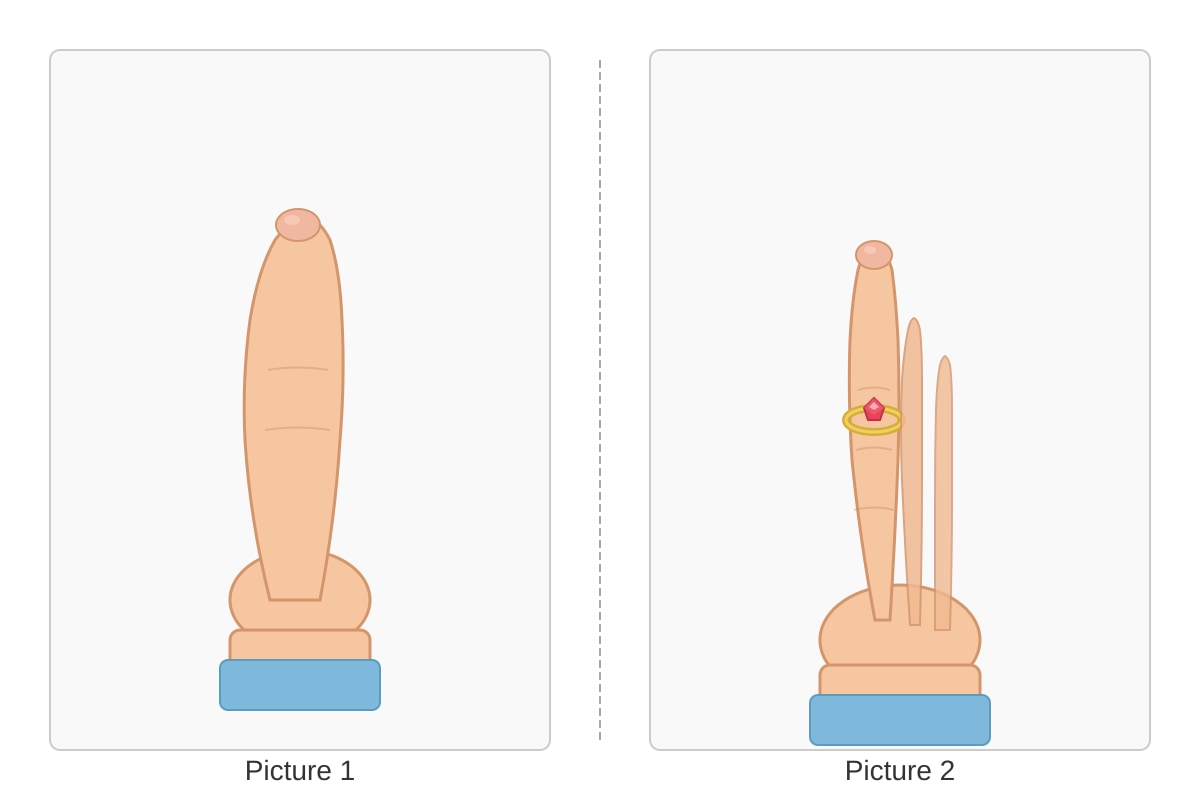
Q15. Answer: The thumb picture: TH; The ring picture: NG (1 mark)
Explanation: "Thumb" contains the 'th' digraph = /θ/ (voiceless, tongue between teeth). "Ring" contains the 'ng' digraph = /ŋ/ (a nasal sound at the back of the mouth). Note: 'th' can be voiced /ð/ (this, that) or voiceless /θ/ (thumb, think). 'ng' always makes the /ŋ/ sound and never appears at the beginning of English words.
Q16. Answer: Any valid word ending in /ʃ/: dish, wash, push, rush, bash, mesh, etc. (1 mark)
Explanation: The 'sh' digraph at the end of words makes the /ʃ/ sound. "Fish" = /fɪʃ/. Other examples: dish (/dɪʃ/), wash (/wɒʃ/), push (/pʊʃ/). The 'sh' spelling is common at the end of action words and objects. Common error: Writing "sheep" (sh at beginning, not end) or "sash" (acceptable if student understands the ending pattern).
Section D: Word Building and Application (Questions 17–20)
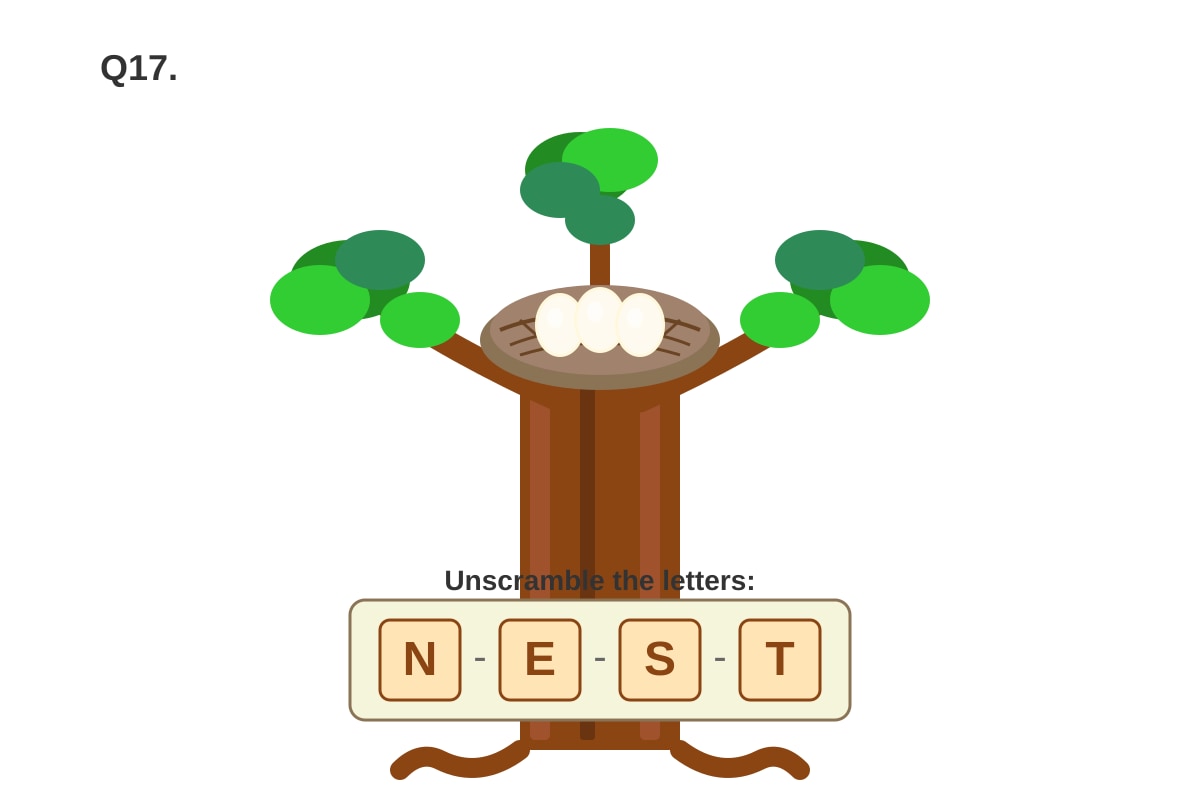
Q17. Answer: nest (1 mark)
Explanation: The letters N-E-S-T unscramble to spell "nest." The picture shows a nest in a tree. This is a CVCC word (Consonant-Vowel-Consonant-Consonant) with a consonant blend at the end: 'st'. Blends are different from digraphs—two letters make TWO sounds pushed together: /n/ /ɛ/ /s/ /t/.
Q18. Answer: mat (or any valid -at family word: bat, cat, fat, hat, pat, rat, sat) (1 mark)
Explanation: The sentence sets up a rhyme with "mat." "The cat sat on a mat" is a classic rhyming sentence. The '-at' word family contains many common CVC words. To solve: identify the rhyme pattern (-at), then think of words with the same ending. "Rat" or "bat" would also create a sensible sentence.
Q19. Answers: Any two valid '-an' family words: man, pan, ran, tan, van, ban, fan, can (2 marks: 1 mark per correct word)
Explanation: The '-an' word family rhymes with /æn/. Examples: f-an, c-an, m-an, p-an, r-an, t-an, v-an. Marking: 1 mark for each correct, spelled word in the family. Common errors: Writing "ann" (double n not needed), "ane" (wrong spelling pattern), or words from wrong families like "hen" (-en family).
Q20. Answers: pen/men ✓; sun/hat ✗; big/pig ✓ (1 mark: all three correct for 1 mark; no partial marks)
Explanation:
- Pen/men: both end in /ɛn/ → ✓ (rhyme)
- Sun/hat: sun ends /ʌn/, hat ends /æt/ → ✗ (do not rhyme)
- Big/pig: both end in /ɪg/ → ✓ (rhyme)
Common mistake: Students sometimes look at beginning letters instead of ending sounds. Rhyming depends on the ending sounds from the stressed vowel onward, not the first letter. "Sun" and "sit" begin with 's' but do NOT rhyme.
End of Answer Key