AI Generated Quiz
Primary 1 English Phonics Quiz
Free P1 English Phonics quiz, GLM5.3 AI version, with questions, answers, and syllabus-aligned practice for Singapore students.
These static practice materials are generated from the site's syllabus and paper-generation workflow, with source and model context shown so students and parents can evaluate the material before use.
Questions
Free quiz and exam paper access
Enter your details to view this paper
Your access is remembered on this device.
Answers
Primary 1 English Quiz - Phonics: Answer Key (Version 1)
Total Marks: 40 | For teacher or parent use. Syllabus-aligned practice; not past-year derived.
Answer 1. (1 mark)
C) p. The letter p makes the /p/ sound, made by pressing the lips together and letting them pop apart. Common mistake: choosing b, d or q because they look like p. Teach pupils to say the sound, not study the shape.
Answer 2. (1 mark)
D) t. The /t/ sound is made when the tongue taps just behind the top teeth. f, l and j each make different sounds (fff, lll, jjj). Quick check: say each letter's sound aloud and match it to /t/.
Answer 3. (1 mark)
h. The /h/ sound is a soft breath, like breathing warm air onto your hand. Test: g says /g/, n says /n/, r says /r/ — only h gives the breath sound.
Answer 4. (1 mark)
C) e. The vowels are a, e, i, o, u. Every word needs at least one vowel sound, so spotting vowels helps pupils build and check words. b, c and m are consonants.
Answer 5. (1 mark)
c and k. Both letters can make the /k/ sound, as in 'cat' and 'kit'. s makes /s/ and p makes /p/. Teaching note: this shows one sound can be spelled by more than one letter — useful later for reading new words.
Answer 6. (2 marks)
A) /s/ (2 marks: 1 for choosing /s/, 1 implicitly for rejecting the others). Method: say 'sun' slowly and stretch the first part — sss-un. The first sound
<stage5_quiz_answers_md>
Primary 1 English Quiz - Phonics: Answer Key (Version 1)
Total Marks: 40 | For teacher or parent use. Syllabus-aligned practice; not past-year derived.
Answer 1. (1 mark)
C) p. The letter p makes the /p/ sound, made by pressing the lips together and letting them pop apart. Common mistake: choosing b, d or q because they look like p. Teach pupils to say the sound, not study the shape.
Answer 2. (1 mark)
D) t. The /t/ sound is made when the tongue taps just behind the top teeth. f, l and j each make different sounds. Quick check: say each letter's sound aloud and match it to /t/.
Answer 3. (1 mark)
h. The /h/ sound is a soft breath, like breathing warm air onto your hand. Test: g says /g/, n says /n/, r says /r/ — only h gives the breath sound.
Answer 4. (1 mark)
C) e. The vowels are a, e, i, o, u. Every word needs at least one vowel sound, so spotting vowels helps pupils build and check words. b, c and m are consonants.
Answer 5. (1 mark)
c and k. Both letters can make the /k/ sound, as in 'cat' and 'kit'. s makes /s/ and p makes /p/. Teaching note: one sound can be spelled by more than one letter — useful later for reading new words.
Answer 6. (2 marks)
A) /s/ (1 mark for the correct choice). Method: say 'sun' slowly and stretch the first part — sss-un. The first sound heard is /s/. n is the ending sound, which pupils often confuse with the beginning sound.
Answer 7. (2 marks)
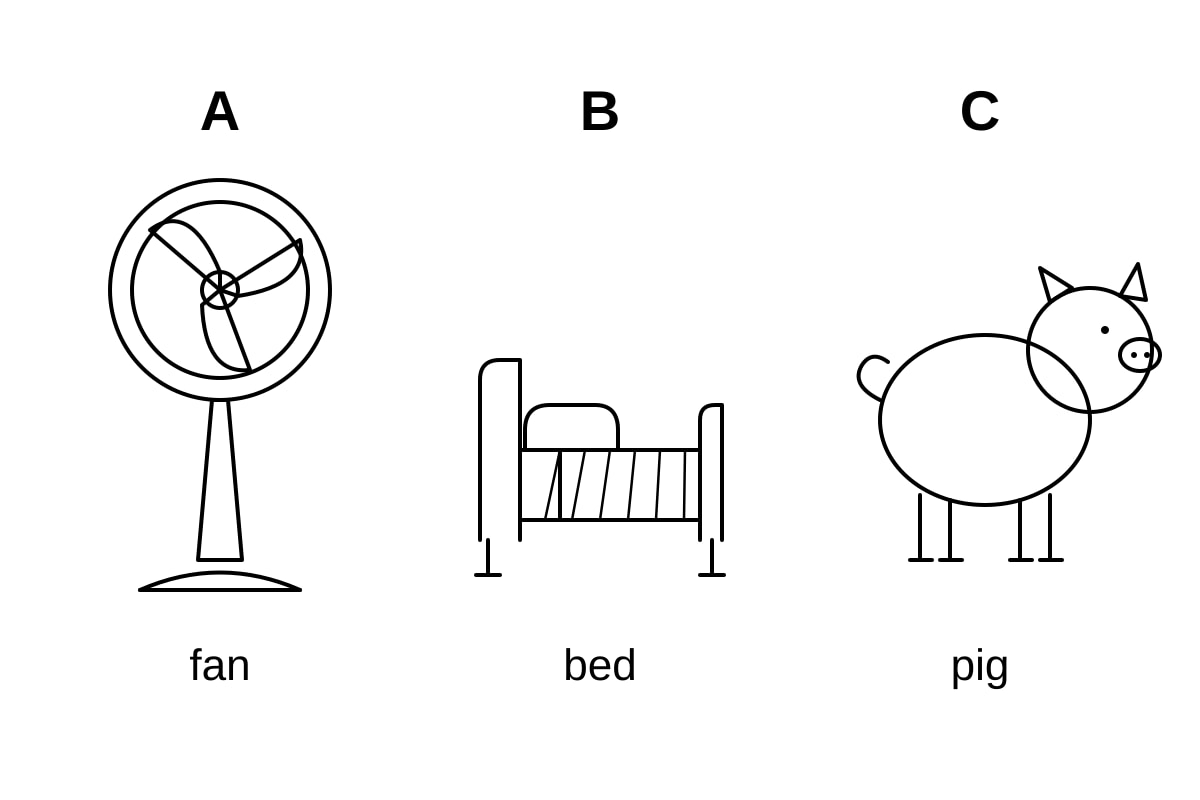
A) fan. Say each picture name aloud: f-an starts with /f/; bed starts with /b/; pig starts with /p/. Award 1 mark if the pupil shows correct letter-sound knowledge of any two pictures even when the final choice is wrong.
Answer 8. (2 marks)
C) /p/ (1 mark). Say 'map' slowly — m-a-p — and stop on the last sound. /m/ is the beginning sound and /a/ is the middle vowel sound; both are common wrong picks.
Answer 9. (2 marks)
B) /e/ (1 mark). Cover the first and last letters mentally: h-e-n leaves the short /e/ sound in the middle. Compare with 'han', 'hin', 'hon' — only 'hen' is a real word.
Answer 10. (2 marks)
A) door. Both 'dog' and 'door' begin with the /d/ sound. 'log' rhymes with 'dog' but does not begin with the same sound — a deliberate distractor to test beginning-sound focus over rhyme.
Answer 11. (2 marks)
B) cat (1 mark). Blend smoothly: ccc-aaa-ttt → cat. 'cot' uses the wrong middle vowel; 'cap' and 'kit' change the ending sound. Ask pupils to blend aloud rather than guess from spelling.
Answer 12. (2 marks)
3 sounds: /p/ – /i/ – /g/ (1 mark for the count of 3, 1 mark for the correct order). Tap a finger for each sound while saying 'pig' slowly. Order matters: /g/ before /p/ shows the pupil is not yet segmenting left to right.
Answer 13. (2 marks)
B) big (1 mark). /b/ – /i/ – /g/ blends to 'big'. 'bag' and 'bug' keep the same first and last sounds but swap the vowel — remind pupils to listen carefully to the middle sound /i/.
Answer 14. (2 marks)
A) go (1 mark). 'go' has just 2 sounds: /g/ – /o/. 'got' has 3, 'goat' has 3, and 'grab' has 4. Two-letter words are not always 2 sounds, but here go = g + o exactly.
Answer 15. (2 marks)
net. Blend /n/ – /e/ – /t/ → net. Accept clearly intended spellings such as 'nett' for 1 mark if the blending is audible and correct, but model the standard spelling. Spelling must be legible and in order.
Answer 16. (3 marks)
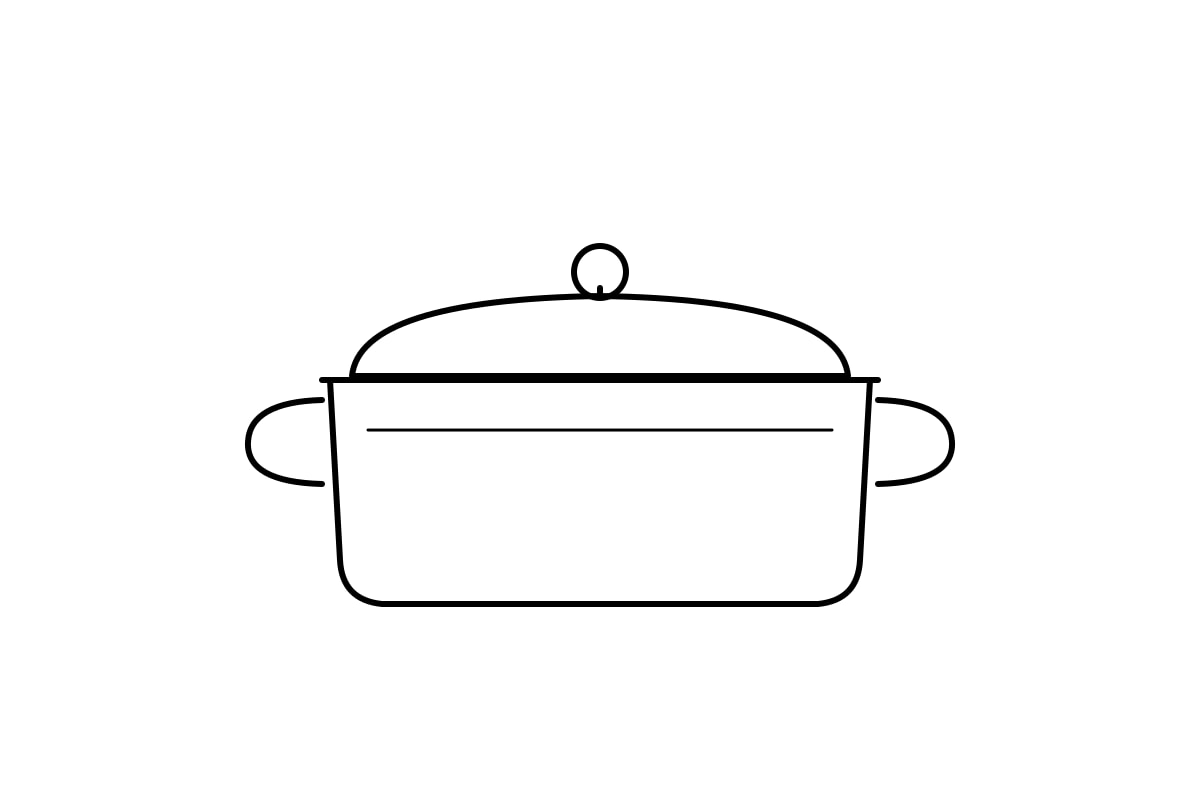
The picture shows a pot. (a) Beginning sound: /p/ (1 mark). (b) Ending sound: /t/ (1 mark). (c) Whole word: pot (1 mark). If (c) is misspelled but (a) and (b) are right, award those 2 marks. Encourage pupils to say the word aloud, stretch it — p-o-t — then write each part.
Answer 17. (3 marks)
bat, ball, bed (1 mark each). All three begin with the /b/ sound. 'sat' begins with /s/, 'pan' with /p/, and 'cup' ends with /p/ but begins with /k/. Pupils must circle all three for full marks; partial credit per correctly circled word.
Answer 18. (3 marks)
Any real word that rhymes with 'pin': win, bin, fin, tin, din, chin, skin, thin (accept any one; 3 marks for a correct rhyme with correct spelling). It must share the /in/ ending sound, not just start or end similarly. 'pen' or 'pan' do not rhyme with 'pin'.
Answer 19. (3 marks)
Something you wear on your head is a hat, so Ben's 'pat' has one wrong letter. (a) Circle p (1 mark). (b) Correct letter: h (1 mark). (c) Correct word: hat (1 mark). This checks that pupils link meaning, sound and spelling: /h/ is the sound needed at the start.
Answer 20. (3 marks)
Sentence: A cat sat on a rug. (a) Rhyming pair: cat and sat (1 mark). They share the /at/ ending. (b) Sounds in 'sat': 3 — /s/ – /a/ – /t/ (1 mark). (c) Another word ending in /t/: cat (also accept 'sat') (1 mark).
Marking summary: Section A: 5 marks | Section B: 10 marks | Section C: 10 marks | Section D: 15 marks | Total: 40 marks