AI Generated Quiz
Primary 1 English Grammar Quiz
Free P1 English Grammar quiz, Kimi2.6 AI version, with questions, answers, and syllabus-aligned practice for Singapore students.
These static practice materials are generated from the site's syllabus and paper-generation workflow, with source and model context shown so students and parents can evaluate the material before use.
Questions
Free quiz and exam paper access
Enter your details to view this paper
Your access is remembered on this device.
Answers
Primary 1 English Quiz - Grammar: Answer Key
Total Marks: 20
Section A: Choose the Correct Word (Questions 1–10)
1. B) sits [1 mark]
- Explanation: "The cat" is one animal (singular), so we add 's' to the verb. "Sit" becomes "sits." We do not say "sitted" because that is not a real word. "Sitting" needs helper words like "is sitting."
2. A) read [1 mark]
- Explanation: "I" is special. With "I," we use the plain verb "read," not "reads." "Reading" needs "am reading." "Reed" is the wrong spelling; it is a plant that grows in water.
3. B) goes [1 mark]
- Explanation: "She" is one person (singular). When a verb ends in 'o,' we add 'es' instead of just 's.' So "go" becomes "goes." This is a spelling rule for words like go, do, and echo.
4. B) are [1 mark]
- Explanation: "My brother and I" means two people (plural). "Are" is used for "you," "we," and "they" — and for all plural subjects. "Is" is for one thing; "am" is only for "I."
5. B) drinks [1 mark]
- Explanation: "The baby" is one person (singular), so we add 's.' "Drink" becomes "drinks." "Drank" is for past time (yesterday), and this sentence is about now.
6. B) are [1 mark]
- Explanation: "We" means more than one person. With "we," always use "are." "Is" is wrong here. "We are happy" is correct.
7. B) has [1 mark]
- Explanation: "That dog" is one animal (singular). "Have" becomes "has" for singular subjects. "Has" shows that one person or thing owns or possesses something. "That dog has a tail."
8. A) go [1 mark]
- Explanation: "They" means more than one person or thing. With "they," we use the plain verb "go," not "goes." This is the same rule as with "I" and "you" — the verb stays simple.
9. B) bakes [1 mark]
- Explanation: "My mother" is one person (singular). Add 's' to "bake" to make "bakes." The silent 'e' at the end stays; we just add 's.' "Baking" needs "is baking."
10. B) are [1 mark]
- Explanation: "You" always uses "are," whether you mean one person or many people. This is a special grammar rule in English. "You are a good friend."
Section B: Circle the Correct Answer (Questions 11–15)
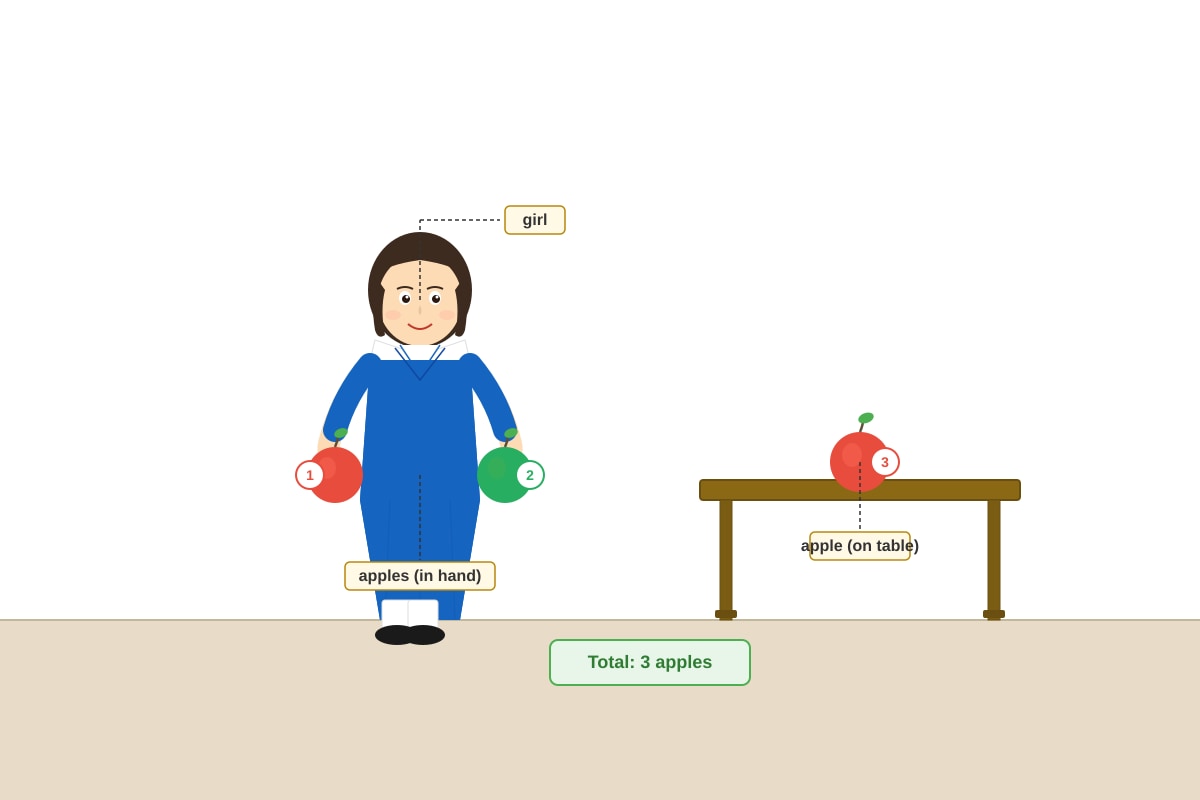
11. C) She has three apples. [1 mark]
-
Explanation:
- "She" is one person, so use "has" (not "have").
- After a number, the noun must be plural: "three apples" (not "three apple").
- "Are having" is wrong because "having" is not used this way in simple present tense.
-
Expected image features: Girl in school uniform, two apples in her hands, one apple on the table beside her, three apples total.
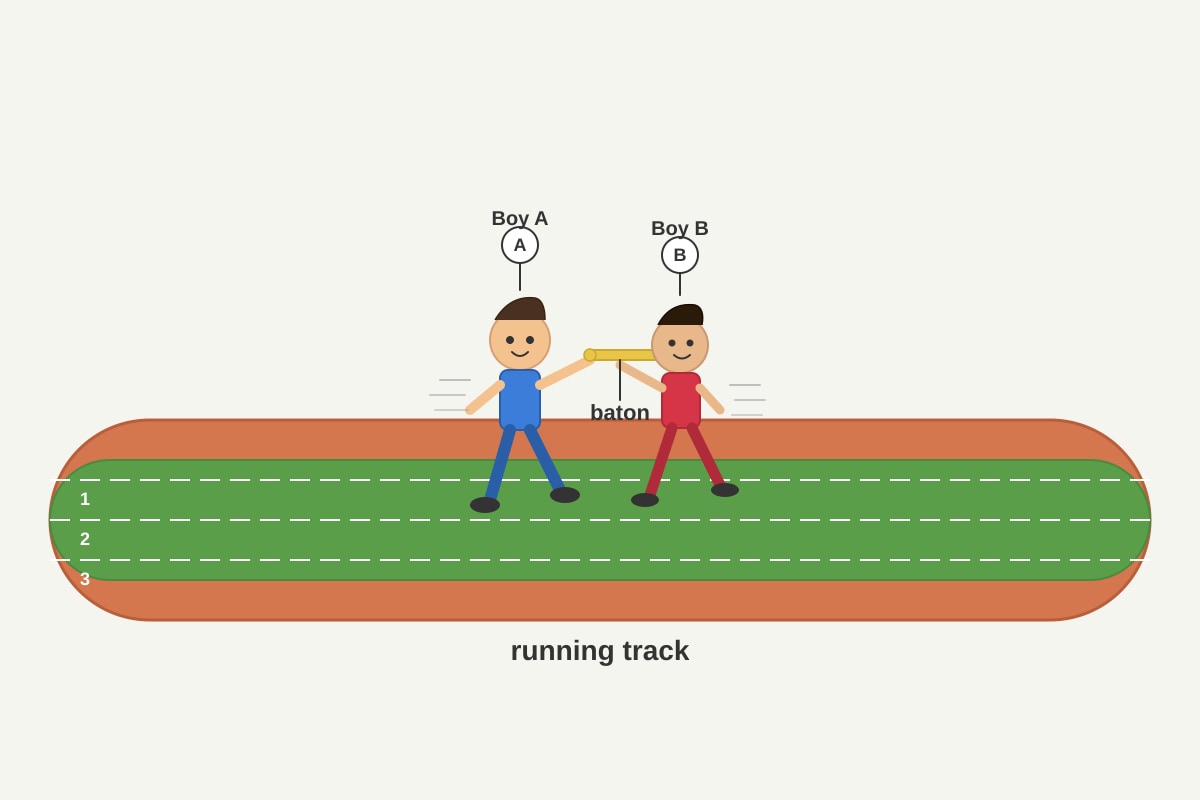
12. C) The boys are running. [1 mark]
-
Explanation:
- "Boys" with 's' means more than one boy, so use "are" (not "is").
- "Boy" without 's' is singular, so "boy are" is wrong.
- "Be running" is not correct English.
-
Expected image features: Two boys on a running track, both in running motion, one holding a baton, shared racing activity.
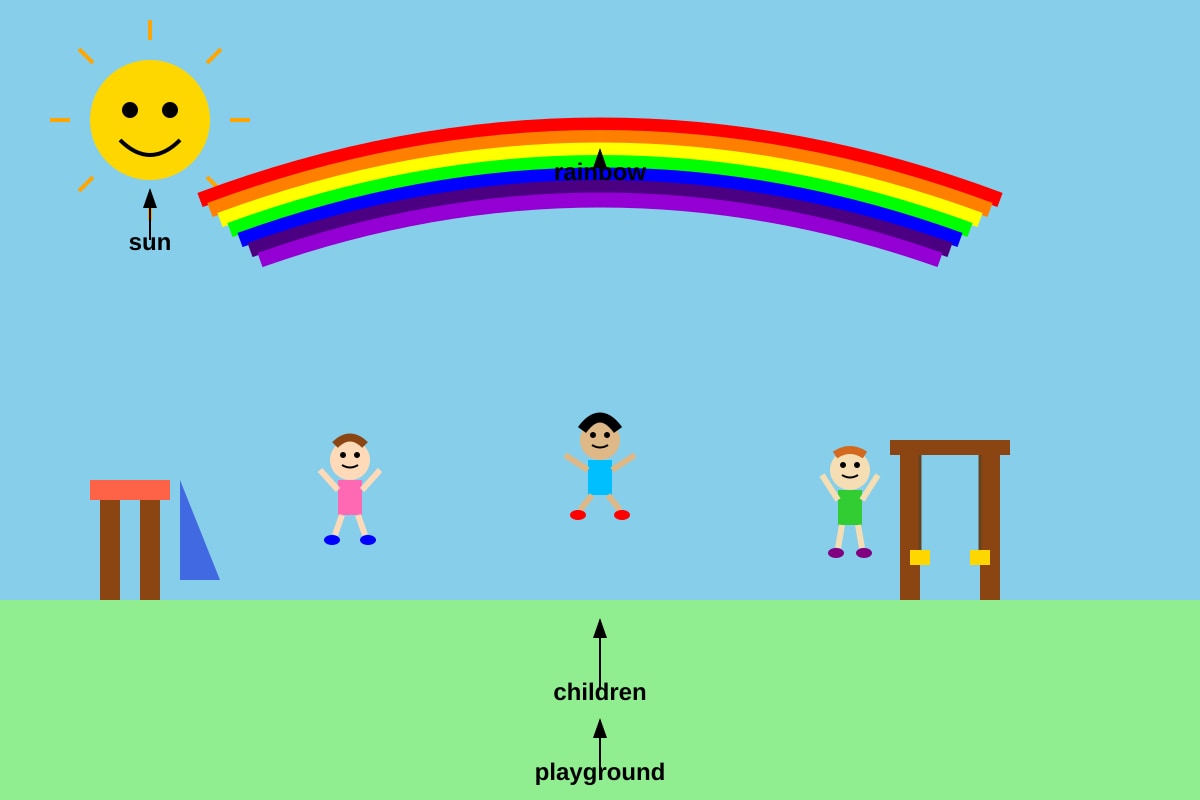
13. B) The children are happy. [1 mark]
-
Explanation:
- "Children" is the plural of "child" — it already means more than one, so use "are."
- "Is" is wrong for plural. "Childrens" is wrong because "children" is already plural.
- "Child" is singular, so "child are" is wrong.
-
Expected image features: Three children jumping, smiling sun with face, rainbow in sky, outdoor playground, happy mood.
14. B) The elephant sprays water. [1 mark]
-
Explanation:
- "The elephant" is one animal, so add 's': "sprays."
- "Elephants" with 's' means many elephants, but the verb would still need checking.
- "Spraying" by itself is incomplete; needs "is spraying."
-
Expected image features: Single elephant, water stream from raised trunk, pond with splashing water below.
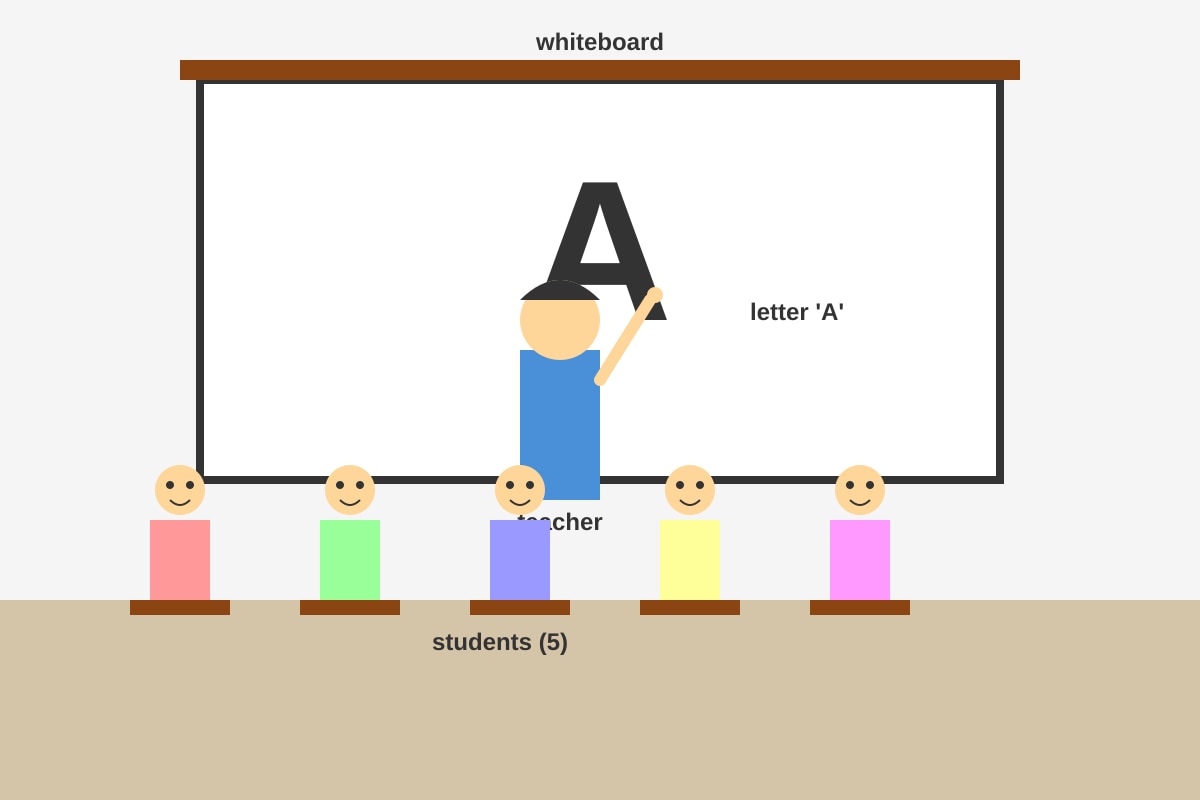
15. B) The teacher teaches the class. [1 mark]
-
Explanation:
- "The teacher" is one person, so add 'es' because "teach" ends in 'ch.'
- "Teachs" is wrong spelling — words ending in 'ch,' 'sh,' 'ss,' 'x,' 'z,' or 'o' need 'es.'
- "Teaching" by itself is incomplete.
-
Expected image features: One teacher at whiteboard, large letter 'A' written clearly, five students at desks looking up, standard classroom.
Section C: Fill in the Blank with the Correct Form (Questions 16–20)
16. drives [1 mark]
- Explanation: "My father" is one person (singular). When a verb ends in 'e,' add 's' to make present tense: "drives." Do not remove the 'e' first. "Every morning" tells us this happens again and again, so we use simple present tense.
17. fly [1 mark]
- Explanation: "Those birds" means more than one bird (plural). With plural subjects, use the plain verb: "fly." Do not add 's.' "Those" is a clue that we mean more than one thing.
18. eats [1 mark]
- Explanation: "The monkey" is one animal (singular). Add 's' to "eat": "eats." This sentence tells us what the monkey does now or usually. If we said "is eating," that would mean right this second.
19. like [1 mark]
- Explanation: "We" means more than one person. With "we," use the plain verb "like" without 's.' Even though "very much" comes after, the subject "we" controls the verb form.
20. washes [1 mark]
- Explanation: "Sam" is one person (singular). "Wash" ends in 'sh,' so add 'es' to make "washes." This is the spelling rule: verbs ending in ch, sh, s, x, or z need 'es' (not just 's'). "Before dinner" is a regular time, so use simple present.
Common Mistakes to Watch For:
- Adding 's' to verbs after "I," "you," "we," or "they" — these stay plain.
- Forgetting to add 'es' to verbs ending in ch, sh, s, x, or z.
- Confusing "have" and "has" — "I, you, we, they" use "have"; "he, she, it" and singular nouns use "has."
- Using incomplete -ing forms without "is," "am," or "are."
End of Answer Key