AI Generated Exam Paper
Primary 1 English Practice Paper 5
Free P1 English Practice Paper 5, Nemo3 AI version, with questions, answers, and syllabus-aligned practice for Singapore students.
These static practice materials are generated from the site's syllabus and paper-generation workflow, with source and model context shown so students and parents can evaluate the material before use.
Questions
Free quiz and exam paper access
Enter your details to view this paper
Your access is remembered on this device.
Answers
TuitionGoWhere Practice Paper - English Primary 1 (Answer Key)
Subject: English
Level: Primary 1
Paper: Practice Paper – Phonics Focus (Version 5)
Total Marks: 40
Section A: Letter Sounds and Recognition (10 marks)
1. B — The letter s makes the /s/ sound (as in "sun", "snake").
Marking note: 1 mark for correct option.
2. B — The letter h makes the /h/ sound (as in "hat", "house").
Marking note: 1 mark for correct option.
3. B — The letter t makes the /t/ sound (as in "top", "ten").
Marking note: 1 mark for correct option.
4. C — The letter r makes the /r/ sound (as in "red", "rabbit").
Marking note: 1 mark for correct option.
5. B — The letter m makes the /m/ sound (as in "man", "moon").
Marking note: 1 mark for correct option.
6. B — The letter f makes the /f/ sound (as in "fan", "fish").
Marking note: 1 mark for correct option. "ph" also makes /f/ but is a digraph taught later; at P1, single letter f is the expected answer.
7. B — In "goat", the letter g makes the hard /g/ sound.
Marking note: 1 mark for correct option. The soft /j/ sound (as in "giraffe") is introduced later.
8. B — The letter l makes the /l/ sound (as in "leg", "lion").
Marking note: 1 mark for correct option.
9. B — The letter p makes the /p/ sound (as in "pen", "pig").
Marking note: 1 mark for correct option.
10. B — The letter k makes the /k/ sound in "kite". (The letter c also makes /k/ in many words, but "kite" specifically uses k.)
Marking note: 1 mark for correct option.
Section B: Beginning, Middle, and Ending Sounds (12 marks)
11. A — The word "sun" begins with the /s/ sound.
Marking note: 2 marks for correct option. Common error: choosing /u/ (the middle sound) or /n/ (the ending sound).
12. C — The word "dog" ends with the /g/ sound.
Marking note: 2 marks for correct option. Common error: confusing /g/ with /k/ or choosing the beginning sound /d/.
13. B — The word "pen" has the middle sound /e/ (short e).
Marking note: 2 marks for correct option. Common error: choosing /i/ (short i) due to vowel confusion.
14. B — "bat" begins with /b/. The other options begin with /k/ (cat), /h/ (hat), /m/ (mat).
Marking note: 2 marks for correct option.
15. B — "cat" ends with /t/. "cap" ends with /p/, "can" ends with /n/, "cab" ends with /b/.
Marking note: 2 marks for correct option.
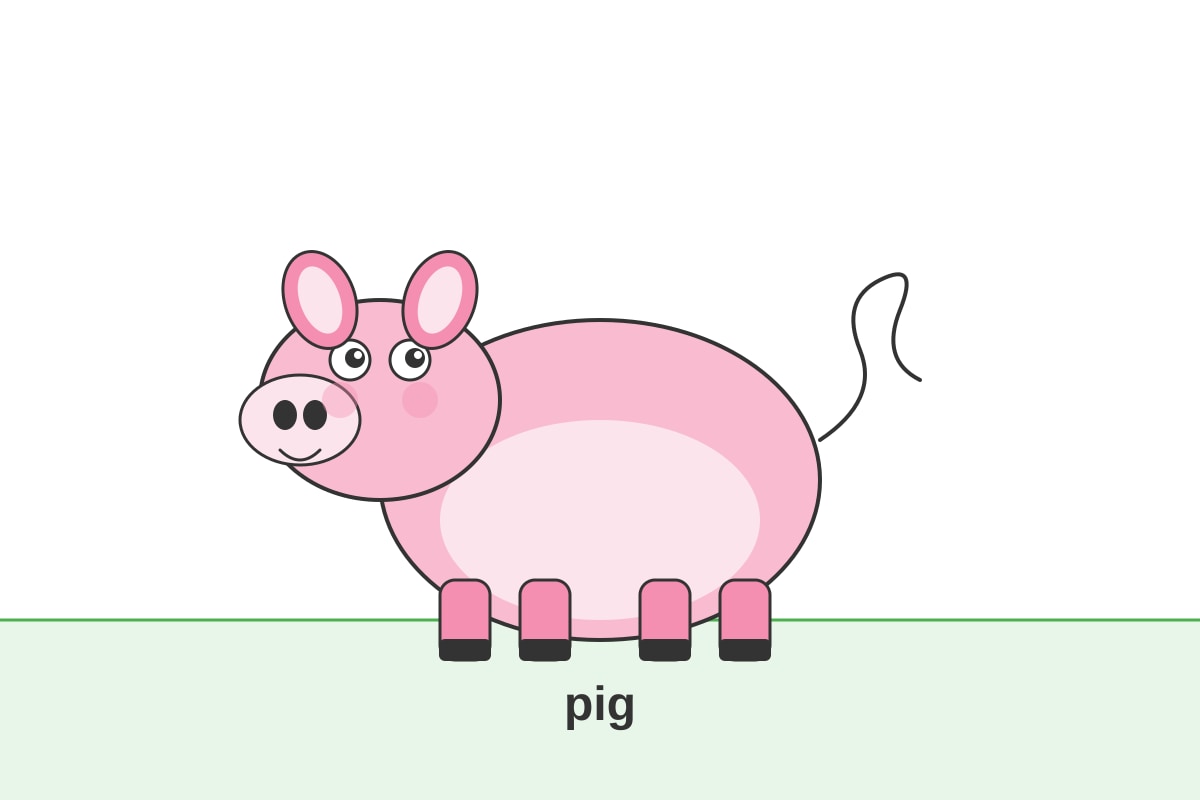
16. A — The picture shows a pig. The beginning sound is /p/.
Marking note: 2 marks for correct option. The image placeholder (Q16-fig1) must clearly show a pig.
Section C: Blending and Word Building (10 marks)
17. B — Blending /c/ /a/ /t/ gives "cat".
Marking note: 2 marks for correct option. This tests the skill of blending three phonemes into a CVC word.
18. A — Blending /h/ /e/ /n/ gives "hen".
Marking note: 2 marks for correct option. Distractors test confusion of beginning sounds (p, t, m).
19. p — The word is pig. The missing beginning letter is p.
Marking note: 2 marks for correct letter. Accept upper or lower case. The picture (implied by context) confirms the word.
20. o — The word is box. The missing middle letter is o (short o sound).
Marking note: 2 marks for correct letter. Accept upper or lower case.
21.
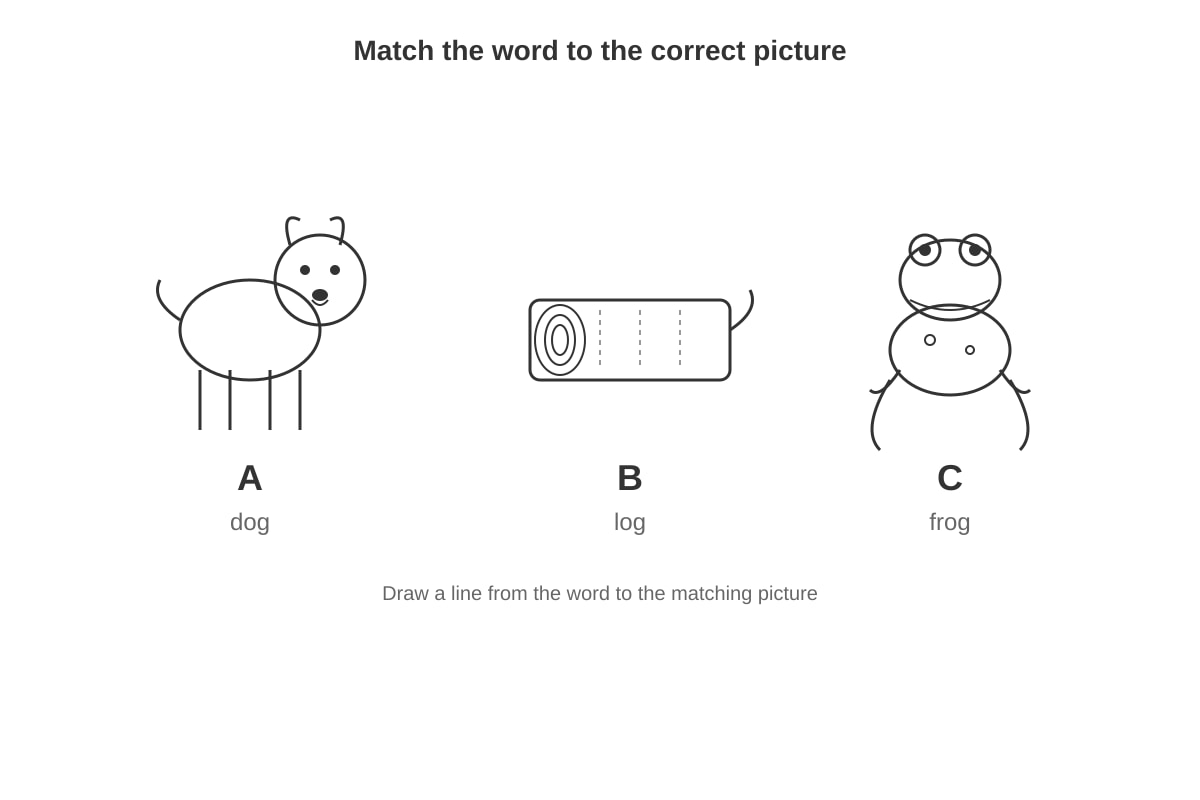
(a) dog — Blending /d/ /o/ /g/ gives the word "dog".
(b) Match to Picture A (dog).
Marking note: 3 marks total (1 mark for part (a), 2 marks for correct match in part (b)). The image placeholder (Q21-fig1) shows three labelled pictures: A (dog), B (log), C (frog). Student must identify the correct picture.
22.
(a) pet — "pet" ends with /et/, not /at/. It does not belong to the -at family.
(b) Any valid -at word: bat, rat, sat, fat, pat, mat (if not already listed), etc.
Marking note: 3 marks total (1 mark for part (a), 2 marks for a correct -at word in part (b)). Accept any real word ending in -at. Common error: writing a nonsense word or a word from a different family.
Section D: Rhyming and Sound Patterns (8 marks)
23. B — "fun" rhymes with "run" (both end with /un/).
Marking note: 2 marks for correct option. "rain" ends with /ain/, "fan" ends with /an/, "fin" ends with /in/.
24. B — "hop" and "top" rhyme (both end with /op/).
Marking note: 2 marks for correct option. Other pairs do not share the same rime.
25. C — The words "man", "pan", "can" all end with the sound /n/.
Marking note: 2 marks for correct option. This tests identification of the final phoneme in a word family.
26. mat (or hat, rat, bat, sat, fat, pat) — The sentence "The cat sat on the mat." completes the rhyme with the -at family.
Marking note: 2 marks for any word that rhymes with "cat" and "sat" and makes sense in the context. "mat" is the most common completion. Accept other -at words that fit the context (e.g., "hat" is less likely for "sat on the").
Total: 40 marks
General Marking Notes for Teachers/Parents
- Phoneme awareness is the key skill tested. Students should be able to isolate beginning, middle, and ending sounds in spoken words.
- Blending (putting sounds together to make a word) and segmenting (breaking a word into sounds) are foundational for reading and spelling.
- Letter-sound correspondence must be automatic for the 26 letters (basic code).
- Rhyming develops phonological awareness and helps with word families.
- Common P1 errors to watch for:
- b/d, p/q, m/w reversals (visual confusion)
- Confusing letter names with sounds (e.g., saying "em" for /m/)
- Vowel confusion: short /e/ vs /i/, short /a/ vs /u/
- Not hearing the middle sound in CVC words
- Treating digraphs (sh, ch, th) as two separate sounds (not tested in this paper but relevant for progression)
- Teaching tip: Use sound buttons (dots under each phoneme) and blending arms (touch shoulder, elbow, wrist for three sounds) to make blending physical and multisensory.