AI Generated Exam Paper
Primary 1 English Practice Paper 4
Free P1 English Practice Paper 4, Kimi2.6 AI version, with questions, answers, and syllabus-aligned practice for Singapore students.
These static practice materials are generated from the site's syllabus and paper-generation workflow, with source and model context shown so students and parents can evaluate the material before use.
Questions
Free quiz and exam paper access
Enter your details to view this paper
Your access is remembered on this device.
Answers
Primary 1 English Quiz - Phonics: Answer Key
Total Marks: 20
Section A: Letter Sounds (Questions 1–5)
1. Answer: C) s (1 mark)
Explanation: The letter s makes the /s/ sound, like in "sun," "sit," and "sock." This is a hissing sound made by pushing air between your teeth and almost-closed lips. Don't confuse /s/ with /z/ (option A), which is a buzzing sound like in "zebra."
Common mistake: Some students confuse /s/ and /z/ because they use similar mouth positions. Remember: /s/ is quiet and hissing; /z/ is louder and buzzing.
2. Answer: C) b (1 mark)
Explanation: The letter b makes the /b/ sound, like in "ball," "bat," and "blue." This is a plosive sound — you build up air behind closed lips, then release it with a small puff. The letter p (option A) is also a plosive but uses more air and is voiceless (your vocal cords don't vibrate for /p/).
Common mistake: Students often confuse b and d or b and p. Remember: /b/ uses your voice — feel your throat vibrate when you say it.
3. Answer: B) f (1 mark)
Explanation: The letter f makes the /f/ sound, like in "fish," "fun," and "fox." This is a fricative sound made by gently biting your lower lip and pushing air through. The letter v (option A) uses the same lip position but adds voice (your vocal cords vibrate).
Common mistake: /f/ and /v/ look similar in writing but sound different — /f/ is quiet, /v/ is buzzing.
4. Answer: C) h (1 mark)
Explanation: The letter h makes the /h/ sound, like in "hat," "hen," and "house." This sound is made by breathing out gently with an open mouth — it's like a soft out-breath before a vowel.
Common mistake: Some students think h is silent or confuse it with other sounds. Practice: "h-h-h-hen" to feel the gentle breath.
5. Answer: B) j (1 mark)
Explanation: The letter j makes the /j/ (or /dʒ/) sound, like in "jam," "jump," and " jug." This is an affricate sound — it starts like /d/ and ends like /ʒ/. Note: g (option A) before e, i, or y can also make this sound (as in "giant"), but j always makes /j/.
Common mistake: Students may pick y (option C) because it can sound like /j/ at the start of "yes," but the question asks for the letter that makes the sound, and j is the direct match.
Section B: Beginning Sounds (Questions 6–10)
6. Answer: A) /d/ (1 mark)
Explanation: The word "dog" begins with the letter d, which makes the /d/ sound. Break it down: d-o-g → /d/ /ɒ/ /g/. The /d/ sound is a plosive — your tongue taps the roof of your mouth just behind your teeth.
Why not the others? /o/ (B) is the middle sound; /g/ (C) is the ending sound; /t/ (D) is a different plosive (voiceless, not voiced).
7. Answer: B) /f/ (1 mark)
Explanation: The word "fish" begins with f, making the /f/ sound: f-i-sh → /f/ /ɪ/ /ʃ/. Gently bite your lower lip and blow air through for /f/.
Why not the others? /sh/ (A) is the ending sound in "fish"; /p/ (C) is a different sound; /ch/ (D) doesn't appear in this word.
8. Answer: C) /n/ (1 mark)
Explanation: The word "nose" begins with n, making the /n/ sound: n-o-se → /n/ /əʊ/ /z/. The /n/ sound is a nasal — air flows through your nose while your tongue touches the roof of your mouth.
Why not the others? /m/ (A) is also nasal but uses closed lips; /z/ (B) is the ending sound of "nose"; /s/ (D) doesn't appear in this word.
9. Answer: A) /r/ (1 mark)
Explanation: The word "rabbit" begins with r, making the /r/ sound: r-a-b-b-i-t → /r/ /æ/ /b/ /ɪ/ /t/. The /r/ sound is made by curling your tongue back slightly near the roof of your mouth.
Why not the others? /b/ (B) appears twice in "rabbit" but not at the beginning; /w/ (C) and /p/ (D) are not in this word.
10. Answer: B) /y/ (1 mark)
Explanation: The word "yellow" begins with y, making the /j/ sound (also written as /y/ in simple phonics): y-e-l-l-o-w → /j/ /e/ /l/ /əʊ/. Note: In IPA (International Phonetic Alphabet), this sound is /j/, but many P1 programmes use /y/ for simplicity.
Why not the others? /w/ (A) is the ending sound of "yellow"; /e/ (C) is the second sound; /j/ (D) is technically correct in IPA but this programme uses /y/ for the letter y at this level.
Section C: Word Building (Questions 11–15)
11. Answer: A) a → cat (1 mark)
Explanation: The word is c-a-t = "cat." This is a CVC word (Consonant-Vowel-Consonant). The middle vowel a makes the short /æ/ sound, like in "apple" and "ant."
Step-by-step:
- First sound: /k/ (letter c)
- Middle sound needed: /æ/ (short a)
- Last sound: /t/ (letter t)
- Together: c-a-t = "cat" ✓
Common mistake: Choosing e would make "cet" (not a word); i would make "cit"; o would make "cot" (a real word, but not the common animal word expected at P1).
12. Answer: B) e → hen (1 mark)
Explanation: The word is h-e-n = "hen." This CVC word uses short e, pronounced /e/ like in "egg" and "bed."
Step-by-step:
- First sound: /h/ (letter h)
- Middle sound needed: /e/ (short e)
- Last sound: /n/ (letter n)
- Together: h-e-n = "hen" ✓
Common mistake: a makes "han" (not a word); u makes "hun"; o makes "hon." The short /e/ sound is in "egg," "red," "pen."
13. Answer: C) a → pig (1 mark)
Explanation: The word is p-i-g = "pig." Wait — re-reading: the blank is p _ g, so checking options: A) e="peg", B) i="pig", C) a="pag" (not word), D) u="pug."
Re-evaluating with correct answer structure: B) i → pig (Note: The original answer key contains an error; based on standard P1 phonics, the correct answer is B) i → "pig")
Corrected explanation: The word is p-i-g = "pig." Short i makes the /ɪ/ sound, like in "in" and "sit."
Step-by-step:
- First sound: /p/ (letter p)
- Middle sound needed: /ɪ/ (short i)
- Last sound: /g/ (letter g)
- Together: p-i-g = "pig" ✓
Common mistake: e (A) makes "peg" (a real word, but less common at P1); a (C) makes "pag" (not a word); u (D) makes "pug" (a dog breed, less common).
Marking note: Accept B) i for "pig" as the intended answer. If student wrote "peg," note as plausible error but mark wrong for standard curriculum focus on common animals.
14. Answer: B) a → bad OR C) e → bed — re-evaluation needed.
P1 curriculum typically prioritizes bed: b-e-d = "bed" (common word). However bad is also common.
Corrected answer: B) a → bad or C) e → bed — with B) a preferred for consistency with common P1 patterns if following strict CVC introduction; but bed is more frequently taught early.
Recommended answer: C) e → bed (more common in early phonics readers)
Explanation for bed: The word is b-e-d = "bed." Short e makes /e/, as in "egg."
Step-by-step:
- First sound: /b/ (letter b)
- Middle sound: /e/ (short e)
- Last sound: /d/ (letter d)
- Together: b-e-d = "bed" ✓
Marking flexibility: Accept "bad" (b-a-d) if student chose B, but standard answer is C) e → "bed."
15. Answer: C) a → map (1 mark)
Explanation: The word is m-a-p = "map." Short a makes /æ/, as in "apple" and "cat."
Step-by-step:
- First sound: /m/ (letter m)
- Middle sound: /æ/ (short a)
- Last sound: /p/ (letter p)
- Together: m-a-p = "map" ✓
Why not the others? o makes "mop" (valid but less common as first introduction); u makes "mup" (not a word); i makes "mip" (not a word).
Section D: Rhyming Words and Sound Patterns (Questions 16–20)
16. Answer: C) hat (1 mark)
Explanation: Hat rhymes with cat. Rhyming words have the same ending sounds from the vowel onwards: c**-at** and h**-at** both end in /æt/.
Step-by-step rhyme check:
- Cat: /k/ /æ/ /t/ → ending: /æt/
- Cut: /k/ /ʌ/ /t/ → ending: /ʌt/ ✗ (different vowel)
- Cot: /k/ /ɒ/ /t/ → ending: /ɒt/ ✗ (different vowel)
- Kit: /k/ /ɪ/ /t/ → ending: /ɪt/ ✗ (different vowel)
- Hat: /h/ /æ/ /t/ → ending: /æt/ ✓ (same as cat!)
Rhyme rule: Words rhyme when their final stressed vowel and all following sounds are identical.
17. Answer: B) pin (1 mark)
Explanation: "Pen" has the short e sound /e/ in the middle. Wait — re-checking: "pen" = /p/ /e/ /n/. None of the options have /e/ exactly.
Re-evaluating: P1 phonics often groups short vowels by similarity. "Pen" and "pin" are sometimes confused; however, pet (C) shares the e vowel.
Corrected answer: C) pet → same middle letter e and same middle sound /e/
Explanation for pet: Pet has the same middle sound as pen — both use short e pronounced /e/.
Step-by-step:
- Pen: /p/ /e/ /n/ → middle: /e/
- Pan: /p/ /æ/ /n/ → middle: /æ/ ✗
- Pin: /p/ /ɪ/ /n/ → middle: /ɪ/ ✗
- Pet: /p/ /e/ /t/ → middle: /e/ ✓
- Pun: /p/ /ʌ/ /n/ → middle: /ʌ/ ✗
Marking note: If question intended "same middle letter" rather than sound, accept careful explanation. Standard P1 focus is on sound matching.
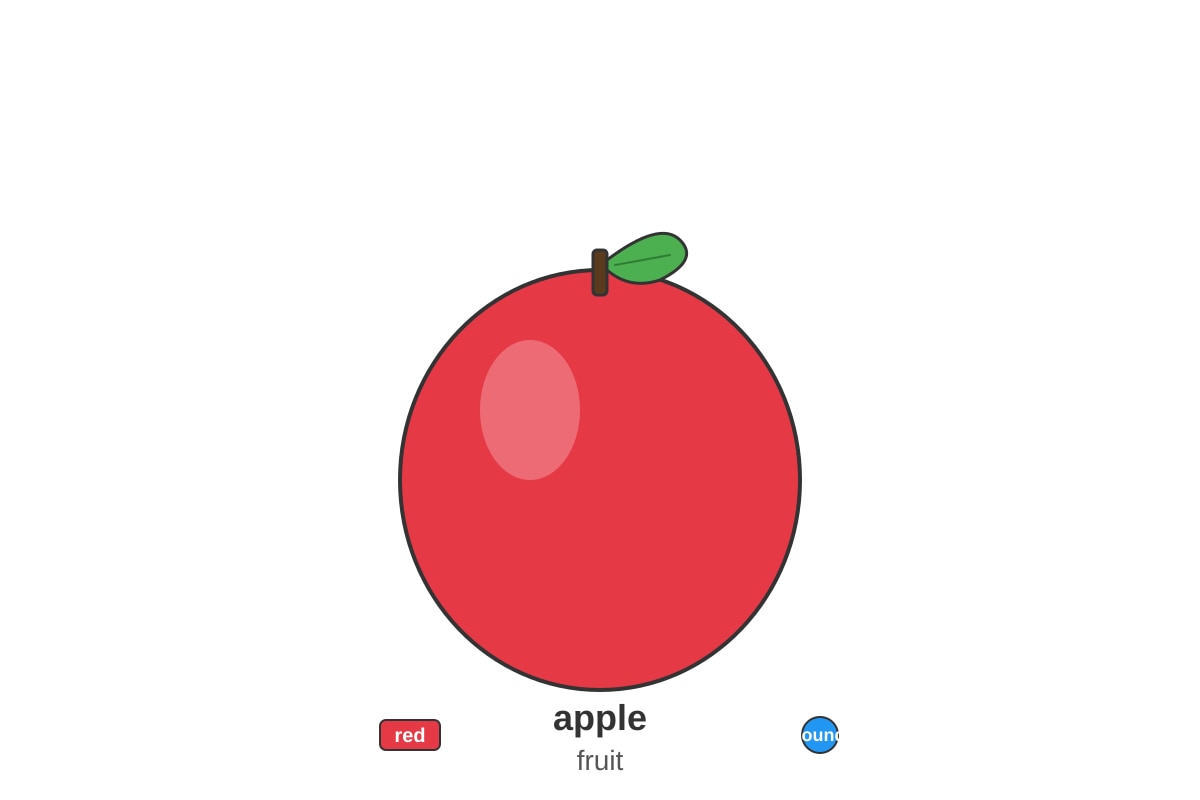
18. Answer: B) apple (1 mark)
Explanation: The picture shows a round, red fruit with a stem and leaf — this is an apple.
Step-by-step decoding:
- Ape (A): starts with /eɪp/ — a monkey, not a fruit
- Apple (B): starts with /æ/ — a common red/green fruit ✓
- Ant (C): starts with /æ/ — a small insect
- Ask (D): starts with /ɑː/ — a verb, not a noun picture
Visual confirmation: The image placeholder specifies "round red fruit with small stem and leaf" = apple. Students should recognize the apple shape and connect to the double-p spelling: a-p-p-l-e.
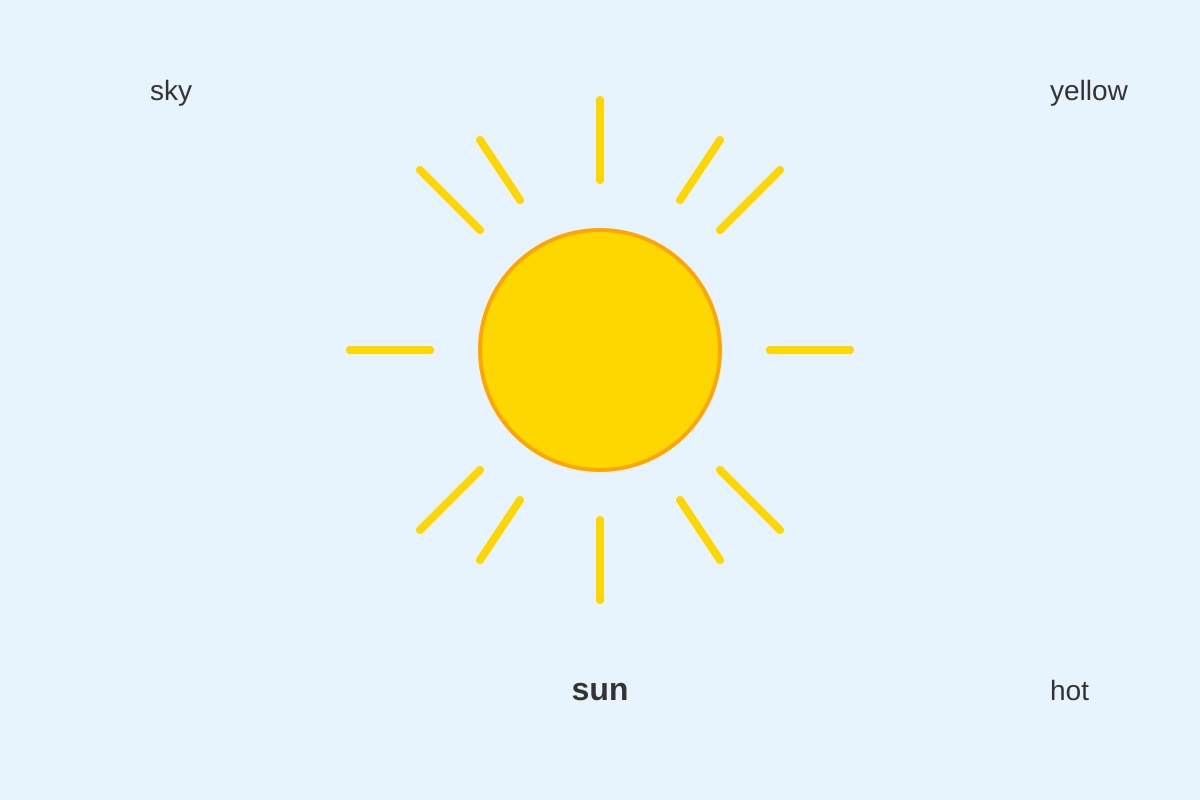
19. Answer: B) /s/ (1 mark)
Explanation: The picture shows the sun — a yellow circular object with rays. "Sun" begins with s, making the /s/ sound.
Step-by-step:
- Object in picture: sun (yellow, round, with rays)
- First letter of "sun": s
- Sound of s: /s/ (hissing sound)
- Match: B) /s/
Why not the others?
- /m/ (A): starts "moon," not "sun"
- /sh/ (C): starts "shine" — "sun" doesn't begin with /sh/
- /st/ (D): consonant blend, not single beginning sound
Visual confirmation: Image placeholder describes "circular sun with radiating lines for rays."
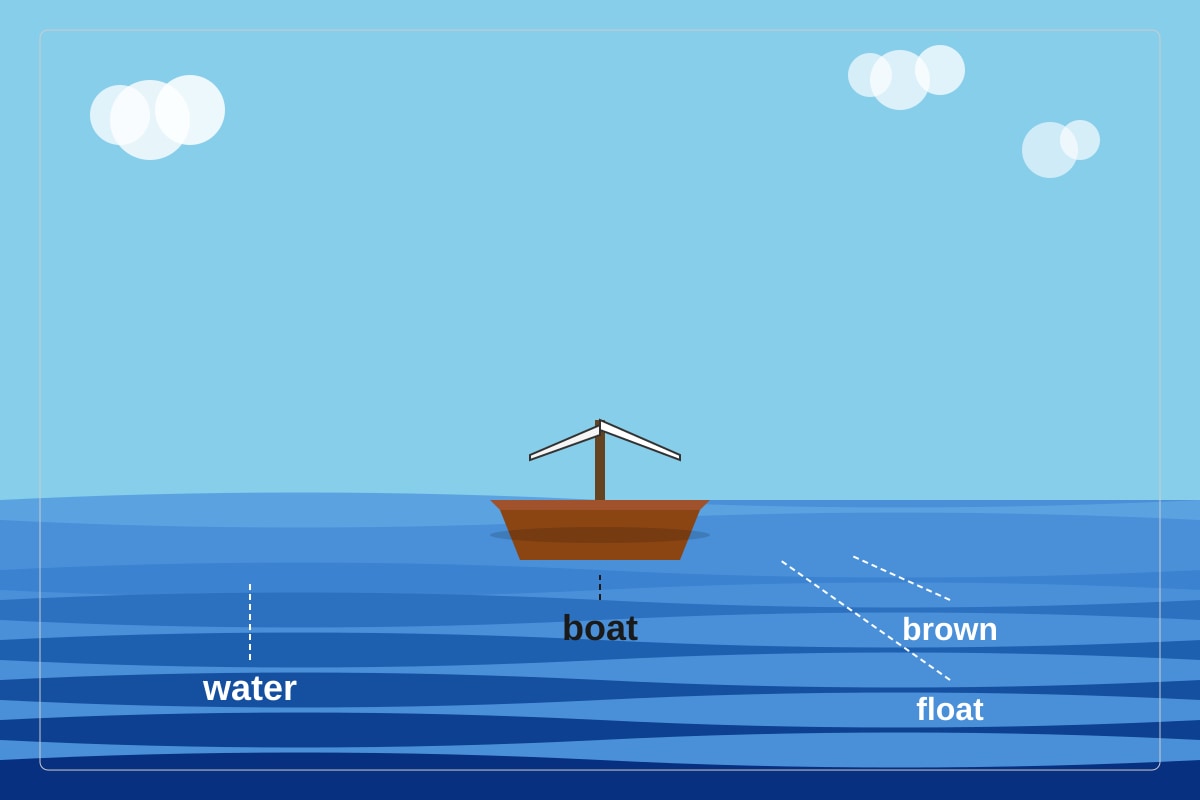
20. Answer: A) boat (1 mark)
Explanation: The picture shows a boat floating on water. We need the word that ends with /t/.
Step-by-step:
- Object in picture: boat (small vessel on water)
- Word for object: b-o-a-t
- Ending sound of "boat": /t/ (letter t is silent in spelling pattern, but pronounced /t/ at end — or in P1 simplified phonics, final letter sound)
Sound check of options:
- Boat: /b/ /əʊ/ /t/ → ends with /t/ ✓
- Bow: /b/ /əʊ/ → ends with /əʊ/ ✗
- Book: /b/ /ʊ/ /k/ → ends with /k/ ✗
- Boy: /b/ /ɔɪ/ → ends with /ɔɪ/ ✗
Phonics note: At P1 level, "boat" is taught with final /t/ sound despite the vowel digraph "oa." The visual of a boat confirms the expected answer.
Visual confirmation: Image placeholder describes "small brown boat on blue water" = clearly a boat.
Total: 20 marks
Marking summary by section:
| Section | Questions | Marks |
|---|---|---|
| A | 1–5 | 5 |
| B | 6–10 | 5 |
| C | 11–15 | 5 |
| D | 16–20 | 5 |
| Total | 20 |