AI Generated Exam Paper
Primary 1 English Practice Paper 3
Free P1 English Practice Paper 3, Kimi2.6 AI version, with questions, answers, and syllabus-aligned practice for Singapore students.
These static practice materials are generated from the site's syllabus and paper-generation workflow, with source and model context shown so students and parents can evaluate the material before use.
Questions
Free quiz and exam paper access
Enter your details to view this paper
Your access is remembered on this device.
Answers
TuitionGoWhere Practice Paper - English Primary 1
Answer Key and Marking Scheme
Version: 3 of 5
Total Marks: 40
Section A: Letter Sounds and Recognition (Questions 1–8)
Marks: 16
Question 1 (2 marks)
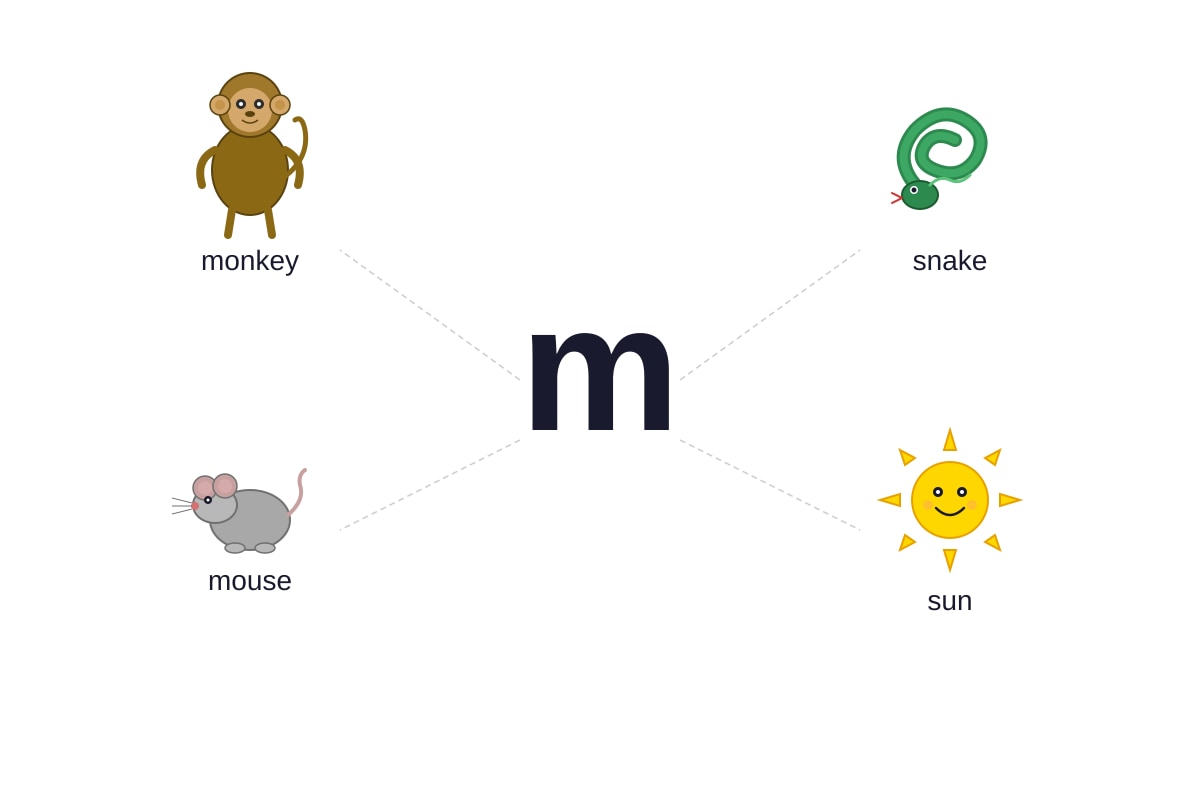
(a) monkey and mouse should be circled. (1 mark)
- Teaching note: The /m/ sound is made by pressing your lips together and humming. Both "monkey" (/mʌŋki/) and "mouse" (/maʊs/) start with this sound. "Snake" starts with /s/ and "sun" starts with /s/ — these are different sounds.
(b) m (1 mark)
- Teaching note: The letter 'm' makes the /m/ sound. Remember: the letter name is "em" but the sound is /m/. Don't confuse letter names with letter sounds.
Question 2 (2 marks)
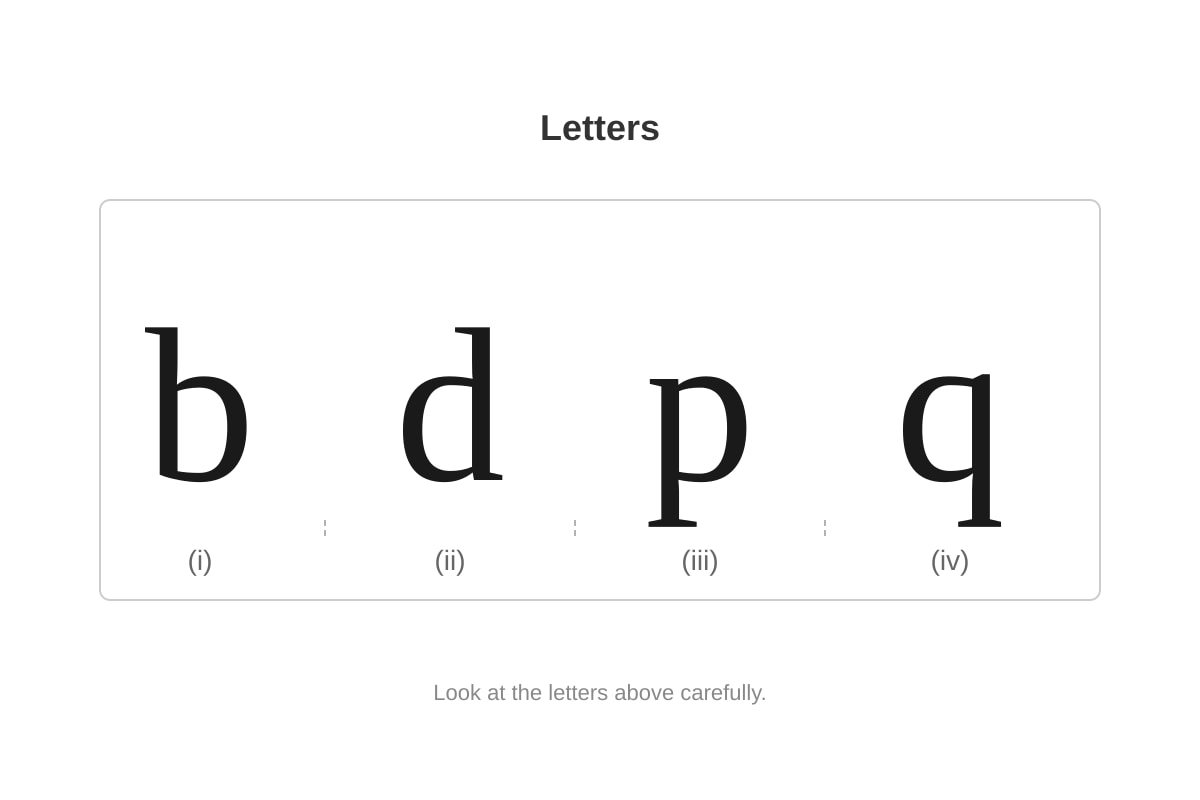
(a) b should be circled. (1 mark)
- Teaching note: The letter 'b' makes the /b/ sound — your lips start together and then pop open. Don't confuse 'b' with 'd' — 'b' has the round part facing right (like a bat and ball: the ball is first).
(b) d should be circled. (1 mark)
- Teaching note: The letter 'd' makes the /d/ sound — your tongue taps the roof of your mouth. 'd' has the round part facing left. A helpful way to remember: 'b' and 'd' are like a bat and a dog — the bat (b) faces the ball first.
Question 3 (2 marks)
| Word | Beginning Sound |
|---|---|
| fish | /f/ |
| van | /v/ |
- 1 mark per correct sound
- Teaching note:
- /f/ is a quiet sound made by blowing air through your teeth and lip. Put your hand in front of your mouth — you should feel air.
- /v/ is a "noisy" version of /f/ — your voice box vibrates. Touch your throat to feel it buzzing.
Question 4 (2 marks)
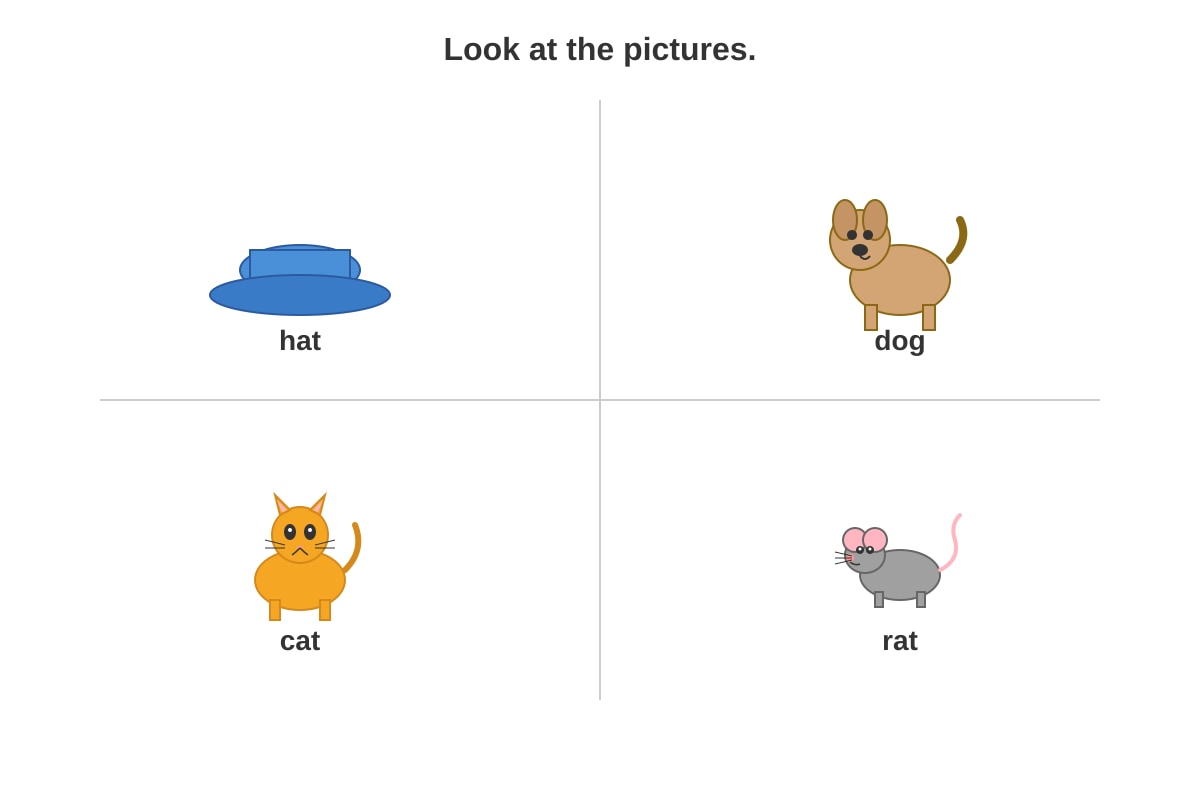
cat and rat (2 marks — 1 mark for each correct word, both must rhyme)
- Teaching note: Words rhyme when they have the same ending sound. Cat (/kæt/) and rat (/ræt/) both end in /æt/. "Hat" also rhymes with these (/hæt/), but the question asks for the pair among the four given pictures. "Dog" (/dɒg/) does not rhyme — it has a different ending.
Question 5 (2 marks)
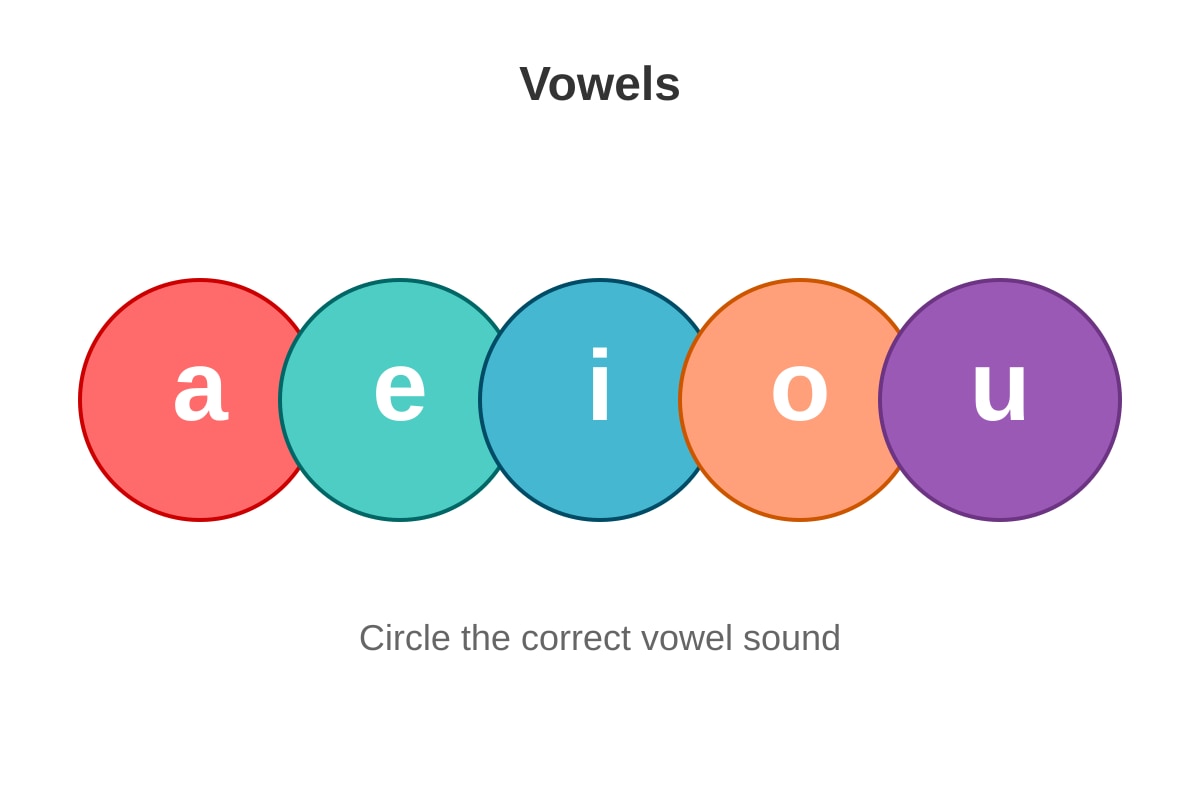
(a) e should be circled. (1 mark)
- Teaching note: The vowel in "pen" is the short /e/ sound — your mouth is slightly open and your tongue is in the middle. The letter 'e' makes this sound. Don't confuse with the letter name "ee" — here we need the sound inside the word.
(b) o should be circled. (1 mark)
- Teaching note: The vowel in "pot" is the short /ɒ/ sound (like the 'o' in "hot"). Your mouth opens round like a small 'o'. This is different from long /əʊ/ as in "go".
Question 6 (2 marks)
(a) stop (1 mark)
- Teaching note: Blend the sounds smoothly: /s/ — /t/ — /ɒ/ — /p/. Say them quickly together without gaps: "s-t-o-p" becomes "stop". This is a CVCC word (consonant-vowel-consonant-consonant).
(b) 4 (1 mark)
- Teaching note: Count the sounds (phonemes), not the letters. s-t-o-p has 4 sounds: /s/, /t/, /ɒ/, /p/. Each letter makes one sound here. Be careful — some letters together make one sound (like 'sh', 'ch', 'th').
Question 7 (2 marks)
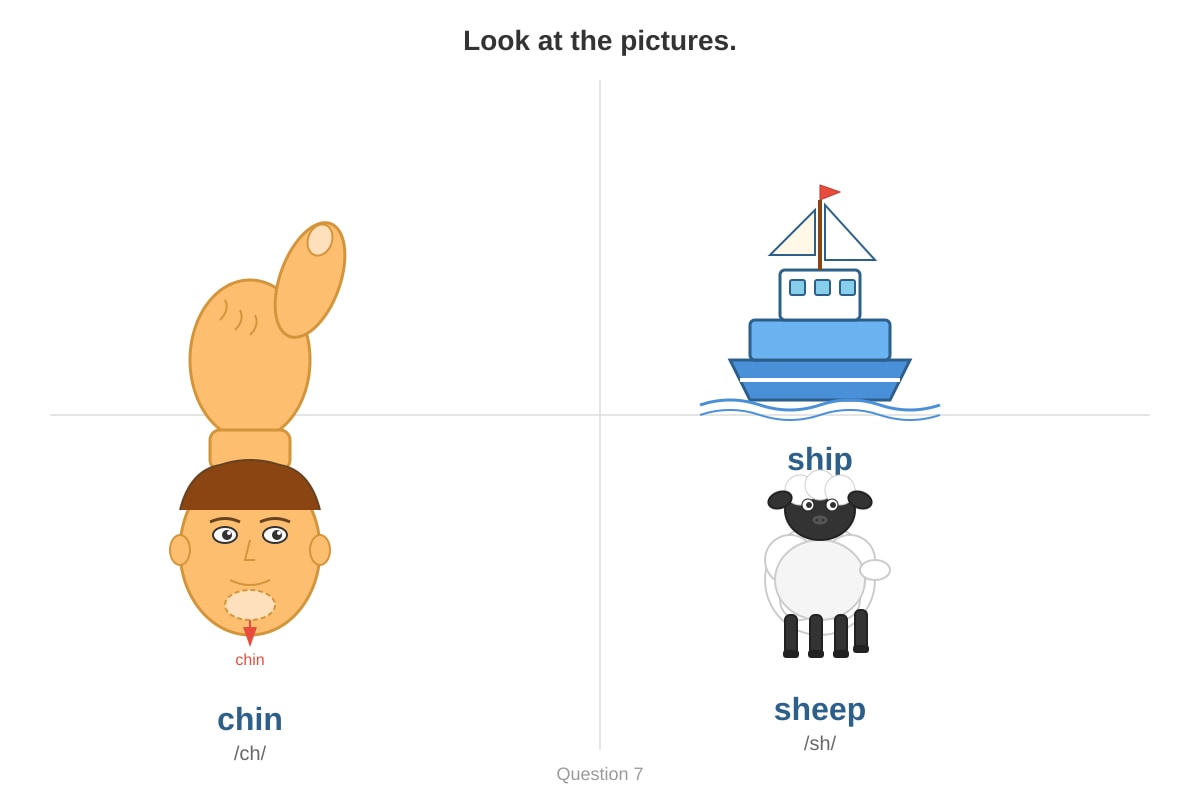
(a) ship or sheep should be circled. (1 mark — accept either, or both if student circles both correctly)
- Teaching note: The /ʃ/ sound (spelled 'sh') is made by rounding your lips slightly and pushing air out. Both "ship" and "sheep" begin with this sound. "Thumb" begins with /θ/ (put tongue between teeth), and "chin" begins with /tʃ/.
(b) chin (1 mark)
- Teaching note: The /tʃ/ sound (spelled 'ch') is like a sneeze — your tongue touches the roof of your mouth and then releases with a burst of air. "Chin" begins with this sound, not /ʃ/ or /θ/.
Question 8 (2 marks)
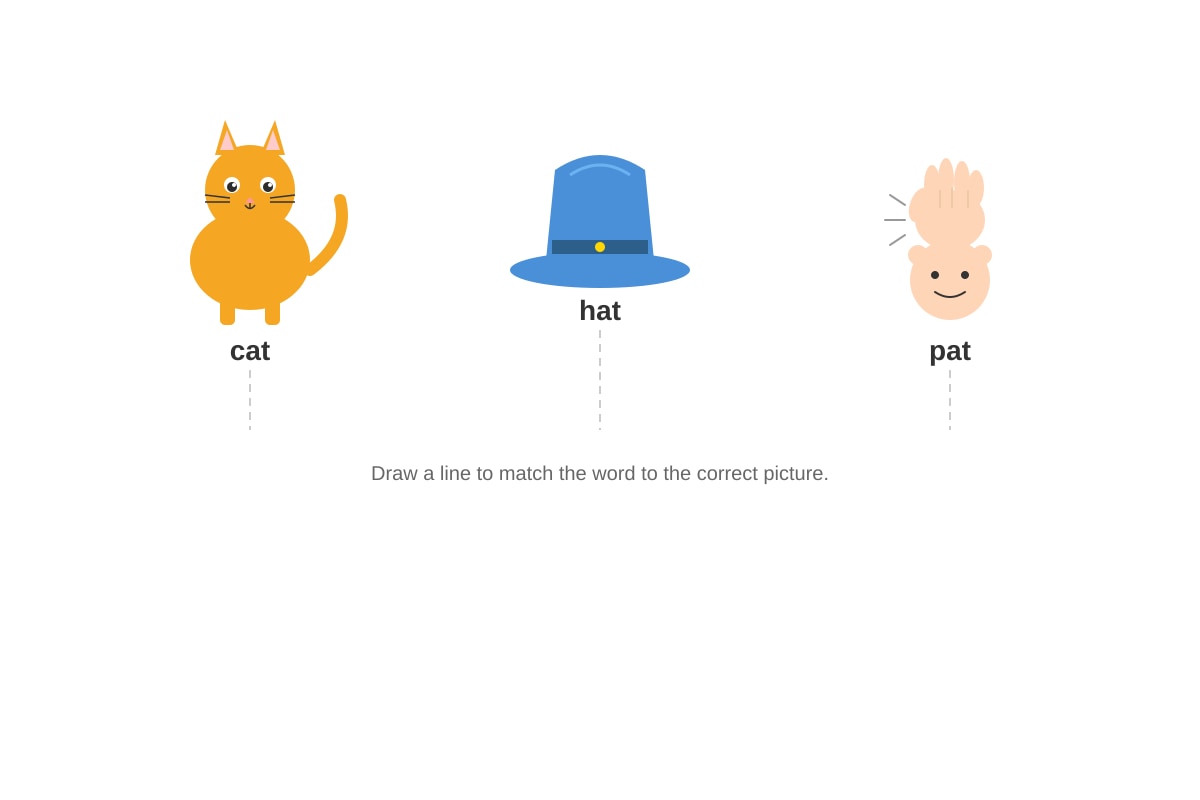
(a) pat (1 mark)
- Teaching note: Arrange the letters in order: p-a-t. Sound them out: /p/ — /æ/ — /t/. Blend together: "pat". This is a CVC (consonant-vowel-consonant) pattern, the basic building block of early reading.
(b) pat should be circled. (1 mark)
- Teaching note: "Pat" means to touch gently with your hand — the picture should show a hand patting. "Cat" is an animal and "hat" goes on your head. Match the meaning to the correct action picture.
Section B: Word Building and Spelling (Questions 9–14)
Marks: 12
Question 9 (2 marks)
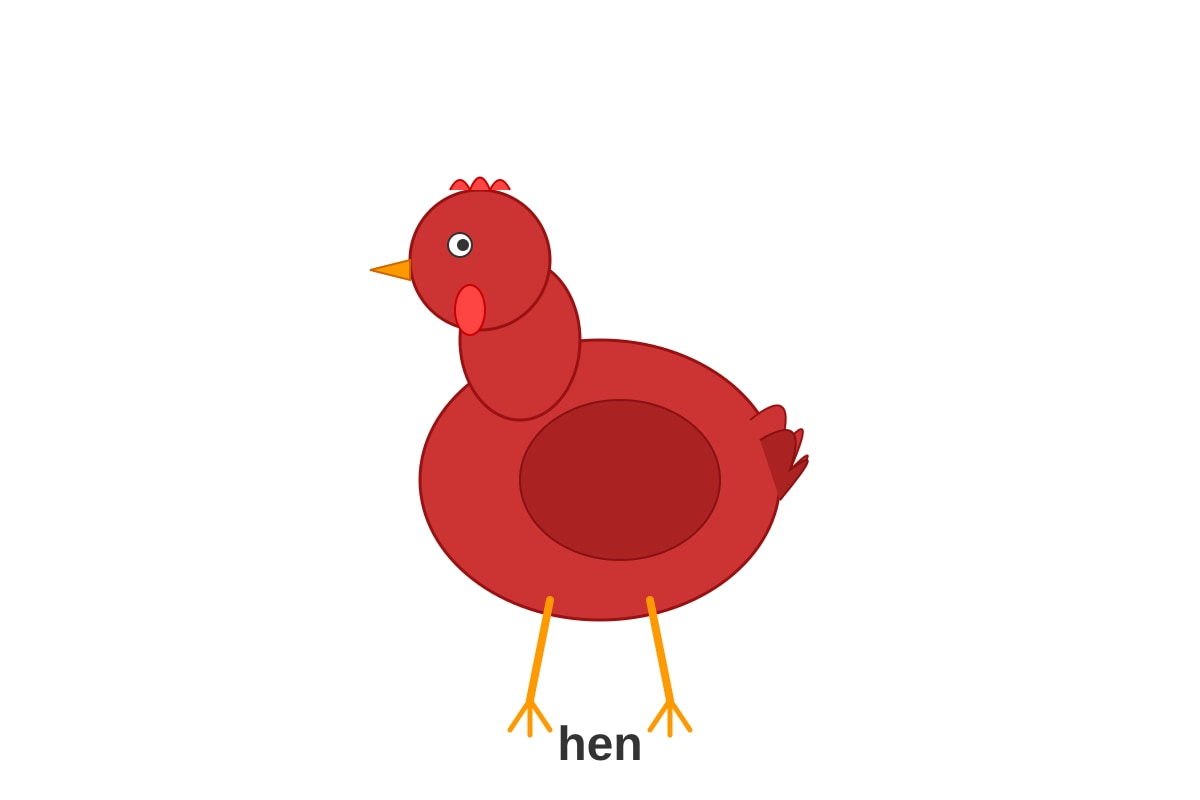
Missing letter: e (1 mark)
Whole word: hen (1 mark)
- Teaching note: The word "hen" follows the CVC pattern: h-e-n. The middle sound is /e/ — your mouth is slightly open, tongue in the middle, not high or low. "Hen" is a female chicken. Don't write 'a' (han is not a word) or 'i' (hin is not a word).
Question 10 (2 marks)
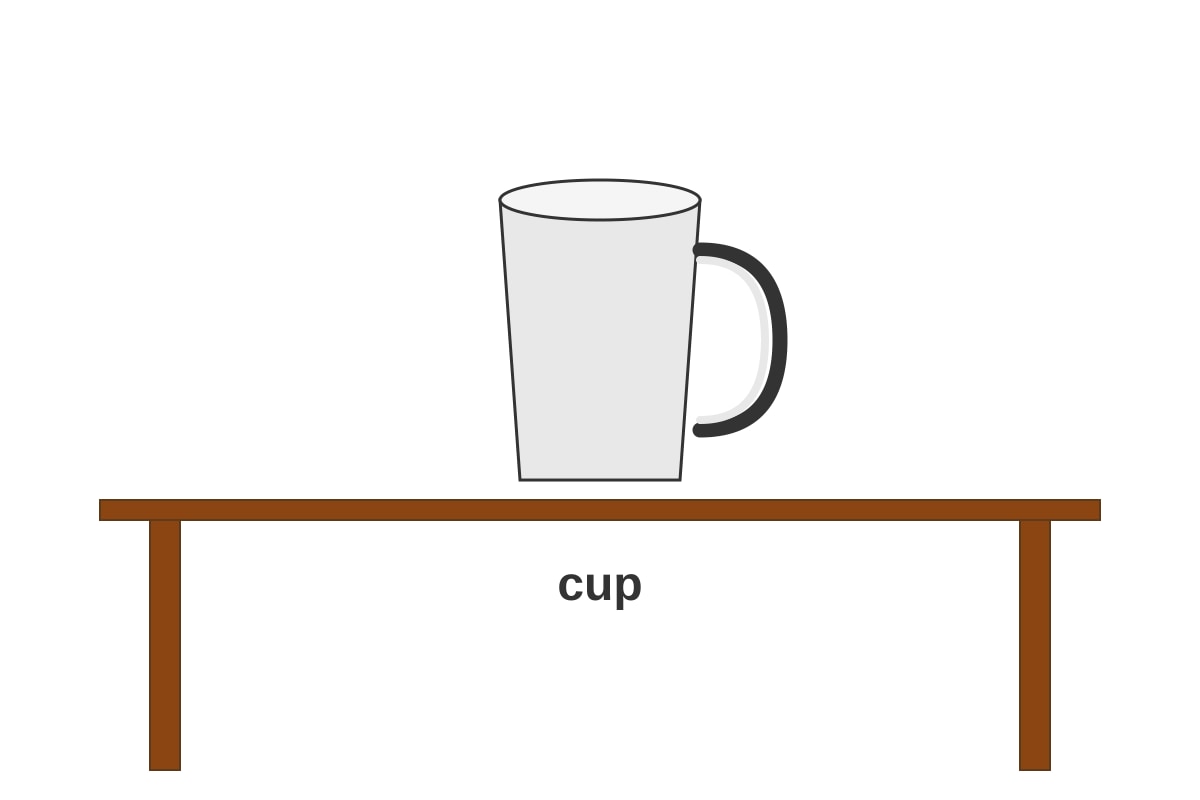
New word: cap (1 mark)
Another word with /æ/ sound: cat, bat, hat, mat, sat, rat, fat, pat, map, tap, nap, lap, gap (accept any correct real word) (1 mark)
- Teaching note:
- To change "cup" to "cap", change the vowel 'u' to 'a'. The consonants stay the same: c-a-p.
- The /æ/ sound is the short 'a' sound — your mouth opens wide and your jaw drops. Common words with this sound are in the "-at", "-ap", "-an" families.
Question 11 (2 marks)
(a) run (1 mark)
- Teaching note: Change the beginning consonant from /s/ to /r/. Keep the rest the same: -un. Sound pattern: r-u-n. "Run" means to move fast on your feet.
(b) fun (1 mark)
- Teaching note: Change the beginning sound to /f/.Keep the rime (the ending part): -un. f-u-n. "Fun" means enjoyment.
Question 12 (2 marks)
Any two real words ending in "-at": cat, bat, hat, mat, sat, rat, fat, pat, vat (1 mark each, 2 marks total)
- Teaching note: Word families (also called rhyming families) help you read new words. If you know "cat", you can read "bat", "hat", "mat" by changing just the first sound. The "-at" rime stays the same. This builds reading fluency.
Question 13 (2 marks)
Word: cat (1 mark)
Yes / No: Yes should be circled (1 mark)
- Teaching note: Arrange the letters: c-a-t. Sound out: /k/ — /æ/ — /t/. "Cat" is a real animal — a small furry pet. All three letters are used in correct order.
Question 14 (2 marks)
(a) rug (1 mark)
- Teaching note: Sound out r-u-g: /r/ — /ʌ/ — /g/. Blend together. A "rug" is a small carpet on the floor. The short /ʌ/ vowel sound is like a quick "uh" — your mouth is relaxed and slightly open.
(b) Any rhyming word: bug, hug, jug, mug, pug, tug, dug (1 mark)
- Teaching note: Words rhyme when they share the same ending sounds from the vowel onward. "Rug" (/rʌg/) and "bug" (/bʌg/) both end in /ʌg/. The consonant at the beginning changes, but the rime "-ug" stays the same.
Section C: Reading and Applying Phonics (Questions 15–20)
Marks: 12
Question 15 (2 marks)
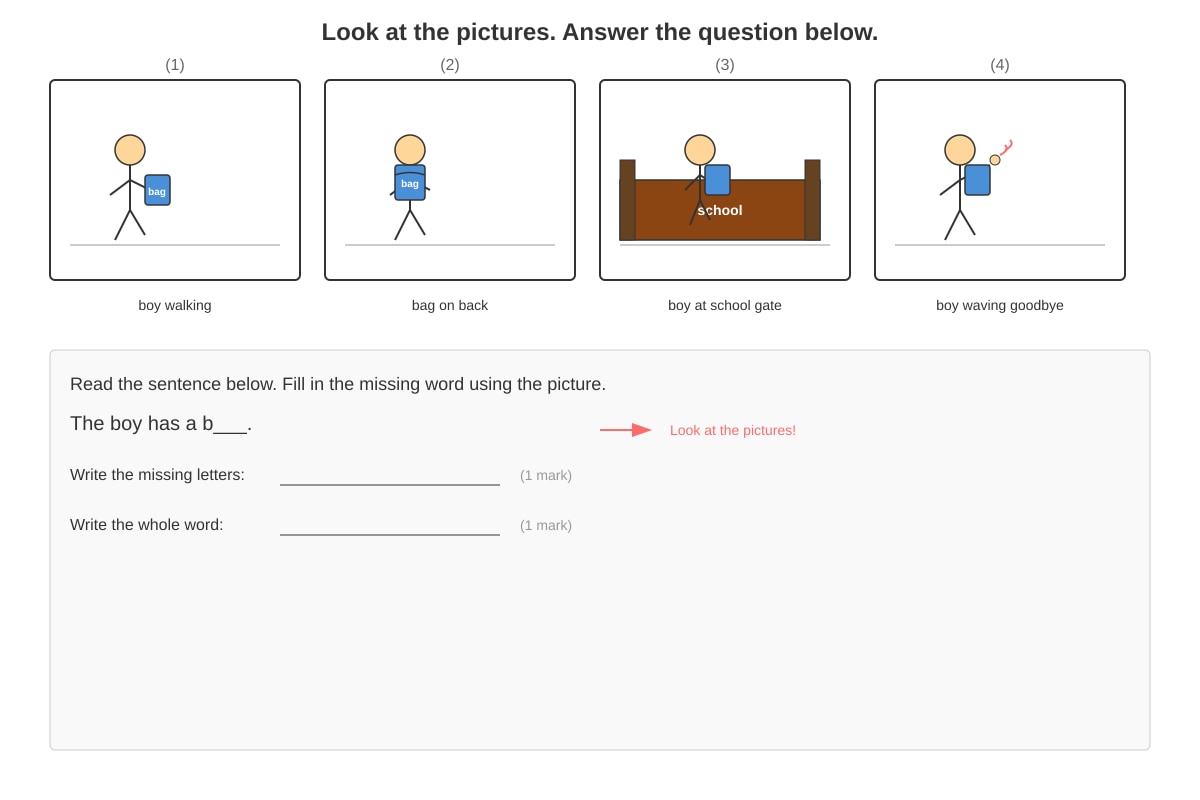
Missing letters: ag (1 mark)
Whole word: bag (1 mark)
- Teaching note: The sentence gives a clue: "The boy has a b___." The picture shows a bag. Sound pattern: b-a-g. The "b" and "g" are given; you need the middle vowel 'a' to make the word complete. This is another CVC word.
Question 16 (2 marks)
(a) hop should be circled (1 mark)
- Teaching note: "Hop" has the short /ɒ/ sound (like 'o' in "hot", "pot", "not"). Your lips make a small circle. "She" has /iː/, "can" has /æ/, "leg" has /e/. Only "hop" has the /ɒ/ vowel sound.
(b) 3 (1 mark)
- Teaching note: Count the sounds (phonemes) in "hop": /h/ — /ɒ/ — /p/. Three sounds, three letters — this is a simple CVC where each letter represents one sound. Note: "h" is pronounced even though it's at the start.
Question 17 (2 marks)
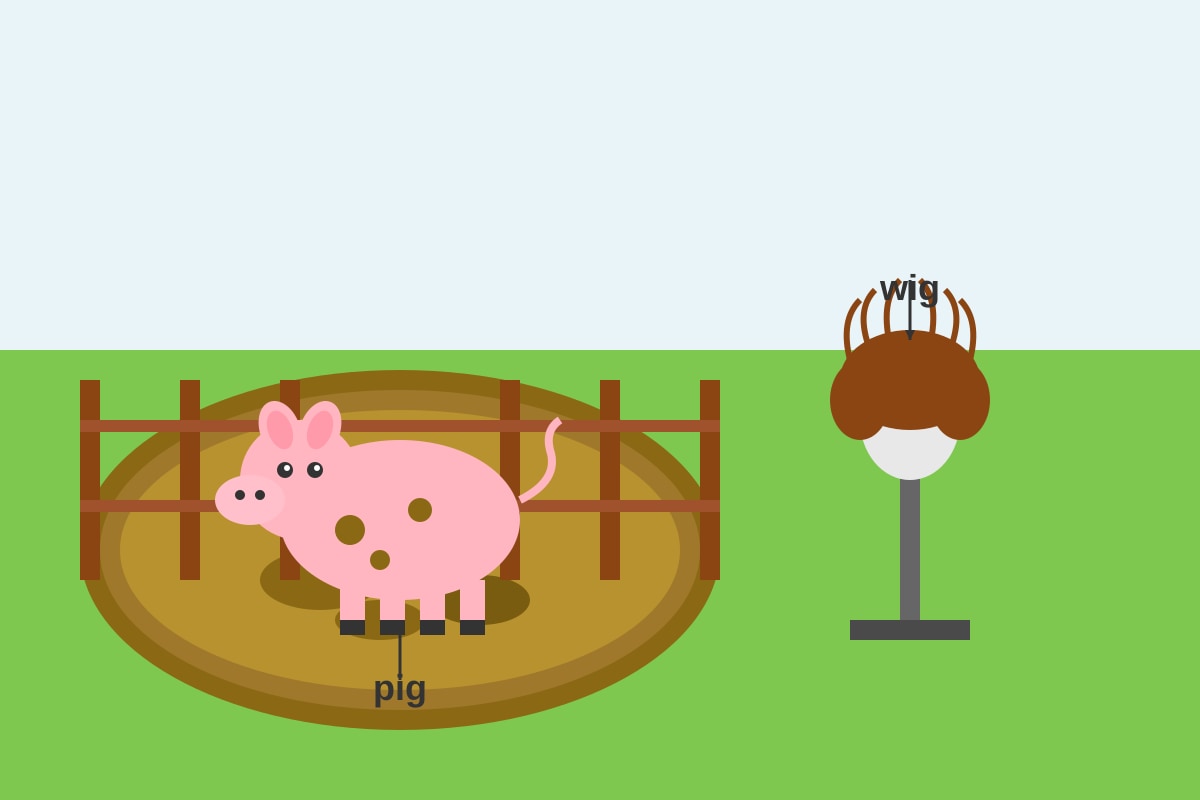
(a) Yes should be circled (1 mark)
- Teaching note: "Pig" (/pɪg/) and "wig" (/wɪg/) rhyme because they have the same ending: /ɪg/. The beginning consonants are different (/p/ and /w/), but everything from the vowel onward matches.
(b) /ɪg/ or ig (1 mark — accept "ig" as written answer)
- Teaching note: The shared part is called the "rime" — it's what stays the same in rhyming words. Here, the rime is "-ig". The vowel /ɪ/ is short, like a quick "ih" sound, and the final /g/ is a hard stop at the back of your throat.
Question 18 (2 marks)
(a) sun and bun (1 mark — accept in either order)
- Teaching note: Both words end in /ʌn/. They rhyme perfectly. "Run" also rhymes with these three. Finding rhymes helps develop phonemic awareness — the ability to hear and manipulate sounds in words.
(b) bun (1 mark)
- Teaching note: "Sun", "fun", "bun", "run" all share the rime "-un" with the /ʌ/ vowel sound. In sentence 3, "yum" has a different vowel (/ʌ/ in the second syllable, but the word "sun" from sentence 2 is explicitly the match). The question asks which word in sentence 3 matches — "bun" is in sentence 3 and shares the middle sound with "sun".
Question 19 (2 marks)
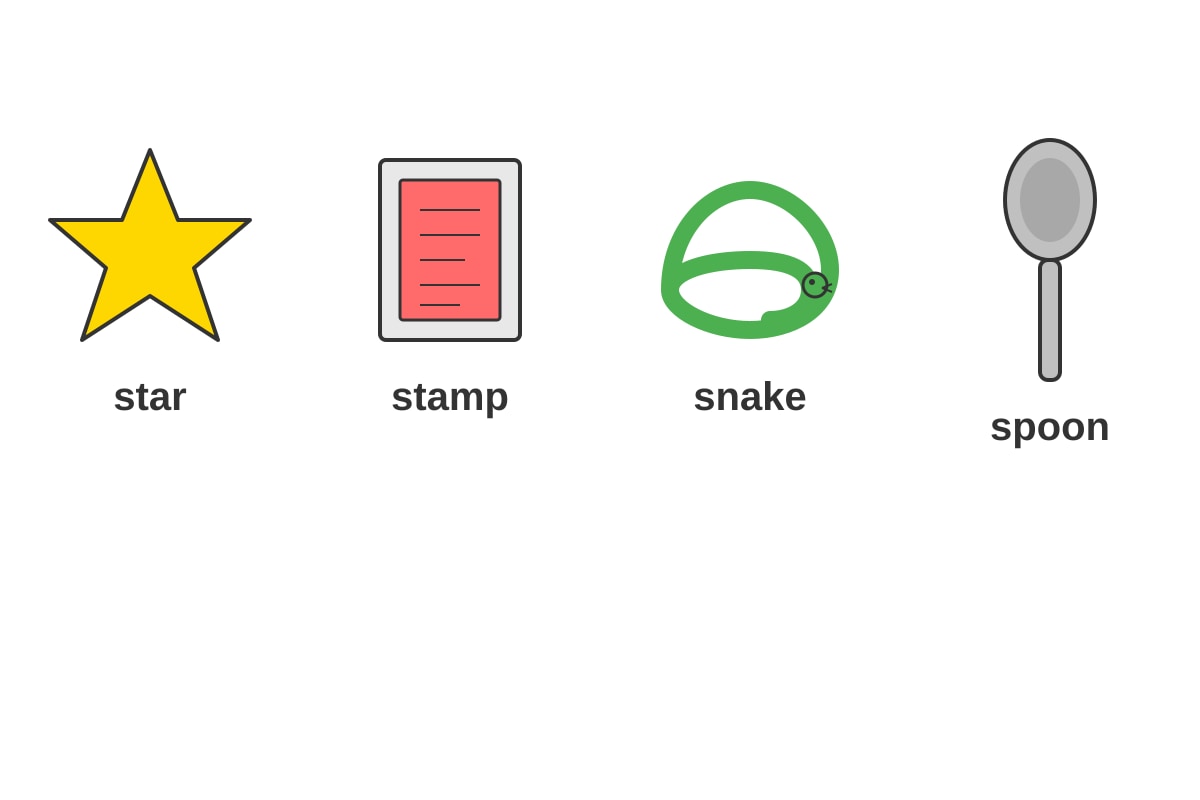
(a) /s/ or s (1 mark)
- Teaching note: All four words begin with the /s/ sound: star (/stɑː/), stamp (/stæmp/), snake (/sneɪk/), spoon (/spuːn/). Even though the next letters differ, the very first sound is /s/. Hiss like a snake to make this sound — air passes through your teeth with no voice.
(b) Any correct word beginning with /s/: sun, sit, sock, sand, saw, seal, step, stump, skin, sky, sleep, slide, small, smell, smile, smoke, smooth, snake, snow, soap, soft, soil, some, song, soon, sorry, soup, sour, space, spade, speak, speed, spell, spend, spill, spin, spirit, spit, spoil, sport, spot, spray, spread, spring, spy, square, squeeze, squirrel, stable, stadium, staff, stage, stain, stairs, stall, stamp, stand, star, start, state, station, stay, steak, steal, steam, steel, steep, step, stick, stiff, still, sting, stir, stomach, stone, stop, store, storm, story, straight, strange, stream, street, strength, stretch, strict, strike, string, strong, student, study, stupid, style, subject, substance, succeed, success, such, sudden, suffer, sugar, suggest, suit, summer, sun, support, sure, surface, surprise, surround, survey, suspect, suspense, suspicion (1 mark)
Question 20 (2 marks)
(a) pen (1 mark)
- Teaching note: "Hen" (/hen/) and "pen" (/pen/) rhyme — they share the rime "-en" with the /e/ vowel sound. Look through the passage for words with this ending. Other rhymes would be "ten", "men", "den", "when".
(b) red and run (1 mark — both needed)
- Teaching note: The /r/ sound is made with your tongue curled back slightly. In the passage, "red" (/red/) and "run" (/rʌn/) both begin with this sound. "Draw" begins with /dr/ (a blend), "The" begins with /ð/, "Tim" with /t/, "has" with /h/, "big" with /b/, "can" with /k/, "hen" with /h/, "with" with /w/, and "says" with /s/. Only "red" and "run" start with /r/.
Summary of Marks
| Section | Questions | Marks |
|---|---|---|
| A: Letter Sounds and Recognition | 1–8 | 16 |
| B: Word Building and Spelling | 9–14 | 12 |
| C: Reading and Applying Phonics | 15–20 | 12 |
| TOTAL | 1–20 | 40 |
Common Errors to Watch For
| Error Type | Example | Correction |
|---|---|---|
| Letter reversal | Writing 'b' as 'd' | Use "bat and ball" mnemonic — ball comes first for 'b' |
| Letter name vs. sound | Saying "em" for /m/ | Remember: name is "em", sound is /m/ |
| Counting letters not sounds | Saying "stop" has 4 letters so 4 sounds (correct here, but not always) | "Ship" has 5 letters but 3 sounds — count phonemes, not graphemes |
| Rhyme confusion | Thinking same beginning means rhyme | Rhyming needs same ENDING from vowel onward |
| Vowel confusion | Writing 'u' for /æ/ sound | /æ/ (as in "cat") needs wide open mouth — practice with a mirror |
This answer key accompanies a syllabus-aligned practice paper. It is not derived from official past-year examination papers.